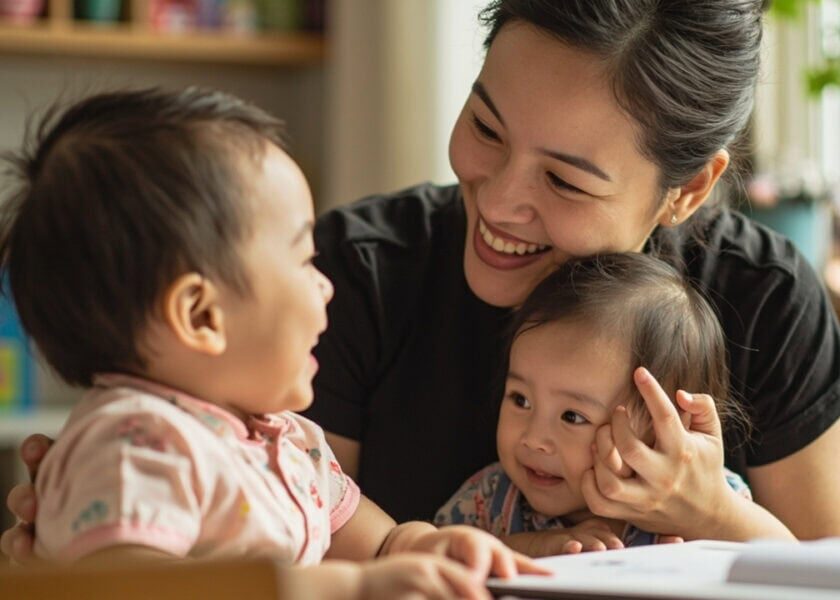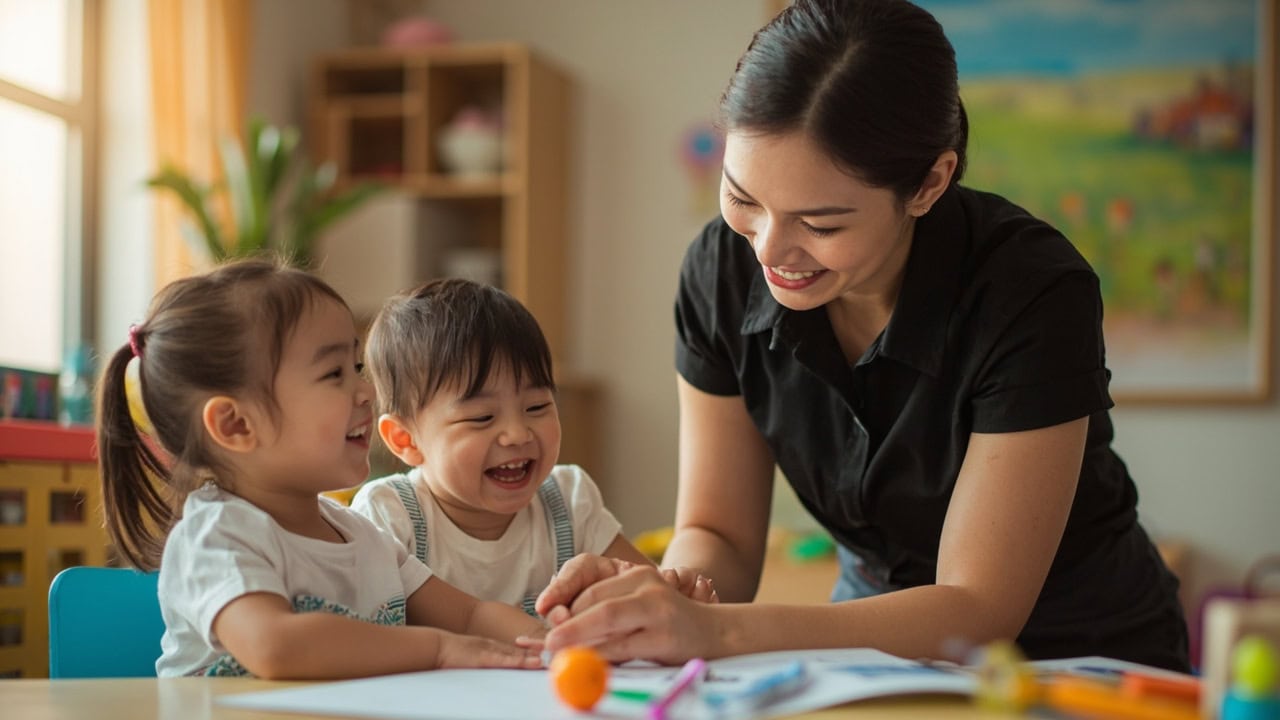
The Conversation Your Toddler Is Already Having With You
The Moment Every Parent Knows
You kneel at the gate of the childcare centre. You ask, “How was your day?” And your toddler looks at you with perfect, radiant incomprehension. Or perhaps they shrug. Perhaps they say, “Good,” in a tone that offers you nothing at all.
You try again. “What did you do? Did you play with anyone? Did you have snack?”
Silence. A vague wave of the hand. The walk to the car is long and quiet, and you find yourself wondering, not for the first time, what actually happened in all those hours when you were not there.
This is not a failure on your part. This is not a failing in your child. This is simply the nature of early childhood — and it is one of the most profound tensions that parents in Singapore live with every single day.
Your child was at childcare. Your child experienced something. Your child felt something. But your child does not yet have the words to tell you any of it. And so you drive home with questions that have nowhere to land, and a tenderness in your chest that has nowhere to rest.
Here is what might change the way you think about this: Your child is already telling you everything.
Why Words Don’t Come: The Science of Early Communication
Every single day, in a language older than speech, your child is reporting on their experience, their wellbeing, their emotional weather, their social world. The problem is not that the report is not being delivered. The problem is that most of us have never been taught how to receive it.
We live in a culture that privileges words. We ask children to tell us how they feel. We wait for sentences. And when sentences do not come, we assume there is nothing to hear.
But a child under three is not silent because they have nothing to say. A child under three is silent because they are speaking in the language of behavior, of movement, of play patterns, of sleep, of appetite, of the way they climb into your arms at the end of the day.
This is not a lesser form of communication. This is the first language your child ever learned, and it is still the language they are most fluent in — long before words arrive to complicate things.
Developmental science has known this for decades. Young children do not yet have the neurological architecture for abstract verbal expression the way adults do. Their communication lives in their bodies: in the way they move through space, in the stories they act out with toys, in the way they seek or withdraw from connection, in the quality of their sleep after a day of new experiences, in the food they accept or refuse, in the way they look at their caregiver — or look away.
All of this is language. All of this is information. And when you learn to read it, you gain something extraordinary: access to your child’s inner world in a way that words alone could never provide.
What Your Child Is Doing All Day at Childcare
Consider what your child is navigating during their hours at childcare. Even in the most loving, stimulating environment, a young child is processing a world that is rich, complex, and sometimes overwhelming.
They are building attachments with caregivers. They are figuring out how to be part of a group. They are processing new sounds and textures and social cues. They are learning what makes them feel safe and what makes them feel uncertain. They are doing the work of early development at a pace that would exhaust most adults.
And every single element of that experience is written in their behavior, waiting to be read.
How Your Child’s Play Tells You About Their Emotional State
Watch how your child plays. This is where children’s inner lives become most visible.
A child who is feeling secure and regulated will play with flexibility and creativity. They will move between toys and activities with a sense of curiosity. They might build and knock down and build again. They might involve others in their play, or they might play alone with contentment.
But a child who is carrying something — whether it is excitement or stress or confusion — will tell you in the structure of their play.
- Repeating the same scenario over and over may mean your child is processing something that happened
- Refusing certain toys or avoiding certain areas of the room may signal that something about that space feels uncertain to them
- Playing aggressively, throwing or knocking things down repeatedly is not being destructive — they may be releasing something they felt and could not name
Play is not recreation for a young child. Play is work. It is how they make sense of the world. And the details of their play, observed with care, can tell you volumes about their emotional state.
The Physical Signals Your Child’s Body Sends
The way a child holds their body tells you about their internal regulation. A child who is calm and secure will have a relaxed posture, an open stance, eyes that move freely around the room.
A child who is tense or stressed may:
- Hold their body stiffly
- Clench their fists
- Move in jerky, uncertain ways
- Seek constant physical contact with a caregiver
- Go unusually still
Some children communicate stress through their faces, holding tension in their jaw or forehead. These are not diagnostic markers. They are simply information — signals that something in your child’s internal experience is expressing itself through their body, because their body is the instrument they know best.
Sleep: The Most Honest Report Your Child Produces
Young children process their experiences through sleep. This is why a day of overwhelming newness can result in a child who sleeps deeply and heavily, as though their body needs to recover from processing.
But a day of chronic low-level stress — a day where a child felt unseen or uncertain — can show up in:
- Fragmented sleep
- Resistance to bedtime
- Waking that carries the residue of something unresolved
When a child comes home from childcare and their sleep pattern shifts, that shift is not random. It is data. It is your child’s nervous system telling you something about the quality of their day.
Appetite as Information
Some children eat more when they are happy and settled. Some children eat less when they are anxious. What matters is not whether your child is a big eater or a small eater, but whether their eating pattern is consistent, and whether shifts in appetite correspond to shifts in their childcare experience.
A child who suddenly refuses food they normally love, or who suddenly cannot stop eating, is communicating something. They may not be able to tell you what. But a caregiver who is paying close attention can help you understand what might be happening beneath the surface.
The Social Map: Attachment and Peer Relationships
How your child relates to their caregiver is one of the most important signals to read. Do they seek out their caregiver when they are upset? Do they move toward the caregiver at pickup, or do they seem to prefer to go home?
A child who feels securely attached to their childcare caregiver will:
- Use them as a safe base from which to explore
- Check in periodically
- Show distress upon separation and relief upon reunion
A child who seems unusually distant from their caregiver, or unusually clingy in ways that seem more about anxiety than security, may be communicating that something in that relational dynamic needs attention.
Whether your child seeks peer interaction or retreats from it, whether they show aggression or empathy, whether they are a leader or a follower or something that does not fit either category — all of this is a map of your child’s social development, drawn in behavior instead of words.
Understanding the Full Picture: Why Single Signals Mean Little
None of these signals, on their own, means anything alarming. A single night of disrupted sleep does not mean your child is in crisis. A single day of difficult play does not mean something is seriously wrong.
This is not about diagnosis or worry. This is about learning to read your child as a whole person, with a rich inner life that is already expressing itself, and meeting them where they are.
It is the accumulation of signals over time — the patterns that emerge across weeks and months — that tell the real story. And that is precisely why quality observation by trained caregivers matters so much. They see your child in context, day after day, and can help you understand the narrative as it unfolds.
Quality childcare is not simply supervision. It is the trained, patient work of learning a child’s language so that parents can learn it too.
When caregivers observe with intention and care — noticing patterns, tracking signals over time, sitting with a parent at the end of the day and saying, “Here is what I noticed, here is what your child may have been communicating” — they become the translator who bridges the gap between your child’s non-verbal report and your understanding.
What to Look for When Choosing Infant Care in Singapore
If you are currently researching childcare options, here are the questions that matter most:
- How do caregivers observe and document? Ask specifically how they track patterns in play, sleep, and social behavior over time — not just what happened, but what it might mean.
- What is the caregiver-to-child ratio? Smaller ratios mean more attention per child, which means better observation and more individualized care.
- How do they communicate with parents? Look for regular, meaningful updates — not just photos, but observations about your child’s day, patterns, and any shifts worth noting.
- How do they describe their approach to understanding children’s non-verbal communication? If they cannot articulate this, they may not be doing it intentionally.
- Do you feel heard when you ask questions? The relationship between you and your caregiver matters. You should feel like partners, not like customers.
“What if I miss something important?” You will not catch everything — and that is okay. The goal is not perfect surveillance of your child’s emotional life. The goal is cultivating a relationship where you are paying attention, where you are curious, and where you have partners who can help fill in the gaps.
“What if the signals mean something is wrong?” Behavioral signals are information, not verdicts. They tell you where to look, not what to fear. A child who is processing a transition, adjusting to a new environment, or working through normal developmental challenges may show shifts in play, sleep, or appetite. These are often temporary. The role of quality observation is to distinguish between normal variation and patterns that may warrant additional attention or support.
You Are Not Failing
Your child is not a mystery to be solved. Your child is a person with a full and active inner life, who is already communicating with you every single day.
The fact that they cannot answer your questions at the gate does not mean they have nothing to tell you. It means their report is written in a language you may not have learned yet.
Learning that language is not difficult. It is a matter of attention. It is a matter of having partners who can help you read the signals. It is a matter of trusting that your child’s behavior is not random, that there is meaning in what they do, and that you have the capacity to understand it.
When we watch a child closely, when we attend to the details of their play and their sleep and their social movements, we are not surveillance. We are not hovering. We are not anxious.
We are doing something that matters deeply.
We are saying to that child: I see you. Your experience is real. Your feelings are valid. I am paying attention to the story you are telling, even before you have the words to tell it.
And you do not have to wonder alone. Your child is telling you. We are here to help you listen.
How EduNanny Singapore Supports Your Family
At EduNanny Singapore, attentive observation is central to everything we do. Not simply the observation of children, though that matters deeply. But the translation of children — the careful, patient, trained work of noticing what a child is communicating before they have the words for it, and helping parents understand that report too.
We are part of the ECDA Childminding Pilot, which means our approach to infant care and childminding is built on standards that prioritize exactly this kind of attentive, individualized observation.
With small ratios that allow our caregivers to truly know each child, with home-based and community pathways that offer families real flexibility, and with transparent communication practices including regular updates to parents, we are building something that serves the actual needs of Singapore families.
The pilot structure makes this quality care accessible. The ability to use CDA and Baby Bonus funds where applicable means that financial considerations do not have to stand between your child and the care they deserve. We offer Monday to Friday care blocks because we know how Singapore parents work, and we know that consistent, reliable care is not a luxury — it is a foundation.
Our caregivers are trained not just to care for children but to observe them with intention. To notice the patterns. To track the signals over time. To be the partner who helps you read your child accurately, day after day.
If you are exploring infant care or childminding options in Singapore and want to learn more about how EduNanny Singapore supports parents in understanding their child’s non-verbal communication, we welcome you to reach out. We are here to walk this path with you.
Learn more about the EduNanny approach →