How to Share a Family Care Ritual Without Asking a Caregiver to Copy You
A meaningful ritual need not be copied word for word. This worked handover keeps the purpose and two familiar anchors while leaving room for your infant to shape the moment.
You can share a meaningful family care ritual without asking a caregiver to copy your words, voice or pace. A useful handover gives one purpose, two or three familiar anchors and a simple rule for responding when the infant does something different.
Think of the ritual as a map rather than a script. You show the pattern once, explain which parts matter to your family and leave the caregiver free to use their own natural voice and manner while noticing the infant.
The worked example is for an awake infant and is illustrative, not a routine every infant must follow or a way to assess development.
Name the purpose before the steps
Begin with one sentence that answers a practical question: what should this moment do in our family? Keep it concrete enough for the caregiver to remember during the handover.
Purpose: “This is how our family greets our infant and begins our time together. We value the same book, one short line and a brief pause.”
This purpose gives the caregiver a decision rule. The caregiver can use their own greeting and wording while still bringing out the book, sharing the line and leaving the pause. The handover communicates what matters to your family without turning the moment into a performance.
Describe what the adults will do rather than predicting what the infant must do. “We show the book, share one line and pause” gives clear actions. “This always settles our infant” predicts a response and may make the handover harder to use when the infant responds differently.
Choose two or three familiar anchors
An anchor is a feature that is easy to remember and identify in the moment. Choose details that carry your family’s meaning and are practical to repeat, rather than every part of your usual routine.
For this book and song ritual, keep only three:
- the same soft cloth picture book;
- one short line from the familiar song;
- one brief pause before deciding what comes next.
Everything else may vary, including the greeting, extra descriptive words, melody, pace and whether the line is sung or hummed. The result should feel like your family’s moment without requiring identical delivery.
UNICEF’s communication guidance describes communication as words, pitch and tone, alongside facial expression, eye contact, gestures and touch. The handover can keep the book and pause without prescribing the caregiver’s voice or nonverbal communication.
A simple handover card can use four short headings: Purpose, Keep, May vary and Respond to. Write one phrase under each heading.
Worked example: a shared book and song ritual
Use this example when the infant is awake and comfortably supported. Choose a cloth picture book in good condition with no loose or detachable pieces. Keep the infant within the caregiver’s sight and reach, and pause or end if the infant turns away or seems uncomfortable.
Purpose: “This is how our family greets our infant and begins our time together.”
Keep: the same soft cloth picture book; one short line from the familiar song; one brief pause before deciding what comes next.
May vary: the greeting, descriptive wording, melody, pace and whether the line is sung or hummed.
Respond to: the infant’s looking, reaching, vocalising, movement or turning away.
During the handover, demonstrate once with the infant present if the infant is awake and engaged. Bring the book into the shared view, show one page, name one simple object, sing or hum the short line, then stop and wait. You can say: “Please keep the book, one short line and the pause. Use your own words and pace. Let what you notice guide the next step.”
| Moment | Parent demonstrates once | Caregiver may adapt | Adult may notice |
|---|---|---|---|
| Greeting | Bring the book into the shared view and give a simple greeting. | Use a natural greeting, expression and supported position. | Looking, reaching, movement or turning away. |
| One page | Show one page and name one simple object. | Use own words and gestures, and hold the book in a comfortable shared view. | Visual attention, a reach or a change in movement. |
| Short line | Sing or hum one short line from the familiar song. | Use own melody or pace. | Sound, movement or a shift in attention. |
| Pause | Stop and leave a brief pause. | Wait before turning a page, repeating the line or closing the book. | Stillness, reaching, vocalising, looking or looking away. |
The infant does not need to look, reach, vocalise or stay still for the adults to carry out the agreed actions. These are possible observations, not conditions for success. If the infant turns away, pause or end rather than asking for another round.
When care is arranged through a service, make this part of the agreed care brief or handover note. Our approach to personalising care starts with a child’s routines, interests, comfort cues and family preferences, while responsibilities and communication are agreed for the service chosen.
Review one moment, not the whole ritual
After one use, review one observed moment rather than asking whether the whole ritual was correct. Three questions are enough:
- What did you notice during one book or song moment?
- Which familiar anchor was easiest for the caregiver to carry out?
- Should the next round keep it unchanged, shorten it or vary one element?
Record the observation in one line. For example: “After the line, the infant turned towards the book, reached once, then looked away when the book closed.” This records what happened in that moment. It does not establish a fixed preference, motive or developmental milestone.
Observation: The infant looked away when the book appeared, then turned towards the caregiver during the familiar line.
Next decision: Keep the same book and pause, but begin with the line before showing the page.
Use the update channel agreed for the care arrangement. Bring one observation and one proposed change to the next conversation, rather than a list of everything the caregiver did differently.
Keep the sentences distinct. “Turned towards the book after the line” records an observation; “keep the pause next time” records the agreed next step. This gives the next round a clear starting point without turning one moment into a score.
Sources and further reading
- Frequently Asked Questions · EduNanny
- How to communicate effectively with your young child | UNICEF Parenting · www.unicef.org
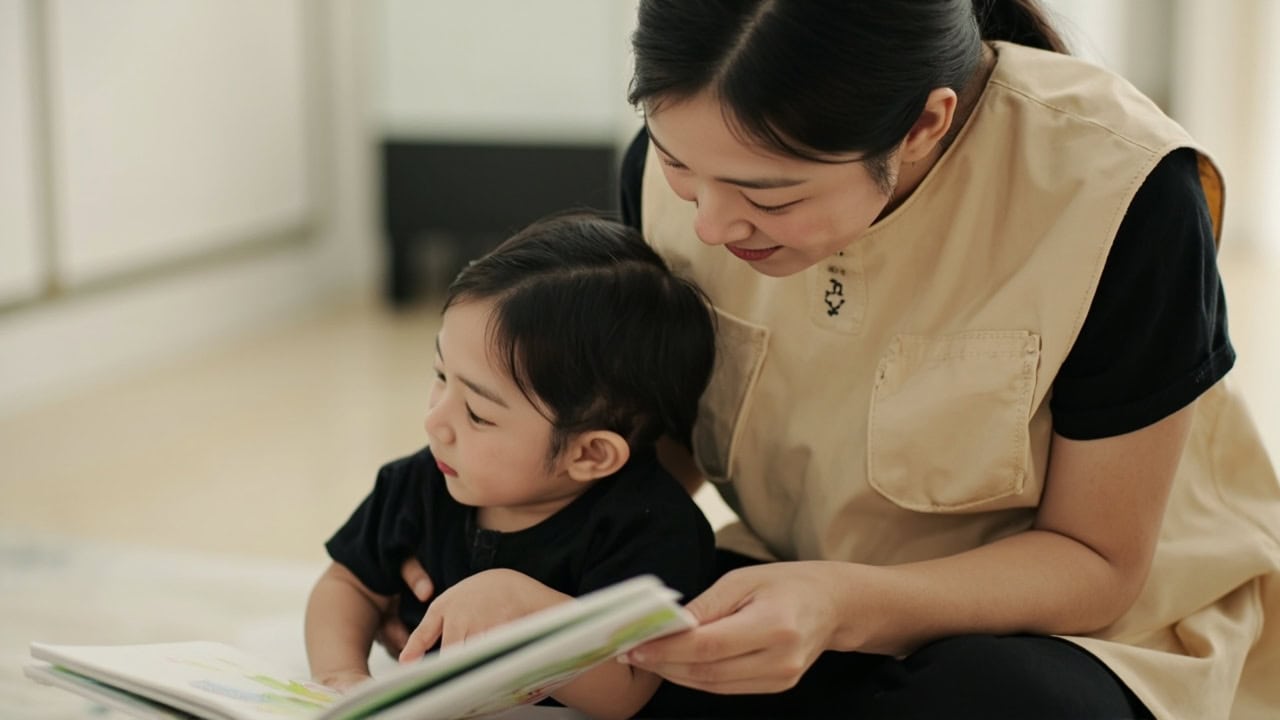
The image in this article was generated with AI for illustration. It does not show an actual EduNanny staff member, child or facility.
Before your next handover, write a small card with one purpose, two or three anchors, one flexible part and one response cue.