Raising a Village: Singapore’s Modern Approach to Family Care
The Feeling You Cannot Quite Name
You know the feeling. It arrives in the morning, when you kiss your child’s forehead and hand them to someone who is not their grandmother. It surfaces in family dinners when your mother asks, without accusation but with genuine bewilderment, why you have arranged other care when she is right here, ready and willing, having raised three children in this very same way. It lodges itself in your chest when your mother-in-law gently suggests that you do not trust her, that you are choosing strangers over family, that something has gone wrong in the way you are choosing to raise your child.
What you are experiencing is not a parenting failure. What you are experiencing is one of the most profound and specific tensions of modern Singapore life — the space where deep cultural expectation meets an honest recognition that what you want for your child may not look exactly like what your parents had.
Singapore has always understood the village concept intuitively. Multigenerational living, extended family involvement, the grandmother who is as much a caregiver as the parents themselves — these are not new ideas here. They are the foundation on which an entire culture was built. And it is precisely because this model has worked so beautifully for so long that it feels so difficult to question, even gently, even partially.
Somewhere between the well-meaning advice and the quiet family expectations, Singapore parents have been handed a story that goes like this: there is a right way to raise a child, and that way involves family, only family, and more family. Asking for anything else — professional help, structured care, expert support — is an admission that you do not trust your own family to do the job they have always done.
But consider what this story costs you. It costs you the peace of knowing that you have made a thoughtful, researched decision about your child’s care. It costs you the ability to see your parents’ involvement clearly — not as the sole source of your child’s early years, but as one essential voice in a chorus of care. It costs your child the experience of growing up in a family that is expanding its definition of village rather than defending a shrinking one.
Here is what we have learned from sitting with hundreds of Singapore families in this exact moment: the fear that you are choosing between family bonds and quality care is a false choice. It is a choice that has been presented to you so many times, in so many ways, that you have started to believe it is real. But it is not real.
What Children Actually Need
Children who grow up with grandparent love and expert professional care do not develop diluted attachments. This is not a comfortable platitude — it is what actual development looks like when children are given the gift of a truly integrated village.
Think about what happens in a week of your child’s life when grandparent care is the only option. The bond is real and deep, but it is also singular. One person carries the full weight of those early years. That person ages. That person tires. That person may live across the island, or may be managing their own health, or may need a break they feel they cannot take because the alternative is unthinkable.
Now think about what happens when your child has both. When a grandparent visits on the weekend and brings their specific, irreplaceable presence — their stories, their recipes, their way of holding a child that is shaped by a whole life lived before — that bond is not weakened by the existence of weekday care. It is strengthened.
The child returns to that grandparent not as a stranger being handed over, but as a child who has been flourishing, who has been seen and heard and held, who comes home full rather than depleted. The grandparent gets a child who is ready to play, ready to listen, ready to receive their particular brand of love with joy instead of anxiety. The relationship deepens precisely because it is no longer the only source of care. It becomes what it has always deserved to be: a chosen relationship, a treasured one, the kind of bond that happens when someone shows up not out of obligation but out of love.
Your child learns something precious in this arrangement. They learn that love is not a finite resource that must be parceled carefully between the people who matter most. They learn that family is not a competitive arena where one caregiver’s presence diminishes another’s. They learn, from the very beginning, that the world contains more than one kind of knowing, more than one kind of warmth, and that they are held by more people than they ever expected to need.
The Village Concept, Modernised
Every culture in every corner of the world has understood, intuitively and explicitly, that children are raised by communities, not individuals. What is new — what modern Singapore has made necessary — is the intentional, deliberate construction of that village in a context where families are increasingly mobile, where parents work demanding schedules, where grandparents may live across the island or across the causeway, where the old models of multigenerational living have given way to something more complex and more choiceful.
Your parents built their village with the resources available to them. For many of them, that meant living with or near extended family, sharing childcare across generations, relying on neighbours and community in ways that urban Singapore has made harder to sustain. They did what was right for their time. You are doing what is right for yours.
There are grandparents in Singapore who are not comfortable with professional care entering the family picture. Who feel that their competence is being questioned, that their relevance is being diminished, that the role they expected to play in their grandchild’s life is being taken by strangers. These feelings are real. They deserve to be named and respected, not dismissed or overridden.
But here is what we have seen happen again and again in the families we work with: when grandparents see what quality care actually looks like, when they see their grandchild thriving under a model that was built to honour family rather than bypass it, when they see that professional care has made their grandchild more present and joyful during their own time together — something shifts. The fear gives way to relief. The competition dissolves into collaboration.
And what emerges is something that looks remarkably like the village every child deserves — not a village of one, carrying the entire weight of early childhood on tired shoulders, but a village of many, each contributing what they do best, each valued for what they bring.
The village your child deserves is not a relic of the past. It is a structure you build, brick by careful brick, with the people and resources that are right for your family. And professional quality care is not the demolition of that village. It is one of the most important bricks you will ever place.
What Quality Childminding Looks Like
If you are going to invite someone into your family’s daily life — someone who will care for your infant during the hours when you cannot be there yourself — it matters what that care looks like. Not every arrangement that calls itself childcare is the same. Understanding the difference is not about perfectionism. It is about understanding what your child actually needs in those early years.
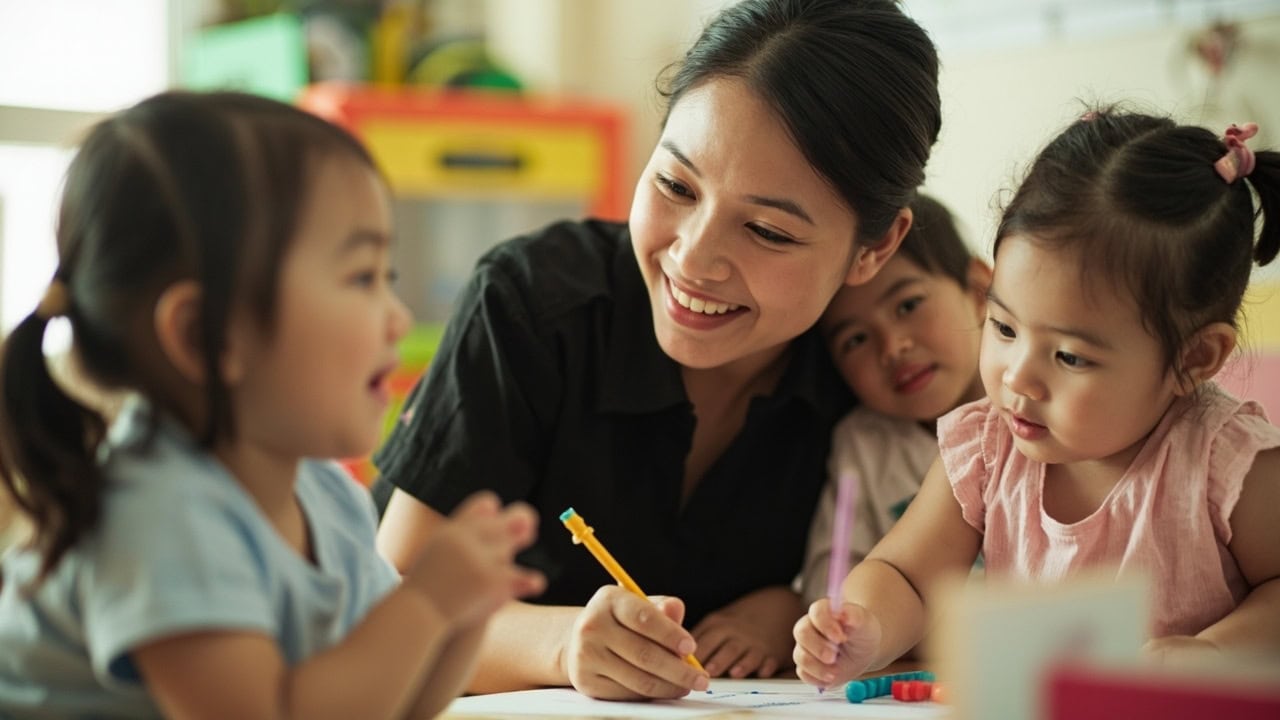
Infants and young children need consistent, responsive care. They need to be seen by someone whose attention is not impossibly divided. They need routines that feel safe and familiar. They need to be in environments where their family’s values — including cultural and dietary traditions — are respected and woven into daily life.
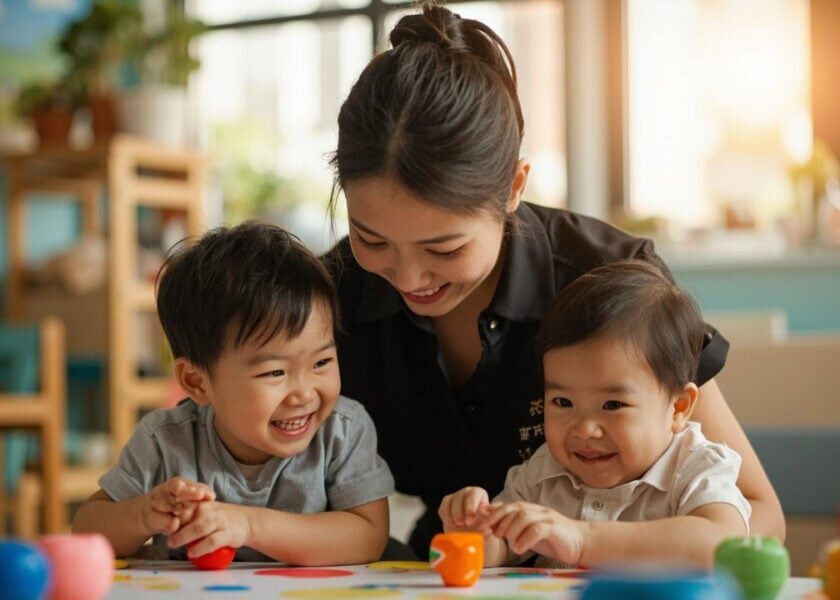
They need someone who sends you home at the end of the day not just with a sleeping baby, but with a photo and a small story, because you want to feel connected to the texture of their hours, not just reassured of their safety. Someone who asks about grandma’s weekend visit. Who celebrates when your mother brings specially made dishes for your child because they understand that this is not interference or competition. It is family. And family, in the way the best care models think about it, is always the point.
Quality care for infants is not a substitute for family. It is a complement that makes the family part of care stronger, not weaker.
Care Built Around Your Family
For families exploring their options, the choice often comes down to finding care that complements rather than replaces what parents and grandparents already provide. The best models of childminding are designed with this in mind — built to integrate with your family’s rhythms, values, and existing relationships rather than operate as a separate world apart from them.
This means the foods your child eats are guided by your preferences and your family’s food culture. The songs your child hears are the ones you have chosen. The routines that structure their day are developed in conversation with you, so that when your child moves between care and home — and between care and grandparent visits — they are not navigating a jarring shift between unrelated environments. They are experiencing a continuity of love and expectation that makes them feel safe and known, no matter who is holding them.
What Thoughtful Childminding Includes
- Structured within Singapore’s regulatory context — operating within frameworks designed specifically for Singapore’s context, built by people who understand what it means to raise a child in a HDB flat in Jurong, in a condo in District 9, in a landed property in Bishan
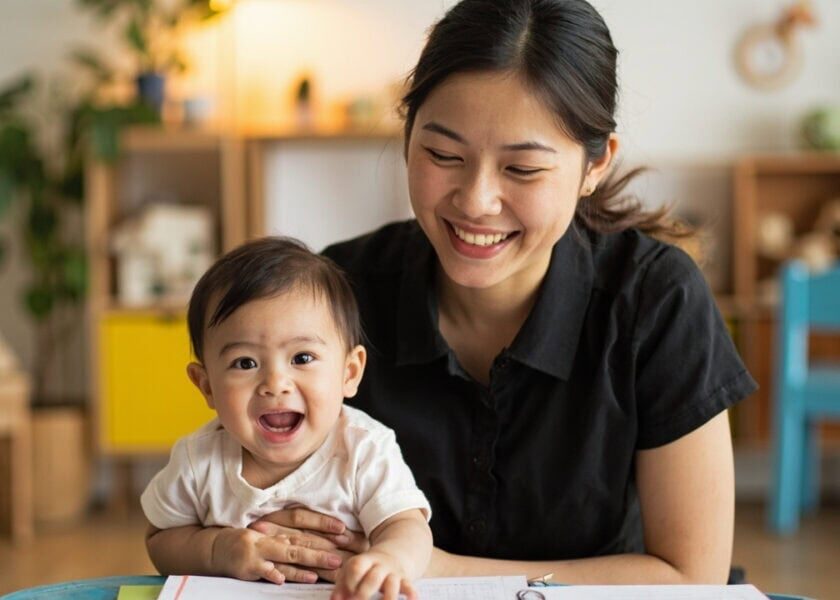
- Small caregiver ratios — caregivers work with up to one to three infants, so your child is seen, known, and held by someone whose attention is not divided beyond what developmental understanding tells us is effective
- Flexible care blocks — Monday to Friday, structured around the realities of working parents’ lives
- Accessible fee structures — designed with families in mind, working with Child Development Account and Baby Bonus savings where applicable
- Home-based or centre-based options — families can choose what fits their situation best
What matters most is that caregivers are vetted, trained, and supported within a structure that prioritises safety without sacrificing warmth. Families should feel connected to what is happening in their child’s day — not anxious about it.
The goal of every well-designed system is to give parents the peace of mind to focus on their work, their own wellbeing, their relationship with their partner, the many demands that modern parenting makes — and to come home at the end of the day to a child who runs to them with joy, because they have been well cared for and they know it.
Building the Village Your Child Deserves
Here is the thing we want you to carry with you, long after you leave this article. The guilt you feel is not irrational. It is the product of a culture that has told you, in a thousand subtle and not-so-subtle ways, that there is a right way and a wrong way to raise a child, that involving anyone outside the family is an admission of failure, that the best mothers and fathers are the ones who do it all themselves, who need no help, who sacrifice everything and call it love.
That story is a story. It is not the truth.
The truth is that the most loving thing you can do for your child is to build them a village. The most loving thing you can do for your parents is to let them be part of that village in a way that honours their capacity and preserves their joy. The most loving thing you can do for yourself is to stop believing that asking for help is the same as not being enough.
You have done the research. You have asked the questions. You have weighed what your parents gave you against what you want for your own child, and you have made a decision that comes from love, not fear. That decision is not a betrayal. It is an expansion. It is your family growing in a direction that still honours where it came from.
Your child will not remember every detail of their early days with the precision of a photograph. But they will carry, in their body and in their heart, the feeling of being loved. They will carry the sense that the world is a place where people show up for each other. They will carry the knowledge — not learned but felt, absorbed through years of experience — that they belong to a family that is bigger than one person, more resilient than any single relationship, capable of holding more love than any one of them could give alone.
When your child grows up with grandparent visits and professional care and a weekday rhythm that is structured and nourishing and kind, they are not experiencing something lacking. They are experiencing something rare and precious: a family that loved them enough to build something new without pretending the old was wrong. A family that chose quality without abandoning tradition. A family that understood, at the most fundamental level, that the village a child deserves is not a fixed inheritance from the past but a living, evolving architecture of care that you have the courage to construct.
The village your child deserves is not a perfect one. No village is. It will be messy and complicated and full of competing opinions and different ways of doing things and grandparents who spoil and caregivers who are still learning and parents who are exhausted and children who are radiant and whole. It will be human. It will be real. And it will be enough.
Thinking through your options?
EduNanny welcomes conversations with families who are exploring what thoughtful, development-oriented childminding could look like for their situation — no pressure, no commitment, just a thoughtful discussion about what your family actually needs.
Get in touch to start a conversation.