Make a One-Page Baby Story for Your 9-Month-Old
Turn a familiar routine into a short picture story with three clear moments, simple words and pauses that follow your baby’s attention.
A cup and spoon already belong to your everyday rhythm. We can turn that familiar sequence into a one-page baby story with three clear pictures, a few short words and enough pause for your baby to show us what catches their attention.
This guide is for a baby around nine months old. It is an illustrative shared activity, not a milestone checklist. At this age, pointing, varied sounds and copying movements or sounds are among the ways a baby may communicate. UNICEF’s nine-month play guidance suggests reading picture books, identifying what a baby notices and using pictures to make a simple story. Our part is to name what we see, leave room and follow the response without expecting a particular answer.
Choose one familiar sequence
Start with something your baby already sees or hears during the day. A cup and spoon, a favourite toy, a nappy being changed or a toy being put away can each provide two or three clear moments. Choose the sequence because it is familiar, not because you want your baby to learn a particular word.
Keep the story short enough to follow your baby’s changing attention. Within its first-year guidance, HealthHub notes that some babies may not concentrate on a book for long and recommends simple, short stories. This is a useful first-year principle rather than a description of every nine-month-old. Make each moment easy to see, say one short line and pause before moving on. HealthHub’s first-year brain development guidance also places books within everyday learning.
You do not need to complete every picture on your schedule. A look towards the page, a point, a sound or a turn away can shape what happens next. Treat a turn away as a cue to lower or close the page, not as a result you need to interpret.
Prepare a one-page picture prompt
UNICEF suggests board books and magazine pictures for making simple stories with babies. For a one-page version, use one board-book page or a piece of sturdy card. Draw, print or firmly attach clear pictures that show one simple sequence. Before beginning, check that no corner, image or covering can lift away. Do not add loose cutouts, detachable parts or small decorative pieces.
Use this preparation template:
- One familiar sequence: cup, spoon, finished.
- One clear image for each moment: the cup, the spoon and the spoon placed away.
- One beginning, one next step and one ending: three beats for this example, not a required format.
- One adult-held page: no pile of loose pictures beside your baby.
Leave some plain space around each picture so your baby can see it easily. Read through the sequence once before you begin and make the wording short and concrete. You are preparing a prompt, not writing a performance.
Tell the cup-and-spoon example
Place the three pictures from left to right. The first shows a cup, the second shows a spoon and the last shows the spoon placed away. Keep the cup and spoon pictures large enough to recognise, with enough space around them to keep the page visually clear.
Hold the page where your baby can see both you and the pictures. You can use the following wording as a worked example rather than a script your baby must follow:
| Story beat | What you say | What you do |
|---|---|---|
| Beginning | “First, the cup.” | Pause and look towards your baby. If they look at the first picture, say, “The cup.” |
| Next step | “Then the spoon.” | Leave a little space. If your baby points or vocalises, name the apparent focus: “The spoon.” |
| Ending | “The spoon is away. All finished.” | Show the last picture, then lower or close the page. Let the ending stand without asking for another word. |
If your baby looks back and reaches towards the page, keep it steady and respond to what they notice. You might say, “You see the spoon,” then pause again. If they turn towards the real cup or spoon, name the object and return to the routine if they remain interested. If their attention moves elsewhere, follow that instead of finishing the prepared sequence.
Let attention lead and keep the activity safe
The pause is the heart of the exchange. After saying, “First, the cup,” give your baby time to look, point, vocalise, reach or move away. A response can be as small as naming an object and waiting again.
- If your baby looks at a picture, name it: “Cup,” “spoon” or “finished.”
- If your baby points, acknowledge what they appear to indicate: “Yes, the spoon.”
- If your baby vocalises, stop speaking and leave room for another sound.
- If your baby reaches for a familiar object, respond briefly before deciding whether to return to the page.
- If your baby turns away, lower the page and end without adding another explanation.
At around nine months, UNICEF describes babies picking up small objects with their fingers and putting objects in their mouths. Close supervision is therefore essential whenever a baby handles picture materials. UNICEF’s nine-month safety and play guidance supports using small objects only under adult supervision.
Keep the page under your control, check that every image is secure before each use and stay close throughout the activity. End and remove the page if your baby mouths, pulls at or tears it, or becomes more interested in grabbing it than looking at it. On another day, use the same words without expecting your baby to remember the first exchange or reproduce a sound. A shared story can be complete after a look, a sound, a reach or simply the final picture. None needs to become the right answer.
Sources and further reading
- Your baby's developmental milestones at 9 months | UNICEF Parenting · www.unicef.org
- Stimulate Your Baby's First Year Brain Development · www.healthhub.sg
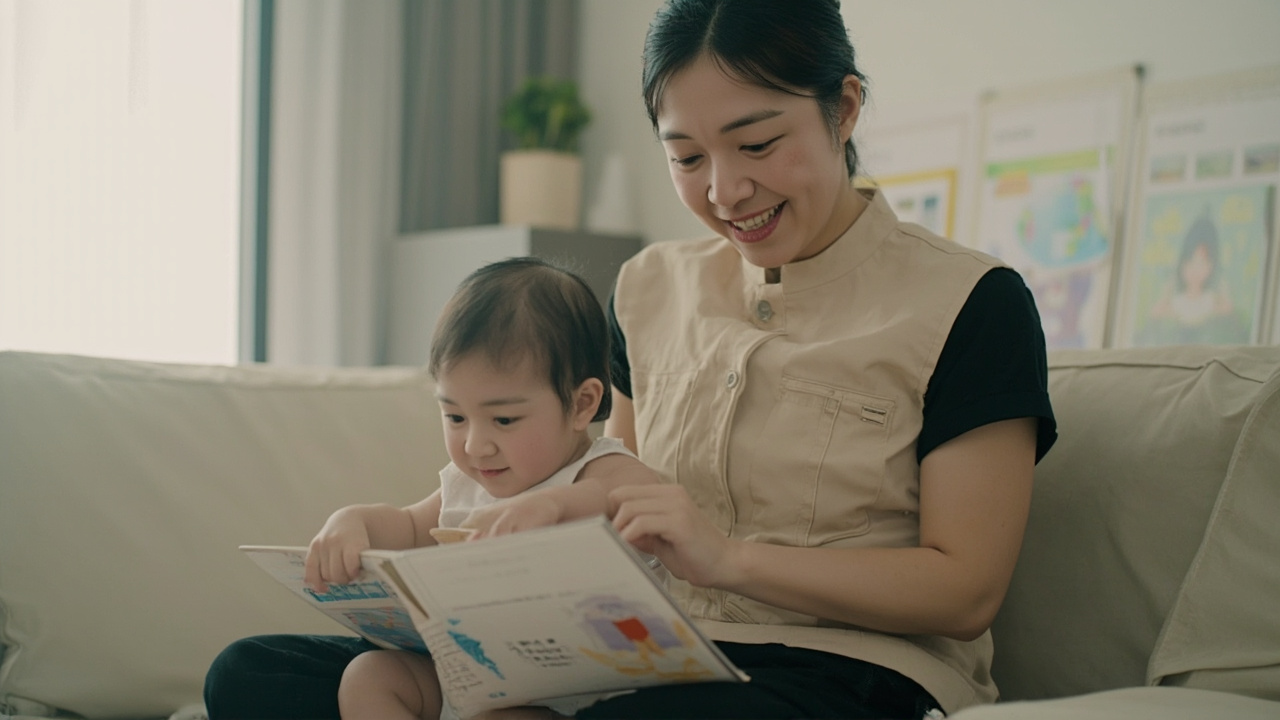
The image in this article was generated with AI for illustration. It does not show an actual EduNanny staff member, child or facility.
Put the finished page with the cup and spoon, then bring it out during the next calm cup-time moment when your baby is ready to look.