How to Know Your Childcare Choice Was Right in the Months Ahead
The Question Every Singapore Parent Carries (But Rarely Asks Out Loud)
There is a question that lives somewhere beneath the surface of every childcare decision you make. It is not the question you ask during centre tours or in conversations with potential caregivers. It is quieter than that. It surfaces at bedtime, in the car, in those rare still moments between work and family.
It sounds something like this: Will this choice still be right?
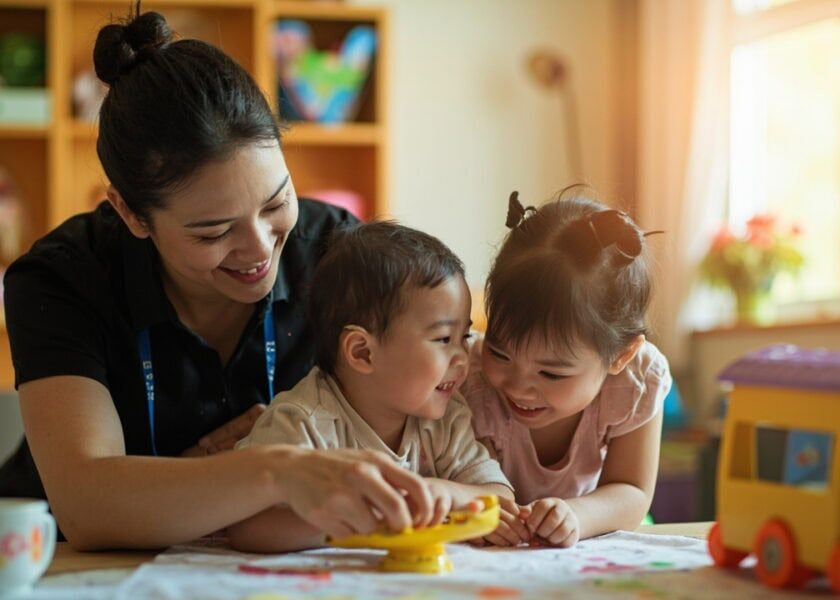
Not right in the first week, when newness smooths over uncertainty. Not right on the first morning, when adrenaline and logistics carry your family through. But right in twelve months, when your child has grown into someone you barely recognize from those early days. Right when the baby who needed constant holding has become a toddler who runs toward the door, who sings fragments of songs learned in care, who has opinions about which shoes to wear and which caregiver to hug first.
This is the question EduNanny Singapore was built to answer. And it deserves more than a checklist of features or a tour of facilities. It deserves a conversation about time.
The Quiet Evidence of Quality: How Change Actually Unfolds
Here is what no one tells parents about the early months of quality childcare: the changes are not dramatic. There is no single moment when everything shifts. Instead, there is a gradual unfolding, a slow accumulation of small evidences that something is working beneath the surface.
Consider what unfolds over time in genuine quality care:
- A child who used to cry at every transition now settles more quickly
- A child who barely made eye contact with unfamiliar adults now watches new people enter the room with curiosity instead of fear
- A child who communicated in fragments begins to narrate, to point, to bring small treasures home and say their names with pride
These are not milestones that arrive with fanfare. They arrive quietly, often at the dinner table, when a parent realizes their child just said a sentence that did not exist in their vocabulary three months ago. The source of that sentence is not home. It is somewhere else. It is somewhere that has been shaping this small person in ways that parents could not replicate alone.
The Compounding Effect: Why Sequences Matter More Than Moments
Quality childcare does not produce results in isolated moments. It produces results in sequences. It builds upon itself:
- Month one: Trust is established between caregiver and child
- Month four: That trust becomes the foundation for the independence being explored
- Month seven: The language modelled in earlier months structures how the child thinks and expresses
- Month nine: The social rhythms learned become the emotional regulation available in challenging moments
Parents who have walked this path often describe it the same way: they did not notice the change as it happened. They noticed it when they looked back. They scrolled through phone galleries and found photos from a year ago, barely reconciling that chubby, uncertain, crying infant with the articulate, confident, joyful child now standing before them.
In that moment of recognition, they understood something no tour, no brochure, no first-day reassurance could have given them: the care worked. Not because it was perfect, but because it was consistent. Because it was present. Because it adapted as the child grew.
Service or Partnership: Why the Distinction Changes Everything
This is where understanding the difference between a service and a partnership becomes essential for Singapore families navigating their options.
A Service Is Transactional
You exchange a fee for a function. The relationship is defined by what happens during scheduled hours. When the hours end, the relationship ends. There is nothing wrong with services. Children and families need them. But a service is static. It delivers the same offering regardless of how your child changes.
A Partnership Is Adaptive
A partnership implies growth. It implies that both parties are changed by the relationship over time, that the caregiver learns the child as the child learns the world, that what worked at six months evolves into something else at eighteen months and something different again at two years.
Consider this example: a caregiver who knew how to soothe a colicky three-month-old must learn, as that same child approaches toddlerhood, that soothing now means offering choices, setting limits with warmth, giving the child room to practice frustration without losing the safety of connection. This is not a skill that can be scripted in a training manual. It develops through presence, through attention, through months of watching a child become.
The most remarkable childcare relationships are not static. They are adaptive. They respond to the child as the child responds to the world.
The Child as Evidence: How You Will Know the Care Was Right
Parents in Singapore often ask how they will know whether their childcare choice was the right one. Here is the honest answer: you will know by watching your child.
Not in the first week, when everything is new and uncertain. But in the sixth month, when your child runs toward the caregiver with genuine joy. In the ninth month, when your child uses words or signs that clearly came from somewhere beyond your home. In the twelfth month, when your child navigates a social situation with a confidence that could not have been there a year ago.
A child who has been in quality care does not simply have different skills. They have a different relationship with the world:
- They trust it more
- They approach it with curiosity rather than wariness
- They have learned that people beyond their parents can be relied upon
- They know that routines create safety
- They understand that exploration is supported rather than discouraged
These are not achievements that can be measured on a chart. They are the quiet evidences that accumulate when a child has been in a place where attention was genuinely paid.
The child becomes the proof. And the proof, when it arrives, is unmistakable.
EduNanny Singapore: Built for the Long View
When the team behind EduNanny considered how to serve Singapore parents, they did not start with logistics. They started with a question: what do children actually need over time, and what would it take to provide that consistently, responsively, in a way that grows with the family?
The answer they arrived at was not a single model but a recognition that different families need different pathways. Those pathways share certain non-negotiables:
- Care ratios that allow genuine attention: EduNanny holds to a maximum of three infants per caregiver, ensuring each child receives the focused attention that developmental science and parental intuition alike confirm matters enormously in the early years
- Consistency of caregivers: This allows for genuine relationship to develop, which is the foundation for all the compounding effects described earlier
- Communication structures that let parents witness what they cannot see during work hours
- Care blocks that allow real daily rhythms rather than rushing transitions
- Fee structures designed to be accessible for families making real financial calculations alongside emotional ones
Grounded in Recognized Standards
EduNanny participates in the ECDA Childminder Pilot, offering both home-based care and community pathways that give families real choices grounded in recognized standards. This means it is not operating in a vacuum. It operates within a structure that has standards, accountability, and pathways for families who want the assurance of oversight without sacrificing the intimacy of home-based care.
For families who prefer centre-based community settings, EduNanny offers those pathways as well, understanding that the word “family” encompasses many shapes and circumstances.
Financial Accessibility for Singapore Families
The practical realities matter when you are calculating how to sustain quality care over the months and years it takes to do its work:
- Monday to Friday care blocks
- Fee structures that take into account what Singapore families actually earn and spend
- Ability to use Child Development Accounts and Baby Bonus funds for eligible services
Communication as Partnership, Not Surveillance
EduNanny’s approach to transparency includes communication protocols and monitoring measures where deployed, designed not as surveillance but as partnership. It is for parents who want to know, who have a right to know, and who will be better partners themselves when they are informed rather than anxious.
Thomas: Support Beyond the Hours of Care
EduNanny offers Thomas, an AI chatbot that reflects the same thinking behind everything else they do: the recognition that modern parents are managing enormous complexity, and that providing accessible, reliable support is not a luxury but a necessity.
Thomas is there when you have a question at ten in the evening, when you cannot remember whether a certain milestone is on track, when you need guidance about sleep or feeding or development and your usual sources have given you conflicting information. It is not a replacement for professional medical advice. It is a companion for the in-between moments, extending EduNanny’s care philosophy into the full texture of family life.
What to Look For: A Practical Guide for Choosing Infant Care in Singapore
There is a fear that childcare is temporary. That it is a placeholder. That the choice made today is a best guess, and that the future will reveal the limitations of the present decision. This fear is not irrational. It is, in fact, a sign of how seriously you take the responsibility of raising another human being. The fear exists precisely because the stakes are real.
The question is not whether the childcare will be perfect. Perfection is not available to any family, any caregiver, any institution. The question is whether the childcare will be responsive: whether it will notice, whether it will adapt, whether the people caring for your child will be paying attention not just to what the child needs today, but to who the child is becoming.
When you visit a potential childcare setting, use these observations as a framework rather than a checklist:
Observe the Caregivers
- Do they kneel to a child’s level when speaking?
- Do they respond to children who are distressed with warmth or with efficiency?
- Do you see genuine attention or performative engagement?
Consider the Ratios
- How many infants per caregiver?
- How does that ratio change during different times of day?
- Can each child receive genuine individual attention?
Ask About Consistency
- Will my child have the same primary caregiver over time?
- How is continuity managed when caregivers are ill or leave?
- What is the turnover rate?
Inquire About Communication
- How will I know what my child did during the day?
- What happens if my child has a difficult day?
- How is information shared between caregivers and parents?
Assess the Adaptability
- How does the programme change as children grow and develop?
- Can caregivers describe how their approach would differ for a six-month-old versus an eighteen-month-old?
- How do they handle developmental transitions?
Your Child Will Show You
The first thousand days of a child’s life are not just a marketing phrase. They are a reality. They are the days when the architecture of the brain is being built, when the patterns of attachment are being laid down, when the relationship between a child and the world is being established.
This is not said to frighten parents. It is said to honor what you already sense. You know these days matter. You feel it. And that is why the question about the future lives so persistently in your mind.
There is a moment that parents often describe when they look back on their child’s early years. It is the moment when they realize that the child they have today was shaped by experiences they could not have provided alone. By people who were not family but became significant. By places that were not home but felt safe. By routines that were not their own but gave their child structure.
In that moment, parents often feel something complicated. Gratitude, certainly. Pride in their child’s growth. But also a kind of release. The release of having made a choice that proved itself over time. The release of having trusted, and having that trust rewarded.
The parents who get the answer they hoped for are not the parents who found perfect care. They are the parents who found attentive care. They are the parents who found caregivers who noticed, who adapted, who took seriously the privilege and responsibility of being part of a child’s formation.
EduNanny Singapore exists to walk this path with families. Not to replace them. Not to diminish the irreplaceable role of parents. But to be present, consistent, adaptive, and attentive in the hours when parents cannot be.
To offer a ratio of care that makes attention possible. To offer communication that makes trust sustainable. To offer a structure that is affordable, accessible, and grounded in standards that parents can rely upon.
And ultimately, to offer something that cannot be packaged or sold but can only be lived: the commitment to treat every child in their care as the person they are becoming, not the task they need to complete.
Your child will show you, in the months and years to come, whether the care was right. Not because it was perfect, but because it was present. Because it was paying attention. Because it was growing alongside your child, as good care must.
That is what EduNanny Singapore is built to offer. And that is what they are honored to walk alongside you toward.
If you are ready to explore whether EduNanny Singapore is the right developmental partnership for your family, you are warmly invited to reach out and begin a conversation. We would be glad to answer your questions and help you understand the pathways available.