
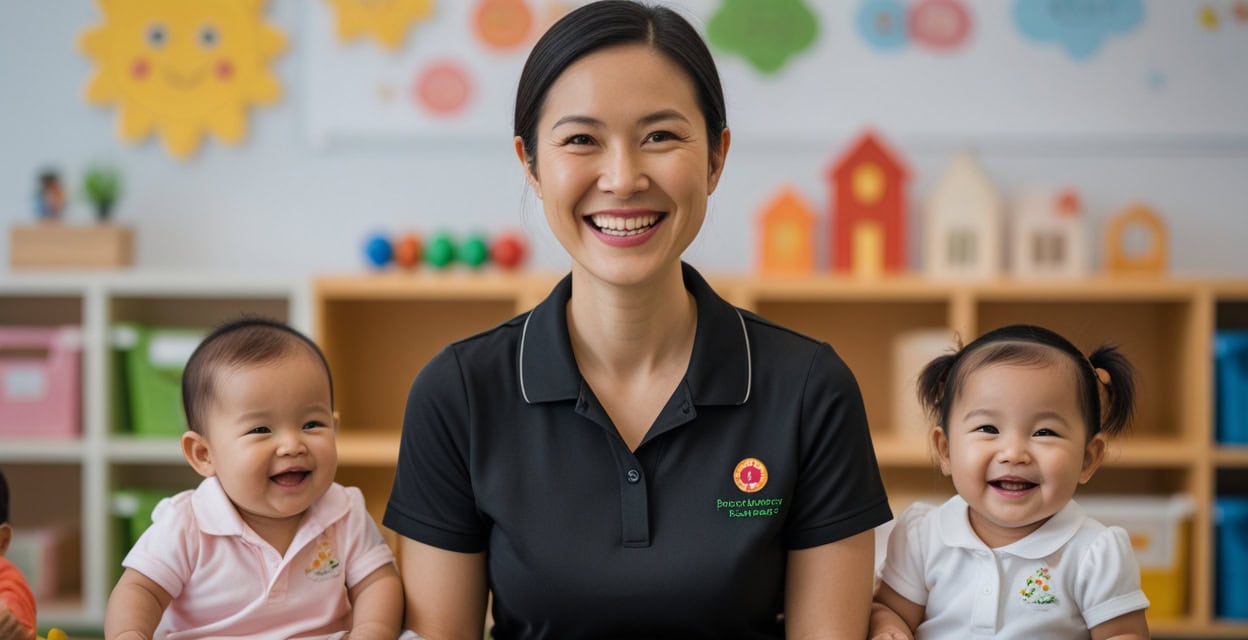
A Public Covenant for the First Thousand Days in Singapore and the 1 to 3 Attunement Model for Safe Joyful Infant Care

Introduction: A Public Covenant for Singapore’s First Thousand Days
Thank you for gathering to consider a daily discipline that is humble in its moment, yet profound in its impact. As an EduNanny advisor and steward of a shared belief, I invite you to view the first thousand days not as a private sprint but as a public covenant. When an infant breathes steadily in sleep, when tiny hands reach for faces with trust, when a caregiver’s response is warm, timely, and sure, a nation’s future is being shaped in real time. This article expands the speech you heard, offering practical, field-tested guidance for parents, childminders, educators, and policymakers who aspire to turn vision into daily practice.

Beacon One: The 1:3 Dialogue
A true 1:3 ratio is not a number—it is a conversation made possible. With three infants, a childminder can notice micro-signals and build a secure, responsive bond that underpins development. Here is how to operationalize this beacon in everyday life:
- Observe before you act: Pause 2–3 seconds to register cues—eye flutter, a sigh, a startle—and name what you notice to yourself and the team (“She’s shifting to a lighter sleep.” “He’s signaling hunger but not quite ready for a bottle.”).
- Scaffold with just-enough challenge: Introduce a tiny problem that invites exploration (a safe rattle, a texture subject to touch, a block tower) and wait for the infant to attempt a solution before intervening.
- Preserve unhurried transitions: Use calm language during feeding, waking, and diapering. Narrate, label senses, and offer choices within capacity (“Would you like to hold the scarf or the rattle while we wait for a nap?”).
Practical examples you can apply now:
- Attunement routines: Gather infants at eye level, maintain gentle touch, and acknowledge each infant by name as you switch activities.
- Language-rich moments: Use serve-and-return language during routine tasks (diaper changes, spoon feeding, dressing) to expand vocabulary and social understanding.
- Independence within security: Allow safe, self-initiated exploration with caregiver scaffolding—offer choices, then step back to let the infant lead within safe boundaries.
Educational anchor: this moment’s discipline aligns with Montessori’s respect for independence, Pikler’s free movement, Vygotsky’s guided scaffolding, and Bowlby’s secure base. It looks simple; it is precise care practiced consistently until secure patterns become character.
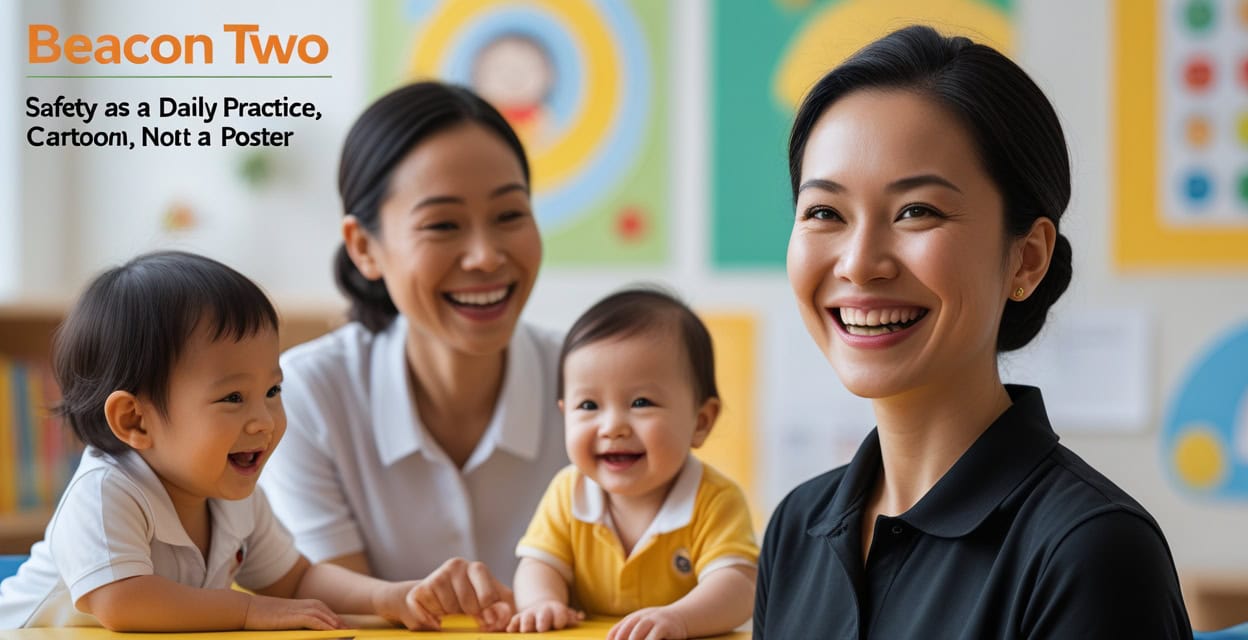
Beacon Two: Safety as a Daily Practice, Not a Poster
Safety must be woven into every moment of the day. A layered safety architecture makes predictable care possible and trustworthy for families.
- Spaces and layout: Modern, calm environments with clear sightlines; defined zones for sleep, feeding, play, and quiet time; anchored furniture and soft-fall surfaces to reduce injury risk.
- Protocols that matter: Safe sleep (back to sleep, firm mattress, no loose items), meticulous bottle hygiene and labeling, documented allergy plans, pacing for feeding to prevent overfeeding, consistent routines that lower cortisol levels.
- Training you can rely on: Infant CPR/AED, choking response, hazard mapping, daily sanitation cycles, five moments of hand hygiene, monthly emergency drills.
- Transparency you can trust: Innovation CCTV and real-time updates so parents feel connected and informed.
- Proximity for consistency: Centre-based and home-based care across neighborhoods to minimize transit time and maximize secure attachment.
Practical safety routines you can implement this week:
- Publish a simple daily safety checklist for staff and families, including sleep position checks and bottle-label verification.
- Run a monthly mock drill (no children present) to refresh steps for choking, fever, or allergic reactions.
- Use color-coded zones (red for high-safety tasks, yellow for transitions) to help new staff stay oriented.
Safety done well fades into the background; it becomes the reliable ground on which joyful learning happens.

Beacon Three: Joy as a Developmental Nutrient
Infant happiness isn’t happenstance; it is cultivated as a core practice. We measure joy with the same care a musician tunes an instrument—rhythm, tone, and relationship power growth.
- Sensory richness without overload: Balanced exposure to light, texture, nature sounds, human voices, and open-ended objects that invite touch and discovery.
- Movement freedom and safe exploration: Daily floor time, supervised outdoor exploration, and caregiver-facilitated positions that support natural motor progression.
- Language as music: Regular singing, responsive back-and-forth talk, and intentional bilingual exposure that respects English and Mother Tongue without haste.
- Play states that build executive function: Peekaboo for object permanence, gentle turn-taking practices, and structured repetition to bolster mastery and self-regulation.
Actionable tips for parents and caregivers:
- Schedule playful, brief “growth bursts” twice daily where infants can explore at their own pace with clear, responsive cues from the caregiver.
- Use bilingual routines consistently—sing songs in both languages, narrate actions in both languages, and introduce new words through sensory experiences.
- Design calm, engaging transitions between activities (e.g., “We’re washing hands, then we’ll read a book together”).
Joy and learning are not rivals; joy is the energy that powers curiosity, memory, and resilience.

Beacon Four: The Professional Childminder—A Trusted Civic Role
We affirm the childminder as a professional whose craft serves the public good. The EduNanny pilot invests in training, career pathways, community embedding, and dignified labor.
- Training and supervision: Ongoing coaching, structured observation, and reflective practice grounded in child development science.
- Career pathways: Apprenticeship-to-mentor routes that expand opportunity and elevate the standard of practice.
- Community embed: Minders are neighbors and citizens; their work strengthens neighborhoods and safety nets.
- Dignity of labor: A Maximum Employment Mandate that creates meaningful, local jobs—recognizing the weight of caregiving as civic work.
Practical guidance for families selecting a caregiver:
- Ask for a clear training record and a demonstrated plan for ongoing development, including reflective practice journals or video reviews of caregiving moments.
- Request routine-based observations: “How do you respond when a baby cues hunger midway through a bottle?”
- Inquire about safety drills, emergency contacts, and how the caregiver communicates during and after drills.
The purpose of childminding is not to “watch babies” but to steward attachment, development, and culture. It is a role of consequence in every neighborhood.

Beacon Five: Trust Made Visible—Parents as Partners
Trust is the atmosphere in which infants thrive. We make partnership visible through transparency, collaboration, and adaptive support.
- Live transparency: Real-time CCTV access and concise daily notes that document feeds, sleeps, diapers, moods, and milestones.
- Two-way planning: Home routines inform care plans, and care plans inform home rhythms—consistency reduces infant distress and parental anxiety.
- Distance support: Tele-coaching, routine design, and developmental guidance to empower home caregiving when needed.
- Accessibility: A range of options (centre-based, home-based) with affordable pathways and eligible subsidies to fit diverse family needs.
Practical steps to foster parental partnership:
- Establish a daily handover format, with a 60–90 second verbal briefing and a one-page written update highlighting cues, moods, and tiny wins.
- Agree on a shared language for routines, so home and care settings speak the same developmental language.
- Set up a short weekly video check-in to review progress, celebrate milestones, and address concerns early.
Trust is the atmosphere in which infants thrive. We build it in daylight, with clear communication and shared purpose.

What This Looks Like, Day to Day
Beyond philosophy, EduNanny translates principles into routine practice. Here is a practical snapshot you can adapt to your family’s rhythm:
- A morning welcome that prioritizes attunement over paperwork: soft eye contact, calling each child by name, and a quick comfort and health check.
- A rhythmic day paced to each infant’s cues, not a stopwatch: protected naps, responsive feeds, and unhurried exploration.
- Micro-teaching woven into care: language that names experiences and encourages curiosity—“I’m lifting you gently,” “This towel feels warm and soft.”
- Calm closings with handover summaries: concise notes that set evenings up for clarity and closeness, avoiding guesswork.

Why EduNanny is Different—At a Glance
- Excellence and quality validated through rigorous training, coaching, and transparent practice.
- Centre-based and home-based options islandwide, with flexible proximity to families’ lives.
- Distance support for coaching and continuity at home when needed.
- Convenience: Monday–Friday, 7 a.m.–7 p.m., with pram-friendly access and modern layouts.
- Affordability from $33/day with CDA/Baby Bonus eligibility (terms apply).
- 1:3 infant ratio enabling genuine responsiveness and safety.
- Innovation CCTV and real-time updates for trust and partnership.
- A National Social Initiative under the ECDA Childminding Pilot with a Maximum Employment Mandate.
- Operated by EduNanny by BUTLER: learn more at EduNanny.com or Childminding.EduNanny.com.

A Short Story of What’s Possible
Picture a Tuesday in Toa Payoh. Three babies arrive within a twenty-minute window. One is ready for a feed; one needs a nap; one is alert and social. The childminder kneels to eye level, narrates each transition, and staggers the care so no infant waits in distress. The room hums quietly. A lullaby begins. Hands are washed and dried with care. A soft rattle appears, then disappears when attention wanes. A tummy-time mat beckons for the high-energy child, while another settles into a bassinet—on the back, safely tucked. A parent checks the live feed between meetings, sees her son’s slow-blink calm, and exhales. This is the ordinary miracle EduNanny makes routine: care that feels like tomorrow already belongs to today.

How Infant Care Becomes a Public Promise
- Pedagogy as curriculum: Caregiving is a living curriculum—observe, respond, release. Independence grows when support respects a child’s pace and curiosity.
- Safety as design: Predictability and visibility shape a safety culture where accidents are exceedingly unlikely to rehearse.
- Development as calibration: Challenges are calibrated to be within reach of each child, not beyond capacity or timing.
- Happiness as asset: Calm, joyful early experiences support self-regulation, attention, and early learning.
- Purpose and profession: Childminders become civic professionals whose work strengthens families and neighborhoods.

Concluding Call: Who, What, When, Where, and How Childminding Matters
Who: Infants, parents, and the professionals who stand with them. Every caregiver is a culture-bearer; every baby is a citizen-in-the-making.
What: Childminding that is evidence-led, relationship-centered, and transparent—safety and joy braided tightly.
When: The first thousand days, and every workday from 7 a.m. to 7 p.m. when families need support most.
Where: In homes and centers across Singapore, islandwide, with distance support when needed.
How: Through a 1:3 ratio that enables attunement; through modern layouts, rigorous safety protocols, and transparent communication; through affordability and access; through a national pilot that dignifies care work and strengthens social fabric.

Let Us Make This Promise Visible
Visit EduNanny.com or Childminding.EduNanny.com to speak with our team, explore centre-based, home-based, and distance supports, and discover how EduNanny can fit your family’s rhythm. Under the ECDA Childminding Pilot, with a Maximum Employment Mandate and eligibility-based CDA/Baby Bonus payments, we are here Monday through Friday, 7 a.m. to 7 p.m., islandwide.
Conclusion
Hold a baby well, and you hold tomorrow steady. EduNanny by BUTLER translates a bold vision into daily, practical care that respects attachment, safety, joy, and professionalism. By embracing 1:3 attunement, layered safety, developmental joy, professional caregiving, and transparent parental partnership, we create a public promise—one that makes the first thousand days a foundation Singapore can stand on, together.
Ready to take the next step? Reach out, observe an EduNanny session, and begin your family’s journey toward consistently excellent infant care that is near, affordable, and scientifically grounded.
Call to action: Explore EduNanny.com and Childminding.EduNanny.com today, join our pilot, and become part of a movement that redefines early childhood care for Singapore’s families.
Note: All program details, eligibility, and pricing are subject to ECDA policies and prevailing terms. Please verify current terms during outreach.
[#EduNanny, #InfantCareSingapore, #First1000Days, #AttachmentBasedCare, #FamilyCenteredCare]