

EduNanny Singapore A Living Promise of Safe Joyful Infant Care and Family Partnership

EduNanny Singapore: A Living Promise for Infant Care, Early Development, and Family Partnership
Good evening, friends, families, childminders, and partners in the flourishing of Singapore’s youngest citizens. EduNanny is not merely a logo or a location; it is a living promise. It is a childminding standard and service designed to align with Singapore’s real rhythms—centre-based and home-based options, islandwide availability, Monday to Friday, 7am to 7pm; a consistent 1:3 infant ratio; modern, observation-friendly layouts; secure CCTV for transparent partnership; and affordability that begins from $33 per day, payable via CDA/Baby Bonus. Operated by EduNanny by BUTLER and participating in the ECDA Childminding Pilot as a national social initiative with a maximum employment mandate, EduNanny dignifies care work as part of dignifying childhood. This article expands the vision with practical guidance for parents, caregivers, and communities who want to put infant care and early development on solid, actionable foundations.
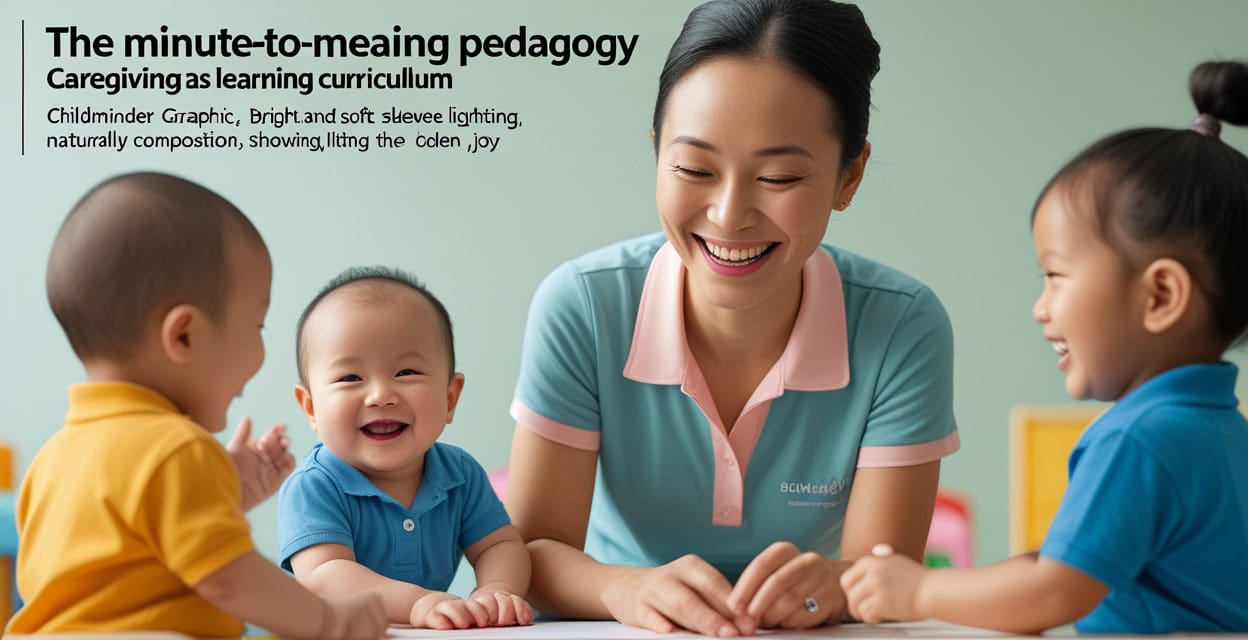
The Minute-to-Meaning Pedagogy: Caregiving as Curriculum
At the heart of EduNanny’s practice is the belief that “what we do during caregiving is what infants learn about the world.” This is not merely philosophy; it is a daily practice that translates into precise routines, responsive interactions, and measurable growth. Here is how parents and caregivers can translate this pedagogy into real-life outcomes.
- Attentive routines as first lessons: Treat diaper changes, feeds, and transitions as one-to-one learning moments. Narrate what you are doing, offer small choices (e.g., “Would you like to hold the spoon or the plate?”), pause for cues, and invite participation. This builds trust and early language foundation.
- Play arcs, not playlists: Design short, child-led explorations that cultivate attention, curiosity, and problem-solving. For example, create light “arcs” such as a simple stacking activity that transitions to rolling a ball and then to reaching for a peekaboo moment.
- Language that lands: Speak with clear, real words, at a comfortable pace, face-to-face. Use descriptive language about actions and feelings, and respect home languages to support identity and cognitive development.
- Observation over interruption: Observe for cues, name emotions, and scaffold learning before directing. This approach strengthens autonomy and confidence, helping infants become authors of their own beginnings.
- Practical home integration: Parents can reinforce the pedagogy by maintaining consistent routines at home—predictable bedtimes, ritual “hello/goodbye” moments, and shared storytelling that mirrors on-site practices.
In a 1:3 ratio, these micro-moments become predictable pathways to robust development. Small circles of care enable infants to become confident, capable explorers of their world.

Five Lines of Safety: People, Place, Practice, Proof, Partnership
Safety is not a poster on a wall; it is a living culture. EduNanny builds safety through five deliberate lines that families can scrutinize, practice, and sustain together.
- People: Carefully selected, trained, and supervised childminders who understand infant cues, safe sleep, choking prevention, and positive touch. Ongoing coaching ensures skills evolve with practice.
- Place: Modern layouts with sightlines, separate sleep and play zones, quiet corners for rest, and controlled light, sound, and temperature. Space is designed to support calm exploration and safe movement.
- Practice: Health checks at arrival, safe sleep protocols, accurate feeding logs, allergy and anaphylaxis plans, medication records, and emergency drills to ensure preparedness without chaos.
- Proof: Secure CCTV for oversight, digital attendance and handover records, and daily notes that reflect actual events to the minute. Transparency is a pillar of trust.
- Partnership: Families are safety co-authors. Regular routines, medical needs, immunization schedules, and any at-home changes are communicated and aligned with care plans.
Safety means a sense of calm that supports curiosity. When caregivers and families share calm, infants thrive and learning accelerates.
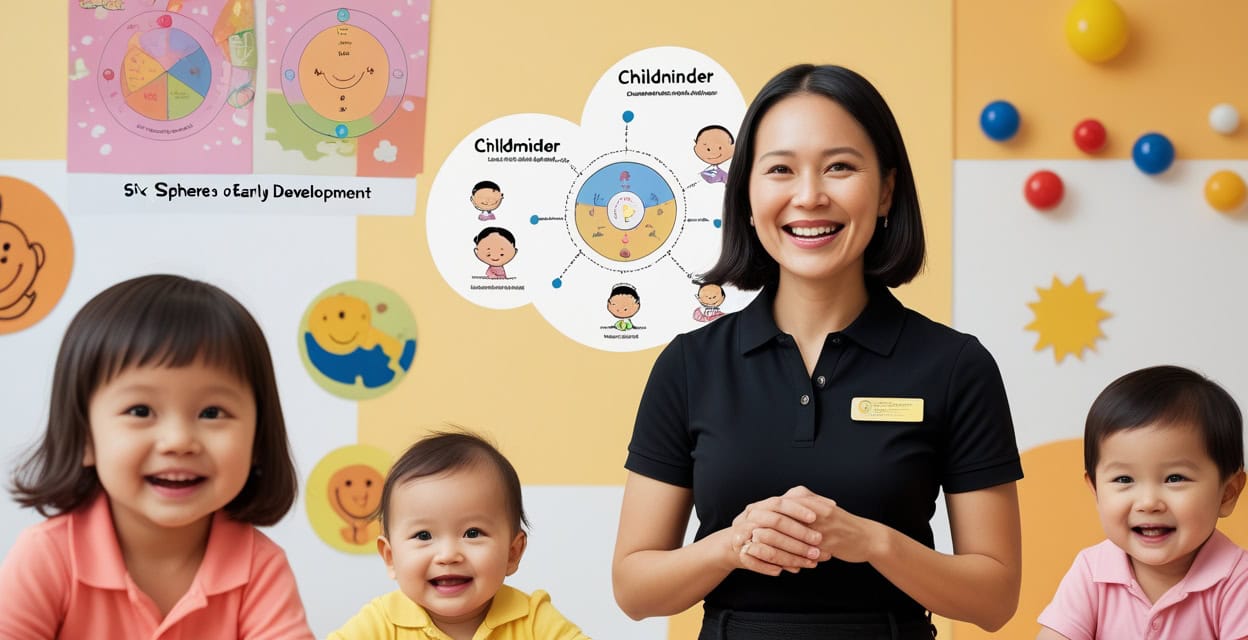
The Six Spheres of Early Development: A Whole-Baby Map
The first thousand days are rapid, dynamic, and interconnected. EduNanny plans around six spheres to support whole-baby development with individualized attention within a communal rhythm.
- Attachment and regulation: Warm, predictable responses to cues; soothing followed by teaching self-regulation in gentle steps.
- Sensorimotor mastery: Encouragement of tummy time, safe exploration of grasping and reaching, rolling, and early mobility with clear boundaries that protect safety.
- Language and social communication: Turn-taking “conversations,” songs with gestures, naming feelings, and reading facial expressions as a foundation for literacy.
- Cognitive discovery: Cause-and-effect play, basic problem-solving, early categorization, and age-appropriate challenges without rushing.
- Health and rest: Nutrition aligned with family choices, paced feeding, protected nap windows, clean environments, and diligent hygiene practices.
- Identity and belonging: Respect for temperament, family culture, and individual rhythms; smooth, patient transitions that honor attachment.
EduNanny’s small-group design ensures each baby receives an individualized day within a communal rhythm—personalized care that remains social and developmentally appropriate.
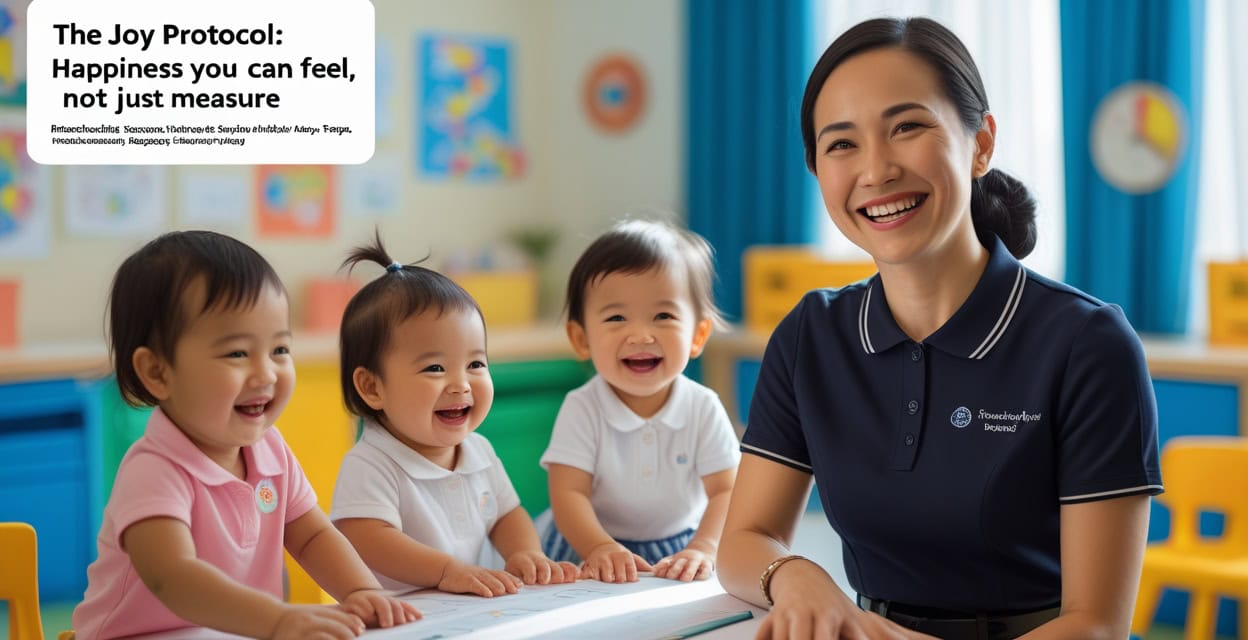
The Joy Protocol: Happiness You Can Feel, Not Just Measure
Joy in infancy is a real signal of healthy development. It arises when the environment is emotionally legible and paced with kindness. Practical strategies for fostering joy include:
- Predictable greetings and unhurried goodbyes: Create rituals that signal security and continuity.
- Daily outdoor light and movement: Where possible, outdoor time acts as a mood-setter and supports physical well-being.
- Sensory invitations rather than overstimulation: Use natural textures, warm colors, and gentle human voices to invite exploration.
- Music and rhyme with gentle repetition: Familiar songs build security and language rhythms.
- Quiet spaces for rest: Provide calm corners that permit respite from sensory load, allowing nervous systems to regulate.
Joy is tracked through engagement, recovery from distress, and ongoing secure attachment, but the core aim is to cultivate environments where delight appears naturally when a trusted adult is present.
The Childminder’s Civic Craft: A Profession of Public Importance
Childminding is a public trust and must be treated as a professional pathway with real dignity and support. EduNanny emphasizes:
- A professional pathway: Structured training, mentoring, observation cycles, and leadership routes to retain skilled caregivers who thrive in the role.
- A shared code of dignity: Respect for infants as persons, parents as partners, and colleagues as co-educators.
- Community embeddedness: Near-home options reduce commute stress and improve continuity of care for families and caregivers alike.
- Public-minded employment: A national-standard platform that uplifts care work and creates meaningful, purpose-driven jobs.
When caregivers are valued, the care they provide becomes a national asset—an investment in the city’s future.
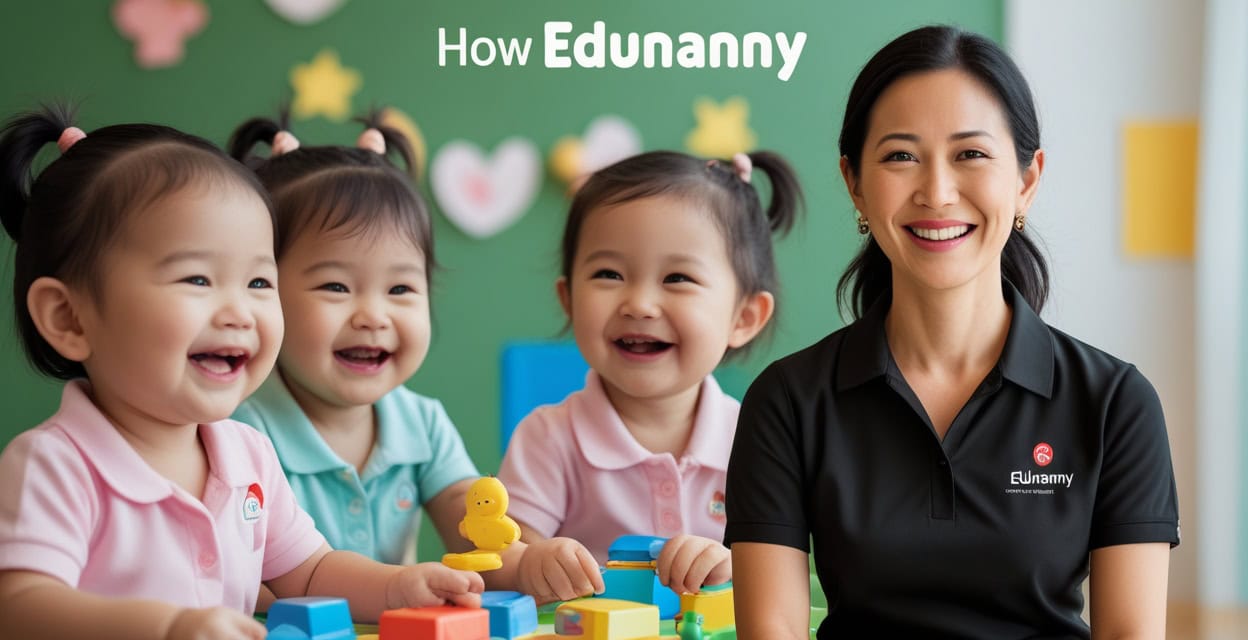
How EduNanny Makes Childminding Work for Singapore
EduNanny translates its philosophy into practical, scalable solutions that meet families where they are. Key advantages include:
- Choice without compromise: Centre-based and home-based options share the same safety culture, pedagogy, and supervision, with digital support that complements on-site care.
- A schedule that matches real life: Monday to Friday, 7am to 7pm, islandwide, delivering reliability as a form of love.
- Transparent partnership: CCTV and daily logs offer clear windows into the day, complemented by constructive feedback for growth.
- Designed for infants, not retrofitted: Modern layouts protect sleep, invite exploration, and reduce overstimulation.
- Affordability and access: From $33/day with CDA/Baby Bonus, ensuring excellence is accessible, not exclusive.
- A public-minded platform: Participation in the ECDA Childminding Pilot aligns everyday nurturing with national goals—expanding access, raising standards, and elevating the profession.
Practical guidance for parents navigating EduNanny choices includes: how to evaluate a centre or home setting, what questions to ask during visits, how to observe caregiver–child interactions, and how to align routines with your family values and medical needs.

A Small Story: Morning in Ang Mo Kio
Picture a morning in Ang Mo Kio. Three infants arrive at a home-based EduNanny setting: one starting solids, one learning to crawl, and one confident on two feet. The childminder greets each by name at the door, kneels to their height, and narrates the plan: “We will sing hello, wash hands, then read under the window light.” The youngest gazes, the crawler smiles, and the walker approaches a board book. The day unfolds in careful crescendos: a brief stretch of exploratory play, a calm bottle, a nap in a quiet room. Midday, a parent checks the secure feed—calm, untheatrical care in motion. By pickup, the crawler has attempted three new moves, the infant tasted pumpkin without fuss, and the toddler practiced waiting for a turn. No fireworks—just the slow architecture of a steady childhood. This is how confidence is built: exacting care, held lightly.

Why Childminding Matters: Who, What, When, Where, How
To understand the impact of EduNanny, consider five questions that guide families and policymakers alike:
- Who: Infants, families, and the professionals who stand with them. Every baby deserves precise, affectionate care; every parent deserves trust; every childminder deserves respect and support.
- What: A reliable mesh of centre-based and home-based infant care that is safe, developmental, joyful, and transparent—delivered in small circles with a 1:3 ratio.
- When: The first thousand days when brain architecture is malleable and relationships write the operating system for life.
- Where: In community and home premises across Singapore—near homes, workplaces, and grandparents’ houses—where families live and love.
- How: Through attunement, rigorous safety, a clear pedagogy, modern environments, and partnerships among parents, professionals, and public institutions. Through affordability and access that turn excellence into the norm.
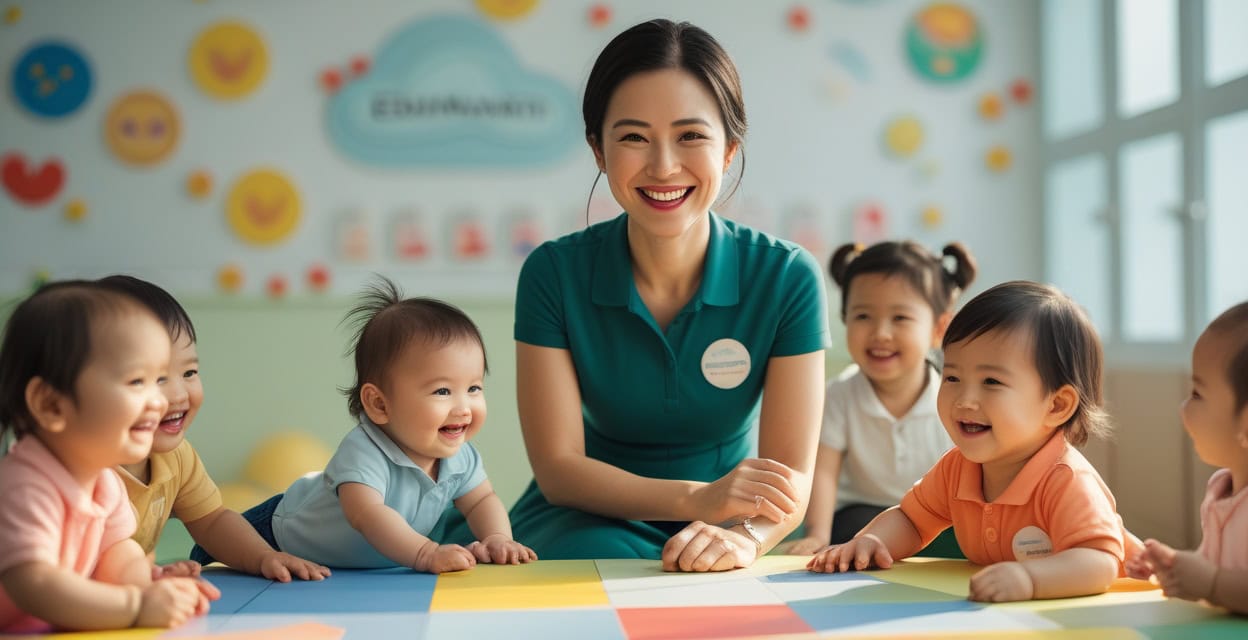
The Philosophy and Purpose of EduNanny
EduNanny holds three commitments that guide every practice and policy decision:
- Attachment before acceleration: Secure bonds are the engine of later learning and resilience.
- Precision with warmth: Procedures matter, but tenderness matters more. The balance is deliberate and ongoing.
- Community as curriculum: When care is near and consistent, belonging becomes the foundational lesson of citizenship.
EduNanny exists so that parents can work with confidence, babies can explore without fear, and childminders can take pride in a craft that shapes the soul of a city. The platform demonstrates that excellence can be affordable, safety can be transparent, and innovation can be human.
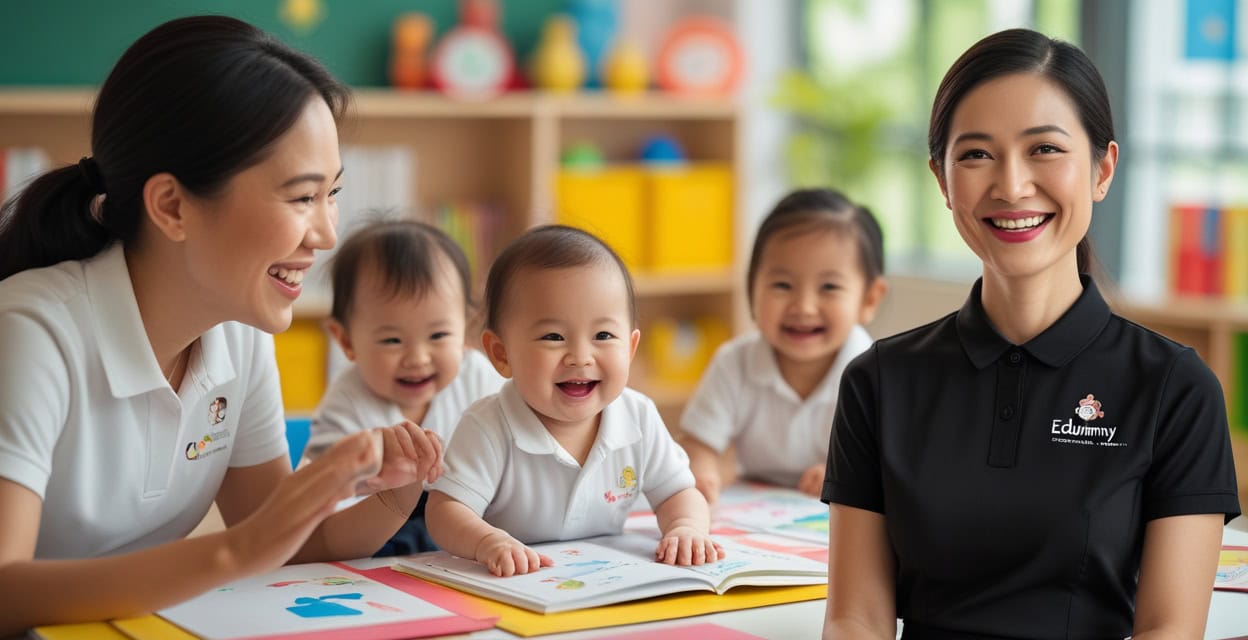
Engaging with EduNanny: How to Get Involved
If this vision resonates, here are practical steps for parents, caregivers, and partners:
- Explore options: Compare centre-based and home-based EduNanny settings, noting proximity, hours, and layout considerations that affect sleep and play.
- Ask the right questions: Inquire about caregiver training, safety protocols, daily reporting, transition plans, and how home cultures are respected in care plans.
- Prepare for enrollment: Gather medical history, immunization schedules, and any dietary requirements. Clarify eligibility for CDA/Baby Bonus and document submission timelines.
- Partner in routine design: Work with caregivers to align daily rhythms with family routines, ensuring consistency between home and EduNanny settings.
- Observe and reflect: Use daily logs and CCTV updates as touchpoints for conversation, feedback, and shared growth goals.
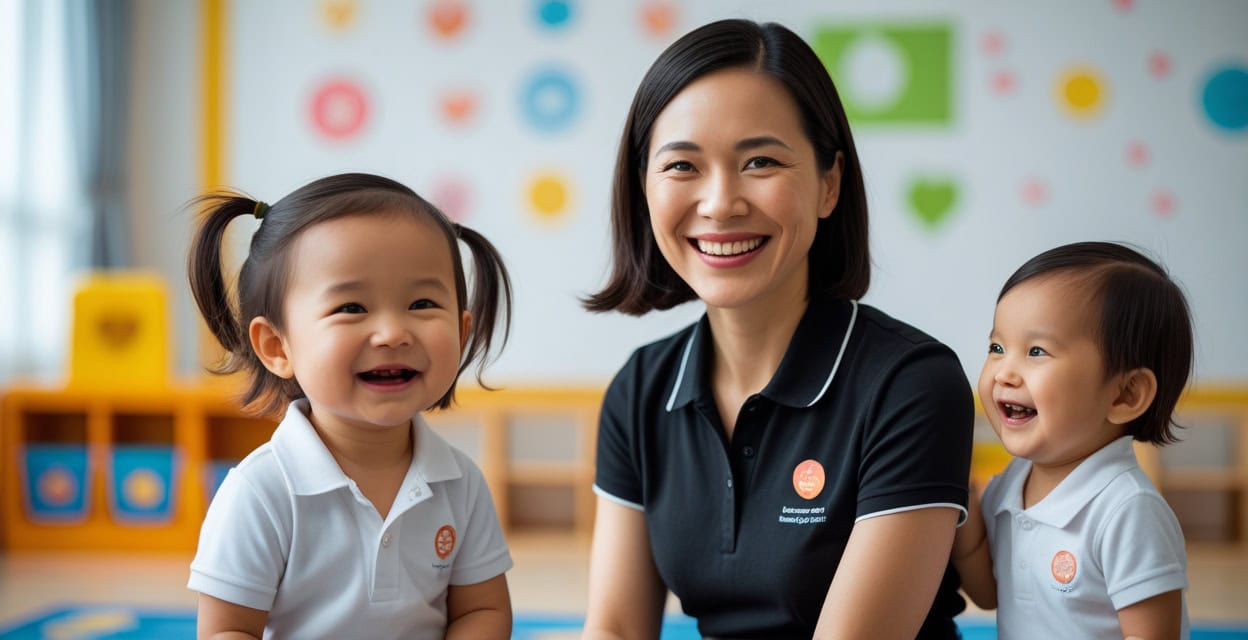
Conclusion: The Future of Infant Care as a Public Good
The future will remember how we greeted our youngest today. EduNanny welcomes infants with safety, science, song, and the slow, steady confidence that the best beginnings are simple: a trusted adult, a clear space, and time to grow. If you seek care, partnership, and a path toward a formative early years experience for your child, step closer to EduNanny. Visit EduNanny.com or Childminding.EduNanny.com to explore centre-based and home-based options, schedule visits, and learn how to enroll with CDA/Baby Bonus support. The journey to a joyful childhood begins with every careful choice you make today.
Thank you.

SEO Keywords
[#EduNanny, #SingaporeChildcare, #InfantDevelopment, #EarlyYears, #ChildmindingPilot]