
EduNanny Singapore 2024 to 2027 A Civic Promise for Safe Joyful Infancy and the First Thousand Days
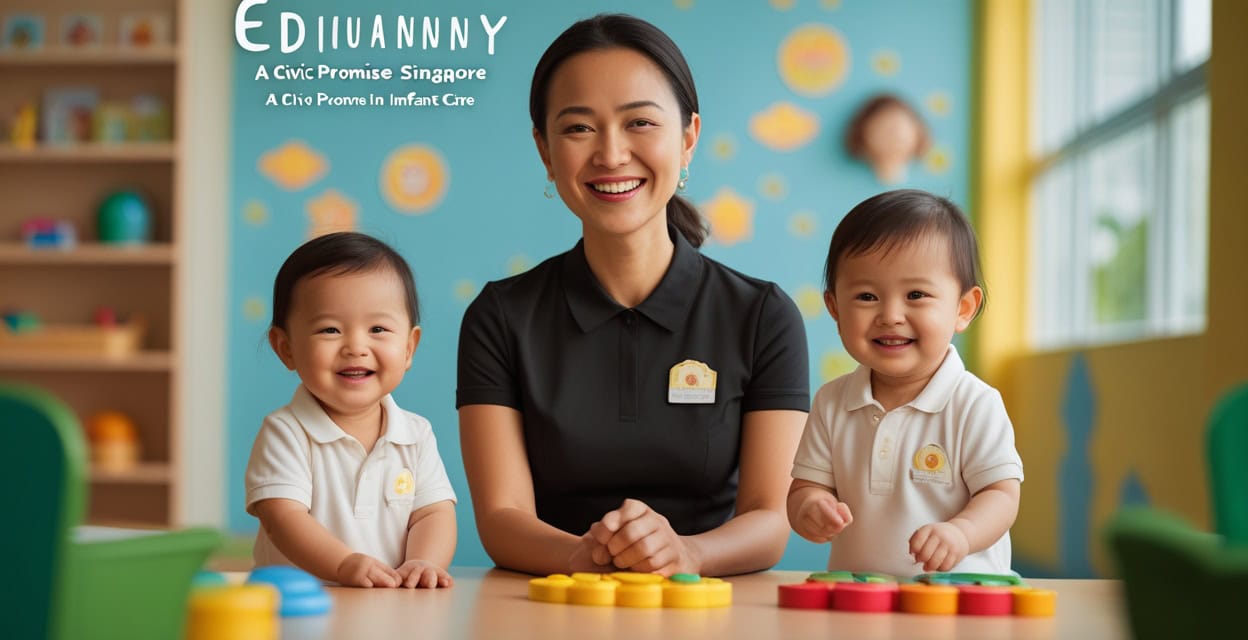
EduNanny Singapore: A Civic Promise in Infant Care
Good evening, Singapore. This is a vision for a nation that invests quietly but powerfully in the first thousand days of life—where care is a public covenant and every infant is treated as a citizen-in-the-making. EduNanny by BUTLER offers a civic promise disguised as infant care: a community-wide embrace of near-home, near-daily care that respects families, carers, and the children who will shape our future. Our approach blends centre-based convenience with home-based familiarity, operating Monday through Friday, 7am to 7pm island-wide. This is not merely childcare; it is a national commitment to excellence, transparency, and dignity for families and for the professionals who serve them.
We exist within the ECDA Childminding Pilot—a national, evidence-led initiative designed to elevate care quality while expanding access. With a best-in-class 1:3 infant ratio, modern layouts, and real-time partnership through innovation CCTV, EduNanny offers affordable care—from $33 per day—where eligible fees can be supported by CDA/Baby Bonus. We operate in both community and home premises, and we extend distance support to families who need coaching and continuity at home. This is a public covenant: safe, joyful, purposeful care—near home, at a human scale.
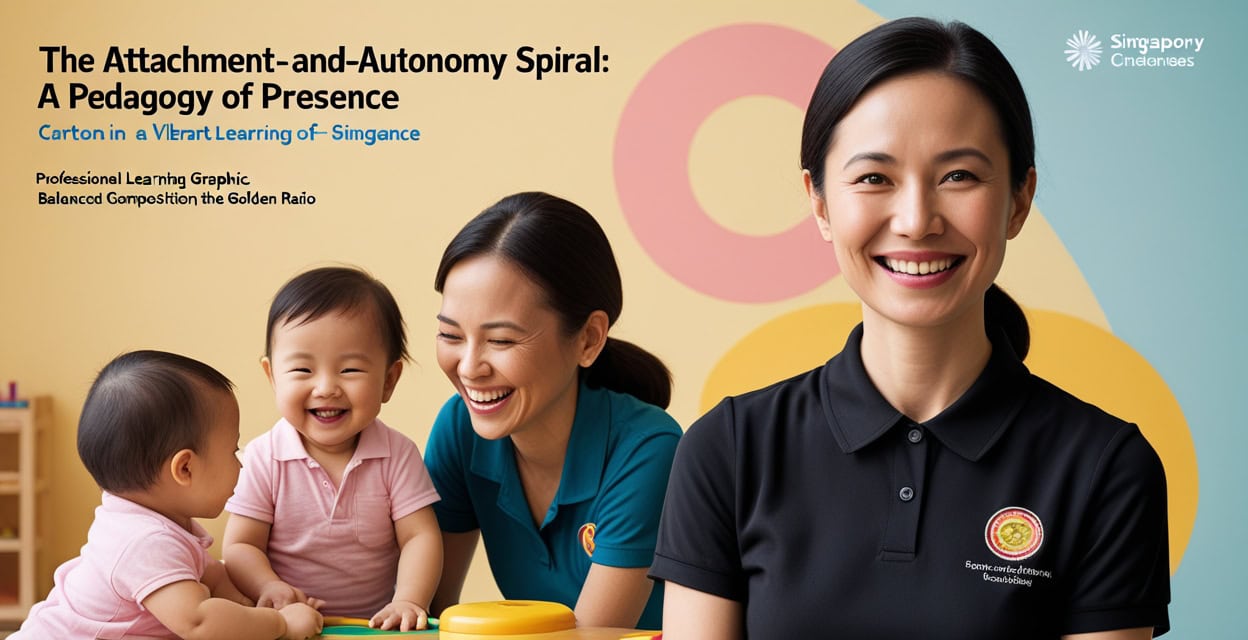
1) The Attachment-and-Autonomy Spiral: a pedagogy of presence
At the core of EduNanny is a living pedagogy that honors both secure attachment and growing autonomy. This is not a rigid method, but a developmental rhythm that adapts to each child’s pace and temperament. The practical framework we deploy in daily routines is Observe, Invite, Extend.
Observe: reading the tiny signals
- Caregivers watch with intention—micro-gestures, vocalizations, gaze, and reach—before intervening. Every cue becomes data for thoughtful next steps.
- Home tip: Parents can cultivate this skill by noting three daily cues from their child (hunger, sleepiness, curiosity) and sharing a short note with the caregiver at pickup each day.
Invite: offering choices appropriate to age
- Offer choices that respect developmental stage: simple objects to explore, textures to feel, and turn-taking opportunities in play.
- Home tip: Create a small “choice board” at home with two safe options (e.g., “story or song” before nap) to support the child’s agency.
Extend: following the child’s lead
- Extend attention by seconds, movements by inches, and language by syllables—celebrating moments when a baby initiates interaction.
- Home tip: Narrate daily moments during feeding or play to reinforce language and social connection, even in routine tasks like diapering.
Outcome: attachment meets autonomy. With stable routines, children feel safe enough to explore and brave enough to repeat, turning daily rituals into a living curriculum—diapering as consent, feeding as dialogue, and settling as self-regulation.

2) Safety as Architecture, Culture, and Habit
Architecture: space designed for safety and calm
- Modern layouts with clear sightlines, anchored furniture, zone-based hygiene (clean/transition/soothe), non-toxic materials, and infant-height design.
- Small pods (1:3 ratio) to ensure continuous supervision, with calm transitions between activities.
Culture: a culture of responsible care
- Innovation CCTV provides secure, privacy-respecting transparency and shared accountability—families and caregivers co-own safety standards.
- Standardized incident reporting and a proactive approach to near-misses—learning before harm occurs rather than blaming after.
Habit: safety as daily choreography
- Morning and mid-day safety sweeps, temperature and sleep checks with clear logs, bottle labeling and milk-handling double-verification, and regular evacuation drills.
- Fatigue management protocols to prevent caregiver burnout being a safety risk.
Practical takeaway for families: safety is visible in every moment—from the layout you see to the way staff pause to confirm a transfer and the routine checks logged for peace of mind. For educators and parents, safety becomes part of muscle memory through repeated, calm practice.

3) The First-Thousand-Day Compass: development folded into care
The brain’s remarkable growth in the first year requires a practical, measurable approach. EduNanny translates developmental science into everyday care that families can observe and participate in.
Sensorimotor mastery
- Daily tummy time with progressive angles, grasp-to-release games, and bilateral coordination through gentle rhythm play.
- Home activity: incorporate short tummy-time sessions after a diaper change, using a mirror or high-contrast toy to encourage head lifts and eye tracking.
Language and social communication
- Narrated caregiving, turn-taking vocal play, and songs in Singapore’s diverse languages to enrich linguistic exposure.
- Home activity: narrate your day with simple questions to invite babble and response, turning routine into conversational practice.
Executive beginnings
- “Wait and watch” rituals and micro-choices—seed the child’s working memory and self-regulation from infancy.
- Home activity: provide two safe options during play and pause to encourage choice-making.
Emotional regulation
- Co-regulation through consistent soothing scripts, breath patterns, and predictable rocking routines that become calming signals.
- Home activity: use a familiar lullaby or soft scent during transitions to foster comfort.
Nutrition and sleep integrity
- Responsive feeding and safe sleep environments; daylight exposure to support circadian health.
- Home activity: maintain regular feeding and napping windows aligned with child’s cues, not the clock alone.
Parents receive weekly “learning moments”: concise, descriptive snapshots that describe what happened and why it matters for development. The goal is not to collect data for its own sake, but to illuminate growth in a way families can act on.

4) Joy as Developmental Oxygen
Joy is not optional; it is the essential fuel for learning and well-being. EduNanny designs experiences that weave happiness into learning, creating a resilient, curious child.
Play arcs
- Each pod designs play arcs that cycle through sensory, social, and motor invitations, respecting each child’s tempo and rhythm.
- Home activity: create a simple, rotating play schedule with two new activities each week to maintain novelty while honoring comfort zones.
Outdoor moments
- Brief, safe outdoor exposure expands sensory diet—shade, breeze, birdsong, and age-appropriate exploration in a secure environment.
- Home activity: establish a daily outdoor moment, even if just a short time in a balcony garden or courtyard with a caregiver present.
Rest with dignity
- Rest is personal and protected—noise and light levels managed, wake windows individualized, and routines tailored to each child.
- Home activity: observe and chart a preferred sleep routine for consistency between home and care settings.
Belonging cues
- Consistent arrival songs, family photos at eye level, and caregiver scarves with familiar scent during separations to reduce distress.
- Home activity: create a small family photo wall at the child’s eye level to ease transitions between home and care environments.
Well-being is tracked through a simple index: appetite, sleep quality, engagement, and ease at handover. Joy leaves a visible trail—one that families and caregivers can read together.

5) The Purpose and Profession of the Childminder
Singapore’s future depends on the people who tend to its youngest citizens. EduNanny’s Maximum Employment Mandate is straightforward: dignify, train, and grow the workforce that grows our children.
Training and pathways
- Structured onboarding in attachment-led care, infant health, sleep science, and developmental observation.
- Paths toward ECDA-recognized qualifications and ongoing professional development to deepen expertise and career satisfaction.
Fair work, fair respect
- Predictable schedules, micro-breaks, reflective supervision, and a culture where caregivers’ insights directly influence practice improvements.
- Home tip: families can support caregivers with clear expectations and regular feedback channels to maintain mutual respect and trust.
Community knitting
- Distance-supported, locally rooted, and community-focused—home-based and centre-based pods serve heartland blocks and transport nodes, reducing commute stress and strengthening local employment.
- Strategy: distance coaching and safety audits extend quality into the home, ensuring consistency across modalities.
When care is professionalized, hope is professionalized too. EduNanny elevates what society values and redirects it toward sustainable, high-quality infant care.

What this looks like for a parent tomorrow
- Convenience you can trust: Monday–Friday, 7am–7pm, islandwide. Centre-based care where it fits your commute; home-based care where familiarity matters; distance support when you need coaching at a distance.
- Transparency you can feel: Innovation CCTV with verifiable standards, live updates, and end-of-day summaries that explain the rationale behind decisions.
- Affordability with integrity: From $33 per day, with CDA/Baby Bonus eligibility where applicable, ensuring access aligns with aspiration.
- Design you can see: Modern layouts, calm spaces, exploration-friendly materials, and spaces scaled to infants’ needs.
EduNanny is the bridge between home, neighborhood, and nation. To cross it, we invite you to engage—to learn, observe, participate, and decide what best supports your child’s growth and your family’s life.

The five guiding questions that matter—and our commitment to each
Who matters?
Every infant matters. EduNanny’s 1:3 promise ensures no child is averaged out and every child receives attentive, individualized care that cherishes temperament and pace.
What matters?
Safe, joyful, developmentally wise care—every day. Not sporadic enrichment, but a consistent choreography of secure attachment, responsive routines, and meaningful play.
When does it matter?
Now. The first thousand days lay the tracks for resilience, language, and lifelong learning. Early care compounds opportunity and reduces later challenges.
Where does it matter?
Near home and across the island. In community and home premises, with designs that prioritize line-of-sight safety, calm transitions, and quiet focus.
How do we make it matter?
With verifiable standards, trusted professionals, and systems that keep families at the center—through the ECDA Childminding Pilot and EduNanny’s integrated model of care, professional development, and community support.

Conclusion: A shared promise for Singapore’s future
EduNanny stands for attachment first, autonomy always; safety by design, not declaration; joy as fuel for growth; professional care as a national asset; and equity through proximity, affordability, and choice. If this resonates with your hopes for your child—and for Singapore—come join us. Explore Centre-Based and Home-Based options near you, and discover how distance-supported coaching can strengthen your home routines. See how affordable, high-quality care can fit the contours of your life. Let EduNanny be the bridge that keeps families close to home while elevating care standards across the nation.
Visit EduNanny.com and Childminding.EduNanny.com to learn more, view locations, and understand how our programs could fit your family’s routine and budget.
Let’s keep the promise—to cradle Singapore’s future with excellence, quality, and heart—together.
[#EduNannySingapore, #InfantCareSingapore, #EarlyChildhoodDevelopment, #AttachmentAutonomy, #ECDAChildmindingPilot]