Eye Level Attunement and the Five Living Practices Redefining EduNanny Singapore Infant Care

Introduction: A Vision for Infant Care in Singapore
In a city where every minute matters, EduNanny proposes a holistic approach to infant care that marries science with tenderness, routine with respect, and a city’s life with its littlest citizens. This article expands a practical framework—grounded in established educational psychology and reinforced by real-world practice within EduNanny Singapore—to help families, caregivers, and communities co-create environments where babies thrive from day one. Here, care is not just supervision; it is a structured, intimate partnership that respects rhythms, protects safety, and invites learning at eye level, on the floor, and in the moments between actions.
Topic One — Pedagogy of Attuned Presence: What Learning Looks Like Before Words
Listen–Locate–Lift: A simple discipline with big results
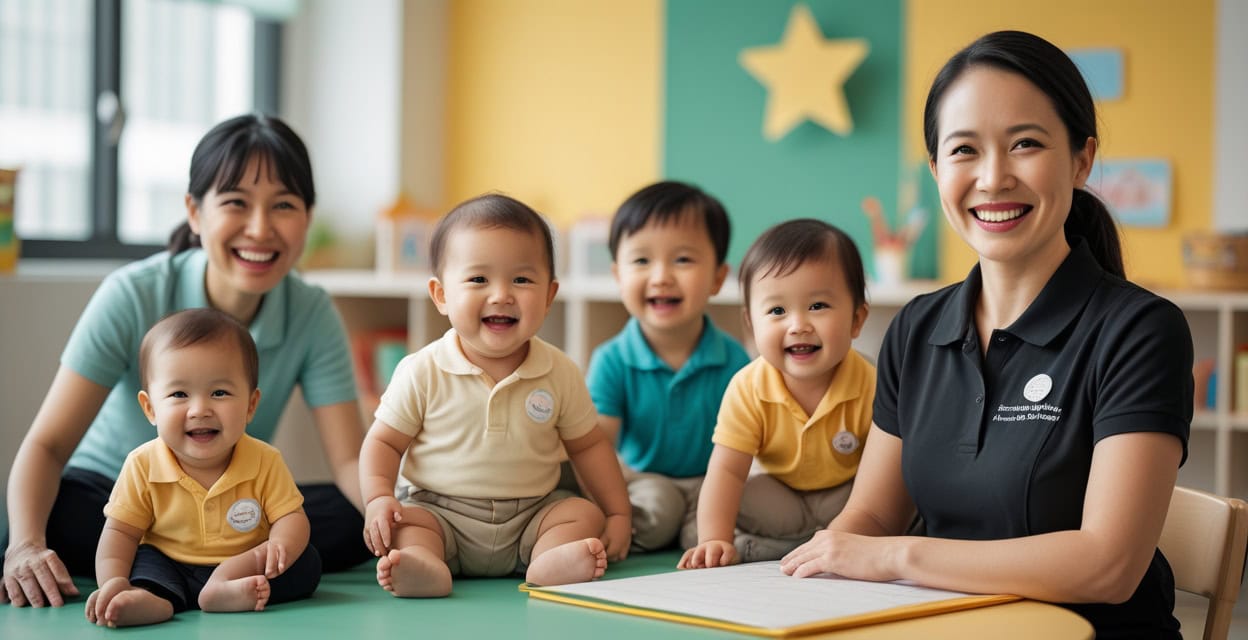
- Listen: Observe the cue beneath the cry—hunger, fatigue, overstimulation, or the need for face-to-face contact. Slow down to hear the infant’s “why.” Practical tip: keep a soft, calm routine for the first minute after a caregiver greets the child, allowing the child to signal needs without rush.
- Locate: Meet the child at eye level and on the floor, where trust is built. Home practice: set aside a small, uncluttered floor mat and low-access toys; ensure ample light and sightlines to the caregiver so the child can make eye contact easily.
- Lift: Elevate the moment into learning by narrating upcoming actions, offering a choice of two toys, and naming emotions without haste. Practical example: “We’re going to roll the ball or reach for the rattle—your choice.”
- Environment as teacher: Use breathable spaces, natural light, soft acoustics, and floor-level setups to invite exploration and self-directed play within safe boundaries.
- Education in action: Integrate Piaget’s sensorimotor discovery, Montessori’s respect for autonomy, and Pikler’s unhurried caregiving as daily practice—no worksheets, just meaningful, hands-on experiences.
- Actionable home practices: Create a daily cadence where caregivers and parents pause for 1–2 minutes during a transition, narrate what’s about to happen, and offer a choice of two safe options to support agency.
Topic Two — Safety as Architecture and Habit: The S.A.F.E. Routine
Safety as room, ritual, and reflex
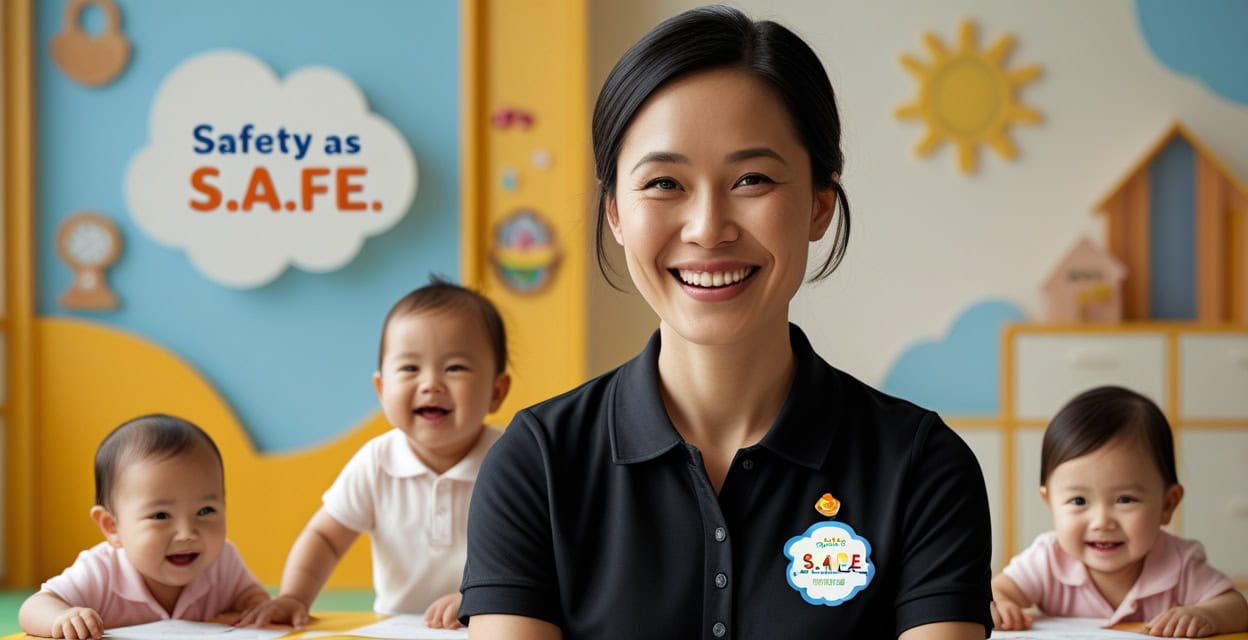
- Sleep: Back-to-sleep on a firm, flat surface; avoid loose bedding; monitor room temperature; maintain sleep logs for consistency with family routines. Action step: establish a short, predictable pre-nap ritual (soft song, dim lights, gentle touch) to cue sleepiness.
- Airway: Upright feeding when appropriate; pace feeding to prevent overfeeding; burp accordingly; respond immediately to distress signals.
- Food: Bottle hygiene, labeling, allergen awareness, and careful solids introduction aligned with family guidance; demonstrate proper handwashing and ensure adults supervise all feeds.
- Environment: 360-degree room scan hourly; plug covers; anchored furniture; sanitized surfaces; clear access controls and privacy-respecting CCTV in common spaces for transparency.
- 1:3 infant-to-caregiver ratio as the minimum architecture of vigilance—more eyes and hands mean quicker prevention and calmer rhythms.
- Emergency preparedness: drill for evacuation, maintain up-to-date first-aid refreshers, and establish clear escalation pathways with families.
Topic Three — Development Through Rhythm: The ABCs of Early Growth
The rhythm that nourishes a growing mind
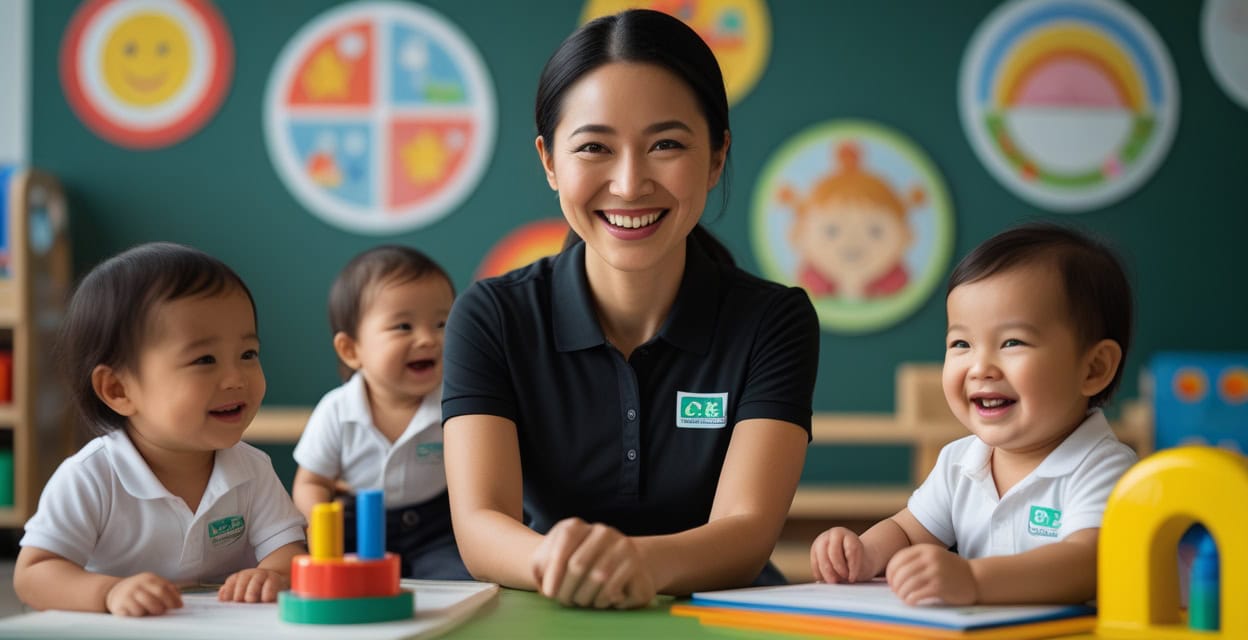
- Attach: The secure base is built with consistent greetings—name, eye contact, and a warm narrative about the day. Transitions are choreographed: hello, then hello again at goodbye, to support enduring trust.
- Body: Integrate gross and fine motor invitations into daily life: tummy time with fatigue cues, soft ramps, graspable rings, and uncluttered floor space. Monitor symmetry, strength, and emerging preferences; collaborate with families and professionals when needed.
- Cognition: From simple cause-and-effect play to early object permanence and turn-taking, cultivate a “tiny tasks” cadence: brief, achievable challenges that respect pacing and attention. Support bilingual development when families desire (e.g., simple rhythms and rhymes in English and Mandarin/Malay/Tamil as requested).
- Cadence over volume: The tiny curriculum is a cadence, not a barrage of activities. Space moments for pauses, waits, and gentle scaffolding to honor the child’s tempo.
- Erikson meets Bowlby in practice: Trust is earned through consistent, patient responsiveness; each safe pause becomes a foundation for later resilience.
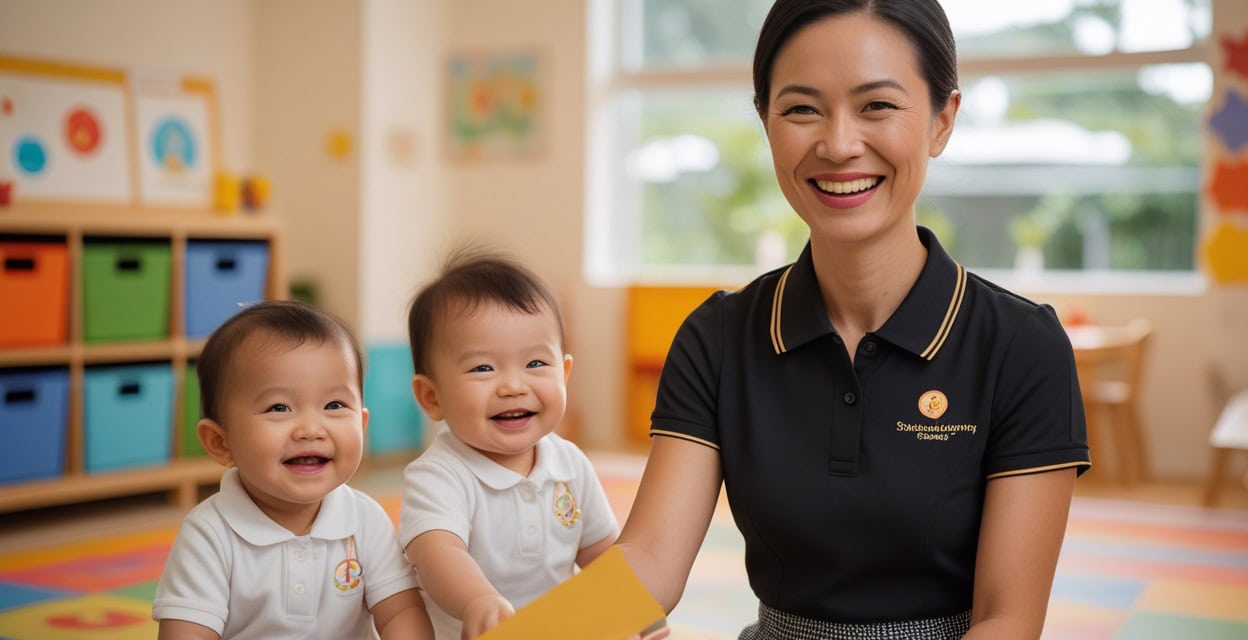
Topic Four — Happiness and Belonging: The Joy Literacy We Teach Without Worksheets
The path to calm, confident babies
- Sensory gentleness: Low-glare lighting, warm voices, soft textures, and predictable auditory cues create a soothing environment.
- Social ease: Small groups (three infants per caregiver) foster familiarity and secure social scaffolding; caregivers model turn-taking within caregiving tasks itself.
- Cultural rootedness: Invite family songs, lullabies, and rituals from home languages; simple routines that affirm a child’s sense of belonging.
- Joy metrics for parents and caregivers: Do infants settle faster over time? Do shared attention moments become more frequent? Do family evenings improve with calmer routines?
- Home practice: Create a daily “moment of delight” (reading a favorite book, a gentle song, or a brief sensory play) to strengthen positive associations with learning and caregiving.
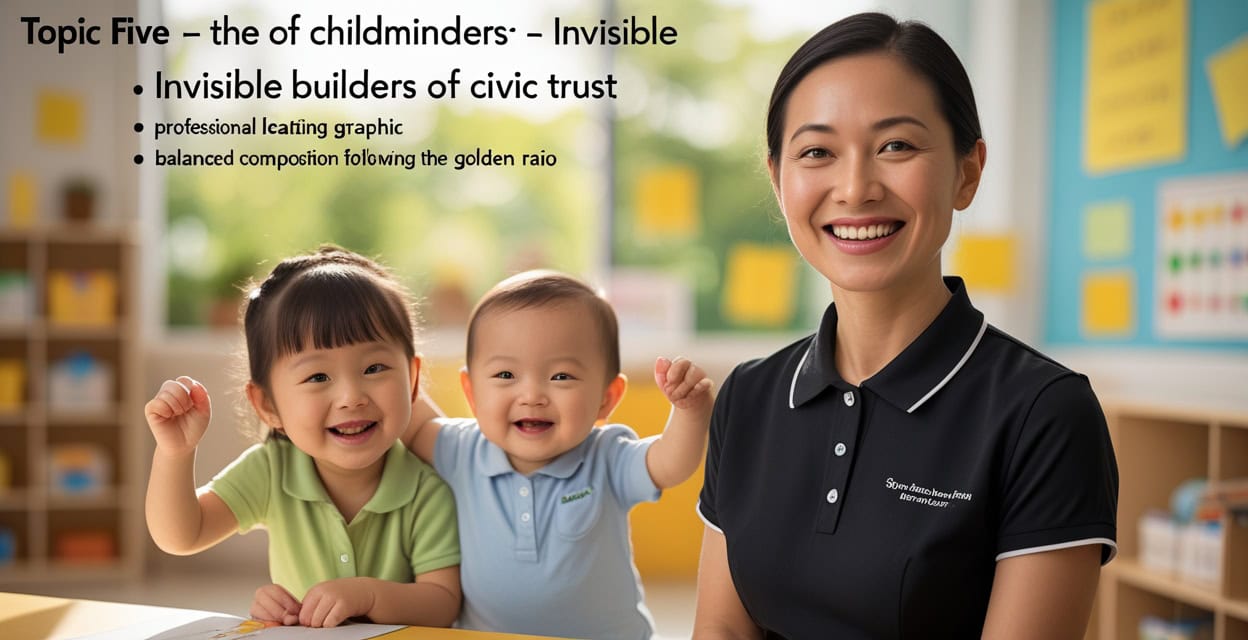
Topic Five — The Purpose of Childminders: Invisible Builders of Civic Trust
Care as infrastructure for a thriving society
- Training and supervision: Ongoing coaching, reflective practice, and a transparent professional ladder ensure caregivers grow in competence and confidence.
- Community integration: Center-based and home-based sites are distributed near families to reduce commutes, lower stress, and keep babies close to their daily lives.
- Distance support: Distance check-ins, privacy-respecting video updates, and quick consults provide a bridge when in-person visits aren’t possible.
- Edutainment for families: Share regular “tiny triumphs” and short videos explaining the learning moments behind a simple routine—building trust through transparency.
- National impact: A coordinated approach elevates care standards, dignifies the caregiving profession, and weaves infant care into civic life.

A Day in the Life, the EduNanny Way
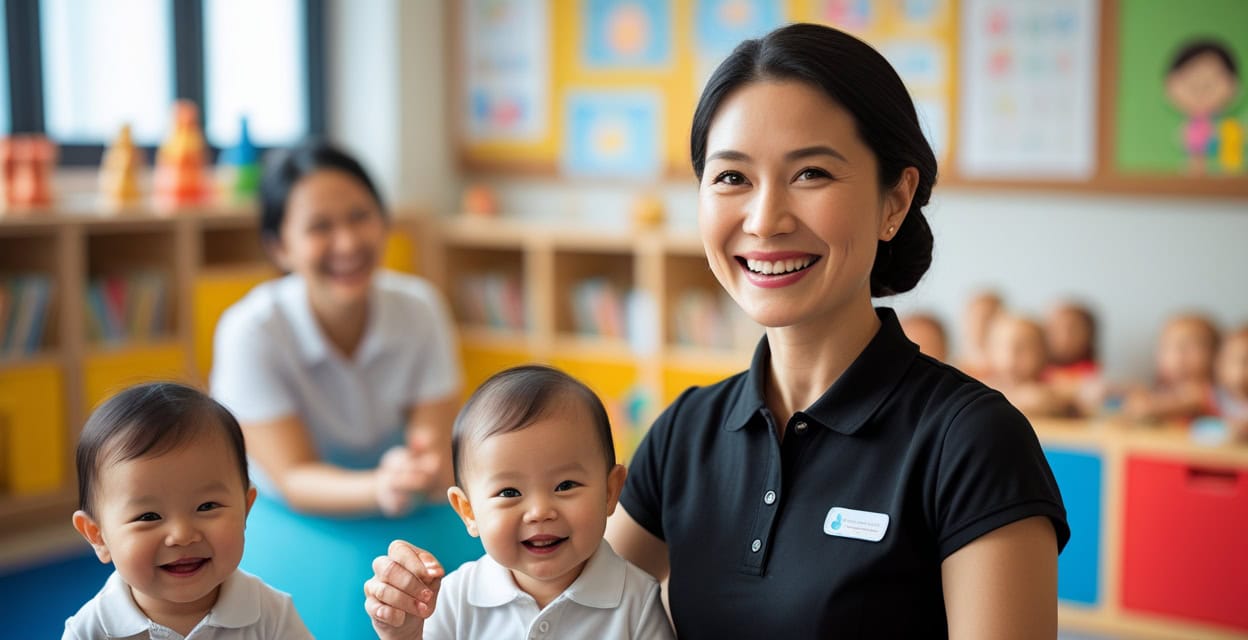
Imagine a typical morning where a caregiver greets your child by name, kneels with warmth, and narrates the day’s plan. A short wave goodbye to a parent, a soft lullaby, and a calm transition. A routine check of bottles, a sleep window confirmed, and a room scanned for safety. The day unfolds with tummy time beside a mirror, a supervised reach for a book with high-contrast images, unhurried feeding, and a quiet nap in a dim space. Later, simple coo-and-respond exchanges in two languages, a gentle bounce to a familiar beat, and an end-of-day summary that highlights feeds, naps, diapers, and the little moments that made the day human. This is not mere supervision; it is engagement, orientation, and growth in action.
Why This Matters Now
In contemporary Singapore, families face intense work demands and busy lives. Outsourcing childhood to screens or adopting rigid, impersonal schedules is not a sustainable solution. A human-centered, organized, and transparent approach to infant care is essential. EduNanny offers a choreography of small, excellent practices—repeated day after day—that collectively build a culture of beginnings, trust, and resilience across neighborhoods.
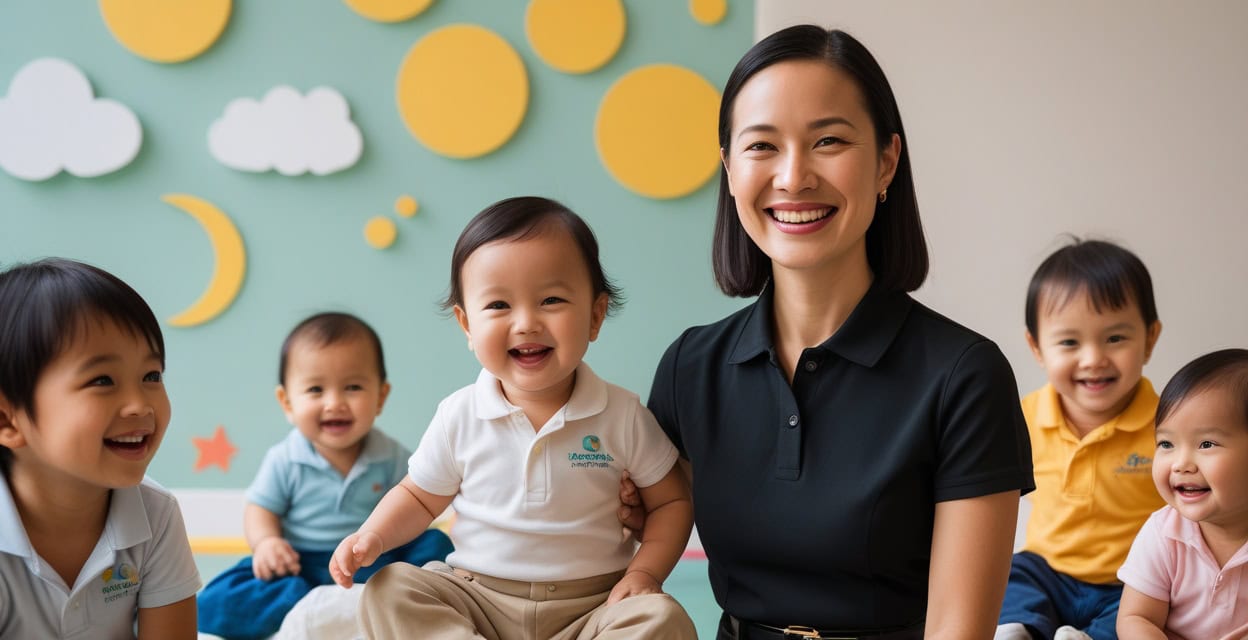
Who, What, When, Where, How—Why It Matters
- Who: Infants and the families who love them; childminders who choose care as a vocation and calling.
- What: A science-led, heart-forward childminding network with a 1:3 ratio, combining center-based and home-based care, with distance transparency and modern design.
- When: Monday–Friday, 7am–7pm; aligned with working families and the natural rhythm of babies.
- Where: Islandwide across community premises and approved home settings near where families live.
- How: Attuned pedagogy, daily safety rituals, rhythm-based development, joy literacy, and a professionalized caregiver workforce—supported by privacy-respecting CCTV, accessible pricing from $33/day, and CDA/Baby Bonus payments.
- Why: Early trust translates into confident, empathetic adults; consistent care is infrastructure for a thriving society.
A Word to Parents
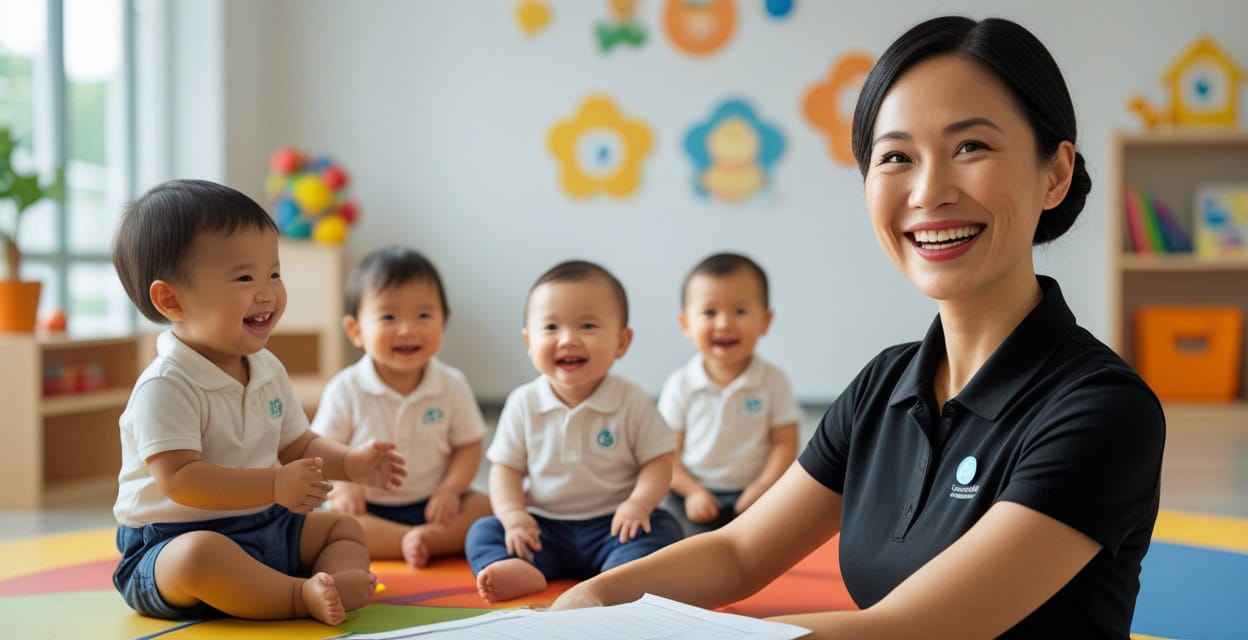
- Choose care that is affordable without compromising excellence; seek clear policies on safety, staffing ratios, and transparency.
- Ask about the daily rhythm: Is there a purposeful balance of care and gentle learning? Are infants spoken to, sung to, and engaged at eye level?
- Look for near-home options to reduce commutes and support stable routines; ensure updates are accessible and easy to understand.
- Request privacy-respecting CCTV and daily logs that explain feeding, sleep, and key moments—transparency builds trust.
- Partnership matters: Share your family rhythms and preferences; a caregiver should tailor routines to your infant’s unique signals and sleep-wake patterns.
A Word to Childminders
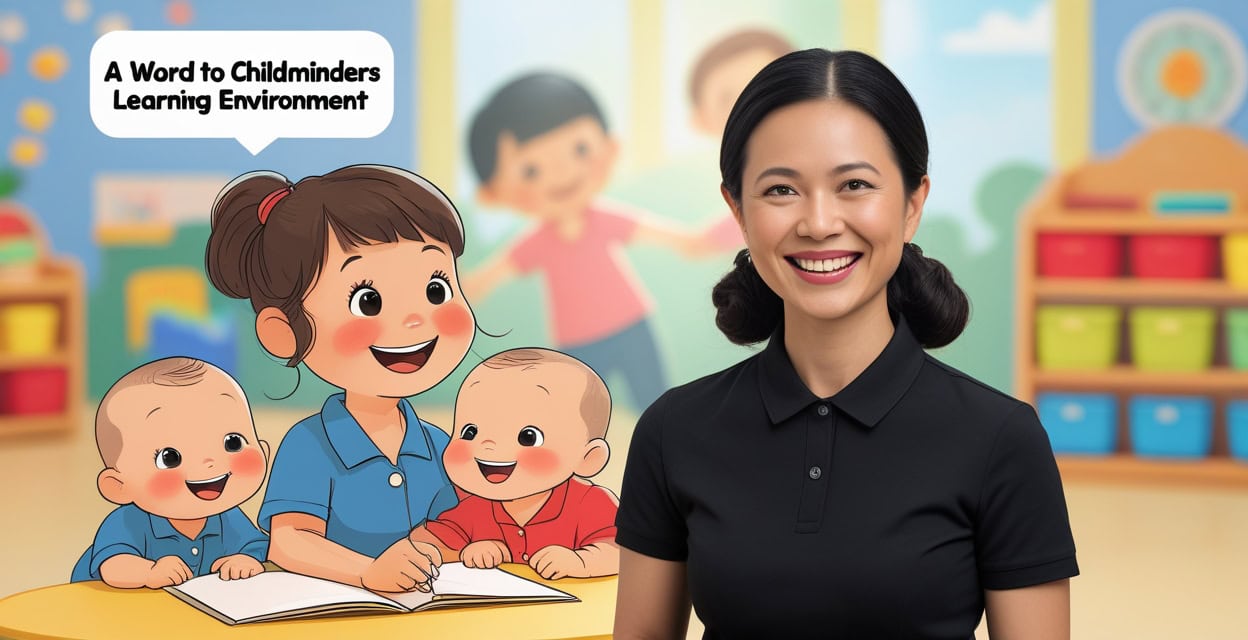
- See your work as nation-building: each calm bottle, each unhurried nap, and each patient greeting contributes to a more resilient society.
- Engage in ongoing training, reflective practice, and mentorship; seek opportunities to mentor the next generation of caregivers.
- Work within a supportive ecosystem that values professional development, fair employment standards, and strong family partnerships.

A Word to Singapore
- Prosperity should be measured not only by GDP but by bedtime—how many babies sleep calmly, how many families end the day with dignity and ease.
- Childminding is infrastructure for human flourishing; a robust system enables parents to contribute to the economy while nurturing the next generation.
Closing
Maria Montessori urged us to “follow the child,” Emmi Pikler to slow our hands, Erik Erikson to protect early trust, and John Bowlby to honor the secure base. EduNanny translates that wisdom into rooms, routines, ratios, and rhythms—scaled thoughtfully across the island we share. The work is humble, the stakes are high, and the future begins with how we care for our littlest citizens today.

Conclusion
In Singapore, infant care can be both excellent and accessible when it is designed as a living system rather than a collection of services. The five living practices—Attuned Presence, S.A.F.E. routines, Rhythm-based growth, Happiness and Belonging, and Professional Purpose—offer a practical roadmap for families, caregivers, and policymakers alike. By prioritizing eye-level care, near-home access, and transparent partnerships, EduNanny aims to set a national standard that respects evidence, honors caregivers, and grounds early childhood in the social fabric of every neighborhood. Take the next step: explore EduNanny’s islandwide network, meet our caregivers, and consider how a thoughtfully organized day can transform your child’s beginning and your family’s future. The future begins with beginnings—right here, right now.
SEO keywords: [#earlychildhood, #infantcare, #Singaporeeducation, #childminding, #EduNanny]
Ready to Experience Excellence?
Transform Your Family’s Journey
Discover Singapore’s leading infant care and childminding services. Expert guidance for your little one’s first thousand days.