

EduNanny by BUTLER A Floor Led Near Home Blueprint for Singapore Infant Care and the First Thousand Days
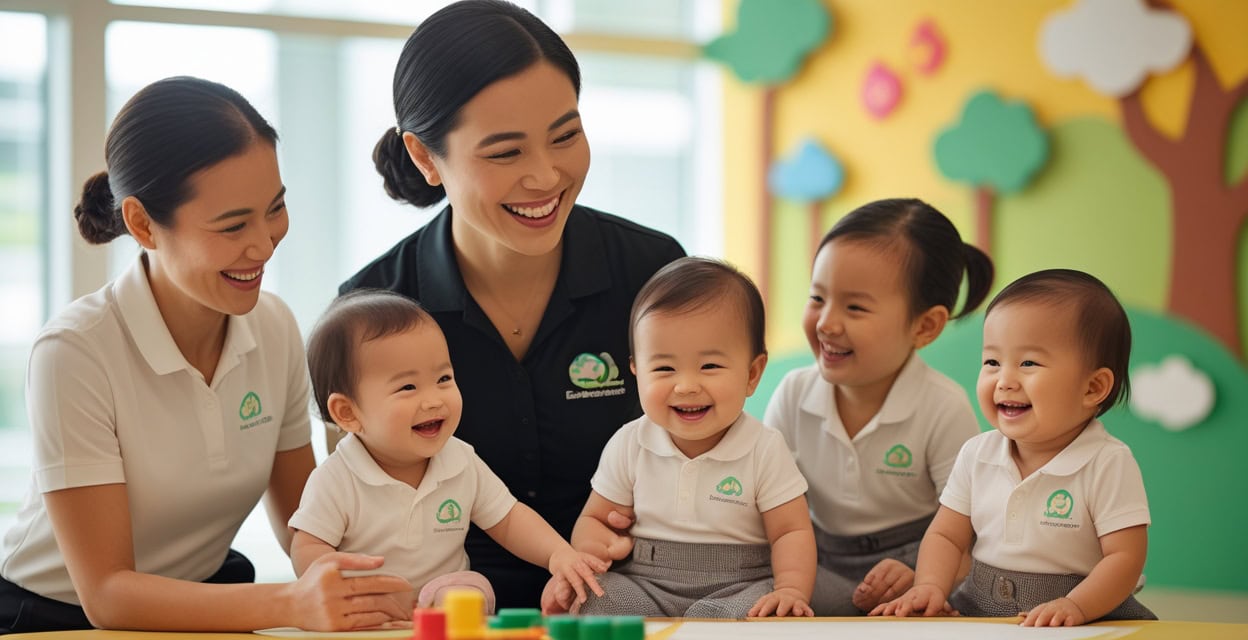
EduNanny by BUTLER: A new standard for infant care in Singapore
Thank you for joining a conversation that touches the core of a nation’s future: how we welcome its youngest citizens with safety, delight, and purpose. EduNanny by BUTLER is a Singapore-born movement designed to turn everyday care into lifelong momentum. By uniting centre-based, home-based, and distance-enabled care under one clear standard, EduNanny brings high-quality infant care within reach for working families across the island.
Grounded in established educational and developmental frameworks, EduNanny blends Montessori, Bowlby, Pikler, Vygotsky, and Erikson principles into everyday routines and the architecture of our spaces. Our promise is simple: to provide care that is near, dignified, and transformative, with an ultra-low 1:3 infant ratio, modern, calm environments, and transparent practices that families can trust. Learn more at EduNanny.com and Childminding.EduNanny.com.

Five core truths that shape EduNanny’s approach
1) Proximity matters
Near-home care reduces stress for families and infants alike. When care happens in community or at home premises, travel time declines, routines become more predictable, and infants conserve energy for exploration and learning. Actionable steps for families:
- Map your daily rhythms and identify 2–3 nearby EduNanny environments to visit for a first-hand feel of layout, noise levels, and caregiver attentiveness.
- During tours, observe whether transitions between activities are smooth, and whether caregivers pause to establish a familiar face at drop-off and pick-up.
- Ask how proximity influences consistency in schedules across centre-based and home-based settings, and request a sample weekly timetable to compare with your family calendar.
2) Ratios matter
The 1:3 infant-to-carer ratio is a foundational standard designed to support responsive care, safe sleep, and language-rich interaction. Practical considerations for families include:
- Request a staffing plan that shows how ratios are maintained across peak hours and during staff handovers.
- Inquire about caregiver-to-infant assignment during key activities (e.g., feeding, diapering, tummy time) to ensure dedicated attention.
- Ask how the setting monitors individual infant cues and adapts care plans when a child needs more one-on-one interaction.
3) Transparency matters
Transparency builds trust. Innovation CCTV provides read-only access to families while preserving privacy. Practical tips:
- Request a written policy that explains what is monitored, who has access, how footage is stored, and how privacy is protected for other families.
- Ask for a daily or weekly digital journal that summarizes milestones, routines, and notable moments for each child.
- Observe how information is communicated: are you receiving timely alerts about sleep, feeding, and milestones?
4) Design matters
Calm, contemporary design reduces overstimulation and supports caregivers’ ability to be present. Elements to look for include:
- Spaces with clear sightlines and defined areas for tummy time, quiet play, and gross motor exploration.
- Soft lighting, noise-attenuating surfaces, and accessible materials at child eye level.
- Furnishings and layouts that enable caregivers to be within arm’s reach during critical moments, while encouraging independent exploration when appropriate.
5) Dignity matters
The childminding profession is the spine of the system. A dignified career pathway supports better care outcomes for children. What to ask:
- How are caregivers trained, mentored, and evaluated? Is there a clear path for professional growth and recognition?
- What ongoing learning opportunities exist (e.g., infant-first-aid updates, reflective coaching, peer learning circles)?
- How does the program support caregiver wellbeing to maintain consistent, caring presence for children?
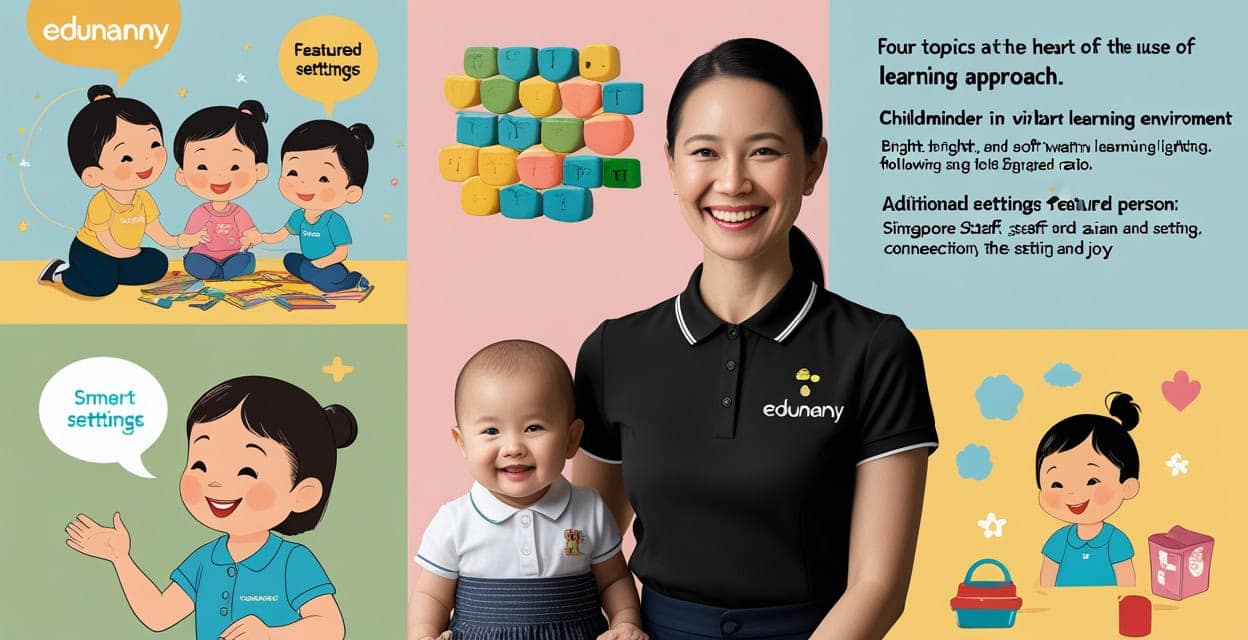
Four topics at the heart of EduNanny’s approach
Topic 1: The Floor-Led Curriculum—Pedagogy you can see, hear, and feel
Infancy is the beginning of citizenship. Our floor-led curriculum centers on the first thousand days, with a four-beat method:
- Notice: Observe micro-cues—gaze, hand-to-mouth actions, torso shifts—before intervening.
- Name: Attach language to feelings and actions: “You’re reaching. You found the rattle.”
- Nurture: Scaffold just beyond current ability—utilizing a Vygotskian zone of proximal development at floor level.
- Release: Step back to let mastery emerge—echoing Montessori’s “help me do it myself.”
Practical implementations you can verify during a visit:
- Tummy-time as conversation: 2–3 minute sessions, several times daily, with caregiver-narrated expressions.
- Care moments as curriculum: slow, predictable diapering, feeding, and dressing that strengthen attachment and skill development.
- Mini play arcs: sensory baskets, fabric textures, finger rhymes, and supported sitting/rolling aligned with the infant’s developmental window.
Topic 2: The Seven-Guard Circle—Safety by design, not by chance
Safety is a system. The Seven-Guard Circle comprises:
- Ratio: 1:3 infant-to-carer across home-based and centre-based settings.
- Credentialed care: ECDA-aligned training, infant-first-aid certification, and recurrent emergency drills.
- Space integrity: Layouts with clear sightlines, sanitised surfaces, and zone-based risk checks logged daily.
- Sleep security: Individual sleep plans, safe-sleep environments, and continuous supervision.
- Nutrition and hygiene: Parent-informed feeding, sterile preparation protocols, and allergy controls.
- Transparent tech: Innovation CCTV with encrypted, read-only access for families without disruption to care.
- Incident learning: A just culture of reporting, review, and weekly improvement cycles.
Topic 3: The Eight Streams of Growth—Development that follows the child
EduNanny tracks eight interwoven domains with observable milestones and partner-family alignment:
- Attachment and self-regulation: Calm arrivals, consistent caregiver voices, and gentle boundaries; anchors trust.
- Gross motor: From tummy-time to rolling, cruising, and early mobility milestones via guided practice.
- Fine motor: Grasp, release, transfer, and purposeful touch—building fine motor maps.
- Language and communication: Turn-taking, babble duets, and named feelings to cultivate expressive language.
- Sensory integration: Curated exposure to light, sound, texture, and movement to invite focused attention without overstimulation.
- Early cognition: Cause-effect exploration, object permanence, and simple problem-solving in age-appropriate play.
- Social curiosity: Shared gaze and gentle bids for interaction within safe, small groups.
- Health rhythms: Sleep, feeding, movement, and outdoor time as daily, predictable routines.
Each infant has a living growth plan reviewed with parents, turning development into a shared project rather than a checklist.
Topic 4: Joy as a Practice—Happiness built into the seams of the day
Joy is not incidental; it is intentional. EduNanny embeds happiness through calm, predictable routines and warm human presence:
- Arrivals: Familiar greetings, named objects, and predictable handovers to reduce door-time stress.
- Transitions: Short “reset rituals” between activities—songs, a sip, a cuddle to re-centre the child.
- Care tasks: Slow, narrated steps during diapering, feeding, and dressing—dignity at every moment.
- Outdoors: Brief daily nature moments—shade, breeze, birdsong—to nourish curiosity and calm.
- Caregiver wellbeing: Reflective breaks, coaching, and peer check-ins to sustain a regulated, responsive environment.

The purpose of childminders—and the craft of childminding
A childminder is a professional partner in attachment and learning, not a stand-in for the parent. The purpose is threefold:
- For the child: A secure base, responsive conversation, and a predictable rhythm that fosters exploration and self-belief.
- For the parent: Transparent, trustworthy care that honours family culture, routines, and preferences.
- For the community: Dignified jobs, interconnected neighbours, and a generation of infants who enter life with trust and curiosity.
EduNanny supports this craft with:
- Centre-Based and Home-Based offerings, both held to the same high standard.
- Distance-enabled convenience: Digital daily journals, secure CCTV viewing, and simple check-ins.
- Career staircase: Training, mentoring, observed practice, and recognition to retain great carers in the sector.
- Fair, accessible fees: Affordable options starting from $33/day, with CDA/Baby Bonus support where available.

The service promise, at a glance
- Excellence and quality across centre-based, home-based, and distance-enabled settings.
- Centre-based, home-based, and distance-enabled options for every neighbourhood.
- Islandwide coverage, Monday to Friday, 7am–7pm.
- Ultra-low 1:3 infant ratio for safety and deep attunement.
- Part of the ECDA Childminding Pilot and National Social Initiative with a Maximum Employment Mandate.
- Clear enrolment pathways at EduNanny.com and Childminding.EduNanny.com.
Practical guidance for families: implementing EduNanny principles at home and beyond
Parents and guardians play a pivotal role in translating EduNanny principles into daily practice. Here are actionable steps to begin immediately:
- Create a near-home routine map: List the three most realistic childminding options near your home. Compare travel times, drop-off windows, and consistency in scheduling.
- Establish a shared care plan: Use a simple template to record your child’s routine, cues, and preferred comfort objects. Share this with your caregiver weekly.
- Attend a “floor-led” demonstration: Observe a caregiver-led activity at floor level; note how they Notice, Name, Nurture, and Release.
- Monitor safety systematically: Review the Seven-Guard Circle policy; request weekly safety notes and a live view schedule that respects privacy.
- Track growth as a partnership: Use a monthly milestone snapshot to discuss progress with caregivers and your family’s early learning goals.
- Prioritize joy in daily moments: Build small rituals at arrivals and transitions, and ensure at least one daily outdoor or nature moment.
Implementation tips for EduNanny caregivers: best practices in daily practice
EduNanny caregivers can strengthen outcomes by embracing these routines:
- Begin every day with a brief family huddle to align on the child’s living culture, dietary needs, and comfort items.
- Maintain consistent language cues during care tasks to build vocabulary and emotional understanding.
- Record micro-milestones in the daily journal and flag any changes in a child’s behavior or routines for parental discussion.
- Design play sessions that rotate through attachment-building conversations, gross motor practice, fine motor skills, and sensory exploration.
- Prioritise caregiver wellbeing through reflective breaks and peer coaching to sustain a calm, present caregiver.

Conclusion: Why childminding matters—and why now
Childminding serves infants first, then families, then the nation that those infants will lead. Great care converts ordinary minutes into attachment, language, and self-belief. In the first thousand days, when neural connections are forming at remarkable speed, proximity, predictability, and positive interaction matter more than ever. The near-home setting, safety-by-design, trained professionals, and transparent collaboration with parents make childhood begin with trust.
EduNanny’s philosophy is simple: relationship is the curriculum; safety is the architecture; joy is the method; family partnership is the frame. Our purpose is to hold parents and infants with equal respect—so work is possible without guilt, care is possible without compromise, and childhood begins with trust.
If you are a parent, visit a centre, meet a home-based childminder, or watch a live minute of care. If you are a caregiver, consider a profession where your presence has public worth. If you are a neighbour, welcome the tiny voices that are Singapore’s future.
This is the promise: near, clear, and deeply human. EduNanny by BUTLER—so every Singapore child can begin with safety, joy, and a path that grows as surely as they do.
Enrolment and information: EduNanny.com and Childminding.EduNanny.com. We are available Monday to Friday, 7am to 7pm, islandwide—ready to hold your little one’s hand as they reach for tomorrow.
Call to action
Take the next step today: schedule a centre tour, request a home-based observation, or sign up for a live minute of care to experience EduNanny’s approach firsthand. Your child’s first thousand days deserve care that is near, transparent, and deeply human.
SEO Keywords: [#earlychildhoodcare, #infantcareSingapore, #childmindingeducation, #EduNannyButler, #caredesignforchildren]