EduNanny 1 to 3 Near Home Infant Pods Transforming Singapore Early Years 1 December 2024 to 31 December 2027
Introduction: What is EduNanny Infant Childminding?
EduNanny is an appointed operator under the ECDA Childminding Pilot running from 1 December 2024 to 31 December 2027. We exist for a simple reason: to bring safe, joyful, ultra‑low‑ratio infant care closer to home—into trusted community spaces and carefully prepared childminders’ homes—so that families can thrive. Singapore Citizen infants aged 2 to 18 months, not concurrently enrolled in ECDA‑licensed infant care, are eligible to participate. Care is provided Monday to Friday, 7am to 7pm, in half‑day (5‑hour) or full‑day (10‑hour) blocks, with the flexibility to choose the days you need.
We believe infant care should feel like a handover of hearts, not a handoff of bags. It should be intimate without being isolating, structured without being sterile, and always alive with the gentle science of development—what Pikler called respectful care, what Bowlby saw as secure attachment, what Montessori recognized as the child’s innate drive toward competence, and what Vygotsky taught us about learning through relationship.
Five Pillars of EduNanny Practice
1) The Pedagogy of Presence: The 1:3 Advantage
At the heart of our model is the ultra‑low ratio of 1:3. This ratio is not a marketing line; it is a developmental safeguard. With three or fewer infants:
- Every cue is noticed; every need is answered within moments.
- Care routines—feeding, diapering, sleep—become rich learning encounters where language, touch, eye contact, and gentle narration scaffold trust.
- Movement is respected. Infants explore safely on the floor, not confined, cultivating balance, coordination, and body confidence.
We mark transitions with rituals: a 90‑second “hello” to welcome your child each morning; a 120‑second “good‑bye” to debrief the day. These small ceremonies are the architecture of secure attachment.
2) Safety by Design: The Everyday Excellence That Prevents Emergencies
- Spaces prepared from the floor up: low shelves, clear sightlines, secured edges, breathable sleep arrangements, and clean zones for bottles and food prep.
- The Safety Trident: hazard scans every hour, hygiene resets before each feed, and a final checklist before sleep.
- Trained and certified childminders: infant first aid, food safety, and basic infant care competencies are mandatory; background checks extend to regular adult residents in home‑based settings.
- Health practices that protect everyone: a No Sick Child Policy during hours of care to minimize contagion; illness and medication protocols communicated clearly in advance.
We use CCTV in community sites as required. For home‑based settings, CCTV is offered as an opt‑in with caregiver consent and clear privacy boundaries in caregiving areas during hours of care. Transparency and dignity move together.
3) Joy, Agency, and Early Learning: The Curriculum You Can Feel
- Language woven through care: warm narration, songs from Singapore’s cultural tapestry, book moments matched to attention spans.
- Sensorial play: scarves, rattles, treasure baskets, water play in safe conditions—simple, open‑ended materials for rich, self‑directed exploration.
- Movement freedom: rolling, reaching, pulling up—each milestone respected at the child’s pace. We do not rush readiness; we invite it.
- Emotional literacy from day one: naming feelings, mirroring expressions, modeling calm. Erikson’s trust vs. mistrust is daily practice, not a textbook chapter.
4) Rest, Nourishment, and Rhythm: The Architecture of Calm
- Sleep that follows the child: individualized nap windows, darkened spaces, consistent settling cues.
- Feeding that respects the body: responsive bottle‑feeding, paced rhythms, safe introduction of solids in alignment with family preferences.
- Hygienic routines that build self‑awareness: gentle hand‑to‑face wipes, named steps, and slow hands that invite cooperation rather than impose control.
5) Trust, Transparency, and the Parent‑Childminder Pact
- Clear communication: daily logs, photos or notes about feeds, naps, diapers, and discoveries.
- CCTV where applicable, transparently governed.
- Incident response that is swift, honest, and accountable, with escalation protocols and debriefs.
- A concierge team that responds, coordinates site visits, and supports a confident start.
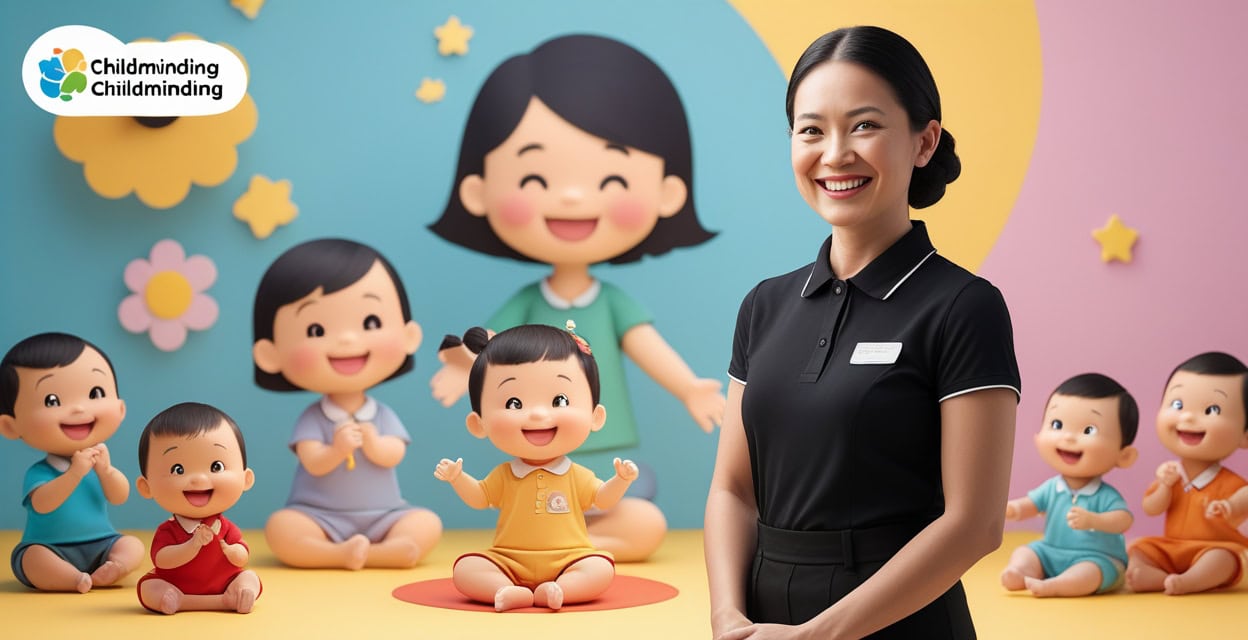
The Purpose and Social Value of Childminding
Childminding is both intimate and civic. It keeps care near home, strengthens neighborhoods, and creates meaningful employment—our Maximum Employment Mandate ensures that capable, caring adults can build a dignified vocation with training, standards, and progression. Parents gain time and confidence; infants gain stability and delight; communities gain cohesion. This is a national initiative that advances excellence and equity at the same time.

What Parents Receive with EduNanny
- Ultra Low Density, Ultra Low Ratio: a maximum of 1:3 infants per childminder.
- Certified EduNanny Childminders: trained in infant first aid, food safety, and infant care; assessed and supervised.
- Background‑checked caregivers and, for home‑based care, background checks on adult residents with regular access.
- Safety and hygiene standards, with a No Sick Child Policy during hours of care.
- CCTV Provided in community spaces; opt‑in CCTV available for home‑based care with consent.
- Centre‑based and home‑based options, islandwide.
- Near‑home distance, convenience, and Monday–Friday, 7am–7pm coverage.
- Affordable fees through the ECDA Pilot: from $16.50 for half‑day (5 hours) and from $33.00 for full‑day (10 hours) before GST.
- Flexible scheduling in subsidised blocks during working hours.
- Fees payable via CDA/Baby Bonus during subsidised hours of care.
- Modern layouts, clean environments, and thoughtful materials for play and rest.
- A dedicated EduNanny Concierge for matching, onboarding, and ongoing support.
- A service aligned to national quality expectations under the ECDA Childminding Pilot.

The Practical Details You Should Know
- Who: Singapore Citizen infants, 2 to 18 months, not concurrently enrolled in ECDA‑licensed infant care.
- What: Childminding in home or community settings by trained, certified, background‑checked childminders; 1 to 3 infants per caregiver.
- When: Mondays to Fridays, 7am to 7pm; you select half‑day (5 hours) or full‑day (10 hours) blocks and the number of days per week you need.
- Where: Islandwide Singapore—near‑home options in community spaces and selected home premises.
- How much: From $16.50 (half‑day) and $33.00 (full‑day) before GST, with CDA/Baby Bonus accepted for subsidised hours.
- How we keep watch: CCTV in community sites by default; opt‑in CCTV for home‑based care with consent, placed in caregiving areas during hours of care.

Four Distinctive Practices You Will Feel from Day One
- The Three‑Minute Arrival: a warm, unhurried welcome with your child’s primary caregiver; hand‑wash, a short song, and a check of cues so the day begins regulated.
- The Floor‑Eye View: caregivers work at the child’s level—on the floor, mirroring, narrating, noticing—because responsiveness begins with proximity.
- The Micro‑Pod Social Script: in tiny groups, babies read faces, trade coos, and learn turn‑taking. Social courage grows quietly, safely.
- The Transparent Close: you receive a clear summary of feeds, sleeps, diapers, play notes and any health observations, so your evening rhythms align.

Why Childminding Matters Now
- Early relational safety predicts later resilience.
- Small groups make calm possible, especially for the youngest infants.
- Near‑home care restores time for families and strengthens communities.
- Dignity in caregiving is a public good that supports a healthier start for all children.
- Joyful beginnings are a societal investment in attention, empathy, and lifelong learning readiness.

EduNanny’s Philosophy in One Sentence
We combine the science of development with the art of tenderness, in spaces designed for safety, connection, and discovery—one caregiver, up to three infants, and a nation’s promise kept.

How to Enroll
Visit https://edunanny.com/edunanny-ecda-childminding-service/ and complete the short form, or enquire via WhatsApp through our site links. Our EduNanny Concierge Team will reach out to understand your needs and match you to a suitable home or community pod. Confirm your appointment for a site visit; meet the childminder, review routines, and discuss any care preferences. Enrol and begin with a gentle, supported transition plan.

Closing
In every handover there is a moment of faith. You offer us your child, and we offer you our presence, our training, our vigilance, and our joy. In a country that prizes excellence, let us remember that excellence begins in the cradle—in the quiet rhythm of responsive care, in the safety of well‑prepared spaces, and in the respectful partnership between parent and childminder.
EduNanny by BUTLER is honored to serve under the ECDA Childminding Pilot. We welcome you to a better, nearer, kinder beginning—where your infant is known, your family is supported, and Singapore’s future is gently, wisely cradled.
Thank you.
[#EduNanny, #InfantCareSingapore, #ECDAPilot, #ChildmindingSingapore, #NearHomeCare]