Close to Home, Far into Tomorrow EduNanny and the Living Curriculum for the Singapore First Thousand Days
Introduction: Beginnings, Trust, and the Promise of EduNanny
Good evenings to parents, grandparents, childminders, educators, and friends across Singapore. Thank you for gathering—here in person and online—to talk about beginnings. The first thousand days are small in length and enormous in consequence. In those days, tiny hands learn to grasp, but more importantly, hearts learn to trust. That trust, and the daily practice of attuned care behind it, is what EduNanny exists to protect. This is the heart of a practical philosophy: care that is as scientific as it is human, as design-minded as it is warm, and as local as it is globally informed.
What is EduNanny?
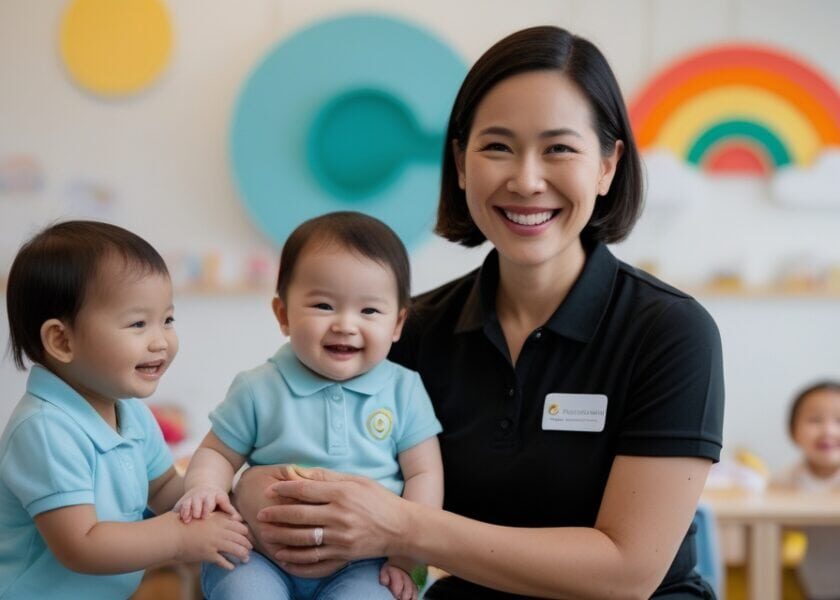
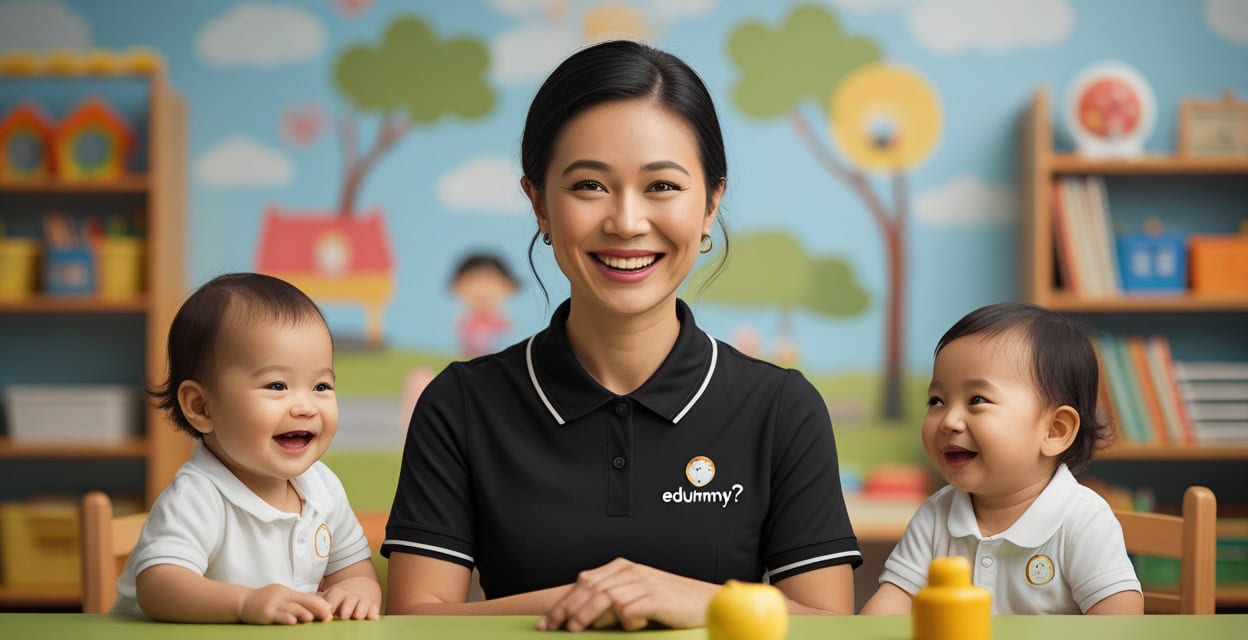
EduNanny by BUTLER is a Singapore-born childminding model that combines the best of science, design, and human warmth. We serve families Monday to Friday, 7am to 7pm, islandwide—through Centre-Based Childminding, Home-Based Childminding, and Distance support for families who need coaching, continuity, or flexible arrangements. We operate with an ultra-low 1:3 infant ratio, modern layouts for safe exploration, and innovation-led transparency through privacy-respectful CCTV that keeps trust visible. We are part of the ECDA Childminding Pilot and aligned to a National Social Initiative with a Maximum Employment Mandate—investing in jobs with meaning, training with rigor, and careers with dignity. Our fees are designed to be accessible, from $33/day, payable with CDA/Baby Bonus, because quality care should never be out of reach.

How EduNanny makes infant care and childminding great in Singapore
We start with three simple commitments that translate into everyday practice:
- Proximity: Care near home and community spaces so that family life is simpler, transitions are gentler, and neighborhoods become ecosystems of support.
- Predictability: Consistent people, clear rhythms, and visible standards that reduce stress and amplify learning.
- Partnership: Parents are not “drop-off”; they are co-authors. We document learning, invite conversation, and make care a shared craft.
Our approach draws on the wisdom of Montessori’s respect for the child, Pikler’s trust in self-initiated movement, Bowlby’s secure attachment, Vygotsky’s social learning, Piaget’s constructive play, Froebel’s gifts and guided wonder, Malaguzzi’s hundred languages, Spock’s family common sense, and Erikson’s stages of becoming. Integrated, not idolized. Lived, not laminated. This is the practical translateable theory that informs daily routines, space design, and caregiver training.
Four Topics that Define Our Practice
1) Pedagogy: The Micro‑Rhythm Method
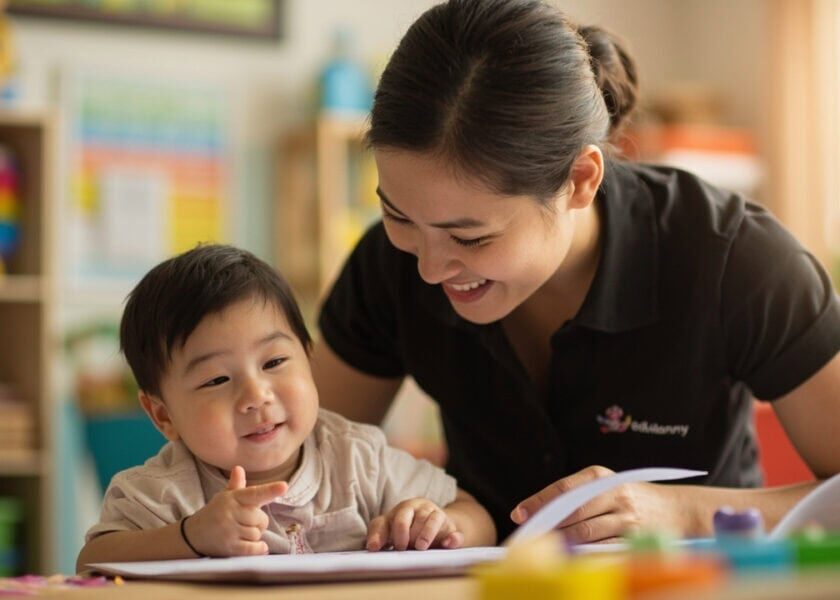
Infants learn in pulses, not lectures. We structure the day around micro-rhythms—short, repeated cycles of observe, attune, and invite.
- Observe: Notice cues with the patience taught by Pikler—how a baby reaches, turns, pauses, or averts gaze. Create a two-minute observation window each flowing activity (play, feeding, resting) and document notable cues.
- Attune: Match pace and tone; provide Montessori-style freedom within safe boundaries. Slow a tempo when a child is overwhelmed; speed up when curiosity leads.
- Invite: Offer a Vygotsky “next step”—a slightly challenging reach, a new texture, a gentle social turn. Introduce an appropriate challenge that remains within the child’s zone of proximal development.
- Living Learning Profiles: We document micro-rhythms to create each infant’s living learning profile—their “Hundred Small Languages”—so every caregiver can scaffold consistently, and every parent can see how tiny moments build big brains.
Practical examples for families:
- During tummy time, record a short clue of progress (e.g., weight shift, reaching for a toy) and discuss with the caregiver at pickup.
- Use language-rich narration during feeding: describe textures, sounds, and actions to promote early communication.
- Implement a simple “pause and mirror” routine after play: adult models a calm breath, child imitates, then shifts to a new activity.
2) Safety: The Five Rings of Protection
Safety is not a single policy; it is a lattice that supports every moment of exploration.
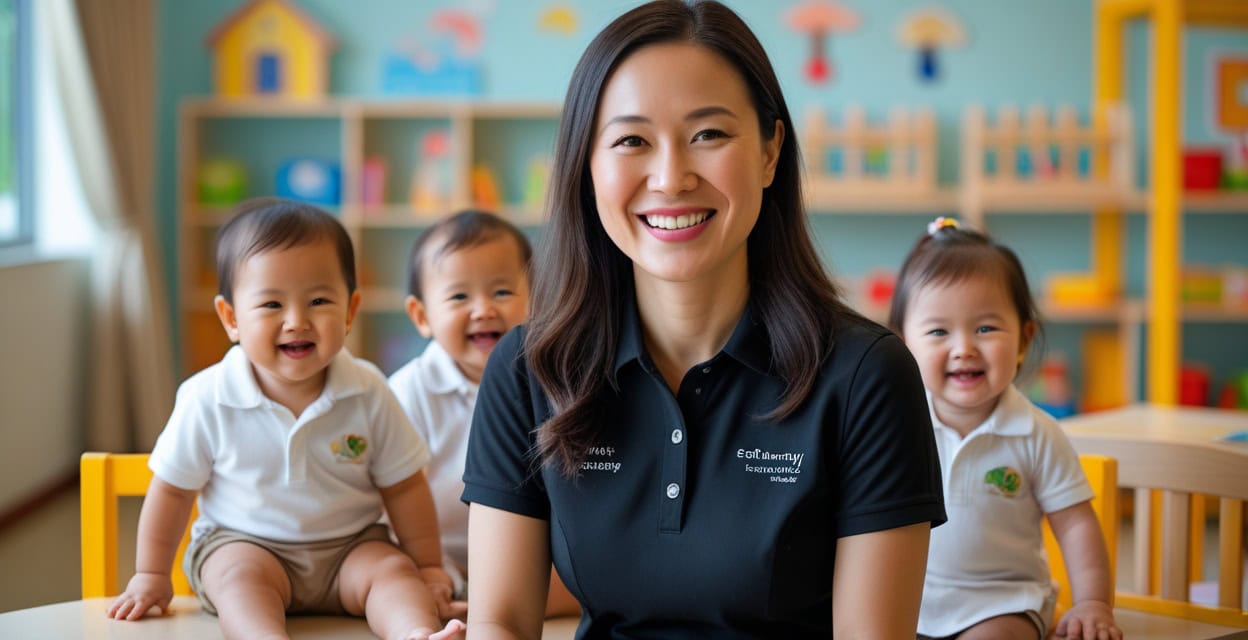
- Design: Purpose-built, modern layouts; low platforms; breathable sleep zones; clear sightlines; natural light; supervised outdoor time. Spaces are designed to invite safe exploration and independence.
- Practice: Infant CPR/First Aid certification, safe sleep protocols, incident rehearsals, allergies and anaphylaxis readiness, hygiene and cleaning standards that exceed requirements. Regular drills become calm routines.
- People: A 1:3 infant ratio; reflective supervision; daily risk scans; calm handovers; respectful caregiving that never rushes a child’s body or voice.
- Technology: Innovation CCTV for live oversight and retrospective review; secure data handling; prompt reporting; checklists that belong to caregivers, not just to clipboards.
- Governance: Clear safeguarding escalations; parent communication pathways; external audits; and continuous learning cycles. Safety is a living standard, not a one-time policy.
3) Development: The Nine Tiny Competencies
We focus on capacities that matter for a lifetime, nurtured through everyday care:
- Secure Attachment: Consistent, responsive “serve-and-return” interactions.
- Self-Regulation: Gentle transitions, predictable routines, and co-regulated soothing.
- Sensorimotor Mastery: Free movement, floor time, and open-ended materials.
- Early Communication: Face time, warm narration, songs, and shared attention.
- Social Turn-Taking: Imitation games, peekaboo, and “your turn—my turn” exchanges.
- Executive Function Precursors: Short waits, simple choices, and soft boundaries to build self-control.
- Curiosity and Agency: Child-led exploration, Montessori-inspired trays, and safe cause-and-effect play.
- Cultural Belonging: Mother tongues, family songs, local stories, and inclusive celebrations.
- Sleep and Nutrition Foundations: Unhurried feeds, responsive sleep cues, and calm, consistent caregiving.
4) Happiness: Joy by Design
Happiness in infancy is not entertainment; it is attuned presence and secure connection.
- Delight Design: Warm voices, unhurried hands, textures from nature, and small group play that matches a child’s energy without overwhelming them.
- Ethical Joy Measurement: Daily mood notes, engagement scans, and frequent parent check-ins that ask, “Is your child’s spark visible at home, too?”
- Protecting Wonder: A “zero-rush” policy during nap, nappy changes, and mealtime; caregivers kneel to a child’s height to share the moment; days that breathe.

The Purpose of the Childminder
Keeper of Attachment
We protect continuity so every baby has a reliable adult to anchor to each day. Consistency in caregivers promotes a sense of safety that supports exploration and learning.
Translator of Development
We make learning visible for families—explaining the why behind the what—so parents feel empowered, not excluded. Regular learning stories translate day-to-day moments into meaningful progress.
Builder of Community
We link families to resources, hire and train locally, and make care a career ladder—so the people who raise our children are valued as professionals with growth pathways and dignity in every role.
Why the Model Matters for Singapore
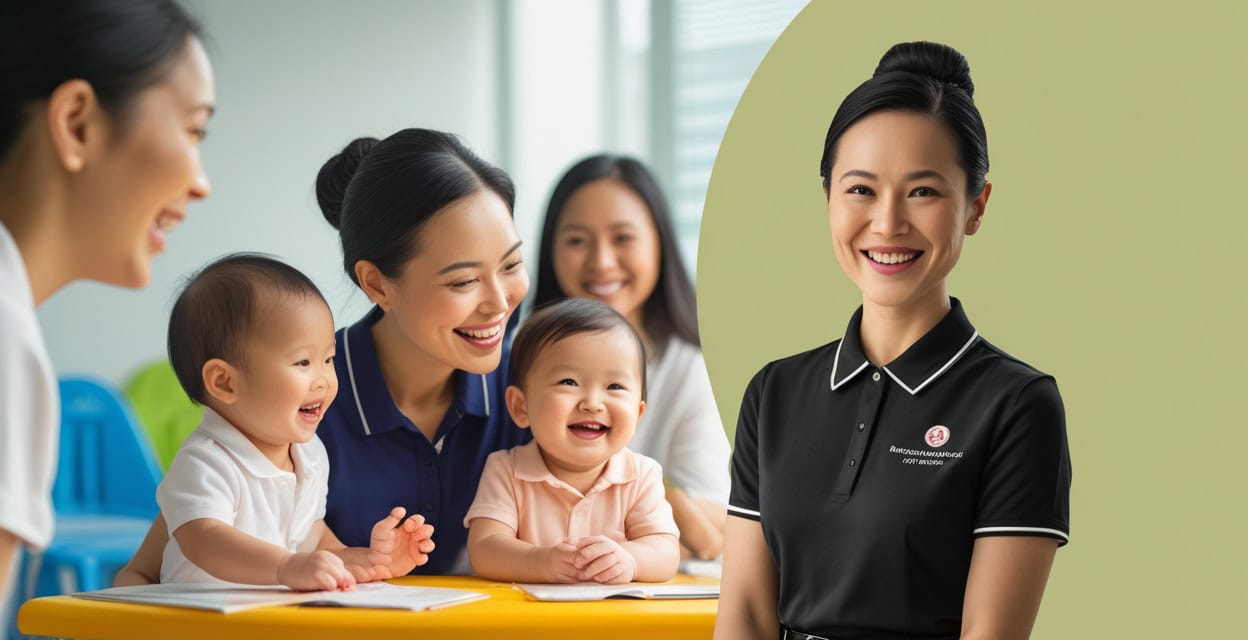
EduNanny is built for real life in our city. Consider how this model translates into everyday life for families and communities:
- Coverage that matches working hours: Monday to Friday, 7am–7pm, to align with typical work schedules.
- Islandwide access: Care options in community centers and homes reduce long commutes and stress.
- Three modes of care: Centre-Based, Home-Based, and Distance support to accommodate illness, travel, and seasonal transitions.
- Transparent affordability: From $33/day with CDA/Baby Bonus support to make high-quality care accessible.
- Innovation with dignity: CCTV for trust and training, paired with strong data protections and parental control in viewing access.
- Ultra-low ratio: 1:3 to ensure attunement and individualized attention as the norm, not the exception.
- Career pathways: A national mindset of professionalizing care and uplifting families through skilled, respected practitioners.
- Public commitment: Participation in ECDA’s Childminding Pilot as part of a wider social effort to support infants and parents.
A Day with EduNanny, in Practice
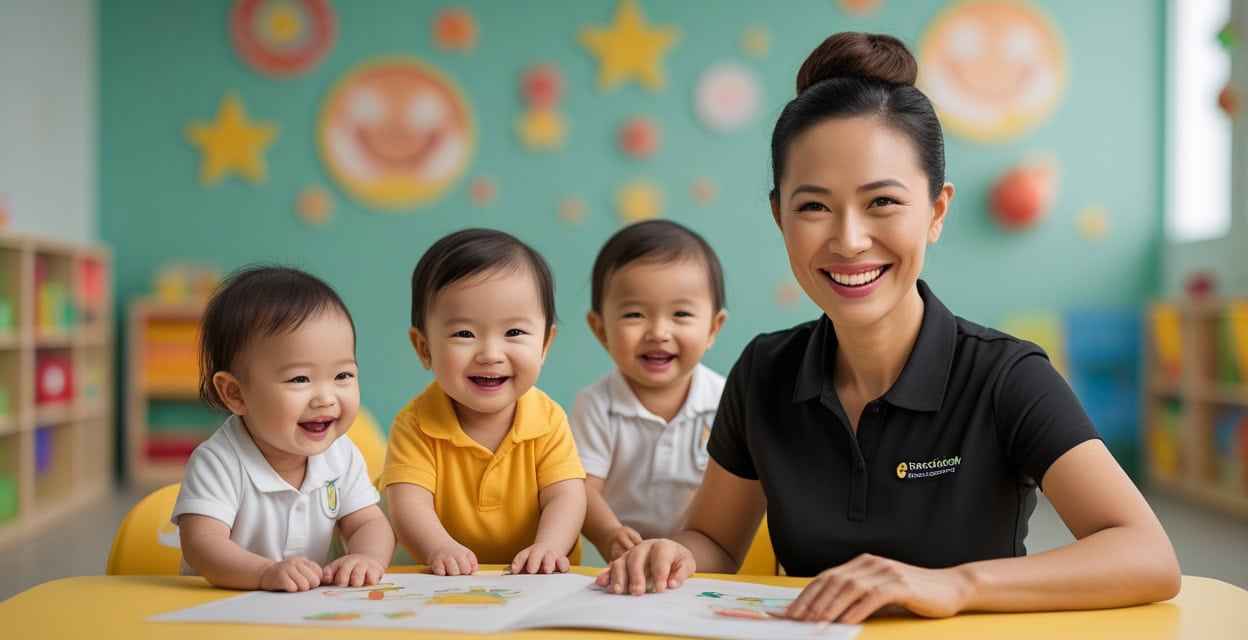
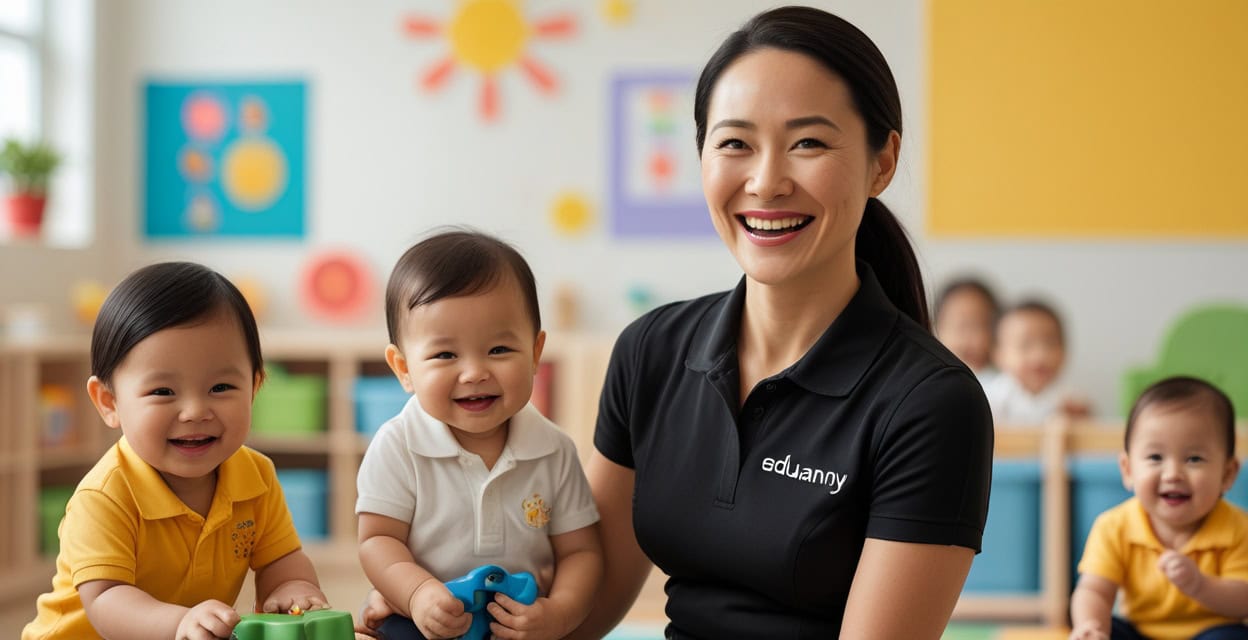
A typical day begins with a warm handover: a parent shares sleep, feeds, and mood in a two-minute exchange, while the childminder narrates, “I see you; I know you.” The infant explores a soft ramp; a caregiver mirrors babble; another documents a first push to knees. In the afternoon, a neighborhood walk invites bilingual naming—clouds named in two languages, birds counted by beats of a song. At pickup, tiny triumphs are shared with photos and stories. At home, the baby settles more easily. The loop is simple: observe, attune, invite; rest, repeat. Ordinary magic, done well.
Benefits at a Glance
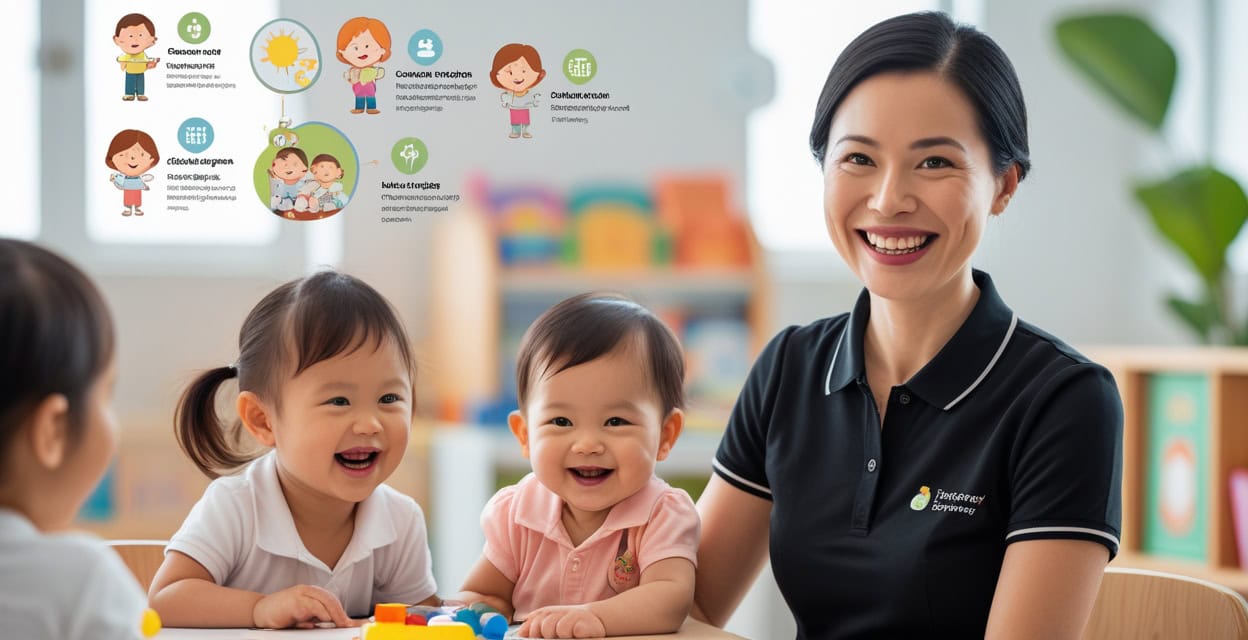
- Excellence and Quality at the core
- Centre-Based, Home-Based, and Distance options
- Convenience: Monday–Friday, 7am–7pm, islandwide Singapore
- Affordable from $33/day; fees payable by CDA/Baby Bonus
- ECDA Childminding Pilot; aligned to a National Social Initiative
- Maximum Employment Mandate; dignified jobs and training
- 1:3 infant ratio
- Innovation CCTV and modern layouts
- Operated by EduNanny by BUTLER
- Learn more: EduNanny.com and Childminding.EduNanny.com
Conclusion: Who, What, When, Where, How—Why Childminding Matters
Who does childminding serve?
Infants who need secure attachment to thrive; Parents who deserve partnership, not compromise; Childminders whose skilled labor builds the nation’s human capital; Employers and communities that benefit from reduced stress and higher stability.
What is great childminding?
Attuned, evidence-based care delivered through small ratios, well-designed spaces, and trusted people—never improvisation, always intention.
When does it matter most?
In the first thousand days, and every workday from 7am to 7pm, when routine becomes the invisible scaffold of development and parental peace of mind.
Where should it happen?
Close to home in community premises, in carefully designed centers, or in the family home—wherever continuity and convenience best serve the child.
How do we make it last?
With the Micro‑Rhythm Method for learning, Five Rings of Safety, transparent technology, fair pricing, and a workforce that is respected, trained, and retained.
And why does EduNanny exist?
Because the way a country holds its babies is the way it holds its future. Our philosophy is simple: dignity in every interaction, science in every decision, and joy in every day. We do not rush the child; we redesign the world around the child. We do not “watch” infants; we build with them the foundations of trust, curiosity, and resilience.
Parents, your hopes are our curriculum. Childminders, your craft is a public good. Policymakers and partners, your support turns quiet excellence into national capacity.
Let us make Singapore a place where every morning handover is a promise kept, every afternoon pickup is a story worth telling, and every infant is held within a circle of care that is close, capable, and kind.
Join us. Visit EduNanny.com or Childminding.EduNanny.com. Enroll a child. Become a childminder. Partner with a neighborhood. Build with us the everyday architecture of a flourishing nation—one steady breath, one gentle hand, one joyful day at a time.
Thank you.
SEO keywords: [#keyword1, #keyword2, #keyword3, #keyword4, #keyword5]