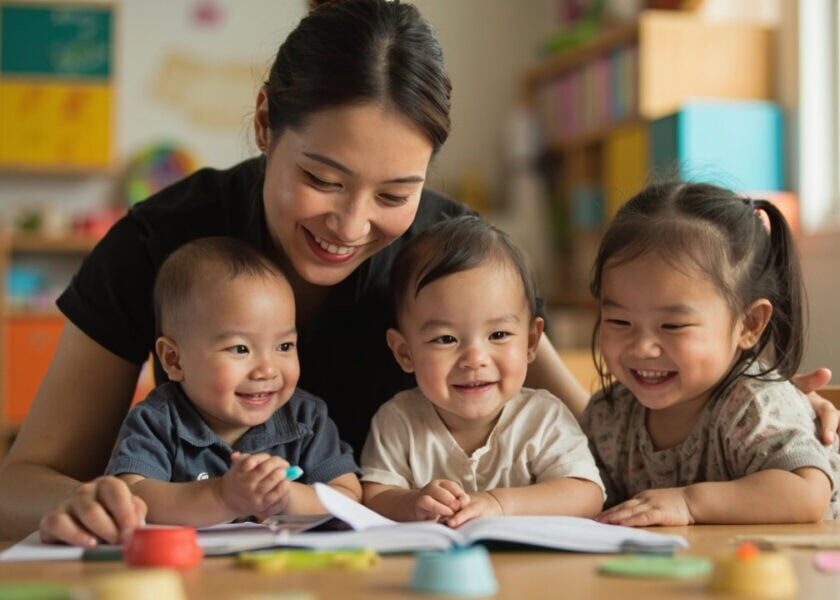
Close to Home, Bold Beginnings: EduNanny’s Five-Pillar Plan for Singapore’s First Thousand Days
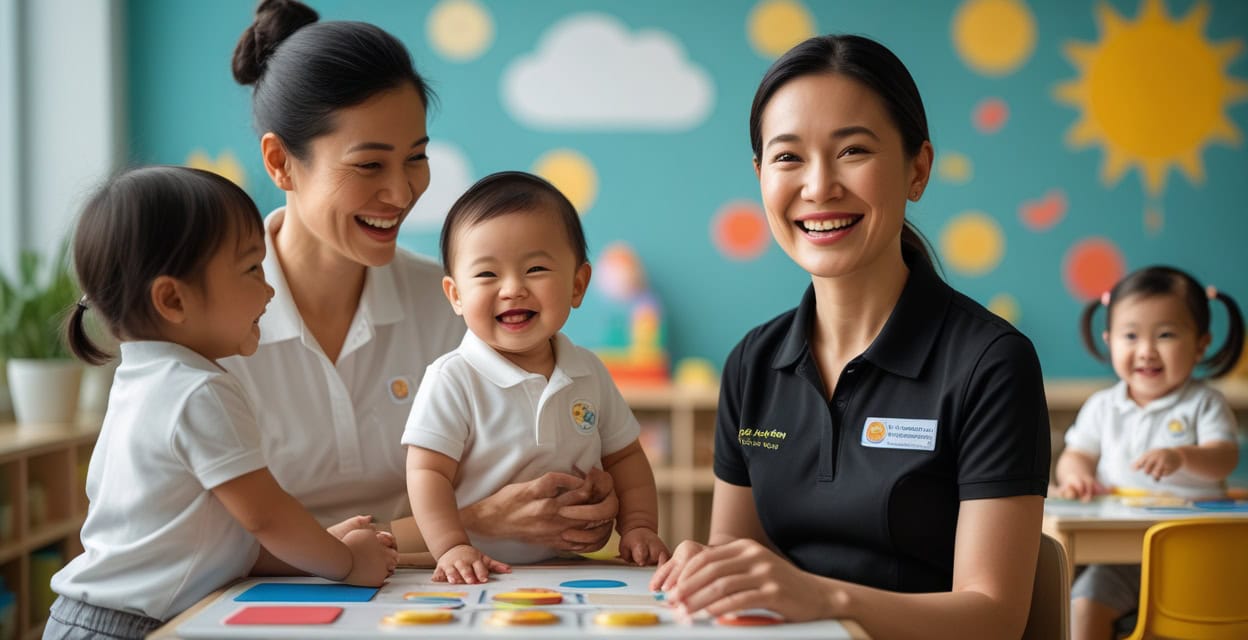
Good evening, partners in care: EduNanny’s roadmap for Singapore’s first thousand days
In the quiet hour before sunrise, a parent balances a bag, a bottle, and a dream. In that moment, every decision about care becomes a hinge—opening or narrowing a child’s world. EduNanny exists for that minute and for all the minutes that follow: to make safety, warmth, and meaningful learning the everyday standard close to home. This is a practical, action-oriented approach to early childhood care that families can rely on in Singapore’s neighborhoods.
What follows is a practical, editor-tested guide to our five pillars, with concrete examples, daily routines, and actionable tips for parents. It combines the vision of EduNanny with the realities of family life, so caregivers, educators, and policymakers can see how theory translates into daily practice.
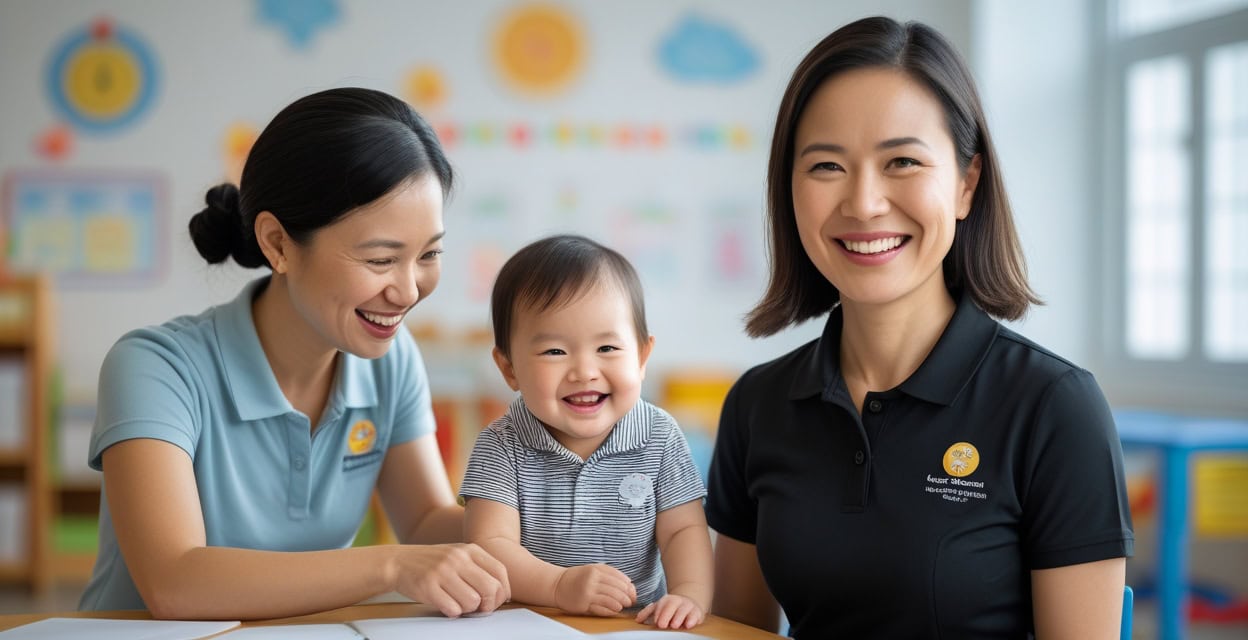
1. The Pedagogy of Proximity: minutes into attunement
Infants are neurologists in miniature. Their “lab” is the caregiver’s face, voice, and touch. When care is near, the handover is smoother; when the caregiver and child share a short commute and steady rhythm, attachment deepens. This is the pedagogy of proximity in daily practice:
- Noticing window: Every 5–10 seconds, childminders scan for cues—gaze, posture, vocal tone—and respond with presence rather than performance. This is deliberate attunement, not guesswork.
- Eye-level and baby speed: Caregivers interact at the child’s level and pace, aligning with the child’s tempo so the brain wires time as a scaffold for learning.
- Micro-rituals at handover: A consistent parent-to-carer conversation, a familiar object, and a greeting in the child’s home language create predictability that calms the nervous system and calms transitions.
From Montessorian respect for autonomy to Piklerian reverence for unhurried touch, the science aligns: near, responsive, and consistent care builds a child’s sense that the world is safe—an invitation to curiosity.

2. Safety as a verb: people, place, practice, proof
Safety is not a poster; it is a living cadence that must be felt in daily routines. EduNanny organizes safety as a four-part system—people, place, practice, and proof:
- People: Ultra-low 1:3 ratios, thoughtful recruitment, and ongoing training. Carers learn infant CPR/first aid, safe sleep practices, bottle hygiene, and positive guidance. Language is safety-forward and dignity-preserving: “safety without shame.”
- Place: Modern layouts with clear sightlines, rounded edges, lockable storage, and zone-specific spaces. Safe sleep uses firm, flat cots, minimal loose items, and airway-friendly positions.
- Practice: Daily sanitization checklists, clearly labeled bottles, timed storage, and secure diapering protocols. Choreography of hygiene steps ensures consistency and reduces risk.
- Proof: Transparent CCTV for accountability, incident learning logs, and regular coaching cycles. Safety is visible, measurable, and improvable.
Safety is not a risk to be minimized by silence; it is a culture of readiness that families can trust every day.
3. A living curriculum for the first thousand days
Learning between zero and three is a conversation, not a timetable. EduNanny’s living curriculum rests on five developmental arcs and is designed to flex with each child’s pace and home context:
- Attachment and regulation: From co-regulation to budding self-soothing; narrating caregiving moments so language and touch build trust.
- Sensorimotor mastery: Respectful tummy time, safe floor play, open-ended objects, and staged gross-motor challenges. Milestones are guided, not rushed.
- Language and communication: Talk, sing, and sign; we honor home languages while providing emotionally safe multilingual exposure.
- Executive beginnings: Early turn-taking through micro-games like peekaboo and naming-and-waiting to foster attention and impulse control.
- Social belonging: Kindness as culture—soft hands, guided sharing, and joyful collaboration. The environment becomes the third teacher, guiding families to adapt principles at home in distance care settings.
In centers, home-based pods, and distance childminding, presence remains the primary method and curiosity the child’s response. A thoughtfully designed environment communicates care even before words—the brain learns to expect learning in a calm, predictable setting.
4. Joy as the daily metric
Progress is best measured by smiles that reach the eyes, relaxed shoulders, and the quiet hum of exploration. Joy is not a distraction; it is a prerequisite for durable learning. Practical ways we integrate joy in daily care:
- Micro-rituals of delight: Warm songs at bottle time, gentle foot rubs, and sunlit floor time after wake windows.
- Yes spaces: Environments where safe exploration is encouraged and corrections are gentle and scarce.
- Calibrated stimulation: Variety that challenges just beyond current competence, never overwhelming leaps.
When infancy is emotionally regulated and joy is nurtured, the nervous system is prepared to learn. Happiness becomes evidence of readiness for new experiences and stronger caregiver-child bonds.

5. The profession and purpose of childminding
Childminding is nation-building at close range. EduNanny’s model advances a maximum employment mandate, lifting caregivers—parents re-entering the workforce, career switchers, and community elders—into skilled roles with clear progression paths. Our professional oath is simple and action-oriented:
- Protect safety with vigilance.
- Guard dignity with language and touch.
- Share learning with families as partners.
- Serve the child’s pace, not the clock’s.
- Practice transparency—our standard you can see.
When we dignify the role, we elevate outcomes: children flourish, families breathe, and communities cohere. A strong caregiving profession is a resilient civic infrastructure.
What makes EduNanny different in practice
- Excellence you can feel: Ultra-low 1:3 ratio, calmly designed spaces, rigorous training, and ongoing coaching.
- Multiple modes of care: Center-based, home-based pods, and distance childminding to fit diverse family needs.
- True convenience: Monday to Friday, 7am to 7pm, with islandwide options that reduce commute stress for infants and parents.
- Accountable transparency: Visible accountability through innovative practices that parents can trust.
- Affordable access: Options starting from $33/day; CDA/Baby Bonus eligibility; scholarships and social pathways under national initiatives.
- Modern environments: Clean lines, natural materials, sensory zones, and safe sleep spaces that communicate respect.
- Public purpose: EduNanny by BUTLER participates in the ECDA Childminding Pilot, aligning care quality with job creation and community resilience.
- Clear touchpoints: Simple, family-friendly enrollment and ongoing family communication channels.
How EduNanny makes infant care and childminding great in Singapore
- Care close to home: Proximity lowers stress, eases transitions, and preserves a child’s biological rhythm.
- Safety as culture: Layered safeguards and visible accountability give families peace of mind and children space to explore.
- First thousand days as civic priority: The brain is most plastic early; calm, consistent care yields lifelong benefits.
- Family partnership: Daily notes, quick videos, and shared caregiving language extend learning beyond the care setting.
- Professionalization of the role: Skilled, stable childminders provide secure bases for infants and stable routines for families.
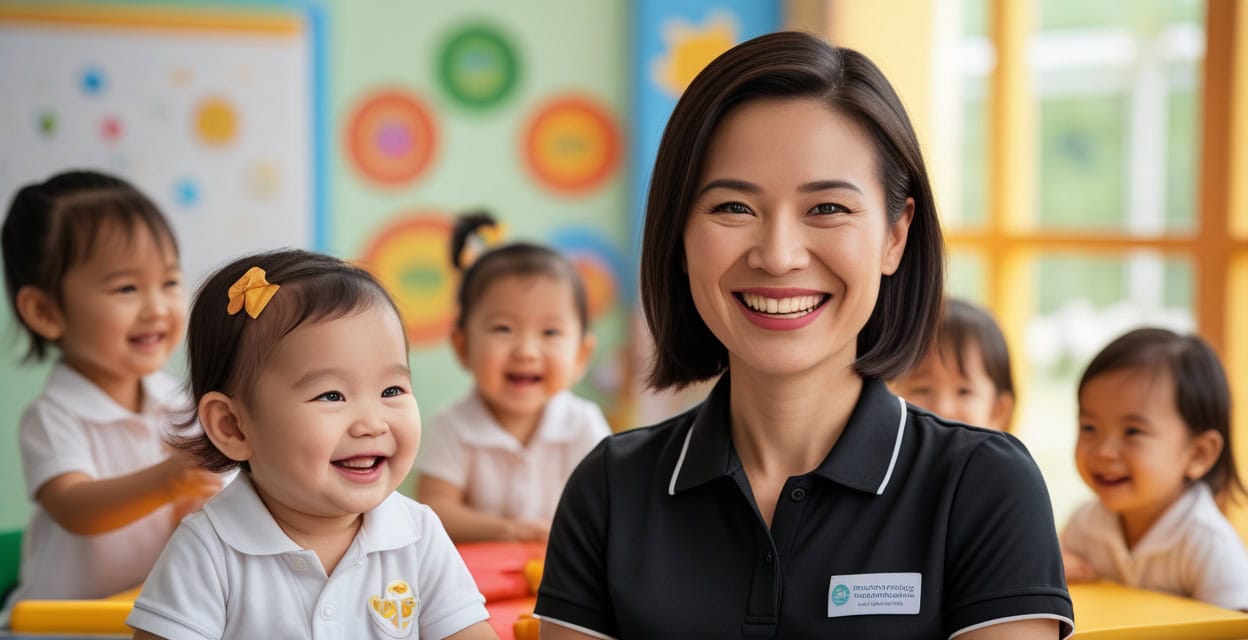
A brief scene from a day with us
It is 8:02 AM. A parent hands their baby to the same carer who greeted them yesterday and will greet them tomorrow. The baby’s eyes search; the carer names the moment: “I see you, Aiden. Daddy’s jacket smells like home. We’re together now.” A soft song during bottle time; a slow stretch before tummy time; a nap in a firm, uncluttered cot; a gentle rub between the eyebrows; a photo to mum with one sentence of genuine noticing: “Today he turned toward my voice faster than yesterday.” This is progress wearing the clothes of ordinary care.
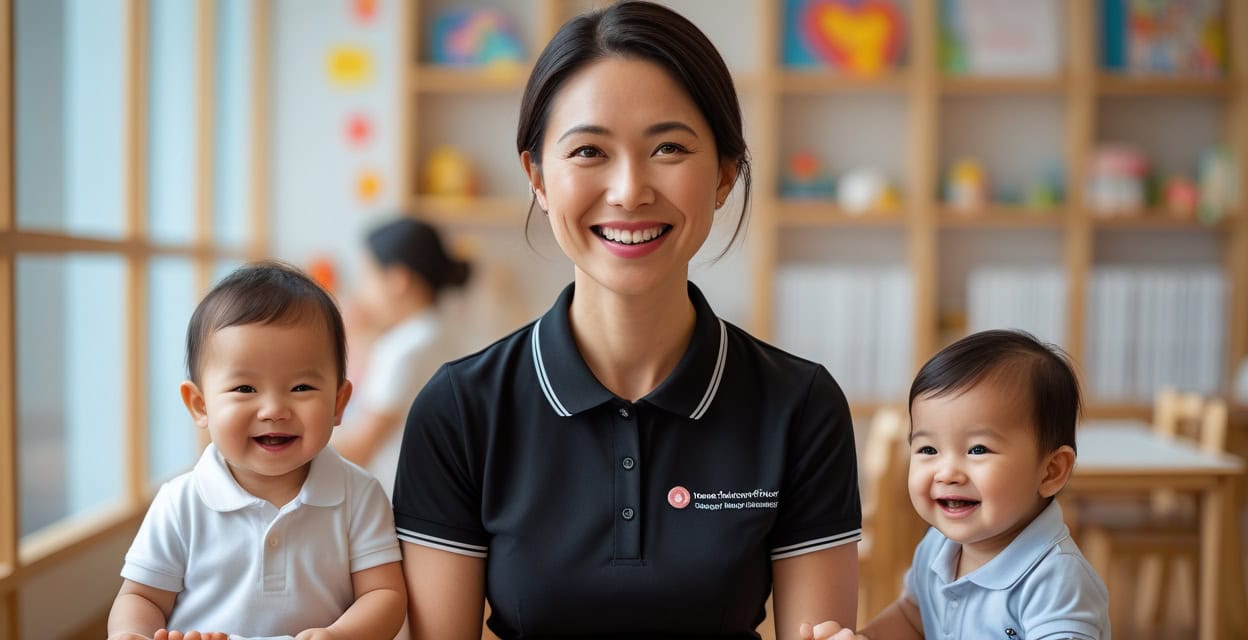
Conclusion: Who, what, when, where, how—why childminding matters
- Who: Every infant, every working family, every carer seeking dignified work. Childminding serves the child, strengthens households, and uplifts communities.
- What: Safe, attuned, developmentally rich care delivered in small ratios by trained professionals who are accountable and supported.
- When: Monday to Friday, 7am to 7pm—reflecting real family rhythms and the needs of working parents.
- Where: Near home—in community premises, thoughtfully designed centers, and supported home-based pods; with distance options when home is the best classroom.
- How: Through a living system—people, place, practice, and proof—anchored by a 1:3 ratio, modern safety design, innovative CCTV, and a curriculum treating every caregiving moment as teaching.
Why it matters: The first thousand days are a national asset. Safety is love made visible. Joy is the best early indicator of readiness to learn. Dignity for infants, parents, and professionals builds civic trust and resilience.
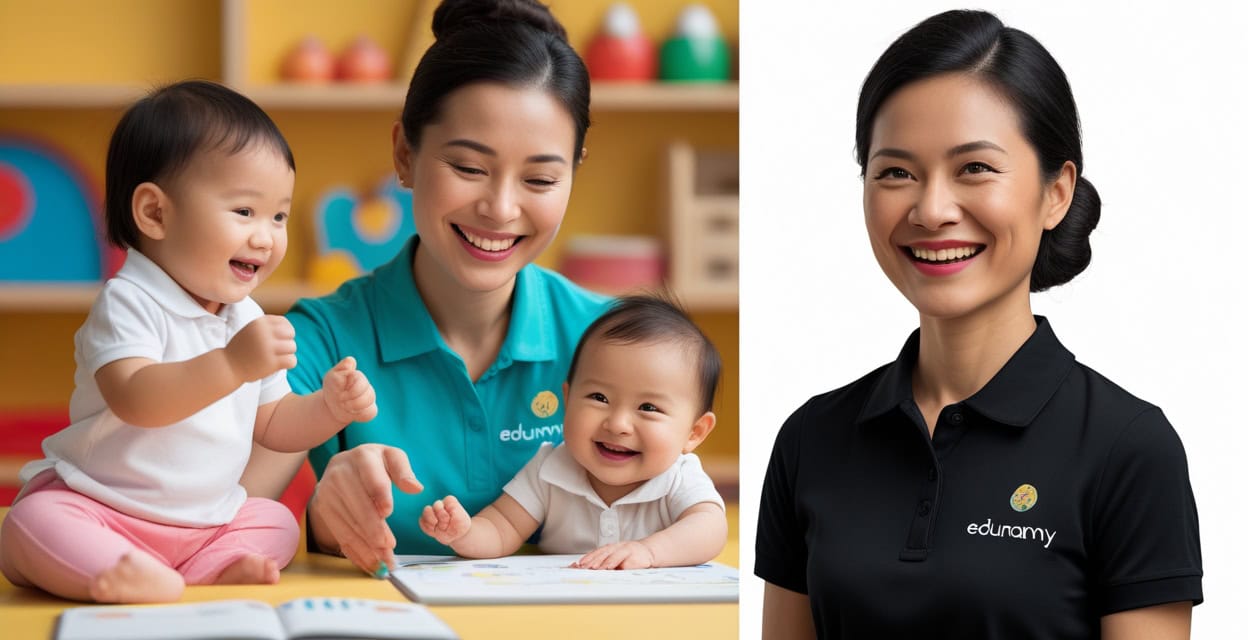
EduNanny’s philosophy: practical, ambitious, and collaborative
- Put the child’s nervous system first; everything else follows in time.
- Make trust measurable; safety becomes a verb you can see and act on daily.
- Keep care close to home; proximity supports family routines and reduces stress on infants.
- Treat childminding as essential civic infrastructure; invest in caregivers, spaces, and training.
- Ensure access is real; affordable pathways, CDA/Baby Bonus support, and employment that strengthens neighborhoods.
To the parents here tonight: your child’s potential is not a future tense. It is present, breathing, and ready. To aspiring childminders: this is noble work, and we will train, support, and honor you. To community partners and policymakers: this is how we turn an ethic into a standard, a standard into a culture, and a culture into a legacy.
A nation is built not only in boardrooms and on runways; it is built each morning on a caregiver’s lap. Join us. Walk into a calm room. Watch a baby’s breath deepen. See the future land softly in the present.
From first light to last pickup, EduNanny will be there—patient, prepared, and proud—to cradle Singapore’s future, one attentive minute at a time. Thank you.
[#keyword1, #keyword2, #keyword3, #keyword4, #keyword5]