Fraud Blocker edunanny.com

Category: Childminding

edunanny-0614462d1397548aa0662b806a6212b6
March 26, 2026

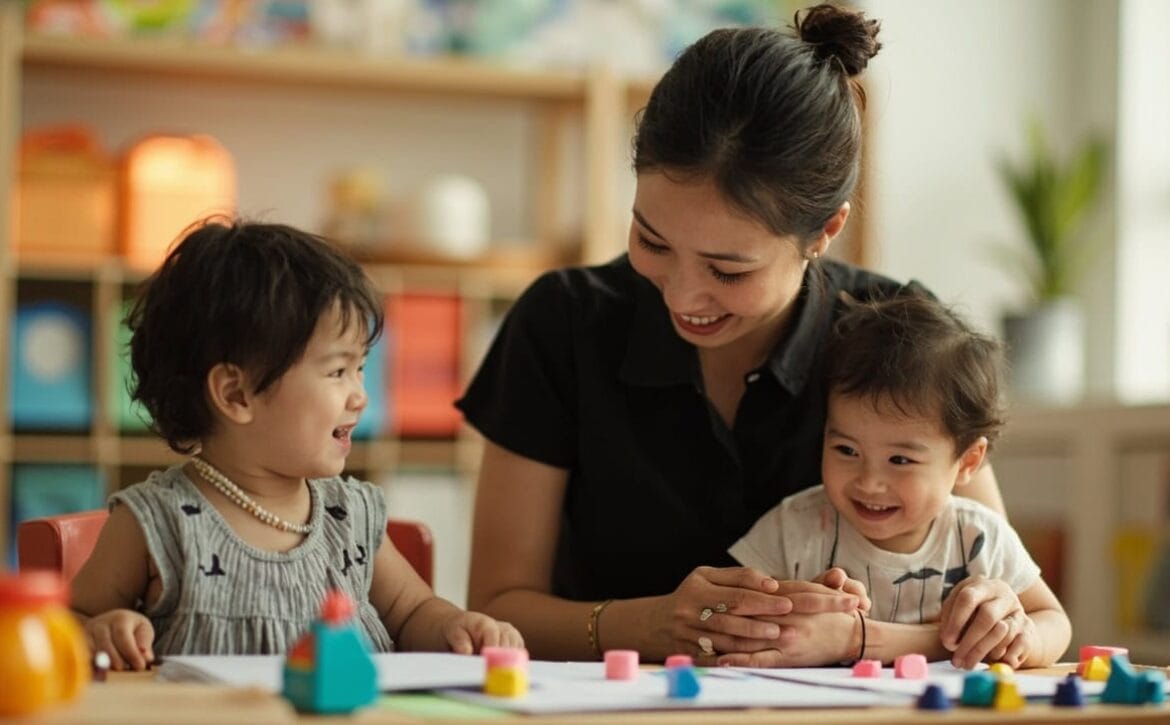
The Emotional Truth About Starting Childcare in Singapore

The Emotional Reality Before Enrollment

We want to speak to the parent who has done everything right and still lies awake wondering if they have forgotten something. The parent who has studied every framework and still feels, in their chest, a tightness when they imagine that first drop-off. The parent who knows how to evaluate a centre but has never been told, with complete honesty, what happens after the doors close behind them.

This is not an article about how to choose childcare. That has been written, discussed, and debated at length. This is an article about what comes after the choice—about the preparation that transforms a decision into readiness, about the realities that no enrollment packet fully captures, and about the kind of partnership between family and caregiver that allows both children and parents to breathe.

The Weight of the Weeks Before

The weeks before a child begins childcare are, for many parents, a period of remarkable doubleness. There is excitement—the recognition that this is a milestone, that the child is growing, that support and structure and new relationships will bless the whole family.

And there is also a heaviness that is harder to name. It is the weight of trusting someone else with the thing you have protected most carefully in the world. It is the strangeness of imagining your child’s day unfolding somewhere you cannot see. It is the guilt that arrives uninvited, even when you know intellectually that you are making the right choice.

These feelings are not weakness. They are not evidence of doubt. They are the signs of a parent who takes seriously the sacred responsibility of raising a child. And they deserve to be named, because unnamed, they become shame. And shame, carried silently, becomes distance—not only from the process, but from the joy that still lives alongside the anxiety.

So here is the first honest thing we want to say: if you have researched, visited, enrolled, and still feel uncertain, you are not behind. You are paying attention. You are not failing at preparation. You are simply standing at the beginning of something that requires a different kind of readiness than the kind you have been cultivating.

The Readiness That Actually Matters

The readiness that matters now is not evaluative. It is emotional. It is relational. And it is profoundly practical in ways that most preparation guides do not address.

In Singapore’s demanding parenting environment, where careers press against family life and information overload is constant, parents are often excellent at gathering information and surprisingly unprepared for the internal experience of letting go—even temporarily. This is not a reflection of failure. It is a reflection of love doing what love does: holding on to what matters most.


What the First Two Weeks Actually Look Like

Consider what actually happens in the first two weeks of childcare. Not the version you have imagined, but the version experienced by real families.

The first mornings are often defined by a peculiar rhythm: the child who clings and cries, then stops, then clings again. The caregiver who is warm but professional, who reassures you at the door while you wonder if they truly understand your child’s particular language of needs.

And for the parent, the drive home—or the return to work—is its own experience. Some parents cry. Some parents feel an enormous, frightening relief. Some feel relief followed immediately by guilt about the relief. Some feel nothing at all, and then feel frightened that they feel nothing, as though the absence of grief means the absence of love.

All of these responses are normal. None of them indicate that you have made the wrong choice. They indicate that you are human, and that you are in the middle of something that is not yet finished.

The Pattern We See in Families Who Navigate This Well

What we have observed, across hundreds of families, is that the parents who navigate this period with the most steadiness are not the ones who felt the least anxiety. They are the ones who had named that anxiety before it arrived.

They understood that the first two weeks would be a period of mutual adjustment—not only the child adjusting to the caregiver, but the caregiver adjusting to the child, and the parent adjusting to an entirely new relationship with their own daily rhythms and expectations.


The Caregiver Partnership: What Actually Helps

Here is the question that most preparation guides omit: what does a good caregiver actually need from you, before your child ever walks through the door?

The answer may surprise you. It is not a fully toilet-trained child, though that helps. It is not a child who sleeps perfectly on a schedule, though routines matter. What a skilled caregiver needs—what enables them to know your child quickly and respond to them with genuine attunement—is information. Not clinical information from a developmental checklist, but the lived texture of who your child is.

Consider sharing:

  • What makes your child laugh?
  • What frightens them?
  • What is their particular way of showing hunger, or tiredness, or the need for closeness?
  • Have they had significant experiences with other caregivers—a grandparent, a previous nanny—that have shaped how they understand trust?
  • Do they have a comfort object, a song, a phrase they use when they need reassurance?

These are the details that no enrollment form captures. They are the details that a caregiver draws upon, in the moments when your child is most uncertain, to speak their language.

The Communication Hunger Most Parents Experience

There is another dimension that deserves attention, because it causes the most silent suffering among Singapore parents. It is the question of what to expect from communication after enrollment.

In the early days, many parents experience a particular kind of hunger. They want to know: Is my child okay? Are they crying? Have they eaten? Did they sleep? Are they safe? And the silence of not knowing—even for a few hours—can feel unbearable. Not because the child is in danger, but because the parent is in a new and unfamiliar relationship with not-knowing.

A good arrangement will keep your child safe, fed, and stimulated. An excellent arrangement will help you breathe. It will provide the kind of communication that acknowledges your anxiety without feeding it, that reassures without minimizing, and that respects the fact that your child’s separation from you is a real loss that deserves acknowledgment—not dismissal.

Communication expectations should be established clearly before enrollment. Ask any prospective caregiver or centre:

  • How often will I receive updates about my child’s day?
  • What will those updates include?
  • How quickly can I reach you if I have concerns?
  • How do you communicate difficult moments—not just the happy ones?
  • What is your approach if my child has had a particularly hard day?

The answers you receive will tell you a great deal about whether this arrangement understands that parental confidence is not the enemy of child independence. A parent who trusts their caregiver transfers that trust to the child, and a child who feels their parent’s trust feels more secure.


Reading Your Child’s Adjustment Signals

One of the most important and least discussed realities of the childcare transition is the difference between a child who is adjusting well and a child who is genuinely misaligned.

In the first weeks, almost every child will show signs of transition. They may be clingier at home. They may have changes in sleep or appetite. They may cry at drop-off, or refuse to eat, or have difficulty settling for naps. These are normal responses to a significant change. They are not, by themselves, red flags.

Signs of Normal Adjustment

  • Crying or clinging at drop-off that decreases over the first two weeks
  • Some changes in sleep or appetite that gradually stabilize
  • Mixed days—harder mornings followed by easier afternoons
  • Playful engagement returning at home in the evenings
  • Willingness to be comforted by caregivers after initial resistance

Signs That May Indicate Deeper Misalignment

There is a different pattern that parents should learn to recognize. It is the pattern that continues past the adjustment window, that intensifies rather than eases, that shows up not only at drop-off but in the child’s overall sense of wellbeing—their play, their curiosity, their openness to the world.

  • Persistent distress that does not ease after the first two to three weeks
  • Withdrawal from activities or people they previously enjoyed
  • A flatness or disengagement that feels unlike their usual temperament
  • Regression in developmental milestones that continues for more than a few days
  • Physical symptoms—frequent stomach aches, nightmares, resistance to eating

A child who is simply adjusting will have hard moments, but will also have moments of engagement and ease. A child who is misaligned may show persistent distress, withdrawal, or a kind of flatness that tells you something deeper is not right.

The Same Principle Applies to the Caregiver Relationship

Normal adjustment means that the caregiver and the family are learning each other—communicating, adapting, finding rhythms. Misalignment means that concerns are dismissed, that communication is defensive, that your observations about your own child are repeatedly overridden by assurances that everything is fine when your parental intuition says otherwise.

We say this not to frighten you, but to honour the intelligence you already possess. You know your child. You have been paying attention for every single day of their life. That knowledge is not replaceable by any framework, any curriculum, or any professional credential—though those matter.


Questions to Ask Before and After Enrollment

The period before enrollment is consequential. It is not about having the right answers. It is about asking the questions that will help you know, early, whether this is a relationship that can bear the weight of raising a child together.

Questions for Your Caregiver or Centre

  • How do you handle a child who is struggling to settle?
  • What does a typical day look like for a child in their first two weeks?
  • How do you individualize the experience for each child?
  • How do you communicate with parents about difficult moments—not just the happy ones?
  • What happens if my child’s schedule is different from the centre’s schedule?
  • How do you handle flexibility when a child needs something different from the routine?
  • What would you do if my child was consistently distressed and not settling?
  • How do you build trust with a child who is new to your care?

Questions to Ask Yourself

  • Do I trust this person with my child’s hard moments, not just their easy ones?
  • Have I been honest about my child’s temperament, or have I presented a version that is easier to manage?
  • Am I prepared to build a relationship with this caregiver, or am I expecting the arrangement to run itself?
  • Am I willing to stay close to the process in these early weeks—not to hover, but to remain genuinely engaged?
  • Am I open to receiving feedback, and willing to adjust my own expectations as I learn what this new reality requires?
  • Do I feel heard when I share concerns, or do I feel dismissed?

These are not questions with right answers. They are questions that, when asked honestly, reveal whether the foundations are in place for the kind of partnership that children actually need.


What Quality Childminding Offers

There is a pathway that deserves special attention here, because it offers something that centre-based care alone cannot always provide: the intimacy of a home environment, the individualized attention that small ratios allow, and the kind of relationship continuity that helps children feel genuinely known.

We are speaking of home-based childminding—where a trained caregiver welcomes your child into a domestic setting designed around their safety and development. In Singapore, this pathway operates under the ECDA Childminding Pilot framework, with registered childminders who meet rigorous standards for care.

The Distinct Advantage of Smaller Ratios

For infants and toddlers, the ratios in quality childminding arrangements allow for something precious: the time and attention to know each child as an individual. When a caregiver is responsible for one to three children rather than one to eight or more, they can observe more closely, respond more attunedly, and build the kind of familiarity that helps a child feel secure.

This is not to say that centre-based care cannot be excellent—it can, and for many families it is the right choice. But for parents seeking an environment where their child will be known in a deeper way, where the pace can slow to match developmental needs, and where the caregiver relationship can deepen into genuine partnership, home-based childminding offers distinct advantages.

The Support Structures That Matter

Quality childminding arrangements do not operate in isolation. Behind each caregiver is a network of support—coordination, training, resources, and oversight—that ensures consistency and excellence.

Look for arrangements that offer:

  • Clear communication channels that you can access easily
  • Regular check-ins and support for both family and caregiver
  • Transparent protocols for handling illness, emergencies, and concerns
  • Ongoing training and professional development for caregivers
  • Flexibility to adapt as your child’s needs evolve

EduNanny: Partnership Before, During, and After

We share these observations because we have walked this path with hundreds of families in Singapore, and we have seen what makes the difference between a transition that breaks and a transition that builds. We are part of the BUTLER family—a network built on the conviction that families in Singapore deserve childcare arrangements that are not merely functional, but genuinely excellent.

We participate in the ECDA Childminding Pilot because we believe that childminding is not a lesser pathway to childcare, but a distinct and valuable approach that, when done with care and expertise, offers something that centre-based care alone cannot always provide. Our infant ratios—up to one to three, depending on the pathway—reflect our belief that the youngest children need the most attentive care.

What We Believe About Your Family

We know that we are not raising your child for you. We know that we are joining a partnership that has already been going since the day your child was born. Our role is to bring expertise, warmth, and an honest commitment to seeing your child clearly—celebrating their strengths, supporting their challenges, and communicating with you with the transparency that trust requires.

Before your child ever walks through the door, we want to know who they are—not as a checklist, but as a person. What makes them laugh. What they need when they are tired. How they show you they love you. These details become the foundation of the care we provide.

Removing Barriers to Access

We also know that quality care should be accessible. Our fee structures are designed to be transparent and manageable, and families in the pilot framework can utilize the Child Development Account and Baby Bonus schemes to support their participation. These are not just administrative details. They are part of our commitment to removing barriers that prevent families from accessing the kind of care their children deserve.

A Tool to Support Your Journey

We also know that modern parenting is demanding in ways that previous generations could not have imagined. The information environment is overwhelming. The pressure to make the right choice—to be the parent who chose correctly—is relentless.

We did not want to add to that burden. We wanted to offer something different: a resource that thinks ahead with you, that names the things you might not have known to ask, and that trusts you to make good decisions once you have the honest information you need.

That is why we have developed Thomas, our AI-powered chatbot—a tool designed not to replace the conversation, but to support it. Thomas can answer your questions at any hour, can help you think through scenarios, can point you toward the resources that are most relevant to where you are in the journey. But Thomas is not EduNanny. EduNanny is the people—the caregivers, the coordinators, the team—who will walk alongside you before, during, and after your child’s transition. Thomas is simply one more way we are making that journey a little easier.


Forgive Yourself—and Begin the Conversation

What children need is not perfection. They do not need parents who never experience doubt, or caregivers who never face a difficult day, or childcare arrangements that run like clockwork without a single tear. What children need is steadiness. They need adults who are paying attention, who are honest about what they do not know, who are willing to repair when things go wrong, and who are committed to showing up, day after day, with care that does not depend on having a perfect experience.

You have done so much already. You have researched, evaluated, visited, and decided. You have likely felt the weight of that decision, the hope that it is right, and the quiet fear that it might not be. You have kissed your child’s forehead in the mornings and wondered if you are giving them enough, and yourself, and your family.

The preparation you are looking for is not out of reach. It is not a perfect plan, or a stress-free transition, or a guarantee that nothing will be hard. It is this:

  • The willingness to stay close to the process
  • To ask the questions that no one else is asking
  • To build a relationship with your caregiver before you need to rely on it
  • To trust that your child’s adjustment will take time, and that time is not your enemy
  • To read your child’s signals with the attention you already have, and to act on them without waiting for permission
  • And, perhaps most importantly, to forgive yourself for the days when readiness feels far away

Because readiness is not a destination. It is a posture—a posture of attention, honesty, and care. And if you are standing here, reading these words, willing to prepare honestly for what lies ahead, you are already practicing it.

Begin the Conversation

EduNanny is here for whatever comes next. Not because we have all the answers, but because we believe that the right questions, asked in the right spirit, lead families to exactly where they need to be. Not to perfection. Not to a childhood without challenges. But to a place where children are known, families are supported, and the work of raising the next generation is shared with integrity and joy.

If you are ready to explore what genuine partnership in childcare looks like—for your family, your child, and your peace of mind—we invite you to begin a conversation with us. Ask the questions that are on your heart. Tell us about your child. Let us show you what honest, attentive, communicative care can feel like.

That is what we are building. And we would be honoured to build it with you.


Ready to take the next step? Speak with our team about your family’s childcare needs, or use Thomas to explore your questions at any hour.
edunanny-061442a9a498eb81eb3de8e6b84e31e3
March 26, 2026

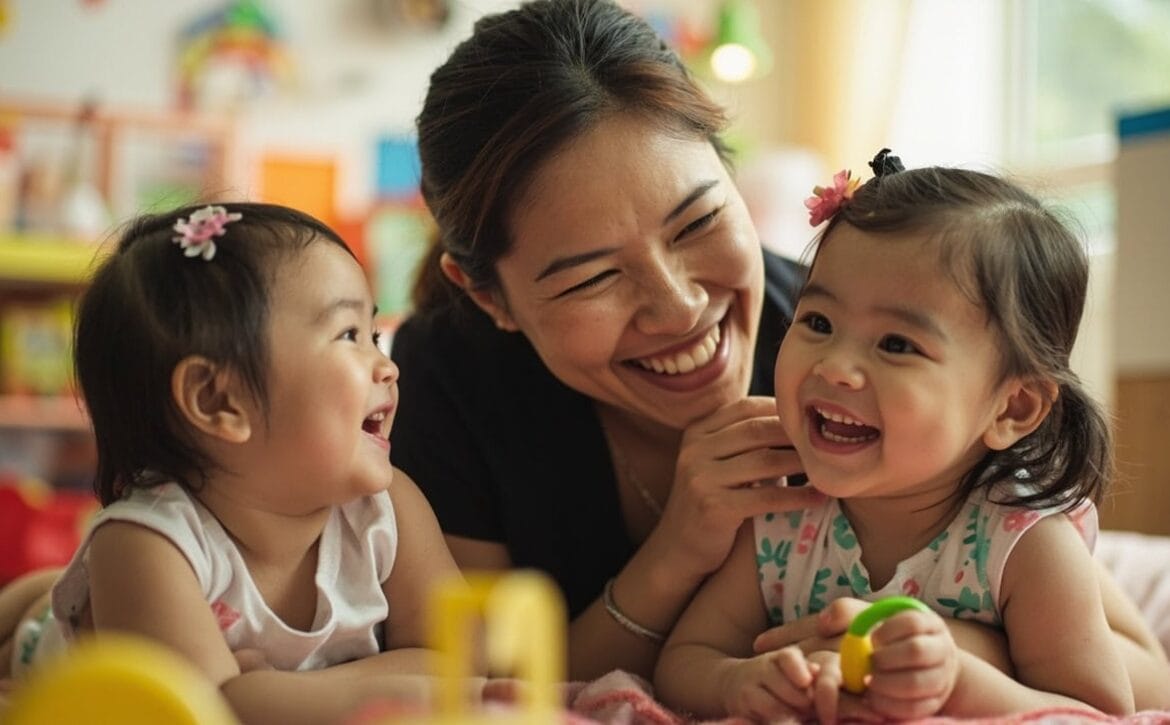
The Morning Goodbye decoded for Singapore Parents

What the Morning Goodbye Is Actually Telling You

There is a moment that every Singapore parent knows. It happens in driveways and drop-off zones, at gates and doorways, in the narrow window between the car seat buckle and the classroom threshold. It is the moment when your child turns back. When the small hand tightens around your finger. When the lip trembles before the tears come—or when something quieter happens: a stillness, a turning away, a composure that seems almost too old for that small face.

This moment has a name, or several names: separation anxiety, morning resistance, the goodbye struggle. Most conversations treat it as a problem to be solved, a phase to be endured, a difficulty to overcome.

But what if we have been reading this moment all wrong?

What if the tears at the gate are not a failure of your childcare arrangement, but its most honest report card? What if the way your child resists the morning goodbye is not a symptom to suppress, but a signal to understand?

Here is a simple premise backed by everything we know about early childhood development: children communicate through behavior long before they can articulate their inner lives in words. A toddler cannot tell you that the classroom feels too large, or that the caregiver’s voice carries a frequency that unsettles them, or that the other children’s energy overwhelms their still-maturing nervous system.

They show you instead. Every morning, at the gate, in the minutes before and the moments after you leave, your child is speaking a language that most of us have never been taught to read. And the remarkable truth is that this language, when we learn to hear it, tells us something essential about whether your child’s care arrangement is genuinely aligned with who they are.

What Your Child’s Drop-Off Behavior May Be Telling You

  • Loud protest at drop-off – Can indicate healthy secure base behavior and trust in you, not just distress. The key question is what happens next: does the caregiver respond with presence or redirection?
  • Quiet, compliant handoff – May seem like smooth adjustment, but investigate further. Is this genuine security, or a protective withdrawal that costs your child something?
  • Swinging between extremes – Morning protest followed by happy afternoons is often normal adjustment. Watch for the arc over weeks, not just days.
  • Regression during transitions – Documented in child development, but not all regression signals the same thing. Some children process change through temporary setbacks; others are signaling chronic stress.
  • Compulsive cheerfulness – An intensity of brightness that feels performative may indicate your child has learned to suppress their full emotional range to meet environmental expectations.

The Five Patterns Worth Understanding

The Child Who Protests Loudly

Consider the child whose crying begins in the car and intensifies at the gate. The arms that reach for you even as the caregiver bends down with warmth and patience. There is a temptation to read this as distress, and certainly some of these children are genuinely distressed.

But there is another possibility worth considering. Loud protest can be what developmental scientists call “secure base protest”—the response of a child whose nervous system is healthy, robust, and appropriately signaling alarm at a significant change. This child is not broken. They are communicating that this boundary between home and elsewhere matters to them, and they want you to know it.

The key question is what happens next. Does the caregiver meet that protest with presence, with steady reassurance, with an acknowledgment that this is hard and you hear them? Or does the caregiver redirect, distract, or gently minimize the child’s experience? Both responses may stop the tears, but they tell very different stories about what is happening inside that child’s developing sense of safety.

The Child Who Goes Quietly

Now consider the opposite pattern: the child who offers a wave, who accepts the handoff, who turns away with little visible resistance. This is often celebrated as “adjustment,” as evidence that the child has settled well.

But here too, we must look more carefully. Is this child settling because they feel secure, because the environment genuinely meets their needs, because they have built trust? Or is this quietness something different—a withdrawal, a protective diminishment of self, a learned response that says “it doesn’t matter what I feel, no one can do anything about it”?

There is a particular kind of quiet that should give us pause. It is the quiet that comes without stories. The child who used to tell you about the morning—who used to describe the other children, the toys, the songs—and who now offers only monosyllables when asked. The child who used to run toward the gate and who now walks slowly, detachedly, without urgency.

The Child Who Swings Between Extremes

The morning protest followed by an apparently happy afternoon, only for the pattern to repeat the next day. Or the child who shows regression—a potty-trained child who has accidents again, a verbal child who stops speaking, a confident child who becomes suddenly clingy at home.

Regression at times of transition is well documented in child development. But not all regression is the same. Some regression signals a child processing a significant change, building integration around a new experience. Other regression signals a child whose stress response system is chronically activated, who has not found the safety they need to let go of the coping strategies that are now causing new problems.

The Child Who Performs Too Brightly

This is the child who protests with an intensity that feels almost anxious. Who waves enthusiastically and says goodbye before you have finished saying it. Who greets the caregiver with a brightness that seems rehearsed.

This child may be telling you something important about what they have learned is expected of them, about what behaviors earn approval, about a self that is being constructed to meet the demands of an environment that may not have room for their full, complicated, fully human emotional range.

The Child Who Processes With Delay

Some children hold themselves together through the morning transition only to fall apart in the afternoon or evening. This delayed processing is not manipulation or testing. It is the response of a child whose nervous system needed to maintain enough regulation to get through the drop-off, and who can finally release what they were holding once they are in a safe space.

Understanding this pattern protects you from misreading your child’s behavior as inconsistent or attention-seeking. Sometimes the child who seems fine all day is the one most in need of your patience when they come home.


Why Caregiver Attunement Changes Everything

Each of these patterns—the loud protest, the quiet withdrawal, the swinging between states, the compulsive cheerfulness, the delayed processing—carries meaning. And the meaning is not universal. It cannot be decoded by a checklist or reduced to a formula. It must be read in context, over time, with attention to what changes and what stays the same, with awareness of your own child’s particular temperament, history, and needs.

This is where caregiver attunement becomes everything.

The way a caregiver receives your child’s morning signals shapes what those signals become. A caregiver who is attuned—who can read the difference between a child who needs to be held and a child who needs to be given space, between a child whose protest requires presence and a child whose protest requires gentle, confident forward motion—creates an environment where your child’s communication is validated and responded to.

Over time, a child in such an environment begins to trust that their signals will be heard. The protest becomes shorter. The withdrawal becomes less necessary. The regression resolves as the child integrates the experience of being understood.

A caregiver who is not attuned—who responds to all distress with the same intervention, or who is so focused on logistics and schedules that they miss the child’s signals entirely—creates a different environment. In this environment, the child must work harder to be understood. They may escalate their communication, becoming more dramatic in their protest, or they may give up on communication altogether, retreating into the quiet that requires nothing of a caregiver who cannot receive it.


What Singapore Parents Should Actually Watch For

The Quality of the Afternoon Transition

How does your child behave when they come home? Is there a release—a heaviness that lifts, a tension that dissipates—or is there a continuation of whatever state they showed at drop-off?

A child who is genuinely well-adjusted often shows what researchers call “clean transitions”—a child who has successfully left the morning behind and is fully present in the afternoon, available for play and connection and the ordinary pleasures of home.

A child who is struggling may show signs of continued dysregulation—irritability, clinginess, difficulty settling, disrupted sleep, changes in appetite. These are the signals that matter most, because they reveal what is happening below the surface of the drop-off performance.

The Arc Over Time

The first days are almost meaningless. A child may protest every morning for two weeks and then suddenly settle, having built the trust and security they needed to make the transition. Or a child may go quietly for a month before suddenly falling apart, having held themselves together until they felt safe enough to show you how hard it has been.

The question is never “what happened this morning” but “what is the pattern emerging over weeks and months, and what direction is it moving?”

The Stories Your Child Tells

Pay attention to what your child shares about their day—not just the facts, but the emotional texture. Do they speak about the caregiver warmly, indifferently, or with anxiety? Do they mention specific activities, children, routines? Or does their day seem to be a blank space?

The richness and emotional quality of their storytelling reveals much about their inner experience.

Red Flags That Warrant Immediate Attention

These are not about the drop-off moment itself. They are about what happens across the day, across the weeks, across the full landscape of your child’s experience.

  • A child who shows signs of genuine distress that never modulates—who is crying or withdrawn throughout the day, not just at drop-off
  • A child whose development seems to be regressing in significant ways—the loss of language, the withdrawal from previously enjoyed activities, the emergence of concerning behaviors that did not exist before
  • A child who speaks with fear about the caregiver or the environment, whose descriptions of their day are dominated by anxiety rather than the ordinary mix of likes and dislikes

These are signals that something is wrong, that the arrangement may not be a fit, and that the question is not whether to act but how quickly you can find an alternative that better serves your child.


Common Questions Singapore Parents Ask

“Am I a bad parent for leaving my child?”

No. The research on early childhood attachment is clear: what matters is not the amount of time spent apart, but the quality of the relationships your child experiences in your absence. A child who feels secure with their caregiver is not being harmed by your return to work. They are building the capacity to form healthy attachments with multiple trusted adults.

“What if my child’s drop-off crying means something is wrong with my childcare choice?”

Drop-off crying can mean many things. It can mean your child has a healthy attachment to you and a healthy protest response to separation. It can mean your child is processing a significant life transition. It can mean the caregiver’s style does not match your child’s needs. Or it can mean your child had a difficult morning for reasons unrelated to the care arrangement—a tired night, a developmental leap, a minor illness below the surface.

The drop-off is a window, not the whole picture. Use it as information. Observe what happens after. Track the arc over weeks. Bring your observations into conversation with the caregiver. This is what thoughtful parenting looks like.

“How do I know if the caregiver is truly attuned?”

Ask to see the morning transition. Notice how the caregiver greets your child. Do they get down to your child’s level? Do they acknowledge your child’s emotional state before moving to the next activity? Do they offer reassurance that feels genuine, or does it feel scripted? Do they seem to notice the small details—the particular comfort your child needs, the particular thing that triggers them?

Observe over time. Ask your child about their caregiver in age-appropriate ways. Watch for the signs we have described: the quality of the afternoon transition, the richness of the stories they tell, the degree to which they seem to be growing into themselves or shrinking to fit a space that does not hold them.

“Is it too early to change arrangements if things aren’t going well?”

Children are remarkably resilient, but they are not indestructible. If the signals are consistently concerning—if your child shows ongoing distress, significant regression, or fear-based responses—the cost of waiting is not worth the cost of change.

An early childhood arrangement that does not fit can leave lasting impressions on a child’s developing sense of safety and self. Changing course is not a defeat. It is wisdom. It is what it means to be a parent who pays attention, who takes the child’s communication seriously, who refuses to accept an arrangement that does not serve them.


Finding Quality Care That Sees Your Child

The morning goodbye is a source of information, not a verdict. It is a data point in a larger story. Understanding this helps you shift your focus from eliminating the difficult moments to interpreting them. You are not looking for a childcare arrangement where your child never cries. You are looking for one where your child’s crying is received with understanding, where their signals are heard and responded to, where they are known as a full person rather than managed as a problem.

Quality infant care in Singapore is not about pristine drop-offs. It is about the quality of attention that surrounds the transitions—the morning arrival, the midday routines, the homecoming at day’s end. These are the moments when children are most vulnerable, most present, most available for connection or disconnection. They are also the moments when the relationship between caregiver and child is most visible, most malleable, most responsive to skilled attention.

When you evaluate a potential childcare arrangement, ask about these transitions specifically. How does the caregiver handle the morning hello? What does the afternoon handover look like? What happens when a child is clearly struggling? The answers you receive will tell you far more than any inspection of the physical space or review of the curriculum.

How EduNanny Singapore Approaches the Morning Moment

At EduNanny Singapore, we train our caregivers to understand this. We do not simply train them in safety protocols or developmental milestones, though these matter. We train them to be observers of the morning moment—to notice not just whether a child is crying, but how they are crying, what their body is doing, what their eyes are searching for, what happens in the minutes after you leave.

We train them to receive the child’s communication as a gift rather than a disruption, as information that helps them serve that child better. And we train them to adapt, to adjust their approach based on what they see, recognizing that no single strategy works for every child and that responsiveness is not a soft skill but the core of quality care.

EduNanny Singapore operates as part of the ECDA Childminding Pilot, offering pathways that include both home-based care and community or centre-based settings, depending on what serves your family best. Our infant ratios are designed to allow for the individual attention that the youngest children—and their parents—need. Our caregivers are trained in the observational practices we have described, in reading the morning signals and responding with attunement.

Fees and Accessibility

We want to be transparent about the practical dimensions of quality infant care in Singapore. The fee structures within the ECDA Childminding Pilot are designed to be accessible. CDA and Baby Bonus funds can be utilized, making quality care within reach for families across the economic spectrum.

Monday to Friday care blocks accommodate the rhythms of working parents. These are not peripheral details. They are part of our commitment to making infant care not just high-quality but genuinely available—to the teacher and the executive, to the HDB flat and the landed property, to the first-time parent and the one who has done this before and knows, now, what matters most.


The Invitation

As we close, we want to return to where we began: the moment of goodbye.

That moment, which feels so ordinary, so daily, so repetitively difficult, is actually extraordinary. It is a daily invitation to witness your child as a full, communicative being—to see them not as someone who must be managed through a transition but as someone who is telling you something true about themselves and their experience.

The child who cries at drop-off is not giving you a hard time. They are having a hard time, and they are brave enough to let you see it. The child who goes quietly is not necessarily fine. They may be managing something complex, and your attention to the full story of their day will help you understand what that quietness means.

This is the invitation we offer you: to become fluent in the language your child speaks at the morning gate. To trust your own observations alongside expert guidance. To resist the urge to read every tear as failure, and the equally important urge to dismiss every apparent ease as success.

Look, instead, at the whole picture—the arc of weeks, the evidence of the afternoon, the quality of the stories your child tells, the degree to which they are growing into themselves or shrinking to fit a space that does not quite hold them.

Because the morning report is always coming in, every single day. And if you learn to read it, it will tell you everything you need to know about whether your child is in the right place to grow.


Ready to find a childcare arrangement where your child will be truly known? Connect with EduNanny Singapore to learn about our infant and childminding services, caregiver training, and how we read and respond to the morning signals that matter most.

You can also learn more about our approach or explore our full range of services.


Understanding separation anxiety and drop-off behaviors is part of the journey for every Singapore family. For more resources on infant care, childminding, and early childhood development, explore EduNanny Singapore’s collection of guides and articles for thoughtful parents.

edunanny-06143f2b7d4097e46f3041e237a717c5
March 26, 2026

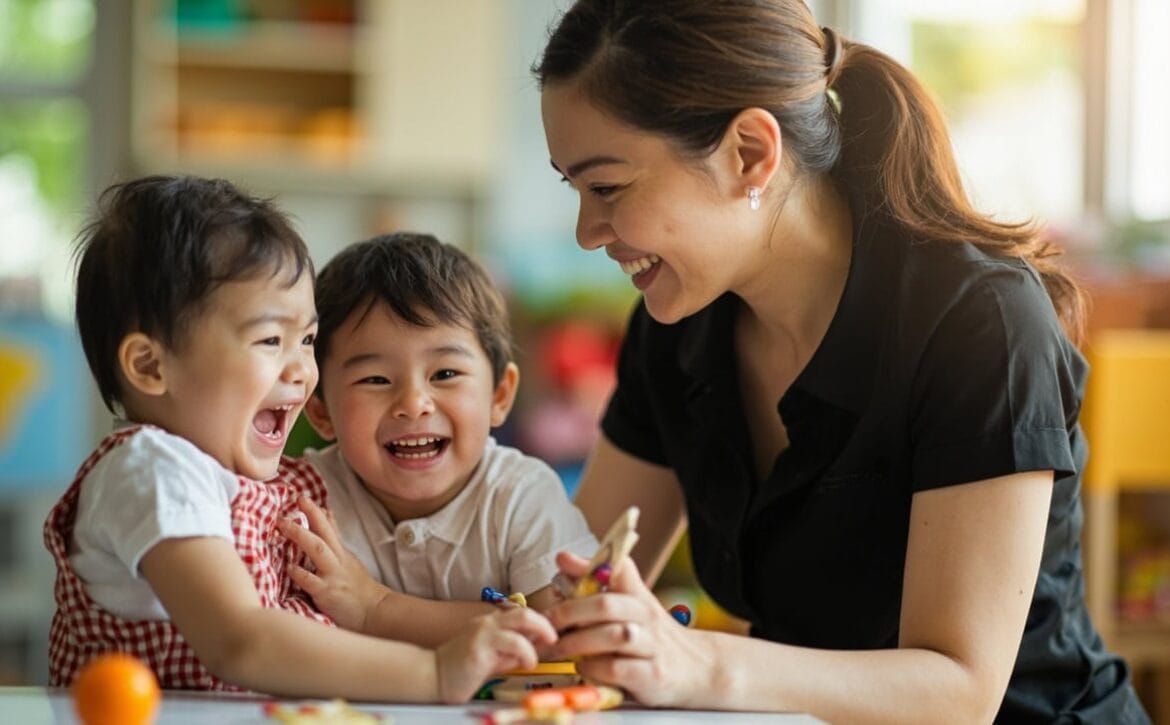
How Singapore Parents Find Quality Childminding for Their Growing Family

Quick Summary

  • Most childcare conversations focus on selection—finding someone reliable, evaluating safety. What they miss is what comes after: the long, textured days and months of actually living with childcare.
  • EduNanny reframes childcare as a living ecosystem—one that integrates into your family’s daily rhythms, adapts as your child grows, and becomes woven into your household’s emotional architecture.
  • This article walks through a typical day with EduNanny, explains what quality childminding looks like, and offers guidance for parents making this decision in Singapore.

What Most Childcare Conversations Miss

There is a particular quality to the light in Singapore at six in the morning. It comes through the windows soft and gray before the heat arrives, and in those first quiet minutes, you remember why you set your alarm an hour before the children wake.

This is the hour that belongs to you.

And then they wake. What follows is a choreography that every parent in Singapore knows by heart. The carrying of a sleepy infant downstairs. The negotiation with a toddler who wants the red cup, not the blue cup. The checking of bags, the searching for the lost shoe that is always in the same place. The morning commute in miniature, performed with the precision of a practiced dance.

This is the rhythm that defines the early years. This is the rhythm that EduNanny Singapore was built to hold.

Most conversations about childcare begin with a practical question: How do I find someone reliable? How do I know my child is safe? These are important questions, and they deserve careful answers. But they are questions about choosing, about deciding, about the moment of selection.

What they miss is what comes after—the long, textured, ordinary days and months of actually living with childcare. They miss the daily reunion at pickup. The handover conversation in the morning. The slow, invisible process of a caregiver becoming part of your family’s story. The way that consistent, loving care becomes woven into the architecture of your child’s emotional life in ways you will only fully understand years later.

EduNanny asks a different question. Not How do we provide childcare? but How do we become part of the rhythm that your family lives by?


The Morning Handover: A Ritual, Not a Transaction

Childcare, when it is done with depth and intention, is not a service you purchase. It is a living ecosystem that integrates into your family’s daily rhythms, emotional life, and long-term flourishing.

The handoff happens at your doorstep, or at a designated meeting point, or at one of the community spaces where EduNanny families gather. You hand your child over, and what happens in that moment matters far more than it appears.

There is a transfer of trust—a parent saying, through words and through the calm in their body, that this is someone worthy of caring for what is most precious. There is a brief exchange of information: the night’s sleep, the morning’s mood, any small thing that might help the hours ahead go smoothly.

There is eye contact between you and your caregiver, and in that eye contact is a contract that goes beyond any written agreement. It says: I am paying attention. I will notice the small things. I will keep your child safe, and curious, and loved.

Like all meaningful rituals, it gains power through repetition. Over days and weeks and months, the morning handoff becomes a passage that your child learns to expect and trust. The anxiety that might exist in those early days softens, because the ritual itself communicates reliability. The same person. The same words. The same care.

This is how trust is built—not through grand gestures, but through the steady accumulation of small, consistent moments.


The Hours Apart: What Quality Care Actually Looks Like

While you are at work, navigating the particular pressures of raising young children in Singapore—the cost of living, the demands of dual-income households, the expectations, the balancing—your child is in the care of someone who knows them.

Not just their schedule and their preferences, but the quality of their laugh. The way they process new experiences. The activities that calm them and the ones that light them up. The small anxieties that come and go, and the ways to meet them.

EduNanny operates within the ECDA Childminding Pilot, and what that means in practice is a structure designed to make this kind of knowing possible. Home-based and community pathways offer environments that are smaller, more relational, more attuned to individual rhythms than large institutional settings.

In infant care, ratios are kept to one caregiver for every three infants. This is a deliberate choice to protect the quality of attention that the youngest children need—the kind of attention that teaches them, long before they have words for it, that the world is a reliable place.

What happens in these hours is not supervision. It is care in its fullest sense—a responsive, attentive presence that tracks the child’s development, supports their emerging abilities, and holds them warmly through the ordinary frustrations and wonders of the day.

  • When your infant takes their first steps with EduNanny, it will be a caregiver who witnesses it and calls to celebrate.
  • When your toddler navigates a conflict over a toy, it will be someone who guides rather than controls, who helps them find words for their feelings and tools for resolution.
  • When your preschooler navigates a new social situation, it will be someone who has watched them grow through every stage and knows exactly how to support their emerging confidence.

The Reunion at Pickup: A Window Into Your Child’s Inner Life

There is a moment, if you are lucky, when you arrive early enough to observe from a distance—the reunion. A caregiver who has spent the day with your child hands them back to you, and what happens in this exchange is remarkable.

You receive not just a child who is fed and rested and changed, but a transmission of the day’s inner life. The caregiver tells you that your child was frustrated by a puzzle this morning and then elated when they solved it. That they tried a new food and rejected it spectacularly. That they asked for you, gently, and were soothed.

That they played in a way that revealed something new about their personality—a competitiveness, a tenderness, a preference for solitude or for company that you might not have seen so clearly at home.

This is one of the most undervalued gifts that quality childcare provides: the window it opens into your child’s inner life. You learn to read your child differently because someone else has been reading them carefully all day. You receive their day as a story, and in the telling and receiving of it, you become more fluent in the language of who they are.

The fear that lives in the background of all working parents—the worry that time apart means time lost, that missing the hours means missing the child—is gently addressed by the simple act of a thoughtful handoff. You were there, the day tells you. You just saw it through different eyes.


Growing the Ecosystem as Your Child Grows

The ecosystem grows. This is perhaps its most important characteristic, and the one most often overlooked by parents in the moment of selection.

When you first seek childcare, your child is small. Perhaps they are an infant, still adjusting to the world outside the womb. Perhaps they are a toddler, newly mobile, newly verbal, newly aware of their own desires. What you need in this moment is presence. Safety. Attunement.

But children grow, and what they need changes dramatically as they move through developmental stages.

  • The infant becomes a toddler who needs not just care but conversation.
  • The toddler becomes a preschooler beginning to prepare for the social and academic demands of formal schooling.
  • A family’s circumstances shift too—parents change jobs, siblings arrive, relocations happen.

The rhythm that worked last year may not work this year, and the childcare ecosystem must be capable of growing with these changes.

EduNanny is designed not as a static arrangement but as a living system that adapts. The same caregiver who held your infant with tender attention now guides your toddler through early language games and motor skill activities. The same home environment that was a safe nest for your one-year-old becomes an explorer’s world for your two-year-old, with carefully considered materials and experiences that match their emerging capabilities.

There is a phrase that EduNanny families sometimes use, after months or years in the ecosystem. They say, I don’t know what I would do without her. Or, It feels like she is part of the family.

This is not sentimental language. It is an observation about a felt reality—the reality that the caregiver who entered their lives through a professional arrangement has become something more. Not a relative, exactly. Not a friend, precisely. But a figure of trust, of continuity, of knowing. Someone who has seen your child through more waking hours than some members of your extended family.

Someone whose opinion you value when you wonder about your child’s development. Someone who will, if the worst happens and you are late or sick or overwhelmed, step in without hesitation because the relationship is built on something deeper than obligation.


Addressing Real Parent Concerns

For parents in Singapore, the stakes feel high in a particular way. The pace of life here is intense. The demands on dual-income families are significant. The cost of raising children is real, and the choices about where to invest family resources carry weight.

In this context, childcare is not a luxury. It is infrastructure—the infrastructure that allows parents to work, to provide, to build a life that their children will grow into.

Here are the concerns parents most often bring when exploring EduNanny:

“How do I know my child is truly safe?”

Safety begins with ratios. In EduNanny’s infant care settings, one caregiver is assigned to no more than three infants. This is a deliberate choice that ensures every child receives the attention they deserve. Where deployed, CCTV and transparent communication protocols provide additional reassurance without replacing the human trust that develops over time.

“What if the arrangement doesn’t work as my child gets older?”

EduNanny is built for adaptation. The same ecosystem that serves your infant evolves to serve your toddler and then your preschooler. Caregivers are trained to support development across stages, and the ECDA Childminding Pilot framework is designed specifically to test and refine this kind of responsive, long-term care.

“Can we actually afford this?”

The pilot fee structures are designed to make quality childminding accessible. Eligible families can use CDA funds and Baby Bonus schemes. The cost of childcare in Singapore is real, but so is the value of care that grows with your family rather than requiring replacement every twelve months.

“Will this feel transactional, or will it feel right?”

The families who stay with EduNanny long-term consistently describe the same experience: it felt right from the beginning, but they did not fully understand why until later. They did not know they needed it until they had it, and then they could not imagine having lived without it.


Practical Guidance for Choosing Childcare in Singapore

If you are researching infant care options, here are the questions worth asking—beyond logistics and cost:

  1. Ask about ratios. In infant care, how many infants is each caregiver responsible for? Smaller ratios mean more attention, more safety, more attunement.
  2. Ask about continuity. Will your child have the same caregiver over months and years, or will they rotate through different faces? Consistent care builds trust. Trust builds security.
  3. Ask how the arrangement adapts. What happens when your infant becomes a toddler? When your toddler becomes a preschooler? The best care environments grow with your child.
  4. Observe the handoff. When you visit, pay attention to how caregivers and parents communicate at pickup and dropoff. These moments reveal the quality of the relationship.
  5. Listen for philosophy, not just features. Anyone can list activities and amenities. What you are looking for is an understanding that care is relational—that it happens in the small moments, in the routines, in the steady accumulation of attention over time.

What You Are Actually Choosing

When Singapore parents make the decision to seek outside childcare, they often frame it as a practical choice. They weigh logistics, costs, proximity to work or home, hours of operation. These are sensible considerations.

But the decision, if it is made well, is not ultimately about logistics. It is about building an ecosystem. It is about finding the arrangement that will hold your family through the seasons of early childhood—not just the infancy that feels so consuming right now, but the toddlerhood that will ask something different, and the preschool years that will ask something different still.

The practical elements of EduNanny—the home-based and community pathways, the small ratios, the Monday to Friday care blocks, the affordability supported by pilot fee structures, the usability of CDA and Baby Bonus schemes for eligible families, the communication and transparency measures including CCTV where deployed—all of these exist to serve a deeper purpose.

They are the scaffolding that allows the living ecosystem to stand. But the scaffolding is not the building.

The building is the relationship. The building is the morning ritual that your child will one day perform without anxiety because it has always been consistent. The building is the caregiver who knows that your child does not like being rushed in the morning, and who builds in extra time, and who never makes either of you feel badly about it.

In the early years of parenting, you make many decisions. Some feel momentous. Some feel rushed. Some you make in the blur of sleep deprivation and postpartum adjustment, and you do the best you can with what you know.

But there are decisions that reveal their true shape only in retrospect—decisions that feel practical on the surface and turn out to be foundational. Choosing the right childcare ecosystem is one of these.

It is not just about who watches your child while you work. It is about who will be part of the story your family tells about these years. It is about what kind of environment will hold your child’s earliest memories of being away from you, and what kind of relationship will teach them, in the most basic way, that the world can be trusted.

EduNanny Singapore is here for that. Not as a provider of slots, but as a partner in the long, beautiful, exhausting work of raising children in this city.

And what you will find, if you let yourself into this rhythm, is that the ecosystem you chose was not just for your child. It was for you. It was for the parent who needed to be held up so they could hold their child up. It was for the family that needed consistency in a world full of change.


Begin the Conversation

If you are exploring childcare options for your family in Singapore, EduNanny invites you to learn more about how home-based and community childminding pathways can serve your family’s specific rhythms, schedule, and needs.

The right ecosystem may be closer than you think—one that grows with you through every season of the early years.

Learn more about who we are or get in touch to start the conversation.

edunanny-06143b7af21dbf30708c42ea628a5d42
March 26, 2026

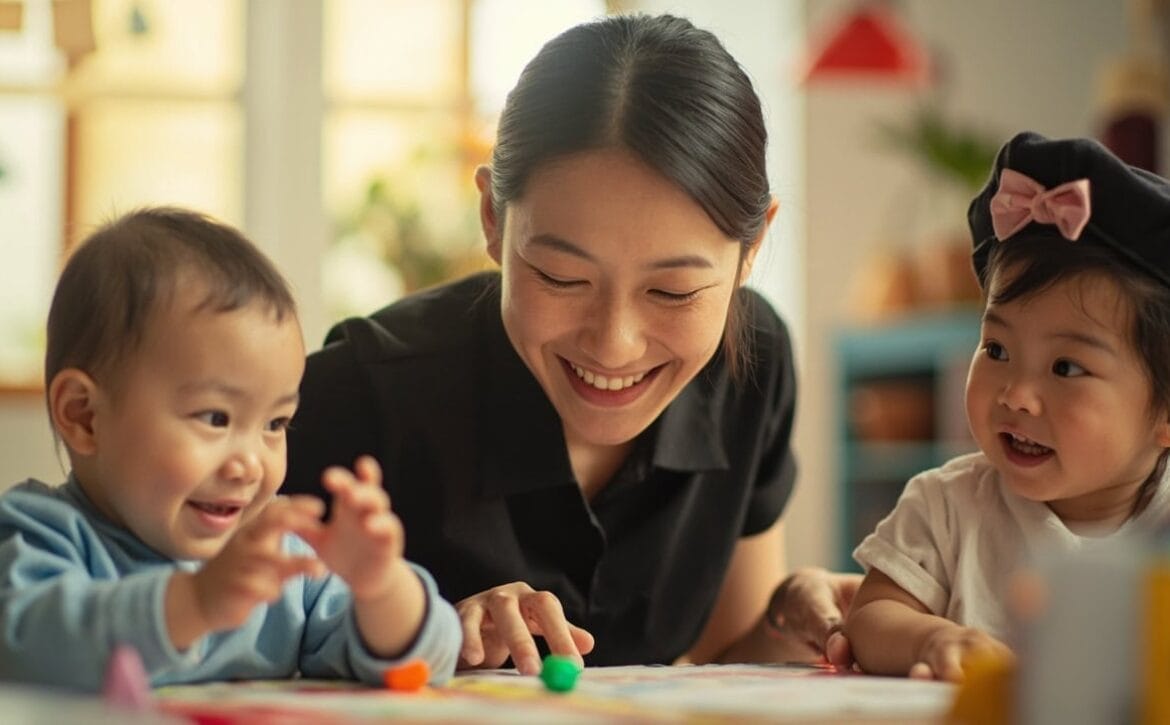
Extending the Foundation: Why Continuity of Care Matters for Your Second Child

The Question That Actually Matters

This is not a question about logistics, though logistics will follow. It is not a question about whether you can manage the schedules and the costs and the arrangements, though those are real and they matter.

It is something more fundamental. It is a question about continuity — about whether the care you worked so carefully to find can expand without fracturing.

Whether the caregiver who learned your child’s rhythms, who understood the particular sound of your child’s cry and what it meant, who became part of the quiet architecture of your family’s daily life — whether that care can hold another child without losing its shape.

Whether your firstborn, who has grown so much in this relationship, will feel the arrival of a sibling as an addition to their world or a diminishment of what was theirs.

These are the questions that most childcare conversations do not touch. Most of what you will read, most of what you will hear from friends and family, will focus on the decision. How to choose. What to look for. What questions to ask at a tour, what red flags to watch for.

These are useful conversations. But they belong to the beginning, when you are choosing for the first time and everything is still ahead of you.

You are not there anymore. You already chose. You already built. And now you are discovering, perhaps for the first time, that its value is deeper than you anticipated.


What You Actually Gave Your First Child

Before we speak about the transition, it is worth pausing to understand what you gave your first child when you chose quality care.

In the first thousand days of life, a child’s brain forms neural connections at an extraordinary rate. This is not a statistic designed to make you anxious. It is simply a reminder of the extraordinary plasticity of these early years, and the correspondingly extraordinary importance of the environments in which that development unfolds.

A child who experiences consistent, responsive, warm caregiving in the first years of life is not simply being kept safe and comfortable. They are building the foundations that will shape how they understand trust, how they form attachments, how they regulate their emotions, how they enter into relationships throughout their lives.

You may not have framed it in exactly those terms when you made your choice. You may simply have wanted your child to be looked after by someone who was warm, attentive, and who treated your child as an individual rather than a task. But beneath that choice was something profound.

You were giving your child something that would outlast infancy — a sense of being known, a felt experience of the world as a place where someone pays attention, where your needs are heard and met, where you are not alone.

What This Looks Like in Practice

  • Secure attachment — Your child has learned that when they reach out, someone responds. This becomes the template for all future relationships.
  • Emotional regulation — Consistent caregiving helps children learn to identify and manage their emotions over time.
  • Exploration and confidence — When the base is secure, children are more willing to explore, try new things, and develop independence.
  • Language and cognitive development — Responsive caregivers who talk, listen, and engage support the rapid language development of the early years.

Can Your Second Child Inherit the Same Foundation?

Now you are preparing to give that to another child. And the question is whether you can give them the same inheritance — not a similar one, not something comparable, but the same inheritance.

The same caregiver who already carries the wisdom of knowing your family. The same rhythms and rituals that gave your first child such a sense of security. The same environment that already holds the imprint of your family’s particular way of moving through the world.

Here is what we have learned from the families who have made this transition: it is possible. But it requires something specific from the care arrangement itself. It requires a model of care that is designed not just to serve one child but to hold an entire family as it evolves. It requires caregivers who are genuinely embedded in the life of the family. And it requires a structure that can accommodate the particular ratios, attention, and flexibility that a growing family needs.

Why Home-Based Childminding Makes This Possible

Home-based childminding, as piloted under Singapore’s ECDA framework, offers something that larger centre-based arrangements often cannot: the ability to know each child deeply, to observe and respond to each child’s individual temperament and needs, to maintain the kind of one-to-one and small-group attention that allows a caregiver to truly understand a child rather than simply manage them.

With ratios of up to one to three infants, there is space for the kind of attention that makes continuity real. There is time for the caregiver to learn your second child’s particular cries, to notice the subtle differences in how they seek comfort, to integrate them into the rhythms that your first child already knows and trusts.

What Your Second Child Inherits

When your second child enters care with a caregiver who already knows your family, they are not starting from zero. They are inheriting a world.

The caregiver who welcomes your second child already understands the tempo of your household, the particular way your family does mornings and afternoons and evenings, the values that shape how you want your children raised. Your second child does not have to spend time learning that this is a safe place, that this person can be trusted, that these routines mean comfort and security. That knowledge is already encoded in the environment itself.

Your second child arrives, in a very real sense, into a home that was already waiting for them.


What Happens to Your Firstborn

When your firstborn has spent two or three years in a quality care environment, learning to trust, learning to explore, learning to be part of a small community of care, they have developed something that cannot be replicated by a new arrangement. They have a history. They have a relationship that has grown alongside them.

And now, when their sibling joins that same space, they get to be part of something significant: they get to be the older child who shows the younger child the ropes, who models what it looks like to be at home in this place, who is not displaced by the arrival of a new family member but is, in a sense, confirmed as a guide and an elder in this small community.

When siblings share a caregiver, they are not simply being cared for in the same location. They are building a shared language of care. They are learning from each other’s experiences, borrowing each other’s security, developing a familial bond that is reinforced daily in an environment that understands and supports family relationships.

Your firstborn does not lose status when their sibling arrives. They gain the opportunity to be a model, a comfort, a companion — and to experience the arrival of a sibling not as a threat to what they have but as an expansion of their world.

Families who have made this transition often describe something unexpected. They expected logistics to be complicated. They expected adjustment periods. They expected some turbulence. What they did not necessarily expect was how quickly the new arrangement would feel like an organic deepening rather than a disruptive expansion.

Because the caregiver already knew how to hold their first child with care and patience and attention, they knew how to make room for a second. Because the environment already had rhythms that worked, those rhythms simply absorbed another small person into their pattern. Because the first child’s relationship with the caregiver was already a source of security and joy, the second child’s arrival was cushioned not just by the caregiver’s skill but by the first child’s own ease and comfort — an ease that communicated, without words, that this place is safe, that this person is good, that there is nothing to fear.


How EduNanny Approaches the Transition

When a family enrolls their second child with EduNanny, we do not treat it as a new onboarding process. We treat it as a continuation.

  • Stable caregiver relationships — The caregiver who has built a relationship with your first child is not replaced or rotated. They are the same stable figure who welcomes your second child.
  • Consistent communication — The protocols that kept you informed about your first child’s day — daily updates, photographs, transparent sharing of milestones and moments — continue and expand to include both children.
  • Maintained environment — The rhythm of the home itself is maintained, not disrupted, as we work with you to integrate your new family member into an environment that is already prepared to receive them.
  • Transparent reassurance — Where CCTV measures are deployed, they provide the same peace of mind for your second child’s care as they did for your first.

Built for Singapore Families

We understand that for Singapore families, practical considerations are not separate from emotional ones. The cost of raising children in Singapore is real, and the question of how to manage childcare expenses across multiple children is not trivial.

This is why we have built our pilot fee structures to be affordable and transparent. It is why we work with CDA and Baby Bonus arrangements where applicable, so that the financial architecture of your family’s growth does not become a barrier to the continuity you want for your children.

It is why our care blocks run Monday to Friday, designed around the realities of Singapore working life, because the best care in the world cannot serve your family if it is not accessible at the hours you actually need.

These are not glamorous features. But they are the kind of thing that makes continuity possible in the real world — not just in theory, not just in aspiration, but in the daily, practical lives of Singapore families who need care that can flex and grow without requiring them to start over every time their family changes.


Questions to Ask Before You Decide

If you are evaluating care arrangements for your second child, here are the questions that matter most:

  1. Who will be the caregiver? Ask specifically whether the caregiver who knows your first child will be the same caregiver for your second. Vague reassurances about “our team approach” may not provide the continuity you are seeking.
  2. What are the ratios? Understand how many children the caregiver will be responsible for at any given time. Smaller ratios mean more individual attention.
  3. How will the transition be managed? Ask how they approach integrating a new child into an established environment. The answer will tell you a great deal about whether they understand continuity as a philosophy or simply as a scheduling exercise.
  4. How does communication work for multiple children? If you have two children in care, how does the caregiver communicate about both? What does a typical daily update look like for families with siblings?
  5. What happens if our family’s needs change? Life in Singapore involves relocation, career changes, and evolving schedules. Ask how the arrangement accommodates change without requiring you to start over.
  6. What fees apply for additional children? Understand the full cost structure, including how CDA and Baby Bonus can be applied, and whether there are any hidden costs as your family grows.

Will my second child receive the same quality of attention?

This is a legitimate concern, and it depends entirely on the structure of your care arrangement. In centre-based settings with higher ratios, there may be genuine limits to individual attention. In a well-structured home-based childminding environment with ratios of up to one to three, there is meaningful space for each child to be known and attended to individually.

Will my first child feel displaced or jealous?

The evidence from families who have navigated this transition well suggests that the opposite is more likely when continuity is maintained. Your first child’s existing security, reinforced by a caregiver they trust, becomes a model for how to welcome a sibling. The displacement anxiety tends to arise when the care environment changes entirely — when a child loses the familiar along with gaining a sibling.

What if something changes with the caregiver?

This points to why caregiver stability is not a marketing talking point but a structural necessity. At EduNanny, caregiver retention and relationship continuity are built into how we operate — because home-based models with smaller ratios and embedded caregivers are inherently more sustainable for long-term relationships than large-scale centre operations.


The Quiet Promise We Make

There is a moment, visible in the families we serve, when this becomes clear in a small and quiet way.

It is the moment when your firstborn, now three or four years old, watches their younger sibling being settled by the same caregiver who has known them since infancy. It is the moment when your second child, just months old, falls asleep easily in an environment that holds them with the same attentiveness and warmth that held their sibling before them.

It is the moment when both children, at different stages of their development, carry the same sense of being known — not similarly, but identically in its depth and its quality. It is the moment when you realise that what you gave your first child was not just care. It was an inheritance. And your second child has received it.

This is what continuity means. The architecture of trust you built with your first child does not have to be demolished and rebuilt when your family grows. It can be extended. New rooms can be added. New children can be welcomed in. The foundation holds, and the structure becomes more beautiful for the addition, not despite it.

Somewhere in Singapore, right now, a parent is sitting with the knowledge that their family is about to change again. They may be feeling the weight of that question we began with: can what we built for our first child also hold our second?

We want to say to them, with warmth and with honesty and with the quiet authority that comes from having seen this transition succeed again and again: yes. If the care you chose was built for it, yes.

EduNanny is built for exactly this. Not to solve the logistics alone, though we attend to those with care. Not to offer a convenient service, though we are reliable and accessible. But to hold your family as it grows — to be the stable figure in a changing world, the caregiver who knows your children by name, the relationship that deepens with time, the home that makes room for every child you bring into it.

That is what continuity means in practice. That is what we have always offered. And that is what we will continue to offer, to every family who trusts us with the most important work there is: raising the next generation, one secure child at a time.


If you are expecting another child and want to understand how EduNanny’s home-based childminding model can extend the care foundation you have already built, we invite you to start a conversation with us. We are happy to discuss your family’s situation, answer your questions, and explore whether we are the right fit for where you are now — and where you are going.

Learn more about how EduNanny’s childminding pilot works, or connect with our team to begin.

edunanny-0614387c59ac4eb143ff78f8ef0f2dde
March 26, 2026

The Daily Bridge Singapore Parents Build With Their Child’s Childcare

Understanding What Your Child Comes Home With

When you collect your child at the end of the day, you are receiving a transmission. Your child may not have words for it yet — certainly not the full vocabulary that adults use to narrate their experiences. But they are communicating. They have been communicating all day, and the drive home is when all of that communication arrives at once, unfiltered and unedited.

The way your child runs to you or hesitates at the gate, the grip of their hand, the speed at which they ask to be picked up, the sudden clinginess that seems disproportionate to the moment. These are not random. They are data. They are your child’s way of telling you what the day was like, not in words but in the only vocabulary they have mastered.

A child who comes home depleted but calm, who collapses into your lap and simply breathes, is telling you something different from a child who explodes into motion the moment they see you — who cannot stop talking or bouncing or demanding. Both are normal. Both contain information.

  • The depleted child may have been a giver all day, a child who modulated themselves to fit the room, who gave their energy to the group and arrived home with an empty cup.
  • The explosive child may be releasing a full day of held emotion — the kind of joy and stimulation and overwhelm that simply had nowhere to go.

What you are learning to do, and what daily engagement teaches you to do better, is to read these signals with increasing precision. Week by week, month by month, you build fluency. You begin to notice that Tuesday heaviness is different from Thursday lightness. You begin to know when the tired is the good tired of learning and growing, and when the tired is the heavy tired of not being seen or heard or understood in the way they needed.

This is not instinct. It is practice. And it is practice that belongs to you, the parent, because no one else will ever read your child with the depth that you are capable of. The caregiver knows your child in context — in the group, in the rhythms of the day. But you know your child in the context of their entire life, their history, their particular temperament, the things that only emerge in the safety of your presence. Both forms of knowing matter. Both are necessary.


The Daily Handoff: Your Most Powerful Tool

The pickup conversation is not a courtesy. It is a tool. And like any tool, it works better when you know how to use it deliberately.

What you ask matters less than you think. What matters more is that you are present in the asking, that you are genuinely curious, that you signal to your child and to the caregiver that the transition from one world to the next is worth pausing for.

Questions That Open Things Up

Questions like “Did you have fun today?” tend to return answers of “Yes” or “No” with no purchase for further conversation. Questions like these give your child something to work with — a thread to pull:

  • “What made you laugh today?”
  • “Who did you sit next to at snack time?”
  • “What song did you sing?”
  • “What was the best part of your morning?”
  • “Did anyone need help today?”

They are not magic incantations. They are simply designed to elicit narrative rather than evaluation. Your child is not a reliable evaluator of their own day. They are a reliable narrator of it. Meet them where they are.

The Conversation With Your Caregiver

This is arguably more important than most parents realise. The caregiver has spent eight or nine hours with your child. They have seen things you will not see. They have noticed things that will help you make sense of the signals you are reading at home.

Ask what you might not already know:

  • About appetite and eating patterns
  • About mood patterns across the day
  • Who your child gravitated toward or pulled away from
  • About moments of delight, because delight is diagnostic
  • About moments of friction, because friction is also diagnostic

A child who delighted in something today is a child whose needs are being met. Friction tells you where your child is being stretched, where they are growing, where they may need more support from you at home.

What you share with the caregiver matters too. If your child had a rough morning before drop-off, if there was tension in the house, if your child is navigating something developmental or emotional that you are watching at home — this is information the caregiver can hold. The daily handoff is a two-way street. It is where you pass relevant context to the person who will spend their day with your child, and where you receive context that helps you make meaning of what comes home.


Genuine Thriving Versus Surface Compliance

One path is reassurance. You want to know your child is fine. You want to hear that they ate well and played nicely and did not cry. You want the surface to be smooth, and when it is smooth, you breathe easier and drive home feeling that the decision was the right one. This is understandable. It is also insufficient.

The other path is understanding. You want to know whether your child is thriving, not just surviving. You want to distinguish between the fine that means “nothing went wrong” and the thriving that means “everything is going right.” This is harder. It requires you to look past the easy answers and ask what is actually happening beneath the surface of your child’s day.

What Genuine Thriving Looks Like

Genuine thriving shows up in specific, observable ways. Your child:

  • Comes home with stories, not just reactions
  • References people by name, not just generically
  • Has texture to their recounting — moments of frustration and delight woven together in ways that suggest they are actually living the day rather than enduring it
  • Shows behaviour at home that makes sense in context of what you are learning about their day
  • The clinginess after pickup is brief and resolved, not cumulative and deepening
  • Sleeps well and wakes ready

What Surface Compliance Looks Like

A child who is performing okay may come home flat. They may tell you almost nothing about the day. They may resist going in the mornings in ways that feel ambiguous — not dramatic enough to raise alarms but persistent enough to sit in your chest. They may have behavioural episodes at home that seem disconnected from anything you can identify. They may be easy in the group but hard in private, or hard in the group but easy at home — the kind of dissonance that suggests the self they are showing is a managed self, not a whole one.

This is not a failure of your choice. It may be a signal that something needs adjusting — that your child needs different support, that the environment is not quite the right fit for their particular way of being in the world. And the only way you catch this early enough to do something about it is through daily engagement, through the ongoing practice of reading your child and asking real questions and staying curious about what is actually happening rather than what appears to be happening.


The Reframe That Changes Everything

Let us name something that sits beneath all of this and that parents rarely talk about: the guilt of presence when you are physically absent.

You chose quality childcare because you believe in what it offers your child. But the choosing, if you are honest with yourself, did not fully resolve the tension. It moved the tension. It relocated it from “am I choosing the right thing?” to “am I doing enough to stay connected to my child’s experience now that I have chosen?”

The truth is that physical presence is not the same as engaged presence, and engaged presence is available to you every single day regardless of how many hours your child spends in someone else’s care. The parent who picks up and puts down their phone, who makes eye contact during the handoff conversation, who asks real questions and listens to real answers, who follows up at home with attention and curiosity and care — that parent is doing something that no amount of physical hovering can replicate.

You are not failing your child by having them in childcare. You are not failing your child by not knowing every moment of every day. You are failing your child only if you hand over the daily work of knowing and interpreting and connecting and then step back as if your role is complete.

Your role is not complete. It is different, and it is daily, and it is irreplaceable.

The caregiver cannot be you. The centre cannot be your home. But you can be the bridge between those worlds every single day, and that bridge is not metaphor. It is practice. It is the questions you ask at pickup. It is the attention you pay on the drive home. It is the conversation at dinner. It is the way you hold your child’s experience and make meaning of it together. It is the feedback loop you create with the caregiver over weeks and months of consistent, purposeful engagement.

Children know the difference, even when they cannot articulate it. Children thrive in integrated environments because they do not have to be different people in different places. They can be themselves, and have that self be known and held across both.

Addressing the Worries Beneath the Surface

“Am I doing enough?” You are doing enough if you are engaged. Physical presence is not the measure. The quality of your attention is the measure. A parent who asks one real question at pickup, who listens, who shares relevant context with the caregiver, who follows up at home, is doing something profound. That parent is being the bridge their child needs.

“What if something goes wrong and I don’t notice?” Daily engagement is your early warning system. When you are in the habit of reading your child’s signals, of asking real questions, of receiving real information from caregivers, you develop fluency that catches drift early. Problems that are caught early are problems that can be addressed. The parent who is disconnected misses the early signals. The parent who is engaged sees them coming.

“What if the childcare arrangement is not right?” Daily engagement also tells you when adjustment is needed. If the signals you are reading consistently suggest that something is off, if your child is showing patterns of surface compliance rather than genuine thriving, if the trust loop with your caregiver is not forming despite your efforts — these are data points worth taking seriously. A childcare arrangement that does not suit your child is not a failure. It is information. And information allows you to make adjustments.


Building Practices That Last

The first week is full of intention. You ask all the questions. You linger at pickup. You are attentive and curious and present. The second week, life intervenes. You are tired from the commute, distracted by work, running late for the next appointment. The questions become fewer. The linger becomes shorter. By the third or fourth week, you have fallen into a routine, and routine is efficient — but routine can also be the enemy of engagement if you are not deliberate about it.

Daily engagement is not a burst of enthusiasm that you sustain for a few weeks and then let fade. It is a set of practices that you embed into your rhythm so that they become natural, not burdensome.

Small Acts, Done Consistently

  • Asking one real question at pickup even when you are tired
  • Sharing one piece of relevant information with the caregiver even when the morning was rushed
  • Pausing for thirty seconds in the car before you drive away to simply notice your child’s state — to take in what they are carrying from the day before you ask them to transition into the evening
  • Making space for your child’s recounting at dinner or during bedtime, not interrogating but being genuinely curious
  • Noticing patterns over time: Tuesday heaviness, Thursday lightness, the good tired of learning, the heavy tired of not being seen

These are not heroic acts. They are small. But small acts, done consistently over months and years, are how you build the fluency to read your child. They are how you build the trust with your caregiver that makes the two-way exchange deeper and more useful. They are how you become the daily interpreter of your child’s experience in a way that no one else can, and that no amount of initial research or decision-making can substitute for.

The Trust Loop

The trust loop works like this:

  1. You share something about your child with the caregiver
  2. The caregiver holds it and uses it in their day
  3. They notice something and share it back with you
  4. You hold it and use it in your evening and your morning
  5. Your child experiences the consistency of a connected ecosystem, where what happens at home is known at childcare and what happens at childcare is known at home

This is not fragmentation. This is integration. And children feel the difference in their bones, even before they have the words to name it.

What Quality Childminding Actually Looks Like

In Singapore’s childcare landscape, the word “quality” is used freely and often without substance. What does quality actually look like when you are living with a childcare decision day after day?

Quality is not a brochure or a fee structure or a well-designed playroom. Quality is the accumulation of small, consistent interactions that tell you your child is known. Quality is a caregiver who notices that your child is off-colour before you do. Quality is receiving information at pickup that helps you make sense of something you noticed at home. Quality is the opposite of a black box.

When evaluating childcare arrangements, look for environments that are structured around engagement rather than supervision alone. Look for arrangements where your questions are welcomed and your observations are actively sought. Look for consistency in caregivers, so that the trust loop we described can actually form. Look for transparency about the daily rhythms, the challenges, the moments of friction and the moments of delight.


EduNanny’s Approach: Built for Daily Partnership

EduNanny by BUTLER was built on a conviction that has everything to do with what we have been describing. We believe that quality childcare is not something that happens to your child while you are away. We believe it is something you participate in daily, and that the daily participation is where the quality compounds.

Our model is designed for that participation — not as an add-on, not as a feature, but as the foundation of how we operate.

ECDA Childminding Pilot: Structured Accountability

We are part of the ECDA Childminding Pilot, which means our approach is structured, accountable, and held to standards that go beyond what unregulated arrangements can offer. For parents who want assurance that quality is not just a promise but a practice with oversight, this matters.

Pathways That Suit Your Family

We offer home-based pathways and community or centre-based pathways depending on what suits your family. Whether you prefer the familiarity of home-based care with a dedicated caregiver or the structure of a centre environment, we have arrangements designed around real family needs.

Infant Ratios That Allow Genuine Noticing

We maintain infant ratios of up to one to three, which means your child is not a number in a room. They are a person whose signals we are equipped to notice and respond to because we are not overwhelmed by volume. When ratios are too high, noticing erodes. When ratios allow genuine attention, noticing becomes possible.

Affordable Within the Pilot Fee Structures

Quality is not the exclusive domain of families with unlimited budgets. We are designed to be affordable within the pilot fee structures, and for families who qualify, CDA and Baby Bonus funds are usable. This removes one layer of the financial tension that often sits beneath these decisions.

Transparency You Can Trust

What we want you to understand about our daily approach is this: we are not a black box. We do not believe that what happens in our care should stay in our care. We believe in transparency, in communication, in the kind of daily exchange that gives you real information rather than pleasant generalities.

Where deployed, we use communication tools and CCTV measures not as surveillance but as transparency, because we understand that parents need to trust what they cannot see, and trust is built through access, not through reassurance alone.

Thomas AI Chatbot: Available When the Questions Come

We know that the questions do not stop at pickup. They continue through the evening, through the weekend, through the moments when you are lying awake wondering if something you noticed is something worth noticing. Thomas AI Chatbot is there for those moments — not a replacement for human judgment, yours or ours, but a bridge. Another small tool in the daily practice of engaged parenting, there when you need quick guidance or a second perspective at two in the morning when the question will not let you sleep.


The Daily Bridge Is Already in You

How do you know it is working when you are not there?

You know because you are there. Not physically, but actively. You are there in the questions you ask at pickup. You are there in the attention you bring to the drive home. You are there in the conversation at dinner, in the bedtime ritual, in the way you hold your child’s experience and make sense of it together. You are there in the trust you build with your caregiver over weeks and months of consistent, purposeful exchange. You are there in the daily practice of reading your child not as a task but as a discipline — the kind of attention that deepens over time into genuine knowing.

The parent who does this is not the parent who never worries. They worry differently. They worry about real things, because they have real information. They intervene when intervention is needed, because they are close enough to their child’s experience to notice. They celebrate what is working, because they can see it. They adjust what is not, because they can identify it. They are not passive recipients of whatever their childcare arrangement delivers. They are active, daily partners in their child’s care.

EduNanny was built for this partnership — not the partnership of signing a contract and hoping for the best, but the partnership of daily engagement, daily exchange, daily trust-building. We designed our model around the conviction that you are not outsourcing your parenting. You are extending it, and extension requires your active participation. We are not here to replace your role. We are here to make your role possible, to give you the information and the access and the transparency that allows you to be the daily bridge your child needs.

That bridge matters more than any decision you made before it. The decision got you here. The daily work is what makes it count.

Your child is not fine because nothing went wrong today. Your child is thriving because someone noticed them, and because you are noticing them too, and because those two noticing practices are talking to each other every single day.

That is where quality compounds. That is where your childcare investment actually works. That is where your child grows up knowing they are held — not just at home, but across all the worlds they move through.

That is the daily bridge. And you already know how to build it.

If you are ready to explore a childcare arrangement that is designed around daily partnership rather than parental absence, we invite you to start a conversation about what EduNanny Singapore can offer your family.

edunanny-061434cc013b8076163d4a33c04bf6bb
March 26, 2026

Childcare That Grows With Your Child Through Every Stage

The First Thousand Days: Why the Stakes Are Real

The first thousand days of life, from conception to approximately age three, represent the most intensive period of brain development a human being will ever experience. Within this window, a child’s brain forms more than one million new neural connections every single second. The architecture of that brain, the foundation upon which all future learning, behaviour, and emotional regulation will rest, is being built with extraordinary speed and equal extraordinary sensitivity.

What a child experiences, whom they love, how they are held, what they are allowed to explore and what they are protected from, all of these are not merely pleasant aspects of early childhood. They are literally shaping the brain your child will carry into adulthood.

This is not meant to frighten you. It is meant to honour the weight of what you are already doing, often without recognition, every single day as a parent. But it also carries an important implication that many childcare conversations overlook: because the brain is developing so rapidly, the needs of a one-year-old and the needs of a two-year-old, though both are technically toddlers, are not merely different in degree. They are different in kind.

What serves a six-month-old beautifully may actively frustrate a sixteen-month-old. What captivates a two-year-old would leave a twelve-month-old completely bewildered. The child who needed constant physical comfort and predictable routines at nine months is becoming a different creature entirely by twenty months, one driven by an internal urgency to do things independently, to assert will, to test limits.


Reading Developmental Readiness: What Actually Changes and When

So how do you know when your child’s care needs are genuinely evolving rather than simply changing in the ordinary way that all children change? This is perhaps the most important practical skill a parent can develop, and it is one that most of us were never taught.

The answer lies in learning to read developmental readiness rather than relying solely on chronological age. Chronological age gives us useful averages. Developmental readiness tells us what your particular child, with their particular temperament, their particular history, and their particular strengths, is actually prepared for.

Developmental readiness often announces itself through new competencies, new interests, or new forms of distress:

  • New competencies: Your child may suddenly show intense interest in climbing, in using scissors, in helping you with tasks that previously held no appeal. This is readiness reaching for new challenges.
  • New interests: Perhaps they begin to assert preferences with a vehemence that surprises you, or show a sudden interest in other children that previously did not exist.
  • New forms of distress: You may notice that situations which previously soothed your child no longer work, that they have outgrown a sleep routine, a feeding approach, a way of being held.

These are not behavioural problems to be corrected. These are communications. Your child is telling you that they have grown into someone whose needs have shifted.

The First Year: Building Attachment

In the first year, the developmental task is overwhelmingly about attachment. Your baby needs to form a secure bond with their primary caregivers, to learn that the world is a reliable place, that their cries will be answered, that comfort is available.

The ideal care environment at this stage is warm, consistent, and focused on meeting physical and emotional needs with sensitivity. Small ratios matter here. A caregiver who can truly attune to one, two, or three infants at most is able to notice the subtle cues that distinguish a hungry cry from a tired cry, a cry of discomfort from a cry of loneliness.

The Second Year: The Emergence of Autonomy

Then something changes. Typically around the second year, the developmental task shifts. Security has been established, or is being established, and a new imperative emerges from within: the need for autonomy.

Your toddler is not merely growing. They are asserting themselves as a separate person with their own will. They want to choose, to do it themselves, to test what happens when they push against a limit. This is not defiance for its own sake. This is the engine of healthy development learning to operate.

Responsive care at this stage means offering appropriate choices rather than arbitrary commands. It means creating safe spaces for controlled risk, for climbing and jumping and exploring in ways that satisfy the toddler’s drive for competence. It means understanding that tantrums are not failures of parenting but the overwhelming frustration of a child who can envision what they want but cannot yet articulate it or regulate their emotions around it.

The Third Year: Expanding Social Worlds

As we move toward the preschool years, another shift occurs that is equally significant. The world expands again.

  • Peer relationships take on new importance
  • Language becomes not just functional but increasingly narrative and social
  • Cognitive development accelerates in ways that allow for genuine problem-solving and imaginative play
  • Parallel play gives way to true social engagement

The child who learned through physical exploration now learns through language, through story, through questions that never seem to stop.


What Quality Childcare Actually Looks Like

Each of these phases requires something different from the care environment. The caregiver who succeeded brilliantly with infants must develop new skills, new ways of interacting, new expectations.

This is where we must be honest about what separates genuinely adaptive care from care that merely claims to be high quality.

Quality childcare, the kind that truly serves your child across these transformative years, is not a single approach applied uniformly. It is a responsive system that shifts as your child shifts. It is built on deep understanding of developmental science and staffed by caregivers who are trained not just in the basics of safety and hygiene, which are non-negotiable, but in the subtleties of child development, in reading readiness, in adjusting their own responses to meet the evolving needs of each child in their care.

It is a system that grows with your child rather than asking your child to remain still within it.


How to Evaluate Whether Your Childcare Is Adapting

If you are researching childcare in Singapore, here are the questions that matter most:

  1. Do the caregivers understand development, not just safety? Ask them what happens when a child has a tantrum. Listen for attunement in their answer, not just management strategies.
  2. Do they adjust their approach as children grow? Ask how their care for a one-year-old differs from their care for a two-year-old. Look for genuine understanding, not just different activities.
  3. Is communication a two-way partnership? You should be receiving observations, not just daily reports of meals and naps. You should feel comfortable raising concerns and confident they will be heard.
  4. Do they see your child as an individual? The best caregivers will speak about your child in ways that reflect who they are as a person, not just what age bracket they fall into.
  5. Can they articulate what your child is working on developmentally? They may not use clinical language, but they should have a sense of the competencies and challenges your child is currently navigating.

Signs Your Child’s Care May Need to Evolve

  • Your child seems consistently frustrated in their care environment in ways that did not exist before
  • Developmental milestones are being reached at home but not reflected in care observations
  • The caregiver seems unable to adjust their approach as your child grows
  • Communication has become one-directional rather than a genuine two-way partnership

Not every change requires a change in care arrangement. Most of what children need in the early years is universal: warmth, safety, consistency, responsive relationships, opportunities to play and explore. These needs do not disappear as children grow. But the expression of these needs changes, and the care that best serves your child is the care that recognises this.


Addressing Common Concerns Singapore Parents Have

“What if I cannot afford premium childcare?”

The research on this is nuanced: the best outcomes for children occur in environments where they are consistently understood and supported, and where parents feel confident and supported rather than anxious and guilty. What matters most is not the hours spent together but the quality of attunement and the coherence of the developmental environment.

The fee structures within the EduNanny pilot are designed to be accessible, and the usability of CDA and Baby Bonus funds where applicable means that financial pressure does not have to force parents into care arrangements that feel uncertain or inadequate.

“I feel guilty for not being home with my child”

There may be a voice inside you that wonders whether your care arrangements are good enough. Whether the centre you chose, the caregiver you hired, the balance you struck between work and family is somehow failing your child.

Let me offer you something different from reassurance, though reassurance has its place. Let me offer you a reframe.

You are not a one-time chooser of a childcare solution. You are an ongoing interpreter of your child’s development. That is your role, and it is a profound one. No algorithm, no evaluation framework, no checklist will ever replace the deep, intuitive knowledge you have of your own child.

But intuition requires knowledge to be fully effective. When you learn to read your child’s developmental readiness, when you understand why the child who needed constant comfort at six months now insists on doing everything themselves at eighteen months, when you can name what is happening during those exhausting but crucial tantrums of the second year, something shifts. The guilt softens. The confidence grows. You become not just a loving parent but a knowledgeable one, and your child benefits from both.


The EduNanny Approach: Built Around Development

EduNanny by BUTLER was designed with this understanding at its centre. As part of the ECDA Childminding Pilot, EduNanny represents a thoughtfully constructed approach to infant and early childhood care that takes seriously both the science of development and the realities of Singapore family life.

The pilot structure, with its focus on small ratios and trained caregivers, is designed to allow for the attunement that early development requires. The home-based pathway brings care into the familiar environment of your own home, honouring the attachment relationships that are foundational in the first year. The community and centre-based pathways offer their own advantages, particularly as children grow and peer interaction becomes increasingly valuable.

Each pathway is designed not as a static solution but as a living framework that can adapt as your child’s needs change.

Communication as Partnership

What does this adaptability require from those who provide it? It requires investment in training, in ongoing development, in hiring practices that prioritise not just qualifications but dispositions, the genuine love of working with young children that cannot be taught but can be recognised.

It requires communication systems that keep parents informed without creating anxiety, transparency measures that build trust rather than surveillance, and a culture within the organisation that values reflection and continuous improvement.

Where EduNanny has deployed communication tools and transparency measures, including CCTV where appropriate, these are not merely compliance measures. They are expressions of a fundamental commitment to trust, because parents cannot partner in their child’s development if they do not feel secure in the knowledge of what happens during the hours they are apart.

The best outcomes for children occur when caregivers and parents are aligned in their understanding of the child’s development and consistent in their approach. When a child receives one set of messages at home and a completely different set at their care environment, the dissonance creates stress that can interfere with the very development we are all trying to support.

When parents and caregivers are true partners, sharing observations, celebrating milestones, discussing challenges with candour and mutual respect, the child benefits from a coherent developmental environment, one in which their needs are consistently understood and met across contexts.

Support When You Need It

EduNanny’s approach extends this partnership through tools like the Thomas AI Chatbot, developed to support parents and caregivers in navigating the everyday complexities of early childhood development. This is not technology for its own sake. It is technology in service of something essential: making it easier for parents to access reliable information, to ask questions without judgment, to feel less alone in the uncertainties that early parenting inevitably brings.

When your child does something that surprises you, when you wonder if what you are seeing is normal or warrants concern, when you simply need a thoughtful response to a question you feel silly asking, having a resource that understands both developmental science and the realities of Singapore parenting makes a genuine difference.


The Question Answered: Care That Grows With Your Child

If your child is not the same child they were six months ago, should their care still be the same?

The answer is nuanced. Not every change requires a change in care arrangement. But the best care you can offer your child is not care that stays frozen in time, but care that grows with them, that meets them where they are, that celebrates each new stage of who they are becoming.

The brain that is being built in these first three years will shape the person your child becomes in ways that we are only beginning to fully understand. The connections being formed now, the emotional patterns being established, the trust or wariness being learned about the world and other people and their own capacity to learn and grow, these are not abstractions. They are the material of your child’s future.

And you, as their parent, are the most important interpreter of their development. No one else will watch them as you do. No one else will know the particular quality of their laugh, the way they hold tension in their shoulders when they are overwhelmed, the brightness that enters their eyes when they master something new.

This knowledge, combined with the understanding of what development actually looks like across these years, is a powerful thing. It is the foundation of responsive parenting.

The childcare you choose is not a destination. It is a relationship, one that should evolve as your child evolves, one that should be built on trust and communication and the shared goal of supporting your child’s healthy development.

If you are noticing that your child is changing, you are right. They are. They always are.

And the best care you can offer them is care that grows with them.


EduNanny by BUTLER is part of the ECDA Childminding Pilot, offering thoughtful, development-oriented childcare for families in Singapore. Connect with our team to explore care pathways designed to flex as your child grows.

edunanny-0614312a71a72185c8df2226b4775eef
March 26, 2026

What Your Child Is Really Telling You at Morning Drop-Off

The Morning Ritual: What Your Child’s Body Tells You

Consider, for a moment, the morning ritual that millions of Singapore parents perform each weekday. The waking, the feeding, the packing of bags. The walk through a childcare centre corridor or the arrival of a caregiver at your home. And then the moment of parting—the hand-off, the brief words exchanged, the closing of a door.

How does your child meet that moment?

This is not a rhetorical question. I am asking you to remember, specifically, what your child’s body does in the minutes before and after you leave. Because the body keeps score, and in young children especially, the body is not yet sophisticated enough to hide what it feels.

A child who is merely tolerating their childcare environment will show it. Their shoulders will be tense. They will hang back, or cling, or cry with a desperation that does not resolve into comfort even after you have gone. There is a particular quality to the cry of a child who is not at ease—not the protest of a brief separation, which is normal and healthy, but the deeper distress of a child who does not feel held in their environment.

A child who is thriving, a child who has found their footing in a space of genuine care, will show you something different. Their body will have a looseness to it even as they wave goodbye. They may glance back once or twice, but there is no panic in the glance. They are not watching to see if you will come back—they are confident you will, and more importantly, they are confident that what they are returning to is good. They settle into the arms of their caregiver with a particular kind of surrender, the way a child settles into a familiar story they have heard many times and love.

This is the first language of your child’s interior world: the language of the body in the morning. Start noticing. Not to judge yourself or your choices, but simply to observe.


After Pickup: Reading the Hours That Follow

Move forward in time, to the afternoon, to the hours after you have reunited. This is where many parents feel most uncertain. They have been apart from their child for eight or nine or ten hours. They arrive to collect them, and they scan the small face for clues. Is this child happy? Did they have a good day? Are they glad to see me?

Here is what matters to understand: your child’s response to you at pickup is not the whole story. In fact, it is often the least revealing part of the equation. Children are adaptable. They have missed you. They are relieved to see you. That reunion energy can mask what has been happening in the hours before.

So where do you look instead? You look at what happens in the hours after. You look at what emerges when the pressure of reunion has passed and your child is simply themselves again, in the comfortable space of home.

What Your Child’s Play Reveals

The content of your child’s play is not random. When children feel safe, when they feel held in an environment of genuine attunement, their play takes on a particular quality. It becomes exploratory. It becomes imaginative. It starts to include others—their caregiver, their friends, the routines and rhythms of their day—not as obligations or anxieties, but as characters in stories they are beginning to tell about themselves.

A child who has spent the day in a space where they felt known will often reproduce that feeling in play. They will be the caregiver. They will care for dolls or stuffed animals with a tenderness that mirrors what they have received. They will create scenarios of comfort, of closeness, of problem-solving.

A child who has been merely supervised, who has been cared for but not truly seen, will often show something different. Their play may be more repetitive, more solitary, more focused on physical sensation than imaginative elaboration. This does not mean anything is irreversibly wrong. But it is information. It is your child telling you something about the quality of their inner experience, encoded in the stories they are telling themselves through play.

The Language Children Use About Their Caregiver

Language, even the limited language of a one-year-old or a two-year-old, is a powerful window. Children begin to name the important people in their lives long before they can articulate complex emotions. And when a child begins to speak about their caregiver—spontaneously, without prompting, in the middle of ordinary moments—a parent should pay attention.

Not all mentions are equal. There is a difference between a child who says their caregiver’s name because it is a familiar sound in their environment and a child who speaks of their caregiver with a quality of warmth, of anticipation, of recognition.

When a child volunteers that their caregiver does something—when they say, “Miss Lim gives me crackers,” or “Auntie Sarah reads books,” with the particular emphasis that means this matters to them—you are hearing evidence of a relationship that has meaning.

Children in quality care environments often begin to use their caregiver as a secure base, even in the parent’s presence. They may show their caregiver a toy, or run to them for comfort in a small distress, or look to them for reassurance in a new situation. This is not a betrayal of your bond with your child. This is a sign of health—a sign that your child has learned how to generalize security, how to trust, how to attach flexibly to the good enough figures in their life.


Comfortable or Thriving? Understanding the Difference

What we are describing is not a checklist. It is your child’s felt sense of their world—what safety feels like from the inside when you are two years old, or three, or four. And it is this felt sense, more than any external marker, that determines whether a child is merely comfortable or truly thriving.

There is a difference between these two states, and it is more significant than many parents realize.

A child who is comfortable is not unhappy. They are not suffering. But they are also not fully themselves. They are getting through their days. They are compliant, often, because compliance is easier than resistance when you do not feel secure enough to be known.

A child who is thriving, on the other hand, is a child who is growing in every sense—emotionally, cognitively, creatively, socially. They are not just being cared for. They are being seen. And the evidence of this seeing shows up everywhere: in the body and the play and the language and the way they move through their days.

Signs Your Child Is Thriving in Care

  • Physical ease at drop-off, not just tolerance
  • Imaginative play that includes caregivers and routines
  • Spontaneous mention of caregiver with warmth
  • Ability to use caregiver as a secondary secure base
  • Curiosity and exploration in their environment
  • Confidence that parents will return—not anxiety, but certainty

Signs Your Child May Be Merely Comfortable

  • Compliant behavior that lacks genuine enthusiasm
  • Relief-focused reunion rather than balanced connection
  • Play that is repetitive or solitary without imaginative depth
  • Physical tension that persists after the morning handoff
  • Reluctance to go that feels deeper than normal separation anxiety

What Quality Childminding Looks Like in Singapore

For parents researching infant care and childminding options across Singapore, understanding what quality looks like from the inside makes the decision less about abstract credentials and more about what your child actually shows you.

Quality childminding is attunement in action. It is a caregiver who notices when a child’s energy shifts, who understands that a tantrum might be about hunger rather than manipulation, who can read the difference between a child who is testing boundaries and a child who is feeling overwhelmed.

It is the small moments—a hand on a shoulder at the right time, a story told with genuine engagement, the patience to let a child finish their thought even when it takes longer than expected.

When choosing, ask yourself: Does this caregiver kneel down to meet my child at their level? Do children seek them out? Ask how they would respond to a child who is struggling. Listen for whether they see behavior as communication rather than something to simply manage.

In Singapore’s context, quality care also means respecting the realities of working parents. It means transparent communication that helps you understand your child’s day without hovering. It means reasonable hours that fit actual work lives. Fee structures that make sense, and the ability to use available schemes like the Child Development Account and Baby Bonus.

If you notice signs that concern you—a difficult pattern over weeks, not just a difficult day—talk to your caregiver. Not from a place of accusation, but from genuine curiosity. A quality caregiver will welcome this conversation. And trust your gut: you know your child better than anyone. If something feels wrong, it deserves attention.


How EduNanny Singapore Approaches Your Child’s Interior Experience

EduNanny by BUTLER is built on a premise that guides every aspect of how they work: the child’s interior experience is not a mystery to be wondered about, but a reality to be honored.

When childcare is designed from the inside out—from what a child actually feels, actually needs, actually shows us—rather than from the outside in, something shifts. It shifts the caregiver-to-child ratio, making attunement possible. It shifts the training, which focuses not just on safety protocols and developmental milestones, but on the finer textures of a child’s emotional life: how to read a child’s signals, how to respond to a child’s inner state, how to create an environment where a child feels not just supervised but known.

What makes this approach meaningful for parents in Singapore is that it creates conditions where your child’s interior world becomes visible to you. Not through constant monitoring, not through cameras or daily reports alone—though communication and transparency are part of how trust is built with families. But because when a child is truly thriving in care, it shows. It shows in the body at the morning drop-off. It shows in the play after pickup. It shows in the language your child uses and the security your child carries.

When parents learn to read these signals, something shifts in the childcare decision itself. It stops feeling like an act of blind faith and becomes something else entirely. It becomes an act of recognition.

EduNanny participates in the ECDA Childminding Pilot, offering pathways that work for real Singapore families. Whether through home-based care, where a caregiver comes to you and your child’s environment is honored and extended, or through community and centre-based options that offer connection and structure, EduNanny is committed to making quality childcare accessible. The pilot fee structures, the usability of CDA and Baby Bonus, the Monday to Friday care blocks that fit real Singapore working lives—these are deliberate design choices that reflect a belief that every child deserves to be seen, and every family should be able to access that.


The Gift of Seeing Your Child Clearly

When you learn to read your child’s interior world, you begin to recognize yourself reflected in them. You begin to see your own love, your own care, your own intention, answered and amplified in the life your child is living when you are not there.

You see your child thriving—not just surviving, not just comfortable, but thriving—and you understand that this is not separate from you. This is what your trust has made possible. This is what your choices have built.

So let me return to where we began. To the morning silence after you have handed your child to someone else. To the walk, the drive, the commute. To the space where your imagination fills in what you cannot see.

I want to offer you something different for that space now. Not anxiety. Not uncertainty. But a kind of quiet confidence—not the confidence that comes from knowing everything will be fine, because parenting is never that simple, but the confidence that comes from knowing you have learned to listen.

You are beginning to hear what your child has been telling you all along. When you collect them at the end of the day, you will know how to look—not just at their face, but at their body, their play, their language, the whole texture of who they are in that moment. And when you see what you see, you will trust it. You will trust what your child is showing you, because you have learned to understand what it means.

EduNanny Singapore stands for not the removal of your role as a parent, but its expansion. Not the outsourcing of your child’s care, but its deepening. They are here to walk alongside you in this extraordinary, demanding, beautiful work of raising a child—to be the ones your child runs to, the ones your child trusts, the ones who help them grow into the person they are becoming.

And to give you, in return, the greatest gift a childcare provider can offer: the ability to see your child clearly. To know, in your bones, that they are thriving.

Because they are. And once you learn to read the language they are already speaking, you will know it too.


Explore EduNanny Singapore

If you are searching for infant care or childminding in Singapore and want to learn how EduNanny creates conditions where your child’s thriving becomes visible, start a conversation with them.

Discover more about how EduNanny approaches quality childcare, or explore the full range of services available for your family.

#childmindingSingapore #infantcareSingapore #qualitychildcare #EduNanny #Singaporeparents

edunanny-06142dc7d5682189e9dd627c529c908a
March 26, 2026

Why Your Child Reaching for Their Caregiver Is a Developmental Milestone

What Is Actually Happening When Your Child Reaches for Their Caregiver

When your child reaches for their caregiver instead of you at drop-off, here is what is actually occurring:

  • Your child is doing exactly what they are supposed to do. This is not a sign that something is wrong. It is a sign that something is working.
  • Your child has formed what developmental science calls a “secure base” with their caregiver. This means they trust their caregiver enough to explore the world from them—just as they do with you.
  • This does not replace or threaten your bond with your child. In fact, your bond is what made this possible. Your child is not turning away from you. They are reaching toward something new, carrying the security you gave them first.
  • Multiple healthy attachments benefit children. Research increasingly shows that children who form secure bonds with caregivers beyond their parents are not dividing their emotional resources—they are multiplying them.
  • You are not on the sidelines. You are the architect of the ecosystem that makes this expansion possible. The bond your child forms with their caregiver is your achievement as much as theirs.

The Science of Secure Attachment: Understanding Your Child’s Relational World

Developmental science has given us a name for the capacity your child is demonstrating in that moment. It is called the secure base.

The concept was first articulated by psychologist John Bowlby and later expanded by Mary Ainsworth. It describes the most fundamental organizing principle of early human development: a child uses their attachment figure—not just for comfort, but for courage. A secure base is a person who is so reliably present, so consistently responsive, that a child can lean on that relationship as a launching pad for the world.

When a child feels secure, they do not just sit still. They explore. They engage. They take in everything around them because they know, deep in their body, that there is a place to return to if they need to.

What you witnessed at drop-off was your child using their caregiver as a secure base.

For that to happen, something has already been put in place. A foundation has already been laid. Your child has not just been supervised for the past few days or weeks—they have been in relationship. And in that relationship, they have experienced enough consistency, enough attunement, enough predictable care, that they now feel safe enough to look outward. To look past you, and into the room, and into the arms of someone else, because they trust that those arms will hold them the way yours do.


Why Your Bond and Their Bond Work Together, Not Against Each Other

Here is something that most parents are never told: children are not built to have only one secure base. They are built to form multiple attachments.

Not equally, and not interchangeably—your bond with your child is singular and irreplaceable. But it is also not the only bond they need.

Research on early childhood development increasingly suggests that multiple healthy attachments in the first years of life are not just tolerable for children—they are beneficial. A child who has one secure base and then forms a second is not dividing their emotional resources. They are multiplying them.

The Feeling No One Talks About

There is a version of this conversation that could make parents feel unnecessary. As if, by forming a bond with their caregiver, your child is proving that they do not need you as much as you thought they did. As if the whole edifice of parental devotion has been quietly undermined by the competence of a good childcare provider.

That version is wrong, and we want to be clear about why.

Your bond with your child is not diminished by the fact that they have formed another bond. Your bond with your child is what made this other bond possible.

A child who does not have a secure base at home cannot form a secure base elsewhere. The primary attachment you have established with your child is the template. It is the model. It is the internal working map that your child uses to understand what it means to trust someone.

Every warm, responsive, attuned interaction you have had with your child since they were born has been preparing them to be the kind of child who can form healthy relationships with other caring adults.

You are not the fallback. You are the foundation.


What Quality Attachment-Based Care Actually Looks Like

Not every non-parental caregiving relationship becomes a secure base. Some do, and some do not. The difference is not accidental. It is not luck. It is the result of specific, intentional relational practices that the best childcare providers understand and cultivate deliberately.

The Three Ingredients of a True Attachment Bond

Consistency: A child does not form an attachment to a rotating cast of strangers. Attachment is built through repetition, through familiarity, through the accumulation of thousands of small, predictable interactions.

When a child knows that the same person will be there in the morning, and in the afternoon, and next Tuesday, and next month, their nervous system begins to settle. They stop scanning for threat. They start engaging with curiosity.

Primary caregiver continuity is not just a nice-to-have in quality infant care—it is the foundation upon which everything else is built.

Attunement: Attunement is the caregiver’s ability to read the child’s internal state and respond to it—not just physically, but emotionally.

It is noticing that a child’s fussiness is not ordinary tiredness but a signal of something deeper. It is adjusting the pace of the day when a child needs stillness rather than stimulation. It is meeting a child’s frustration with calm steadiness rather than impatience.

It is the caregiver functioning as an external regulator for the child’s still-maturing nervous system.

When a caregiver is attuned to a child, the child experiences being known. They experience their internal world being reflected back to them by someone who is paying close enough attention to understand it. Attunement shapes the architecture of the developing brain. It teaches the child, through lived experience, what it feels like to be in sync with another person.

Predictability: Young children do not have the cognitive capacity to understand time the way adults do. They do not know that a parent who leaves will return later in the day.

What they do understand is routine. They understand the sequence of events that makes up their day—the morning greeting, the feeding, the nap, the story, the homecoming.

Predictability is not a limitation on a child’s development. It is the scaffolding upon which their sense of security is built.

Signs Your Child’s Attachment Bond Is Healthy

How do you know that the bond your child is forming with their caregiver is a healthy one? How do you know that what is happening in the hours when you are not there is actually good for your child? Here is what to look for.

A child who has formed a healthy attachment bond with their caregiver will show signs of that bond at home—not dramatic or theatrical displays of affection, but subtle, consistent indicators that their relational world is expanding in a healthy way.

  • Increased confidence in exploration. Your child seems more willing to move away from you to investigate something new, knowing that you are there. More secure in unfamiliar situations.
  • Stronger emotional regulation. Their ability to recover from frustration, to settle after distress, is stronger than it was before they began care.
  • A sense of ease around the caregiver. When the caregiver’s name is mentioned or when they are approaching the childcare space, there is no anxiety, no resistance, no fear.
  • An expanding social world. Your child is more interested in other children. More willing to engage with new adults. Curious in a way that suggests general security.

A child with a healthy caregiver attachment does not contract into a smaller world. They expand into a larger one.


What to Look for When Choosing Quality Infant Care

Understanding the difference between quality attachment-based care and mere supervision is essential. Here is what to look for:

  • Primary caregiver continuity: Your child should have one main caregiver who is consistently present, not a rotating team of different faces.
  • Small ratios: In infant care, the number of children per caregiver directly affects the quality of attunement possible.
  • Intentional relational practices: Quality care is not accidental. Providers should articulate how they build secure attachment through daily practices.
  • Predictable routines: Consistent daily rhythms help children feel safe and understand their world.
  • Transparent communication: You should have regular insight into your child’s day—not as surveillance, but as partnership.

Questions to Ask Any Infant Care Provider

If you are evaluating childcare options in Singapore, these questions will tell you whether a provider understands what we have been discussing:

  1. Who will be my child’s primary caregiver? How often does this person change?
  2. What is the ratio of caregivers to infants? How does this change as children grow?
  3. How do you support attachment and emotional security? Look for answers that go beyond safety and curriculum to talk about relationships and responsiveness.
  4. How do you handle drop-off and transitions? Quality providers understand that these moments matter and have thoughtful approaches.
  5. How will I know what is happening during the day? What communication systems are in place?
  6. How do you support families? Is there partnership, or is the relationship purely transactional?

The answers to these questions will tell you whether a provider has genuinely thought about attachment, or whether they are simply offering supervision with a caring face.

For parents navigating the practical realities of childcare in Singapore, accessible care arrangements are available. Care blocks run Monday to Friday, and eligible families can access support through CDA and Baby Bonus schemes—making quality infant care a realistic option rather than a privilege reserved for the few.


The EduNanny Approach: Built on Attachment Science

EduNanny by BUTLER is part of the ECDA Childminding Pilot, which means their model is built around these very principles: small ratios, consistent caregivers, intentional relationship-building.

In their home-based and community or centre-based settings, your child is not one face in a crowd. They are one child, known by name, seen for who they are.

The up to one-to-three infant ratio in the pilot model is not a regulatory accommodation. It is a recognition that quality attachment cannot happen at scale. It requires intimacy. It requires attention. It requires a caregiver who has the time and the capacity to attune to your child as an individual.

EduNanny’s approach also reflects a commitment to transparency and partnership with parents that goes beyond what most childcare arrangements offer. Communication systems, regular updates, and where deployed, measures that give parents a window into their child’s day—all of this serves a single purpose. It helps you trust what you cannot fully witness.

Every consistent caregiver assignment, every attunement practice, every predictable routine is a deliberate act of relational security-building. Supervision keeps children safe. But attachment-based care keeps children safe and helps them grow into the kind of people who trust the world, who can form healthy bonds, who can explore without fear.


Your Child Is Learning How to Love—and You Made It Possible

Your child is in the business of learning how to love. Not the love of dependency, which is fragile and fear-based, but the love of connection, which is secure and expanding.

Every day your child spends in the care of someone who meets them with consistency, with attunement, with warmth, they are learning something that will shape their capacity for relationship for the rest of their lives. They are learning that the world has more than one safe place. They are learning that they are worthy of care from people beyond their immediate family. They are learning that love is not a finite resource that diminishes when it is shared.

You, the parent, are not on the sidelines of this process. You are its source.

So when you walk out of that door tomorrow morning, or next week, or next month, and your child reaches for someone else, remember what that moment actually means.

It means your child trusts you enough to trust someone else.

It means the bond you built is strong enough to bear the weight of expansion.

It means your child’s heart is growing, and you are the reason.

That is not a loss. That is the whole point.

That is what healthy development looks like. That is what you chose. And that is what EduNanny is here to honor.


If you are a parent in Singapore considering quality infant care or childminding, we invite you to connect with us to learn more about how EduNanny by BUTLER puts attachment science at the center of everything they do. Every consistent caregiver, every attunement practice, every predictable routine is designed with one purpose: to give your child the security they need to flourish, and you the peace of mind you deserve.

Your child’s expanding emotional world begins with a choice you make today. We would be honored to be part of that story.

edunanny-06142a4c05482bcf3c8232163da06ae7
March 26, 2026

What Singapore Parents Learn After Making the Childcare Choice

After the Choice: What Singapore Parents Need to Know

There is a moment familiar to many parents in Singapore: you bring your child to their caregiver for the first time. The bag is packed. The bottles are prepared. You have read the reviews, asked the questions, walked through the door, and made your choice. And now, standing at the threshold of that first goodbye, you feel the weight of something you cannot quite name—not regret, not doubt, but a quiet question that follows you through the weeks and months ahead.

How will I know?

How will you know if this was the right choice? How will you know if the hours apart are shaping your child the way you hope they will? How will you know if care is becoming growth?

Most conversations about childcare in Singapore focus on the choosing—the tours and timelines, the ratios and credentials, the careful weighing of options that every parent undertakes with love and anxiety in equal measure. But what comes after? Because the truth is, the decision you made was not an ending. It was an opening.

You have done the work. You have made the call. And yet, when the first week passes and the routine settles into something almost normal, a new question emerges—quieter and more persistent than the ones before. Your child cannot tell you what their day was like. Your caregiver sends photographs that capture smiles but not depth. And you find yourself wondering whether the care you chose is translating into something more.

This is not a failure of your choice. This is the beginning of your role. That is what this guide is about.


Being Cared For Versus Growing: What Matters Most

There is a distinction I want you to hold close, because it changes everything about how you show up to this partnership.

A child can be cared for in a way that is safe, warm, even loving—and still not be growing in the ways that matter most. Being fed, being changed, being held through a difficult moment: these are not small things. They are the foundation. But they are not the whole story.

Growth is something else. Growth is your child beginning to reach for things with purpose, not just grasping by reflex. Growth is a new sound, a different kind of cry, a way of looking at another child and wondering what they are doing. Growth is the slow, astonishing unfolding of a person who is learning that the world is interesting and that they have some power within it.

The childcare partnership I am describing is one that makes this kind of growth visible—not through clinical checklists or standardized assessments, but through the daily, patient work of attentive adults who know how to watch and who care enough to share what they see.

What you are looking for, as a parent engaged in this partnership, is not proof that your child is meeting every milestone on schedule. You are looking for evidence that your child is becoming more themselves—that their window onto the world is opening wider, that they are reaching toward new capacities, that the care they receive is building something inside them that will carry them forward.

This is not about surveillance or assessment. It is about attention.


Three Lenses for Reading Your Child’s Growth

Here are three lenses through which you can begin to read your child’s growth in the context of your childcare partnership. These are not milestones in the medical sense. They are patterns of being that you can learn to recognize and discuss—with yourself, with your partner, and with your caregiver.

Lens One: Connection

Watch how your child responds when they see their caregiver at the start of the day. Not the performance of a practiced hello, but the quality of recognition—do they move toward this person? Do they settle more quickly in their presence?

This is attachment beginning to take shape. It is the knowledge, deep in a child’s nervous system, that there is someone here who knows them and will keep them safe.

You cannot manufacture this. But you can recognize it, and you can ask your caregiver about it. “How does she settle when she arrives?” is a better question than “Did she eat well today?” Not because nutrition does not matter, but because connection is the soil in which everything else grows.

Lens Two: Curiosity

Watch how your child engages with the world around them during the hours they are with their caregiver. Are they drawn to objects, textures, sounds? Do they explore with their whole body, not just their eyes?

Curiosity is the engine of learning, and it looks different in every child. Some children are quiet explorers. Others are bold experimenters. What matters is that the impulse exists and is being honored—that the caregiver is creating space for it rather than containing it.

Ask your caregiver: “What is she most interested in right now? What makes her light up?” These are the questions that reveal a mind at work.

Lens Three: Selfhood

Watch for the moments when your child begins to assert themselves—not in defiance, but in discovery.

“No.” “Mine.” “I do it.”

These are not problems to be managed. They are the sounds of a child discovering that they are a person with preferences, with power, with a will of their own. This is development. This is growth. And it needs to be supported, not suppressed.

Ask your caregiver how they respond when your child pushes back. A caregiver who understands development will welcome these moments. A caregiver who only values compliance will try to stop them.


Questions and Conversations That Deepen the Partnership

One of the most common barriers to genuine developmental partnership is that parents do not know what to ask. They ask, “Did they have a good day?” and they receive a reassuring yes that tells them nothing. They ask, “What did they do?” and they receive a list of activities that could have happened to any child.

Here are questions that open real conversation:

Instead of asking… Try asking…
“Is my child meeting milestones?” “What is my child working on right now? What have you noticed them trying to do more of?”
“Is my child happy?” “How does my child express what they need here? Who do they go to when they are upset?”
“Did they behave?” “How does my child handle frustration? What helps them calm down?”
“Are they doing well compared to other children?” “What is unique about how my child learns? What do they gravitate toward?”

Beyond these daily exchanges, I want to invite you into something that may feel unfamiliar but that I believe is one of the most powerful tools available to a parent engaged in developmental partnership: a structured conversation with your caregiver once a quarter.

This is not a performance review. It is a shared reflection on what you have both observed over the preceding months—what has surprised you, what has delighted you, what has concerned you, what you want to pay more attention to going forward.

The best knowledge about your child lives at the intersection of home and care. You know your child as a family member, as a parent, as someone who sees them in the context of their home life and their extended world. Your caregiver knows your child as a social being, as a learner, as someone who is building relationships outside the family. When these two sources of knowledge come together, you get something closer to the whole picture than either could offer alone.

Bring your questions. Bring your observations. Bring your wonder and your worry, both. Ask to see patterns over time, not just snapshots. Ask what has changed since the last conversation. Ask what your caregiver believes your child is working toward developmentally, and how you might support that work at home.

These are the conversations that transform childcare from a service into a partnership. They are the conversations that make your child’s development legible to you—not as a series of achievements to be checked off, but as a living, unfolding process that you are part of.


What Quality Developmental Partnership Looks Like in Practice

Philosophy must be grounded in practice, so let me be direct about how these principles become real in your daily life.

EduNanny Singapore operates within the ECDA Childminding Pilot, which means our framework is built on standards that prioritize your child’s development, not just their supervision. We offer home-based care as well as community and centre-based pathways, because Singapore families come in many shapes and have many needs.

The infant ratios we maintain—up to one to three in our infant care settings—are a commitment we make because we believe that the number of attentive eyes on a young child matters enormously for their sense of security and their opportunity to explore.

When your child is in EduNanny’s care, you are not receiving a passive service. You are entering into a partnership in which developmental observation is active and ongoing. Our caregivers are trained not only in the practical dimensions of infant care, but in the art of watching—tracking the small shifts and large leaps that make up a child’s growth.

They notice when a child stops reaching for everything and begins to choose. They see when a new sound becomes a word. They observe the quality of play and the texture of a child’s emotional responses. And then they share what they see with you.

The communication structures we have in place are designed for this purpose. We believe in transparency—not as a selling point, but as a precondition for trust. Our regular updates go beyond the snapshot of a photograph. They are the threads that connect your child’s day in care to your understanding of who they are becoming.

We are not interested in telling you that your child hit a milestone on a specific date. We are interested in helping you understand the shape of their growth—the direction they are moving, the strengths they are building, the areas where they might need more support. We want you to know your child better, not just to feel reassured that they are okay.

For families navigating the financial realities of quality childcare in Singapore, we are committed to making our approach accessible. Within the pilot fee structures, our services are designed to be affordable. We understand that CDA and Baby Bonus resources exist for a reason, and we help families understand how these tools can be used to support their child’s care without creating unsustainable burdens.


The Long View: What Quality Care Builds Over Time

Developmental partnership is not a project with a deadline. It is a way of being in relationship with your child’s growth that unfolds over months and years, and its effects last far longer than the childcare years themselves.

Consider what quality developmental care builds over time:

  • In the first year, it builds attachment—the deep, biological certainty that the world is a place where needs are met and people can be trusted.
  • In the second year, it builds curiosity—the confidence to explore, to test, to learn through trial and error in an environment that is safe enough to allow failure.
  • In the third year and beyond, it builds selfhood—the knowledge that one is a person with agency, with voice, with the capacity to shape one’s own path.

Children who grow through quality developmental partnerships do not simply have better outcomes on standardized measures, though some of them do. They carry something forward that is harder to measure but easier to recognize: a sense of security that allows them to take risks, a curiosity that keeps them engaged with the world, a confidence in their own worth that allows them to form healthy relationships.

These are the gifts of developmental partnership. They are what we are really investing in when we choose quality care and commit to engaged participation.

Addressing Your Real Concerns

“Am I delegating my parenting if my child is in care?”

No. The caregiver who tends your child is not a substitute for you. They are an extension of the partnership you have already begun. And the structure built around that partnership—communication practices, developmental frameworks, ratios that allow for genuine attention—is designed to support that extension, not to replace it. You, as a parent, are not a peripheral figure in your child’s development. You are central to it.

“What if my child doesn’t seem to be ‘doing’ anything?”

Development is not always visible in dramatic leaps. Some of the most important growth happens in quiet ways—the growing ease with which a baby settles, the growing trust a toddler shows in exploring a little further from their caregiver, the growing ability to regulate emotion when frustrated. These are not things that show up on checklists, but they are real, and attentive caregivers can help you see them.

“Is it normal to feel this anxious?”

Yes. The quiet worry you feel about your child’s development is not a sign that something is wrong. It is a sign that you care deeply. The goal is not to eliminate that concern but to channel it into informed, engaged participation—to move from wondering at a distance to understanding with confidence.

Let me return to where we began. You made a choice. You chose well, or you are choosing still, with care and hope and the very best intentions. But that choice was never the end of your involvement. It was the beginning of something that will unfold over years.

Your child is growing right now. In the hours they spend in quality care, in the relationships they are building with attentive adults, in the explorations they are making and the challenges they are meeting, they are becoming someone.

Every day, they are developing the neural pathways that will support their learning for the rest of their lives. Every week, they are building the relational foundations that will shape how they connect with others. Every month, they are discovering new dimensions of themselves and the world.

This growth deserves to be witnessed. It deserves to be understood. It deserves to be shared between the people who love your child most.

That is the invitation of developmental partnership. Not to delegate your parenting, but to extend it. Not to worry from a distance, but to engage with confidence. Not to wonder whether you chose right, but to become part of the answer to that question—every day, through every conversation, through every act of attentive, loving participation in your child’s unfolding.

Begin the Partnership

EduNanny Singapore is honored to walk this path with families across Singapore who trust us with the most important thing in their lives. We are committed, every day, to being worthy of that trust—not through grand promises, but through the steady, patient, unglamorous work of doing right by the children in our care.

If you are ready to move beyond choosing and into genuine developmental partnership—if you want to understand your child’s growth rather than simply hope for it—we invite you to begin a conversation with us.

Your child is growing. And with the right partnership, you will not just witness that growth. You will be part of it.


At EduNanny Singapore, we believe that quality childcare is built on trust, attention, and a genuine commitment to your child’s development. Learn more about our approach or get in touch to start a conversation about your family’s needs.

edunanny-061426dd74713a8cda648312a0fab5e7
March 26, 2026

What Your Child Looks Like at Pickup Reveals Everything

What You See at Pickup Is the Only Answer That Matters

There is a moment that happens every single day in Singapore — in HDB living rooms and condominium apartments, in landed homes and everywhere in between. A door opens. A child looks up. And a parent, still wearing the weight of a full workday, leans down and asks the simplest question in the world.

How was your day?

And the child — in whatever language they have, words or gestures or silence or a sudden, urgent need to be held — begins to answer.

Most parents listen to that answer. But very few have been taught to hear everything it contains. And that is exactly what matters: there is a kind of knowledge sitting right there, in plain sight, that most parents have never been invited to fully trust.

This is not about adding pressure to parenthood. It is about recognising that the child who returns at the end of the day is the most honest, most complete piece of evidence about the quality of care they have received. Not a tour. Not a brochure. Not a review online. The child comes back, and the child is the answer.


You Cannot Be Inside That Room — So Trust What Returns

You cannot be inside that room. You cannot follow your child through every moment of their day and verify that the care is excellent. That is the fundamental condition of working parenthood, and it does not come with a manual for how to know.

So parents do what they can. They ask the caregiver. They read the updates. They look at photos. They take the tour and pay attention to whether the space smells right, whether the children seem calm, whether the walls are bright and the toys look cared for. These things matter. They are not nothing.

But they are indirect signals. And the most direct signal — the one that lives in your arms every evening — is the child themselves.

At the school gate, the infant care centre, or the childminder’s home — wherever your child has spent their day — you see them. Watch carefully. This is not just a child finishing a day. This is a child who has been somewhere, doing something, feeling things, all day long, without you there.

Everything that happened in those hours has gone somewhere inside that small body. It has shaped their posture, their expression, the speed at which they move toward you or away from you. The quality of that return is not incidental. It is data. It is the only data that truly matters.

Most parents in Singapore feel a quiet anxiety about this moment — one they do not always have language for. It is not the anxiety of doubting their child’s physical safety. It is deeper than that. It is the question that sits underneath the surface of every parent who drops their child into someone else’s care for eight or ten hours a day:

Are they okay? Not just safe. Not just fed and changed and put down for a nap. Are they okay? Are they more than okay?


What Genuinely Excellent Care Looks Like

Let us be specific. Because specificity is what transforms a feeling into something you can trust.

Settled, Not Perfectly Behaved

A child in quality care comes back settled. Settled is not a child who is quiet and compliant. Settled is a child whose nervous system has had enough attunement during the day that it can afford to relax.

Settled is a child who may be tired, may be whiny, may be full of big feelings — because children do, because life is full of big feelings — but who can be soothed. Who can come back to themselves after a moment of distress. Who does not arrive home already depleted, already shut down, already running on empty.

Curious, Not Just Supervised

A child in quality care comes back curious. You will see this in the drive home or the walk through the park or the moment they get through the door and notice the cat, or the new book on the shelf, or the way the light is falling differently because it is later than yesterday.

A child who has been genuinely engaged all day — not just supervised, not just kept safe, but engaged — brings that openness home with them. They want to tell you something. They want to show you something. They point. They babble. They reach for you and then immediately reach past you toward something that caught their eye.

That restlessness of genuine curiosity is one of the clearest signs that a child’s mind and heart have been alive all day.

More Themselves, Not Less

This is the point that matters most, and it is the one most often missing from how we talk about childcare quality.

A child in quality care comes back more themselves, not less. The child who walked into care in the morning is the same child who walks out — not diminished, not flattened, not changed into someone who knows how to perform for adults.

The child’s temperament, pace, and particular way of being in the world — all of that is still there, fully intact, maybe even more so. A quiet child does not come back loud because they learned to perform. A spirited child does not come back subdued because they learned to suppress. The child is still the child.

And if the care was genuinely excellent, the child is even more the child — more confident in who they are, more trusting of the world, more willing to show you the real self because the real self has been met with care all day long.


Signs That Deserve Your Attention

Compare this to the child who comes back different in ways that concern you. These are not minor observations. They are the child’s most honest communication, and they deserve to be read with the same seriousness you would give a medical symptom or a school report.

  • The child who is unusually flat or disconnected
  • The child who falls apart the moment the door closes at home in a way that feels disproportionate to the moment
  • The child who does not want to talk about their day — not because they are introverts who need processing time, which is completely valid, but because something has made the day feel unreportable
  • The child who flinches when a caregiver’s name comes up
  • The older infant who has stopped asking to go, which sometimes happens when the environment has become a source of stress rather than growth

A single difficult pickup does not mean anything is wrong. Children have hard days. Children are tired, hungry, overstimulated, going through developmental leaps, dealing with normal social friction. What matters is the pattern. What matters is what lives inside the child over weeks and months.

Is the general trajectory one of openness and warmth? Does the child regress after a weekend at home and then recover during the week? Or is there a slow, quiet erosion of something that used to be there?


Trust the Flicker

We know this can feel like a lot to put on a parent. You are already carrying enough. You are already wondering if you are doing enough, being enough, giving enough. And now: pay attention to this, too. Read this signal. Carry this knowledge.

We say this not to add to your burden, but to take something away. Because what we are really saying is: you already know more than you think you do.

Your instinct is not just a feeling. Your intuition about your child is a legitimate form of evidence. It is built from thousands of hours of loving observation. It is data. It is pattern recognition at a depth no algorithm can match.

When something feels off — even if you cannot articulate why, even if the caregiver’s report sounds fine, even if the photos look bright and the children look smiling — trust that.

Trust the flicker. The micro-signal. The moment when your child walks through the door and something is just not quite right, and you feel it before you think it. That feeling is not anxiety. That feeling is attunement. And it is one of the most powerful tools a parent has.


Asking the Right Questions

How was your day? is a good start, but it is not always enough. For infants and toddlers, the question often yields silence, or a shrug, or the word “good” — which tells you very little. This is not because your child does not want to share. It is because their capacity to narrate their inner experience is still developing, and the day itself is too abstract and too long for a young mind to organise into a reportable story.

Listen With Your Body First

Before you ask anything, you pick them up and you hold them and you notice. You notice how they rest into you, or how they squirm to get down. You notice whether they reach for you with their whole body or just extend a hand. You notice whether they are floppy or tense.

You notice their smell. Yes, their smell. Because a child who has been in a warm, nurturing environment all day often carries a particular quality of calm in their body. These are not trivial observations. These are a form of listening.

Ask With Shape and Colour

Then ask questions that meet the child where they are. Not “what did you do today?” which is enormous and abstract. But:

  • “Did you play with the blocks?”
  • “Who was sitting next to you at lunch?”
  • “What song did Ms Rachel sing?”
  • “What was your snack today?”
  • “Who picked you up after nap?”

Questions that have a shape, a colour, a specific thing the child can reach for and hold up to show you. Questions that let the child give you a window into a single, concrete moment of their day.

Watch what happens next. Watch what your child’s face does when you ask the right question. Watch for the moment when recognition lights up — oh yes, the blocks, the blue ones, I knocked them down and Amin knocked them down and we both laughed. That is when you are getting real data. That is when you are inside the child’s experience, even though you were not there.

Notice What Your Child Turns Away From

Watch for the questions your child does not want to answer. The ones they turn away from, or the ones they answer with deflection or a sudden interest in something completely different. These are not failures in your parenting. These are information. They tell you that something lives in that question that the child is not ready to carry into words yet, and that deserves your gentle attention and your patience.


The Child Is the Answer

Every parent already has the capacity to read their child at pickup. You have been doing it since your child was born. You know what your child’s normal looks like. You know the particular way they lean into you when they are tired but happy versus when they are genuinely distressed. You know the sound of their laugh, the way their face changes when they see you across a room, the exact quality of their grip when they reach for you on a good day versus a hard one.

That knowledge is not small. That knowledge is everything.

The child who comes home and says nothing but climbs into your lap and stays there for a while — that child is telling you something.

The child who comes home and talks endlessly, reconstructing the whole day for you in a torrent of language and gesture — that child is telling you something.

The child who comes home and goes immediately to the corner where they keep their favourite toy and sits down and plays, really plays, the way a child plays when their inner world is orderly and full — that child is telling you something.

What we want you to carry forward is not a checklist. It is an invitation to trust what you already know and to pay attention to what your child is already telling you every single day.

And if you have the courage to read those signals honestly, and the humility to act on them when something does not look right, and the patience to trust the pattern over time rather than any single moment — you are being the kind of parent your child needs you to be.

Not a perfect parent. Not a parent who never doubts. A parent who pays attention. A parent who takes the child’s communication seriously. A parent who knows that the child who returns is the answer.


What EduNanny Believes About Infant Care in Singapore

EduNanny was built on a conviction that infant and toddler care in Singapore deserves a different kind of thinking. Not just a better version of what already exists, but a fundamentally reframed approach — one that starts from the child’s experience rather than the parent’s convenience or the institution’s efficiency.

The difference between a child who is safe and a child who is flourishing is the quality of attunement they receive during the hours they are in care.

Safety is the baseline. It is non-negotiable. Every parent deserves to know — truly know — that their child is physically safe, that the environment is clean, that supervision is rigorous, that ratios are appropriate.

But safety alone is not what makes a child come home settled. What makes a child come home settled is a caregiver who is genuinely attuned to them — who notices when a toddler is about to tip over the edge of frustration and steps in before the meltdown, who knows that this particular child needs more processing time before transitions, that this one needs a physical outlet before circle time, that this one is going through a language explosion and needs to be talked to constantly.

Attunement at that level — individual, specific, responsive — is the difference between childcare that merely functions and childcare that genuinely nurtures.

Consistency and Continuity

Monday to Friday. Morning to afternoon. Consistent hours, consistent caregivers, consistent environments.

Infants do not generalise well across settings. A child who has three different caregivers in three different places is expending developmental energy on adaptation rather than growth. The steadiness of a consistent care arrangement is not a minor detail. It is foundational.

Trust and Transparency

Where CCTV measures are deployed, they are not there as surveillance. They are there as a bridge — a way of extending the parent’s visibility into the day, so that the distance between you and your child’s experience feels smaller.

We believe in communication that tells you not just that your child ate and slept, but how they ate, how they slept, what made them laugh, what they reached for first when they woke up. This kind of communication is only possible when ratios are low enough that caregivers have time to notice these things. It is only possible when the culture prioritises transparency as a form of respect for parents, not as a liability management strategy.

Affordability and Access

Singapore parents carry specific pressures — the cost of living, the expectations of the education system, the difficulty of extended family support in a city where grandparents may live in another country or still be working.

The guilt of leaving your infant in someone else’s care, even when you must, even when you know it is good for your child — we do not resolve that guilt for you. We are here to do something more practical: to give you evidence. Real, daily, observable evidence that the care your child is receiving is the kind that produces a child who runs to you at the end of the day and cannot wait to show you the thing they made.

The CDA and Baby Bonus mechanisms are there, and they are usable, and we will help you understand how — not because affordability is a footnote to quality, but because a family that can sustain the care is a family that can sustain the relationship with the caregiver. That continuity is one of the most underappreciated ingredients of excellent infant care.

Our Approach

EduNanny participates in the ECDA Childminding Pilot because we believe that home-based and community-based care pathways offer something that large centre-based environments struggle to replicate: the intimacy of smaller ratios, the warmth of domestic-scale settings, the relational depth that comes from consistent caregivers who know your child the way you know your child.

Our caregivers are not just trained to follow protocols. They are trained to attune. They are trained to read the micro-signals — the same signals we are encouraging you to read at home — and to respond to them in real time, in a way that teaches the child that they are seen, that their feelings matter, that the world is a place where their needs are understood.

That is not a soft aspiration. That is a daily, moment-by-moment practice, and it produces children who come home different in ways you can measure with your own eyes.


From Your Child’s Side of the Door

EduNanny exists because we believe that every Singapore family deserves access to care that makes this moment possible — the moment at the end of the day when your child comes back to you and you can feel, in your bones, that the hours apart were good for them. That they grew. That they were held. That they are more themselves than they were this morning.

We cannot do that alone. The caregiver cannot do that alone. The structures — the centre, the home, the pilot programme — none of these do the work by themselves. The work is relational. It lives in the space between your child and the person who holds them while you are away. And it lives in the space between you and your child, when you pick them up and hold them and ask, quietly, without expectation:

What was your day like?

And the child answers.

Not in words, perhaps. Not always in words. But in the body that relaxes into yours. In the curiosity that reaches toward the evening ahead. In the openness that says: I was safe today, and I was more than safe. I was known.

That is the child we want for every family in Singapore. That is the child who comes back. And that is why EduNanny does what we do — not just to care for your child while you work, but to ensure that when your child returns, you both know, without any doubt, that the day was exactly what it should have been.

That is the promise we hold. That is the evidence we build toward, every single day. And that is the child who walks through the door at the end of every day — ready for dinner, ready for bath, ready for the bedtime story, ready to fall asleep knowing that the world is a good place where people know them and care for them and help them become more themselves.

From your child’s side of the door, it looks like coming home.


If you are exploring infant care or childminding options in Singapore and would like to understand how EduNanny approaches the kind of care that produces a child who comes back settled, curious, and more themselves — we welcome the conversation.