Fraud Blocker edunanny.com

Category: Childminding

edunanny-0614b2edb54b3fc188aca6834f5396c7
March 27, 2026

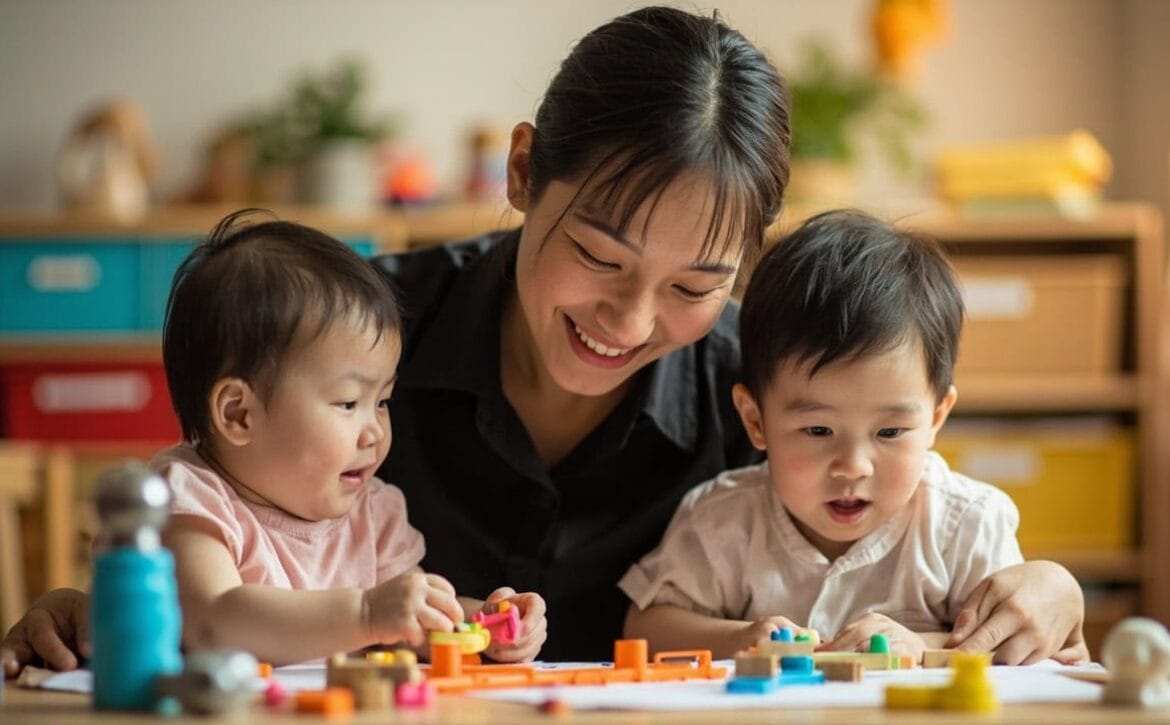
Beyond Settled: How Singapore Parents Can Know If Their Child Is Truly Growing

The Most Important Distinction in Early Childhood Care

At EduNanny Singapore, we have spent considerable time thinking about what it means to know. Not to guess, not to hope, but to know with genuine confidence that the care your child receives is building the developmental foundation they deserve.

We have built our approach around a simple conviction: when parents learn to see what is actually happening, they become not anxious observers but empowered partners in their child’s growth.

Let us begin with what we have found to be the most important distinction in early childhood care—the difference between a child who has settled and a child who is developing.

These two states can look remarkably similar from the outside. A settled child has adapted to routine. They know the faces, the spaces, the rhythms of their day. They have made peace with the transition. They have learned, through the remarkable adaptability of early childhood, to be content.

And this is no small thing. Adaptation requires resilience. It requires a kind of quiet courage. We should not dismiss what it means for a young child to accept a new world.

But settling is not the same as growing. A child can be settled in a place that asks nothing of their curiosity, nothing of their emerging capabilities, nothing of their potential. A child can be settled and still be waiting—for engagement, for challenge, for the kind of purposeful interaction that stretches rather than simply soothes.

The goal is not a child who tolerates care. The goal is a child whose cognitive capacities are being built, whose emotional intelligence is being nurtured, whose social instincts are being guided toward competence, whose motor development is being supported in ways that matter.

The goal is a child who is not merely comfortable, but who is becoming.


How to Tell the Difference: Observable Signs of Real Development

So how do you look at your child at the end of a care day and understand whether the hours in between have been spent merely passing time or genuinely building a foundation?

The answer lies in learning to see what development actually looks like when no one is performing. This is the skill we want to help you develop—not because we doubt your instincts, but because your instincts deserve a language.

Without language, observation remains scattered, impressionistic, easily undermined by a bad day or a momentary regression. With language, observation becomes pattern recognition. It becomes certainty. It becomes trust that has been earned rather than trust that has been hoped for.

Emotional Development: Beyond Simple Comfort

A settled child may show comfort—ease in the environment, willingness to engage with caregivers. But a developing child begins to show something more nuanced: the capacity to experience and regulate a wider range of emotions within the safety of the care setting.

You might notice your child becoming more expressive, not less. More curious about the emotional states of others. More willing to seek comfort not because they are in distress, but because they have learned that comfort is available and reliable.

The developing child moves through emotional territory that would have overwhelmed them months earlier, not because they have been sheltered from difficulty, but because they have been accompanied through it with skill and attunement.

Social Development: From Parallel to Reciprocal

In the social domain, you might notice a shift from parallel play toward something more reciprocal. Not necessarily cooperative play—that comes later—but the beginning of genuine social awareness.

Your child notices other children. They imitate. They experiment with social gestures, with sharing attention, with the delicate choreography of being near others.

These are not dramatic moments. They do not announce themselves. But they are the earliest architecture of social intelligence, and they require a care environment that is attentive enough to support them.

Cognitive Development: Sustained Attention and Problem-Solving

In the cognitive domain, the signs are often subtle but unmistakable once you know what to look for. A developing child begins to show sustained attention—not just to toys, but to processes.

They want to understand how things work. They begin to solve problems that would have frustrated them before. They remember. They anticipate. They show interest in cause and effect, in patterns, in the logic of the physical world around them.

These are not academic skills. They are the fundamental tools of human thought, and they emerge most powerfully when the care environment actively cultivates them through play, through conversation, through the thoughtful arrangement of experiences.

Motor Development: Control and Intention

In the motor domain, you may notice increasing control and intention. Not just bigger movements, but more precise ones. Your child is not just grabbing; they are manipulating. They are not just moving; they are exploring the boundaries of what their body can do.

Motor development is often treated as separate from cognitive and emotional development, but in early childhood, these domains are deeply intertwined. A child whose motor world is expanding is simultaneously building neural pathways that will serve every other domain of growth.


The Comparison Trap: Why Looking Sideways Obscures Understanding

Here is what we have found to be most important in helping parents develop this observational capacity: the discipline of looking at your own child over time, rather than looking sideways at other children.

Comparison is the enemy of understanding. It is also, unfortunately, the default mode of most parental anxiety.

When you compare your child to other children, you are comparing different temperaments, different developmental timelines, different home environments, different starting points. You are comparing incommensurable things and expecting them to yield meaningful answers.

The question is never whether your child is doing what another child is doing. The question is whether your child is doing what they were not doing three months ago.

Growth is a comparison of a child to themselves. It is the most honest measure, and the most reliable one. When you look at your child and ask not “Are they normal?” but “Are they progressing?” you begin to see what is actually there.


What Quality Childminding Actually Looks Like in Singapore

Learning to observe your child is powerful. But observation becomes most meaningful within a true developmental partnership between parent and caregiver.

The caregiver sees your child in ways you cannot. They have hours of observation that you do not have. They have professional training in recognizing developmental patterns. They can help you understand what you are seeing at home, and they can help you understand what is happening in the care setting.

But this relationship only works when both parties are committed to honest, informed conversation. Not just “Did they eat?” and “Did they sleep?” but:

  • “What were they interested in today?”
  • “What challenged them?”
  • “What did I notice them trying that they have not tried before?”

These are the conversations that build a shared picture of your child’s development. They are the conversations that transform care from a service into a partnership.

EduNanny Singapore was built on the belief that parents should not have to choose between convenience and confidence. You should not have to trust blindly. You should not have to hope. You should be able to see your child’s development with your own eyes, understand it with your own mind, and speak about it with the certainty of someone who has learned to see what matters most.

Our model, developed through the ECDA Childminding Pilot and offered across both home-based and centre-based pathways, reflects this conviction at every level.

Small Ratios, Real Attention

With small ratios of up to one to three infants, we ensure that every child receives the individual attention that genuine development requires. We know that attunement cannot scale. Quality care happens in relationship, and relationship requires time and space that large groups cannot provide.

Trained Caregivers, Science-Backed Approach

Our caregivers are trained not just in safety and comfort, but in the science of early development—the understanding that every interaction, every environmental choice, every moment of attunement is either building or missing an opportunity for growth.

Accessible Quality

Our fee structures within the pilot have been designed to make this quality accessible. Singapore families can utilize CDA and Baby Bonus funds to support their child’s care with us.

We believe that developmental care should not be a privilege reserved for those who can pay premium rates. Every child in Singapore deserves to be in an environment where they are not just settled, but growing.

Consistent, Reliable Care

We offer Monday to Friday care blocks, because we know that consistent, reliable care is the foundation on which development builds. Growth is not a sporadic event. It is a daily accumulation, a compounding of experiences, a steady deepening of capacity over time.

This is why we think in terms of years, not days. We are not trying to get your child through today. We are trying to build the neurological, emotional, and social architecture that will serve them for the rest of their lives.


Evaluating Childcare: A Practical Framework for Parents

When evaluating childcare options in Singapore, focus on these factors as a guide for deeper conversation with potential providers:

  • Child-to-caregiver ratio — Determines how much individual attention your child receives daily
  • Caregiver training and approach — Shapes whether care is reactive or intentionally developmental
  • Communication practices — Enables you to partner in understanding your child’s growth
  • Environmental design — Reflects whether the space is designed for discovery or merely management
  • Parent involvement philosophy — Indicates whether they see you as a partner or customer
  • Consistency of caregivers — Determines whether your child builds secure attachment relationships

Ask specific questions about their approach to development, not just their credentials. Ask them to describe what a typical day looks like. Ask how they would handle a child who is frustrated or struggling. Ask how they communicate with parents about development.

A quality caregiver will have thoughtful answers and welcome your questions.

Research consistently shows that ratio matters more than setting. A small, well-resourced home environment with a highly attuned caregiver can provide superior developmental support to a large centre with high child-to-caregiver ratios. The key is individual attention, consistent relationships, and intentional cultivation of developmental opportunities—not the physical location.

You do not need to be a developmental specialist to see meaningful progress. You need a caregiver who helps you understand what you are observing and a framework that focuses on your child’s individual growth over time, not on comparison to norms or other children.


The Value of Uncertainty—and the Certainty Beneath It

We want to close by acknowledging something that may feel counterintuitive: the value of uncertainty.

The willingness to sit with not-knowing, to observe carefully before concluding, to trust the process even when the evidence is still accumulating—this is not weakness. It is the foundation of good parenting and good caregiving alike.

We do not promise that development will be visible on a schedule. We do not promise that every day will show dramatic progress. We promise that if you learn to see, you will find evidence.

Not because we are perfect, but because children are wired for growth, and given the right environment, the right attunement, the right opportunities, that growth will emerge. It always does.

The question is not whether your child is capable of remarkable development. They are. The question is whether they are in an environment that is equal to the task of nurturing it.

At EduNanny Singapore, we believe that we are. And more importantly, we believe that you will be able to see it for yourself—not as an act of faith, but as an act of recognition.

Because when you learn to see genuine development, you will find it. And when you find it, you will know. Not just with your heart, but with your eyes.

That is the promise we make to you. Not comfort, though we will provide that. Not safety, though that is our foundation. But growth. Real, observable, meaningful growth. The kind that prepares your child not just for school, but for life. The kind that justifies your trust. The kind that makes the quiet question finally, permanently, confidently quiet.

The moment you asked the quiet question—”Is this working?”—you became a participant in your child’s development, not merely a spectator. You are bringing the most important ingredient: attention.

We are ready to show you what that attention can reveal.

Ready to see the difference for yourself? Connect with EduNanny Singapore to learn how our ECDA Childminding Pilot approach makes authentic developmental progress visible to parents like you.

edunanny-0614af71e386b65b5c3bfa8453ab6608
March 27, 2026

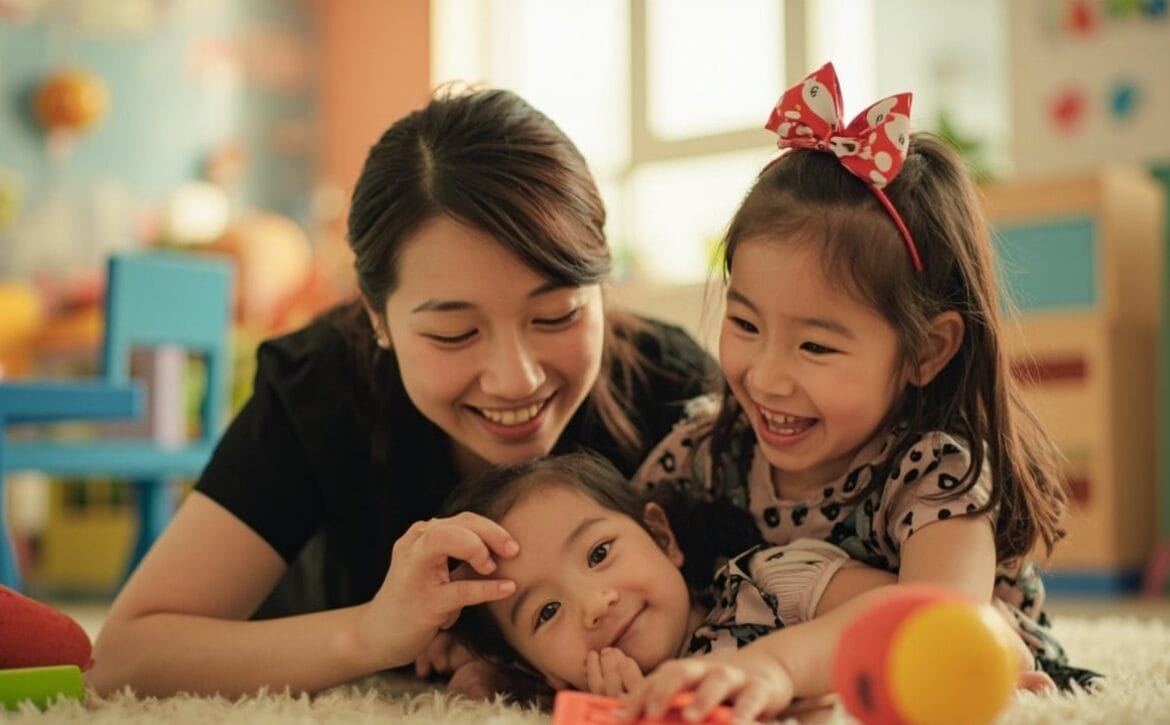
Reclaiming Joy: Why Singapore Parents Are Choosing Restoration Over Sacrifice

That Silence Before the Door Opens

There is a particular kind of silence that lives in Singapore homes in the late afternoon, just before the door opens and a child rushes in. It is the silence of a parent sitting alone for the first time in hours, staring at a cold cup of coffee, feeling something between relief and guilt that they cannot quite name.

If you know that silence, this article is for you.

For Singapore parents, the act of caring for a young child can feel like an endless series of choices where your own needs are perpetually last—or absent entirely. Between prenatal classes and first words, between midnight fever checks and the quiet guilt that arrives uninvited when you hand your child to someone else so you can sit in a meeting and breathe, something begins to erode. Slowly. Quietly. In ways that are hard to name until the erosion becomes a chasm.

We want to name what is happening, because naming is the first step toward change. What you are experiencing is not weakness. It is not a sign that you are failing as a parent. It is one of the most understated risks facing modern families in Singapore: parental burnout.

What research tells us: Chronically depleted parents cannot offer the consistent warmth and presence that young children need to develop secure attachment. Your well-being is not separate from your child’s—it is the foundation from which all good parenting grows. Choosing quality childminding is not choosing your child less. It is choosing to show up as your whole self.


The Weight Nobody Talks About

Singapore parents give. They give enormously, unstintingly, with a ferocity of devotion that is one of the most beautiful things about this culture. Walk through any hawker centre on a Saturday morning and you will see it: the way parents crouch down to wipe small faces, the way grandparents adjust small hats against the midday sun, the way mothers carry sleeping toddlers on their hips while juggling bags and sippy cups. There is no shortage of love in Singapore homes.

And yet.

Somewhere between the paediatric appointments and the guilt that arrives uninvited, something begins to erode. It does not happen all at once. It happens in small withdrawals.

The patience that used to be infinite becomes finite. The laugh that used to come easily takes more effort. The interests you had before you became a parent—the books, the runs, the conversations with friends that had nothing to do with sleep training or screen time—begin to feel like artifacts of another life. You look in the mirror and you see a parent, and only a parent, and somewhere deep in your chest, there is a question you are afraid to ask: Is this all I am now?

Researchers now use the term “parental burnout” to describe this state of chronic depletion. In Singapore, where the cultural script tells us that good parents give endlessly, that selflessness is the highest virtue, that asking for help is somehow an admission that you are not enough—this burnout often goes unnamed and unaddressed.

You might recognise it in these quiet signs:

  • Feeling drained before the day has even begun
  • Counting down to bedtime rather than savouring the hours with your child
  • Losing patience more quickly than you would like
  • Feeling distant from your partner, your friends, and the person you were before parenthood
  • A sense that you are surviving rather than living

If these patterns feel familiar, you are not alone. And you are not broken.


The Science Is Clear: Your Well-Being Shapes Your Child’s Security

Here is what research has established beyond reasonable doubt: a parent’s emotional state is not separate from a child’s security. When parents are depleted—running on empty, chronically stressed, losing access to their own sense of self—the quality of presence they can offer their children diminishes. Not because they love their children less, but because they have less of themselves to give.

Children are exquisitely attuned to this. They feel the distance even when no words describe it. They calibrate their own anxiety to the emotional temperature of the room. When parents are chronically depleted, children show increased anxiety, behavioural challenges, and attachment insecurity—not because their parents do not love them, but because depleted parents cannot regulate, cannot be fully present, cannot offer the consistent warmth that young brains require to develop a sense of security.

Love does not multiply from nothing. Love needs a vessel. And that vessel is you.

The most generous thing you can give your child is not a parent who sacrifices everything. It is a parent who is whole.

This is not a comfortable message in a Singapore context where self-sacrifice is often held up as the highest form of parenting virtue. But consider this honestly: when you have slept badly for the fifth consecutive night, when your patience has been rationed across eighteen hours of caregiving, when the person your spouse married has been buried under responsibility and exhaustion, do you show up as your best self for your child in those evening hours?

When your own identity has atrophied to the point where you cannot remember what you wanted from your career or your marriage or your life before parenthood, do you have anything meaningful to model?

When you are running on fumes, does the love you have for your child somehow multiply to fill the gap?

The answer, if you are honest, is no. And that honesty is not a failure. It is the beginning of wisdom.


What Restoration Looks Like for Singapore Families

So what does parental restoration look like in practice? It is not a weekend spa retreat or a tropical holiday—though those have their place. It is the accumulation of ordinary hours returned to you, one morning at a time.

It looks like this:

  • The morning your child is welcomed into care by someone who is genuinely delighted to see them, and you walk to your car and sit there for a moment and feel your shoulders drop for the first time in weeks.
  • The first Tuesday you remember what it felt like to drink a hot cup of coffee while it was still hot.
  • A conversation with your partner that has nothing to do with schedules or doctors or whose turn it is to do the night feeding.
  • An afternoon when you go to work—or to a meeting, or to a coffee with a friend who remembers who you were before—and you feel like yourself again.

These are not luxuries. These are the conditions for good parenting.

When you get these hours back, something shifts in the evenings. You come home to your child and you are not counting down to bedtime. You are not surviving the bath and the bottle and the bedtime routine with gritted teeth. You are present. You are playful. You are the parent your child deserves to see at the end of the day—not the frayed, depleted ghost of one, but the real person, restored and ready.

Parents who have access to reliable, quality childcare report higher relationship satisfaction, greater career engagement, reduced symptoms of anxiety and depression, and crucially, more positive interactions with their children during the hours they are together. The childcare does not replace parenting. It restores the capacity to parent well.


The Ripple Effects: What Changes When Parents Are Restored

The benefits of parental restoration extend far beyond the individual parent. When a Singapore family finds the right support structure, the effects ripple outward.

The marriage that felt like it was becoming a logistics partnership begins to remember why it started. Partners can reconnect as adults, not just as co-parents managing a schedule.

The career that had been on hold finds new energy. When you are not running on empty, ambition becomes possible again.

The grandparent relationship actually improves, because the pressure lifts from everyone. Grandparents can be grandparents again—present for the joy, not drawn into the exhaustion.

The child, paradoxically, becomes more secure—not less—because they are learning that the adults around them can hold them and be held, can care for them and also care for themselves. This is one of the most profound gifts a child can receive: a model of healthy boundaries and sustainable love.

There is something profoundly life-giving about watching a family breathe again.


What Quality Childminding Looks Like

For quality childminding to deliver on these promises, it must meet certain standards. Not all childcare is created equal, and the difference matters enormously for both parent restoration and child outcomes.

Individualised Attention

Infants and young children need consistent, attuned care to develop secure attachment. This means low ratios—an up to one-to-three ratio for infants is the standard that developmental research supports. When every child has access to genuine attention, they thrive. And when children thrive in care, parents can genuinely relax.

Trained, Passionate Caregivers

Quality childminding is not entry-level work. It requires training, emotional intelligence, patience, and genuine love for the work. Look for services that invest in their caregivers, because those investments translate into the quality of care your child receives—and your peace of mind.

Transparent Communication

One of the things that prevents parents from truly releasing their child into care is uncertainty. Did my child eat? How was the nap? What did they do today? When a service communicates transparently and proactively, it removes the anxiety loop that keeps parents from resting even when their child is in capable hands.

A Framework You Can Trust

In Singapore, look for services operating under established frameworks. The ECDA Childminding Pilot, for example, was designed with extraordinary care and intention to uphold the standards that Singapore families deserve. Understanding the regulatory framework behind a service gives you confidence that quality is not just promised but verified.


EduNanny: Built for the Whole Family

The EduNanny model by BUTLER was conceived with a clear understanding: parents are not secondary to the equation. In fact, parent restoration is central to child outcomes. When parents are resourced, children thrive. When parents are depleted, even the most attentive care cannot fully compensate.

This is why EduNanny operates differently:

  • Under the ECDA Childminding Pilot framework, with ratios that ensure every child receives the attention their development requires.
  • With transparent communication that keeps you informed and connected throughout the day, so you can actually relax.
  • With tools that make logistics genuinely easier, reducing the mental load that weighs so heavily on busy parents.
  • With accessible fee structures, including the ability to use CDA and Baby Bonus funds, so that this investment is within reach for families who have planned thoughtfully for this moment.
  • With flexible pathways—home-based, community, and centre-based options—so that families can choose what fits their circumstances, their values, and their child’s needs.

We know that for many Singapore families, the decision to enrol a child in care—even premium care—is not simple. There are real concerns, and they deserve honest answers.

Addressing Common Concerns

“What will my parents or in-laws think?” There are often extended family dynamics to navigate. Grandparents who raised children without this kind of support may feel that their way was sufficient, or that formal care implies something is wrong.

Here is language you can use: “I am not outsourcing my child. I am investing in my child’s future by investing in my own capacity to be present. The research is clear that children with parents who are emotionally healthy and resourced have better outcomes across every measure we can track. I am doing the most important thing a parent can do for their child, which is to show up as my whole self.”

“Isn’t premium care only for wealthy families?” Quality care is an investment, and like all significant investments, it requires planning. But the fee structures within the ECDA Childminding Pilot are designed to be accessible. CDA and Baby Bonus funds can be used, and Monday through Friday care blocks allow parents to rebuild their workweeks around something more than pure survival.

“What if my child doesn’t settle?” Adjustment takes time. Most children settle well with consistent, quality care. The key is choosing a service with low ratios, trained caregivers, and transparent communication—so that you can trust what is happening during the day and your child can trust that they are in safe, attentive hands.

When you choose EduNanny, you are choosing a service that understands what you need to show up as your whole self for your child. The evening parent who walks through the door after a day of EduNanny care is a different parent than the one who would have spent that day alone, depleted, counting the hours. That difference is not small. It is everything.


To the Parent Who Has Been Carrying This Weight Alone

You have been telling yourself that this is just what parenting feels like. That exhaustion is the price of love. That there is something noble about depleting yourself on behalf of your child.

We want to tell you that you were never meant to parent alone.

You were never meant to pour from an empty cup.

And the choice to seek out quality care—not because you have failed, but because you understand what you are worth, and what your child is worth, and how those two things are intertwined—is one of the most courageous choices a parent can make.

It takes courage to walk into a centre and say, “I need help.” It takes wisdom to understand that accepting help is not weakness. It takes love to recognise that your child needs a parent who can be joyful, patient, and present, and to do the necessary work to become that parent again.

Singapore families deserve to be whole. Your child deserves a parent who is present, playful, and at peace. Your marriage deserves attention. Your career deserves ambition. Your identity deserves to exist beyond the word “parent.”

These are not selfish desires. These are the conditions for everything good that families are built on.

EduNanny is here because we believe that quality childminding is not a compromise. It is not an admission of failure. It is a deliberate, wise investment in your family’s future—starting with you.

If you have recognised yourself in what we have said today, we want you to know that you are not alone in this. The silence before the door opens does not have to be the silence of depletion. It can be the silence of readiness.

The door is open. Welcome to EduNanny Singapore.


EduNanny is a trusted, development-focused childminding and childcare service for Singapore families. Learn more about our approach or get in touch to explore how we can support your family.

edunanny-0614ac31177497a8ea8e257f1499fb1b
March 27, 2026

What Your Child Is Really Telling You After Childcare

Understanding What Your Child Is Telling You

You drop your child off in the morning and she is happy, easy, familiar with the routine. You pick her up in the afternoon and she is a different person. Not metaphorically. You can see it in her body, in the way she holds herself, in the quality of her cry or the silence that replaces it.

Your first thought is: something happened.

Your second thought is: what do I do with this thought?

This is one of the most common experiences of parents who choose quality childcare, and it is also one of the most isolating. You feel a flicker of doubt, and then you feel guilty for feeling the doubt, and then you do not know whether to trust yourself or dismiss yourself.

Here is what we want you to hear: that flicker of attention, that noticing, is good parenting. It is not distrust. It is attunement. Your child cannot yet tell you what happened, but you can feel that something shifted, and that feeling is worth honouring.

Release or Something More?

Behavioural changes after childcare are not necessarily signals of something wrong. They are often signals of something active.

Your child has been in a social environment all day, navigating relationships, processing stimulation, learning to be a person among other people. That is exhausting work, even when it is wonderful work.

The clinginess at pickup, the meltdown in the car, the refusal to eat dinner despite clearly being hungry, the tears that come the moment she sees you: these are often the releases that happen when safety returns. When the environment shifts from public and performed to private and held. Your child is showing you that she trusts you to receive her in the ways she cannot show you at school.

Think of it this way: your child has been holding it together all day. You are the person she does not have to hold it together for. That regression, that release, that seeming step backward in behaviour? It may actually be a sign of deep security.

Developmental Leaps and Temporary Disorientation

You may have noticed this. Your child suddenly cannot do something she could do yesterday. Or she is suddenly doing something new, something startling, something that seems to come from nowhere.

She may become more clingy, more frustrated, more awake at night. She may refuse foods she loved the day before. She may laugh at things that are not funny, or cry at things that are not sad.

This is not misbehaviour. This is often development. Children do not grow in straight lines. They grow in surges. And those surges require energy, reorganisation, adjustment. The same child who walked confidently last week may need to be carried this week. The same child who slept through the night may be waking again. The same child who was speaking in short sentences may now be frustrated that words will not come fast enough to match her thoughts.

These are not problems. They are invitations to see your child more fully, to hold her with patience as she expands. Your caregiver sees this too. Because they are with your child in a different context, they may notice something you are missing at home, or they may help you interpret what you are seeing. When these perspectives talk to each other, you get a fuller picture of who your child is becoming.

When It Persists or Intensifies

But sometimes a behaviour change is more than release. Sometimes it persists. Sometimes it intensifies. Sometimes your child uses language or displays an attitude that is not part of your household culture, and the gap between who she is with you and who she is there creates a worry you do not know how to name.

Here is a framework that might help distinguish normal adjustment from genuine concern.

Signs of Normal Adjustment

  • Your child has an off day, or an off week, but then returns to baseline
  • There is variation, but the overall trajectory is positive
  • Your child is meeting milestones appropriately
  • She is relating to caregivers with warmth
  • She is sleeping, eating, playing in ways that feel healthy
  • She may be tired after childcare, but she is not consistently distressed

Signs That Warrant Attention

  • Changes that persist rather than improving over time
  • Changes that intensify rather than easing
  • Your child becomes consistently withdrawn, or consistently aggressive in ways that are new
  • She loses skills she previously had
  • She speaks about childcare with consistent fear or distress
  • She has unexplained marks or signs of rough handling

These are not things to dismiss or wait out. These are things to investigate, and you have every right to ask direct questions, to request observation, to escalate if necessary. We would rather hear from you when there is nothing wrong than miss a moment when there is something that needs attention.


Building the Partnership Through Communication

There is a skill here that no one teaches you, and it matters enormously. You notice something. A concern. Maybe it is small. Maybe it is bigger. You are not sure if it is worth raising. You do not want to be the parent who overreacts, who micromanages, who creates friction with a caregiver you otherwise trust. But you also do not want to be the parent who stays silent and later wishes you had spoken.

The truth is that the quality of your child’s care depends enormously on this moment. Not on whether the concern exists, but on whether you can raise it in a way that invites partnership rather than defensiveness.

A Framework for Difficult Conversations

The caregiver who is genuinely invested in your child will receive your concern as information, not as accusation. The parent who approaches the conversation with curiosity, not accusation, is far more likely to get the honest, useful answer that helps everyone.

A good opening might sound like this:

I noticed something I wanted to ask you about. Can we talk about what you saw on Tuesday?

That is not defensiveness. That is not a demand. That is an invitation to compare observations, and it is almost always received better than a lead with, “Is something wrong?”

What we have found in working with families through these moments is that most concerns dissolve in the light of honest conversation. They were misunderstandings. They were developmental. They were one-time events that felt significant in isolation and reveal themselves as ordinary in context.

But sometimes a concern points to something real, something that needs to shift, and when parents and caregivers can speak honestly to each other, those shifts become possible. The partnership deepens. The care improves. Your child benefits.

How EduNanny Thinks About Communication

This kind of communication is only possible when it is structured into the relationship from the beginning. When you chose EduNanny, you did not just choose a service. You chose a philosophy of partnership—one that welcomes your questions, that expects your feedback, that sees your involvement not as interference but as essential to the work.

We build time into our routines for exactly this kind of exchange. Not just at pickup when time is short and energy is low, but in regular, unhurried check-ins. We want you to know not just what your child ate, but how she ate. Not just that she napped, but what kind of sleep she had. Not just that she played, but how her play has shifted. These details are not trivia. They are the texture of your child’s life, and they help you understand whether what you are seeing at home is ordinary or warrants attention.


Navigating Transitions

Change is part of any sustained childcare relationship. Sometimes your caregiver moves on. It may be planned and gradual. It may be sudden. Either way, it lands in your chest like a small grief, because you have built something: a rhythm, a trust, a relationship that your child had come to rely upon.

And now there is someone new, and your child is noticing, and you are wondering how to manage this without causing harm.

The Way Through

The way through this is honesty, gentleness, and time. Your child will take cues from you. If you approach the transition with anxiety, your child will amplify that anxiety. If you approach it with calm confidence, with genuine warmth toward the new caregiver, your child will follow.

This does not mean suppressing your own feelings. It means doing your work before you walk through the door.

  • Talk to your new caregiver. Learn their name, their background, their approach.
  • Ask questions. Be present in the early days, even if just for a short while—not to hover but to be a bridge between your child’s known world and this new person.
  • Give it time. Transitions are disorienting for all of us, and children are particularly attuned to the adults around them.

What feels like a slow adjustment is often a normal, healthy adaptation. Your child is learning that change does not mean loss, that new people can be trusted, that you are still here even when someone new has arrived.

Continuity by Design

We think about continuity deeply at EduNanny. Our small ratios, our consistent staffing, our careful onboarding processes: these are not accident. They are design choices built on the understanding that children need predictability to feel safe, and safety is the condition under which everything else grows: curiosity, learning, independence, kindness.

When we introduce new caregivers into our community, we do it gradually, with overlap, with intentional handoffs that preserve relationships and model trust. We do not make transitions easy, but we make them thoughtful, and that matters enormously.

The Move to Primary School

There is one more transition we want to name, because it is coming for all of you eventually: the move from childcare to primary school. This is a different kind of transition. It is not just a new caregiver. It is a new system. Longer days, different expectations, formal learning, new social dynamics.

Preparing your child for school readiness is not about flashcards or academic acceleration. It is about social-emotional readiness. Ask yourself:

  • Can your child regulate her emotions?
  • Can she persist at a difficult task?
  • Can she navigate conflict with peers?
  • Can she separate from you and trust that you will return?
  • Can she ask for help?

These are the skills that make school a place where learning can happen, and they are built in the context of warm, consistent, responsive relationships. When your child moves from EduNanny to primary school, we want her to carry more than academic readiness. We want her to carry a sense of herself as capable, as worthy of attention, as someone who can learn and grow and belong.


Sibling Dynamics in Childcare

This is something that parents encounter and almost never talk about.

You have two children in care, or one child in care and one at home, and one of them is thriving while the other is struggling. The one at childcare is flourishing, meeting milestones ahead of schedule, coming home happy and tired. The one at home is clingy, frustrated, acting out in ways that feel relentless.

And you find yourself thinking: is it childcare? Is it me? Is it something I am doing wrong?

The honest answer is that children are different. They have different temperaments, different rhythms, different needs. One child may find the group environment exhilarating. Another may find it depleting. This does not mean childcare is wrong for the second child. It may mean that the second child needs more decompression time, more one-on-one connection, more processing space at home. It may mean that the classroom that works beautifully for your first child is not the right fit for your second.

These things are not failures. They are information. And the more honestly you can look at both children, the better you can serve each one.

This is another place where the partnership with your caregiver matters. Share what you are seeing at home. Ask what they are seeing in different contexts. Notice where each child seems most like themselves. Let the picture be assembled by more than one set of eyes.


What Quality Childcare Looks Like at EduNanny

We think it matters to be concrete. Here is what EduNanny actually offers, and why each element exists.

ECDA Childminding Pilot

We are part of the ECDA Childminding Pilot. That is not just a regulatory designation. It is a structure that means our programme meets standards for infant and child care that go beyond minimum requirements. It means we are accountable. It means our ratios are meaningful: up to one-to-three in our infant programme, which means your child is not one of twelve in a room but one of three, seen, known, held.

Two Pathways, One Standard

We offer both home-based and community-based pathways, because families are different and one model does not fit all.

Pathway Best For
Home-based Families who want care in their own space, with a caregiver who becomes part of the household rhythm
Community-based Families who value peer interaction, structured environments, and a centre community

Accessible by Design

Our fee structures are designed to be accessible within the pilot framework. We know that childcare costs are a real pressure for Singapore families, and we are committed to quality that does not require wealth to access. CDA funds are usable. Baby Bonus can be applied. These are not just policy details. They are the practical architecture that makes quality care possible for families across this island.

Transparency and Trust

We also believe in transparency. Where CCTV measures are deployed, they are deployed not for surveillance but for safety, for accountability, for the kind of openness that builds trust over time. You are not sending your child into a black box. You are entering into a relationship with people who are glad you are watching, who want you to ask questions, who know that your trust is earned through consistent, honest, daily care.

Consistent Partnership

Monday through Friday, we are here consistently and predictably, as a partner in your child’s weekly rhythm. Not because you need us to fill a gap, but because we believe this work matters. The daily partnership of childcare is not a convenience. It is a contribution to your child’s development, to your family’s wellbeing, to the kind of society we are building together.


Coming Home to Partnership

We chose the name EduNanny for a reason. Our caregivers are not staff. They are partners. They are the people who know your child’s favourite song, who notice when her language is expanding, who will hold her gently when she falls and tell you honestly about it at the end of the day. They are doing the work that you could not do if you were not working, and they are doing it not instead of you but alongside you.

We know that there are days when you feel guilty for being away from your child. We know there are days when you feel guilty for being with your child. We know the impossible arithmetic of modern parenting, the competing demands, the sense that you are always failing somewhere. We want to ease that burden, not add to it. We want to be the kind of partner who receives your child with joy, who sends her home happy, who tells you the truth about her days, who lets you be a good parent without making you feel like a bad one.

Let us be clear about what we are not promising. We are not promising a perfect experience. Children have hard days. Caregivers are human. Transitions are difficult. Developmental leaps are exhausting. There will be moments of uncertainty, moments when you wonder if you made the right choice, moments when you are simply tired and the whole enterprise feels enormous.

We are not here to tell you that this is easy. It is not always easy. But we are here to tell you that it is worth doing, and that you do not have to do it alone.

The daily partnership is for the Tuesday when your child screams at the gate and you do not know if this is normal. It is for the Wednesday when she comes home different and you need someone to help you understand. It is for the Friday when she says something new and you want to know the context. It is for the caregiver transition that you did not choose but must navigate. It is for the developmental surge that makes everyone in the house temporarily impossible. It is for the sibling who is thriving and the sibling who is struggling and the parent who is trying to see them both clearly. It is for the conversation you are not sure how to start, and the concern you are not sure is real, and the trust you are trying to rebuild after something felt off.

The children in our care are not in our programmes. They are in our keeping. There is a difference, and it matters. To keep something is to hold it with intention, to guard it with care, to give it back better than you received it. That is what we aim to do every single day.

You chose quality childcare. That was the first act. Now comes the second act, which is harder and more important: the sustained, daily, sometimes uncertain, deeply meaningful partnership that carries your child from where she is now to where she will be.

We are grateful to walk that path with you. We are grateful for the trust it takes to leave your child with someone else. We know it is not small. We know what it means to hand over the most precious thing in your life and say, take care of this. We do not take that lightly. We never will.

If you are ready to move from choosing to sustaining, we would welcome the conversation. Enquire about our placements and let us walk this path together.


Learn more about who we are or return to EduNanny Singapore.

edunanny-0614a8a0e300f6455251607463a8d84d
March 27, 2026

The Foundation Years That Prepare Your Child for Primary School

These Years Are Not a Holding Pattern

The years between toddlerhood and primary school are not a placeholder. They are not the administrative prelude to the real event. These years—all three or four of them—are the most developmentally active and relationship-rich phase of your entire childcare journey.

This runs counter to a subtle cultural narrative that frames childcare as something you need most when your child is helpless and small, and less and less as they grow capable, verbal, and ready for school. That narrative is wrong. Understanding why changes everything about how you experience this period as a parent.

Consider what is actually happening in your child between the ages of two and six:

  • At two, your child is learning to communicate desire, to assert autonomy, and to test the boundaries of the physical world.
  • At three, they are discovering cooperation, learning to see themselves through the eyes of others, and beginning to construct a moral imagination that distinguishes between mine and yours.
  • At four, they are ready for genuine complexity: narrative thinking, imaginative play with elaborate rules, and the capacity to hold an emotional experience and describe it.
  • At five, they are preparing for the cognitive demands of formal education: sustained attention, working memory, the ability to delay gratification, and the emotional regulation to sit with frustration rather than flee it.

These are not natural progressions that simply unfold because a child grows older. They are built, layer by layer, through relationships, environments, and experiences that the child moves through over time. The quality of care, the consistency of relationships, and the intentionality of programming during these years determine how well that construction proceeds.


What Quality Childcare Looks Like as Your Child Grows

Many parents feel uncertain about what they should be noticing and expecting. Here is what age-appropriate care looks like across these pivotal years.

At Two: Building Security

Your child is still learning the basics of social existence: how to be near other children, how to share space and toys, how to communicate needs without aggression, and how to trust that caregivers will return after absences.

Quality care at this stage is warm, responsive, and focused on building security and basic social competence. You might see parallel play, simple language modeling, and plenty of caregiver scaffolding for emotional regulation.

At Three: Intellectual Stimulation

The environment should feel more stimulating, more intellectually alive. There should be opportunities for pretend play, problem-solving, and early literacy experiences that are playful rather than prescriptive.

Your three-year-old should be encountering stories that build empathy, songs that develop phonemic awareness, art activities that develop fine motor control, and social experiences that teach turn-taking and cooperation. The caregiver should be a facilitator of discovery—asking open-ended questions and extending your child’s thinking rather than simply directing it.

At Four: Readiness Without Pressure

Quality care begins to introduce the academic readiness that will serve your child well in primary school, but it should do so in ways that feel engaging rather than pressured.

You should see evidence of early writing attempts, letter recognition, number sense, and conceptual thinking. But you should also see equal attention paid to the skills that schools do not teach but desperately need:

  • The ability to focus for increasing stretches of time
  • The capacity to manage transitions between activities
  • The social intelligence to navigate a classroom of thirty peers
  • The emotional vocabulary to express frustration appropriately

At Five: The Bridge to School

The environment should feel like a genuine preparation for school, grounded in warmth rather than anxiety. Your child should be learning to follow multi-step instructions, work collaboratively on projects, handle feedback without defensiveness, and sit still for periods that mirror a typical school day.

The caregiver’s role is no longer primarily nurturer, though warmth remains essential. The caregiver is now also a teacher, a coach, and a bridge between the secure world of childcare and the more structured world that awaits.

If this evolution is not happening—if the care your child receives at five looks and feels identical to the care they received at two—that is a red flag. It may not mean the care is bad. But it does mean the relationship has not matured. A maturing child needs a maturing arrangement.


The Partnership That Grows With Your Child

EduNanny Singapore speaks about childcare as a partnership that evolves. In the first year, partnership looks like frequent communication, photo updates, and detailed daily reports. Parents want to know that their infant was fed, slept, had a diaper change, and was soothed when crying.

In the middle years, partnership looks different. It looks like a caregiver who can tell you that your child resolved a conflict on the playground today without adult intervention—using language they must have heard modeled in class. Partnership looks like a nuanced observation of your four-year-old’s growing capacity to persist at a difficult puzzle, to include a hesitant peer in a game, or to express disappointment without escalating into a full collapse.

Partnership looks like a caregiver who knows your child well enough to notice when something is different, and confident enough to raise it with you before it becomes a concern.

Over years, you and your caregiver develop a shared language for your child’s development. You learn to trust her observations because you have seen them proven accurate over and over. She learns to trust your instincts about your child because you have demonstrated, consistently, that you know your child better than anyone.

This is not a vendor relationship. It is not a transactional arrangement that ends when the invoice is paid. It is a collaborative investment in a human being who is in the middle of becoming someone.

Your Role Has Evolved Too

In the early months, your involvement was intense: daily check-ins, detailed handover conversations, perhaps anxious texts about your infant’s wellbeing.

As your child grew older and more verbal, that intensity naturally decreased. Your child can now tell you what happened at childcare. The daily reports may be less clinical, more anecdotal. And you find yourself with less to discuss during pickup, more trusting of the arrangement, and perhaps less certain about what you are still contributing.

This is not a sign that your role has diminished. It is a sign that your role has evolved. You are no longer the anxious manager of a fragile situation. You are now a mature partner in a longer relationship.

You can contribute by staying engaged without being intrusive—asking thoughtful questions during handover like What did she seem most engaged by today? How did she handle the transition to outdoor time? These are not the questions of a worried parent. They are the questions of an invested co-pilot. Share insights about your child’s emotional life at home that enrich the caregiver’s understanding, and follow up at home on the social and emotional lessons being learned at childcare.

You can also notice when something feels off. These are early signals that the partnership has become stagnant:

  • Your five-year-old stops talking about her caregiver with affection
  • She begins to show signs of boredom or restlessness at pickup
  • The communication from the childcare arrangement becomes sporadic or surface-level
  • The caregiver’s observations feel generic rather than specific to your child

Stagnation, in a relationship that should be growing, is a reason to pause and re-evaluate.


Continuity, Stability, and Genuine School Readiness

You may be tempted, as your child approaches school age, to begin making changes: to switch arrangements, reduce hours, or gradually transition out of childcare in preparation for the big shift. Resist this temptation unless there is a compelling reason.

Continuity of care—the consistency of relationships and environments over time—is one of the most robust predictors of positive developmental outcomes in the research literature. A child who has been in a stable, quality childcare arrangement for three or four years has built a foundation of security, social competence, and cognitive engagement that serves as a springboard for formal learning.

Disrupting that continuity in the final year before school, when your child most needs the stability and confidence that come from knowing their world well, can introduce unnecessary stress and regression.

What Real Readiness Looks Like

Singapore parents are not naive about the demands of primary school. You have seen the workload that children as young as seven are managing. You know that the transition to formal education is a significant adjustment, and you want your child to be prepared.

But preparation does not mean acceleration. Preparation does not mean replacing play with worksheets, or hiring tutors before your child has even begun Primary One.

Genuine school readiness—what EduNanny Singapore is designed to cultivate—is about readiness in the broadest sense. It is about a child who:

  • Can focus for sustained periods
  • Can follow multi-step instructions
  • Can manage the social dynamics of a large group
  • Can recover from disappointment and continue trying
  • Has a vocabulary for emotions and the self-regulation to use that vocabulary before acting on impulse
  • Is curious about the world and confident that adults can help them learn about it

These are not skills that appear on a test. But they are the skills that determine whether a child thrives or struggles once formal learning begins. And they are built, painstakingly and joyfully, in the years before school, by caregivers who are attentive, intentional, and responsive.

As your child approaches the final year before primary school enrollment, your EduNanny caregiver should begin to introduce more structure, more explicit learning activities, and more practice with the skills that will serve your child in a classroom setting. This is appropriate. This is what quality care looks like at this stage.

But it should always be grounded in warmth, in relationship, in the understanding that your child is a whole person who is learning how to be a student—not a vessel that needs to be filled with information.


What Sustains Your Child Through the Transition

When your child walks through the gates of their primary school on the first day, they carry with them everything they have learned, felt, and become during these years.

They carry their capacity to trust adults, to make friends, to persist when things are hard, to ask questions, and to believe that learning is exciting rather than frightening.

They carry the invisible curriculum of the preschool years: the emotional vocabulary, the social competence, the resilience, the curiosity. And they carry the relationship they built with their caregiver, which taught them that adults can be trusted, that growth is possible, and that they are worthy of attention and care.

The caregivers you work with through EduNanny Singapore—whether in the home-based pathway of the ECDA Childminding Pilot or in centre-based arrangements—are trained to adapt their approach as your child grows. They do not apply the same methods to a five-year-old that they would use with a two-year-old.

They notice development. They adjust their language, their expectations, their programming, and their relational style. And they do this in partnership with you—communicating observations, celebrating milestones, flagging concerns, and working together to ensure that your child arrives at the doorstep of primary school not just academically ready, but emotionally secure, socially capable, and genuinely curious about learning.

The children who arrive at primary school most ready are not necessarily the ones who were drilled on academic content. They are the ones who arrived secure, curious, capable, and confident. They are the ones who had caregivers who noticed them, who adapted to them, who grew with them, and who treated these years not as a waiting period but as what they truly are: the most important developmental chapter in your child’s life so far.


To the Parent Still Asking That Question

So when that quiet question surfaces again—the one that asks whether this is still right, whether this still matters, whether you should be doing something more or something different—remember this:

The fact that you are asking the question at all is a sign of how much you care. And the answer, if you are with EduNanny Singapore, is almost certainly yes. This still matters. This still serves your child. And the partnership you have built is not winding down. It is entering its most rewarding and consequential phase.

Your child is not becoming ready for school despite your childcare arrangement. They are becoming ready for school because of it.

And that is something worth celebrating.

Whether you are just beginning to research childcare options or you are deep in the partnership years, EduNanny Singapore is here to walk this journey with you—from those first uncertain weeks of enrollment through the confident, excited child who is ready for everything that comes next.

Reach out to learn how our approach adapts to your child’s evolving needs, because these years matter, and so does every decision you make within them.


About EduNanny Singapore · ECDA Childminding Pilot · Contact Us

edunanny-0614a4f15ca2ff126de84aaa8a0206b0
March 27, 2026

Give Your Parents the Gift of Being Grandparents Again

The Light in the Morning: A Singapore Story About Grandparents, Children, and the Choice That Changes Everything

There is a particular quality of light in Singapore in the early morning. It falls through the windows of HDB living rooms and landed properties alike, catching the steam from a cup of kopi and the small hands of a child reaching up. If you have grown up here, or if you have raised children here, you know that scene intimately.

The grandparent. The grandchild. The unspoken promise between them that stretches back generations and forward into a future every family hopes for.

We see you. We see the way your parents light up when your children walk into the room. We see the way your children run toward them without hesitation, without fear, without the smallest doubt that they are safe. That is not something that can be manufactured. That is inheritance. That is love doing exactly what love is supposed to do.

But we also know something else about Singapore families. Something quieter. Something that does not get talked about at parties or in parenting forums, but that lives in the space between a parent’s gratitude and a grandparent’s sigh when they think no one is watching.

If you are a Singapore parent who feels caught between needing childcare and worrying about overburdening your own parents, this article speaks directly to that tension.

Central Insight

  • When grandparents become full-time caregivers, the grandparent-grandchild bond often shifts from presence to performance, from joy to obligation
  • Choosing quality professional childcare does not mean choosing away from your parents
  • It means choosing toward them—freeing them to be the grandparents they want to be
  • This restoration benefits your children, your parents, and your entire family system

The question is not whether professional childcare is compatible with strong family bonds. It is not just compatible. It is complementary.


The Quiet Weight Many Singapore Parents Carry

Here is what we have noticed, watching Singapore families navigate this terrain for years. When grandparents become primary caregivers, something subtle and significant shifts. Not always. Not deliberately. But often enough that it deserves to be named, because naming it is the first step toward doing something about it.

The relationship that should feel like sanctuary begins to carry weight. The morning handoff becomes not just a transition of time but a transfer of responsibility. The grandparent who arrived at your door wanting nothing more than to hold their grandchild now finds themselves managing nap schedules, preparing meals, navigating the relentless physical and emotional demands of toddlerhood, day after day.

The role that was meant to be gift becomes obligation. The presence that was meant to be joy becomes labor.

And the child, who should be experiencing their grandparent as a person who is simply, purely there for them, begins to see them instead as the person who says no, who sets limits, who is associated with the everyday friction of being small and needing things.

You feel this. The guilt you carry about relying on your own parents is not abstract. It is specific and it is real.

You see the fatigue in your mother’s eyes. You notice that your father, who was once the one who took your children to the park without being asked, now hesitates when you suggest a visit. You wonder, in the private hours of your own uncertainty, whether you are asking too much. Whether the help you need is costing your parents something they cannot afford to give.

These are not the thoughts you share at playgroup. They are not the questions that fit neatly into parenting forums. They are the quiet knowing that lives beneath the gratitude, and they deserve to be acknowledged honestly.


The Reframe That Changes Everything

Here is the truth that no one has said to you plainly: the choice you are facing is not a choice between family and quality care. It is not a choice between honoring your parents and giving your children the best start.

The frame that makes this feel like a dilemma is the frame that is wrong.

What you are actually choosing, when you choose quality childcare, is not away from your parents. You are choosing toward them.

When a trusted professional childcare partner steps into the daily rhythm of your family’s life, something remarkable happens to the grandparent-grandchild relationship. The logistics dissolve. The schedules release their grip. The grandparent is no longer the person responsible for the child’s meals and naps and the thousand small negotiations of a young life. They become, again and more fully than perhaps they have been in years, the person who arrived with no agenda except love.

Think about what that means for a child. When a child knows that their grandparent is the person who comes to play, who brings a small treat, who sits with them during a bedtime story without the weight of tomorrow’s responsibility already pressing down—that child receives something irreplaceable.

  • They receive a grandparent who is present in the deepest sense
  • They receive a relationship uncomplicated by the necessary friction of caregiving
  • They receive the grandparent who can be fully themselves, which is to say, fully joyful

What Your Child Learns When Grandparents Are Free to Grandparent

Research consistently shows us that the quality of the grandparent-grandchild relationship matters enormously for a child’s emotional development, for their sense of security, for the model they carry forward of what family love looks like.

A grandparent who is emotionally free to show up as a grandparent—with warmth, with patience, with the particular indulgence that grandparents seem to have been designed to provide—gives a child something no curriculum can replicate.

Consider the difference in what a child learns from these two scenarios:

Scenario one: The grandparent who is tired from managing naps and meals and the endless negotiations of toddlerhood, whose patience is finite because their responsibility is boundless.

Scenario two: The grandparent who arrives on a Saturday morning with nothing to do except be there, who can say yes more often than no, who has the emotional space to simply play, to simply love.

The child in scenario two is learning something profound about what family feels like. They are building an internal model of unconditional presence that will shape their relationships for life. This is not sentimental. It is developmental. It matters in concrete ways for your child’s emotional architecture.


What Quality Childminding Looks Like—and Your Options in Singapore

Not all professional childcare is created equal, and the difference matters. When you are entrusting someone with the daily care of your infant or toddler, you need more than supervision. You need genuine attention.

Here are the markers of care that truly supports your family:

  • Individual attention: In infant care, a ratio of no more than three infants per caregiver means each child can be truly seen—a caregiver who can notice the shift in mood that precedes a meltdown, who can respond to the child who reaches for connection rather than the one who has already given up asking
  • Consistency: For a developing brain, predictability is the architecture of security. Your child knows what comes next. They trust the routine because the routine is kept
  • Transparency: You should never wonder what happened during the hours between drop-off and pickup. Communication with families is ongoing, daily, and honest
  • Developmental intentionality: Care is not just about keeping children safe and occupied. It is about responding to where they are developmentally and supporting their next steps
  • Partnership with families: Quality care works with you, not instead of you. It respects that you know your child best and keeps you informed and involved

Singapore parents have several pathways for professional childcare. Understanding these can help you make a choice that aligns with your family’s needs.

Care Type Best For Key Considerations
Home-based childminding Families wanting care in their own home; infants who thrive in familiar environments Child remains in comfortable surroundings; caregiver comes to you
Centre-based care Families valuing social environment; children who benefit from peer interaction Community setting; structured environment with peer interaction
Hybrid approach Families with varied schedules or needing flexible coverage Combines elements based on family needs

The right choice depends on your child, your family dynamics, and what works for your household. What matters most is that whatever pathway you choose maintains the standards your child deserves and supports—rather than supplants—your family system.

Why EduNanny

EduNanny is part of the ECDA Childminding Pilot, which means we operate within a framework designed to raise the standard of home-based childcare across Singapore. We believe in that framework because we helped build it.

More importantly, we believe in what it represents: a serious, structured approach to giving children the individual attention they deserve in those critical early years, while giving families the support they need to stay whole.

Our infant ratio of up to one to three is not a bureaucratic requirement we tolerate. It is a philosophy we hold. When a caregiver is responsible for only three infants at most, they can truly see each child.

Our care runs Monday through Friday, in structured blocks that give you predictability and give your child consistency. This is not a small thing. This is everything.

And we understand that for this to work, trust must be absolute. Where CCTV measures are deployed, they are there not because we doubt our caregivers but because we understand that you need to see what we see. You need to know that your child is not just safe but seen.


Your Real Questions, Answered Honestly

You may have questions. They deserve real answers.

“Will my parents feel replaced?”

No. The opposite happens. When professional care handles the daily logistics of meals, naps, and schedules, your parents are freed to show up as grandparents in the fullest sense. They become the person who can say yes more often than no. The person who arrives at a visit and simply is there, without a mental list of tasks, without the clock counting down to the next feeding. Professional care does not diminish a grandparent’s role. It returns them to it.

“Is this financially feasible?”

The ECDA Childminding Pilot offers fee structures that make quality care accessible, and we have designed our services to work within those structures without compromising on the standards we believe children deserve. CDA and Baby Bonus funds can be used, which means the financial architecture of Singapore’s family support system is working for you, not against you. Quality care and financial sensibility are not opposites.

“Will my child be safe? Will they be known?”

Safety is the foundation, not the ceiling. Beyond safety, we believe every child deserves to be known—to have caregivers who notice them, who understand their cues, who respond to them as individuals. Our low ratios exist precisely so that this is possible.

“What if I have questions outside of business hours?”

We have built support tools that make parenting and childcare less overwhelming. Questions that arise at odd hours—questions that feel too small to bother anyone with but too pressing to wait until morning—deserve answers. Our support systems are designed to complement, not replace, the human judgment that sits at the heart of quality care.


A Practical Path Forward

If you are considering this path, here is guidance that may help:

  1. Start with your values, not just logistics. What do you want your children’s relationship with their grandparents to feel like? Work backward from that vision.
  2. Have the conversation with your parents. Not just “can you watch the baby” but “what do you want your role to be?” You may be surprised what they say.
  3. Ask about ratios and training. In infant care, lower ratios mean more individual attention. Ask about caregiver qualifications and ongoing development.
  4. Look for transparency. How will you know what happens during the day? What does communication look like?
  5. Trust your instincts. When you visit a potential care arrangement, notice how it feels. Do you sense warmth? Do the caregivers seem present?
  6. Consider the financial fit. Understand what support structures are available to you, including government schemes designed to make quality care accessible.

The Invitation

Singapore grandparents are often the silent pillars of our family system. They stepped in without being asked. They rearranged their lives, postponed their own rest, carried the weight of a generation’s childcare needs without complaint.

Many of them would tell you, if you asked them honestly, that they are tired. Not tired of their grandchildren—never that—but tired in the way that comes from being responsible for something you love too much to do halfway.

When professional care enters the picture, it returns them to themselves. They become the grandparent again, in the fullest sense. The person who can give their grandchildren the one thing no amount of effort can manufacture: unhurried, unburdened presence.

The grandparent who takes your child to the park because they want to, not because they have to. The grandparent whose eyes light up at the door because there is no fatigue behind them. The grandparent who is there, truly there, because they finally have the space to be.

This is the gift you give your parents when you choose aligned professional care. This is the gift you give your children. This is the gift you give to the whole family system.

But here is what we want you to hold onto, beyond the features and the frameworks and the service details, because those are not really what this is about.

This is about your family. It is about the conversation you have with your partner at the end of a long day, weighing the impossible-seeming choices. It is about the way your mother looks when she tells you she is happy to help, and the slight distance in her eyes that tells you something else.

This is about your child, who does not yet have words for what they need from the people who love them, but who feels everything—the tension, the fatigue, the unspoken weight in the room.

What we are offering, at the most human level, is permission. Permission to stop carrying this alone. Permission to choose care that does not diminish your family but strengthens it. Permission to give your parents back to your children, and to give your children the grandparents they deserve.

There is a word we keep coming back to, and it is not a word that childcare services usually use, but we believe in it. That word is restoration. Not replacement. Not substitution. Restoration. The return of something to its rightful, intended state.

Your parents were always meant to be the joyful presence in your children’s lives. Your children were always meant to experience them as the source of uncomplicated love, the safe harbor, the people who spoil them in all the best ways. And you were always meant to have the peace of knowing that your children are in excellent hands while you do what you need to do—not because you are abandoning your family but because you are protecting the bond that matters most.

We do not take the trust you place in us lightly. Every family that walks through our doors or invites us into their homes is trusting us with something irreplaceable. We know that. We carry it with the seriousness it deserves.

The village that raises a child has always been a truth in Singapore, across our cultures and our communities. But the village works best when every member of it is doing what they are meant to do. When grandparents are free to grandparent. When parents are supported in their choices. When children are cared for by people who are trained, present, and committed to their development.

That village exists. It is not a metaphor. It is what we are building, one family at a time.

You have already shown, by reading this far, that you care deeply about getting this right. You are not looking for the easy answer. You are looking for the right one.

We understand that search, because we share it.

We believe that choosing well—choosing care that honors your family, that respects your parents, that gives your children the foundation they need—is not a compromise. It is a gift. It is the gift you give to everyone you love.

And we would be honored to be part of it.


Ready to explore what this could look like for your family?

We invite you to have a conversation with us about your situation. No pressure. No judgment. Just an honest discussion about what your family needs and whether we might be the right partner for you.

Because your parents deserve to grandparent. Your children deserve to know their grandparents as sources of joy. And you deserve to make this choice without guilt—because it is not a choice away from your family.

It is a choice toward them.


Learn more about EduNanny and our approach to infant care and childminding in Singapore, or read more about who we are.

edunanny-06149dea6cb86ccaafeaa7f349f7a51f
March 27, 2026

For Singapore Mothers Returning to Work After Baby Without Losing Yourself

The Morning You Put On Your Old Clothes: Navigating the Return to Work After Maternity Leave

There is a particular morning that every working parent who has taken maternity leave eventually recognizes. The morning when you put on clothes that are not soft, not forgiving, not designed for a body that is still learning what it has become. The clothes you wore before. The professional armor.

And you look in the mirror and something inside you fractures, just slightly, just enough.

Your baby is asleep in the next room, or perhaps already awake, reaching for you with that particular urgency that infants have, as though they understand the minutes are running out before you even know how to name what you are losing.

You are going back.

For parents in Singapore, this moment carries a particular weight. You are returning to a society that celebrates the devoted mother even as it rewards the ambitious professional. You are returning to offices and meetings and responsibilities that do not pause to acknowledge that something profound has shifted inside you. You are returning to a version of yourself that existed before, even as you know you are no longer that person.

This article is for you. Not to solve everything, but to say what you already feel but rarely hear spoken aloud: this is hard. And that hardness is not a sign that you are doing something wrong. It is the entirely reasonable response of a person who loves deeply and is navigating an impossible intersection with honesty and open eyes.


What Is Actually Happening Inside You

Let us begin with the landscape of your own experience, because understanding it is not a luxury—it is necessity.

The postpartum period is not simply a physical recovery. It is an identity reconstruction. For nine months, you were pregnant, and then you were nursing, and your body and mind were organized around the creation and nurturing of another human being.

Research in developmental psychology tells us that the first year of parenting is a period of profound identity formation. The parental identity is not something you simply add to who you already were. It becomes woven into the fabric of who you are, changing how you perceive yourself, your relationships, your place in the world.

And then, if you are like most working parents in Singapore, you are asked to return to a version of yourself that existed before all of this. To sit in meetings. To perform competence. To remember passwords and project deadlines and how to be a professional person who also happens to have given birth to and fed and held and loved a small creature who now, at this very moment, is being held by someone else.

The disorientation you feel is not weakness. It is the entirely reasonable response of a psyche in transition.

Singapore parents carry this weight with particular intensity. We live in a society that sends contradictory messages about what good motherhood looks like. We are told that quality time matters more than quantity, and then we watch other mothers organize playdates and enrichment classes with a precision that makes our scrambled egg on white bread feel like an act of negligence. We are told that children thrive with consistent attachment, and then we are handed our jobs back like a test we never signed up to take.

Somewhere in this impossible intersection, we find ourselves: dressed in our old clothes, pumping in bathroom stalls or conference rooms, checking our phones every spare moment, wondering if we are failing at everything at once.


What Secure Attachment Actually Requires

Let us talk about what the science actually says, because this matters more than the cultural narrative.

Secure attachment—your child’s ability to trust, to explore, to form healthy relationships—does not require constant physical presence. It requires sensitive responsiveness. It requires that when you are present, you are truly present. And it requires that when you are away, the people caring for your child are also responsive, also attuned, also capable of forming a secondary attachment that supports rather than undermines the primary bond you have built.

This is not a consolation prize. This is the actual science of how human beings develop.

The late psychologist Mary Ainsworth, whose work on attachment patterns transformed our understanding of child development, was clear: children can form multiple attachment relationships. What matters is consistency, sensitivity, and emotional availability over time. A child who is securely attached to a primary caregiver can absolutely also be securely attached to a secondary caregiver. What matters is the quality of care, not the identity of the caregiver.

This is the truth that transforms the childcare search from a search for a replacement to a search for a partner.


What Quality Infant Care Looks Like—and How to Find It

When you are searching for childcare, the question you are really asking is not only: will my child be safe. It is: will my child be loved? Will my child be known? Will someone notice when something changes, when something is wrong, when something is wonderful?

Here is what quality infant care actually looks like:

  • Communication is daily and genuine. Not a perfunctory log entry, but real exchange about feeding and sleeping and developmental milestones and the small moments of joy and frustration that make up your child’s day.
  • Ratios are intentionally small. Up to one to three infants in infant care settings means your child is not lost in a crowd. This is the difference between a child being cared for and a child being truly seen.
  • Transparency is visible. In settings where CCTV measures are deployed, you can see what your child experiences. You can trust what you can verify.
  • Caregivers are partners, not replacements. They celebrate when your child takes a first step or says a first word. They communicate with you honestly and daily about what your child is experiencing and discovering and needing.
  • The arrangement is accountable. Your child’s care is part of a system designed with intention and oversight, not simply a private arrangement with no accountability.

Questions Worth Asking When You Search

  1. What are the caregiver-to-infant ratios? Lower ratios mean more individualized attention.
  2. How is daily communication handled? Look for genuine exchange, not just log entries.
  3. What training do caregivers have? Ask about qualifications, ongoing development, and ECDA alignment.
  4. What does a typical day look like? Routines provide security for infants.
  5. How are developmental milestones tracked and shared? You should know what your child is learning and discovering.
  6. What transparency measures are in place? CCTV in applicable settings is about building trust on a visible foundation.
  7. How are feeding, sleeping, and care preferences handled? Your child’s routine should be respected and maintained.
  8. What happens if my child is unwell? Understand their health and safety protocols.

The EduNanny Approach: Extending Your Family, Not Replacing It

EduNanny Singapore was built on this understanding—not as a tagline, but as a genuine commitment to the idea that quality infant care does not replace the family. It extends and supports it.

EduNanny operates within the ECDA Childminding Pilot, which means your child’s care is part of a system designed with intention and oversight. Whether you choose home-based or centre-based pathways, your family has access to trained caregivers, transparent practices, and support structures that hold everyone accountable to your child’s wellbeing.

For families navigating the financial realities of raising a child in Singapore, EduNanny’s pilot fee structures are designed to be accessible, with CDA and Baby Bonus funds available—so that quality care is not exclusively available to those with significant means.

Feature What It Means for Your Family
ECDA Childminding Pilot Accountable, structured care with oversight
Home-based and centre-based options Flexibility to choose what suits your family
Low infant ratios (up to 1:3) Individualized attention for your child
CDA and Baby Bonus eligibility Affordable access to quality care
Daily communication and transparency measures Trust built on visibility, not promises alone

The Concerns That Keep You Up at Night

“Am I abandoning my child?”

You are not. Your child is being cared for by capable, trained adults in a structured environment while you contribute to your family’s financial stability and model that adults have full, meaningful lives. The parent who returns to work from love—not necessity alone, but the love that includes your need to grow and contribute and be recognized—is not a parent who has failed. That parent is modeling something valuable: that families contain whole people, that love is not diminished by the presence of other meaningful commitments.

“Will my child be securely attached to me?”

Research consistently shows that children can form multiple secure attachments. What matters is the quality of responsiveness, not the quantity of hours. When you return home, when you are together, if you are truly present—attuned, responsive, engaged—your child will know you are their parent. The bond you have built does not erode during the hours of childcare. It holds because it was built on something real.

“What if the caregiver doesn’t notice something wrong?”

This is why low ratios and daily communication matter. In quality care settings with intentional caregiver-to-infant ratios, your child’s caregiver can notice when something is off—before it becomes a problem. The goal is not surveillance but genuine partnership: you and your child’s caregiver working together to support your child’s development.

“I feel guilty. Does that mean I’m making the wrong choice?”

The guilt is not a warning. It is the residue of impossible cultural messaging that asks mothers to be all things to all people without acknowledging the cost. The grief you feel is the appropriate response to a significant transition—the end of a chapter and the beginning of another. You can feel guilty and still be making the right choice. You can grieve and still move forward with hope.


The Return to Yourself

Here is what I want you to know above everything else: you are not losing yourself. You are becoming someone integrated.

Slowly, something shifts. You begin to find yourself in the intersection. You begin to see that the mother you are becoming is not a lesser version of the person you were before, nor a completely new creation separate from your professional self. You are becoming someone who can hold meetings and hold your baby in the same day and not feel fractured by the distance between them. Someone who brings the patience and attention and attunement of parenting into the workplace, and who brings the competence and confidence of professional life into the home.

This is the expansion I want for you. Not the choice between identities, but the integration of them. Not loss, but becoming.

You do not owe your child your erasure. You do not owe your child the quiet death of your professional identity or your creative ambitions or your sense of self outside the home. Your child will know they are loved. Not because you never leave. Because when you are together, you are really together. Because the people caring for them communicate with honesty and care. Because you are bringing your whole self to the relationship, not a depleted and resentful fragment.

The first thousand days of your child’s life matter profoundly. This is not a platitude—it is a scientific finding, replicated across cultures and contexts, showing that early experiences shape brain architecture and developmental trajectories in ways that have lasting effects. But what matters in those thousand days is not simply where your child spends their time. It is the quality of relationships, the consistency of care, the responsiveness of the adults around them.

When you choose infant care that understands this, you are not making a lesser choice. You are making a choice in alignment with how human beings actually develop. You are building a village, not abandoning a post.


You Can Do This

If you are reading this in the weeks before your maternity leave ends, I want you to know that what you are feeling is not a sign that you are doing something wrong.

You can return to work and still be an excellent mother. Your child can thrive in quality childcare and still be securely attached to you. You can hold your professional ambitions and your parental love in the same hands, and neither has to diminish the other.

The return that changes everything is not the return to work. It is the return to yourself—not the self you were before, but the self you are becoming. A self that is larger than you imagined. A self that contains multitudes. A self that can grieve the end of something precious and still move forward with hope.

While this article speaks often to mothers—and the cultural pressure on mothers in Singapore is particularly intense—these truths apply across every configuration of family. Fathers feel the grief of returning to work. Single parents navigate impossible logistics with grace. Grandparents raising grandchildren carry their own weight of love and loss. The science of attachment does not discriminate, and neither should our recognition of the difficulty and the dignity of the journey.

EduNanny was created to walk this journey with families like yours. Not to take your place, not to judge your choices, but to be the partner you deserve during this transition: someone who sees your child clearly, who communicates with honesty, who treats your family with the respect and dignity it deserves.

The work of raising the next generation is not small. It is, in fact, the most important work any of us do. And it takes a village, as the old saying goes.

We are grateful to be part of yours.


If you are ready to explore what partnership in infant care looks like for your family, we invite you to start a conversation with us.

edunanny-06149aca7bd20bb51a8d742400c2d2d7
March 27, 2026

Reading the Signs Your Child Is Ready for the Next Stage

Quick Summary

  • Why childcare transitions feel emotionally difficult—even when you know they’re right
  • The signals that indicate your child is developmentally ready to move on
  • How Singapore’s childcare landscape shapes the transitions families navigate
  • What quality childcare providers do when a child is ready to transition
  • Practical ways to prepare your child for the next stage
  • How to honor caregiver relationships during times of change
  • Why well-handled transitions extend rather than interrupt attachment

The Paradox at the Heart of Every Transition

Let us begin with honesty. Most parents facing a childcare transition feel something unexpected: guilt. Not because they have done anything wrong, but because they have been told—implicitly and explicitly—that the mark of a good decision is a settled arrangement.

The ideal, the narrative suggests, is a childcare relationship that endures. Your child thrives for years in one place, with one caregiver, in one consistent environment.

And when that narrative bumps against reality—when your child begins to outgrow what once fit perfectly—the guilt arrives uninvited.

But here is what you need to understand. That guilt, that sense of disruption, that fear of destabilizing something that works—it is not a warning sign that you are making the wrong choice. It is evidence that your choice was exactly right. Because your child has been growing. And growth, by its nature, eventually requires new containers.

The paradox at the heart of every childcare transition is this: you change something that works precisely because your child is growing. The arrangement that served them beautifully at twelve months may no longer serve them at twenty-four. The caregiver who was exactly what your infant needed may find that your mobile, communicative toddler requires something different—more structure, more peer interaction, more challenge.

This is not a failure of the original arrangement. It is the fulfillment of its purpose.

The parents who navigate transitions most successfully understand this reframing early. They do not experience transition as an admission of defeat. They experience it as the natural consequence of successful early care. Their child flourished because the arrangement was right. And now the child is ready to flourish in a new way.


Reading the Signs: Is Your Child Ready?

So how do you know when that time has come? The signals are there, if you know how to read them.

Developmental readiness does not announce itself with trumpets. It arrives in small moments:

  • Your child begins to show frustration with activities that once absorbed them completely
  • They start to mimic behaviors they observe in older children—wanting to do things “by myself”
  • They insist on sequences and routines that their current environment cannot quite accommodate
  • Their language explodes, and suddenly the pace of interaction in their current group feels too slow
  • They begin to assert themselves in ways that create friction with the rhythms of infant care

These are not problems to be solved. They are signals to be heard.

There are other signals too. A child who was settled becoming unsettled—not because of some regression, but because they have outgrown the parameters of what their current arrangement can provide. Sleep patterns changing. Play preferences evolving. Social needs emerging that their current peer group can no longer satisfy.

These shifts can be confusing for parents who expected their settled arrangement to remain settled. But they are, more often than not, invitations to look ahead.

The question I encourage parents to sit with is not “Is something wrong?” but rather “What is my child becoming capable of?” That question opens a different emotional register. It transforms anxiety into curiosity. And it positions you not as someone who is failing to maintain a status quo, but as someone who is learning to read their child’s growth.


Understanding Singapore’s Childcare Transitions

In Singapore’s childcare landscape, the transitions most families encounter are the moves from infant care to toddler care, and from toddler care to preschool. Each transition is governed by age-based regulations—ECDA sets the parameters—but the developmental readiness of your individual child may not align perfectly with those calendar markers.

Your sixteen-month-old may be developmentally ready for the toddler room while the calendar still classifies them as an infant. Your three-year-old may have outpaced what their current preschool can offer well before the official graduation date. Reading these signals, rather than relying solely on age cutoffs, is one of the most important skills a Singapore parent can develop.

Singapore offers multiple pathways for childcare, each with its own transition rhythms:

  • Centre-based care with structured groupings and age-appropriate programming
  • Home-based care, including options like EduNanny, which participates in the ECDA Childminding Pilot and offers an alternative model that many families find suits them particularly well during those crucial early years

What makes Singapore’s landscape both rich and complex is the range of choice it offers—and the coordination it requires of parents. You may begin with a home-based caregiver when your child is an infant, appreciating the intimate ratios and personalized attention. As your child approaches toddlerhood, you may find yourself weighing whether to transition to a centre-based program that offers more structured learning, or whether to continue with home-based care through a different arrangement.

These decisions are not made in a vacuum. They are made in the context of costs, of CDA and Baby Bonus usability, of Monday-to-Friday work schedules, of the particular rhythm your family has established.

The transitions between infant care, toddler care, and preschool care are also transitions between different regulatory frameworks, different pedagogical approaches, different daily rhythms. Navigating them requires not just emotional readiness but practical preparation. You need to understand what each transition entails, what questions to ask of new providers, and how to build continuity wherever possible—continuity of routines, of values, of the secure attachment that will carry your child through change.


Honoring Relationships and Ensuring Continuity

There is another dimension to transition that deserves its own consideration: the relationship dimension.

In Singapore, where home-based childcare and centre-based care both play significant roles in the ecosystem, families often develop deep, enduring bonds with caregivers. These are not transactional relationships. They are the kinds of relationships that form when someone has held your infant, soothed your toddler, celebrated your child’s first steps, and marked every small victory alongside you.

These relationships matter. And transitions that affect them can feel like a kind of grief.

Let me speak directly to that grief, because dismissing it does a disservice to the reality of what you are navigating.

When you transition your child from one care arrangement to another, you are not only changing your child’s environment. You are also renegotiating a relationship that has been central to your family’s daily life. The caregiver who has known your child since infancy is losing that child to the next stage. You are losing a trusted partner in the exhausting, exhilarating work of early parenthood. These losses are real, and they deserve acknowledgment rather than dismissal.

What quality childcare providers do, when they are worthy of that designation, is honor both losses. They understand that your child’s transition is also their loss, and they hold space for that. They do not make you feel that moving on is a betrayal. They celebrate the transition as the purpose of their work.

They understand that their job is not to keep children forever, but to prepare them so well for what comes next that leaving feels like an achievement rather than an abandonment.

Quality care is preparation for leaving. That is its highest purpose.

The caregiver who cared for your infant deserves acknowledgment. She deserves to know that her work mattered, that it prepared your child for what comes next, that the relationship was not disposable. A simple conversation, a note, a small gesture of gratitude—these things honor what was built. And they model for your child an important truth: that people who have meant something to us remain meaningful even when our circumstances change.

We have seen families navigate caregiver transitions with such grace that the original caregiver becomes part of the child’s story of growth rather than a figure abandoned. We have also seen families handle these transitions so poorly that children absorb a sense of impermanence, of relationships as contingent and disposable. The difference lies not in the transition itself, but in how the adults frame it.

Research on attachment tells us that children carry internal working models of security with them. If those models are strong, they can generalize them to new environments. Children can form secure attachments with multiple caregivers, in multiple environments, provided the quality of care remains high and the transitions are handled well.

What children need is not one caregiver forever, but the repeated experience of being seen, responded to, and valued. Each quality caregiving relationship adds to the child’s internal model of what relationships can be. Each transition, when handled with sensitivity, teaches the child that change does not mean abandonment, that leaving can be a form of growing.

The childcare transitions that Singapore families navigate are not interruptions to attachment. When handled well, they are extensions of it. They teach your child that you, their parent, are confident enough in their security to allow them to grow beyond the first nest. They teach your child that caregivers can be trusted, and that trust survives change. They teach your child that they are capable of taking what they have learned in one setting and applying it in another.

This is the gift of intentional transition. Not the absence of disruption, but the presence of readiness.


EduNanny’s Approach: Transitions as Milestones

EduNanny operates within the ECDA Childminding Pilot, offering home-based childminding that provides a particular kind of environment for Singapore families. The ratios in this model—up to one-to-three in infant care—mean that your child receives attention that centre-based models, operating under different ratio requirements, cannot always provide.

The home setting offers a different quality of experience: smaller scale, family-like rhythms, the kind of environment that can feel less institutional and more nurturing, particularly for infants who are building their earliest sense of security.

But what we want to emphasize is not just the model itself, but the philosophy behind it.

EduNanny understands that home-based care, like all quality care, is not designed to be permanent. It is designed to serve the child who is there, for as long as that arrangement is the right fit. This means that the team thinks about transitions not as disruptions to be minimized, but as milestones to be prepared for.

They work with families to recognize readiness signals. They have conversations about what comes next—not to rush children forward, but to ensure that when the time is right, the transition happens well.

This orientation matters. When you work with EduNanny, you are not just accessing a service. You are accessing a philosophy of care that takes the full arc of your child’s development seriously. They are invested in your child’s thriving now, and in their readiness for what comes next. They measure their success not by retention, but by whether the children in their care are prepared to flourish in whatever setting comes after.

For families using home-based childminding, the question of trust is paramount. How do you know what happens when you are not there? EduNanny has addressed this with practical measures—clear communication protocols, transparency about daily rhythms, and where deployed, security measures that allow families to feel confident in what they cannot see.

These are not peripheral concerns. For parents returning to work, leaving their infant in someone else’s care, trust is the foundation of everything else.

The pilot fee structures within the ECDA framework also make this kind of care more accessible than many families assume. Singapore’s CDA and Baby Bonus mechanisms can be applied, reducing the financial burden of quality care during the years when it matters most. The Monday-to-Friday care blocks align with the rhythms of working parents, providing the consistency that young children need while respecting the realities of Singapore’s workforce.


Preparing Your Child for Transition

Preparing your child for transition begins long before the transition itself. It begins with talk—age-appropriate, honest, repeated conversation about what is changing and why. Not as something to be feared, but as something to be understood. Toddlers and preschoolers are far more capable of processing change than we often give them credit for, provided they have the language and the narrative to make sense of what is happening.

For younger infants, preparation looks different. It is less about conversation and more about routine. Ensuring that the new environment shares some continuity with the old—the same songs, the same types of activities, the same approach to meals and sleep.

What you do as a parent during transition matters enormously. Your calm is your child’s compass. They read your body language, your tone, your willingness to linger and then leave with confidence. They take their cues from you about whether this is something to be feared or something to be trusted.

If you approach transition with the conviction that this is growth, not loss—that your child is moving toward something, not away from something—that conviction will communicate itself.


Moving Forward with Confidence

We are not just filling a gap while parents work. We are not just providing a service that happens to be necessary for families in this city. We are doing something that matters at the level of human formation.

The first years of life are not just a phase to be gotten through. They are the foundation upon which everything else is built—attachment patterns, neural pathways, the capacity for relationships, the willingness to explore, the confidence to learn.

EduNanny understands this. The ECDA Childminding Pilot understands this. The families who choose quality care over convenient care understand this. They know that the decisions made in the first thousand days echo across a lifetime. And they know that navigating transitions well is part of that, not a deviation from it.

There is a moment, as every parent knows, when your child outgrows something. Not just a childcare arrangement, but a stroller, a crib, a favorite blanket. Each outgrowing is a small death and a small birth. You mourn what was, while celebrating what is emerging. You let go of the child they were, even as you welcome the child they are becoming.

Childcare transitions are exactly this. They are the professional manifestation of the same pattern that plays out in every family, in every home, every time a child grows.

So if you are standing at that invisible line—if you are watching your child and recognizing readiness, if you are feeling the weight of the decision ahead—I want you to know something.

You have already done the hardest part. You chose quality care. You built a relationship. You created the conditions for your child to flourish. And now, because you did those things well, your child is ready for more.

That is not a failure. That is the whole point.

The best childcare relationships eventually transform. That is not a flaw in the system. It is proof that the system worked. And navigating those transformations—intentionally, lovingly, with confidence—is one of the most important gifts you can give your child.

You are not abandoning what you built. You are building on it. You are taking what your child learned about safety, about trust, about being valued, and giving them a new context in which to practice those learnings. You are saying, through your actions, that you believe in their capacity to grow.

And that belief, more than any curriculum, any facility, any ratio, is what will carry them forward.

The transition nobody prepares you for is also the transition that proves everything you have done so far was exactly right. Walk into it with your head high. Your child is ready. And so are you.

If you are navigating a childcare transition in Singapore, or beginning to wonder whether your child’s current arrangement still fits, we would welcome the conversation. Reach out to our team to learn more about how EduNanny supports families through every stage.


EduNanny by BUTLER participates in the ECDA Childminding Pilot, offering thoughtful, development-oriented home-based childcare for families in Singapore. Learn more about who we are or explore our approach.

edunanny-061496cf43e978247fbe4c008aaf6c02
March 27, 2026

Reading the Quiet Signs Your Child Is Flourishing

How Young Children Experience Safety

We adults tend to think of safety as the absence of harm—the locked doors, the clean surfaces, the ratios that ensure no child is ever overlooked. And yes, these things matter. In Singapore, where the ECDA Childminding Pilot sets standards for home-based and centre-based pathways, where infant ratios can reach one caregiver to three infants in the earliest months, there is a framework of protection that parents can trust.

But the child’s experience of safety is not primarily about absence. It is about presence.

A young child feels safe when there is someone who is consistently, predictably attuned to what they need. It is not dramatic. It is not a grand gesture. It is the caregiver who notices that Marcus is beginning to fuss before he begins to cry. It is the caregiver who sees that Aiyana has been circling the same play area for twenty minutes and wonders if she needs food, or rest, or simply a different kind of stimulation. It is the quiet register of a voice that matches the child’s mood—soft when the child is tired, animated when the child is curious, calm when the child has fallen and skinned her knee and needs to know that the world is still okay.

This is what safety feels like for a child under three. It feels like a rhythm. It feels like a pattern. It feels like the same voice saying good morning every day, the same caregiver kneeling at eye level, the same consistent presence that allows the child’s nervous system to settle, to breathe, to say: I am held. I am known. I can let go of this moment and trust that the next one will be okay.

This is the developmental architecture of trust that quality care builds in the first years of life. And here is what matters: you cannot build this architecture from a distance. It requires proximity. It requires the daily repetition of a relationship where your child is not just monitored but met. Where the caregiver is not just watching but reading. Where the environment is not just safe but warm.


Flourishing vs. Enduring: What Quality Care Looks Like

There is a difference, and it is visible to the trained eye.

A child who is enduring care will adapt. Children are remarkably resilient. They will learn the routines, follow the rules, do what is asked of them. They will go to the caregiver when called. They will sit when told to sit. They will play in the designated area. And the parent, arriving at pickup, may see a child who is calm, compliant, even happy in a surface way.

But a child who is flourishing tells a different story. And you can learn to read it.

The Body

A flourishing child moves through the environment with a certain looseness, a certain ease. There is no tension in the shoulders, no guardedness in the eyes. The child sprawls on the floor when playing. The child leans back against the caregiver without checking first. The child’s body says: I am comfortable here. I do not have to hold myself together.

The Play

A child who is growing—not just being entertained, but genuinely developing—will play with intention. There is a quality of curiosity in their engagement. They bring questions to the toys, not just hands. They experiment:

  • What happens if I stack this?
  • What happens if I pour this?
  • What happens if I make this sound and see if someone responds?

This kind of play is the work of early childhood, and it requires an environment that does not rush the child toward the next activity, the next lesson, the next developmental milestone. It requires a daily rhythm that allows for boredom, for wandering, for the kind of unstructured time that is actually the most structured thing for a developing brain.

Consistent daily patterns provide the predictability that allows a child’s nervous system to settle. When a child knows what comes next—not in a rigid, authoritarian way, but in a gentle, reliable way—they can be present. They can explore. They can grow.


What Healthy Attachment Looks Like

This is where the conversation often goes wrong.

We tend to think of attachment as clinging. We worry that if our child cries at drop-off, something is broken. We worry that if our child is too attached to the caregiver, something is wrong with the arrangement.

But healthy attachment in a quality care environment looks nothing like clinging. It looks like confident exploration.

Here is what it looks like: your child arrives in the morning, settles into the caregiver’s arms for a moment—there is the greeting, the transition, the handoff—and then your child pulls back. Looks around. Spots a toy, or a friend, or a patch of light on the floor that looks interesting. And goes.

Not because the caregiver is unimportant, but because the caregiver is trusted. Because the child has learned that when he goes to explore, the caregiver is still there. She is not going anywhere. She will be there when he looks back, and he will look back, and she will smile, and he will turn away again, a little further each time, into the world.

This is the paradox that every quality caregiver understands: you build independence not by pulling away but by being so consistently present that the child no longer needs to check. The child knows. The child feels it in their bones. And so the child explores.


How to Read Your Child’s Experience

So how do you, as a parent, know what is happening when you are not there to see it? What are the signals?

At Pickup: Notice the Quality of the Greeting

Not just whether your child is happy to see you—though that matters—but the ease of it.

A child who runs to you with full-body urgency, who clings with a kind of desperation, may be telling you something about the day’s emotional weather. A child who looks up, notices you, offers a smile, and then—importantly—looks back at the room before leaving, may be telling you something else.

The child is not rejecting you. The child is saying: I am here, and I was also there. Both are true. Both are good.

At Home: Notice What Your Child Talks About

Not in a forensic way, not as evidence for a verdict, but as texture, as window.

  • Does your child mention the caregiver’s name?
  • Does your child recall a specific activity, a specific toy, a specific moment from the day?

A child who can narrate fragments of their experience—fragmented, yes, because memory at this age is episodic and strange—is a child who is processing, integrating, finding meaning in the day.

A child who has nothing to say, who seems to have no interior life to report, may be in an environment that is not generating material for that interior life to work on.

In Play: Notice What Your Child Brings Home

A child who has been in a quality care environment will often bring that environment with them. They will role-play caregiving. They will recreate the rhythms they have learned. They will show you, through play, what they have been practicing in your absence.

This is not nostalgia. This is consolidation. The child is making sense of what happened, and the making sense requires you.


What to Look For and What to Ask

If you are researching options in Singapore, here are some things worth noticing during visits:

  • Observe the caregiver’s stance: Do they kneel to meet the child’s eye? Do they speak the child’s name with recognition?
  • Notice the pace of the environment: Is there time for a child to finish what they are doing, or is every moment scheduled?
  • Watch the children’s bodies: Are they loose, sprawled, at ease? Or are they alert, watchful, tense?
  • Ask about transitions: How does the morning handoff work? How does pickup feel for the child?

When evaluating a caregiver’s attunement, ask about their approach to reading cues. A quality caregiver will talk about noticing before responding—not just managing behavior, but understanding it. Ask how they handle transitions, how they match their tone to the child’s mood, how they create the rhythms that allow a child to feel held.

The difference between entertainment and growth lies in the quality of engagement. Watch for intentional play—experimentation, questions, the kind of focused curiosity that happens when a child is not being rushed. Watch for the looseness in the body. Watch for the stories that come home. These are the signs of a child who is not just occupied, but growing.

Financial Considerations

Quality care is an investment, and Singapore has structures in place to make it more accessible. Within the ECDA Childminding Pilot, affordable fee structures help remove a layer of financial stress—not because the parent’s comfort is the point, but because a parent who is less anxious creates a calmer household, and the child feels that too. CDA and Baby Bonus usability can help manage the expense.

Trust Your Gut

You know your child. If something feels off, it is worth exploring why. The pattern over time matters more than any single moment. A child in quality care will, over weeks and months, develop the quiet confidence that you always return, that the caregiver is a reliable presence, that the environment is a place where they can grow rather than merely survive.


What Your Child Has Been Waiting to Show You

You are raising a child in one of the most demanding, competitive environments in the world. You know this. You feel it in the choices you make, the sacrifices you negotiate, the constant calibration between what you want for your child and what is possible in your life.

The decision to place your child in care is not a small one. It is freighted with love and worry and hope and doubt, all mixed together, all impossible to separate.

And we want to tell you that this is not a failure. This is not a compromise. The first thousand days of a child’s life are a window of extraordinary opportunity, a period when the brain is forming at a speed it will never again achieve, when the architecture of emotional regulation, of attachment, of curiosity, is being laid down in ways that will echo across a lifetime.

The question is not whether your child will be shaped by their early experiences—of course they will. The question is whether the shaping is happening in an environment that is worthy of your child.

There is a child in a quality care environment. She is two years old. She has been there since eight in the morning, and her mother is arriving now, and the child is at the sand table, building something. She looks up. She sees her mother. She does not run. She does not cry. She smiles, a private, inward smile, and then she turns back to her sand castle, back to her work, and she continues building.

And her mother stands there in the doorway, watching, and she understands something.

Her child is not waiting for rescue. Her child is not enduring the day. Her child is alive in the way that children are meant to be alive—curious, absorbed, confident, at ease in her own skin. Her child has found a place where she can be herself, where she is not just loved but known.

This is what quality care looks like from the inside. This is what your child has been trying to tell you every time they turned away from you at the threshold and toward the world.

You have given yourself the most important gift: the willingness to look more closely. To move beyond your own peace of mind and into your child’s experience. To ask not just “Did I make the right choice?” but “Is my child happy? Is my child growing? Is my child becoming who they are meant to be?”

At EduNanny, our caregivers are trained not just to watch, but to read. Not just to keep, but to nurture. Not just to care for, but to understand. We believe every child deserves an environment where they are not just safe, but known. Not just occupied, but flourishing. Not just minded, but cherished.

If you are ready to explore what an environment designed for your child’s interior life looks like, we invite you to connect with us to learn more about our approach to infant care and childminding in Singapore.


edunanny-06149370600d89460ddd8bbc3922b663
March 27, 2026

How Sibling Bonds Transform Quality Childcare for Growing Families

The Relationship That Shapes Everything

When we think about quality childcare in Singapore, much of the conversation focuses on what happens to the individual child. Is she safe? Reaching her milestones? Is the caregiver attentive and warm?

These are essential questions — and we take them with absolute seriousness. But they are incomplete questions when you are a family with more than one child, or when you are planning to become one.

Because the truth is this: children do not develop in isolation. They develop in relationship. And the most formative relationship many children will ever have is not with their parents — it is with their siblings.

Think about what a sibling actually is to a child. A sibling is someone who is always there. Someone who shares your parents, your home, your history. Someone who remembers the same birthday party, the same holiday, the same unremarkable Sunday morning when nothing special happened except you were together.

A sibling is a witness to your life — and in being a witness, becomes part of who you are.

Most childcare discussions treat siblings as a logistical challenge: two children need pickup, two schedules to manage, two sets of needs to meet. But siblings are not just logistical units. They are a system — an emotional ecosystem that shapes how each child understands themselves, relates to others, and learns what it means to love someone who is not a parent.

When a second child enters an established childcare arrangement, something significant happens. The first child has already built something there. She knows the rhythms, the rituals, the people. She has learned to trust. And then — suddenly or gradually — a new little person arrives in that space. A person who is related to her. A person who might sleep in the same room, play with the same toys, follow her around with wide eyes trying to figure out how to be like her.


What Quality Childcare Makes Possible for Siblings

This is where EduNanny’s approach becomes something different from simply caring for individual children in the same place at the same time. We think about the sibling system — and what that means in practice is both simple and profound.

There is something quietly powerful about a younger child watching her older sibling navigate the world of the caregiver with confidence. She sees: It is safe here. The caregiver is patient here. This is a place where big people start small and grow.

And there is something equally powerful about the older child having the quiet pride of showing the way. She is the one who knows which song comes after snack time. She is trusted to help. She has something to offer that belongs only to her.

These are not small things. These are the foundations of sibling attachment — the emotional architecture that will outlast any particular caregiver, any particular arrangement, any particular phase of childhood.

Sibling bonds built in quality care are different from sibling bonds built at home alone.

At home, siblings often orbit around the same overwhelmed parent, competing for finite attention. The evening routine becomes a negotiation. The play becomes a battlefield. Not because parents love their children unequally — never that — but because the mathematics of attention and energy do not add up the way children need them to.

In quality care, with trained caregivers who understand how to support the whole sibling system, children learn to be together differently. They learn cooperation. They learn mutual respect. They learn the particular joy of playing alongside someone who is not your parent — someone who shares your world completely.


When a Second Child Joins Established Care

One of the things parents tell us, again and again, is that they were worried about how their firstborn would respond to the arrival of a new baby in their EduNanny arrangement.

They worried that she would feel displaced. That she would sense the caregiver’s attention divided. That she would experience the arrival of a sibling as a loss rather than a gift.

And then something unexpected happened.

What parents report is that their older child, rather than feeling replaced, felt enhanced. She felt like she had something to offer. She felt like the caregiver still knew her — really knew her — as a distinct person with her own needs, her own temperament, her own ways of expressing joy.

And when the new baby arrived, she was not competing for a caregiver’s love. She was participating in it. She was watching it expand to include someone she already loved, someone who shared her home and her history and, now, her care.

This is not an accident. It is the result of deliberate attention to each child as an individual within the family system. At EduNanny, we do not simply enroll siblings and hope for the best:

  • We track each child. Development documentation, behavioral notes, communication with parents — all of it is individualized.
  • We understand the older child’s needs. She may need more verbal affirmation, more explicit reassurance that her place in the caregiver’s heart is secure. We provide that.
  • We understand the younger child’s needs. She may need more physical closeness, more help articulating her needs, more patience as she learns the rhythms of the space. We provide that too.
  • We understand the relationship between them. The way they play together, resolve conflicts, comfort each other, learn from each other — this is as important as either child’s individual experience.

What Quality Care Gives Parents

There is another dimension to this that deserves attention, because it is rarely discussed honestly: what happens to parents when professional care is working well for their children.

Parents in Singapore carry a great deal. The cost of living, the demands of dual-income households, the weight of cultural expectations about achievement and opportunity — these are not abstract pressures. They are daily realities that shape how parents move through their days, what they worry about at night, how they relate to their own children.

And when you add another child to the family, the arithmetic of attention and energy becomes even more acute. Parents often describe a kind of depletion — a sense that they are giving pieces of themselves to multiple children and arriving empty at the end of each day.

This is not a failure of love. It is the mathematics of modern parenting.

What quality professional care does — and this is one of its most undervalued gifts — is give families room to breathe.

When you know that your children are with trained caregivers who genuinely know them, who track their development, who communicate with you honestly and transparently, who operate within frameworks that prioritize safety and quality — something shifts. You arrive home not depleted but present.

And this is where siblings become the beneficiaries of professional care in ways that are easy to overlook. When parents are present, siblings are together differently. There is a quality to the play, the conversation, the way siblings move through the evening routine that is simply different when parents are not running on empty.

Siblings who arrive home from quality care together — who have spent the day in a space designed for their development, supervised by caregivers who understand how they grow — carry something with them. They are tired in a good way. They are often already in relationship mode, ready to share and negotiate and laugh together, rather than isolated in parallel play, competing for parental attention.


Continuity as Your Family Grows

One of the great unspoken fears of parents who find a childcare arrangement they love is: what happens when our family changes?

When the baby becomes a toddler and needs different things? When another child arrives? When our lives shift in ways we cannot yet predict?

At EduNanny, we have built our approach to accommodate the reality of family life. Our home-based and community-based pathways are designed to grow with you — to serve your children as they develop, and to serve your family as it grows.

When a second child joins your EduNanny arrangement, we do not start from scratch. We build on what already exists. We understand that continuity is not just about the caregiver’s relationship with your child — it is about your family’s relationship with a system that knows you, that has documentation of your child’s development, that can serve your growing family’s needs without forcing you to search for something new every time your circumstances change.

This matters more than parents often realize until they need it.

There is also something else worth saying, because it is at the heart of why EduNanny exists. Professional childcare, when it is done with integrity and skill and genuine warmth, does something almost paradoxical. It frees family to simply be family.

When grandparents visit, they are not there to fill a childcare gap. They are there because they want to be there — because they can hold the new baby and marvel at her without wondering whether they are doing it right.

When parents come home, they are not scrambling to catch up on what happened during the day. They are receiving thoughtful, transparent communication that helps them understand their children better — and then they are simply present with them, loving them, being a family.

This is not a small thing. This is what childcare should ultimately do. Not replace family, but empower it.


Choosing the Right Childcare for Your Growing Family

If you are a family in Singapore researching infant care and childminding, here are some questions worth asking — not just of potential providers, but of yourself:

  • Does this arrangement see my children as individuals, or only as a unit to be managed?
  • Does the caregiver understand how siblings develop in relationship, not just proximity?
  • Will this arrangement grow with us if our family continues to grow?
  • Do I feel confident that my firstborn’s sense of security will be protected when a new child arrives?
  • Will this care give me room to be present with my children when we are together?

The right childcare arrangement will not erase the challenges of growing a family. But it can change the quality of what your children carry home with them — and the quality of what you bring to them when the day is done.


Your Growing Family Is Exactly Who We Are Here For

EduNanny Singapore was built for families who take this responsibility seriously. Families who understand that childcare is not a logistical necessity but a developmental choice — one that shapes how children relate to each other, how parents relate to their children, how families relate to the communities around them.

We are part of the ECDA Childminding Pilot. We maintain communication and transparency — honest updates about your child’s day, development tracking that serves not as data collection but as genuine understanding of how each child is growing.

We do these things because we believe they matter. Not as certifications to display, but as commitments to honor.

But above all, we are here because we have seen what is possible when siblings grow up together in the right conditions. We have seen the older child light up when the younger one arrives. We have seen the younger child watch her sibling with something like reverence. We have seen parents arrive home after a day of trust and transparency and simply love their children — not with the frayed, depleted love of overstretched parents, but with the clear, present love of people who know their children are known.

This is why we do what we do. And this is why, if you are a family in Singapore wondering how to care for the children you love — all of them, together — we would welcome the chance to walk this journey with you.

Your growing family is exactly who we are here for.


At EduNanny Singapore, we believe that thoughtful, development-oriented childcare begins with understanding families. Learn more about our approach or get in touch to explore how we can support your family as it grows.

edunanny-0614900824e9fd833e8b017c1bfeb465
March 27, 2026

What Quality Childcare Builds in Your Child’s Developmental Architecture

The Hours That Matter Most

Let us begin with a truth that is both humbling and liberating: the hours between drop-off and pickup are not filler. They are not merely a safe place to keep your child occupied while you work. Those hours are, in fact, the most developmentally significant hours of your child’s week.

Not because school is more important than home—it is not. But because of something the science of early childhood has revealed to us with growing clarity over the past several decades. Children are not simply growing in size and age during these years. They are constructing the architecture of their entire capacity to learn, to relate, to regulate, and to thrive.

This architecture is built through experience. Through the quality of care, the richness of interaction, the safety of relationships, and the gentle challenge of appropriate stimulation. And here is what makes this so remarkable and so important for you as a parent: this architecture is not invisible to those who know how to look. It is expressed constantly—in the way your child plays, in the way they meet new situations, in the way they connect with you at the end of the day.

The work of early childhood is real. It is happening. And it is observable. The question is not whether your child is growing. The question is whether you know how to read the evidence.

What Quality Childcare Actually Builds: The Five Capacities

Consider what quality childcare builds in a child—not as an abstract concept but as a living, observable reality. There are specific, identifiable capacities that emerge from quality early experiences, and each of them has a signature in your child’s behavior. Understanding these capacities—and learning to recognize them—changes everything about how you see your child’s day and your role in their development.

1. Secure Relating

When a child spends time in an environment where caregivers are consistently warm, responsive, and emotionally attuned, something profound happens in their nervous system. They begin to internalize a fundamental sense of safety in connection.

This is not softness or sentimentality. This is neurobiology. The stress-response systems in a child’s brain are being calibrated by the quality of their early relationships. A child who experiences consistent attunement in their childcare setting develops a secure base from which to explore the world.

What this looks like in your child:

  • At drop-off: a brief moment of trust rather than prolonged distress
  • At pickup: genuine pleasure in seeing you rather than emotional collapse
  • At the playground: willingness to approach new children with curiosity
  • In uncertainty: looking to an adult rather than shutting down

This capacity does not stay at childcare. It travels home with your child every single day.

2. Sustained Engagement

Quality childcare is not entertainment. It is not a parade of activities designed to keep children occupied. It is a carefully designed environment that teaches children how to be with something—how to sit with a puzzle, how to follow a story, how to persist in a block structure that keeps falling down.

This capacity for what developmental psychologists call “sustained shared thinking” is one of the strongest predictors of later school readiness and intellectual curiosity.

What this looks like in your child:

  • At pickup: calm, involved, and reluctant to leave an unfinished project
  • At home: the ability to sit through a picture book without needing to flee
  • In play: the capacity to return to a game they were playing yesterday
  • In transition: waiting their turn without total collapse

When you see your child engaged in this way, you are witnessing the foundation of lifelong learning being built in real time.

3. Emotional Regulation

This is perhaps the most misunderstood and yet most valuable gift quality childcare offers.

Emotional regulation is not the absence of big feelings. Children will always have big feelings—they are supposed to. Emotional regulation is the developing ability to have a big feeling and not be destroyed by it.

  • To feel frustrated and find a way through
  • To feel angry and not lose access to thinking
  • To feel scared and reach for a trusted person

In quality childcare settings, children are gently supported through their emotional storms—not rescued from them, not punished for them, but accompanied through them. This teaches a child’s brain something that cannot be taught any other way: that feelings are survivable, that help is available, and that they are capable.

What this looks like in your child:

  • Quick recovery from disappointment
  • Increasing accuracy in naming their feelings
  • Using words instead of teeth when frustrated
  • Pausing before reacting

When you see these signs, you are seeing the architecture of regulation being built brick by brick.

4. Social Contribution

Children in quality childcare are not merely in proximity to other children—they are learning to be members of a community. They are learning to notice others, to share space and resources, to recognize the emotional states of peers, to negotiate, to comfort, to celebrate together.

These are not simple skills. They require sophisticated cognitive and emotional processing, and they are built through countless small interactions throughout the day.

What this looks like in your child:

  • Telling you about a friend with genuine feeling
  • Showing concern for someone who is hurt
  • Spontaneously sharing something they usually guard
  • Noticing when another child is struggling

This is the social capacity traveling home from the hours you could not see.

5. Wonder and Curiosity

Quality childcare environments are alive with possibilities. They offer children the chance to encounter the world in ways that spark questions rather than supply answers.

When a caregiver responds to a child’s curiosity with genuine engagement—”What do you think might happen?” or “Let’s find out together”—they are doing something that has lasting neurological impact. They are wiring a child’s brain for inquiry.

What this looks like in your child:

  • Asking “why” with genuine hunger, not just habit
  • Investigating something unexpected with focused attention
  • Showing you something they discovered with authentic delight
  • Bringing home questions they cannot stop thinking about

This is not a capacity that produces immediate measurable outcomes. It is a capacity that produces lifelong learners.

These five capacities—secure relating, sustained engagement, emotional regulation, social contribution, and wonder—do not exist in isolation. They are interconnected, mutually reinforcing, and collectively constitute what we might call the child’s invisible developmental architecture.

They are built not in dramatic moments but in thousands of small, daily interactions: in the way a caregiver kneels to meet a child’s eyes during a conflict, in the way a story is read with pauses that invite prediction, in the way a child’s accomplishment is noticed and named, in the way a disappointment is held with patience.

This is the invisible work. And once you understand what to look for, it becomes beautifully, unmistakably visible.

Learning to Read the Evidence: What to Watch For

So how do you, as a parent, develop what we might call observational fluency about your child’s development? The answer is simpler than you might expect, and yet it requires a shift in how you attend to your child.

At Pickup: The Developmental Goldmine

The moments immediately following pickup are rich with information if you know how to listen. Watch not just your child’s face but their whole body.

  • Are they moving with ease or tension? Physical ease often reflects emotional safety.
  • Are they reaching for you or striding toward the door? Reaching signals connection; striding may signal overstimulation.
  • Do they mention anything from their day with genuine feeling? These mentions—a friend, an activity, a caregiver—are windows into what had weight and meaning.

When your child talks about another child, they are telling you about their social world. When they mention an activity, they are telling you about their engagement. When they specifically mention a caregiver, they are telling you about their relational world. These are not random. They are signals.

At Home: Where Capacities Express Freely

Observe your child in free play on weekends and after hours. This is where the capacities built in childcare express themselves most freely.

  • Notice how your child approaches a problem
  • Notice how they navigate being told no
  • Notice how they include or exclude others in their play
  • Notice how they respond to a new situation

These behaviors are not separate from what happens in childcare—they are the same capacities operating in a different environment. A child who can sustain engagement with a puzzle at home is building on the same capacity they exercised with an art project at school. A child who can negotiate with a sibling is using the social skills they practiced with peers.

The capacities transfer. They generalize. They become part of who your child is.

Understanding Behavior Across Contexts

Parents often ask: “Will my child behave differently at home than at childcare?”

The answer is yes, but perhaps not in the way you fear. Children are contextually sophisticated beings. They behave differently in different settings not because they are being insincere, but because different settings call forth different aspects of their developing self.

A child who is still learning to regulate in a challenging family environment may show remarkable regulation at school—and this does not mean school is “better.” It means the child is building a capacity that is beginning to generalize. Over time, with consistent support, these capacities do transfer. A child who learns that big feelings are survivable in childcare eventually learns that big feelings are survivable at home.

The transfer happens. It just takes time and attunement.

Why Understanding This Changes Your Parenting

When you know that your child’s Saturday morning tantrum is not a sign of failure but a sign of a regulation system under construction—when you know that your child’s difficulty sharing on Sunday afternoon is a normal developmental challenge, not evidence that childcare is “too permissive”—you become a more grounded, more patient, more perceptive parent.

You are no longer guessing. You are reading the evidence. And reading the evidence changes everything.

Understanding what quality childcare builds also changes how you think about your own role. You are not giving up your role as a parent by choosing quality care. You are enriching it. Quality childcare gives your child additional secure bases from which to explore, additional attuned ears to hear them, additional eyes to notice what is emerging. The capacities built in childcare do not replace the capacities built at home. They reinforce each other. They create a richer, more resilient, more capable child.

What Quality Care Actually Requires

Not all childcare is built the same way, and the difference matters enormously. The conditions that allow these five capacities to develop are not accidental. They require:

  • Specific ratios of adults to children—enough attention for each child to be truly known
  • Caregivers trained in developmental understanding—not just supervision, but genuine insight into how children grow
  • Environments designed with intention—where every material, every routine, every interaction has been considered for its developmental potential
  • Continuity of relationships—because a child cannot build secure attachment to a rotating cast of caregivers
  • Small group experiences—where each child can be truly known, not just managed

If you are researching infant care or childminding options for your family, here are the questions worth asking:

  • What is the adult-to-child ratio? For infants, a ratio of 1:3 or better allows for genuine attunement.
  • How are caregivers trained? Look for training in child development, not just childcare certification.
  • Is there relationship continuity? Will your child have consistent caregivers over time?
  • How is the environment designed? Does it invite exploration, engagement, and interaction?
  • How does the programme communicate with parents? Is there regular, meaningful update on your child’s experience?
  • What does a typical day look like? Is it designed around children’s developmental needs or around adult convenience?

The right care for your child is one where you can see, over time, the five capacities growing.

You know quality care is happening when your child:

  • Separates from you with increasing ease
  • Returns from care with genuine warmth toward caregivers
  • Shows increasing capacity to persist, wait, and recover from frustration
  • Talks about friends and activities with feeling
  • Asks questions and shows curiosity about the world

These are the signs. They are not instant, but they are observable.

The EduNanny Approach

EduNanny was created to serve families who understand that early childhood is not a waiting period. It is a foundational period.

The EduNanny model operates under the ECDA Childminding Pilot, which means it is part of a deliberate, government-supported effort to offer families in Singapore high-quality, relationship-centered care for infants and young children. This is not a generic babysitting service dressed in professional language. This is a model designed around what developmental science tells us children need.

When you bring your child into EduNanny care, they are not entering a facility. They are entering a developmental relationship.

The caregivers are not babysitters. They are interpreters of your child’s inner world—people trained to notice, to attune, to respond, and to document the growth that is happening in ways that allow you, as a parent, to understand and participate in that growth. They are partners in your child’s development, and they understand that their role is not to replace you but to extend the kind of care that supports the work you are doing at home.

Parents need not wonder what is happening in their child’s day. EduNanny’s approach prioritizes transparency—clear, consistent communication about your child’s experiences, their discoveries, their challenges, and their moments of delight. Where deployed, CCTV measures offer additional reassurance, because trust is built through openness.

But the goal is not to create dependency on reports. The goal is to help parents develop their own observational fluency—to read their child with increasing skill and confidence. The daily updates are not the destination. They are scaffolding. The destination is you, at pickup, noticing something in your child’s face and knowing exactly what it means.

The structure of EduNanny care reflects the realities of working families in Singapore. Monday to Friday care blocks are designed to align with the rhythms of professional life. Community and centre-based pathways offer flexibility depending on your family’s needs and preferences. And the pilot fee structures are designed to make quality care accessible—because developmental excellence should not be reserved for families with unlimited resources. CDA and Baby Bonus usability further supports families in making this investment.

The Peace That Comes from Understanding

There is a moment that happens for parents who have found quality care for their child. It usually arrives unexpectedly.

It happens when you are watching your child play, or listening to them navigate a disagreement, or marveling at how they entered a new situation with curiosity rather than fear. And it happens when you realize: I could not have built this alone.

Not because you are inadequate—you are not—but because children need more than one relationship to develop the full range of their capacities. They need a village. They need consistency and variety, familiarity and novelty, the safety of home and the rich challenge of a thoughtfully designed environment.

Quality childcare does not diminish your role as a parent. It enriches it.

The peace that comes from understanding what is actually happening in your child’s day is not the absence of concern. It is the presence of insight. It is the knowledge that even when you cannot see your child, a capable, caring team is seeing them. It is the trust that the hours apart are not a gap but a gift—a gift of growth, of relationships, of experiences that will compound over time into the person your child is becoming.

You came here with a question. You wondered what is actually happening in there—what is happening inside your child when you are not there to see it.

Now you know. You know that secure relating is being built in every warm greeting, every patient response to distress, every moment of attunement. You know that sustained engagement is being constructed in every puzzle persisted with, every story followed, every project carried forward. You know that emotional regulation is taking shape in every big feeling accompanied rather than dismissed. You know that social contribution is emerging in every shared toy, every comforting word, every noticed friend. You know that wonder is being sparked in every question welcomed, every discovery celebrated, every “what do you think might happen?”

These are not small things. These are the building blocks of a full human life.

And you, as their parent, are not peripheral to this story. You are central to it. The capacities built in childcare do not replace the capacities built at home. They reinforce each other. They create a child who carries the security of their relationships wherever they go. A child who is ready to learn, to connect, to contribute, to wonder.

This is the promise of quality childcare. Not that it will raise your child for you, but that it will stand alongside you in the most important work of your life—the work of raising a human being who will one day step into the world with everything they need to thrive.

That is not invisible work. That is the most visible work there is.

And you are already doing it.


EduNanny offers relationship-centered infant care and childminding under the ECDA Childminding Pilot. If you are exploring quality childcare options for your family in Singapore, we invite you to connect with us to learn more about how we support the invisible—and beautifully visible—work of your child’s early development.

Learn more about the EduNanny approach