Fraud Blocker edunanny.com

Category: Childminding

edunanny-062b5fada5dcc1dd4f25d451d9c04650
April 13, 2026

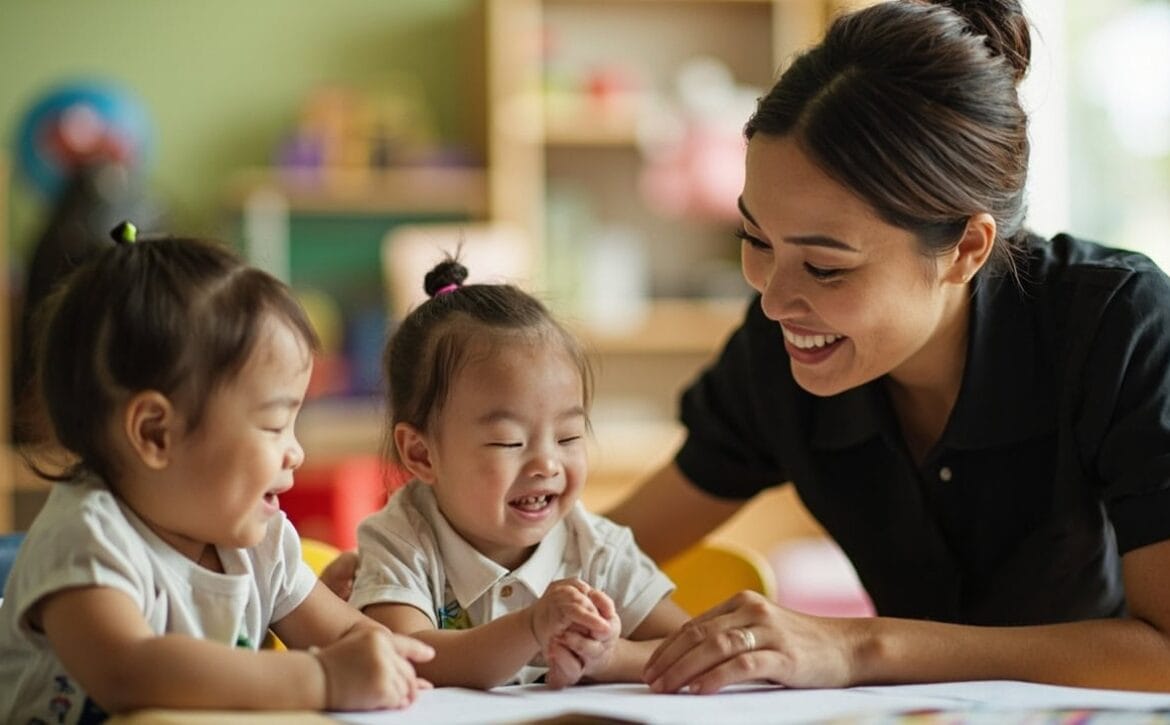
The Foundation That Determines Your Child’s Readiness for Primary One

What the Early Years Actually Build

If you are reading this between school runs or during a lunch break, here is what you need to know:

  • The skills your child needs for Primary One are not academic — they are developmental. Emotional regulation, focus, persistence, and social confidence are what allow learning to happen.
  • These skills are built, not inherited. The brain is most receptive in the early years, and the environment your child experiences between infancy and Primary One shapes the neural pathways that will support learning for life.
  • Quality childcare is not a trade-off between nurturing and preparation. It is the place where both happen — intentionally.
  • Your childcare decision is your first educational decision. The ground you lay now determines what your child brings to Primary One.

The Invisible Architecture: What Executive Function Actually Means

There is a concept in child development science that has been waiting, for decades, to become common knowledge among parents. It is called executive function, and it is the invisible architecture that makes everything else possible.

Executive function is what allows a child to hold an instruction in mind while they act on it — to remember “first put the toy away, then we can read a story” when every part of them wants to skip straight to the book. It is what allows them to stop an impulse, to notice they are getting frustrated before the frustration becomes a meltdown, to shift attention when one activity ends and another begins.

In school, a child with strong executive function can sit still, listen, follow multi-step directions, and manage the social complexity of a classroom of thirty children. A child without it struggles with all of these things — not because they are not intelligent, but because the mental scaffolding that holds everything else up has not been built.

Here is what most parents do not realise: executive function is not something that develops naturally, like height. It is built, slowly and deliberately, through repeated opportunities to practice it. And the years between infancy and Primary One are precisely when this building happens most rapidly — when the brain is most plastic, most ready to form the neural pathways that will support self-regulation, working memory, and cognitive flexibility for the rest of your child’s life.


What Primary One Actually Needs

Consider what a Primary One teacher receives on the first day of school. Thirty children, each carrying different levels of developmental readiness. Some can manage frustration. Some cannot. Some can focus for twenty minutes. Some cannot sit still for three. Some will ask for help when they are lost. Some will disengage entirely rather than risk being wrong.

The teacher has one year to build on what each child brings. She does not have time to teach a child how to manage frustration, how to wait for a turn, how to hold a sequence of instructions in mind. These competencies either exist or they do not. And they cannot be rushed into existence.

They must be grown, slowly, in an environment that understands their value and knows how to nurture them.

This is the first hidden truth of early childhood: the academic pressure that Singapore parents feel so acutely is not in opposition to emotional nurturing. It depends on it. A child who has learned to regulate their emotions, who has developed the executive function to focus and persist, who has the social confidence to ask for help when they need it — this child is not just emotionally well. They are academically ready. They walk into Primary One with the internal tools that make learning possible.


What Quality Childcare Actually Looks Like

Now consider what a quality childcare environment actually does.

It creates a structured day with predictable rhythms — transitions that teach a child that one thing ends and another begins, that the world does not end when an activity changes. It offers age-appropriate challenges that require a child to persist, to try again, to feel the satisfaction of a small accomplishment earned through effort.

It surrounds the child with trained caregivers who name what they observe — “I see you’re feeling frustrated that the puzzle piece won’t fit” — and in doing so, teach children to name and understand their own inner lives.

These are not accidents. They are not perks. They are the deliberate architecture of a learning environment, building executive function one interaction at a time.

The Disposition Toward Learning Itself

There is another competency that lives alongside executive function, and it is harder to measure but impossible to miss once you understand it. It is the disposition toward learning itself.

Some children walk into a classroom and see it as a place of danger. They have learned, somewhere in their early years, that trying and failing feels like proof that something is wrong with them. They avoid new challenges because new challenges might expose what they cannot yet do.

Other children walk into that same classroom and see it as a place of possibility. They are curious. They are willing to be wrong. They ask questions because they genuinely want to know the answers, not because they are performing for a teacher. They have learned, quietly, over years of being in an environment that valued their curiosity and celebrated their effort, that learning is something you do because it is rewarding — not because you are afraid of the consequences of not doing it.

This disposition — this belief that learning is safe and worthwhile — is what researchers call intrinsic motivation. And it is one of the most fragile and precious outcomes of quality early care. It cannot be taught through worksheets. It cannot be assessed in a test. It is built, day after day, in an environment that responds to a child’s questions with genuine engagement, that offers challenges slightly above their current ability — close enough to be achievable with effort — and that treats every attempt, successful or not, as evidence of a learner who is growing.

In Practice: The Texture of Intentional Care

What does this look like in practice?

It is the caregiver who kneels beside a two-year-old struggling to zip their own jacket and says, “You’re working so hard on that. Let me show you one trick that might help.” It is the teacher who notices that a child has been watching the butterflies in the garden and, the next day, brings in a picture book about metamorphosis without being asked.

It happens when caregivers understand child development — not just as theory, but as a daily practice of observation, responsiveness, and intentional interaction. When they know that language development in the first thousand days follows predictable patterns that can be supported through responsive conversation. When they understand that motor development and cognitive development are deeply intertwined — that a child who is crawling, climbing, and manipulating objects is not just burning energy but building the neural connections that underpin thinking. When they can read a child’s behaviour — the aggression that is really anxiety, the withdrawal that is really overwhelm — and respond not with punishment or dismissal but with the precise kind of support that teaches self-regulation from the inside out.


What This Means for Singapore Parents

If you are weighing your childcare options, here is a useful way to think about what you are actually choosing:

  • Safety and supervision are the baseline — the floor, not the ceiling.
  • Quality developmental care means your child is in an environment designed to build executive function, nurture curiosity, and teach emotional regulation as deliberately as it teaches letters and numbers.
  • The caregiver is not just warm and kind — though that matters enormously. They are trained. They observe. They understand the science of early development and bring that knowledge to every interaction.
  • Your child will be known. The way they think, the things that interest them, the skills they are developing, the struggles they are working through — all of this is seen, tracked, and responded to with purpose.

This is what quality looks like. Not a safe place, a clean place, a place where your child will not be hurt. But a place where your child will be known.


The EduNanny Approach

EduNanny was built on this understanding. As part of the ECDA Childminding Pilot, we operate within a framework designed to bring quality developmental care to more Singapore families — not as a luxury, but as something every child deserves.

The Caregiver-to-Child Ratio

The ratio between caregiver and child is not a logistical detail. It is a developmental one. When an infant is in an environment with a maximum ratio of one to three — when a caregiver can genuinely attend to what each child needs, can notice the moment a child’s curiosity is piqued, can respond to distress before it becomes overwhelm — that ratio is doing educational work. It is the condition that makes everything else possible.

Flexible, Intentional Environments

Where children learn matters. We offer both home-based and centre-based pathways, because different families have different needs, and quality should not require a choice that sacrifices your life. In both settings, we bring the same intentionality to the learning environment — the daily rhythms, the materials, the interactions, the balance of guided activity and free exploration — because we know that development does not pause when the setting changes.

Communication as a Philosophy

Communication with parents is not a feature. It is a philosophy. You should know what your child is doing, how they are growing, what they are curious about. You should receive updates that go beyond “they ate well and slept well” — though of course they will eat well and sleep well — and into the texture of their day. Not because we have anything to hide. Because the trust you need to leave your child in someone else’s care depends on transparency.

The Caregivers Are the Curriculum

The caregivers themselves are the curriculum. This is why we invest in training, in observation, in reflective practice that makes a caregiver not just reliable but excellent. We know that you are not leaving your child with a service. You are leaving them with a person. And that person should be someone who understands what they are doing and why — who knows the science, who has the skills, who brings warmth and intelligence to every interaction.

Addressing Your Concerns

We know the concerns you carry. They are real, and they deserve honest answers.

  • “Will my child feel loved?” Yes. Not instead of you, but alongside you. The caregivers in our network are chosen for their warmth and their skill. They notice your child. They respond to your child. They are not a replacement for your bond — they are an extension of the environment you are building together.
  • “Will they actually learn, or just be looked after?” The two are not separate. Every interaction in a quality environment is a learning moment — how to manage frustration, how to wait, how to ask for help, how to try again. This is not accidental. It is designed.
  • “Can we afford this?” EduNanny operates within the framework of the ECDA Childminding Pilot, where fees are structured to be affordable. Government support through the Child Development Account and Baby Bonus schemes can be applied. We want the decision you make to be about what is right for your child, not what is possible within a budget that does not exist.
  • “How do I know I can trust someone else with my child?” Trust is built through transparency, consistency, and communication. Our caregivers are trained and supported. Our processes are built around keeping you connected to what is happening in your child’s day.

Ready for Primary One — and Eager for Learning

There is a word that we sometimes use in education to describe the role of a parent in the earliest years. It is the word architect.

Not because your child is a project to be designed, but because the environment you create for them — the decisions you make about who will care for them, what they will experience, how their days will be structured — these are acts of creation. They shape the person who will walk into Primary One and sit down at a desk and open a book. They shape the person who will ask questions in class, who will persist when something is hard, who will believe that trying is worth it.

Choosing childcare is not the first educational decision you will make. It is, in many ways, the most important one — because it determines the ground on which all the other decisions will be built.

That weight you feel after drop-off — the wondering about whether the hours ahead will matter — is not guilt. It is recognition. It is your instinct telling you that what happens in those hours is not nothing. It is everything.

When you choose a childcare environment that understands this — that knows it is not just minding your child but building the learner they will become — you are not outsourcing your role as a parent. You are activating it in a new way. You are choosing to give your child an environment that complements what you do at home, that builds on your love with intention, that takes the early years as seriously as they deserve to be taken.

EduNanny exists for parents who understand this. Who feel the weight of that question — “will the hours matter?” — and want an answer they can believe in.

We are not promising that we will raise your child. That is your privilege and your purpose, and it belongs to no one else. We are promising that when your child is with us, something intentional is happening. The foundations are being built. The curiosity is being nurtured. The love of learning is being planted, carefully, one day at a time, so that when your child walks into Primary One, they will not be afraid.

They will be ready.

And more than ready — they will be eager. Because they have already learned the most important lesson of all.

That learning is not something that happens to you. It is something you do because you are curious, and capable, and surrounded by people who believe in you.

That is the first chapter of your child’s education. And it begins, not at Primary One, but now — in the place where you choose to leave them, every morning, with a mixture of hope and worry and love that is as powerful as anything else in their lives.


If you are ready to explore what quality developmental care looks like for your child, we welcome the conversation. No pressure, no obligation — just an honest discussion about what you are looking for and whether EduNanny is the right fit for your family.

Speak with our team to learn more about how EduNanny supports families across Singapore.
edunanny-062b5c2ffe0bc0bb910f134aaa4d1fc1
April 13, 2026

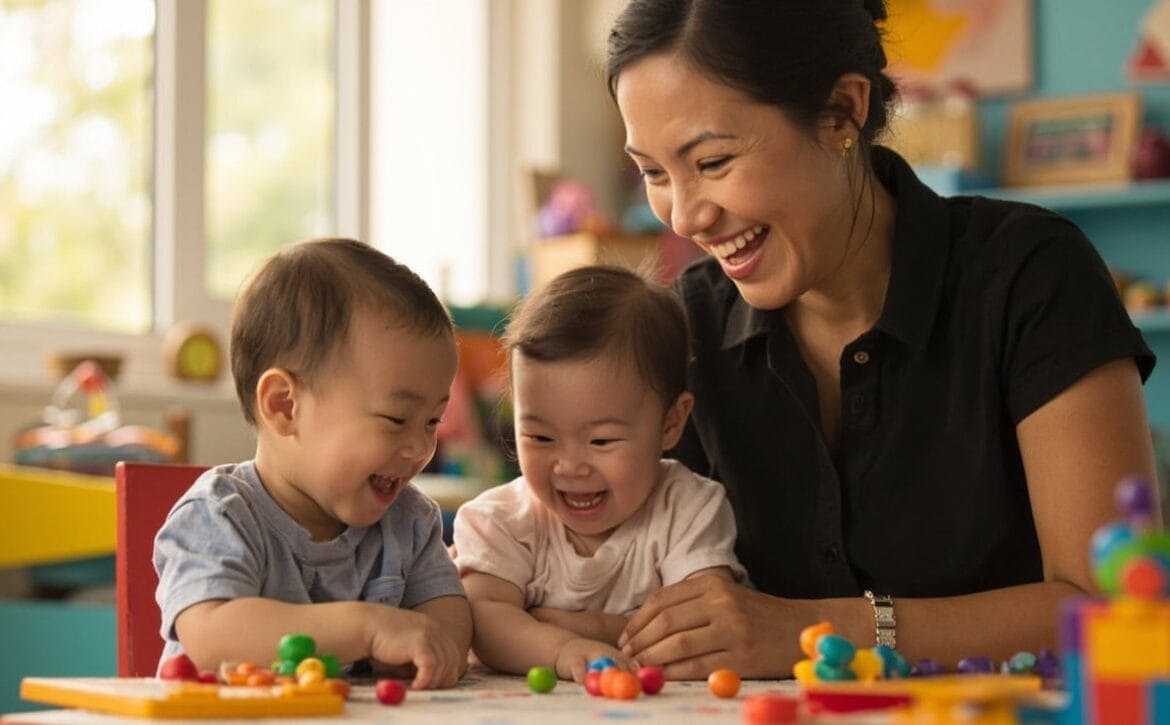
The Real Work Begins After You Choose Childcare in Singapore

The Gap No One Talks About

Here is what most conversations about childcare in Singapore do not address: what happens after the decision. Every guide tells you how to choose. Every checklist helps you evaluate the tour, the interview, the first impression. The settling period gets its own advice — how to prepare your child, how to handle separation anxiety, how to read the signs that things are going well.

But almost no one talks about what it looks like to be in a childcare arrangement six months later, or a year later, or two years later. No one names the texture of that experience. No one acknowledges that the relationship between you and your child’s caregiver is a living thing — something that grows, shifts, deepens, and requires attention just like any other meaningful relationship in your life.

This is the gap. And it is a significant one, because the absence of this conversation does not just leave parents uninformed. It leaves them anxious. It leaves them disengaged. And in too many cases, it leads them to make changes — not because the care was poor, but because they did not know how to tend a partnership they had never been taught to see as one.

The truth is that the relationship between you and your child’s caregiver is not a service transaction that ends when the forms are signed. It is a partnership. And like all the best partnerships in your child’s life — the one you have with your spouse, with your closest friend, with your own parents — it is most alive when both people involved commit to it not just at the beginning, but as a sustained, ongoing act of care.


What Sustained Partnership Looks Like — and Why It Matters

Think about what it means to truly know a child over time. When your child was an infant, their caregiver knew them through the language of physical comfort — how they liked to be held, the specific rhythm of their feeding, the way they soothed when they were overtired.

As your child grew into toddlerhood, that knowledge expanded. The caregiver learned what made your child laugh, what frustrated them, the particular way they approached a new toy or a new playmate. Now, as your child moves into the next season — more verbal, more curious, more independent — the caregiver knows them in a new way again. They have watched your child negotiate, problem-solve, express preferences, test boundaries. They have seen your child at their most joyful and their most defiant. They know things about your child that you, in the rush of a weekday morning, sometimes do not see.

This is not incidental. This is the compound interest of sustained attention.

The caregiver who has been with your child for eighteen months does not simply have more data than a new caregiver. They have a qualitatively different understanding. They have context. They can notice when something is off, not because they are watching for red flags, but because they have internalized the baseline of who this child is. They can adapt. They can respond with nuance. They can see your child as a whole person across seasons of development, not just as a set of needs to be met in the present moment.

The Quality of Exchange That Deepens Over Time

But here is what parents quietly struggle with: they do not always know how to participate in this partnership. They feel the distance of the weekday hours, the gap between what they hear at pickup — the pleasantries, the logistics, the developmental milestone shared with a smile — and what they sense might be possible. They wonder: Should I be communicating more? Is this relationship supposed to feel like this? Am I doing something wrong that I do not know how to deepen it?

The quality of your ongoing relationship with your child’s caregiver is not a passive reflection of how things began. It is an active, evolving collaboration. And like any collaboration, it flourishes when both parties invest in it with intention and care.

What does this look like in practice? It looks like conversations that go beyond the daily report — not every day, not in a way that feels like a debrief, but in moments that feel genuinely exchanged.

  • A caregiver who tells you not just what your child ate, but how they ate it: whether they lingered over the meal or rushed through it, whether they shared with a friend or retreated to eat alone.
  • A parent who shares not just schedule changes, but observations — what your child talked about at breakfast, a book that seemed to resonate, a question they asked that felt new and important.
  • A caregiver who knows your child well enough to notice that something is different — that your normally easy-going child has been more clingy this week, or that a child who typically approaches new situations with caution seemed unusually open at the park today.
  • A parent who can receive that observation without defensiveness, who can take it in and say, yes, we have been going through a transition at home, or actually, I had not noticed — what did you see?

This kind of exchange requires something from both parties. It requires the caregiver to pay attention not just to safety and schedule, but to the whole child — to notice, to remember, to reflect. And it requires the parent to stay curious, to stay engaged, to resist the pull toward passive observation that can feel easier on a tired weekday evening.

When both sides bring this quality of attention, something remarkable happens for your child. They develop a more stable sense of security. They do not have to navigate two separate worlds — the world of home and the world of care — with the exhausting effort of translation. They know, in their bones, that the people who love them are speaking to each other. That the values at home are not being contradicted at childcare. That their caregivers and their parents are on the same team, noticing the same things, invested in the same outcome.

For a child in the early years of life, this kind of consistency is foundational. It shapes how they understand relationships. It shapes how they trust. It shapes their capacity to explore the world with confidence, knowing that there is a safe base to return to, and that the people in their life are coordinating to protect and nurture that base together.


The Fear You Might Not Say Aloud — and the Signs That Matter

I want to speak directly to a fear that many parents carry but few say aloud. You chose carefully. You felt good about the arrangement in the settling period. But some part of you worries — quietly, persistently — that you might not know if the quality has slipped. That the care your child received in those first weeks might not be the care they are receiving now. That you, busy with your own work and life, might be missing something important.

This fear is not irrational. It is the shadow side of trust. When you delegate something as precious as your child’s care, you are making yourself vulnerable. And vulnerability, when left unaddressed, tends to grow into anxiety.

The answer to this fear is not surveillance. It is not micromanagement. It is not the illusion of control. The answer is sustained partnership — a relationship in which communication flows in both directions, in which both parties are committed to transparency, in which there is enough genuine exchange that you would know if something changed.

A caregiver who genuinely knows your child will tell you when something is off. A parent who genuinely engages with their caregiver will sense when something is not right. The relationship itself becomes the signal. Not a daily report. Not a checklist. The quality of the exchange.

After months or years in an arrangement, how do you know things are still going well? Here are the indicators that matter most:

  • Your child is genuinely happy to go and genuinely happy to return. Not just tolerant — genuinely glad. This is harder to fake than any milestone report.
  • The caregiver knows your child as a whole person. They reference your child’s preferences, friendships, recent interests, and patterns — not just today’s schedule.
  • Communication flows both ways. You hear about the small moments, not just the logistics. And you find yourself sharing observations from home that the caregiver finds genuinely useful.
  • You can raise a concern and feel heard. Not that every suggestion is implemented immediately, but that the conversation is collaborative and respectful.
  • The caregiver speaks about your child with specificity and warmth. They notice things. They remember things. They care about the story of who your child is becoming.
  • Your child references the caregiver in ways that feel healthy. Not as a parent replacement, but as a trusted figure in their constellation of care.

Staying Engaged: What It Looks Like in Practice

If you are a parent who wants to deepen your partnership with your child’s caregiver — whether you are currently enrolled or still researching — here is what that looks like in practice:

Build the habit of genuine exchange

  • Ask questions that go beyond logistics. Instead of “Did he eat well?” try “How did he seem at lunch today?”
  • Share observations from home. “She has been asking about the caregiver a lot this weekend” or “We read that book again — she seems really interested in the animal pages.”
  • Receive observations with openness. When the caregiver shares something about your child’s day, treat it as information worth understanding, not just recording.

Stay curious about your child’s whole experience

  • Who are their friends? What do they gravitate toward?
  • What frustrates them? What delights them?
  • How do they handle transitions, conflict, new situations?

The more you know to ask, the more the caregiver will know to share.

Communicate about your whole family

  • Share changes at home — a new sibling, a move, a stressful period. Context helps caregivers understand behaviour.
  • Let the caregiver know what you are working on at home so they can complement it, not contradict it.

Address concerns early and gently

  • If something is bothering you, name it — kindly, specifically, and in service of the child. The longer you wait, the more anxious it grows.
  • Acknowledge the caregiver’s perspective. They see your child too.

You do not need to be checking constantly. You need to be engaged consistently. The quality of the exchange — how natural it feels, how specific it is, how mutual the respect is — tells you more than any report card ever could.

In any long-term relationship, the time to raise a concern will come. It might be a change in your child’s behaviour at home. It might be something you noticed in how the caregiver spoke about another child. It might be a mismatch between what you expected and what you are observing.

When that moment comes, the foundation of sustained partnership makes it possible to do so with confidence and care. You are not a stranger approaching a service provider. You are a parent who has built a relationship over time, who has mutual respect, who has established that both of you want the same thing: what is best for this child.

In that context, a conversation about a change in your child’s needs, or a suggestion for how things might be approached differently, is not a confrontation. It is a collaboration.


How EduNanny Supports the Full Arc of Your Child’s Care

This is the kind of partnership that EduNanny is designed to support. Not just the first meeting, not just the settling period, not just the initial weeks of reassurance and routine-building — but the full arc. The months and years in which your child grows, changes, and becomes more fully themselves. The relationship between you and the caregiver who walks alongside that journey.

EduNanny, a service under the ECDA Childminding Pilot, was built with this understanding at its centre. The pilot creates pathways for home-based and community-based care that are structured for sustainability — manageable ratios, clear communication systems, and a model that treats the caregiver not as a resource to be optimised but as a partner to be supported.

The fee structures are designed to make this kind of quality care accessible. CDA and Baby Bonus funds can be used, easing the financial planning that so many families in Singapore carry as an invisible weight. And the service operates across Singapore, recognizing that families everywhere deserve access to childcare that is built for the long term.

What does this look like in practice?

  • Caregivers trained not just in safety and development, but in the art of sustained communication. They understand that knowing a child deeply over time is part of the work, not an optional extra.
  • Systems that give parents visibility into their child’s day without creating a surveillance culture. In homes where it is deployed, additional monitoring measures offer an extra layer of reassurance — not because trust is absent, but because the parents who carry the most tender vulnerabilities sometimes need more than words.
  • Monday to Friday care blocks that provide the consistency on which children’s security depends. Not fragmented, not ad hoc — structured enough to build the continuity that matters.
  • A framework that treats the relationship between parent and caregiver as something worth building. Something that deserves attention, intention, and care.

The Partnership That Grows With Your Child

There is also something important to say about how the partnership evolves as your child grows. The needs of a one-year-old are not the needs of a three-year-old. The caregiver who has been with your child through this transition has something invaluable: continuity.

They understand where your child came from, what they have mastered, what they are working toward. They can support the next stage not as an outsider imposing new expectations, but as someone who has walked alongside your child through the previous ones.

  • A caregiver who knows that your child took their first steps only two months ago can celebrate the next milestone with genuine understanding.
  • A caregiver who knows that your child struggled with sharing last month can support this month’s growth with calibrated patience.
  • The story of your child’s development, held by someone who has been present for its chapters, is a story that can be tended with care.

The caregiver who knows your child at three is not the same as the one who knew them at eighteen months — and that is not a problem to be solved. It is the gift of continuity. It is the compound value of sustained attention.


Where the Real Work Begins

Here is what EduNanny understands: the moment you have been waiting for — the moment after the decision, after the forms are signed, after the settling period ends — is not the end of the story. It is the beginning. It is the time when the real work of partnership begins.

The question you quietly carry — the question about what happens next — is not a sign that something is wrong. It is a sign that you understand something essential: that choosing well is necessary, but it is not sufficient. That the relationship you have with your child’s caregiver deserves the same intentionality you brought to choosing them.

This is not a burden. It is an invitation. An invitation to stay curious, to stay engaged, to treat the partnership as something alive and growing, just like your child. To ask questions that go beyond logistics. To share observations that add texture. To trust that the relationship itself is doing work — creating the consistency, the alignment, the compound security that your child needs to flourish.

EduNanny measures its success not by how families feel on day one, but by how they feel a year from now — not by the quality of the decision experience, but by the quality of the ongoing relationship that the decision made possible.

Your child is not new anymore. The settling period has ended. And what comes next — that is where the real work begins. The work of staying present. The work of partnership. The work that makes everything you chose in the beginning actually matter.


If you are exploring childcare options and would like to understand how EduNanny supports families across Singapore — from the first conversation through the months and years that follow — connect with the EduNanny team to learn more about the approach and what it might mean for your family.

EduNanny is a service under the ECDA Childminding Pilot, offering structured, development-focused childminding for families across Singapore. Learn more about who we are and what we offer.

edunanny-062b586691fd38e3a48125f17e035d4c
April 13, 2026

Why Children at Different Stages Thrive with Age-Appropriate Care

When “Childcare” Becomes Multiple Worlds

When you have children at different developmental stages, you quickly learn that the word “childcare” can be almost misleading. It suggests a single thing, a uniform service. But your infant is not experiencing the world the way your four-year-old is. Your toddler is not processing emotions or building skills the way your preschooler does.

Each child is at a different threshold of their own development, and what they need from the people who care for them while you are at work is genuinely, meaningfully different.

Here is what many families quietly realize: finding one arrangement that genuinely honors both of these realities is harder than it looks. A centre where your toddler is one of twenty children in a room is not the same as a place where your infant has the focused, unhurried attention they require. A programme designed for preschoolers may not have the gentle, responsive routines that your baby needs.

You are not looking for one thing. You are looking for a system that can hold different things at once.

This is the gap that EduNanny was built to address. Not as a theoretical exercise, but as a response to what families actually described needing.


What Children at Different Stages Actually Need

Understanding what your children need at each stage is the foundation for evaluating whether any care arrangement can truly serve your family. These needs are not interchangeable—they are distinct, and they matter equally.

For Your Infant

For an infant, the world is still mostly about trust. Attachment is not a buzzword; it is the architecture of everything that comes after.

Infants need caregivers who respond consistently, who hold them with attentiveness, who understand that comfort and security are not luxuries but necessities. In those early months and years, the ratio of adults to children matters enormously.

When an infant has a caregiver who can be truly present, who is not simultaneously managing three other crying babies, something foundational takes root. The infant learns that the world is reliable. That people can be counted on. That crying leads to comfort.

This is not sentiment. This is the beginning of how a human being learns to be in relationship with others.

For Your Toddler

Your toddler is discovering the pleasure of growing autonomy. They need safe spaces to explore, supervised independence to practice emerging skills, and gentle guidance as they begin to navigate early social dynamics. The world is expanding, and they need caregivers who can balance protection with the freedom to discover.

For Your Preschooler

Fast forward a few years. Your preschooler is asking why the sky is blue, negotiating over who gets the red block, noticing when someone is left out, and beginning to understand the enormous pleasure of making something, building something, solving something.

Their needs are different. Social dynamics matter. Cognitive curiosity needs fuel. Physical independence needs space to be practiced.

The preschooler is not just being cared for; they are being stretched, challenged, introduced to the joy of their own capabilities. Quality care for a preschooler looks like rich conversation, opportunities to collaborate and create, and adults who ask good questions instead of just giving answers.

What Quality Looks Like at Each Stage

Developmental Stage Core Needs What Quality Care Provides
Infant (0–12 months) Trust, security, consistent responsiveness Low caregiver-to-infant ratios, unhurried routines, attachment-focused interaction
Toddler (1–2 years) Safe exploration, growing autonomy Supervised independence, support for emerging skills, gentle social guidance
Preschooler (3–6 years) Cognitive engagement, collaborative play Rich conversation, project-based learning, opportunities to lead and create

A childcare arrangement that cannot articulate how it serves each stage differently may not be serving any of them as well as your children deserve.


The Sibling Bond: Not a Casualty, But a Strength

When siblings are enrolled at different stages at EduNanny, they are not just placed in different rooms. They are placed in environments that have been thoughtfully designed around what children actually need at each developmental threshold.

And critically, the sibling bond itself is not left to chance.

One of the beautiful things about having children in care at the same centre is that siblings get to see each other. They have shared drop-offs and pick-ups. They hear about each other’s days. They carry a sense of belonging to the same place, even as they move through spaces that are age-appropriate for each of them.

Siblings are not just people who live in the same house. They are the first community your children will ever know. They are the people who will shape each other’s understanding of fairness, of sharing, of loyalty, of what it means to have someone in your corner.

Over time, we have observed something quietly remarkable happen between siblings at different stages. The older child grows more patient, more protective, more aware of the world as a place that includes small people who need gentleness. The younger child is motivated by imitation, by watching what their sibling does, by wanting to be part of what they are part of.

These are not abstract benefits. They are observable, real, and they compound over time. When your childcare arrangement understands this dynamic, it does not just care for your children in parallel. It creates conditions where they grow together, not just alongside each other.


The Practical Reality for Multi-Child Families

Beyond the developmental needs, the logistics of multiple children are real and they are daily:

  • Pickup times that need to work for a baby on one schedule and a preschooler on another
  • The exhaustion of coordinating different bags, different drop-off points, different routines
  • Managing multiple communication channels, apps, and reporting systems

When siblings are in different programmes at the same centre, some of this complexity eases. There is one place. There is one relationship with the team. There are shared communication channels where you can hear about both of your children’s days without juggling three different apps or three different systems.

For families navigating the demands of modern Singapore, this coherence is not a small thing. It is the difference between feeling coordinated and feeling scattered.

There is also something else worth naming. When you have children at different stages, it is easy to feel that you are doing something wrong if one arrangement serves your infant differently than it serves your preschooler. The cultural weight of wanting everything to be equal can be surprisingly heavy.

But your children are not the same. They have never been the same. They arrived with different temperaments, different needs, different rhythms. The best thing you can do for them is not to treat them identically. It is to see them clearly, individually, and to find arrangements that honor who they actually are at each stage.


What EduNanny Offers Families

EduNanny operates within the ECDA Childminding Pilot, and we mention this not as a credential alone, but because it reflects a certain philosophy.

The pilot was designed to expand the kinds of care options available to Singapore families, recognizing that the childcare landscape needed more nuance, more flexibility, more pathways. Both home-based and centre-based options exist within this framework, allowing families to choose what fits their children’s ages, their neighbourhood, their own working lives.

The pilot fee structures are designed to make quality care accessible, and families can use CDA funds and Baby Bonus where applicable, because we believe that financial considerations should not force families into arrangements that are not right for their children.

We also believe that transparency is not optional. When you entrust your children to any care arrangement, you deserve to know what is happening during the hours you are apart. Communication at EduNanny is ongoing, and where systems like CCTV are deployed, they are there to support the trust and clarity that families need. This is not about surveillance. It is about partnership. It is about ensuring that the relationship between families and caregivers is grounded in openness rather than uncertainty.


Questions Worth Asking Any Care Provider

If you are currently navigating this decision, here are some questions worth asking any care provider you are considering:

  1. How does your programme differ for infants, toddlers, and preschoolers? Ask for specific examples, not general statements.
  2. What is the caregiver-to-child ratio at each age group? For infants especially, this number matters enormously.
  3. How do siblings in different programmes interact? Is there intentional time or space for them to be together?
  4. How is communication handled when you have children at different stages? Is it consolidated or fragmented?
  5. How do you support the sibling bond when children are in separate age-appropriate environments?

The answers you receive will tell you whether a centre truly understands the complexity of serving multi-child families, or whether they are offering the same approach with a different age label attached.


A Final Truth

Choosing childcare for even one child is a profound decision. For families with children at multiple stages, the weight of that decision is multiplied, and the stakes feel even more personal. You are not just choosing a service. You are choosing a context in which your children will grow, sometimes for years, during the most formative window of their lives.

Your children are not the same. That is not a problem to solve. That is the beautiful truth that makes your family singular.

The right childcare does not try to flatten them into one approach. It holds them each at their own threshold, protects the bond that connects them, and walks alongside your family as your children grow into the people they are becoming.

That is the care we are building. That is the care we are inviting you into—not just today, but for every stage that comes next.


We welcome you to reach out, ask questions, and explore whether EduNanny is the right fit for your family. Every family’s situation is unique, and we would be honored to listen to yours.

Learn more about who we are or return to our homepage.

edunanny-062b54ee6c541393060865617b5d4cce
April 13, 2026

Beyond Guilt: How Singapore Families Are Redefining the Village

The Cultural Architecture and Emotional Reality

In Singapore, multigenerational family life is not a quirk. It is a cultural architecture. Grandparents here are not peripheral figures who visit on Sundays. They are central — with expectations, traditions, and a deep, genuine sense of responsibility for the children in their family.

When a grandmother in Jurong West tells her daughter that she will be the one to raise the baby while the daughter returns to work, she is not overstepping in her mind. She is completing a family story. She is doing what mothers and grandmothers have always done.

And when that daughter responds that she has found a professional childminder — someone trained and certified, someone who will give her child structured early development in a small, safe group — she is not rejecting her mother’s love. She is responding to a world that has changed. A world where both parents often work. A world where early childhood science has revealed how profoundly the first thousand days shape a child’s brain, language, and emotional foundations.

When Two Loves Pull in Different Directions

What happens is that parents feel caught. And that feeling of being caught is one of the loneliest experiences in modern parenthood.

There is guilt. Parents worry that saying no to a grandparent’s offer means rejecting their wisdom, their sacrifice, their identity as a family elder.

There is fear — fear of conflict, of disappointing people who have already given so much.

There is confusion, because the advice from one generation conflicts with the research from another, and parents are left standing in the middle, unsure whose map to follow.

And there is a quieter pain too: the sense that wanting something different from what your own parents had for you somehow makes you ungrateful, or modern, or cold.

Naming this is not an act of blame. It is an act of respect — for parents who carry this weight silently, and for grandparents who genuinely believe they are offering their best.


Redefining the Village

The question is not whether to include grandparents or to choose professional care. The question is how we redefine the village.

The village has always been real in Singapore. What we have not done enough is talk about how that village works when it contains both the grandmother who raised two children in the eighties and the trained childminder who understands infant neuroscience in the twenty-twenties.

Both of them love the same child. Both of them want what is best. And the real opportunity — the one that most families never get to see because they are too busy defending their choices — is that these two forces do not have to be rivals. They can be partners. But only if we are willing to have the conversation that most families avoid.

What Each Generation Needs to Hear

For grandparents, the need is dignity and belonging. They need to know that their role in this child’s life is not diminishing. That they are not being replaced or dismissed. That the years they spent raising their own children, the sacrifices they made, the love they poured in — none of that is being forgotten or deemed insufficient.

For many grandparents, their sense of purpose is wrapped up in being the ones who care for the next generation. To take that away without offering something in return is not just unkind. It is a failure to see them fully.

For parents, the need is agency and trust. They need to feel that the decisions they are making for their child — based on research, on their own instincts, on the realities of their lives — are respected even when they differ from tradition. They need their own parents to trust that they are capable, that they are not children anymore, that the world has changed and they are adapting to it in good faith.

And for the child — who is, after all, at the centre of all of this — the need is simple: safety, consistency, rich interaction, and love from every direction possible.

What a Three-Generation Arrangement Looks Like When It Works

It looks like a grandmother who still picks up her grandson every afternoon and takes him to the playground in the estate, because that is her ritual and it matters. It looks like a grandfather who teaches the child to use chopsticks the way his own father taught him, passing down something that no classroom can replicate.

It looks like the child growing up with a sense of where he comes from — with grandparents who know his mother’s childhood stories, who have photographs from decades ago, who speak to him in the dialect that connects him to a culture he would otherwise lose.

And alongside that, it looks like mornings in a home-based childminding environment where a trained caregiver, with no more than three infants in her care, engages in responsive, language-rich interaction. It looks like a child who has been carefully observed over weeks by someone trained in developmental milestones. It looks like parents who receive transparent updates — photographs, written notes, real-time information — and who can trust that the person caring for their child is not just loving, but knowledgeable.

Role Boundaries, Not Role Rejection

The role boundaries are not about cutting grandparents out. They are about being explicit about what each person does best.

Grandparents thrive in the spaces that require no training to do well. The spontaneous afternoon walk. The birthday treat. The singing of nursery rhymes in dialects that a child absorbs like music. The stories. The warmth. The sheer gift of time and attention that grandparents can give because they are retired, because they are unhurried, because this is what they have waited their whole lives to do.

Professional care thrives in the spaces that require structure, training, and consistency. The developmental activities designed around what infants actually need at each stage. The small ratios that mean every child is seen and responded to. The safety of a regulated environment with clear protocols. The communication systems that keep parents informed and involved even when they are at work.

When families define these roles clearly — not in a rigid contract, but in a genuine, kind conversation — something remarkable happens. Grandparents stop feeling sidelined because they are not being asked to step back from what matters most to them. Parents stop feeling like they are fighting a war on two fronts because the arrangement is clear and everyone has a valued place.


A Practical Framework for the Conversation

The conversation itself is an act of love. And it is one that Singapore parents are remarkably capable of having, once they are given permission and a framework for how to do it.

1. Have the Conversation Before You Need to Have It

Not in the middle of a crisis, not when feelings are raw, but in a calm moment when everyone can think clearly. Choose a time when the grandparents are rested, when you are not rushed, when the child is elsewhere and the whole focus can be on understanding each other.

2. Lead With What You Appreciate

Tell them what their involvement has meant to you. Tell them what you want for your child that is built on what they have already given. Grandparents who feel valued are far more open to hearing about new ideas. Grandparents who feel dismissed or replaced will dig in. The difference is almost entirely in how the conversation begins.

3. Be Specific About What You Are Asking For

“I want you to be involved” is too vague and leaves room for assumptions on both sides. “We would love for you to pick him up from childminding on Tuesdays and Thursdays and spend the afternoons together — that time with you is so important for him” is specific, warm, and it makes your grandparents’ role tangible and valued.

4. Explain the Why Behind Your Choices

You do not need to cite every research study. You can simply say, “We chose this because we felt our child would benefit from small-group care with someone trained in early development, especially in these first critical years.” That is honest, calm, and it gives grandparents something to understand rather than something to resist.

5. Listen

Genuinely listen to their concerns. Sometimes grandparents worry about things that are easy to address — they worry about being replaced, and a simple conversation about how much their role matters resolves that. Sometimes they worry about the cost, and that opens a door to talking about subsidies, CDA, Baby Bonus. Sometimes they worry because they do not understand what modern childminding actually looks like, and an invitation to visit the space, to meet the caregiver, to see for themselves — that changes everything.

6. Keep It as an Ongoing Dialogue

The families who navigate this most gracefully are the ones who treat it as an ongoing dialogue, not a one-time negotiation. They keep talking. They keep inviting grandparents in. They share photos and stories from the childminding setting. They make grandparents feel like insiders rather than observers.


What Quality Childminding Actually Looks Like

For parents who are considering professional childminding as part of their arrangement, it helps to know what you should actually be looking for. Quality childminding is not simply supervision. It is active, informed care.

  • Small ratios are non-negotiable. An infant in a home with no more than two or three other children means genuine attention, not just oversight. Every cry is heard. Every developmental moment is noticed.
  • Trained caregivers understand infant development — not as academics, but as practitioners who know what language-rich interaction looks like, who can spot when a child’s communication is on track, who create environments that support exploration and safety simultaneously.
  • Transparent communication keeps parents in the loop. Photographs, written updates, notes about the child’s day — this is not an extra service, this is trust infrastructure. Parents need to know what is happening, and caregivers deserve to have their professionalism visible and respected.
  • Consistency and routine matter enormously for infants. A reliable schedule, a familiar caregiver, a predictable environment — these are the foundations on which infants build security and, later, the confidence to explore.

How EduNanny Fits Into Your Family Village

EduNanny is part of the ECDA Childminding Pilot, operating within a framework designed to make quality childminding accessible and regulated. We offer home-based childminding as one pathway, alongside community and centre-based options. Our ratios are small — up to three infants, depending on the arrangement — because we believe that what infants need most is responsive, individual attention, not supervision at scale.

Our fees are structured within the pilot’s affordability parameters, and families can access available subsidies, use CDA funds, and apply Baby Bonus where applicable. Care is available in Monday to Friday blocks, designed around the realities of working parents.

Where our model includes transparency measures such as documented communication protocols, these are in place not as surveillance, but as trust infrastructure — because parents deserve to know what is happening with their children, and caregivers deserve to have their professionalism visible and respected.

We are not here to replace the village. We are here to be part of it.

We see our role as complementary. A child who spends mornings with a trained childminder, afternoons with doting grandparents, and evenings with parents — that child is receiving something extraordinary. Cultural rootedness and developmental richness. Unconditional love and informed, responsive care. The best of what previous generations offered and the best of what current research understands.

That is not a compromise. That is the goal.

For parents who have questions about development, feeding, sleep, or the thousand small concerns that arise at two in the morning, we offer a support resource built for the realities of modern Singapore parenting. It does not replace the judgment of a pediatrician or the warmth of a community. But it fills a gap that every parent knows intimately — the gap between needing an answer and having nowhere reliable to look.


Addressing Common Concerns

“Will my parents feel rejected if we choose professional care?”

This fear is real and valid. But rejection and redirection are not the same thing. When you approach this conversation with warmth, specificity, and a clear role for your parents, you are not pushing them away. You are inviting them into a different shape of involvement — one that may, in fact, be more sustainable and more enjoyable for everyone. Most grandparents, when they truly understand the arrangement and see themselves valued, are relieved to have clarity rather than confused about expectations.

“What if my parents refuse to accept our choice?”

This happens, and it is painful. But it is worth remembering that parents who refuse to accept any arrangement other than full primary caregiving are often operating from a place of fear — fear of irrelevance, fear of being forgotten, fear that their sacrifices are being dismissed. These fears can be addressed, but not if the conversation is about winning or losing. Sometimes the bravest thing a parent can do is hold their position calmly, repeatedly, and with compassion — and give their own parents time to adjust.

“Is home-based childminding actually safe and regulated?”

Within the ECDA Childminding Pilot, there are clear standards and frameworks that participating operators must meet. Home-based childminding is designed to offer small-group care in a domestic setting — which is precisely why ratios are kept low and why transparency measures are built in. When choosing any childcare arrangement, it is reasonable to ask about certifications, ratios, communication practices, and emergency protocols. Quality providers welcome these questions.

“How do we manage the logistics of a three-way arrangement?”

It helps to be explicit about the practical schedule. Who picks up from where? Who handles which days? What happens if a grandparent is unwell or a caregiver has an emergency? Building a childcare arrangement that works is not about perfection — it is about having enough structure that everyone knows the plan, and enough flexibility that unexpected changes can be managed. Families who do this best are the ones who keep talking, keep adjusting, and keep including everyone in the problem-solving.


What Singapore Families Are Building Together

Every child in Singapore is standing at the intersection of at least two worlds. The world their grandparents knew, and the world their parents are building. The world of family and the world of community. The world of tradition and the world of evidence-based practice.

These are not opposites. They are the two hands that have always held a child up — and the work of this generation is to learn how to hold them both at the same time.

The question my grandmother asked my father — the question that my mother asks me now about my own children — is not a question about childcare methods. It is a question about love. It is a question about legacy. It is a question about what kind of family we want to be.

And the answer, I believe, is this: we want to be the kind of family that gives every generation a role. The kind that teaches our children that love is not a finite resource that runs out when it is shared. The kind that shows them, through the way we navigate difficulty and difference, that the best outcomes emerge not from avoiding complexity but from meeting it with honesty and care.

The village is real. It has always been real. What we are learning now is how to build it with intention — with grandparents inside it, with professional care alongside it, with parents at the centre who have the courage to ask for what they truly need for their children, and the grace to make room for everyone else.

What Children Learn From Watching This

They learn that adults in their life can work together even when they are different. They learn that love can take many forms and that all of them are real. They learn that their family is both rooted in tradition and alive with adaptation.

They absorb, without ever being told, the emotional intelligence that comes from watching their parents navigate a difficult conversation with respect, clarity, and care.

And they gain something that no single childcare arrangement, however excellent, can give them alone: the full richness of three generations, each contributing what they do best.


Start the Conversation With Confidence

If you are a parent in Singapore navigating this tension right now, I want you to know: you are not wrong for wanting something different. You are not ungrateful for wanting quality care for your child. You are not alone in feeling caught between worlds.

The path forward is not about choosing between the people who love you. It is about being brave enough to have an honest conversation, specific enough to give everyone a clear role, and generous enough to make room for every generation in your child’s life.

We built EduNanny to be worthy of the trust Singapore families place in us. Not just trust that we will care for their children — though of course we will. Trust that we understand the full context of their lives. That we know a grandmother’s longing is real. That a father’s desire to give his child the best is not a rejection of his own parents but a continuation of the love they gave him.

If you are ready to explore what a complementary childcare arrangement could look like for your family — one that honours your parents and serves your child — we would welcome the conversation.


If you are considering home-based childminding in Singapore and want to understand how it could fit within your family’s childcare arrangement, we invite you to reach out and speak with our team. No pressure, no hard sell — just an honest conversation about what you need and whether we might be part of the solution.

edunanny-062b517c3ed009de473bfeced6b50cdd
April 13, 2026

When Your Child Has Outgrown Their Childcare Arrangement

The Question Singapore Parents Never Know to Ask

When a child is young, the signals that their environment is meeting their needs are relatively easy to read. They sleep. They feed. They reach their milestones. They smile when they are picked up. Parents watch for the cues, the childcare arrangement delivers against them, and that feels like confirmation. Everything is working.

But then something shifts. Not suddenly, but gradually. The arrangement that once felt warm and stimulating starts to feel a little small. The activities that once engaged now seem to bore. The routines that once provided security start to feel like constraints. And the child, who cannot articulate this in words, begins to behave in ways that concern parents — increased resistance to mornings, difficulty separating, a withdrawal that is easy to misread as a phase or stubbornness when it is actually a deeper signal that their world has outgrown its container.

This is not a failure of the parents. It is not a failure of the childcare. It is simply what happens when a child grows and their environment has not yet caught up.

Singapore parents carry a strong conviction that good parenting means commitment. That questioning the choice means you got it wrong the first time. That staying is always the virtue and leaving is always the admission of defeat. This cultural script is costing families something real.

The truth is that reassessing your child’s childcare arrangement is not a sign of doubt. It is a sign of attention. The parent who asks whether the arrangement still fits is not the parent who made a poor choice. They are the parent who is paying close enough attention to notice that the choice was right then and may need to be examined now. That distinction is everything.


When Your Child’s Needs Are Changing

Every child moves through phases of accelerated development that change what they need from their daily environment. Understanding these transitions is the first step to knowing when to pause and reassess.

From Infant to Toddler: The First Major Shift

Between infancy and toddlerhood, the shift is profound. What worked for a six-month-old — gentle sensory exploration, close physical proximity, a focus on trust and attachment — begins to give way to what a two-year-old demands: language scaffolding, fine motor opportunities, social initiation, a sense of agency.

If the childcare arrangement has not evolved with those needs, the child will feel it before anyone names it. They may become more dependent rather than less. They may show heightened anxiety around transitions that used to feel safe. They may begin to test boundaries with an intensity that seems out of proportion to the moment.

These are not behavioural problems. They are developmental communications. The child is saying, in the only language available to them, that their world needs to grow.

From Toddler to Preschooler: The Cognitive Leap

The same is true when a child moves from toddlerhood into the preschool years, where the cognitive leap is significant. Suddenly they are asking why questions constantly. They want to understand cause and effect, fairness and consequence, their place in a social group. They need an environment that treats them as a thinking person, not just a small person to be managed.

If the arrangement is still calibrated for toddlers — even if it is warm, even if it is loving — there can be a quiet mismatch that the child experiences as stagnation. And stagnation, over time, is not neutral. It costs children the momentum of their own development.

When Family Life Changes

Child development is not the only trigger for reassessment. Families in Singapore experience shifts that also deserve honest attention:

  • A parent changes jobs — new schedules, new demands, a different rhythm at home
  • A second child arrives — the family configuration has fundamentally changed
  • A grandparent who was providing weekend support moves away — the village just got smaller
  • The neighbourhood that felt safe when you chose the centre has changed — external context matters
  • Your own capacity as a parent has shifted — what felt manageable two years ago may feel like a different life now

Each of these is a legitimate trigger for asking whether your childcare arrangement still serves the family you are now, as opposed to the family you were when you signed the forms.


How to Know If It’s More Than Just a Phase

How do you distinguish between the normal friction every family experiences when settling into a new rhythm, and a real misalignment that warrants something more than patience?

Signs Worth Paying Attention To

These are not dramatic signals, not the kind that appear in every parenting article as a red flag to panic over. These are subtle, sustained signals:

  • A child who was once content and is now consistently resistant on mornings — not occasionally, but as a pattern
  • A childcare arrangement that was once described with warmth and specificity by your child and is now mentioned rarely or with flatness
  • A sense, over weeks or months, that your child is not being stretched in the ways their development is now asking to be stretched
  • A gut feeling that is not anxiety but clarity — the feeling that something that was once enough is no longer enough, without any particular event to blame

These signals, held gently and observed honestly, are worth taking seriously. Not acted on impulsively, but genuinely considered.

Normal Adjustment vs. Genuine Misalignment

Normal Adjustment Genuine Misalignment
Temporary resistance during settling-in that improves over weeks Sustained resistance that persists for months without improvement
Mild separation anxiety that eases with consistent routines Deepening anxiety that intensifies rather than eases
Occasional behavioural pushback during developmental leaps Pattern of withdrawal, dependency, or flat engagement
Interest in activities that matches developmental stage Boredom, disengagement, or listlessness despite a warm environment
Child speaks about caregivers with warmth and recognition Child rarely mentions the arrangement or speaks about it without life

When the Answer Is to Stay — and When It Is to Transition

Sometimes the answer is not to leave. Sometimes the answer is to grow within. A good childcare arrangement, especially one run by people who understand child development and who are committed to quality, will evolve as your child evolves. The routines will adapt. The activities will deepen. The caregiver will respond to the child’s emerging needs with intention.

In that case, the right choice is to stay, but to stay with open eyes — to have the conversation with the caregivers, to ask the questions, to be part of the evolution rather than a passive passenger in it. Partnership in childcare is not a one-time handshake at signing. It is an ongoing collaboration between family and caregiver, and the best arrangements are the ones where both sides are willing to grow together.

But sometimes — and this is equally valid — the answer is to transition. To recognise that the arrangement, however warm and however beloved in its time, has reached the limit of what it can offer your child at this moment. And to begin, with clarity and care, the process of finding something that matches who your child is becoming rather than who they were.

This is not failure. This is responsiveness. And children are remarkably resilient when change is handled with honesty and tenderness. The parent who asks the hard question — is this still working? — is not the parent who doubted their earlier decision. They are the parent who is paying attention. They are the parent who understands that loving a child means staying awake to who they are becoming, not just who they were.


Questions to Ask and Concerns to Address

Questions Worth Asking Your Childcare Provider

  • How have the daily activities evolved over the past six months to match my child’s developmental stage?
  • What does a typical day look like for a child at my son’s or daughter’s current age and stage?
  • How do you approach a child who seems ready for more challenge than the current programme offers?
  • Can you share examples of how the curriculum has adapted for children at different points of the year?
  • What does communication look like when there are signs of developmental leaps or transitions?

Addressing What Might Be Holding You Back

“Does questioning my choice mean I made a mistake?”

No. Children change. Needs change. Reassessment is an act of love, not doubt. The parent who asks whether the arrangement still fits is paying close enough attention to notice that the choice was right then and may need to be examined now.

“What if I stay too long?”

Children who remain in arrangements that no longer serve them can experience quiet disengagement, decreased confidence, or a sense that their growth is being contained rather than celebrated. These are not dramatic failures — they are subtle erosions that accumulate over time. Responsible reassessment protects against this.

“What if I leave too soon?”

Transition is disruptive only when it is handled without care. Children are remarkably resilient when change is accompanied by honest explanation, consistent reassurance, and a smooth settling into something that better matches who they are becoming. The anxiety around leaving is often worse than the leaving itself.

“How do I know if this feeling is real or just parenting anxiety?”

This is the most important question. The answer lies in duration and pattern. A single difficult morning is not a signal. Weeks of consistent resistance is. One off-hand comment from your child is not. Repeated flatness or avoidance is. Anxiety is urgent and scanning for threats. Clarity is calm and knows what it is seeing. If your feeling is the latter — if you have been noticing something for weeks or months without a clear explanation — that deserves to be taken seriously.


What Quality Childcare Looks Like as Your Child Grows

As you consider whether your current arrangement still fits, it helps to know what you are looking for. Quality childminding, whether through a centre or a home-based arrangement, shares certain characteristics that remain constant even as your child’s needs evolve:

  • Responsive attention: Your child is known as an individual, not just managed as one of many. The caregiver notices shifts in mood, development, and need.
  • Developmental intentionality: Activities and environments are calibrated to where your child is now, not where they were.
  • Transparent communication: You receive regular, honest updates about your child’s day, their progress, and any concerns — without needing to ask.
  • Evolving partnership: The arrangement feels collaborative, not transactional. Your observations as a parent are welcomed and integrated.
  • Honest reflection: When something is not working, the caregiver is willing to name it — and when the arrangement has reached its limits, they will tell you.

When you find an arrangement that demonstrates these qualities, the question is not whether to stay or leave but how to grow together. The best childcare relationships are the ones where both family and caregiver remain curious about the child, honest about limitations, and committed to evolution.


EduNanny Singapore: Built for the Full Season

EduNanny Singapore was built to walk this entire path with families. Not just the beginning, not just the search, not just the signing. The whole arc.

We know that the first days matter enormously. We know that choosing well is one of the most consequential decisions a parent makes. We have built our services around giving families the best possible start — from our home-based and community-based pathways under the ECDA Childminding Pilot, with ratios that ensure genuine attention, to transparent communication practices that keep parents informed and confident throughout the relationship.

We know that affordability matters, and we have designed our fee structures to be accessible to families across Singapore, with provisions that allow the use of CDA and Baby Bonus funds so that financial considerations do not add unnecessary weight to an already emotionally significant decision.

We know that trust is built through clarity, and our approach to communication reflects our belief that the best childcare relationship is one where nothing is hidden and nothing is assumed.

And we know, perhaps most importantly, that this relationship is not static. That is why we are committed to being the kind of partner who will tell you the truth, even when the truth is that your child’s needs have evolved beyond what a particular arrangement can offer. Not because we want you to leave — we genuinely want every family we work with to find lasting, sustainable fit — but because pretending that every arrangement will serve every family forever is not honest, and we would rather be honest with you than comfortable.

For the infant who needs close, responsive, developmentally rich care in those critical first years. For the toddler who is discovering the world with furious curiosity and needs environments that can keep up. For the preschooler who is building the foundations of social intelligence, emotional regulation, and cognitive confidence. For the reassessment conversations that are not always easy to have but are always worth having.

If you have been quietly wondering whether your child’s childcare arrangement is still the right one, we invite you to have that conversation with us. Not to tell you what you should do, but to think through it together with honesty and care. The question is worth asking — and you do not have to ask it alone.

Reach out to EduNanny Singapore today and let us walk this next step with you.


edunanny-062b4dc81280e5537cae124f4d85f141
April 13, 2026

The First Thousand Days Are Building Who Your Child Becomes

The Moment That Changes Everything

There is a moment — perhaps you have felt it — when you look at your child and something crystallizes. Not the love. That has always been there, enormous and uncontainable. But something else. A flash of recognition. A sense of seeing, for the first time, the person they are already becoming.

And in that moment, a question forms. Not the anxious question parents are told to ask — will my child be okay while I am away? But a different one. A bolder one. A question that begins with ambition:

Who do I want this child to become, and what am I choosing to make that possible?

This is where the conversation about childcare in Singapore needs to begin.

This article offers a core reframe: choosing childcare is not what you are giving up, but what you are building for your child. It explores why the first thousand days matter uniquely, what separates supervision from genuine investment, and how to choose with the intention your child deserves.


The Reframe That Changes Everything

For too long, the conversation around choosing care for your infant has been framed in the language of compromise. We talk about returning to work as leaving. We discuss childcare options as a search for peace of mind, as if peace of mind were the ceiling of what a parent could hope for. We frame the decision as something to get through, something to survive, something that requires apology or explanation.

But this framing is not yours. It was handed to you, and you are not required to accept it.

The truth is far more interesting, and far more worthy of you. Every parent standing in that moment — considering how their child will spend the hours when the world is young and the brain is building itself at a speed it will never reach again — is not choosing childcare despite loving their child. They are choosing childcare because they love their child.

Because they see something in that small person, something worth investing in, something worth building toward. Because they have a vision for who this child is becoming, and they are making the choices that bring that vision to life.

Not what you are giving up. What you are building.

When Singapore parents ask themselves what they want for their children, the answers are remarkably consistent. They want children who are curious, confident, and capable. They want children who know how to learn. They want children who feel secure enough to explore, resilient enough to persist, and connected enough to trust.

These are not aspirations born from anxiety. These are ambitions worthy of intention. And intention, if it is to mean anything, must be followed by action.


The First Thousand Days: Why These Hours Matter More Than Any Others

Consider, for a moment, the first thousand days of your child’s life. Neuroscientists and developmental researchers return again and again to this window, not because it is a convenient framework but because the science is unambiguous.

In these thousand days, your child’s brain is constructing itself at a rate that will never be repeated:

  • Neural connections are forming with extraordinary speed
  • Language pathways are being laid down
  • Emotional regulation systems are being coded
  • The architecture of how this person will think, learn, relate, and grow is being established

Later interventions can influence these foundations, but they cannot fully replicate them. This is not a reason to feel guilty about the hours you spend at work. This is a reason to feel urgent about the quality of what fills the hours you do not spend yourself.


Supervision vs. Investment: The Distinction That Changes Your Decision

Here is what purposeful developmental care actually delivers: a partner in your child’s development. Someone who understands that an infant’s day is not about being kept occupied but about being engaged in ways that build neural pathways. That language is not acquired passively but through thousands of meaningful interactions. That security is not coddling but the foundation upon which exploration is built.

The distinction matters.

Supervision asks only: Is my child safe, fed, and unharmed?

Investment asks: What is my child experiencing, and what is my child becoming because of it?

These are different questions, and they lead to different choices.

When you choose care based on developmental investment logic, you are not settling for the most convenient option, the cheapest one, or the one that causes the least guilt. You are making a decision that reflects your values. You are saying that your child’s early years matter, that the quality of their experiences in your absence matters, and that the people who spend their days with your child are not interchangeable but significant — and they should be chosen accordingly.


What Quality Childminding Looks Like in Practice

Research consistently links responsive, warm caregiving to healthier attachment patterns, stronger emotional regulation, and better cognitive outcomes. Look for these markers of quality:

  • Attentive ratios: Fewer children per caregiver means more individual interaction, more language engagement, more responsiveness to your child’s cues
  • Language-rich environments: Infants do not acquire language passively. They need thousands of meaningful interactions — conversations, narrations, responses to their coos and gestures
  • Secure attachment foundations: The confidence to explore comes from knowing that a responsive caregiver is present and attuned
  • Developmental intentionality: Every interaction is an opportunity to build neural pathways. Quality care is not accidental — it is deliberate

What EduNanny Offers

EduNanny, a service by BUTLER, is part of the ECDA Childminding Pilot — a government-supported initiative that recognizes the importance of home-based and community-based care pathways for Singapore families. With infant ratios of up to one to three, EduNanny ensures that your child receives the attentive, responsive care that developmental science tells us matters. Monday to Friday care blocks are designed around the rhythms of working families, and fee structures within the pilot are structured to be accessible, with CDA and Baby Bonus usability built in — because financial practicality and developmental quality should not be in opposition.

Beyond Structures: The EduNanny Belief

Beyond the structures, beyond the ratios and frameworks, there is something else that EduNanny represents: the belief that parents deserve more than peace of mind. They deserve partnership.

They deserve to know what is happening in their child’s day, to feel connected rather than disconnected, to receive not just photographs and updates but meaningful communication about their child’s development, discoveries, and growth. Transparency measures including appropriate documentation create a channel between caregiver and family built on trust and openness.

The Childminder: Your Partner in the First Thousand Days

A childminder is not a babysitter in the colloquial sense. A childminder working within EduNanny’s framework is a trained, supported professional who understands infant development, who knows how to engage a child in ways that build language and cognition, who creates the kind of warm, responsive environment that research tells us produces better outcomes across every developmental domain.

The childminder is not a replacement for you. She is an extension of your intentions — someone who, like you, sees your child and recognizes the person they are becoming. She is a partner in the project of your child’s first thousand days.

For the moments when questions arise, when uncertainty surfaces, when the daily decisions of parenting feel overwhelming — Thomas, the AI-powered chatbot, is there. Not as a replacement for human guidance, but as a resource, a support, a way to access information and reassurance when you need it.


Your Questions, Answered

Will my child feel secure with someone else?

Secure attachment is built through consistent, responsive care — not through proximity alone. When your child has a caregiver who is attuned, warm, and present, they develop the confidence to explore from a secure base. The question is not whether your child can form secure attachments with caregivers, but whether those caregivers are trained to support attachment rather than simply manage care.

How do I know quality when I see it?

Look for these markers: Do the caregivers narrate what they are doing? Do they respond to your child’s vocalizations with words? Is there a calm, engaged environment rather than one focused on entertainment alone? Are they interested in your child’s individual rhythms and personality? Quality care looks like investment — active, intentional engagement with your child’s development.

Is this worth the cost?

The question is not whether quality care is worth the cost. The question is whether you are investing in the first thousand days of your child’s life, or whether you are paying for the cheapest available supervision. These are different decisions with different outcomes. Singapore parents understand this. That is why you research preschools. That is why you ask other parents. That is why you care.


Choosing With Intention: A Practical Path Forward

If you are weighing options right now, here is how to approach the decision with confidence rather than anxiety:

  1. Ask the investment question first: Not “will my child be okay?” but “who do I want my child to become, and what kind of care will support that?”
  2. Look for ratios that allow responsiveness: Fewer infants per caregiver means more individual engagement, more language, more attunement
  3. Observe language richness: Quality care involves constant narration, conversation, and response — not silence or screen time
  4. Ask about developmental intentionality: How does the caregiver structure the day? What does play look like? How is language supported?
  5. Trust your observations: If something feels off, it probably is. Your instincts as a parent matter
  6. Consider the relationship, not just the service: You are choosing a developmental partner, not a vendor. Communication, transparency, and trust should feel natural

The First Thousand Days Are Happening Now

Let me speak directly to you, the parent who is still somewhere in the middle of this decision.

You may be weighing options right now. Reading reviews, comparing schedules, calculating costs, wondering if you are doing the right thing. Let me offer you this:

The fact that you are asking these questions is itself a form of love. The fact that you care about getting this right is already a decision in favor of your child.

The first thousand days of your child’s life are not waiting for you to feel ready. They are not pausing while you search for permission to make good choices. They are now — every day, every hour — in the experiences that are shaping the person your child will become.

Every parent is the architect of their child’s future. The choices you make — about where your child lives, what your child experiences, who your child spends time with, how your child’s days are filled — these are not small. They are the building blocks of a life.

Stop asking whether quality childcare is acceptable. Start asking whether the childcare you are choosing is worthy of your child.

This is not about whether you love your child. You do. Completely. That is not in question.

This is about what your love looks like when it is put into action. This is about the architecture you are building for the person your child will become.

Choose accordingly. Choose with ambition. Choose with the confidence that comes from knowing what you want and going after it.

Your child is watching. Not with anxiety or need, but with something simpler and more profound. Your child is watching you to learn how to be a person who makes good decisions, who invests in what matters, who builds a life with intention and care.

Be that person. For your child. For your family. For the future you are creating.


If this vision of intentional, developmental childcare resonates with you, we would be glad to hear from you. We are here to answer your questions, walk you through the process, and be your partner in building the future your child deserves.

The conversation you have been waiting for starts here.

edunanny-062b4a98e68b3a146b48f98faac9ccfd
April 13, 2026

How Singapore Parents Read the Signs of Genuine Security in Childcare

The Moment Before You See It: What Your Child Is Already Telling You

There is a moment in every morning at a quality childcare setting that most people never see. It happens before the parent has fully let go of the hand. Before the door closes behind them. In the space between the goodbye and the beginning.

It is the moment when a child, without announcement or ceremony, settles.

Not because they have been told to. Not because they are performing compliance for an adult who is watching. But because something inside them recognizes, quietly and completely, that this place is safe. That the person waiting is familiar. That the room holds the same light it held yesterday, and the day before, and all the days that came before when this child learned, one experience at a time, what it means to feel held.

This is the signal you have been looking for. And it lives not in the childcare setting itself, but in the hours after—in your child’s body, in their voice, in the ease with which they move through your home at the end of the day.

If you are researching childcare in Singapore, you are probably comparing facilities, credentials, ratios, and reviews. These things matter. But the most honest indicator of quality does not live on a tour or in a brochure. It lives inside your child. This article explores how to read it.


What You Are Actually Trying to Measure

If you are a parent in Singapore making decisions about who will care for your child during the hours when you cannot be there, you are probably doing what every thoughtful parent does. You are researching. Comparing. Reading reviews, visiting spaces, asking questions about ratios and curricula and meal plans and nap schedules. Looking for evidence.

You are trying to measure something that resists measurement.

This is not a failing on your part. It is, in fact, the most reasonable thing in the world. You want to trust your decision. You need to trust your decision. And so you look for the things that can be looked at—facilities that gleam, credentials that impress, ratios that meet standards, communication systems that reassure.

But here is what I want to suggest to you, not as a lecture but as an invitation to look a little differently.

The thing you are trying to measure cannot be found on a tour. It cannot be read in a brochure. It cannot be quantified on a checklist, however thoughtfully that checklist was designed.

The thing you are trying to measure lives inside your child. And it shows up not in the childcare setting, but in the hours after.


Compliance vs. Security: Why the Difference Matters

There is a distinction worth making here, because it matters more than almost any other distinction when you are trying to read your child’s experience.

It is the difference between compliance and security.

A child can comply. A child can learn, over time, to do what is expected of them—to follow routines, to stay calm, to eat when food is offered, to sleep when the room goes dark. This is not nothing. Compliance is a survival skill. Children are extraordinarily adaptable. They can find ways to manage environments that are not quite right for them. They can shrink themselves to fit spaces that are too large, too loud, or too hurried. They can learn to need less than they actually need.

But compliance is not the same as security. And your child knows the difference, even if they cannot tell you in words.

Signs of Compliance (Managing)

  • Coming home still holding something together
  • Needing a long decompression period after care
  • Reactivity that seems disproportionate to what is happening
  • Clinginess that feels urgent and anxious rather than warm
  • Behavior that suggests they have been performing rather than simply being

Signs of Security (Flourishing)

  • Coming home and simply being—not depleted, but curious
  • Play that flows naturally, not as a performance of readiness
  • Language that emerges because the experience was meaningful enough to need words
  • Energy left over for wonder
  • Available to you—not because they have been trained to be available, but because they have been seen so thoroughly in care that they have nothing to hide

When your child feels genuinely held in care—when the person caring for them knows not just their name and their allergies but their particular rhythms, their quiet preferences, the particular quality of light that calms them and the particular kind of touch that soothes—they build something inside themselves that does not deplete.

This is what you are looking for. Not the child who behaves. The child who is whole.


What Genuine Security Looks Like at Home

A child who feels genuinely secure in their care environment does not perform that security in front of you. They do not announce it. They simply live it.

You can see it in the ease of their body when they play—not cautious, not watchful, but genuinely at ease in their own exploration. You can hear it in the fluidity of their language when they ask for what they need, confident that asking will be met with response. You can feel it in the willingness with which they explore—a new object, a new person, a new idea—not because they have been encouraged to, but because curiosity is their natural state when they feel safe.

They come home and they are not depleted. They are curious. They have energy left over for wonder.

At Home, You Will Notice:

  • Movement that is confident but not reckless—they trust their environment enough to test it, but they are not frantic about it
  • Language that flows because it needs to—not because they have been prompted to narrate, but because the experience was meaningful enough to need words
  • Morning separation that is calm—not with dread, not with a performance of toughness, but with the quiet confidence of someone who knows exactly where they are going and trusts that the person waiting will be glad to see them
  • An ease of return—they come back to you open and available, not closed off from a day of managing

This is not a minor observation. This is the signal. This is the evidence you have been looking for, even if you did not know how to ask for it.


Why the First Thousand Days Matter

In the first thousand days of life—from conception to approximately the third birthday—the brain develops faster than it will at any other point in the human lifespan. The architecture being built in those early years is not a passive accumulation of experiences. It is an active construction. Neural pathways are forming based on the quality of the care the child receives. Stress hormones are either buffered or not. The body’s baseline for safety is being set, cell by cell, experience by experience.

A child who experiences consistent, responsive, emotionally attuned care during this period is not simply having a pleasant time. They are building the neurological foundation for every relationship they will ever have. For every challenge they will ever face. For every moment of creativity and connection and resilience that their future self will need.

So how does a childcare setting actually create that? How does an environment become one where children feel genuinely known, rather than merely supervised?

It happens through specifics. Through the accumulation of small, consistent, attentive responses that tell a child: I see you. I know you. You matter here.

What Attuned Care Looks Like in Practice

  • A caregiver who notices that this child goes rigid when startled but softens when spoken to in a low voice
  • The ability to tell the difference between the cry that means hunger and the cry that means loneliness
  • Space—the ratio, the time, the training—to respond as a human being rather than as a manager of a schedule
  • Consistent faces and predictable rhythms that allow the child to build trust over time
  • Attention that is specific to this child, not generic to all children

When your child feels safe, they can afford to be curious. When they feel held, they can afford to let go. When they know, in their body, in their nervous system, that the world is a place where people know how to take care of them—they are free. Free to learn. Free to grow. Free to become the person they are meant to be.


Evaluating Infant Care: A Practical Framework

When you visit a childcare setting—whether a centre or a home-based option—here is what to look for and what to watch for over time.

On the Visit, Look For:

  • Caregiver attention—Do the caregivers seem hurried or unhurried? Can they engage with individual children, or are they managing groups?
  • Responsiveness—How do caregivers respond when a child signals a need? Is the response immediate and warm, or delayed and routine?
  • Environment tone—Does the space feel safe and predictable, or chaotic and overstimulating?
  • Caregiver consistency—Are the same caregivers present day to day, or does the roster change frequently?
  • Ratio reality—Not just the legal minimum, but the actual number of caregivers to children in the room

At Home, Watch For:

  • Morning separation—Calm and trusting, or anxious and brittle?
  • Energy at return—Curious and available, or depleted and managing?
  • Quality of play—Free-flowing and exploratory, or performative and watchful?
  • Language flow—Does your child share about their day because they want to, or because they feel they should?
  • Body ease—Is your child relaxed in their own skin, or holding tension they brought home from care?

Common Questions Parents Ask

“My child doesn’t cry at drop-off. Does that mean they feel secure?”

Not necessarily. Children can learn to suppress their distress as a survival response. What matters more is what happens at home: Are they open and available to you, or closed off and managing? Do they separate with quiet trust, or with a brittleness that suggests they have learned to need less than they actually need? The absence of crying is not the same as the presence of security.

“How do I know if my child is actually happy in care, or just managing?”

The answer is not in the childcare setting itself—it is in the hours after. Watch for the signs of genuine security: ease of body, fluidity of language, curiosity that flows rather than performs, energy that is available rather than depleted. If these are present, your child is not just managing. They are flourishing.

“What if I make the wrong choice?”

Your child is already telling you things. Not in words they have mastered, but in the language they have always known—in the way they move through the world, in the quality of their attention, in the ease or tension of their body at the end of the day. Children are not mysterious. They are honest. They have not yet learned to perform what they do not feel. If something is not right, you will see it. And you will be able to respond.


What Thoughtful Childcare Looks Like in Practice

There are childcare arrangements in Singapore that are built around this understanding—designed not just to supervise, but to nurture. Not just to meet ratios, but to create the conditions where a child can feel genuinely held.

These settings tend to share certain characteristics: thoughtful caregiver-to-child ratios that allow for real attention rather than management, consistent caregivers who build trust over time, environments that feel predictable and calm, and an approach that sees each child as a specific person with specific needs rather than a checklist to be completed.

What you are really looking for, in any childcare arrangement, is the felt sense of safety that shows up as quiet confidence in your child. The belonging that your child carries home from the right place.


Begin the Conversation

Your child is already telling you things. Every day. In the language they have always known.

You do not need to become a checklist expert. You do not need to interrogate every curriculum claim or credential. You need to watch your child. You need to read the signals they are already sending.

Does your child come home and light up with genuine curiosity? Do they have language flowing, not because they have been prompted but because they have something to share? Do they separate from you in the morning with trust rather than dread? Do they come back to you after care and feel like a whole person—energized, open, free?

These are not soft observations. These are the most honest quality indicators available to you. And they are available to you every single day.

We know that making this choice is one of the most important decisions you will ever make. We know that trust is not given lightly, especially when it comes to the person who will hold your child while you cannot. That is why we have built something designed to earn that trust—by creating the conditions where your child can flourish. Where your child can come home and show you, in a thousand small ways, that they are secure. That they are curious. That they are ready to become whoever they are meant to be.

When you see that in your child—when you recognize the quiet confidence that comes from genuine safety, when you read the belonging signal that your child has been carrying home all along—you will know. Not because of a tour. Not because of a brochure. Because of the person your child is becoming in your presence, every single day.

If you would like to explore whether a particular arrangement is the right fit for your family, we invite you to learn more and reach out with any questions. We are here to walk alongside you as you make this important decision.


Learn more about EduNanny Singapore and our approach to developmentally aligned childminding, or connect with our team to discuss your family’s needs.

edunanny-062b46ec9b6cd73a91df11a7da92f130
April 13, 2026

The Year That Unfolds: Your Child’s First Year of Care

“`html

The Decision Nobody Prepares You For

Choosing infant care in Singapore is not a small thing. It is undertaken under pressure. The cost calculations. The guilt that arrives uninvited. The commute conversations. The relatives who ask why you are not just staying home. The colleagues who casually mention their child’s Montessori this or Waldorf that. You are making a decision that will shape your child’s daily experience of the world, and you are doing it while sleep-deprived, stretched between meetings, and probably wondering if you are getting it right.

The industry knows this. That is why so much content focuses on the decision moment—the pros and cons, the checklist, the tour, the comparison. And those things matter.

But here is what nobody tells you clearly enough: the decision is the door you walk through. What happens on the other side—across the months and seasons that follow—is where the real story lives. It is a story worth understanding deeply. Not because it erases the complexity of your feelings, but because knowing what is unfolding gives those feelings a context.

This article walks you through the developmental partnership that unfolds over twelve months of quality childcare. At each stage, you are not a passive observer. You are an active participant in your child’s unfolding. Understanding that is everything.


Months 1–3: The Attachment Window

There is a period that developmental psychologists sometimes call the attachment window, and in quality childcare, it unfolds in the first three months. This is the phase where your child is doing the most important work they will do all year, and it is almost entirely invisible to the naked eye.

They are learning that the world is safe. That the person holding them will respond. That hunger, discomfort, and loneliness are not permanent states but temporary disruptions that receive a warm, consistent reply.

This is not sentimental language. It is neurobiology. The infant brain is literally wiring itself based on the reliability of its early caregiving relationships. In a setting with consistent caregivers—small ratios, familiar faces, the same gentle voice in the morning and the same warm handover at the end of the day—that wiring happens not by accident but by design.

At EduNanny, this is the foundation they build from. Through the ECDA Childminding Pilot, with caregiver-to-infant ratios kept intentionally low—up to one to three, depending on the pathway—your child receives the kind of focused, responsive attention that research has consistently shown to be foundational for healthy emotional development.

Your role in these first three months matters too. Ask your caregiver what your child’s face looks like when they hear a familiar song. Ask what calms them fastest when they are upset. Share what works at home so the caregiver can mirror it during the day. These are not intrusive questions. They are the beginning of the partnership. You are building a shared understanding of who your child is, and that shared understanding is the single most valuable thing you will contribute all year.


Months 4–6: Trust and Exploration

Around month four, the child you know begins to change. It is not dramatic. It is not a single discovery. It is a quiet accumulation of curiosity. The grasping hand becomes an exploring hand. The face that once turned toward your voice now turns toward a sound in the corner of the room. They are not just receiving the world anymore. They are reaching for it.

Your child is developing preferences—not just for a particular toy or blanket, but for a way of being in the world. They want to try things. They get frustrated when they cannot. They look to the caregiver, and to you, to see if frustration is something to fear or something to move through.

The environment matters enormously here. A well-designed infant care setting is not a warehouse of activities. It is a curated landscape of safe challenge:

  • The right height of mirror so your child can see their own moving face and begin to recognize the self
  • A variety of textures and sounds and light that invites engagement without overwhelming
  • The caregiver who notices the moment a child reaches for something slightly beyond their current ability and offers exactly the right kind of help—not too much, not too little, but enough to move forward with confidence

This is what educators call the zone of proximal development, and it sounds academic until you watch your own child master something they could not do the week before. Then it becomes the most real thing in the world.

Here is where something important becomes clear: your child’s caregiver is not a peripheral figure in their life. In those hours between nine and five, that person is one of the primary architects of your child’s early experience. When you choose EduNanny, you are choosing a system that respects the gravity of what it is doing.


Months 7–9: Growing Autonomy and Social Discovery

By month seven, something different is happening. Your child is no longer simply exploring the world. They are beginning to understand that the world includes other people—and that other people are interesting.

This is the phase of social discovery, and it arrives in fits and starts. You might see your child watch another child from across the room with an expression that looks almost like wonder. You might notice them reaching out tentatively, then pulling back, then reaching again. They are learning the grammar of human interaction before they have language to name it.

In quality infant care settings, this is where the group environment becomes genuinely valuable—not as a substitute for individual attention, but as a complement to it. Your child is developing the capacity to be around others, to notice others, to begin to understand that other people have feelings and responses that are different from their own.

This is also the phase where you may notice a shift in your own relationship with the childcare arrangement. The initial period of adjustment has passed. You have a rhythm. You have a caregiver you trust. You have started to hear things in the handover conversation that you now understand because you have context.

But this middle period is not always smooth. There will be phases where your child seems to resist the morning dropoff again, or where the communication feels less detailed than you would like. These are not signs that something is wrong. They are signs that the relationship is evolving, and evolving relationships require recalibration.

EduNanny’s commitment to transparency matters here. When communication is clear and consistent—when you know what your child ate and how they slept and what they seemed fascinated by that morning—it is not surveillance. It is partnership. It is the information you need to carry the relationship forward at home, to extend the curiosity and the security and the exploration into your own evenings and weekends.


Months 10–12: Integration and the Felt Sense of Readiness

Now, let us move toward the end of the first year, because this is where something remarkable often becomes visible.

Months ten through twelve are a season of integration. The child is no longer just developing skills in isolation. They are bringing things together:

  • The fine motor control they have been building becomes purposeful
  • The language sounds they have been practicing become recognizable words
  • The emotional regulation they have been developing becomes visible in how they manage frustration, how they seek comfort, how they return to exploration after a setback

This is what school readiness actually looks like—not a certificate, not a readiness test, not a checklist of things your child can do. It is the felt sense of a child who is ready to be a learner.

Who trusts that new environments can be navigated. Who has a baseline of security from which curiosity can safely extend. Who has learned, through months of consistent, responsive care, that the world is a place where effort leads to growth and where other people can be trusted to help.

And this is not something that happens on its own. It is cultivated. It is the product of a deliberate environment, trained and intentional caregivers, and parents who have stayed engaged—asking questions, reinforcing at home, building on what the childcare setting provides.

Beyond month twelve, the story continues. The security, the curiosity, the social awareness, the emerging sense of self—all of it carries forward into primary school and beyond. What you have built over these twelve months is not just a childcare arrangement. It is a foundation of trust that your child will draw upon whenever they face something new. A new teacher. A new classroom. A new challenge. They will carry with them the felt memory of a world that was safe, that responded to them, that helped them grow.


What Quality Childcare Looks Like

I want to speak directly to the part of you that is still, despite everything, a little worried. The worry is reasonable. It is the worry of someone who loves their child and is navigating a system that, from the outside, can feel opaque. You dropped your child in a place and you cannot see everything that happens. You hear secondhand accounts in handover conversations. You read updates that are sometimes brief and sometimes, on the good days, detailed.

EduNanny’s framework was designed with this in mind—not to dismiss that anxiety, but to address it structurally.

What to Look For and Ask

When researching infant care options in Singapore, ask these questions on your tour:

  • What is the caregiver-to-infant ratio? (Look for 1:3 or better for infants under 18 months)
  • How consistent are the caregivers? Will my child have the same primary caregiver over time?
  • How do you handle communication with parents? What does a typical day look like in terms of updates?
  • What is your approach to the attachment window—those critical first months?
  • How do you support children through transition periods or developmental leaps?

Signs of Quality

  • Caregivers who know your child by name and can tell you something specific about their day
  • Environments designed for exploration—not just safety, but intentional challenge
  • Consistent routines that provide security without becoming rigid
  • Transparent communication practices that make you feel like a partner, not a customer
  • Caregivers who invite your questions and treat your involvement as valuable

EduNanny’s Thomas chatbot gives you a direct line to information about your child’s day—your own questions, the small and large things you need to know. This is not a gimmick. It is an extension of the same principle that guides everything else: you should not have to wonder. You should not have to wait until pickup to find out what happened at lunch.

Partnership means access, and access means trust can be maintained and grown over time.

The ECDA Childminding Pilot reflects a broader recognition in Singapore that infant care is not a private family matter or a workplace logistics problem. It is a public good. The early years are foundational in ways that the education system is only beginning to fully articulate. And the families who are navigating this—who are making these decisions under pressure, with love, with doubt, with hope—are doing work that matters enormously, even when it does not feel like it on the hard days.


Where This Leaves Us

Somewhere around month six, something shifts. You will notice it before anyone tells you. It might be the way your child reaches for the caregiver’s hand at the door—not in doubt, but in certainty. Not asking will you be there but knowing you are. And in that small, unremarkable gesture, months of invisible work become visible all at once.

That is the moment this article is about. Not the signing, not the settling, not even the first tearless dropoff—though those matter too. But the moment when you realize that what you entered was not a service arrangement. It was a year-long developmental partnership, and it was changing your child in ways you could not have predicted and in ways that, now, you cannot imagine losing.

When you arrive at month twelve—or month fourteen, or an ordinary Tuesday afternoon in the middle of the year—you will see a child who has grown in ways you can now trace clearly, because you have been paying attention. Because the partnership gave you the information and the access you needed to stay close. Because you asked the questions and reinforced the learning and celebrated the small victories and sat with the harder moments and showed up, every morning, for the handover, for the conversation, for the work of staying connected to a child who is changing faster than you ever imagined possible.

Your child is ready. Not for a test. Not for a performance. For life. For the next room, the next teacher, the next challenge. Because they learned, across twelve months of quality care, that the world is a place worth exploring, that they can trust the people in it, and that they are capable of growing.

You are not a passive observer of your child’s first year. You never were. You were always the most important person in the room.

You just had the wisdom to build a team around you.


If this resonates with you, we would be glad to continue the conversation. Explore the ECDA Childminding Pilot or get in touch with our team to learn more about what a 12-month developmental partnership looks like with EduNanny.

“`

edunanny-062b4331e57f3c19ed3b954e8e3991cd
April 13, 2026

Why the Right Childcare Makes Siblings Closer Not Distant

The Bond That Outlasts Everything Else

Here is a truth we do not say often enough, though every parent feels it in their bones: the bond between your children is the longest relationship they will ever have. It will outlast yours.

When you are no longer the centre of their universe, they will still have each other. When they face heartbreak, failure, and the particular loneliness of adulthood—difficulties no parent can shield them from—they will have someone who shares their beginning. Someone who remembers the same house. The same car rides. The same small kindnesses and small crucibles of childhood.

Your children will carry each other through their lives in ways that you, however deeply you love them, simply cannot.

The right childcare does not weaken sibling bonds—it architects them. Siblings become close by learning to navigate friction, cooperation, and care together—not merely by occupying the same room. In quality settings, trained caregivers actively manage sibling dynamics, model conflict resolution, and help children develop the emotional vocabulary for their relationship. When siblings feel emotionally safe, they can explore independence together, reducing competition and deepening connection.

The skills children practice in childcare—cooperation, negotiation, forgiveness—transfer directly to the home environment. When intentionally supported, the sibling bond becomes a protective factor that lasts into adulthood.


Understanding Your Anxiety About Childcare and Siblings

You want more than anything for your children to be close. But you also live in a world that asks you to work, to contribute, to build a life that requires more than any one family can sustain alone. The question of childcare is not abstract. It is deeply, personally loaded.

When you think about placing your children in someone else’s care—even the best care—something tugs in your chest. You wonder whether the hours away from you will pull them apart from each other. Whether your older child will resent the younger one, or whether your younger one will feel less connected to the sibling they see less of.

This fear is not irrational. You have seen it in other families, where siblings seem to tolerate each other more than truly know each other. Perhaps in your own extended family, where proximity did not translate into closeness. You do not want that for your children. And so you hesitate, and the decision that should feel like a relief instead feels like a risk.

The Misconception at the Heart of the Fear

What I want to share with you is that this fear, so real and so understandable, rests on a misconception. It assumes that sibling bonds are weakened by time apart, that connection is eroded by distance, that the relationship between your children is something fragile that must be protected by your constant presence.

But the truth, when you look closely at how sibling relationships actually develop, is almost the opposite.

Siblings do not become close simply because they are in the same room. They become close because they learn to navigate each other—the friction and the fascination, the competition and the care. They become close because they have opportunities to cooperate, to practice being together, to discover that the other person can be trusted with their vulnerability and their joy. They become close because someone helps them make sense of their feelings toward each other, and teaches them words for what they are experiencing, and creates the conditions where their bond can grow deeper than mere proximity could ever take it.

The right childcare does not pull your children apart. The right childcare becomes an architect of the bond you want them to have.


How Quality Childcare Builds Sibling Bonds

This is not a theory. It is something that unfolds every day in quality childcare settings when trained caregivers understand that their role extends beyond the individual child to the relationships between children.

When a caregiver notices that your two-year-old is becoming frustrated with your five-year-old, and steps in—not to separate them, but to help them find a way forward together—teaching language, modelling patience, redirecting without diminishing—you are watching something powerful. You are watching your children’s relationship being tended, the way a gardener tends a seedling, with intention and with care.

In a quality setting, your children are not merely occupying the same space. They are learning to be siblings together. They are discovering what it feels like to share attention, to wait for each other, to celebrate each other’s small victories, to negotiate when they both want the same toy. They are building the relational muscles that will serve them for the rest of their lives—not in isolation, but in the particular crucible of siblinghood, which is unlike any other relationship they will ever have.

The Role of Trained Caregivers

This is why caregiver training matters so deeply. Not every childcare environment understands this. Not every caregiver has the skill or the philosophy to see siblings as a unit that must be nurtured, not just individual children who must be managed.

But in settings where relational development is part of the pedagogy—where caregivers are taught to observe not just what each child is doing, but how each child is relating to their sibling—something extraordinary happens. The rivalry that so often defines early sibling relationships begins to soften. Not because it is suppressed, but because it is given space, language, and guidance. Children learn that conflict is not the end of connection. That anger does not mean abandonment. That they can fight and make up and fight again and still belong to each other completely.

Emotional Safety and Individual Growth

Quality childcare gives children the safety to explore their independence together. In the early years, siblings can feel threatened by each other’s growing capabilities. Your two-year-old may resent your five-year-old’s ability to run and climb and speak in complete sentences. Your five-year-old may feel their status threatened by the new baby who demands so much attention. These are normal feelings, deeply normal, and they do not disappear because we wish they would.

But in a supportive childcare environment, children can grow and assert themselves without the sibling bond feeling like a competition. They can each be their own person and still come home to someone who knows them completely—who shares their history, who will always understand something about them that no one else ever can.

Emotional safety means your children are not fighting for the same limited supply of attention and approval. It means they can each develop at their own pace, with their own temperament respected and celebrated, and still return to each other as allies rather than adversaries. The age gap that might seem like a challenge becomes instead an opportunity—the older child learns to guide and protect, the younger child learns to admire and emulate, and both learn that families are made of people who are different from each other and deeply connected anyway.


The Skills Your Children Will Bring Home

What parents often do not realise is how much of this relational learning transfers from childcare to home. Children who have practiced cooperation, negotiation, and conflict resolution in a quality childcare setting bring those skills to the dinner table, to the playground, to the long car rides and the bedtime routines that make up family life.

They do not leave their relational education at the door. They carry it with them, and it shapes the way they interact with their siblings in every setting—including the one that matters most: the home you have built together.

When the childcare environment and the home environment are aligned in their understanding of what sibling relationships need to thrive, the results can be remarkable. Your children become not just siblings who share a roof, but companions who share a life.

The Sibling Bond as a Protective Factor

This matters in ways that extend far beyond the early years. Research has long documented what parents intuitively know: children with warm sibling relationships are more resilient, better able to navigate social challenges, more likely to seek support when they need it and to offer it when someone else does. The sibling bond is a rehearsal for every significant relationship your children will ever have—a place where they can practice intimacy, manage conflict, learn forgiveness, and discover what it means to truly know another person.

Quality childcare, when designed with relational development in mind, becomes a partner in building that rehearsal space.


What to Look For When Choosing Childcare for Multiple Children

If you are a parent in Singapore evaluating childcare options for two or more children, here are questions that speak specifically to sibling bond development:

  • Does the caregiver or centre observe sibling dynamics, not just individual development?
    The best settings track how children relate to each other, not just what they can do independently.
  • How does the environment handle sibling conflict?
    Look for settings that use conflict as a teaching moment rather than simply separating children. The question is not whether siblings fight—they always will—but whether adults help them find their way back to each other.
  • Are siblings grouped in ways that allow for connection but also individual space?
    Children need time together and time apart. Quality care creates both.
  • Does the caregiver communicate about sibling interactions?
    Updates that mention how your children are relating to each other—not just eating, sleeping, and milestones—are a strong signal that relational development is part of the programme.
  • Is the adult-to-child ratio sufficient to allow for genuine observation and support?
    When caregivers are stretched too thin, sibling dynamics are among the first things to go unobserved.

Our Approach to Caring for Families with Multiple Children

This is the vision that guides how EduNanny Singapore approaches caring for families with multiple children. We understand that choosing childcare is never just about one child. It is about your family as a whole, and specifically about the relationships between the people who make your family whole.

When we designed our approach, we kept this at the centre: the recognition that siblings are not simply multiple individual children occupying the same space, but a relational unit that requires intentional support.

EduNanny Singapore participates in the ECDA Childminding Pilot, which reflects a broader commitment to making quality childcare accessible to families across Singapore. Our home-based and centre-based pathways are designed to offer flexibility for families with different needs—because we know that every family’s situation is different, and the best care fits your life rather than demanding that your life fit it.

We maintain ratios that allow caregivers to truly observe and support sibling dynamics—to know each child as an individual and to know them in relation to each other. We invest in the ongoing training and development of our caregivers so that they approach sibling relationships with the skill and sensitivity they deserve.

Trust, Transparency, and Accessibility

We know that trust is not built on philosophy alone. It is built on transparency, on communication, on the daily details that let you know your children are safe and thriving even when you cannot be with them. Our communication practices are designed to keep you genuinely informed. Where deployed, CCTV measures are in place, because we believe in letting parents see what we do and how we do it.

For families navigating the practical realities of childcare in Singapore, affordability matters. The ECDA Childminding Pilot fee structures are designed to be accessible, and tools like the Child Development Account and Baby Bonus can help ease the financial considerations that no family should have to set aside when seeking quality care.

You are entrusting us with the most important people in your life. We do not take that lightly. We know that this decision is not made once—it is made every morning when you hand your children over, and every evening when you take them home. We earn that trust through consistency, through care, through the quiet work of supporting the relationships your children will carry with them forever.


The Long View: Making This Decision

If you are reading this and feeling the weight of the decision—not just about childcare, but about whether you are doing the right thing for your children’s relationship with each other—I want to name that weight. It is real. It is reasonable. And it does not mean you have failed to figure this out on your own.

What it means is that you care deeply about something that most parenting advice glosses over. You are not looking for childcare that will merely keep your children safe. You are looking for a partner in the project of raising people who will know and love each other for decades after you are no longer the bridge between them.

So when you think about the decision you are facing, I invite you to reframe it.

Do not think of childcare as something that might pull your children apart. Think of it as something that can help them grow together. Think of the hours they will spend learning to be siblings in a supportive environment, under the care of people who understand what that means. Think of the skills they will develop, the bond they will strengthen, the relationship that will protect and guide them through every stage of their lives.

You are not choosing between your children and your career. You are not risking the sibling bond for the sake of your family. You are, if you choose wisely, building something remarkable: a foundation for the longest and most enduring relationship your children will ever have.

You are giving them the gift of each other—not just as siblings by circumstance, but as companions by choice. People who will choose to show up for each other, year after year, because they learned how in the earliest years of their lives.


EduNanny Singapore welcomes families exploring childcare options for multiple children. If you would like to learn more about our approach to sibling bond care, our participation in the ECDA Childminding Pilot, or how our home-based and centre-based pathways can support your family’s unique configuration, we invite you to start a conversation with us.

Your children’s lifelong bond begins long before they know to call it a gift.

edunanny-062b3fddf435fca78cde8d3e71852dbf
April 13, 2026

The Quiet Science Behind Childcare Peace for Singapore Parents

Understanding the Guilt You’re Carrying

If you have ever second-guessed your childcare choice before you even walked out the door, you are not alone. Singapore parents carry a particular weight. The costs of raising a family here are real. Housing expectations, career trajectories, the particular intensity of a society that values both achievement and family—sometimes in the same breath—create a tension that does not resolve simply because you have chosen to return to work.

And so the guilt becomes familiar. It becomes part of the morning routine alongside the diaper bag and the car keys. You tell yourself that other parents manage this. You remind yourself that quality care is available, that children are resilient, that your child will be fine. These things are true, in the way that true things can be unhelpful—true enough to acknowledge, not true enough to transform how you feel when you hand your child to someone new and watch their face shift from confusion to tears.

But here is what most childcare conversations miss: they tell you to trust your instincts without helping you understand what you are actually trusting. They offer reassurance when what you need is insight.

The parent who feels nothing when they leave their child in care is not a better parent. They are a parent who has stopped listening to their own instincts. The guilt is your conscience speaking. The question is not whether to silence it, but what to do with it.

Here is what years of working alongside Singapore families has taught us: the guilt you carry is not a sign that you are doing something wrong. It is a sign that you are paying attention. And once you understand what is actually happening in the space between your guilt and your child’s response, everything changes.

  • Children are emotional mirrors. Long before they have language, they read the emotional frequency of every adult around them—including you.
  • Anxiety transfers. The micro-hesitation in your hand, the brightness you force into your tone—your child feels these signals before they understand them.
  • Quality care creates a feedback loop. When your child feels genuinely secure, they broadcast that security. When you receive that broadcast, your own anxiety decreases.
  • Your child’s emotional state is the most honest feedback. Not a tour, not an inspection report—how your child looks in care tells you everything.

Your Child Is Reading You

Children are not passive recipients of care. They are active readers of everything around them—especially everything they cannot yet name.

Long before your child has words for what they feel, they have language in how they feel. Their bodies respond. Their nervous systems calibrate. From birth, they are tuned to the emotional frequency of the adults around them with a sensitivity that neuroscience is only beginning to fully understand.

This is why the transfer of a child from parent to caregiver is never simply a physical act. It is an emotional one. When you hand your child to someone, your child is reading not just that person’s face and voice, but yours. They notice:

  • The micro-hesitation in your hand before you let go
  • The brightness you force into your tone when you say “Mummy will be back soon”
  • The way your breath catches, even when you think you have hidden it

Your child does not understand these signals in the way you understand them. They feel them the way you feel weather—a presence that shapes the air around them without requiring interpretation.

Researchers call this anxiety transmission, and it happens constantly. In every interaction, in every room where a parent and child occupy the same space. When you arrive at childcare to pick up your child, you are not entering a neutral space. You are entering a space shaped by hours of care, by the rhythms of feeding and sleeping, by the particular quality of attention your child has received.

And you are entering it carrying everything you have felt all day—the meetings, the commute, the email you could not send, the client who was not satisfied, the guilt that has been humming beneath your thoughts since seven in the morning.

Your child reads all of it. Not because they are psychic, but because they have never learned to filter. They are still learning that adults have interior lives separate from what they show. To your child, your face is the forecast. Your mood is the weather. Your presence is the ground beneath them.

The Guilt-to-Calm Cycle

So here is the question that changes everything: if your child is a reader of your emotional state, what happens when your emotional state changes?

When you find care that is genuinely worthy of trust—care where the ratios are small enough that your child is seen and known, where the caregivers are present enough to notice the small shifts in mood, where the environment is structured not just for safety but for the kind of peace that comes from predictable rhythms and warm responsiveness—something shifts.

It is not a dramatic shift. It is not a revelation. It is the slow, quiet accumulation of days that feel right.

In quality care, your child is not merely occupied. They are not simply entertained, distracted, or soothed by proximity. They are secure.

There is a difference, and it matters.

  • Distraction keeps a child busy. The calm is fragile, easily disrupted, dependent on the immediate presence of novelty or stimulation.
  • Security keeps a child whole. A child who is genuinely secure is calm in a different register—the calm of someone who has been heard, who has learned that their needs are met not by accident but by design, who has internalized that the world is a place where people show up.

How Security Broadcasts

A securely attached child radiates their state outward. Not in words, because words come later. In the way they settle into sleep. In the ease of their transitions between activities. In the absence of the tight, braced quality that marks a child who is holding themselves together against an undercurrent of uncertainty.

A child who is genuinely secure moves differently in the world. They explore more freely because they have a base to return to. They engage more fully because they are not simultaneously monitoring the environment for threats. They are, in the most basic neurological sense, at peace.

And because your child is a mirror, a reader, a receiver tuned to your frequency—this peace radiates outward to you.

When you pick up your child at the end of the day and they come to you without the desperate, clinging quality of need—when they are happy to see you, yes, but not only happy to see you, when they are settled enough in the hours they have just experienced that they can greet you from a place of wholeness rather than lack—something in you shifts too.

You feel it before you can name it. The knot behind your sternum loosens. The hum of guilt quiets. You look at your child’s face and you see evidence of something you could not see when you left them in the morning: evidence that they were okay. Not just physically safe, but emotionally whole.

This is the guilt-to-calm cycle. It is a feedback loop, and it works in both directions.

  • Quality care gives your child genuine security.
  • Your child broadcasts that security outward.
  • You receive that broadcast, and your own anxiety decreases.
  • When your anxiety decreases, the emotional frequency you carry into your next interaction with your child shifts.
  • Your child reads the shift. The cycle continues.

Each iteration deepens the baseline of peace that your family operates from.

What Quality Childcare Actually Looks Like

Not all childcare is created equal, and the difference is not always visible on a tour or listed on a brochure. Here is what to look for—and why it matters.

Small Ratios, Real Attention

When there are fewer children in a caregiver’s attention, each child receives more of it. A caregiver who can notice the change in appetite, the slight fever beginning, the frustration building behind a block tower that will not stay standing—these are the caregivers who create security. They do not just manage children. They know them.

Consistent Presence

Children need predictability to feel secure. Monday to Friday consistency means your child learns the rhythms of their day, anticipates what comes next, and settles into routines rather than constantly bracing for change. When the caregiver changes every week, security cannot take root.

Emotional Attunement

Quality care is not just about keeping your child safe and fed. It is about responding to your child not as a task to be managed but as a person to be known. It is the caregiver who notices when your usually gregarious child is quieter than usual. The one who adjusts the day when a nap was shorter than expected. The one who speaks to your child with the same warmth you would use, because they understand that their voice is shaping your child’s inner world.

Transparent Communication

When you cannot be in the room, you need to know what is happening in the room. Regular updates, daily documentation, the kind of transparency that turns the mystery of the absent hours into a story you can follow—these are not luxuries. They are the foundation of the trust that makes quality care possible.

Environment as Teacher

A space that is safe physically is the baseline. A space that is safe emotionally—the kind where a child can explore without constant vigilance, where mistakes are met with patience, where the environment itself communicates “you are welcome here”—is where security is built.

EduNanny by BUTLER: Built Around This Understanding

We know that Singapore parents are not looking for a babysitter. They are looking for an extension of the care they would provide if they could be present every moment.

This is why EduNanny participates in the ECDA Childminding Pilot—not as a compliance exercise, but because the pilot reflects values we believe in. Small ratios matter. Up to one-to-three infant ratios in home-based care. Carefully structured pathways whether you need care in your own home or in a community setting. Monday to Friday consistency that builds the predictability children need to feel secure.

These are not features added to a checklist. They are the architecture of peace.

We also know that peace requires transparency. Where monitoring measures are deployed, they serve not as surveillance but as evidence—evidence that your child is safe, that the care you chose is the care they are receiving, that your trust is well-placed.

And we know that Singapore parenting happens in a specific economic context. The costs of quality care should not be a barrier to quality care. Within the pilot fee structures, we have worked to ensure that care is affordable. Your Child Development Account can be used. Your Baby Bonus can stretch further. These are not peripheral concerns to parents who are doing the mathematics every morning. They are central to whether the whole system is sustainable—whether the peace you find in quality care survives contact with the reality of how much it costs.

Because parents need support beyond the hours of care, we built Thomas. Not as a gimmick, not as a chatbot that outputs generic advice, but as a real resource for navigating the genuine complexity of raising a child in Singapore today. Thomas is available when the office is closed, when your caregiver has gone home, when you are standing in the nursery at midnight with a child who will not sleep and a question that will not wait.

It is one more way we work to close the gap between the care we provide and the peace you need.

Answers to Questions Parents Ask Us

“How do I know if my child is truly secure, or just tolerating care?”

A child who is tolerating care may appear calm on the surface. But the calm is fragile. It breaks easily when routines change, when they are tired, when a new caregiver appears.

A child who is genuinely secure is calm in a different register. They settle into nap time without protest. They transition between activities with relative ease. They greet their caregiver in the morning without the tight, braced quality that marks uncertainty. And they come to you at pickup not with the desperation of need met but with the generosity of joy shared.

Look for that difference. It is the signal.

“What if my child cries every morning? Does that mean the care is wrong?”

Morning separation tears are not, by themselves, evidence of poor care. Children often experience separation differently in the moment than they do overall. A child may cry at the door and settle within minutes—because the environment is safe, because the caregiver is attuned, because the security has taken root even when the transition is hard.

What matters is what happens after you leave. The question is not whether there are tears, but what your child looks like an hour later, two hours later, at pickup.

“Can childcare really replace what I provide?”

No childcare can replicate your unique role in your child’s life. But that is not what quality care attempts to do. What quality care does is create an experience worthy of the trust you have extended—an experience that your child can rely on, that shapes their sense of the world as a safe place, that complements rather than competes with your relationship.

Your child does not need you to be present every moment. They need you to be present in the moments you have. Quality care creates the conditions for those moments to be full rather than fraught.

“Is it selfish to choose childcare so I can work?”

The mathematics of modern parenting will never perfectly balance. There will always be moments missed, first words heard secondhand, evenings when dinner happens too fast and bedtime happens too late.

But within that imperfect arithmetic, there is room for something that feels, at last, like enough. A career and a family are not mutually exclusive. They require structure, support, and choices made with intention.

Choosing quality care is not a compromise of your love for your child. It is a different expression of it—one that builds a life you hope will give them options, security, and a future that justifies the present complexity.

The Signal to Look For

There is a question we sometimes ask parents who are considering EduNanny.

It is not “Do you trust us?” Trust is built over time, and we do not expect you to extend it before you have evidence.

The question is: What would it mean to you if your child came home peaceful?

Not just quiet. Not just fed and rested and physically healthy. Peaceful. Settled in the knowledge that they were cared for. Ready to engage with you not from a place of need but from a place of abundance.

If you can imagine what that would feel like—not just for your child but for you—then you are imagining the guilt-to-calm cycle in motion. You are imagining a version of yourself at the end of the workday who is not racing home to compensate for absence but arriving home ready to be present. You are imagining a family rhythm that does not require you to choose between ambition and attachment, between the life you are building and the child you are raising.

Your child is not asking for your constant presence. Your child is asking for your peace.

And when you find care that is structured to deliver it—when the ratios are right, when the caregivers are trained and present and committed, when the environment is safe not just physically but emotionally—your child will show you what that peace looks like:

  • In the easy way they go to their caregiver in the morning
  • In the way they settle into nap time without protest
  • In the way they run to you at pickup, not with the desperation of need met but with the generosity of joy shared

This is the signal. This is what EduNanny is designed to produce. Not just a service that meets your child’s basic needs, but a system that creates the conditions for genuine peace—for your child, and therefore for you.

We cannot eliminate the complexity of modern parenting. Singapore parents carry real pressures—housing costs, career expectations, the particular intensity of a society that values both achievement and family. We cannot tell you that the tension is imaginary or that the math is simple.

What we can tell you is that the tension does not have to resolve into guilt. It can resolve into something else. It can resolve into the quiet satisfaction of watching your child thrive in care that is worthy of them, worthy of you, worthy of the trust you have extended.

The most honest measure of your childcare choice is not how you feel when you make it. It is how your child looks in its aftermath. The child who is merely tolerating care is tolerating a necessary compromise. The child who is genuinely peaceful in care is telling you something that no inspection report, no conversation with a caregiver, no tour of a facility can communicate as directly: they are safe, they are seen, and they have nothing to fear from the hours they spend away from you.

That peace is not a luxury. It is what your child needs from you. And it is what EduNanny is here to help you find.

What to Do Next

If you are researching infant care or childminding in Singapore, here is what we recommend:

  1. Trust your instincts. The fact that you are thinking carefully about this means you are already paying attention. That attention is the most important tool you have.
  2. Observe your child. When you visit a potential care arrangement, watch how your child responds—not just in the moment, but in the hours and days that follow.
  3. Ask about ratios and consistency. Small numbers and familiar faces are not luxuries. They are the foundation of security.
  4. Look for transparency. You should be able to know what your child’s day looked like, even when you were not there to see it.
  5. Imagine the end of the day. Ask yourself: what would it feel like to pick up a peaceful child? What would that mean for my family?

If you can picture that peace, and you are ready to learn whether EduNanny can help you find it, we invite you to take the next step. Your child is waiting to show you what security looks like. We are here to help make that possible.

Ready to explore how EduNanny can support your family? Speak with our team and discover what the guilt-to-calm cycle could look like for you.