Fraud Blocker edunanny.com
edunanny-062c2f0c6a221adbc7dbafcdac9e4ffc
April 13, 2026

Your Child’s Second Nature Is Waiting to Be Discovered

The Central Tension Every Working Parent Carries

This is not a failure of parenting. This is the central tension of modern parenthood in Singapore — one no childcare tour, brochure, or orientation session can fully resolve.

You can ask the right questions. You can read the reviews. You can check the ratios and verify the certifications. But what you are really searching for, beneath all of that diligence, is a place where your child can show you who they are — and where you can learn to recognize it.

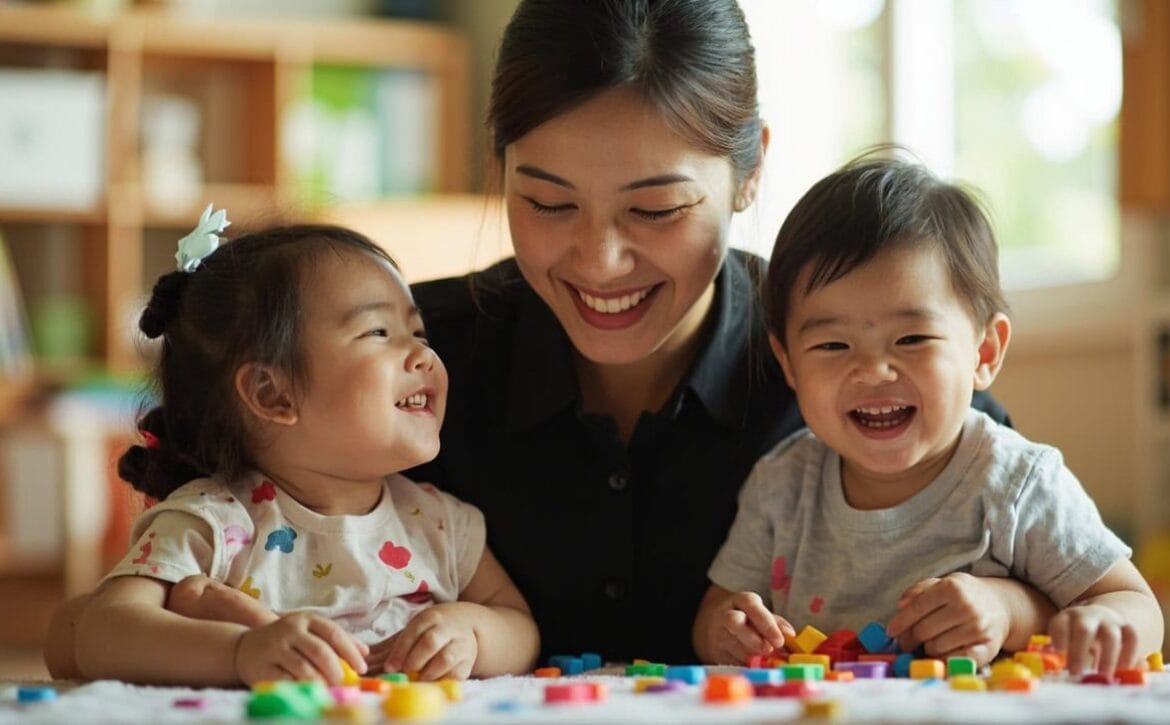
The most honest thing we can tell you is this: that place exists. But it requires something more than safety protocols and qualified staff. It requires an environment built on security — not just structure. On warmth, not routine alone. On the kind of consistent presence that allows a child to stop performing and start being.


What We Mean by “Second Nature”

When a child enters a new environment — any new environment — there is a period of calibration. They watch. They assess. They take the temperature of the room, the voice of the caregiver, the reactions of other children.

This is not conscious. It is instinct. And for a certain span of time, the child you see in that environment is a child performing safety, performing adaptation, performing the version of themselves they believe is expected.

This is true of adults too, if we are honest. We all calibrate. We all present the version of ourselves most likely to be accepted. A child in a new classroom, a new home, a new care arrangement — they are doing exactly what we would do in an unfamiliar workplace. They are watching. They are waiting. They are not yet themselves.

But here is what becomes possible in a different kind of environment: when a child feels genuinely safe — not just temporarily comfortable but deeply, neurologically safe — something shifts. The performance drops. The calibration ends. And what emerges is something truer and more revealing than any checklist or report card could capture.

We call this your child’s second nature.

First Nature vs. Second Nature

Your child’s first nature is what you know at home — their preferences, their quirks, their temperament in familiar spaces with familiar faces.

But their second nature is who they become in relation to the world. It is their social style, their emotional architecture, the way they reach for connection or hold back from it.

It is:

  • The leader who waits before acting, or the observer who speaks with precision
  • The child who needs movement to think, or the one who thinks best in stillness
  • The child who gravitates toward conflict resolution, or the one who quietly notices when another child is struggling
  • The child who thrives in group dynamics but seemed withdrawn in the smaller world of family

These are not behaviors to be managed. They are signals — the truest signals — of who your child is becoming.


The Foundation: Why Security Reveals Who Your Child Really Is

There is a difference, and it matters, between a child who is safe and a child who is secure.

A child can be safe in a room — safe from harm, safe from danger, safe in the way that checklists and ratios and certifications describe.

But a child is only secure when they feel it in their body. In the quality of the voice that speaks to them. In the face that appears when they wake from a nap. In the small consistent rhythms that tell them: you are held here. You are known here. You can be yourself here.

The Science of Early Security

In the first thousand days of life, a child’s brain is building at a rate that will never be matched again. Neural connections are forming at extraordinary speed. And the architecture of that development is not built by curriculum. It is built by relationships. By the quality of attention a child receives. By the consistency of the presence around them.

This is not a soft claim. It is the consensus of developmental science, confirmed by decades of longitudinal research across cultures. A child who experiences consistent, warm, responsive caregiving in their earliest years develops a different kind of internal foundation — one that allows them to explore, to take social risks, to express their preferences, to form attachments with confidence.

That foundation is not built in a month. It is built over time, through thousands of small interactions, through the accumulation of trust.

What Security Makes Possible

When a child reaches this kind of security — and it takes time, it is not immediate — something remarkable happens. They begin to reveal themselves in ways that would not happen at home, in familiar spaces with familiar faces.

Not because home is wrong, but because home is loaded. At home, there is history. There are patterns already established. There is the child you already know, and the child who already knows how to be for you.

But in an environment of genuine security, a child will sometimes show you something new:

  • A preference you never noticed because the context never arose
  • A sensitivity that was always there but found no space to emerge
  • A social instinct — diplomatic, leadership-oriented, reflective, playful — that was forming beneath the surface all along

These are not revelations that a report card captures. They are not found in developmental milestones or academic readiness assessments. They are the kind of knowing that changes how you see your child — and therefore how you parent them, support them, and advocate for them for years to come.


What Quality Childcare Actually Looks Like

For many parents, the idea of quality childcare remains abstract — something that feels important but resists clear definition. Let us make it more concrete.

Quality infant care is not primarily about the toys on the shelves or the curriculum on paper. It is about what happens in the spaces between planned activities. It is about:

  • How caregivers respond when a child is frustrated, not just when they are happy
  • Whether a child’s communication style — verbal or otherwise — is noticed and respected
  • The pace of the day — whether it serves the child’s rhythms or forces the child to serve it
  • The caregiver-to-child ratios that allow for genuine individual attention
  • How transitions are handled — the moments when children are most vulnerable and most revealing

Quality care is also about observation without intrusion. It is caregivers who are paying attention — not to surveil, but to understand. Who notice not just what a child does, but how they do it.

The Questions Caregivers Learn to Ask

In environments built on security, caregivers learn to observe with intention. They begin to notice:

  • The pace at which a child approaches new experiences — do they dive in or hang back?
  • The way a child seeks comfort — quickly, slowly, indirectly, directly?
  • The relationships they form first — with children their age, older children, or adults?
  • The activities that absorb them completely versus the ones they tolerate?
  • The social role they naturally assume, or the one they quietly resist?

These observations are not collected for documentation alone. They are collected because they are meaningful. They tell us who this child is in the world. And when shared genuinely with parents — through regular updates, through honest dialogue, through the kind of transparency that lets you feel connected even in your absence — they become the bridge between who your child is at home and who they are becoming beyond it.


How EduNanny Creates Space for Your Child to Be Known

We have seen this at EduNanny, and we want to tell you honestly what we have observed.

When a child arrives with us — whether through our home-based pathways or our community and centre-based options — our caregivers are not simply providing care in the conventional sense. They are paying attention.

They are noticing not just what a child does, but how they do it. The pace, the style, the preference, the instinct. And these observations are shared with you — not as clinical reports, but as genuine insights into who your child is becoming.

We know that this matters to you. We know that handing your child to someone else for the day creates a vulnerability that is not theoretical. You need to trust the environment. You need to know what is happening. And so we have built communication into the foundation of what we do — not as an add-on feature, but as a core principle of care.

Whether through daily check-ins, caregiver notes, or the transparency measures we maintain in our spaces, we want you to feel that you are not disconnected. You are still in the loop. Your child is still yours to know.

Our Care Structure

Our care blocks run Monday to Friday, because we know how Singapore families work. And our ratios — with up to one to three infants in our home-based settings — mean that the kind of individual attention we are describing is not a promise. It is a structural reality.

There is space here for your child to be known as an individual, not managed as a number.


Addressing the Concerns Singapore Parents Hesitate to Raise

On Affordability

We are aware that for many families in Singapore, the question of affordability shapes the entire conversation about quality care. It should not have to.

Through our participation in the ECDA Childminding Pilot, we have worked to ensure that access to this kind of attentive, relationship-centered care is not only available to those with significant resources.

Our pilot fee structures are designed to be accessible. Your Child Development Account can be utilized. Your Baby Bonus can be applied. These are not marketing concessions — they are deliberate design choices, because we believe that every child deserves to be seen, and every parent deserves to know who their child is becoming.

On Trust

We understand that trusting someone else with your child’s early years is deeply personal. You are not looking for a replacement for your care — you are looking for a supplement that is worthy of your trust.

We earn that trust through consistency. Through honesty. Through the small, daily evidence that your child is not just safe, but secure. Not just supervised, but seen.

We will tell you when your child had a difficult morning. We will tell you when they surprised us with something unexpected. We will tell you what we noticed — and we will welcome you asking what we noticed, because that is the whole point.

On Whether You Are “Missing Out”

Here is what we have come to understand, through years of working with children and families across Singapore: the most valuable thing a childcare environment can give you is not preparation for school. It is not a curriculum, however excellent. It is not even safety, though safety is the foundation without which nothing else exists.

The most valuable thing it can give you is visibility.

Visibility into who your child is. Not the child you have always assumed them to be, not the child shaped by your hopes and anxieties, but the child who exists in the world — in relation to others, in social contexts, in the hours you are not there to see.

The child with preferences you did not know they had. The child with instincts you have never had the occasion to observe. The child who is, in their second nature, something both familiar and surprising.

This knowledge does not diminish you as a parent. It does not suggest that you have been doing it wrong, or that someone else knows your child better than you do. What it does is complete the picture. It adds a dimension to your understanding that home alone cannot provide — because home is one context, and your child has many.


Practical Guidance: Choosing Care That Lets Your Child’s Nature Emerge

If you are in the process of evaluating childcare options in Singapore, here are some questions worth asking — not just at the tour, but in your own quiet reflection.

Questions to Ask Yourself

  • After speaking with the caregivers, do I feel they are interested in my child as an individual — or in filling a slot?
  • Do the communication practices suggest genuine observation, or perfunctory reporting?
  • Do the caregiver-to-child ratios allow for the kind of individual attention that lets a child feel secure enough to be themselves?
  • Does the environment feel warm, or merely clean and organized?
  • Can I imagine my child being fully themselves in this space — not performing, but being?

Questions to Ask the Caregiver

  • How do you approach a child who is struggling to settle in?
  • What does a typical day look like — and who sets the pace?
  • How do you communicate with parents about their child’s day?
  • What do you observe about how children form relationships with each other and with caregivers?
  • How do you handle moments when a child is expressing a preference or instinct that is different from what you expected?

The answers to these questions will not be found in brochures. They will be felt in the tone of the conversation, in the specificity of the responses, in whether the people you are speaking with seem to be watching your child or simply managing them.


Two Kinds of Parenting — and the Knowledge That Changes Everything

There is a kind of parenting that operates from the outside in — from schedules, from expectations, from the desire to shape your child into the person you imagined before they arrived.

And then there is a kind of parenting that operates from the inside out — from genuine understanding of who this particular human being is, in all their specificity, in all their unrepeatable combination of instincts and preferences and ways of being.

The first kind of parenting is not wrong. It comes from love. But it is incomplete. Because a child who is only seen from the outside — only shaped, only measured against milestones — will grow up less certain of who they are. They will have been managed, but not known.

The second kind of parenting — the kind made possible by understanding your child’s second nature — is not about letting go of guidance. It is about making guidance meaningful. It is about nurturing what is actually there rather than what you hoped would be there. It is about trust: in your child, in the environment you have chosen for them, and in the process of growth itself.

When you begin to see your child’s social-emotional self — their temperament in groups, their style of connection, their way of navigating the world — you begin to make every subsequent decision with greater clarity. The school you choose. The way you respond to their struggles. The strengths you nurture rather than the anxieties you amplify. You begin to parent not from assumption, but from insight.

And that insight, gathered over time, becomes the most powerful tool you have as a parent. It guides every choice from preschool to secondary school to the choices they will one day make for themselves.

What Trust Makes Possible

That trust is not easy to build. It takes time. It takes consistent presence, consistent warmth, consistent attention — from the caregivers in your child’s life and from you, in the hours you have together.

But when it exists — when your child feels secure enough to show you who they are, and when you as a parent are open enough to see it — something extraordinary happens.

  • You stop managing your child and start knowing them
  • You stop worrying about whether you are doing enough and start trusting that what you are doing is right
  • You see your child — the whole child — for the first time

This is what we offer at EduNanny. Not just care. Not just safety. Not just a service to fill the hours you are at work.

We offer a space where your child can be themselves. Where their temperament is not managed but noticed. Where their social style is not shaped away but understood. Where the caregiver who holds them each day knows them as a person, not just a schedule.

And we offer you, the parent, something that no checklist can provide and no tour can guarantee: the opportunity to know your child more fully than you thought possible. To see them as they are, not as you assumed they would be. To parent with insight rather than anxiety, with understanding rather than assumption.

Your child’s second nature is not hidden. It is waiting. It has been waiting, in every interaction, in every social moment, in every environment that felt safe enough to let it emerge.

We are here to help you find it. And we believe — with the quiet confidence of people who have seen thousands of children grow — that once you do, everything else falls into place.


Ready to Explore Your Options?

If this approach resonates with you — if you are looking for childcare that sees your child as an individual and helps you see them too — we invite you to learn more about what EduNanny offers.

Speak with our team, visit our spaces, and ask the questions that matter to you. We believe the right fit is not about credentials alone — it is about whether the environment feels like a place where your child can be fully themselves.

Your child’s second nature is waiting. Let us help you find it.
edunanny-062c2bc67527285ab1db9fe70d4fcb5a
April 13, 2026

Beyond Watched: How Trained Caregivers Know Your Child

What You Cannot See: The Architecture of Attention

There is a moment that every parent in Singapore knows intimately, even if they wish they did not. It happens somewhere between the car seat clicking open and the classroom door closing behind you. Your child turns back. Your child does not turn back. Your child reaches for you or reaches for the caregiver.

And then you leave.

You walk to your car, or you walk to the train station, or you walk back to your desk. And the workday begins. And the question begins with it:

Is my child okay right now?

This is not a dramatic question. It does not arrive with panic or urgency. It is quieter than that—a low hum that runs beneath every workday, every meeting, every commute. It is the question that parents in Singapore have learned to carry without letting it spill over, because there is nothing to be done with it. The answer is simply: you are not there, and so you do not know.

Except, perhaps, you should.

Not in the sense of installing cameras in every corner or demanding hourly updates that interrupt both your work and your child’s care. But in the sense of understanding what professional childcare actually is—what it is built on, what systems hold it together, what trained people are doing when your child is not yours to watch.

Because what happens between drop-off and pick-up is not random. It is not mere supervision. It is, when done well, an architecture of attention. And that architecture matters more than most parents ever get to see.


The Invisible Gap: Trained Observation vs. Casual Supervision

Most parents believe they are hiring someone to watch their child. To keep them safe, fed, perhaps entertained. To prevent harm. And yes—safety is the floor. It is the absolute minimum. But premium childcare operates on an entirely different level. It is not just watching. It is trained observation.

The difference between those two things is the difference between a child being merely kept and a child being genuinely known.

Think about what it means to observe a child professionally. An untrained observer notices that a baby is crying. A trained caregiver notices that the baby is crying in a specific way—a hunger cry versus a fatigue cry versus a cry that says something in the body is not right before the child has words to say it.

An untrained observer notices that a toddler is playing. A trained caregiver notices which materials the child returns to repeatedly, which social configurations the child seeks out, which challenges cause the child to persist versus retreat.

An untrained observer notices a child who is crying. A trained eye notices a child whose cry has changed in pitch, whose body is holding tension in a specific way, whose crying has a quality that might indicate not distress but illness—before a fever appears, before the child knows how to say my ear hurts.

An untrained observer notices a child who hit another child. A trained eye sees the sequence that preceded it—the frustration building, the social skill gap that made negotiation impossible, the trigger that might have been avoided with different environmental arrangement.

This is not intuition. It is a skill developed through specific training, intentional practice, and learning to see systematically rather than impressionistically.

Why the First Thousand Days Shape Everything

When you choose a childcare arrangement for your infant or toddler in Singapore, you are not simply entrusting them to warmth and goodwill. You are entrusting them to a team trained in the discipline of observation—caregivers who understand infant and toddler development not as general knowledge but as a daily working framework.

This matters because the early years are not simply a waiting period before real learning begins. The first thousand days of a child’s life are when the architecture of the brain is being built at its fastest pace. Neural connections are forming at a rate that will never be matched again. The emotional patterns, the stress response systems, the capacity for attachment and trust—these are all being established in these years.

What happens in these years is not recorded in any test. But it shapes everything that follows.

A trained caregiver tracks whether communication is emerging as expected, whether motor skills are building appropriately, whether social engagement is healthy and growing. They hold a picture of your child’s development that is far more detailed and consistent than any single parent visit could provide—because they are with your child every day, and they are looking with trained eyes.

Warmth without training is not enough. Warmth without observation is a feeling without follow-through. What children need, what parents need, is warmth that is directed by knowledge. Care that is both compassionate and competent.


Responsive Care: Following the Child, Not the Clock

Observation alone is not care. Observation is only the beginning. What transforms observation into genuine quality is what happens next: responsive adaptation.

There is a model of childcare that runs on schedules. Meals at twelve. Nap at one. Activity at three. This is administratively convenient. It is easy to manage. It creates the appearance of order. But it is not premium care. It is institutional convenience dressed as routine.

Premium infant and child care operates on a different principle entirely. It operates on responsiveness. This means that the caregiver is not following a schedule. The caregiver is following the child.

What Responsiveness Looks Like in Practice

When an infant shows early hunger cues—before the cry that tells you hunger is urgent—the trained caregiver responds. This matters because waiting until a baby is in distress is not just uncomfortable for the child; it teaches the child that their signals do not matter, that they must escalate before they will be heard.

Responsive care teaches the opposite: that your communication is valid, that your needs are noticed, that the world responds to you.

When a toddler is deeply absorbed in an investigation—a tower of blocks that keeps collapsing, a puddle of water spreading across tiles, a beetle being watched with absolute focus—a responsive caregiver does not interrupt to maintain the schedule. They protect that focus. They understand that sustained attention is a skill being built in these moments, and that interrupting it repeatedly teaches a child that their interests do not matter.

This is what responsive care looks like in practice. It is not dramatic. It is not a spectacle. It is a thousand small decisions throughout the day, each one asking: What does this child need right now?

It requires training. It requires staffing ratios that make it possible. And it requires a philosophy that prioritizes the child’s experience over administrative convenience.

Why Staffing Ratios Matter

In Singapore, the ECDA Childminding Pilot is designed to maintain exactly the kind of low ratios that make responsiveness possible. When you have one caregiver for every infant, or one for every three children at most, you have time to notice. You have time to adapt. You have time to truly know each child as an individual rather than managing a group.

This is not a luxury. It is a standard. And it is one that Singapore parents should understand to expect and demand.


The Quiet Work of Developmental Tracking

There is another dimension of professional childcare that parents rarely get to see, and it is perhaps the most important: the quiet work of developmental tracking.

This is not the same as observation. Observation is moment-to-moment attention. Tracking is the synthesis of those observations over time into a coherent picture of how your child is growing.

A trained caregiver is noting, across days and weeks and months, patterns that no single observation could reveal:

  • Is this child’s language development progressing on track?
  • Are there any areas where the child seems stuck or delayed?
  • Are there behaviors emerging that warrant attention—a regression that might indicate stress, a sudden withdrawal that might indicate difficulty, a persistent frustration that might indicate an unmet developmental need?

This tracking happens quietly throughout the day. It is not a formal test. It is not a report card. It is the continuous, professional attention of someone who knows what typical development looks like, who knows the range of normal, and who is watching for anything that falls outside it.

Why Early Detection Changes Everything

In the early years, catching a developmental concern early matters enormously. The plasticity of the young brain means that intervention at two can accomplish what intervention at five will struggle to achieve. The eyes that are watching for these signals are not just caregivers. They are, in the truest sense, your child’s first teachers—trained not to perform lessons but to notice growth and respond to it.

And because this tracking is systematic and consistent, it becomes reliable. You are not relying on a single caregiver’s impressions. You are relying on a documented, professional process that maintains continuity even when individual caregivers are absent.

The systems that professional childcare providers build ensure that observation is recorded, that patterns are tracked, that nothing falls through the gaps of a casual Tuesday afternoon when maybe someone was a little tired or distracted. Quality is built into the infrastructure, not left to the luck of individual personalities or daily variations.

This is what makes consistency possible across days and caregivers. Not just goodwill. Not just habit. Systems.


What Professional Communication Actually Looks Like

All this knowledge is valuable only if it reaches you. This is where professional communication becomes not a nice-to-have but a core component of quality care.

Most parents have experienced the pickup conversation that tells them nothing. The child was fine. The child ate well. The child played. And you leave with a vague sense of reassurance that does not actually tell you anything about your child’s day, your child’s development, your child’s wellbeing.

Professional communication protocols are different. They are designed to actually inform you—not just reassure you, not just satisfy you for the moment, but genuinely give you insight into what is happening with your child.

Three Dimensions of Meaningful Communication

1. Sharing observation. What did your child focus on today? What new skill emerged or was practiced? What was the quality of their engagement with other children or caregivers? What moments seemed significant?

2. Sharing context. If your child was clingy at drop-off, it means explaining what preceded it—was there a disrupted night, a change at home, a developmental leap that sometimes causes regression before advancement? If your child was unusually quiet, it means explaining whether this was peaceful quiet or withdrawn quiet and what the caregiver observed about the difference.

3. Sharing partnership. What can you do at home this weekend that would support what is being worked on this week? What should you be watching for? What questions should you be asking?

This commitment to professional communication extends to the infrastructure of trust itself. Where technology is deployed in service of the relationship between parent and provider—not a replacement for human connection, but a bridge across the distances that busy lives create—this is what transparent childcare looks like. Not because there is nothing to hide, but because the work itself is worth showing.


The Sacred Work of Transitions

There is one more dimension of premium care that deserves attention, because it is so often overlooked: the intentional management of transitions.

Transitions—drop-off and pickup, the movement between activities, the shift from play to rest—are the moments when children are most vulnerable. They are the moments when stress hormones are most likely to spike. They are the moments when a child’s sense of security is tested most directly.

And yet in most childcare settings, transitions are handled casually. The parent drops off, maybe lingers too long or leaves too abruptly, and the caregiver moves on to the next task.

Premium care treats transitions as the sacred moments they are.

The Structured Goodbye

The structured goodbye is not about a ritual for its own sake. It is about creating a predictable, calm, emotionally attuned ending to the parent’s presence and a warm beginning to the caregiver’s presence.

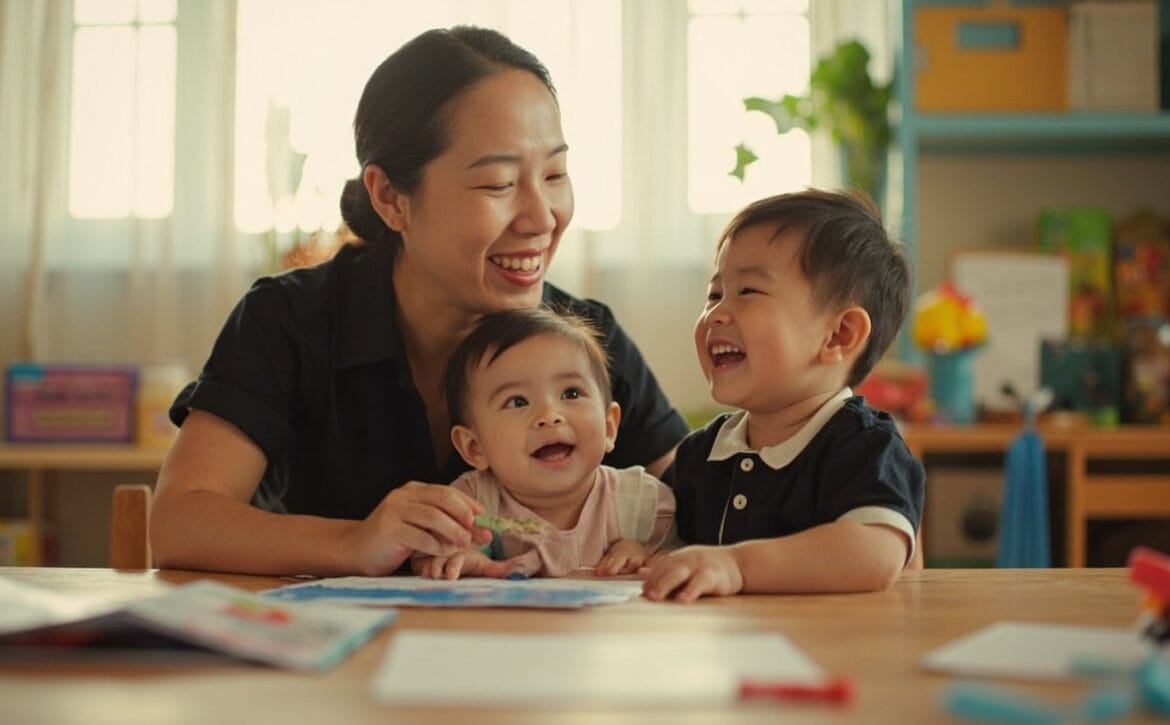
The caregiver meets the parent and child together. They acknowledge the child’s feelings about the parent’s departure—however old the child is, whatever words they have. They give the child a moment to process, to cry if they need to cry, to be held if they need to be held, and then they gently redirect attention toward the day ahead.

The Structured Reunion

The structured reunion at pickup is the same principle in reverse. The caregiver shares not just the logistics of the day but the emotional texture of it. They help parents understand what their child was like when they arrived, how they settled, what they seemed to need. They bridge the gap between the hours so that parents can understand their child’s full day, not just the pieces they witness.

This is not sentimental. It is neuroscientific. Transitions handled well reduce cortisol, build attachment security, and teach children that the world can be trusted to manage changes smoothly.

When you evaluate a childcare setting, watch the transitions. This will tell you more than any tour of colorful classrooms or carefully curated activities.


How to Evaluate Quality: Questions and What to Watch

You now know what good care looks like from the inside. Here is how to evaluate it from the outside—during a visit, before you commit, wherever you are in Singapore.

Questions That Reveal Real Standards

  • How do you handle drop-off? Look for a structured, unhurried process where the caregiver meets you and your child together, takes time to hear about the morning, and helps your child transition rather than simply accepting the handoff.
  • What does a typical day look like? If the answer is a rigid minute-by-minute schedule, that is institutional care. If the answer describes rhythms and routines that adapt to children’s needs, that is responsive care.
  • How do you track development? Listen for systematic documentation—not vague reassurances, but actual processes for noting patterns over time and sharing them with parents.
  • What training have your caregivers received? Look for specific references to child development training, not just experience with children. Experience without training is just seniority.
  • What are your ratios? For infants, one caregiver to one child is ideal. For toddlers, no more than one to three. Anything higher makes genuine observation and responsiveness impossible.
  • What does communication look like? Ask what a typical pickup conversation includes. Look for providers who share observations, context, and partnership—not just logistics.

What to Watch For During a Visit

  • Are caregivers on the floor with children, or behind desks managing paperwork?
  • Do caregivers kneel or sit at children’s level, or do they tower over them?
  • Are children allowed to persist with activities, or is everything on a timer?
  • How do caregivers respond when a child is distressed? With comfort or with commands?
  • Do transitions feel rushed or intentional?

The One Question That Matters Most

Ask any caregiver: What did my child focus on today?

If they cannot answer, that tells you something. If they offer a vague oh, they played, that tells you something. But if they describe what captured your child’s attention, what challenged them, what they returned to repeatedly—that is trained observation in action.


EduNanny by BUTLER: Built for Parents Who Want to Know

EduNanny by BUTLER was built for parents who want more than warm smiles and clean facilities. Parents who want to understand what is happening when they are not there. Parents who want systems, not just promises. Parents who want to be partners in their child’s care, not just recipients of reassurance.

The ECDA Childminding Pilot represents Singapore’s commitment to making professional, home-based childcare accessible—with infant ratios that allow for genuine attention, fee structures designed for affordability, Monday to Friday care blocks that fit real working lives, and CDA and Baby Bonus usability that removes unnecessary financial friction.

Whether through home-based care, where your child develops in a home environment with consistent caregivers, or through community-based or centre-based pathways where the same professional standards apply, EduNanny meets families where they are.

The specifics of delivery may vary, but the infrastructure of trained observation, responsive care, developmental tracking, and professional communication does not. This is not a philosophy that sounds good in a brochure. This is a daily practice built into every hour, every interaction, every record, every communication.


The Informed Parent: Your New Role

Here is what has changed for you today.

You are not wrong to feel the weight of that question—Is my child okay right now? You are not wrong to feel the distance between yourself and those hours of the day when you are not present. That distance is real, and it matters, and it deserves a response.

But here is the answer to that question, for parents who choose well:

Your child is not in a void. Your child is in a system designed to know them. Your child is being observed by trained eyes, responded to by adapted care, tracked by professional attention, communicated with through protocols that take their development seriously. Your child is not merely supervised. They are genuinely, systematically, professionally cared for.

And you—parents who have come to understand what you now understand—are not in the dark anymore.

You know what to look for. You know the difference between supervision and observation. You know the difference between a schedule and responsiveness. You know what communication should feel like when it is professional rather than performative. You know how transitions reveal quality. You know what trained caregivers notice that others miss.

You are not placing blind trust anymore. You are placing informed recognition. You are choosing from knowledge rather than guesswork, and that changes everything.

This knowledge is not just valuable for evaluating any childcare arrangement. It is valuable for evaluating any setting, anywhere. Because now you know what questions to ask. You know what answers mean something. You know what to watch for in transitions, in communication, in ratios, in training, in the way caregivers describe their work.

You are not a passive consumer hoping for the best. You are an informed parent capable of recognizing quality when you see it.

The question you have carried—Is my child okay right now?—is not a question you need to stop asking. It is a question you can now answer, because you know what good looks like. You know what to trust.

And you know, with confidence, that when your child is in care that operates on these principles, the answer to that question is yes.

Your child is okay. Because they are known.

And now, so are you.


EduNanny is a trusted Singapore childcare and childminding service committed to trained observation, responsive care, and professional standards. Learn more about EduNanny or connect with our team.

edunanny-062c27dd6192a764a2c9d566e62ea311
April 13, 2026

How Singapore Working Parents Build Reliable Childcare Systems

The Invisible Architecture of Working Parenthood

You are an architect. Not of buildings or institutions, but of something far more intricate: the care ecosystem that holds your child’s world together while you hold everything else.

The remarkable thing is that you have been doing this work all along. You simply have not had the words for it.

This is cognitive work. Emotional work. Work that sustains your family’s functioning day after day. It is also real labor—the kind that shows up in the mental simulations you run at 3 a.m. about tomorrow, in the trust you build through small, consistent confirmations, and in the invisible negotiations you conduct every single day between what your child needs, what your employer expects, what your home requires, and what you yourself need just to keep functioning.

Once you see it, you will recognize it everywhere—in yourself, and in every parent who has stood at a bus stop at seven in the morning, running through a mental checklist that spans safety protocols, feeding schedules, developmental milestones, and the particular way their child likes to be held when they are tired.

Pattern Recognition

You learned your child’s patterns before anyone else did. You know the exact quality of silence that precedes a nap versus the silence that means something is wrong. You know that certain foods will be refused on certain days not because of taste but because of texture—and that this is not stubbornness but development.

You have been observing, cataloguing, and interpreting since the day your child was born, with a precision that most professionals would envy. This is expertise. This is labor. This is work your child depends on.

Coordination

Not the dramatic kind. Not the kind that makes headlines. The quiet kind.

The coordination that looks like remembering to mention to your caregiver that your child has been pulling at their ear, just in case. The kind that looks like adjusting your own work schedule so that a doctor’s appointment fits into a system that was already running at capacity.

This is not inefficiency. This is orchestration. You are conducting a symphony that no one else can hear.

Daily Trust

Not the abstract, philosophical kind that gets written about in parenting books. The daily, operational kind.

The trust that lets you walk away from your child and go to work. The trust that lives in the message you send at noon and the reply you receive. Trust, as you know better than anyone, is not a feeling. It is a practice. It is what happens when the photograph arrives, when the update is given without being requested, when the caregiver notices what you notice and tells you about it.


What Quality Childminding Actually Looks Like

For Singapore parents navigating the transition back to work, quality care is not a luxury. It is the infrastructure that lets your architecture stand.

When we speak about what quality childminding looks like, we speak about it in specific terms:

  • Small ratios: One caregiver to a small number of children means attention is not divided. It means your child is known, not just watched.
  • Consistent environment: A warm, predictable setting where routines are maintained because routines are how children feel safe.
  • Communication you can count on: Not the anxious kind, not the kind that requires you to wonder and worry, but the kind that comes because it is built into how the system operates.
  • Transparent operations: Where oversight measures exist, they exist not to surveil caregivers but to reassure parents—quiet confirmation that you can see what you need to see, when you need to see it.
  • Partnership with your expertise: The caregiver understands what you understand about your child because you have been given the means to share that knowledge.

Where EduNanny Singapore Fits in Your System

EduNanny Singapore exists not to replace the architecture you have built, but to become part of it.

We are not the center of your child’s care story. You are. We are the foundation you can trust, the infrastructure that lets your architecture flourish.

When we speak about what EduNanny offers, we speak about it in the language of support, not salvation. Because you do not need saving. You need partners who understand the complexity of what you are already doing and who can meet you there with competence, with transparency, and with genuine respect for the expertise you bring to your own child’s life.

EduNanny Singapore is part of the ECDA Childminding Pilot, operating within a framework that recognizes home-based care as a legitimate, high-quality pathway for Singapore families. This means our model has been evaluated, validated, and designed with the realities of Singapore parenting in mind—not an experiment conducted from a distance, but a program built for the specific conditions of this city, this pace, these families.

Our caregivers work with infant ratios of up to one to three. Your child is not one of twelve or fifteen. Your child is one of very few, and that ratio is intentional—because we know what you know: attention is not infinite, and the quality of attention your child receives matters.

A small number of children in a warm, consistent environment, cared for by a trained professional who reports to a coordinated system, is not a compromise. It is a choice. The same kind of thoughtful choice you make every single day.

We know that affordability matters. That the cost of quality care should not require a choice between your child’s wellbeing and your family’s financial stability. Our pilot fee structures are designed with this in mind, and CDA funds and Baby Bonus can be used—because we believe the financial logistics of care should not add unnecessary weight to an already heavy load.

Care runs Monday through Friday, in care blocks that accommodate the rhythms of working parents. This is practical infrastructure. You live in both worlds at once, and we designed our service to meet you there.


Evaluating Infant Care: What Singapore Parents Actually Need to Know

If you are researching infant care options in Singapore, you are likely navigating real concerns. Here is what matters:

“Will my child be safe and known?”

Safety begins with ratios. When your child is one of very few, attention is not spread thin. When caregivers operate within a coordinated system with training and oversight, there is accountability. When communication flows both ways, you are not left wondering.

Knowing a child takes time and proximity. Small ratios create the conditions for genuine familiarity. Consistent caregivers create the conditions for trust to develop. Communication protocols create the conditions for you to share what you know about your child and receive back what they observe.

“Can we afford this?”

Quality care should not require financial compromise. Our pilot structures are designed to be accessible, and eligible subsidies and schemes exist precisely to reduce the burden on families.

“How do I know I can trust someone else with my child?”

Trust is not given lightly. It is earned through consistency, through communication, through the steady proof that the people caring for your child understand what you understand about them. This is why we believe trust must be built in daily, operational ways—not promised, but practiced.

Questions worth asking any care provider

  • What is the caregiver-to-child ratio, and why does it matter for my child’s age?
  • How is communication handled? Is there a daily update, or do I have to ask?
  • What is the caregiver’s training, and how does the program support them?
  • How are decisions made when my child is unwell, or when something changes?
  • What visibility do I have into my child’s day?
  • How does the program fit with my work schedule and my family’s rhythms?
  • What happens if my child’s needs don’t match the routine?

The answers to these questions will tell you whether a care arrangement is designed around the child and family, or simply around the convenience of the provider.


You Are Not Just a Parent Who Arranged Childcare

Here is what we want you to know, because it is true and because no one has said it to you plainly:

The patterns you recognize, the decisions you make, the invisible negotiations you conduct every day between your child’s needs and the world’s demands—these are not the behaviors of someone who is managing. They are the behaviors of someone who is designing. They are the behaviors of someone who is building something that will last.

All of this—the pattern recognition, the coordination, the daily building of trust—this is expertise. This is labor. This is work that matters, work that sustains, work that your child depends on.

You are not merely a parent who has arranged childcare. You are a parent who has built a system. And systems, to function well, need reliable infrastructure.

EduNanny Singapore is honored to be part of what you have built. We do not claim to be the architecture. We are the infrastructure within it—the reliable, transparent, well-designed foundation that lets your architecture stand. We are here because Singapore parents deserve care that meets them where they are, that respects what they already know, and that supports the extraordinary work they are already doing.

When you walk through our doors—or when a caregiver walks through yours—we want you to know that we understand exactly who you are.


Begin the Conversation

The first thousand days of your child’s life mattered before you walked through our doors. They mattered because of you. They will continue to matter, because of you.

You are not just a parent. You are the architect of the most important thing in the world. And we are here to make sure your architecture has everything it needs to thrive.

If you are ready to explore what partnership looks like, we invite you to speak with us. No pressure. No obligation. Just a conversation about whether we are the right infrastructure for the system you have built.

We understand that choosing infant care is one of the most personal decisions a family makes. Wherever you are in that journey, we respect the work you have already done.


Learn more about EduNanny Singapore and our ECDA Childminding Pilot.

edunanny-062c24c62d98470e34469479c8995ebe
April 13, 2026

The Morning Goodbye That Tells You If Your Childcare Is Working

Quick Summary: What Your Morning Is Actually Telling You

  • Your child’s response to the morning goodbye is not a personality trait to be managed — it is a diagnostic window into your childcare quality
  • Rushed mornings are not a logistics problem. No amount of clever lunch boxes or earlier alarms will fix a morning that is structurally broken.
  • Quality childcare restructures the architecture of the morning itself — the transition becomes warm, unhurried, and attuned
  • When your child’s day is built around their actual needs, the evening opens into genuine family connection rather than mutual depletion
  • The families who get this right are not luckier — they understood that childcare is not a checklist to search, but a daily rhythm to design

The Morning Goodbye: A Diagnostic Window, Not a Personality Trait

When your child clings and cries at the drop-off gate, most interpretations land on the child — they are anxious, they are not ready, they need more time to adjust. But consider a different reading.

That response is not a defect in your child. It is a signal about the system your child is being handed off into. It is your child’s most honest assessment of whether the people receiving them are ready to receive them.

A child who settles quickly into a morning transition is not merely emotionally secure — though that is real. They are walking into an environment where the arrival process has been designed with enough warmth, enough attentiveness, and enough capacity to hold them properly.

A child who takes forty minutes to stop crying at the gate is telling you something about the ratio of caregivers to children. They are telling you about the attention available at the moment of transition. They are telling you whether the morning handoff was built around their needs or around the convenience of a schedule.

This is the reframe that changes everything. Your child’s response to the morning goodbye is not a personality trait to be managed. It is a diagnostic window into the quality of your childcare arrangement — not as an abstract measure of quality, but as a concrete assessment of daily life. It tells you whether the architecture of your morning and the architecture of your childcare are aligned, or whether they are working against each other.


Why Rushed Mornings Cannot Be Solved at the Logistics Level

Let us be honest about what most Singapore parents actually face in those morning hours. Most families do not have the luxury of a slow, unhurried start. There is the MRT. There is the bus transfer. There is the 8:15 meeting that does not care that your toddler just refused to wear socks.

The morning is not just a logistics challenge. It is a compressed ecosystem of connection, care, and transition that either holds together under pressure or collapses into the rushed, guilty, fraying pattern that so many Singapore parents have quietly accepted as normal. And when the morning collapses, it does not stay contained there. It cascades.

No amount of advanced preparation, no clever lunch box system, no extra ten minutes on the alarm is going to solve a morning that feels structurally broken. Because the issue is not the packing. The issue is not the timing. The issue is that the childcare arrangement you are working with was not designed for the morning your family actually has. It was designed for a generic family morning — a theoretical morning — and you are trying to fit your real, specific, beautifully complicated life into that generic framework.

And it does not fit. So you stretch. You rush. You absorb the stress. And then you do it again the next day.


How Quality Childcare Builds Your Child’s Day

Now let us consider something most childcare conversations never address. What happens during the hours between drop-off and pickup? Most parents, frankly, do not know. They drop their child into a kind of mental black box and hope that whatever is happening in there is good enough. They pick up at 6 p.m. and assess the day based on how their child looks and whether there are any visible bruises.

But the hours between are not a void. They are the hours in which your child’s day is actually being built.

In quality infant care, those hours are not filled with entertainment or distracted supervision. They are built around a rhythm — feeding, sleep, play, interaction, exploration — that mirrors the natural architecture of infant development. That rhythm is not a schedule on a wall. It is a living, responsive structure that the caregiver follows with understanding, adjusting to your child’s specific patterns, specific needs, and specific pace on any given day.

When your child is in a responsive, well-structured care environment, they are not just being minded. They are being seen. The caregiver notices when your child is becoming overstimulated before the overstimulation becomes a meltdown. They read the signals — the furrowed brow, the reaching hand, the particular cry that means something specific — and they respond with precision rather than defaulting to a bottle, a screen, or a holding pattern.

Your child is not in a place where they are simply supervised. They are in a place where their day is being shaped intentionally, around the person they are becoming.


The Evening Difference: From Survival to Presence

This matters enormously for the evening, though not in the way most parents are led to expect. You will not pick up a perfectly regulated child every single day — that is not what quality care promises. What it promises is a better baseline.

A child who has been genuinely engaged through the afternoon will come to the evening pickup in a different state than a child who has been managed through it. They will be ready to transition to the family environment rather than depleted by the care environment. And that difference — that shift from depletion to readiness — is the difference between an evening you can inhabit and an evening you merely survive.

Think about what happens in your home when you open the front door in the evening. The flat is small. The evening is short. There is dinner to manage, a bath, the bedtime routine, and somewhere in there — if there is anything left — a moment of genuine connection with your child before the day closes.

Now imagine that your child has been in a high-quality, responsive care environment all day. They have been engaged. They have been held — not just physically, but with attention and warmth. They have had their needs met with consistency and understanding.

When you pick them up, the caregiver can tell you not just what happened but who your child was today — their mood, their discoveries, their moments of frustration and their moments of delight. This is what real communication looks like.

And when you come home, something structural has changed. You open the door to a child who is still in possession of themselves. They are not already frayed, already depleted, already in need of everything you do not have left to give. They are ready. They can play. They can be curious. They can sit with you at dinner and listen when you ask them about their day.

The question “What did you do today?” — that question that usually gets you a shrug or a silence or a random non sequitur — actually gets an answer, because your child has had a day worth describing. They have been doing things. They have been engaged. They have been part of something.

The dinner table conversation is not a small thing. The fact that your child can sit with you, present, curious, and engaged — that is not a small thing. That is the texture of your relationship. That is where your connection with your child is actually built, in the ordinary, everyday moments that quality care makes possible rather than draining away.


What EduNanny Singapore Offers

EduNanny Singapore, operating under the ECDA Childminding Pilot, offers families something genuinely different. Both pathways — home-based care and centre-based care — are structured around the same principle: that the daily rhythm of your child’s care is not something to be managed but something to be designed.

The pilot maintains caregiver-to-child ratios that make responsive, attentive care structurally possible. With ratios of up to one to three infants, the morning does not have to be managed. It can be tended. When you arrive, the environment is already awake and prepared. There is not a caregiver scrambling to reorganise because three children just arrived at once. There is not a hurried handoff at the gate while the clock ticks toward the next obligation. Instead, there is a genuine moment of reception — a caregiver whose attention is on your child, who has the time and the capacity to receive them properly.

Affordability and Access

Fees are structured to be accessible within the pilot framework. Families can use CDA funds and Baby Bonus contributions, because quality care should not require families to choose between what they can afford and what they know their child deserves.

Communication and Transparency

Coverage runs Monday through Friday, aligned with the working week, because the architecture of daily life in Singapore does not pause for Saturdays and Sundays. Wherever the programme is deployed, the commitment to open communication and transparency means you are never guessing what your child’s day looked like. You are told. You are shown. You are included. At pickup, you receive genuine information about who your child was that day — not just a log of activities, but an account of their mood, their discoveries, and their moments.

The Caregiver at the Core

But the programme’s real difference is the caregiver. Not the ratio, not the schedule, not the facility — the person. The caregiver who understands why the morning transition matters, who knows how to receive a child at drop-off in a way that makes the goodbye brief and the settling fast. The caregiver who structures the hours between not around a checklist but around the specific child in front of them. The caregiver who walks you through the evening at pickup not with a form to sign but with genuine knowledge about who your child was that day.

EduNanny invests in the preparation and development of the people who carry this work, because they are not filling a slot. They are holding the morning, and the afternoon, and the evening, and the relationship between all three.


The Morning Holds the Day

The families who come home to connection instead of crisis, who have evenings that feel like evenings, who send their child into the morning and feel okay about the goodbye — they are not lucky. They are not families with more resources or more help or easier children.

They are families who understood something different about what they were doing when they chose their childcare. They stopped thinking about childcare as a search for the right checklist. They started thinking about it as the design of their daily rhythm.

They looked at their morning and saw it clearly — not as a mess to be managed, but as an architecture to be built. They understood that the morning goodbye was not a moment to rush through on the way to something more important. It was the moment that determined what the rest of the day felt like for everyone. They understood that the hours between drop-off and pickup were not a gap to be endured but a space to be created.

And they understood that when the morning and the afternoon are designed right, the evening does not have to be negotiated or managed or survived. It simply opens, naturally, into the family life you actually want to be living.

When you find the arrangement where the morning transition is warm and unhurried, where your child settles because they have been genuinely received, where the caregiver walks you through the afternoon with real knowledge and genuine care — that is not luck. That is the architecture working. That is the morning holding the day.

That is EduNanny Singapore doing what they have built themselves to do: not filling a childcare slot, but designing the daily rhythm that allows a family to feel calm, connected, and capable. Not every day. But reliably. Over time. With care.

And that is not a small thing. That is everything your child carries into tomorrow. That is the evening you come home to. That is the family you are building, one morning at a time.


When you are in the midst of a rushed morning, when you are standing at the gate watching your child cry and telling yourself this is just how it is — pause. Look at what that morning is actually telling you.

The morning is not an obstacle between the night before and the day ahead. It is the diagnostic. It is the place where your childcare arrangement reveals itself — whether it is built to serve your family’s daily life, or whether your family is being asked to serve its logistics.

Your morning is not a mess to be managed. It is an architecture to be built. And it starts with choosing a childcare partner who understands that the morning goodbye, the hours between, and the evening you come home to are not separate problems — they are one daily rhythm, designed well or designed poorly, holding your family together or slowly fraying it.

The question is not whether quality care matters. You already know it does. The question is whether you are ready to stop searching for the right checklist and start designing your family’s daily rhythm — starting with a morning that finally feels like it was made for the life you actually live.

Explore how EduNanny Singapore can help you design a daily rhythm that works for your family.


If you would like to learn more about EduNanny Singapore and the ECDA Childminding Pilot, we welcome you to reach out. You can also read more about our approach to development-oriented childcare and childminding for families in Singapore.

edunanny-062c20e23830296b95c19a7b3c7ca51f
April 13, 2026

How to Read the Signs That Your Childcare Is Working

The Doubt Is Not Evidence of Failure

Here is what the world of childcare advice rarely tells you: the doubt you are experiencing is not evidence that you chose poorly. It is evidence that you care deeply about getting this right.

Singapore parents face a particular kind of challenge. We pour enormous emotional energy into finding the right childcare — visiting centres, reading reviews, weighing options. We ask the questions. We read the materials. And in the end, we make a decision.

But then comes the harder part.

The weeks and months after enrollment can feel lonelier than the decision itself. You second-guess. You scan your child’s behaviour for signals. You wonder if another choice would have been better. The internet offers plenty of decision frameworks, but almost nothing on how to recognise whether your choice is actually working — how to move from wondering to knowing.

This article offers you that framework. Not a checklist. Not metrics. A clearer way of seeing what is already in front of you.


Signs Your Childcare Choice Is Working

  • The evening state matters most. Watch how your child returns to you in the hour after pickup, not how they behave at drop-off.
  • Absence of problems is not proof of excellence. You are looking for evidence of thriving, not just the absence of failure.
  • Small developmental signs tell the truth. New skills, new sounds, new intentions — these are signs of genuine attention.
  • Quality care makes you a more observant parent. When your child is well-cared for, your instincts become more trustworthy.
  • The partnership with your caregiver matters. Bidirectional communication is where real reassurance lives.
  • School readiness is quieter than you think. It is emotional resilience and curiosity, not worksheets and test scores.

The Quietest Hour Tells the Truest Story

There is a particular moment that experienced parents come to trust. It is not the morning drop-off — that moment is too charged, too full of separation anxiety for both sides, too susceptible to the particular mood your child woke up in. It is not even the homecoming itself, when children are often wired and overstimulated from the day’s excitement.

It is the quieter window that follows: dinner, perhaps, or the slow unwinding toward sleep.

Watch your child in that hour. Not for dramatic revelations. Watch for the texture of their ease.

The way they move through your home. The way they engage — or do not need to engage — with you. A child who has spent a day in genuinely good care often returns in a particular state: not perfectly behaved, not artificially calm, but fundamentally settled in their own skin.

They have been seen and held and responded to all day. They are not running on empty. They are not a vessel of accumulated stress waiting to overflow the moment they cross your threshold.

This is the evening state, and it is one of the most honest signals available to you. Not because children in quality care never have hard afternoons — children are human, and humans have hard afternoons. But the frequency, the recovery, the overall arc — these tell you something real.

When your child returns to you tired but not depleted, clingy but not desperate, you are witnessing the residue of a day that was good for them. You may not be able to articulate why you feel this, but your feeling is worth trusting. Quality care makes your instincts as a parent more trustworthy, not less.


What Quality Care Actually Looks Like

Here is where many parents go astray: they look for the wrong signals.

The Absence of Problems Is Not the Presence of Excellence

If your child’s school or caregiver reports that nothing went wrong today — no incidents, no upsets, no moments worth flagging — that is meaningful information. But it is not the information you are actually looking for.

You are looking for evidence of thriving, not the absence of failure. A childcare arrangement can be entirely adequate and entirely unremarkable, and your child can pass through it without incident while still not being truly nurtured in the ways that matter most.

Think about it this way: a child can survive a day of bare-minimum care. They can be fed, changed, kept safe, and sent home without any visible harm. But survival is not the same as flourishing.

The Signs That Someone Is Paying Real Attention

Genuine quality looks like this:

  • A caregiver who knows your child’s particular language for hunger, for tiredness, for the need to be held versus the need to be given space
  • Routines that feel organic rather than rigidly enforced
  • Your child developing small competencies you did not teach them — the way they stack blocks now, the new sound they have learned, the way they point at things with new intention
  • A child who runs toward their caregiver in the morning, not away from them

These are the signs that someone is spending real time with your child, paying real attention, and investing real care in their development. They are not dramatic. They are quiet. But they are reliable.


The Partnership Between You and Your Caregiver

There is something that matters deeply but is rarely discussed: the relationship between you and the person caring for your child.

The best childcare arrangements are not transactional. They are not a morning handoff and an evening report and nothing in between. They are a living, evolving collaboration between two sets of adults who share one important purpose: the wellbeing of your child.

What Working Partnership Looks Like

When this partnership is working, you will notice certain rhythms:

  • Your caregiver tells you things without being asked — not just the logistics of meals and naps, but observations
  • They noticed that your daughter was particularly clingy this morning and wondered if teething might be bothering her
  • They have been working on a new gross motor skill all week and finally got it yesterday

These are not rehearsed updates. They are the natural output of someone who is paying close attention and wants you to know what they see.

And on your end, you will find yourself sharing things that matter. You will tell the caregiver that your son did not sleep well and might be more sensitive today. You will mention that your daughter is going through a phase where she refuses to eat anything red, and please do not take it personally.

This bidirectional communication — the small exchanges that happen around the edges of formal reports — is where real partnership lives.

When the Partnership Is Not Working

If these exchanges are not happening, that is information too. Not a catastrophe, but information.

The question to ask yourself is whether the communication gap is a symptom of a larger distance, or whether it is simply a mismatch in communication style. Some caregivers are more reserved by nature. Some parents prefer minimal daily updates.

But the underlying orientation — the sense that you are both invested in the same small person and that information flows freely between you — should be present. When it is, your confidence grows. When it is absent, you are right to notice and to address it.


What to Do When Something Feels Off

Normal developmental variation is not a red flag. Children have off days, resistant phases, and periods of clinginess that have nothing to do with their care. What you are watching for is pattern — a sustained change in your child’s evening state, a persistent resistance to going to their caregiver, a marked decline in developmental progress rather than the normal ebb and flow of learning.

When you notice something that concerns you, bring it to your caregiver without accusation. Share what you are observing and ask what they have noticed. Often, two sets of eyes see more than one. And often, what felt alarming in isolation resolves into a normal developmental phase when placed in context.

If the communication gap persists despite your efforts to bridge it, and if it reflects a deeper difference in values or investment, then it is reasonable to explore other options. A childcare arrangement can be locally convenient and emotionally distant. You do not have to accept that trade-off.

Finding a caregiver whose communication style aligns with yours is not a luxury — it is a practical necessity for the kind of partnership that gives you genuine peace of mind.


Beyond the School Readiness Trap

Somewhere between eighteen months and three years, Singapore parents begin to hear the whisper of Primary One. They begin to wonder whether the care their child is receiving today will translate into readiness tomorrow. They scan for academic indicators, for vocabulary milestones, for signs of the cognitive abilities that schools will eventually measure.

And in doing so, they often miss what is actually unfolding in front of them.

What School Readiness Actually Is

School readiness is not a set of test scores from a toddler. It is a much quieter thing:

  • The ability to separate from a caregiver without catastrophic distress
  • The willingness to follow a routine, to sit with other children, to listen when an adult is speaking
  • The emotional resilience to be frustrated and recover
  • The curiosity that makes a child want to learn, which cannot be taught but only preserved

A quality childcare arrangement nurtures these things not through worksheets or drills but through the daily rhythms of responsive care: the caregiver who notices your child is frustrated and helps them name and manage that feeling; the peer environment where sharing is practiced and patience is modelled; the activities that captivate rather than overwhelm.

When your child comes home from a day like this, they are not necessarily reciting numbers or letters. They are coming home with the internal architecture of a learner still intact, still curious, still unafraid.

The readiness anxiety so many Singapore parents carry is understandable. The school system is demanding, and the stakes feel high. But when you shift your attention from readiness metrics to the quality of your child’s daily experience — from the output to the input — something often resolves.

You begin to trust that the right foundations are being laid, even if they will not be visible on a checklist for years.


How Quality Care Changes You as a Parent

Here is what often surprises parents: quality care makes you a more observant parent, not a less involved one.

When you know that your child is being well-cared for during the day, something frees up inside you. The anxiety that had been clouding your perception begins to lift. You find yourself noticing things you had stopped seeing because you were too worried to look clearly.

The dinner-table observations that used to feel ambiguous — Is this normal? Is this a problem? — start to resolve into something you can read with confidence. Your child is thriving, and because you know this, you can finally relax enough to see them.

This is the shift worth understanding. It is not about finding external proof that will quiet the doubt forever. It is about developing an internal capacity to recognise what is actually happening, to trust your own observations, and to release the grip of comparison and anxiety.

The parents who eventually arrive at genuine confidence in their childcare choice do not get there by accumulating more data points. They get there by learning to see what was always there.


You Are Closer to Knowing Than You Realised

The doubt you carry is not a flaw. It is the shadow of love. You doubt because you care, and you care because this small person matters more than anything you have ever cared about. That care is not a problem to be solved. It is the very thing that makes you the right parent for your child.

But you are also allowed to arrive at confidence. You are allowed to trust your own eyes. You are allowed to look at your child’s evening face, at the small new skills, at the way they run toward their caregiver in the morning, and to say to yourself: I know I chose well.

You chose your child’s care with care. You asked questions. You visited spaces. You read reviews and weighed options and, in the end, you made a decision.

That decision was not made lightly, and it was not made without reason.

The recognition you are looking for was never as far away as you feared. You were always closer to knowing than you realised. Now you have the language for what you already saw. Now you have the permission to trust it.


EduNanny: Designed for This Journey

At EduNanny, we have understood something from the beginning: parents need more than a service. They need a partner who helps them arrive at the answer they are already beginning to sense.

EduNanny operates within the ECDA Childminding Pilot, offering pathways that reflect the real diversity of Singapore family life. Whether you need home-based care where your child remains in their familiar environment, or community-based care that brings them into a small group setting, we have designed structures that prioritise what matters most: the quality of the relationship between caregiver and child, and the peace of mind that comes from knowing your child is genuinely known.

What We Offer

  • Intentional ratios — up to one caregiver to three infants — not just regulatory compliance, but a deliberate choice to ensure every child receives the attention they need, especially in those crucial early months when attachment is forming
  • Trained, vetted, and supported caregivers — who understand that their role is not just supervision but genuine investment in your child’s development
  • Ongoing communication with parents — not episodic updates, but the kind of bidirectional exchange that builds real partnership
  • Transparent connections — regular updates that help you stay connected to your child’s day, not just the headlines of it
  • Accessible structures — care blocks structured around working life, with CDA and Baby Bonus eligibility to reduce financial friction

If You Are Currently Searching for Childcare

Here is what we encourage you to look for:

  1. Visit during an ordinary morning, not just a scheduled tour. Watch how children move through the space. Notice whether caregivers are responding to children or just managing them.
  2. Ask about caregiver-child ratios and how they are maintained during different parts of the day.
  3. Ask what a typical day looks like — not the curriculum, but the rhythm. Routines should feel responsive, not industrial.
  4. Notice whether the caregiver seems curious about your child, or whether they give rehearsed answers to your questions.
  5. Ask existing parents about their evening experience — not just whether they are satisfied, but how their child returns to them after a day of care.

Ready to explore what genuine partnership in childcare looks like? Speak with EduNanny to learn how our ECDA Childminding Pilot pathways can support your family — with the care, the communication, and the clarity you have been looking for.

edunanny-062c1d7151e3f061e14eb5b1e91aeb64
April 13, 2026

The Primary One Preparation Mistake Most Singapore Parents Are Making

Are You Doing Enough to Prepare Your Child for Primary One?

There is a question that keeps Singapore parents awake at night. It is not a question they ask out loud at playdates or raise in parenting forums. It is the quiet, persistent worry that lives beneath the surface of every enrichment signup, every assessment book purchase, every conversation with grandparents about whether their child will cope.

The question is this: Am I doing enough to prepare my child for what is coming?

And beneath that question lies another one, rarely spoken, even more rarely answered: Where do I begin?

This article is for parents who feel the weight of Primary One preparation and suspect—perhaps without being able to articulate why—that the answer may not lie in more enrichment classes. If you are wondering whether your childcare choices actually matter for your child’s academic future, read on. What we share may change the way you think about what comes first.


The Enrichment Trap: Why More Programmes Are Not the Answer

Here is what we have observed, working alongside families across this island: most parents in Singapore approach school readiness like they are assembling a puzzle. They gather the pieces—phonics classes, mathematics workshops, Chinese tuition, motor skills programmes—and they hope that somehow, when Primary One begins, the picture will come together.

And yet, for all the money spent and weekends sacrificed, there is a growing sense that something fundamental is missing. The preparation feels fragmented. The child themselves seems less confident, less curious, less ready to engage with learning than all this effort should have produced.

Consider a common scenario: a four-year-old who can recognise fifty Chinese characters but falls apart when asked to share a toy. A child who can count to one hundred but cannot manage the transition from playtime to circle time without a meltdown. A learner who has been so thoroughly drilled on academic content that they have lost the very curiosity that would make all that knowledge meaningful.

The reason for this gap is not difficult to understand. It is just rarely said plainly.

Enrichment is built on the assumption that the child is ready to receive it. But readiness is not something that arrives at age six. Readiness is built in the years before. It is constructed in the daily rhythms of early childhood—in the way a toddler learns to wait, to try again, to ask for help, to feel safe being wrong, to believe that effort leads somewhere.

These are not soft skills. These are the precise capacities that determine whether a child in a Singapore classroom raises their hand or keeps it firmly in their lap. Whether they see a difficult problem as a challenge or a threat. Whether they arrive at Primary One believing that school is a place where they belong, or a place where they will be found out.


What School Readiness Actually Means

Ask most Singapore parents what school readiness looks like, and they will describe early literacy, numeracy skills, or the ability to sit still for extended periods. These are the metrics visible on assessment forms and discussed at parent meetings.

But school readiness, understood properly, is something far more fundamental: the ability to learn. And the ability to learn is not taught in enrichment classes. It is built in the quality of care a child receives in their first thousand days.

The First Thousand Days: Why These Years Matter Most

You may have heard the phrase “first thousand days.” It refers to the period from conception to approximately age three—a window of developmental sensitivity that neuroscientists describe as the most consequential of the entire human lifespan.

During these thousand days, the architecture of the brain is being laid down at a speed that will never be matched again. The neural pathways that determine how a child processes emotion, responds to stress, forms language, and relates to other people are not waiting to be installed later. They are being built now, in the interactions, routines, and relationships that make up your child’s daily life.

This is not a soft claim. This is the consensus of developmental science, endorsed by institutions from the World Health Organization to Singapore’s own National Early Childhood Development Agency. And yet, as a society, we have built an entire industry around preparing children for school that almost entirely ignores this foundational period. We pour resources into Primary One preparation while spending comparatively little attention on what happens in the three years before.

The Capacities That Actually Matter

When we speak about school readiness, we mean something specific. We mean:

Emotional Regulation

The child who enters a Primary One classroom already equipped with the capacity to sit, to listen, to manage the mild frustration of not knowing something immediately. The child who has learned, through consistent and responsive caregiving, that their feelings are valid but manageable. That a new situation can be navigated. That separation from a parent does not mean abandonment.

These are not personality traits that some children are born with and others are not. They are capacities that develop in relationship—with caregivers who model calm, who respond to distress with presence, who create predictable rhythms that allow a child’s nervous system to feel safe.

Social Confidence

Not bravado, but genuine ease in the presence of other children and unfamiliar adults. The ability to share, to take turns, to navigate small conflicts without escalation, to understand the social grammar of a group setting.

These skills are not intuitive. They are learned. They are learned when a child has enough individual attention to feel seen, enough peer exposure to practice, and enough guidance to understand the unwritten rules of social life.

Language Foundations

The child who comes to literacy with curiosity rather than anxiety. Not the child who has been drilled on characters, but the child who has been spoken to, read to, sung to, and listened to. The child who has learned that sounds become words, that words become stories, that stories are worth the effort of decoding.

In Singapore, where language demands begin early and never ease, the child who arrives at Primary One already in love with language—not afraid of it—has an advantage that no enrichment class can replicate in the same way.

The Belief That Learning Is Worthwhile

Not because of stickers or rewards or parental pressure, but because learning feels good. Because asking questions was encouraged. Because trying something hard and failing was met with warmth rather than correction.

Somewhere in those first thousand days, this child developed the disposition that makes all academic effort meaningful: the conviction that they are capable of figuring things out.


What Quality Childminding Actually Looks Like

For Singapore parents, the childcare market can feel overwhelming. Infant care centres, student care facilities, full-time helpers, grandparents, playgroups—the options multiply, and each comes with trade-offs that feel impossible to evaluate.

What does quality actually look like when you are choosing care for your infant or toddler? Let us be specific.

The Caregiver Ratio Matters More Than Most Parents Realise

At this age, the ratio of caregivers to children is not just an administrative number. It is the difference between a child who is observed and a child who is truly known.

When an infant cries, does someone come within seconds? When a toddler is struggling with a puzzle, does someone notice the frustration before it becomes a meltdown? When a two-year-old is on the verge of hitting another child, is there an adult close enough to intervene with guidance rather than correction?

In settings with lower ratios—one caregiver to every three infants, for example—these moments of responsiveness become possible. In crowded settings where one adult is responsible for ten or fifteen young children, they simply cannot. The child’s brain is building either way. The question is whether the building happens in an environment of stress or security.

Predictable Rhythms Build Neurological Stability

Children in their first thousand days are not capable of managing chaos. Their nervous systems are still learning to regulate, and they do this by relying on predictability. The same sequence of morning activities, the same response to hunger and tiredness, the same faces greeting them each day.

This is not about rigid scheduling or deprivation of spontaneity. It is about creating an environment where a child’s brain can develop the capacity for flexibility—because that capacity is built on a foundation of security.

Language Exposure Happens in Conversation, Not Screens

Research consistently shows that children develop language best through responsive human interaction—not passive exposure to television, apps, or recordings. A caregiver who narrates the day, who responds to a baby’s coos, who reads books interactively rather than reciting words, who engages in genuine back-and-forth conversation with toddlers—this caregiver is building language foundations that will serve your child through every year of schooling.

In Singapore specifically, where bilingual development is both an asset and a challenge, this quality of language exposure matters even more. The child who has learned that communication is pleasurable will approach Mandarin or Malay with curiosity rather than dread.

Secure Attachment Is the Foundation of Everything

Perhaps most importantly, quality childminding means that your child develops a secure attachment to their caregiver. This does not mean your child will love the caregiver more than you—it means your child will use the caregiver as a secure base from which to explore the world.

A child with secure attachment can tolerate short separations because they trust the caregiver will return. They can approach new situations with curiosity rather than fear. They can regulate their emotions because they have learned, through consistent attunement, that difficult feelings are survivable.

These capacities do not appear suddenly when Primary One begins. They are built slowly, through hundreds of responsive interactions, over months and years of quality care.


The EduNanny Approach

EduNanny was founded on a specific premise: that childcare is not a waiting room before education begins. It is education. It is the soil from which everything else grows.

Under the ECDA Childminding Pilot, EduNanny offers pathways that work with the realities of Singapore family life—home-based care options for families who value the familiarity and individualized attention of a home environment, as well as community and centre-based options for those whose circumstances call for different arrangements.

The infant ratios we maintain ensure that your child is not one of fifteen in a room. They are one of three, or fewer. This is not an accident. It is by design. It is the practical expression of everything we have discussed: that responsiveness builds readiness, that attention builds security, that quality relationships build the brain architecture that makes all future learning possible.

What Singapore Parents Need to Know

Trust is not abstract for parents in Singapore. It is logistical. It requires communication, transparency, and visibility. Our programme incorporates regular updates to parents, clear channels for questions and concerns, and where deployed, measures such as CCTV that allow parents to see into their child’s day with their own eyes. You should not have to wonder. You should know.

Affordability matters. Singapore families plan carefully. The Child Development Account and Baby Bonus structures exist precisely so that early childhood investment does not require choosing between your child’s development and your family’s financial wellbeing. Our pilot fee structures are designed to be accessible within these frameworks.

Flexibility within structure. Our care operates Monday through Friday, in defined blocks, recognising that most families need reliable, predictable arrangements. This is infrastructure, not just service. It is the dependable rhythm that children—particularly in those crucial first thousand days—actually need to thrive.

The People Who Care for Your Child

There is one more thing we want to name, because it is central to why EduNanny exists.

The childminder, in Singapore, has not always been treated as a profession of dignity and consequence. There is a tendency, in our society as in many others, to see the work of caring for young children as lesser—less skilled, less important, less worthy of respect.

This is not a view we share.

The person who holds your infant, who responds to your toddler’s distress, who creates the daily environment in which your child’s brain is being built—that person is doing some of the most consequential work in your child’s life. At EduNanny, we treat our caregivers with the seriousness this deserves. We invest in their training, their development, and their professional identity.

Because when caregivers are valued, they are present. And presence is everything.


The Questions That Actually Matter

If you are currently evaluating childcare options for your infant or toddler, these are the questions worth asking:

  • What is the caregiver-to-child ratio? For infants, aim for no more than one to three. This is the difference between observation and true attunement.
  • Is there consistency of caregivers? Frequent rotation undermines attachment security. Ask how long caregivers typically stay and how transitions are managed.
  • What does a typical day look like? Predictable rhythms are not about rigidity—they are about building neurological regulation. Ask about the daily schedule and how changes are handled.
  • How is language development supported? Look for interactive conversation, reading, and singing—not screens or passive activities.
  • How are conflicts and distress handled? The way caregivers respond to a crying infant or a toddler’s tantrum teaches your child about emotion regulation. Ask about their approach.
  • What communication can you expect? Regular updates, photos, and accessible channels for questions are signs of a programme that values transparency.
  • How does the programme support your family’s needs? CDA Baby Bonus eligibility, flexible arrangements, and parent partnership are practical considerations that affect your daily life.

The Decision You Are Already Making

Let us return to that question we began with. Am I doing enough?

Here is what we know. You are not lacking effort. You are not lacking love. You are lacking a framework for understanding where your effort matters most.

And once you see that emotional regulation, social confidence, language foundations, and the love of learning—all of it begins in the quality of care your child receives in these earliest years—the path forward becomes clear.

You do not need to choose between nurturing and preparing. They are not separate things.

The same responsive caregiver who makes your infant feel secure is building the brain architecture that will allow your child to sit in a Primary One classroom and believe they can learn. The same predictable routines that make your toddler feel safe are teaching the self-regulation that Singapore schools reward. The same warm interactions that make your child feel loved are constructing the confidence that will carry them through every challenge school brings.

Not a promise that your child will top their class. We will not make that promise, because no one can.

But we will make this one: we will treat your child’s first thousand days with the seriousness they deserve. We will know your child. We will build the capacities that matter. We will partner with you as you make the most important early decisions of your child’s life.

When Primary One arrives—when your child walks through those school gates, perhaps a little nervous, but fundamentally ready, fundamentally curious, fundamentally sure that they belong in a place of learning—you will know that the decision you made in these early years was not an afterthought to enrichment. It was the beginning of everything.

That is what EduNanny is for. That is why we are here.


EduNanny is a Singapore childminding and early childhood care programme built on developmental warmth, professional standards, and the conviction that the first thousand days matter more than any enrichment class that comes after. Learn more about our approach or reach out to speak with our team.

edunanny-062c19cc03a7b9dabf3562c68c1afc57
April 13, 2026

The Unseen Classroom: Understanding Your Child’s Daily Education

The Invisible Curriculum: What Quality Childcare Actually Transmits

There is a moment every parent in Singapore knows. It happens at the gate, or the door, or the drop-off point. You kiss your child goodbye. You watch them disappear into the morning. And then you spend the next several hours wondering—not doubting, not worrying exactly, but wondering—what is actually happening in those hours? What are they doing? Are they safe? Are they happy? Are they learning something? Are they being seen for who they are?

You chose this. You researched, you visited, you asked questions, you weighed the cost against your income and the convenience against your peace of mind. You made the best decision you could with the information you had. And now you are on your way to work, carrying with you the quiet question that most parenting decisions cannot fully answer: is this right?

This is not about doubt. It is about visibility. And understanding what is happening in those unseen hours changes everything.

What Your Child Is Actually Learning

  • Social navigation: Children learn conflict resolution, negotiation, and peer relationship skills from other children—something adults cannot replicate in the same way.
  • Emotional vocabulary: When caregivers name feelings (“I see you’re feeling sad”), children absorb the language for their inner lives.
  • Behavioral modeling: Calm, steady responses from caregivers teach emotional regulation through immersion, not instruction.
  • Rhythmic understanding: Predictable daily structures help children develop inner security and the capacity to anticipate.
  • Evidence at home: The words they use, the composure they show, the confidence they carry—this is proof of invisible education made visible.

When a child enters a quality childcare environment, they enter a world that is simultaneously structured and alive. There is rhythm there: the predictable sequence of greeting, meal, play, rest, transition, activity, goodbye.

You may think this is simply scheduling. It is not. For a young child, predictable rhythm is the architecture of security. It is how they learn that the world is reliable, that transitions have meaning, that after this comes that, and that the adults around them understand the shape of time.

Children who grow up with this kind of rhythmic structure develop something profound: the inner capacity to anticipate, to prepare, to trust that what is coming is knowable. You cannot teach this with flashcards. You teach it through repetition and warmth and the consistent presence of someone who knows how children need time to move.

The Social Education Between Drop-Off and Pickup

Consider what happens in the hours you cannot see. There is peer interaction—children learning from children, which is different from learning from adults in ways that matter enormously.

When a two-year-old takes a toy from another two-year-old and the second child responds with a word—”mine” or “no” or “my turn”—something is being transmitted that no adult could replicate in quite the same way. This is social navigation. This is the raw, immediate, consequential education of human relationship at its most honest.

A quality childcare environment holds this space with care. It does not intervene to solve every conflict, because solving every conflict deprives children of the opportunity to learn conflict resolution. But it observes, it guides, it models. The caregiver’s responses to children’s disputes become the template children absorb—not because they are told what to do, but because they watch what adults do when the stakes are real and the emotions are genuine.

Emotional Vocabulary and Behavioral Modeling

You will not receive a daily report that says “today your child learned to negotiate.” You will not see a chart tracking their social development. But one day—parents often describe this moment with surprise—you will be at home, and your child will handle a small disappointment with a composure that seems new, that seems borrowed from somewhere else.

Or they will use a word you did not teach them, a feeling-word, a word that names an internal state: “frustrated,” or “disappointed,” or “I feel left out.” This is emotional vocabulary, and it does not emerge from thin air. It emerges from an environment where feelings are named, where caregivers narrate what they observe—”I see you’re feeling sad”—and where children learn that their inner lives have language and that language has value.

The caregivers in a quality childcare setting are doing something educational when they respond to a crying child with calm steadiness. They are not just soothing. They are modeling. They are showing a child what emotional regulation looks like from the outside—the tone of voice, the physical steadiness, the patience that does not escalate. This is behavioral modeling at its most profound, because it is happening at an age when children are absorbing everything, when the brain is building the architecture for how to be a person in relation to others.

You cannot explain emotional regulation to a two-year-old. But you can live it in front of them, consistently, day after day, and they will absorb it the way they absorb language itself—without effort, without instruction, through immersion.

The Environment as Teacher

The invisible curriculum is happening through the way the environment is arranged—not random, but intentional, with areas for active play and quiet play and individual activity and group gathering, each space designed to support a different mode of being.

It is happening through the way transitions are managed—not rushed, but prepared for, with songs or signals or rituals that help children move from one activity to the next without the disorientation that comes from sudden change.

It is happening through the caregiver who sits with a child during a meal, not just to supervise eating, but to model conversation, to ask questions, to respond with genuine interest, to show a child that their thoughts and observations matter to another person.


Recognizing the Evidence: When the Invisible Becomes Visible

Here is what you should notice, because this is where the invisible becomes visible again. When your child comes home from a day in quality care, they are not returning as the same child who left.

They may be tired—growing brains are hungry work, and social learning at this intensity is exhausting. But beyond the tiredness, you may notice:

  • A confidence that was not there last week
  • An ease with other children at the playground
  • A willingness to try something new
  • A way of speaking about their feelings that sounds almost sophisticated for their age

These are not coincidences. These are the evidence—the home evidence, the observable evidence—of what happened during the hours you could not see.

The child who now says “I’m feeling worried” instead of simply crying has been in an environment where worry was named and met with calm. The child who shares a toy and waits for a turn has been in an environment where turn-taking was practiced, supported, and celebrated. The child who navigates a small crowd at a birthday party with relative ease has been in an environment where social navigation was daily work, supported by a caregiver who helped translate what was happening between children.

You are seeing, at home, the results of invisible education. This is why the childcare hours are not empty. They are full—full of learning that compounds over days and weeks and months, full of development that shapes who your child is becoming.


Why Understanding This Changes Everything

Understanding the invisible curriculum changes the way you see your child. It changes the way you interpret their behavior at home.

When your toddler has a meltdown at the end of the day, you will know—if you understand the invisible curriculum—that this is not failure. It is the natural result of a full day of learning. The brain has been working hard. The social processing has been intensive. The child is not misbehaving; they are tired, and they are safe enough with you to show that tiredness.

When your child resists going to childcare in the morning—yes, this happens even with the best care—you will understand that resistance is not rejection of the place. It may simply be the ordinary difficulty of transition, which quality care handles with patience and ritual, and which you can support at home by acknowledging the difficulty while maintaining the structure.

Understanding also changes the way you make decisions. When you can see what quality care is actually doing, you stop evaluating it by surface metrics. You stop asking “what did they do today?” and start asking:

  • How are they seeming lately?
  • How are they moving through the world?
  • What are they trying to do that they could not do last month?

This shift—from activity-focused evaluation to development-focused observation—is the mark of a parent who truly understands what early childhood education is.

And understanding changes the way you feel about your choice. The anxiety you carry—the quiet wondering—is not irrational. It is the natural response to investing in something you cannot fully see. But when you understand the invisible curriculum, you can trust what you cannot see. You can leave your child in the morning knowing that the hours ahead are not empty, that your child is in a place designed to transmit something meaningful, that the investment you are making is purchasing education, not just supervision.

This is not blind trust. This is informed confidence, based on understanding what quality care actually does.


What Quality Childminding Looks Like in Singapore

For parents in Singapore researching infant care and childminding options, understanding what to look for can feel overwhelming. Here is what quality looks like, grounded in the principles that matter most:

Signs of a Quality Childcare Environment

  • Predictable daily rhythm: A consistent sequence of activities that gives children security and helps them anticipate what comes next.
  • Intentional caregiver responses: Adults who guide rather than control, who observe and model rather than intervene at every moment.
  • Space for peer interaction: Opportunities for children to navigate social situations with supportive supervision, not helicopter oversight.
  • Emotional naming: Caregivers who narrate feelings and help children develop vocabulary for their inner lives.
  • Environmental design: Spaces arranged for different modes of play—active and quiet, individual and group.
  • Thoughtful transitions: Movement between activities prepared through songs, signals, or rituals rather than abrupt changes.
  • Transparent communication: Regular updates that go beyond “fine” to share meaningful moments from the day.

Questions to Ask During Your Visit

  • How do you handle conflicts between children?
  • What does a typical day look like?
  • How do you support children during transitions?
  • How do you communicate with parents about the child’s day?
  • What is your caregiver-to-child ratio?

Addressing Common Parent Concerns

“What if my child cries every morning?”
Morning resistance is not necessarily rejection of the childcare environment. It may be the ordinary difficulty of transition—a very different thing. Quality care handles transitions with patience and ritual. At home, you can support this by acknowledging the difficulty (“I know it’s hard to say goodbye”) while maintaining the structure. The fact that your child settles after drop-off is a positive sign, not a red flag.

“How do I know anything is actually happening?”
You know by reading your child. The invisible curriculum becomes visible in the changes you observe at home—in their words, their composure, their ease with others, their growing confidence. A quality childcare service will also support this visibility through regular updates that share meaningful moments, not just photographs of activities.

“Is this really education, or just babysitting?”
The difference lies in intentionality. Quality childcare is transmitting something systematic, relational, and developmental every day—not a holding pattern until you return, but a daily education. The caregivers’ responses, the environment’s design, the peer interactions—all of this is teaching. The question is not whether learning is happening, but whether the learning is intentional.

“Can we afford this?”
Within the ECDA Childminding Pilot framework, EduNanny’s fee structures are designed to be accessible. CDA and Baby Bonus funds are usable. For many families, the question is not whether they can afford quality care, but whether they understand what quality care is actually purchasing—an education, not just supervision.


EduNanny by BUTLER: Where the Invisible Curriculum Is Intentional

EduNanny by BUTLER was built on the understanding that the first years of life are not a waiting period. They are an education. And that education needs to happen somewhere—in your home, yes, but also in environments designed to support it, guided by people trained to transmit it.

Within the ECDA Childminding Pilot framework, EduNanny offers Singapore parents a childcare model where the invisible curriculum is not accidental, but intentional. Caregivers are trained not just to watch children, but to observe them—to notice their social attempts, their emotional breakthroughs, their rhythmic understanding, their growing vocabulary of feeling.

What Makes EduNanny Different

  • Intentional observation: Caregivers notice and document the small moments of development that matter most.
  • Appropriate ratios: Up to one caregiver to three infants in infant care, allowing for the attentive presence that quality requires.
  • Monday to Friday care blocks: Designed around the rhythms children need and the lives parents actually live.
  • Transparent communication: Where deployed, CCTV systems and open channels for questions allow you to stay connected to your child’s day.
  • Meaningful updates: When you ask “how was their day?”, you receive answers that go beyond “fine”—a moment when they helped another child, a time when they used a new word, the way they navigated a transition with growing ease.

Support for the Whole Family

Within the pilot fee structures, this level of care is affordable. CDA and Baby Bonus funds are usable, making the investment manageable for families across Singapore. The Monday to Friday care blocks align with actual parent lives—not the abstract concept of a working week, but the real, demanding, often exhausting rhythm of getting to work and getting home again and trying to be present for your child in the hours that remain.

For the moments when you have questions—the ordinary questions of parenting, the ones that come at 9pm when you cannot call anyone—Thomas, the AI chatbot developed by EduNanny, supports parents through the journey of childminding. Thomas is not a replacement for human guidance. But for the small questions, the wondering moments, the need for a thoughtful response at an inconvenient hour, Thomas is there. Because parenting is not a 9-to-5 activity, and neither is EduNanny’s support.


The Evidence Is Your Child: Why Your Choice Was Right

When you drop your child at EduNanny in the morning, you are not leaving them in a holding pattern. You are placing them in an educational environment that will, during the hours you cannot see, teach them how to be a person in a group of people.

It will teach them the words for their feelings. It will teach them that transitions can be managed, that rhythm is a gift, that other children are both challenging and wonderful, that adults can be trusted to respond with steadiness when the world feels too big.

And when your child comes home, you will see it. Not always. Not every day. But you will see it—in the words they use, the ways they play, the ease they show in social situations, the confidence they carry in their small bodies.

This is evidence. This is proof that the invisible curriculum is working. This is the education your child is receiving in the hours between the goodbye and the hello, and it is preparing them for something remarkable: not just school, though it does that too, but life.

EduNanny by BUTLER is not just childcare. It is a daily education. It is a place where the invisible curriculum is not hidden out of negligence, but honored as what it truly is: the most important learning your child will do in their first years of life.

And it is a place that wants you to see it—to understand it, to witness it, to trust it. Because when you understand what is happening, you can stop wondering. You can drop your child at the gate and walk away knowing that the hours ahead are full. That your child is receiving something real. That your choice was not just an expense but an investment in the person they are becoming.

This is what EduNanny offers Singapore parents: not just care, but meaning. Not just supervision, but education. Not just a place to leave your child, but a place to trust with the daily work of raising a human being.

The hours between drop-off and pickup are not empty. They have never been empty.

Now you know what is happening there. And now you can see your child—at home, in the evenings, on the weekends—as the evidence of that invisible education made visible.


Ready to explore what quality childminding looks like for your family? Schedule a consultation with EduNanny by BUTLER to learn more about their approach to the invisible curriculum—and to see for yourself what your child will be receiving.

edunanny-062c169c0d0d11733405455d79d82e74
April 13, 2026

The Partnership That Makes Premium Childcare Worth Every Dollar

“`html

Premium Childcare Is a Partnership, Not a Purchase

If you are a Singapore parent who has chosen quality care, you have already made a significant decision. But here is what the childcare industry does not always tell you: choosing a provider is not the finish line. It is the starting gun for a relationship that will unfold over years, that will change as your child changes, and that requires something more from you than good instincts on a tour.

The families who get the most from their childcare investment are not those who made the best initial choice, but those who stayed present, communicative, and curious throughout the entire journey.

  • The partnership you build with your caregiver compounds over time
  • Communication quality matters more than frequency
  • Caregiver continuity creates the security your child needs
  • Difficult conversations become possible when trust is already built
  • Your role as parent is enhanced, not replaced, by quality care

What Genuine Partnership Looks Like in Practice

Here is what I have seen in families who build beautiful, lasting relationships with their childcare providers. They treat the partnership as an ongoing investment rather than a one-time decision.

That trust does not arrive fully formed on the first day. It builds slowly, through hundreds of small interactions: the morning handoffs where you learn to say more than just the logistics of naps and feeds, the afternoons when you start asking not just what your child ate but how they seemed today, the months when you notice that the caregiver remembers details you forgot you mentioned.

And here is what I have seen in families who let that drift happen. In the early months, it is easy to stay engaged. The first drop-offs carry adrenaline. The first pickups carry curiosity. You want to know everything. But as months become years, as the routine becomes, well, routine, something shifts. The urgency fades. Parents start to default to surface-level exchanges.

How was the nap? Did they finish their lunch? Fine, good, see you tomorrow.

In that subtle drift toward transactional exchanges, something important is lost: the opportunity to truly know what is happening in your child’s day, the chance to build a genuine relationship with the adult shaping so much of your child’s world, the shared work of reading your child’s cues together.

Partnership requires vulnerability. It requires you to admit that you do not know everything about your own child, that the caregiver may notice things you miss, that your child behaves differently in your care than in hers, and that this is not a failure but a gift.

It requires you to stay curious even when you are tired. To show up to conversations not just to report but to listen. To trust that the person you have chosen is your ally, not your employee.

It looks like the parent who asks, not just what happened today, but what do you notice about how Ethan responds to new situations?

It looks like the caregiver who tells you not just that your daughter napped well but that she seems to be going through a language explosion and has been trying out three-word phrases today.

It looks like the parent who can say, I am struggling with something at home, and the caregiver who says, I noticed that too. Here is what I have been doing that might help.

This is the work of genuine partnership. It is unglamorous. It happens in the margins of ordinary days. But it compounds.

Why Caregiver Continuity Shapes Your Child’s Development

When Singapore parents begin their childcare search, they often focus on ratios and qualifications and physical space. These things matter. But there is a factor that many parents underestimate: the profound importance of caregiver continuity over time.

What does this mean? It means that the relationship your child builds with their caregiver is not just a matter of who feeds them lunch. It is a matter of who knows them.

  • Who has been present through enough of their growth to recognise when something is off
  • Who has earned their trust so deeply that drop-offs become easy rather than agonising
  • Who understands their particular rhythms and needs and preferences
  • Who can meet them with attunement that only comes from sustained presence

The early years are not static. What your child needs from their care setting in infancy looks very different from what they need as toddlers, and very different again as they approach preschool age.

  • Infancy: The communication style that works when you are sharing detailed feeding logs and developmental milestones
  • Toddlerhood: The caregiver who helps your toddler navigate autonomy and challenge
  • Preschool years: Understanding new social dynamics, language leaps, and cognitive explosions together

The partnership you build with your caregiver must be able to evolve alongside these changing needs. It means staying invested in this evolution. It means showing up not just when something is wrong but when something is going well and you want to celebrate it together.

EduNanny’s Approach to Sustained Partnership

At EduNanny by BUTLER, we have built our approach around the understanding that your childcare relationship deserves the same attention you gave the search.

We are part of the ECDA Childminding Pilot, which means we operate within a framework designed to elevate the quality and continuity of care for Singapore families. Our home-based pathway offers something increasingly rare in early childhood education: the opportunity for your child to develop a sustained bond with a single caregiver, in a home environment, over an extended period.

Our infant ratios are structured to make genuine attunement possible. With ratios of up to one to three for infants, caregivers have the capacity to really see your child, to respond to their cues, to build the kind of knowledge that comes only from consistent, unhurried attention.

This means the communication becomes more meaningful, the transitions become smoother, the care becomes more responsive. Your child feels the difference, even if they cannot articulate it.

We also support the partnership with practical dimensions that make it possible for you to be present rather than overwhelmed:

  • Monday to Friday care blocks that provide the reliability families depend on
  • Transparent communication practices that let you feel connected to your child’s day even when you are not there
  • Baby Bonus and CDA usability that removes unnecessary friction from the financial side of things
  • Fee structures designed to make quality care accessible within the pilot framework

Navigating the Moments That Matter

Concerns arise in every long-term relationship. Perhaps you have noticed something about your child’s behaviour that concerns you. Perhaps there is a routine that no longer seems to be working. Perhaps something about the communication has felt off for a few weeks and you cannot quite name why.

The instinct for many parents is to either let it go, reasoning that it is probably fine, or to approach it defensively, bracing for conflict. Neither serves the partnership well.

What I have learned from families who navigate these moments well is that the key lies in the quality of the relationship before the concern arises. If you have been genuinely invested in the partnership, if you have built a foundation of trust through daily communication and mutual respect, then difficult conversations become possible. They become collaborative rather than adversarial.

This is one of the most underappreciated gifts of the long-term childcare relationship. You are not alone in understanding your child. You have a partner who has been watching, too.

You approach the caregiver not as someone who needs to be corrected but as a partner who might have a perspective you need to hear. When concerns are raised with care and genuine curiosity, with the assumption that you are both on the same team, the response is almost always more helpful than you expected. Because your caregiver knows your child too. She has seen things you have not seen.

Common Questions Singapore Parents Ask

How do I know if my child is really thriving?

You know by staying engaged in the partnership. By asking deeper questions. By trusting that the caregiver’s observations, combined with your own, give you a fuller picture than either could have alone. The families who feel most confident are those who have built the communication habits that let them see their child through multiple lenses.

What if something goes wrong?

You navigate it together. This is exactly why the partnership matters. When you have already built trust and communication, when you have established that you are on the same team, concerns become conversations rather than confrontations. You approach problems as partners who both want the same outcome: your child’s wellbeing.

How do I balance being present without micromanaging?

The distinction is between curiosity and control. Ask questions. Share observations. Express interest in what your child is experiencing. But trust that the caregiver has expertise and knowledge that you chose them for. Partnership means you do not have to oversee every detail. It means you can relax because you trust the relationship you have built.

The Quiet Truth About Choosing Quality Care

Let me speak directly to something that I know many parents feel but rarely say out loud. There can be a kind of guilt that accompanies the choice to enroll your child in care, especially in those early months. The sense that you should be the one there, that no one can care for your child the way you do, that you are somehow failing by choosing to share this responsibility.

I want to tell you that this guilt, while understandable, misses something essential.

What you are doing when you choose quality care is not outsourcing parenthood. You are expanding your child’s world. You are giving them access to relationships and experiences and learning that would not be possible without the partnership you are building. You are not abandoning your role as parent. You are inviting others to join you in it.

What I have seen, consistently, in families who embrace this understanding is that their children learn to form healthy attachments with multiple adults, learn social skills in settings calibrated for their developmental needs, and learn independence and resilience because their parents and caregiver are aligned. They maintain a secure, primary bond with their parents.

Long-term families know that the relationship with their childcare provider becomes one of the most reliable pillars of their parenting life. They know that the caregiver who has been with them since infancy becomes a trusted advisor, a collaborator, a friend. They know that the years pass quickly, far more quickly than they imagined, and that the investment they made in this partnership paid returns they could not have anticipated.

An Invitation to Build Something That Lasts

There is a question I would invite you to sit with as you think about your childcare journey. When you think about the years ahead, what do you want your relationship with your childcare provider to look like?

Do you want it to be a transaction, a service you purchase and review periodically? Or do you want it to be something more?

  • A partnership that grows alongside your child
  • A collaboration that makes you a better parent because you are not doing this alone
  • A relationship that your child experiences as consistent, loving, trustworthy
  • A team that is greater than any single member

The choice is yours. And it is not made just once. It is made every day, in the questions you ask and the conversations you prioritise and the trust you extend.

What begins as a decision becomes a relationship. What starts as care becomes trust. What might have been a transaction becomes the kind of collaboration that shapes who your child becomes.

Somewhere in that quiet moment after enrollment, when the pressure lifts and the question forms, what comes next is not uncertainty. What comes next is the invitation to build something that will matter for years to come.

We would be honored to build it with you.


Ready to explore what a genuine childcare partnership looks like? Connect with EduNanny by BUTLER to learn about our home-based childminding pathway and how we support families through every stage of their child’s early development.

Learn more about who we are or return to our home page.

“`

edunanny-062c134e8d93f3c86bbc2288898ad702
April 13, 2026

What Your Child’s Arrival Tells You About Their Childcare

What This Article Explores

  • Why the question “is my child truly okay?” sits so deeply in every Singapore parent’s chest
  • How quality childcare operates on two levels — the visible and the interior
  • What genuine thriving looks and feels like from your child’s perspective
  • Practical ways to read your child’s internal experience
  • What quality childminding actually offers families in Singapore

The Question Every Singapore Parent Carries

Singapore parents carry something particular. You plan early. You research carefully. You choose preschools and childcare arrangements with a rigour that would impress any educator. You are, by almost any global standard, extraordinarily engaged in your child’s development.

But alongside that engagement lives something else. A quiet wondering. A soft anxiety that does not announce itself loudly but is always there, just beneath the surface of the morning routine and the evening bathtime. It asks: is my child truly okay?

Not safe — you trust that, or you would not have made the choice you made. But okay. Happy. Secure. Growing into themselves in the way they deserve to be.

This wondering is not a sign of doubt. It is a sign of love. And it is one of the most underserved emotional needs in the landscape of childcare information available to parents today.

Most of what exists answers a different set of questions — questions about curriculum, ratios, licensing, reviews. Useful questions. Practical questions. But they do not answer the one that sits in your chest at seven in the morning when you hand your child to someone else and trust them with the most precious thing in your life.


The Two Levels of Every Childcare Environment

There is a way of thinking about this that changes everything — not a framework or a checklist, but a shift in perspective. A way of seeing what has been there all along.

Every childcare environment has two levels. The first is visible. It is the room itself — the space, the schedule, the ratio of children to caregivers, the activities on the weekly plan. This is the level that reviews describe and frameworks measure. It is real, and it matters.

But there is a second level. The interior level. The one that exists in the quality of attention a caregiver gives when a child falls and looks up for reassurance. The one that lives in the pause before a response — whether it is a moment of genuine attunement or a reflex of redirection. The one that shapes whether a child walks into a room and feels this is a place where I am known, or simply this is a place where I am.

This interior level is not easy to see from outside. It does not appear in inspection reports or curriculum documents. But it is the level at which children actually live. It is the level at which they are developing their sense of self, their trust in the world, their belief about whether other people are reliable, whether they are worthy of care, whether the emotions they feel are valid and seen.

Because a child who is merely supervised and a child who is truly known are not having the same experience. Not even close.


What Thriving Looks Like From the Inside

Consider what it looks like when a child is genuinely thriving. You may not see it in the photographs. You may not read about it in the daily reports. But there are signals — real signals — that a child is living through days that are nourishing rather than merely containing.

Arrival: The Lightness of Recognition

Watch a child upon arrival. Not on the first day, when all children are adjusting, but after the settling period has done its work. A child who is settling well into quality care will show you something in the way they move toward the door.

There is a lightness. Not the lightness of excitement alone — children can be excited about many things. This is something different. It is the lightness of recognition. Oh, there she is. There is my person. This is the place where things make sense.

When a caregiver has genuinely attuned to a child — when she knows the child’s rhythms, their thresholds for stimulation, the moments when they need to be held and the moments when they need space — the child feels it. They do not have the language for it yet, but they feel it the way we feel the difference between a room that is merely warm and a room that is home.

Social Curiosity: Reaching Outward From a Foundation of Security

Watch the child’s social curiosity. A child who feels secure inside a quality care environment begins to reach outward. They notice other children. They experiment with sharing, with collaboration, with the first tentative negotiations of play.

This does not happen in a vacuum. It happens because the inner foundation of security has been laid. A child who is anxious, who is merely contained in an environment that does not attend to their emotional world, will not reach outward with this kind of confidence. They will be too busy managing their own distress.

Emotional Range: Learning to Feel Big Feelings

Watch the child’s emotional range. Not just the happy moments — every child has those. But the moments of frustration, of disappointment, of anger.

A child in quality care is learning to feel big feelings in the presence of a caregiver who can hold them. Who does not dismiss, minimise, or rush past the emotion. Who says, in one way or another, I see that this is hard for you. I am still here.

This is where emotional regulation begins — not in a lesson about breathing techniques, but in the lived experience of having your feelings witnessed and accompanied.

Coming Home: What the Child Carries

Watch what the child carries home. Not in their bag — in their being.

The child who has spent a day inside quality care comes home with something. A readiness for connection. A capacity to settle. An ease in their own skin. You may not be able to name it precisely, but you feel it. The family feels it. The evening is different. The dinner is different. The bedtime is different.

This is what thriving looks like from the inside — not just the visible work of activities and routines, but the invisible work of building a child’s inner architecture. Their sense of who they are. Their trust in other people. Their belief that the world is a place where they can grow.

Safe vs. Feeling Safe

There is a difference between a child who is safe and a child who feels safe — and this distinction matters enormously.

A child can be physically safe in a room. Ratios can be met. Doors can be locked. Sanitation protocols can be followed. And yet that child can still feel, inside themselves, a low hum of anxiety that they do not have the words to describe.

Because safety is not only about the absence of danger. It is about the presence of reliable, attuned, responsive care. It is about the quality of the human relationship at the centre of the environment.

A child who feels safe has internalised something profound. They have internalised the understanding that when something goes wrong — and something always goes wrong, because that is what childhood is — there is someone who will come. Someone who will listen. Someone who will help them make sense of it.

The caregiver-child dynamic in those first years is not one context among many. It is the context from which so much else unfolds.


Reading Your Child’s Internal Experience

So how do you know what is happening inside the room when you are not in it? Here is a way of paying attention. A language for what you may already be sensing.

Begin With Your Child’s Body

Children communicate through their bodies long before they have words. Notice how your child arrives at childcare in the morning. Does their body soften as they approach the door, or does it stiffen? After the initial hello, does play begin relatively quickly, or does the child linger at the threshold, watching?

These are not definitive signals — all children have difficult mornings sometimes. But patterns matter. A child who consistently arrives with tension in their body is telling you something about their internal experience, even if they cannot say it in words.

Listen for Specifics in How Your Child Talks About Their Caregiver

Notice your child’s language about the caregiver. Not just “I like Miss” — children often say this even in environments that are not nourishing them. Listen for something more specific:

  • “Miss knows I don’t like the loud music.”
  • “Miss always saves me a seat.”
  • “Miss gives the best hugs when I’m sad.”

These small, specific details are windows into the quality of the relational connection. They suggest that the caregiver is not simply performing a function but is genuinely present to this particular child.

Notice How Your Child Talks About Other Children

A child in a high-quality environment will often develop what researchers call a “sense of group” — a feeling of belonging to a social world that includes other children. They will mention friends. They will talk about sharing, about playing together, about the small dramas and joys of peer life.

A child who never mentions other children, who presents the experience as isolated, may be in an environment that contains them without truly including them in a social world.

Notice What Happens at Home in the Evenings

Not just behaviour — though that matters — but the overall quality of connection. Is your child able to be present with the family? Can they settle? Can they engage?

When a child’s days are spent in an environment that is merely containing them, they often come home running on empty. They are depleted not because they have been doing too much, but because they have been managing too much alone.

A child who is genuinely thriving in care comes home with something to give. With presence, with capacity, with the quiet energy of security.

If the patterns you are noticing suggest that something is not right inside your child’s experience of care, that wondering is worth honouring. It is data. It is your child’s most reliable reporter telling you something through you.


What Quality Childminding Actually Looks Like

There is a form of childcare that is designed, by its very structure, to attend to this interior world. It is home-based childminding — and understanding what makes it different can help you think more clearly about what you are really choosing when you choose care for your child.

The Ratio That Makes Attunement Possible

In home-based childminding settings like EduNanny Singapore, caregiver ratios of up to one to three infants are maintained. This is not an accident of policy — it is a design decision rooted in developmental understanding.

When a caregiver is responsible for fewer children, she can truly attune. She can notice what each child is feeling, what they need in this moment, what they are reaching toward. She can be the consistent, reliable presence that builds the inner compass we have been talking about. She can know your child the way you know your child.

Home as a Secure Base

The home environment itself offers something that larger centre settings cannot replicate quite as easily: the intimacy and predictability of a domestic space. A consistent caregiver. A consistent space. A consistent routine.

For a young child, this predictability is not boring — it is the foundation of security. It is what allows them to venture out and explore, because they know exactly where and who they will return to.

Partnership With Parents

The best childcare relationship is one in which you are not outside the equation. You are not dropping your child into a system and hoping for the best.

You are the primary interpreter of your child’s inner experience. You are the one who knows your child’s history, your child’s temperament, your child’s particular joys and vulnerabilities. And the best childcare relationship is one in which that knowledge is honoured, welcomed, and woven into the daily care your child receives.

Where deployed, transparency measures including regular updates and, in applicable settings, CCTV access give parents a window into the daily experience. Not surveillance — connection. The ability to see what your child’s day looks like, to receive updates that go beyond “had lunch and slept well,” to feel genuinely included in the story of your child’s life during the hours you are apart.

The Human Work at the Centre

The work of caring for a young child — truly caring, not merely supervising — is among the most demanding, most consequential, and most underrecognised forms of labour that exists.

It requires patience that feels infinite. It requires attention that is both acute and sustained. It requires the ability to read a child’s needs before they are spoken, to respond with calm when everything inside you wants to react, to be fully present to one small person’s world while holding the larger world in mind.

EduNanny’s caregivers are not anonymous staff. They are trained professionals who understand child development, who are equipped to support the interior world of the children in their care, and who take genuine pride in the relational work they do every day.

When we say that EduNanny’s caregivers are central to quality care, we mean it literally. The ratio, the training, the relational culture — these are not abstractions. They are the conditions that allow a caregiver to do what she does best: know your child.

Quality Care Should Be Accessible

Quality care should not be a privilege available only to families with significant resources. In Singapore, where the cost of raising children is a genuine consideration, EduNanny’s pilot fee structures are designed to make quality childminding accessible. CDA and Baby Bonus can be applied, reducing the financial weight on families at a stage of life when every dollar matters.

Every child deserves to be known.


When a Child Thrives, the Whole Family Feels It

When a child is thriving from the inside — when they are genuinely secure, genuinely known, genuinely growing into themselves — the family feels it. Not abstractly. Measurably.

In the quality of the evening. In the ease of bedtime. In the conversations you have with your partner after the children are asleep when you say, quietly, I think this is really good for her.

This is what quality childcare makes possible. Not just for the child, but for the whole family. Because when your child is well, something unlocks in the household. The pressure eases. The guilt that Singapore parents carry — that quiet, background hum of wondering if they are doing enough — softens.

The parent-child relationship can breathe, because the child is coming home whole rather than depleted, ready to connect rather than needing to be managed.

In Singapore, where the pressures on families are particular and real, where the pace of life is fast and the expectations are high, this kind of support is not a luxury. It is a necessity.

No family in this city should have to choose between quality care and accessible care. No child should have to be merely supervised when they could be genuinely known. No parent should have to wonder alone about what is happening inside the room.


What to Look For When Choosing Childcare in Singapore

If you are beginning the process of choosing childcare — or if you are wondering whether your current arrangement is truly serving your child — here are some questions worth sitting with:

  1. When you observe arrival, how does your child’s body respond? Look for the lightness of recognition, not just tolerance.
  2. Does your child speak about their caregiver as a person? Specific, personal references are a window into relational quality.
  3. Does your child mention other children? A developing sense of group suggests emotional security.
  4. How does your child come home? Presence, capacity, ease — or depletion and need for management?
  5. How does your child respond to big emotions? A child learning emotional regulation will have moments of frustration, but should also be developing the language and capacity to move through feelings with increasing steadiness.

These are not tests to pass or fail. They are signals to pay attention to. And the fact that you are reading this article — that you are willing to look inside the experience rather than just at the surface — is itself a sign of the kind of awareness that serves children well.


Walking This Journey Together

We have tried to take you somewhere you may not often go in discussions about childcare. Inside the experience. Into the child’s world. Not to make that world strange or unfamiliar, but to make it visible — to give language to what you already sense, to offer a framework for what you already feel, and to invite you to trust your own capacity to read your child’s inner experience with the same wisdom you already bring to everything else.

Your child is not just a person in your care who happens to go somewhere during the day. Your child is a whole world — interior, rich, complex, and deeply responsive to the quality of the relationships they experience.

And when that world is tended to with attentive, attuned, warm, and consistent care — your child becomes someone who feels safe enough to explore, brave enough to connect, and secure enough to grow.

That is what EduNanny Singapore is working toward every day. Not the management of children. Not the administration of care. The cultivation of that interior world — the one where your child’s sense of self is being built, quietly and profoundly, one interaction at a time.

We understand the weight of the question you carry. We understand the care with which you made the choices you have already made. And we understand that the decision you are making now — or reconsidering now — is not just logistical. It is deeply personal. It is about your child. It is about your family. Your evenings. Your peace of mind. Your capacity to show up as the parent you want to be.

If what you have read here resonates — if the idea of your child being truly known, not just watched, feels like what you have been looking for — we would be glad to hear from you.

We are grateful you are here. And we are honoured to walk this part of the journey alongside you and your child.


EduNanny Singapore offers quality home-based childminding under the ECDA Childminding Pilot. Learn more about who we are or explore our approach to childcare.

edunanny-062c0f6d6475ad81eeb7b4bd098c0690
April 13, 2026

Secure Childcare That Makes Your Child Come Home More Connected

How Quality Childcare Strengthens Your Bond

Here is what most conversations about childcare never say directly: when your child feels genuinely safe with quality care, they do not come back to you less. They come back to you more.

Not depleted. Not guarded. Not retreating from the world into your arms because the world outside was too much. They come back expanded—full of discoveries, full of stories, full of a curiosity that was only possible because someone made them feel secure enough to explore it.

This is not an abstract idea. It is how attachment science works.

  • Children with secure early care develop stronger emotional vocabulary
  • Quality childcare does not weaken the parent-child bond—it can strengthen it
  • Secure attachment in care creates capacity for deeper attachment at home
  • Children who feel safe away return more, not less, connected to parents
  • The key differentiator is whether care is attachment-friendly or attachment-disrupting

Understanding the Secure Base Theory

Every child needs what researchers call a secure base—a relationship stable enough that the child can afford to venture out from it. This concept, developed by attachment researcher Mary Ainsworth and expanded by pioneering figures like Diana Winnicott and Daniel Siegel, describes a fundamental truth about human development.

A baby who feels genuinely held and responded to does not cling to that holding. They use it as a launching pad. They play independently. They test their limits. They form their own warm connections with caregivers.

And then, when the day ends, they come home ready to share everything that happened, because they are not coming home to recover from the world. They are coming home from a place that was good, to a parent who is better.

This is the counterintuitive mechanism at the heart of quality childcare: safety in care creates the capacity to return. When a child is not spending their emotional energy managing fear or uncertainty, they have more to give when they are with you.

What Children Bring Home

The language you will hear from parents who chose quality childcare well is almost always the same. They describe evenings that feel full rather than frantic. Children who arrive home with new words, new songs, new questions. A quality of presence at the dinner table that surprises them.

When a child feels secure, they do not need to cling to one person. They can hold multiple good relationships in their heart at once. They can love their caregiver and come home and love you even more—because love, when it is genuine, does not divide. It multiplies.

A child who has experienced warm, consistent, attuned care has a fuller internal model of what relationships can feel like. They know what being truly seen looks like. They know what it means when someone pays attention to their distress and responds.

And when they come home to you, they are not comparing you to someone else. They are recognising you. They are arriving at the deepest part of the bond because they finally have the language—the emotional vocabulary—to know what they have found in you.


What Quality Childminding Looks Like

Attachment-friendly care is not a philosophy you can will into existence. It requires specific conditions that make it actually possible.

Ratio and Attention

In infant care, ratios matter more than almost any other structural factor. Small ratios mean every cry is heard, every smile is noticed, every child’s individual rhythms are learned and respected over time. When a caregiver has too many children to attend to, attunement becomes impossible—not because the caregiver does not care, but because mathematics does not allow for it.

Consistency Over Time

Children learn that the world is predictable and safe through repetition. A rotating cast of caregivers prevents this learning. Quality care means consistency—the same faces, the same voices, the same presence that allows a child to build the internal security that enables exploration.

Trained Attunement

Caregivers who are consistent, warm, and trained not just in developmental milestones but in the subtle art of attunement. This means understanding not just what a child needs, but what a child is communicating in any given moment—the difference between a cry of hunger and a cry of overstimulation, the difference between protest and distress.

Transparent Communication

Genuine transparency about your child’s day. What did they eat. How did they sleep. What made them laugh. Which new sound they are practising. These are not administrative details. They are the building blocks of trust, and trust is what allows you as a parent to relax.


Why Your Child Cannot Replace You—and Why That Is the Point

Let us name it plainly: the fear that quality childcare will replace you. That someone else will become central to your child’s emotional world. That the bond you share will weaken because you chose to share your child.

Here is the truth: replacement is not what quality care creates. Expansion is.

A child who has experienced genuine care in enough abundance can give and receive love freely. They have a full emotional life to bring home to you. They have learned what safety feels like and can therefore recognise it when you provide it.

The difference between replacement and expansion lies in the word security. A child who is anxiously attached to a caregiver—because the caregiver is inconsistently available, or because there are too many children for individual attention, or because the environment is stressful—may indeed struggle to attach fully to parents. That is attachment disruption, and it is a real risk of poor-quality care.

But a child who is securely attached in quality care? They are building a foundation. And the foundation is not there to replace your home. It is there so that your home can be even more.

The Long-Term Emotional Literacy Dividend

Over time, this compounds. Children who have experienced secure, consistent, responsive care tend to:

  • Develop emotional vocabulary earlier, because someone was there helping them understand that feelings have names
  • Understand boundaries better, because boundaries were set with warmth and consistency
  • Recognise attunement when they experience it—because attunement was modelled for them
  • Come to you not because they have to, but because they genuinely want to

Years later, when your child can articulate what they feel, when they can sit with disappointment because they learned that big feelings pass and someone stays with them—this is what parents who chose quality childcare often describe. Not distance. Not replacement. A relationship that deepened because the child had somewhere else to grow.


The EduNanny Approach

EduNanny operates from a philosophy that understands this counterintuitive truth. In the ECDA Childminding Pilot, whether through home-based pathways or centre-based care, the goal is not to fill your child’s day with activities or even with love alone. The goal is to build your child’s internal sense of security so thoroughly that they can afford to be curious, to be independent, to be their own person—and then to come home and be fully with you.

This requires specifics:

  • Ratios that make real attention possible—in infant care, maintaining ratios small enough that every child is known as an individual
  • Consistency that allows children to learn, over time, that the world is predictable and safe
  • Caregivers who have the space and the training to respond to children as individuals, not as tasks on a schedule
  • Communication with you—not just updates and photographs, though those matter too, but genuine transparency about your child’s day

These are the conditions that make the kind of care we are describing actually possible. Not perfectly, not without effort—because working with children is never without effort—but with intention, with structure, and with a genuine commitment to the idea that every child in our care is being built up so they can come home more fully themselves.

What Happens When Parents Can Relax

Here is what many parents do not expect: when you can truly relax into knowing your child is safe, everything changes.

The evenings change. The mornings change. The quality of attention you can give your child when you are not operating from a background hum of anxiety is different. It is more present. More curious. More truly in the moment with your child rather than half-present, wondering.

The child feels that ease. They do not need to manage your worry. They can simply arrive home and be with you, and you can simply be with them.


Choosing Quality Care in Singapore

If you are researching infant care or childminding options in Singapore, here are the questions that matter most:

  1. What are the caregiver-to-child ratios? Especially in infant care, small ratios are non-negotiable for the kind of attention that builds security.
  2. How consistent is the caregiver team? Ask about turnover rates and whether your child will have primary caregivers or a rotating cast.
  3. What is the communication approach? Look for genuine transparency about your child’s day—not just food and sleep logs, but insight into their emotional experience.
  4. What training do caregivers have? Beyond basic certifications, ask about attachment training, emotional regulation knowledge, and attunement practices.
  5. Does the environment feel calm? Visit at different times of day if possible. Observe whether children seem settled, whether caregivers are responsive rather than stressed.
  6. Are home-based and centre-based options both available? Different families suit different models. The ECDA Childminding Pilot offers pathways that can be tailored to your situation.

For eligible Singapore families, the Child Development Account (CDA) and Baby Bonus frameworks may apply, making quality care more accessible. These are not marketing features—they are real structural supports that make the kind of care we have described possible for more families.


Ready to Take the Next Step

Before you make this decision, before the hesitation becomes doubt and the doubt becomes a decision made from fear instead of clarity, here is what we want you to know:

Choosing quality care for your child is not a retreat from parenthood. It is not a concession to circumstance. It is not a vote of no confidence in your own ability to be enough.

It is an act of belief. It is saying:

  • I believe my child deserves the best.
  • I believe they deserve me and everything I can give them, and they also deserve to be held by people who are trained to hold them well.
  • I believe my family is strong enough to include more than just us.
  • I believe that love, when it is real, only grows when it is shared.

That is the belief that builds the bridge.

And the bridge is where your child lives now—not in one place or the other, but in the space between. Travelling back and forth. Coming home each time a little more themselves. And finding you there, ready to receive them.

EduNanny is not here to replace you. We are here to build your child so completely, so securely, so well, that when they come home, they have more to give you than they would have if they had never left at all.

If you are weighing your options and want to understand how the ECDA Childminding Pilot might work for your family, we invite you to have a conversation with us. Not a sales call. A real discussion about what you are looking for, what you are worried about, and what quality care could actually look like for your child.

Because your child deserves more than a placeholder. They deserve a foundation. And you deserve to feel confident that the people caring for your child understand exactly what they are helping to build.

At EduNanny, we believe that thoughtful, developmentally informed childminding is one of the most meaningful gifts a family can give their child—and themselves. Learn more about our approach.