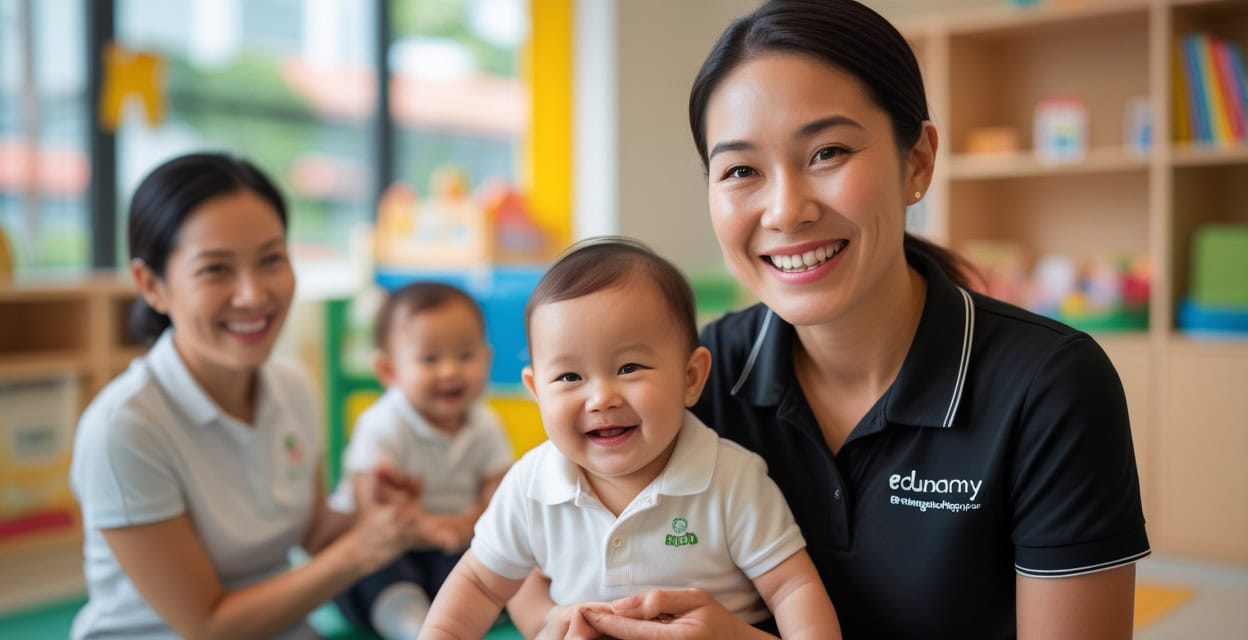
Attentive Care as Civic Craft EduNanny Singapore and the First Thousand Days

EduNanny Singapore: A Craft of Attentive Care for Singapore’s First Thousand Days
EduNanny by BUTLER is a human-centered, science-led approach to infant care and childminding designed for Singapore’s earliest days. Grounded in research, guided by professional training, and aligned with national policy, EduNanny seeks to protect and multiply precious moments of early development—moments that shape trust, resilience, language, and curiosity. This article expands on the EduNanny philosophy with practical guidance for families, caregivers, and communities, offering actionable steps you can apply from day one.
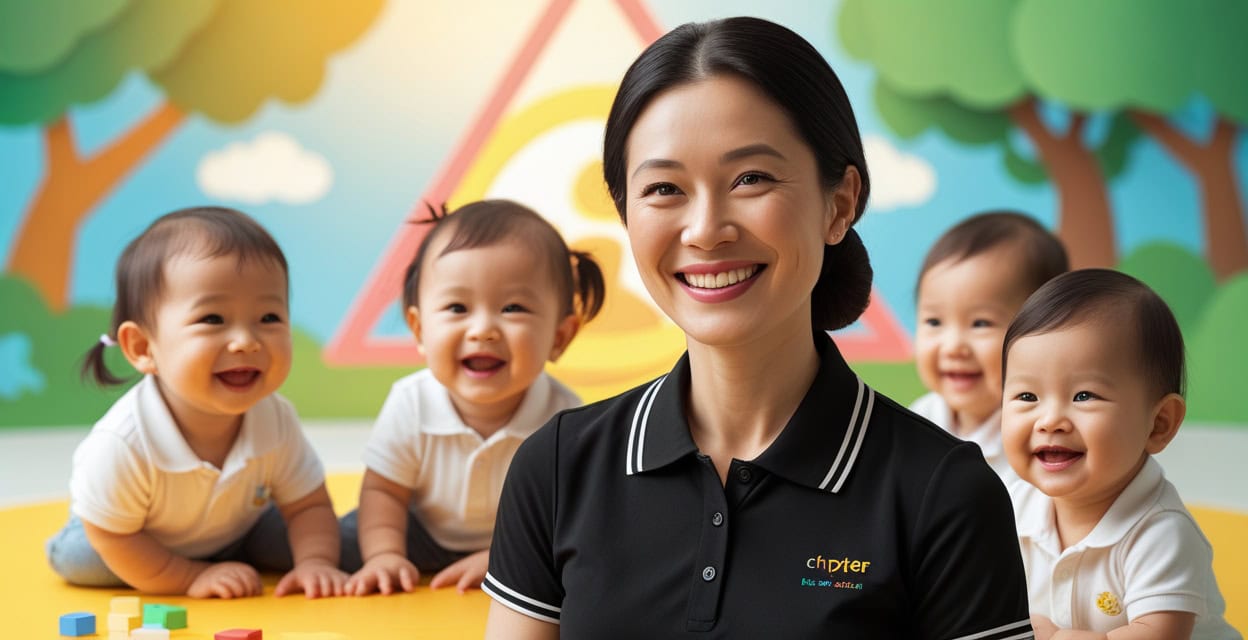
Chapter 1: The Attentive Triangle
Infancy thrives when child, caregiver, and parent are connected by attention. Attention is not a distraction; it is the curriculum. Here’s how to bring this triangle to life in everyday routines:
- Observe and narrate: When your infant gazes toward a toy, name the moment aloud: “You see the rattle. You’re curious.” This helps the baby connect perception with meaning.
- Endorse and extend: After noticing a cue, respond with a small step forward—offer the rattle closer, pause for the baby’s response, then continue with another simple action such as a happy face or a soft song.
- Bridge home and care: Use shared phrases during transitions (e.g., “We’ll ride the elevator together,” “Time for nap now”) to create predictability and emotional safety for your child.
- What families can do: Create a one-page “signal sheet” that lists common cues and the typical caregiver responses you prefer. Review it weekly with your EduNanny coach to keep alignment.
- What caregivers learn: Attuned handling, gentle pacing, and responsive timing—skills developed through video coaching, reflective practice, and constructive feedback loops.
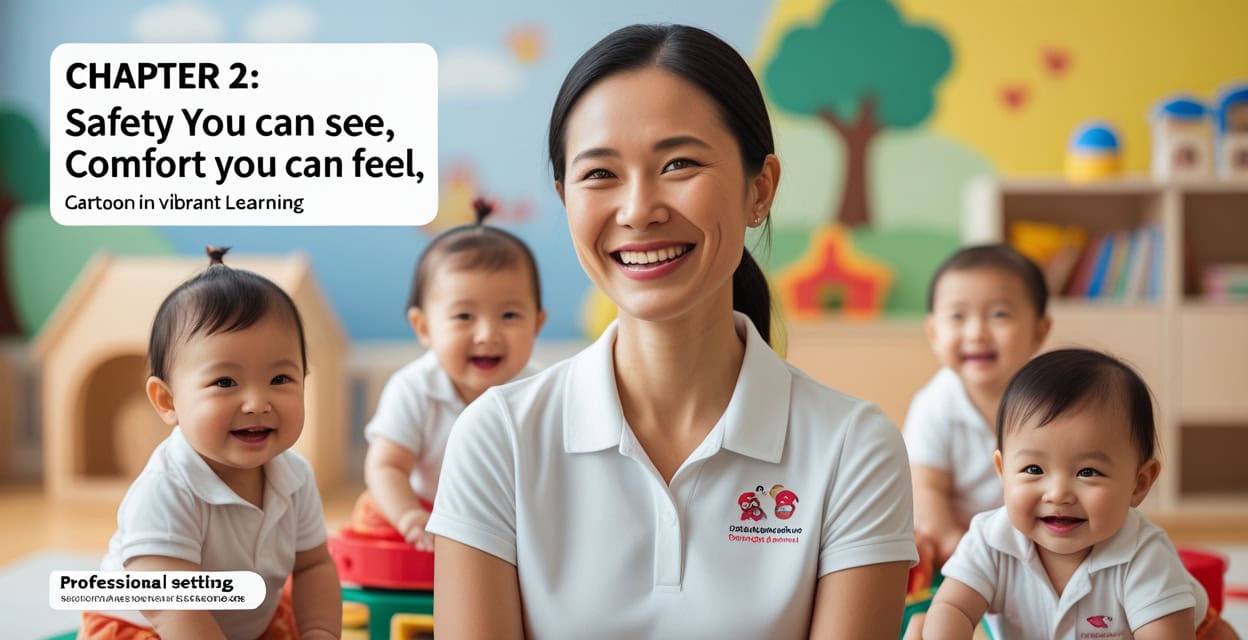
Chapter 2: Safety You Can See, Comfort You Can Feel
Architecture
Safety begins with the environment. EduNanny uses modern, uncluttered layouts, soft-edged materials, and infant-sized furnishings to pave safe exploration paths. Practical steps for families and centers include:
- Keep play areas free from small objects and choking hazards; store items that are not in rotation out of reach.
- Choose rooms with ample natural light and visible sightlines so caregivers can monitor multiple infants at a glance.
- Provide age-appropriate materials that invite hands-on exploration—soft blocks, textured fabrics, and safe mirrors.
Choreography
Care is a dance of transitions and presence. The 1:3 infant ratio is designed so caregivers can respond with full attention, not rushing through care moments. Practical tips:
- Implement a 15-second safety scan before any transition (e.g., from play to feeding) to ensure no hazards or abrupt changes.
- Use a consistent routine for sleep, meals, and diaper changes to reduce stress and support regulatory systems.
- Apply privacy-respecting CCTV for coaching and transparency, with strict access controls and parental consent.
- Document key moments (sleep windows, feeding cues, first steps) in a shared digital log that parents can view in real time.
Preparedness
Emergency drills, sleep checks, and feeding logs are part of daily practice. Turn preparedness into a habit:
- Run quarterly drills that simulate common emergencies and review procedures with families.
- Track sleep onset, duration, and duration consistency; discuss sleep routines with parents to align at home and care settings.
- Provide simple feeding cues charts for parents to observe at home and during visits.
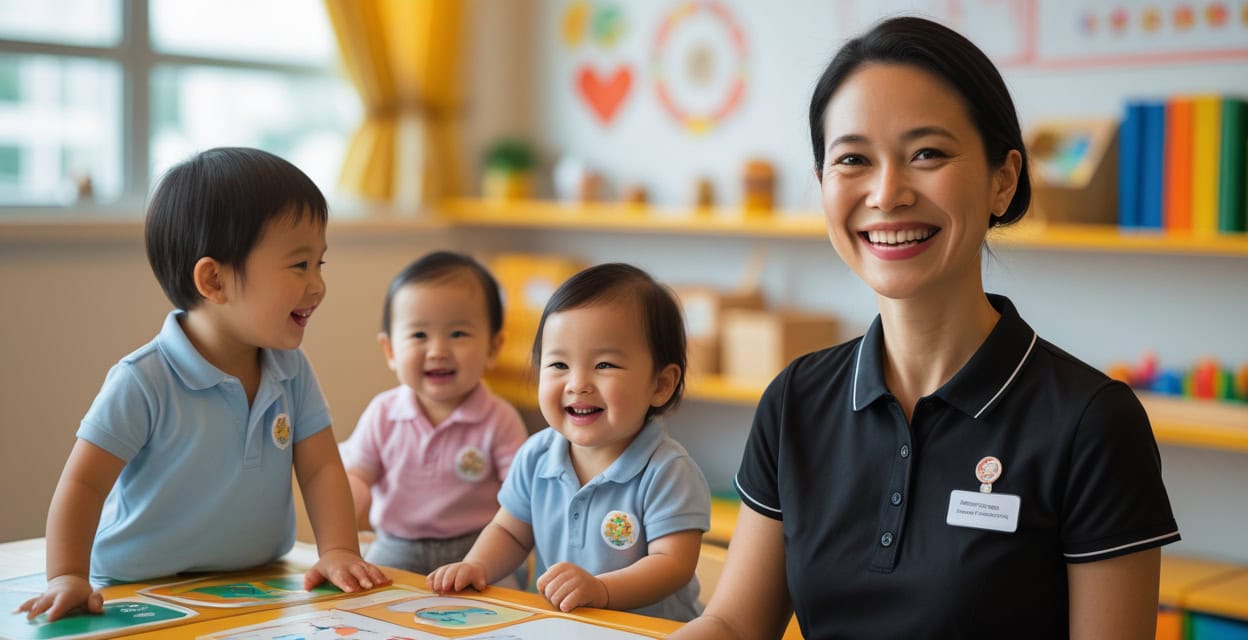
Chapter 3: The Singapore Sensorium: Development in Motion
Language and Music
Language is nourishment for the infant brain. Practical, culturally attuned strategies include:
- Provide soft bilingual narration during routine care (e.g., feeding, diapering, dressing) to strengthen language exposure.
- Sing gentle, repetitive songs during transitions and use cue-based rhymes that cue upcoming activities.
- Read picture books with expressive faces and point-to-point narration to support word comprehension and joint attention.
Movement and Floor Time
Movement builds core strength and neurological organization. Actions you can adopt:
- Offer safe, uncluttered floor space for free movement and exploration; rotate toys to sustain curiosity.
- Encourage tummy time with eye contact and varied textures to promote motor development and neck strength.
- Limit containment that reduces natural exploration; design “exploration zones” with age-appropriate challenges.
Sleep and Feeding Literacy
Responsive routines support regulation. Practical guidance:
- Learn your child’s sleep cues and build a predictable day-night rhythm that honors natural nap patterns.
- Respond promptly to hunger cues; offer age-appropriate feeding textures and pacing to support self-feeding development.
- Share a simple nap and feeding diary with caregivers to ensure consistency across environments.
Tiny Projects
Infants are little scientists. Encourage safe experimentation:
- 7-month-old goals: transfer a soft block with intent, peek-a-boo with a mirror, repeat a simple sound sequence with a rattle.
- Provide time, space, and a supportive adult to observe, name, and expand the baby’s ideas.
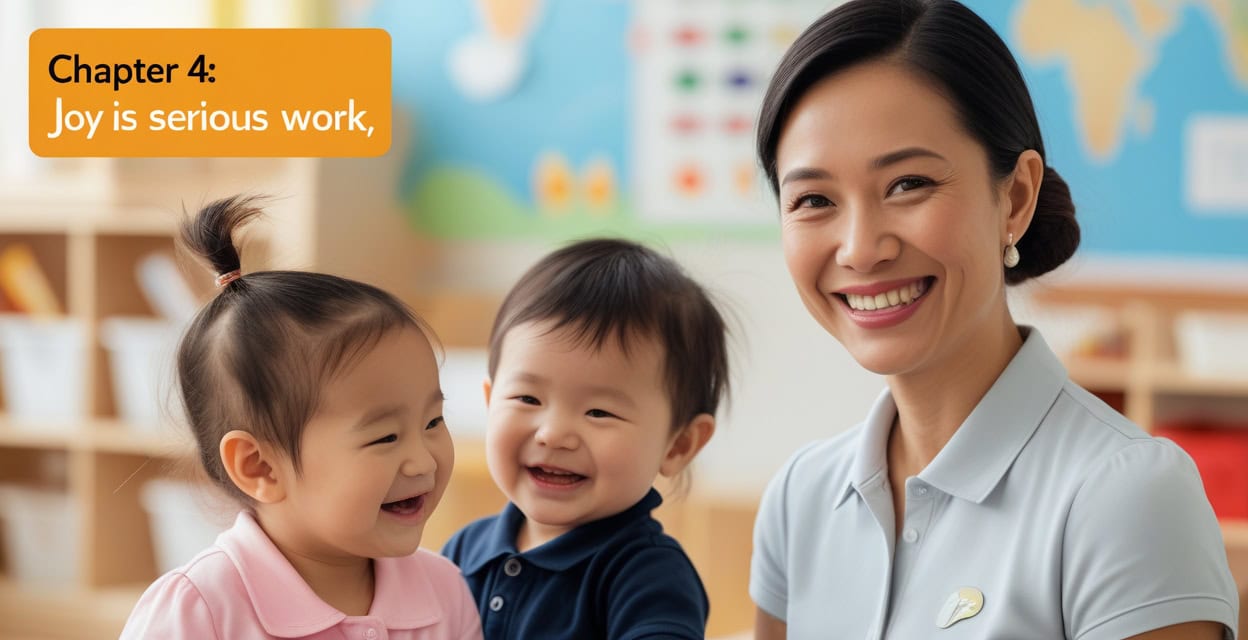
Chapter 4: Joy Is Serious Work
Joy is a driver of learning, not a reward after mastering skills. Make joy a measurable practice:
- Treat delight as data: monitor which activities elicit prolonged attention or repeated attempts, then tailor future play.
- Honor shy smiles, big laughs, and quiet moments alike. Create spaces where a slower hello or a soft bell can be heard and appreciated.
- Use calm, low-stimulation environments for children who need longer transitions; celebrate every small win with gentle, verbal encouragement.

Chapter 5: The Craft and Purpose of Childminders
Childminders are partners in families’ journeys, not backups. Here’s how EduNanny elevates the profession and how families can participate:
- Tailored recruitment: Look for temperament traits such as patience, curiosity, and steadiness, then support with structured skill-building (attuned handling, hazard mapping, and routine design).
- Coaching and feedback: Video-supported coaching helps refine floor practice and share progress with parents in clear, readable formats.
- Career pathways: Emphasize growth opportunities, mentorship, and formal recognition to elevate the profession as a valued civic craft.
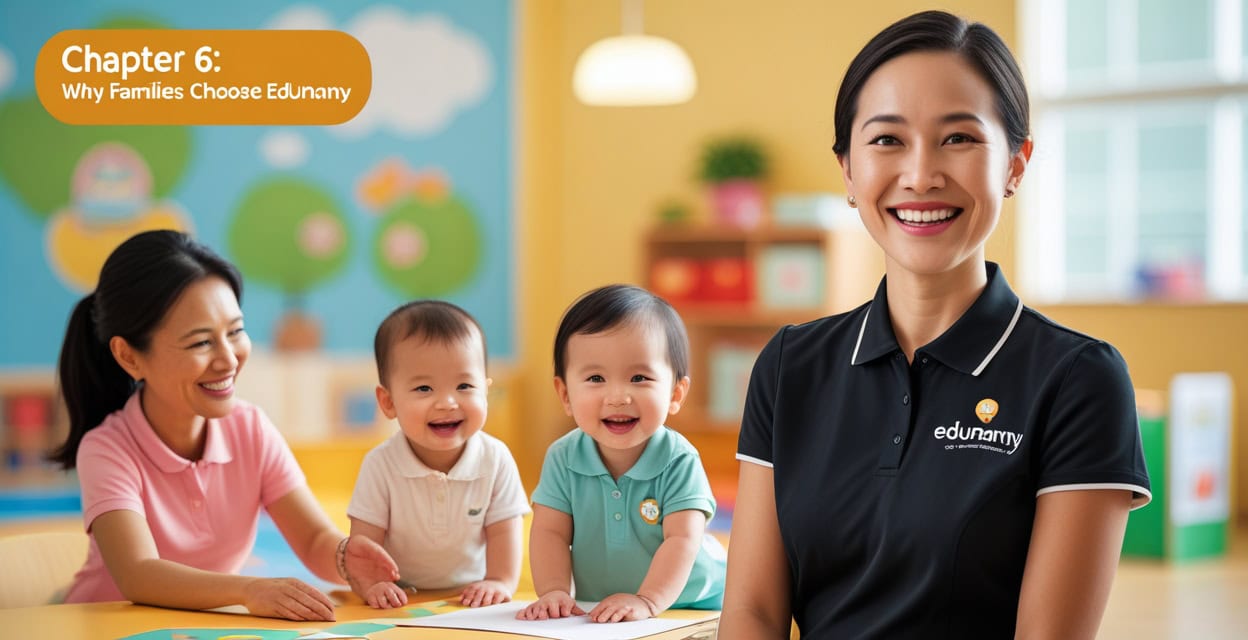
Chapter 6: Why Families Choose EduNanny
Below are the tangible benefits families experience and how to maximize them:
- Excellence and palpable quality at the door—calm, respectful routines, and consistent care.
- Near-home access with flexible center-based and home-based options islandwide.
- Distance support for coaching, virtual check-ins, and seamless transitions during care changes.
- Ultra-low 1:3 infant ratio for genuine attention and individual time with each child.
- Innovation CCTV with secure access and privacy safeguards to strengthen trust and collaboration.
- Affordability from $33/day with CDA/Baby Bonus support, designed to ensure broad access.
- A National Social Initiative under ECDA’s Childminding Pilot framework that protects families while growing caregiving talent.

Chapter 7: How EduNanny Fits Singapore’s Life
We design programs around real life: MRT commutes, morning rushes, and the balance between home and work. Practical alignment tips include:
- Choose a nearby EduNanny location to shorten commutes, stabilize naps, and reduce stress at drop-off.
- Synchronize home and care routines by sharing weekly plans with caregivers and establishing consistent language and cues.
- Plan transitions with a “handoff window” that includes a brief, shared narrative of the child’s mood and needs.

Chapter 8: Transparency and Partnership
Parents should never guess about their child’s day. EduNanny emphasizes transparency as a pillar of trust:
- Sleep windows, soothing language, and play arcs are shared and visible to families.
- Care narrative logs describe textures, first attempts, and progress in accessible terms.
- Technology serves as a bridge between home and care, not a replacement for human connection.

Chapter 9: What Makes Our Pedagogy Uniquely Singaporean
Singapore’s rich multiracial culture informs every moment of care—from lullabies to routines:
- Multiracial lullabies and culturally respectful greetings to elders enrich social learning and cultural identity.
- Tidy-up rituals are gentle, participatory, and cooperative, reinforcing social manners without stress.
- Punctuality is practiced, but never at the cost of a child’s nervous system; timing respects biological rhythms.

Chapter 10: Measuring Progress and Outcomes
We measure what matters most for infants’ growth and families’ peace of mind:
- Safety events prevented and near-miss learning opportunities.
- Minutes of face-to-face language and social interaction during care routines.
- Floor time achieved and infant-led transitions honored.
- Caregiver growth: professional development milestones and coaching outcomes.

Chapter 11: The Future: Near-Term and Long-Term Vision
EduNanny envisions a future where high-quality, trusted childminding is a standard path for families across Singapore. This includes stronger caregiver pipelines, enhanced home-care partnerships, and ongoing community building through pods where families share resources, advice, and support.
Closing: Who, What, When, Where, and How Childminding Matters
- Who: Infants who need steady hands and listening eyes; parents who deserve peace of mind; childminders who build beginnings with dignity.
- What: Attuned, safe, and joyful childminding—center-based, home-based, and supported at a distance—delivered with an ultra-low 1:3 ratio, modern layouts, transparent practice, and dignified professionalism.
- When: Monday to Friday, 7 a.m. to 7 p.m.—the true span of a working day—so mornings begin calmly and evenings return to you intact.
- Where: Islandwide Singapore, in community premises and home environments near your door, proximity as a core safety principle.
- How: Through the attentive triangle of child, caregiver, and parent; through safety you can see and comfort you can feel; through routines that respect biology and play that respects curiosity; through training, coaching, innovative CCTV, and continuous improvement; through affordability and government support; through a national initiative that grows both strong children and strong careers.
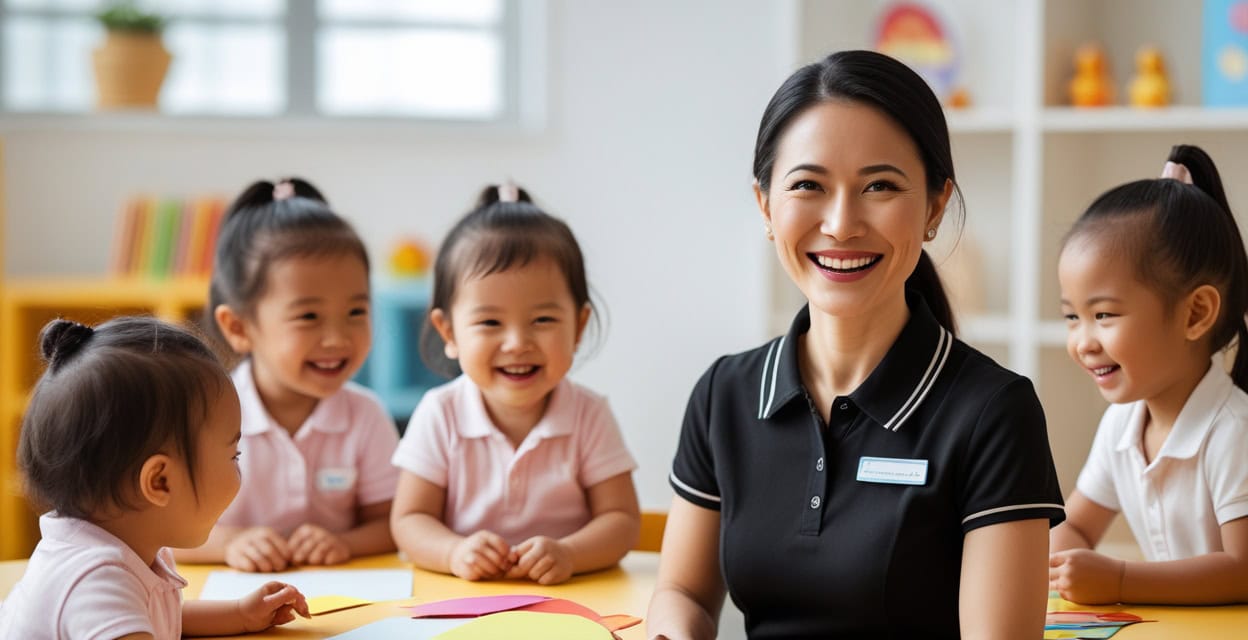
Conclusion
EduNanny is more than a service—it’s a civic art that honors beginnings. By centering attention, safety, development, and joy, we create environments where infants feel seen, parents feel supported, and caregivers feel valued. This is how a nation grows its future: one quiet minute, one safe transition, and one confident child at a time. Visit EduNanny.com or Childminding.EduNanny.com to learn more, arrange a tour, or enroll your child in a program that treats care as a craft and beginnings as sacred.
To learn more or to enroll:
– EduNanny.com
– Childminding.EduNanny.com
EduNanny by BUTLER. Designed for beginnings. Built for Singapore. Where every quiet minute becomes a bright tomorrow. Thank you.
- Practical action steps: Schedule a family-care consultation, request a sample daily plan, review the safety and privacy policy for CCTV, and prepare a one-page parent-caregiver protocol for your household.
- Key considerations for enrollment: proximity, caregiver-to-infant ratio, transparency tools, and alignment of routines between home and EduNanny.
SEO keywords: [#earlychildhoodcare, #infantcareSingapore, #childmindingSingapore, #educationthroughcare, #EduNannySingapore]
Ready to Experience Excellence?
Transform Your Family’s Journey
Discover Singapore’s leading infant care and childminding services. Expert guidance for your little one’s first thousand days.