Home safety planning when supervising a young child: the MSF neglect definition
The moment every parent of a young child recognises: the doorbell rings, or the bathroom needs you, and you have to leave the room. HealthHub's published home-safety advice gives a workable answer for that gap. Its Safe Home for Your Baby guidance — for a baby who is crawling, and for the nine to twelve months when a baby may start to walk, climb and pick up small objects — says to try to stay within an arm's reach, and if you need to leave him for a while, to place him in a safe place such as a playpen. [1]
The MSF neglect definition is not a stopwatch, and reading it that way is what turns ordinary parenting into alarm. MSF defines neglect as the deliberate or unreasonable refusal by a caregiver to provide a dependent with basic necessities, including supervision when required, to the extent that the dependent's health, safety or development is at risk. Set beside the home-safety rules, it tells you what to arrange. [2]
What MSF's definition actually covers
MSF's own list of examples describes care that is missing or wrong: being left in unclean or unsafe living conditions, medical needs not met, a child not given proper care or a level of care unsuitable for their age and development, deprivation of food over a period resulting in constant hunger, dehydration or malnourishment, and a child not protected despite a caregiver knowing they are being abused by others. [2]
One of those examples is squarely about supervision — a child being forced to do duties not suitable for their age, such as expecting a 5-year-old to care for a younger sibling alone. Note what the definition and the examples have in common: both describe an outcome, a child without care that age and development required, rather than a number of minutes. [2]
Where a supervision gap sits on MSF's spectrum
MSF presents child protection concerns as a spectrum. At the lower end are families under high emotional and financial stress who could benefit from more support; higher up are parents failing to provide adequate food, clothing or medical care; and at the most serious end, parents who deliberately cause serious injuries and are unwilling to work with community partners. MSF's Protective Service is the statutory authority that deals with those high-risk cases. [3]
MSF states that as far as possible children should stay with their families, and that a child may need an alternative environment only when the family environment becomes unsafe. Reporting on a September 2026 parliamentary reply and an MSF spokesperson, The Straits Times reported an average of 539 cases a year between 2022 and 2024 serious enough for the Protective Service to step in, and that MSF does not track young children found unsupervised in public places and assessed to need care and protection. [3] [4]
The moments that need a plan before they happen
Water is where the published rules are least forgiving, and each page states its own setting. In the bath, Safe Home for Your Baby says never to leave your baby unattended or alone in the bath, even for a moment, to keep everything within reach during bath time, and to always have a hand supporting him in the water, because babies can drown in as little as 5 cm of water. Its separate home-safety list for infants and young children adds that bathtubs, toilets and pails should never be left unattended, that the toilet cover stays down, and that water temperature is always tested before a shower head is turned on a child or a baby is lowered into the bath. [1] [5]
Pool and water-play rules come from Keeping your child safe, written for 12 to 24 months, and are about being in the water rather than the bathroom. There, an adult stays within an arm's length of the child in the pool to provide prompt help, and HealthHub says not to be distracted or lose sight of the child, avoiding distractions such as reading or a mobile phone. At social gatherings, adults can take turns to be the designated watcher, and if you must leave, take your child with you. The same page advises supervising children near the pool to prevent accidental unsupervised entry. [6]
The second reason to plan ahead is what a short gap actually exposes. HealthHub lists common childhood injuries as abrasions, cuts, scalds and burns; fingers caught in doors or drawers, fractures and dislocated elbows or shoulders; bruises, head injuries from falls and eye injuries; and swallowed objects, choking and accidental poisoning. Its injury-prevention article notes that most common childhood injuries happen at home, where young children spend most of their time, and that a home environment suitable for adults may not suit a growing child. [5]
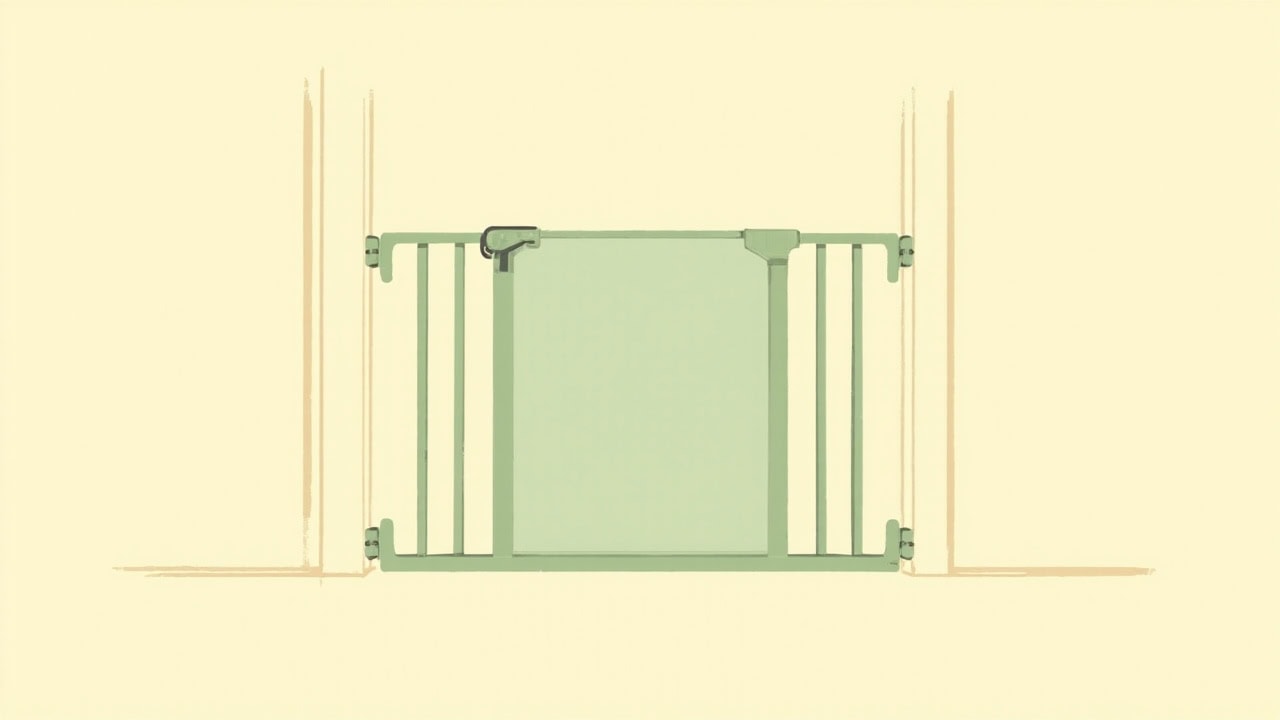
Its barriers advice — gates for kitchens or a playpen to keep a baby in, window grilles locked once a baby can climb, covered electrical outlets, furniture secured to the wall, child-proof locks and corner guards — is what makes a brief gap less risky. And for a child cared for by a relative or a babysitter, HealthHub's 12-to-24-month guidance says you have to ensure the caregiver follows your instructions as closely as possible. [5] [6]
What to write down, and how a concern is raised
HealthHub also asks that you keep a first aid kit at home, learn basic first aid such as treating scalds, cuts or choking, which require immediate attention, and keep your child's other caregivers informed on those actions as well. Our suggestion is to write that down before anyone takes over: a named watcher for each room, the safe place your child goes when you step away, what any sitter must not do, and where the first aid kit sits. This is preparation, not a guarantee that nothing will go wrong. [5]
If your concern is about a child who is not being cared for rather than about your own supervision arrangements, MSF's child protection system page directs people to the National Anti-Violence and Sexual Harassment Helpline on 1800-777-0000 or its online reporting form, and to the Police at 999, or SMS 70999, where there is imminent danger. And the honest answer to the question you started with: no MSF or HealthHub page sets a safe number of minutes. The line is whether a child was left without the care their age and development needed, to the point that health, safety or development was at risk — so for the next time the doorbell rings, plan a named watcher, a playpen or a child in hand. [3]
Read next
- Raising a child safety concern in Singapore: NAVH helpline 1800-777-0000
- ECDA partnership guide for parents: shared language with caregivers
Sources
- Safe Home for Your Baby
- Neglect – Ministry of Social and Family Development (MSF)
- MSF | Child Protection System
- An average of 539 child neglect cases a year in Singapore required authorities to step in | The Straits Times
- Common Childhood Injuries and Childhood Injury Prevention
- Keeping your child safe
EduNanny Editorial · AI-assisted research and writing, reviewed by our automated editorial team. Sources checked 2026-10-09. Featured image: AI-generated editorial illustration.