Your Baby Pulls Up: Supported Standing Play at 11 to 12 Months
A baby who is beginning to pull up does not need a training target. Prepare one clear play zone, stay close and follow a simple three-part example built around your baby's choices.
When your baby first pulls up, keep your response simple: clear one reachable play zone, stay close and let your baby explore at their own pace. The aim is comfortable, supported movement, not completing a standing exercise. This guide is for awake babies around 11 to 12 months who have begun reaching, crawling or showing interest in furniture.
HealthHub places trying to stand and walk with furniture support in the 11 to 12 month stage. For an individual baby, this is a possibility rather than a deadline. HealthHub’s infant development guide describes babies holding furniture as they explore this new position, so follow the attempts your baby makes rather than rushing to add the next one.
What Pulling Up Can Look Like
A first supported standing attempt may begin when your baby notices furniture, moves nearer and chooses to hold it. Some babies pause to look back or explore from a hands-and-knees position. Others may hold on without rising fully. These are all moments to notice, but none needs a score or a repeated attempt.
Your baby does not need to stand for you to recognise progress during play. Reaching, turning towards an object, moving to a stable surface and choosing to stop are useful cues for deciding what to offer next. Keep the exchange playful and let comfort guide the pace.
Keep the sitting milestone separate from this play. HealthHub advises consulting a doctor if an infant is not sitting unaided by 12 months. This advice concerns independent sitting and should not be turned into a deadline for pulling up or standing. HealthHub’s developmental guidance explains when to raise sitting concerns with a medical professional.
Clear One Reachable Play Zone
Kneel or crouch at your baby’s eye level and inspect the area from the mat up to the height they may reach while holding furniture. This matters because a safe floor is not automatically a safe standing area.
Cover electrical outlets, consider guards on reachable sharp corners and move breakable or small items well out of reach. Check possible climbing routes too, including a chair that could bring items within reach. HealthHub gives these as practical home safety measures for infants. HealthHub’s infant-proofing guidance also recommends viewing sharp corners from the baby’s level.
Choose one large toy intended for small hands. If it has a handle, look for a smooth curved shape, and make sure the toy is intact without small pieces that could break off. Before your baby begins crawling or pulling towards it, remove anything that could obstruct the route between the mat and the furniture. Check that the furniture is stable and will not slide or tip when your baby holds it.
Keep your baby awake and within arm’s reach throughout the activity. Stay beside them with your hands ready to respond, but do not lift or pull them upwards. Your attention protects the space while your baby’s own movement guides the play.
A Three-Part Floor to Standing Example
This illustrative round uses one large smooth toy, a firm clear mat and nearby stable furniture. Skip any part that your baby does not choose. There is no required distance, number of attempts or sequence to complete.
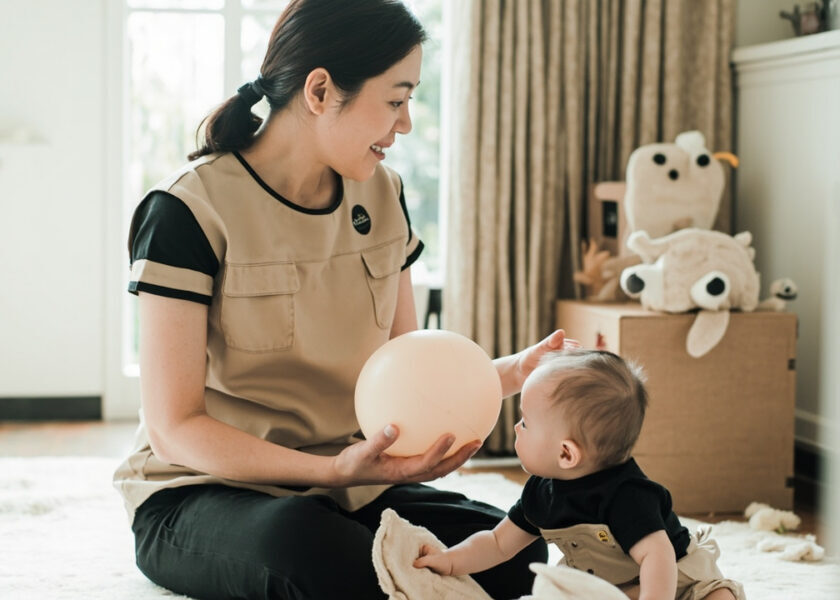
- Begin within comfortable reach. Settle beside your baby on the clear mat and place the toy where they can look at or reach it without stretching. Let your baby decide whether to reach, move closer, investigate another part of the space or pause.
- Offer a little more space. If your baby reaches successfully and remains interested, move the toy slowly a little farther away. HealthHub suggests inviting an infant to reach for an object that is gradually moved farther, which may encourage crawling or pulling towards it. HealthHub’s movement-play example does not prescribe a distance or guarantee a particular movement response, so make only a small change and return the toy to comfortable reach whenever needed.
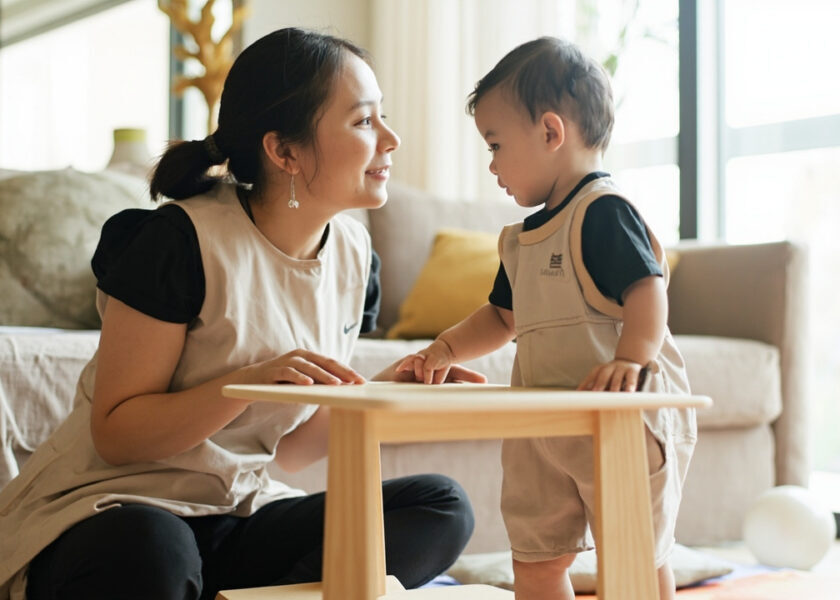
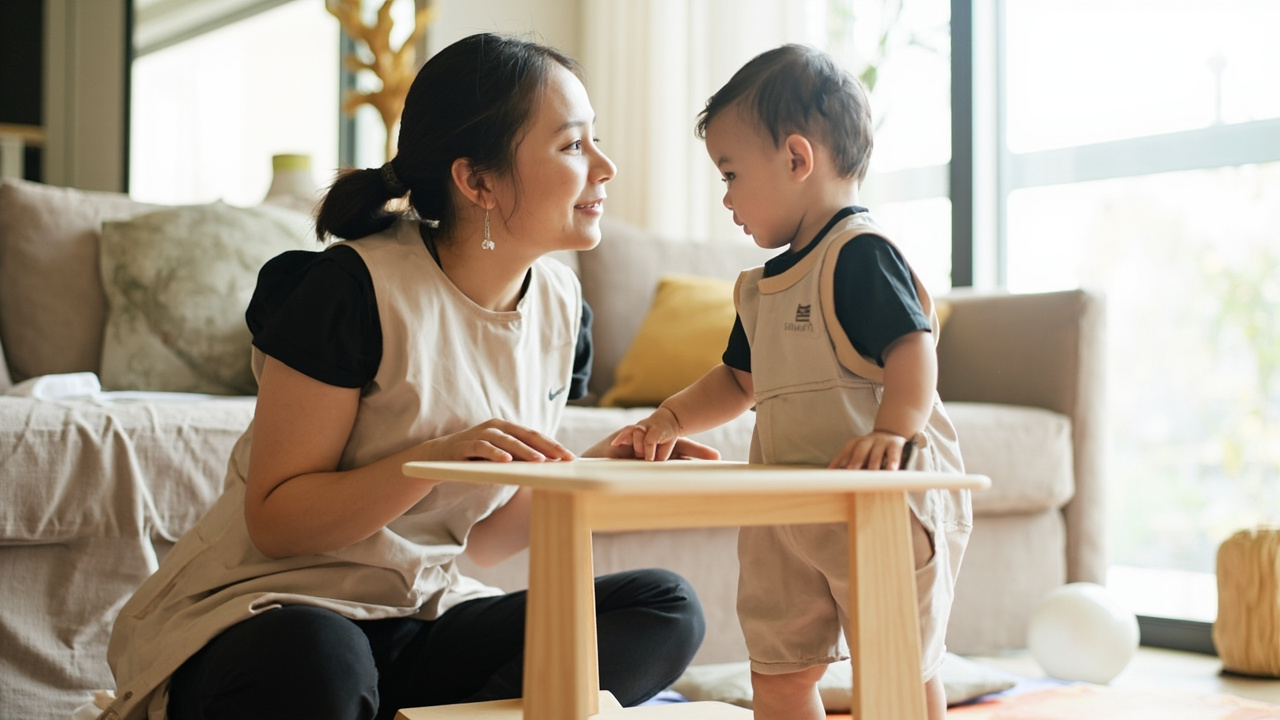
- Make room for a baby-initiated pull-up. If your baby moves towards the checked furniture and begins pulling up, stay within arm’s reach. Let their arms and legs do the work while the furniture provides support. When they choose to come down or the moment has had enough, return to the toy at floor level or finish the round.
Your baby may repeat the reach, move away, look back at you or ignore the toy. None of these choices means the activity has failed. The next part happens only when your baby shows interest.
Follow the Baby’s Choices
UNICEF describes free play as giving children opportunities to explore and do most things on their own, helping them build confidence and independence. Its guidance applies broadly to children rather than prescribing a standing exercise. UNICEF’s free play guidance nevertheless supports a useful principle for this round: children need room to make choices within safe limits.
For your baby, that choice may be to reach again, move towards the table, pause or leave the area. Notice what your baby does without turning the observation into a developmental test. You are providing a safe invitation, while your baby decides how far to take it today.
Sources and further reading
- The Beginner’s Guide To Taking Care of Your Infant: 7 to 12 Months · www.healthhub.sg
- What is free play and why should you encourage it at home? · www.unicef.org
The image in this article was generated with AI for illustration. It does not show an actual EduNanny staff member, child or facility.
Try the three-part round once and notice which part your baby chooses to repeat, change or leave.