How to Make a Small Infant Play Kit for Shared Care
Build a flexible kit from two or three familiar objects, then add a short caregiver note that explains your baby’s interests, cues and changing responses.
When you are preparing a baby for care with someone else, you want play to feel familiar without filling a bag with new toys. A small infant play kit can do that. Choose two or three ordinary objects your baby already notices, give each one a simple role and include a short note about what usually happens when the baby engages with it.
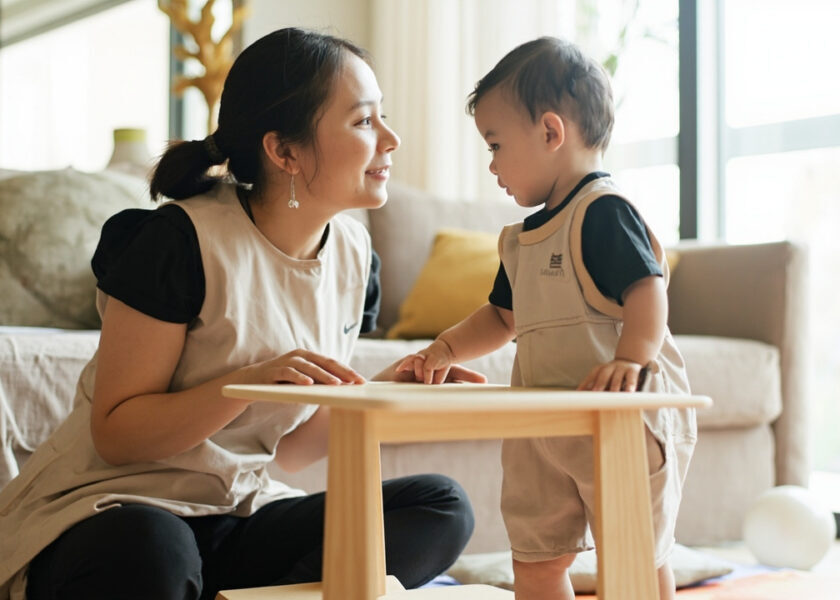
The kit is a starting point, not a script. The caregiver can offer an object, notice the baby’s response and decide whether to repeat, change or stop. That responsiveness matters more than completing a set of activities. A Center on the Developing Child at Harvard University explains that attentive relationships with plenty of back and forth interaction provide a strong foundation for learning and development. The object begins the exchange, but the adult responds to what the baby contributes.
This guide is written for the broad age range served by our EduNanny ECDA Childminding Pilot, which supports eligible Singapore Citizen infants aged 2 to 18 months who are not concurrently enrolled in an ECDA licensed infant care centre. The examples are adaptable, not fixed activities for every baby within that range.
Start with what your baby already notices
Begin by noticing repeated moments during ordinary play at home. Does your baby often look towards a particular cloth? Follow a slowly moved object? Reach for something and then look for it again? These observations are more useful than choosing toys from a generic infant activity list because they show where your baby’s attention already goes.
Write down one or two patterns you have noticed more than once. You might record that your baby usually watches a soft cloth before reaching towards it, or becomes still when a familiar sound is repeated. Keep the description brief. The aim is to give another caregiver a clue, not to attach a developmental label to a single moment.
Our pilot approach begins with each infant’s interests, comfort and readiness. It describes familiar objects, naming, shared stories, simple back and forth interaction and safe floor play as ways to support learning. The EduNanny FAQs also explain that activities are guided by the child’s age, current abilities, interests and readiness, together with family observations. This is why the same object can be offered differently from one day to the next.
Give each object one simple job
A compact kit works best when each item has a clear purpose. Use one object to invite noticing, one to invite a simple action and, only if your baby already shows interest in it, a third for naming or shared attention. This keeps the focus on the baby’s response rather than the number of things in the kit.
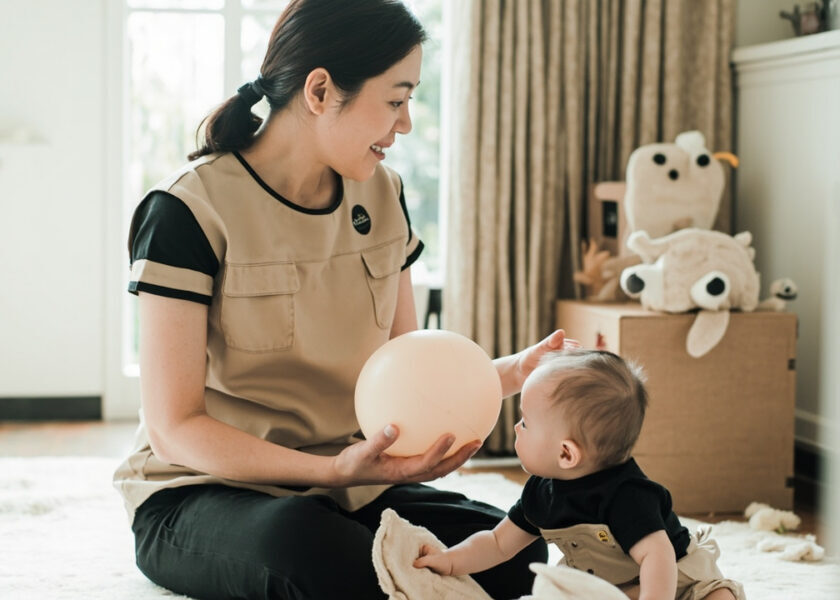
Here is an illustrative example for a baby who repeatedly notices a large soft cloth and a large matte ball during supervised floor play:
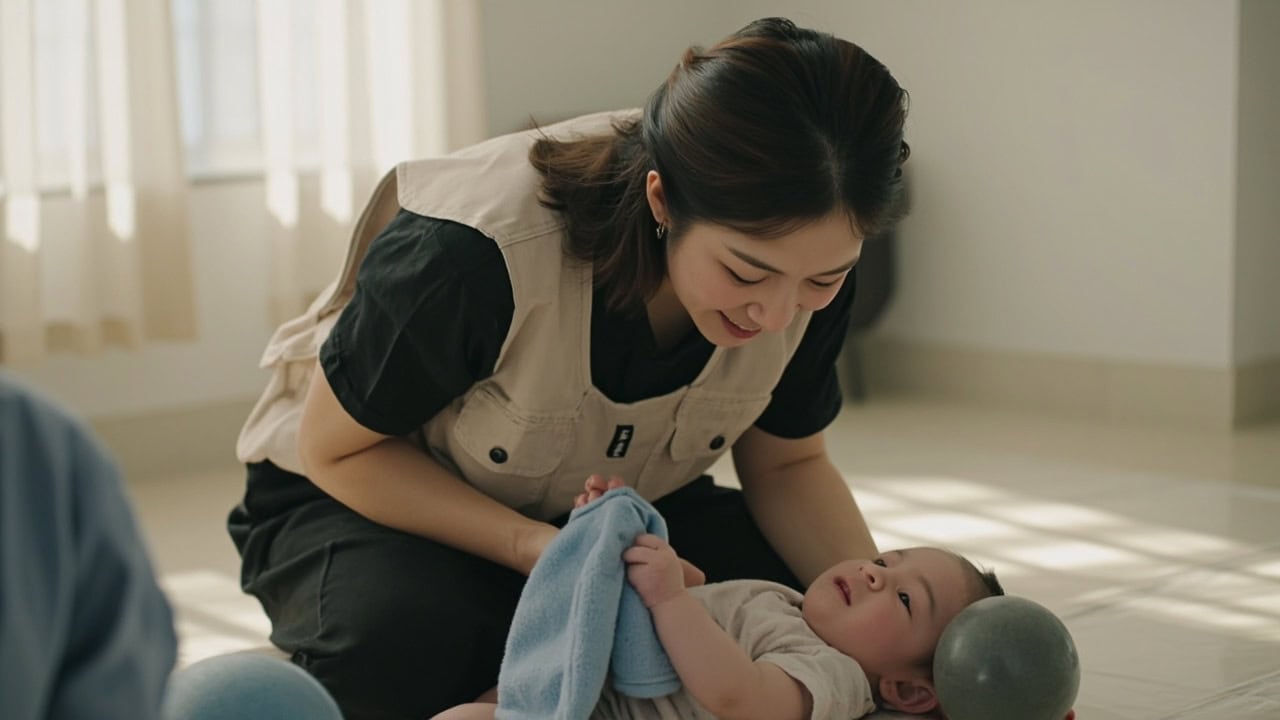
- For noticing: The caregiver holds the large soft cloth where the baby can see it, keeping the material away from the face and neck. The caregiver watches for a gaze, reach, movement or sound, then pauses before offering it again.
- For trying: The caregiver moves the large matte ball slowly within the baby’s safe reach. The caregiver notices whether the baby tracks it, reaches towards it, vocalises or turns away, then changes the exchange when the response changes.
- For connecting: Add one familiar object only if the baby already shows interest in it. The caregiver can name it, let the baby notice it or share a simple moment of attention. Leave it out if it does not add anything to the moment.
Before sharing any item, check that its size, condition and intended use suit your baby’s current abilities and the agreed care setting. Keep the play area clear and remain within reach. The object names above are examples, not a universal safe list for every infant.
At first, one exchange may be enough. If the baby responds with interest, the caregiver can offer the same object again. If attention shifts, the object can move away or be put aside. Play can then give way to feeding, rest or comfort without becoming a task to finish.
Write a note the caregiver can use
Another caregiver does not need a fixed performance. They need enough information to recognise what may happen and how to respond. Share familiar routines, favourite comforts, current interests and any communication your baby is already exploring. Explain that the note records your family’s observations and should change as your baby changes.
A practical note might look like this:
Caregiver note: At the moment, [baby’s name] often notices the large soft cloth and matte ball during supervised floor play. They may look towards them, reach, vocalise or look for the same object again. Please follow the response rather than expecting a fixed sequence. If attention shifts, pause or offer one familiar object. A slower pace can help. Please share what the baby enjoys and what makes the exchange easier or harder.
You can add a familiar word, sound or comfort that often helps, but keep the note based on what you have seen. It should not predict what the baby will do during care. When the caregiver shares an observation, record the detail rather than judging the outcome. For example, noting that the baby reached for the cloth and then looked towards the caregiver gives the next interaction more useful information than saying the baby did not finish the activity.
This approach supports a two way conversation. You contribute what you know from home, and the caregiver contributes what they notice during care. A specific observation can then help both of you decide whether to repeat an object, slow the exchange or choose something else next time.
Change the kit as your baby changes
A useful kit is easy to edit. Attention can shift with sleep, comfort, a new ability or the mood of the moment. You do not need to replace everything. The caregiver might bring the cloth closer, slow the ball’s movement, use one object for a shorter moment or set an item aside when it no longer holds attention.
Keep feeding, rest and comfort central. If the baby turns away, becomes uncomfortable or loses interest, pause the exchange rather than introducing another object. For example, if the ball usually brings a response but a slower movement does not on one day, record the change and try a different pace another time. The aim is not to make every play session identical. It is to make the next interaction easier to understand.
At your next care discussion, share three simple details: which object your baby returned to, how the baby responded and one change you would like to try. Over time, these short observations can become a useful record of what feels familiar now. The kit can stay small while the caregiver’s understanding grows more precise.
Sources and further reading
- EduNanny ECDA Childminding Pilot · EduNanny
- 5 Steps for Brain-Building Serve and Return – Download Resources · developingchild.harvard.edu
- Frequently Asked Questions · EduNanny
The images in this article were generated with AI for illustration. They do not show actual EduNanny staff, children or facilities.
Notice one object or routine your baby returns to, then prepare one simple exchange to try during supervised play.