Prepare a Care Brief for the EduNanny Know Your Child Conversation
A focused care brief can give a Know Your Child conversation practical shared context about routines, cues, preferences and updates. Here is how to prepare a brief on one page, use it during a visit and keep it useful as care begins.
Before a childminder cares for your infant, you may be holding many details in your head: the usual feeding routine, the way your baby asks to be held, the sounds that usually mean settling down, or the toy that brings comfort. The most important details are practical. Make them easy for the childminder to understand and use in everyday care.
Our Know Your Child conversation gives families considering the EduNanny ECDA Childminding Pilot time to discuss routines, feeding, sleep and development goals. A few notes prepared beforehand can help you share the details that matter and give the childminder useful questions to explore with you.
The official ECDA Childminding Pilot information identifies EduNanny by Butler as one of the operators appointed to provide infant childminding services under the scheme.
Keep the brief focused
A brief should not try to tell the childminder your infant’s whole history. Its job is to make everyday care easier to understand. Write down what usually happens, what your infant may be communicating, which family preferences you would like respected and how you would like information shared.
At EduNanny, we plan care around each child’s routines and stage of development. Understanding familiar habits and family preferences helps shape that care plan. Your brief brings those details together so they can be discussed, clarified and revisited as your baby grows.
Keep the tone factual and specific. Instead of writing that your baby is a difficult sleeper, you could write, “Usually needs a quiet feed and a few minutes of being held before settling.” Instead of saying that your baby hates bath time, note which part of the routine is uncomfortable and what usually helps.
Four sections to include in your brief
Use these four headings to organise your notes. They are a practical preparation tool, not an EduNanny form. You can keep each section to a few short lines.
1. What is our usual routine?
Start with the rhythm that matters to your family. Include waking, feeding, sleep, settling and any regular sequence your infant usually follows. You do not need to create a precise timetable. A useful note explains the usual order and where a flexible response may be needed.
For example, you could write: “Morning feed usually follows waking. Before a nap, a familiar song and a few minutes of being held often help my baby settle. Please tell us if a different approach works better.” This shares a familiar pattern while making room for the childminder’s observations.
2. What might my infant be communicating?
Describe observable cues, the context in which you notice them and the response that usually helps. For example, you could write, “Turns away when I continue talking; slowing down and offering a quiet cuddle usually helps.” Keep the focus on what you have observed in your child rather than assigning a fixed meaning to a behaviour.
Invite the childminder to add what they notice. If the same cue appears in a different situation, compare the context and what helped. A note that changes with your shared observations is more useful than a label such as “does not like noise.”
3. What preferences should be respected?
Record the choices your family would like understood. These may include a preferred settling method, a familiar object, a language or song used consistently, or your usual response when your infant becomes overwhelmed.
Separate firm preferences from points that can remain flexible. For example, you might explain that your family consistently speaks to your infant during feeds, while the settling method may depend on the child’s mood and the setting. A preference is easier to follow when you explain it clearly and say why it matters.
4. How should we keep each other informed?
The final section is about communication. Decide what information you most need and how updates should be arranged. Our daily updates and routine communication help you keep track of feeding, rest and your child’s day. You can use this as a starting point for asking what will be shared, when it will be shared and which channel will be used.
You might ask whether updates cover feeds, sleep, comfort, activities and any change in routine. Also decide what should happen if your infant seems unwell, if a usual routine does not work or if a preference needs to be reconsidered. The childminder should be able to explain what they will communicate and how the family should respond.
Make the brief a shared agreement
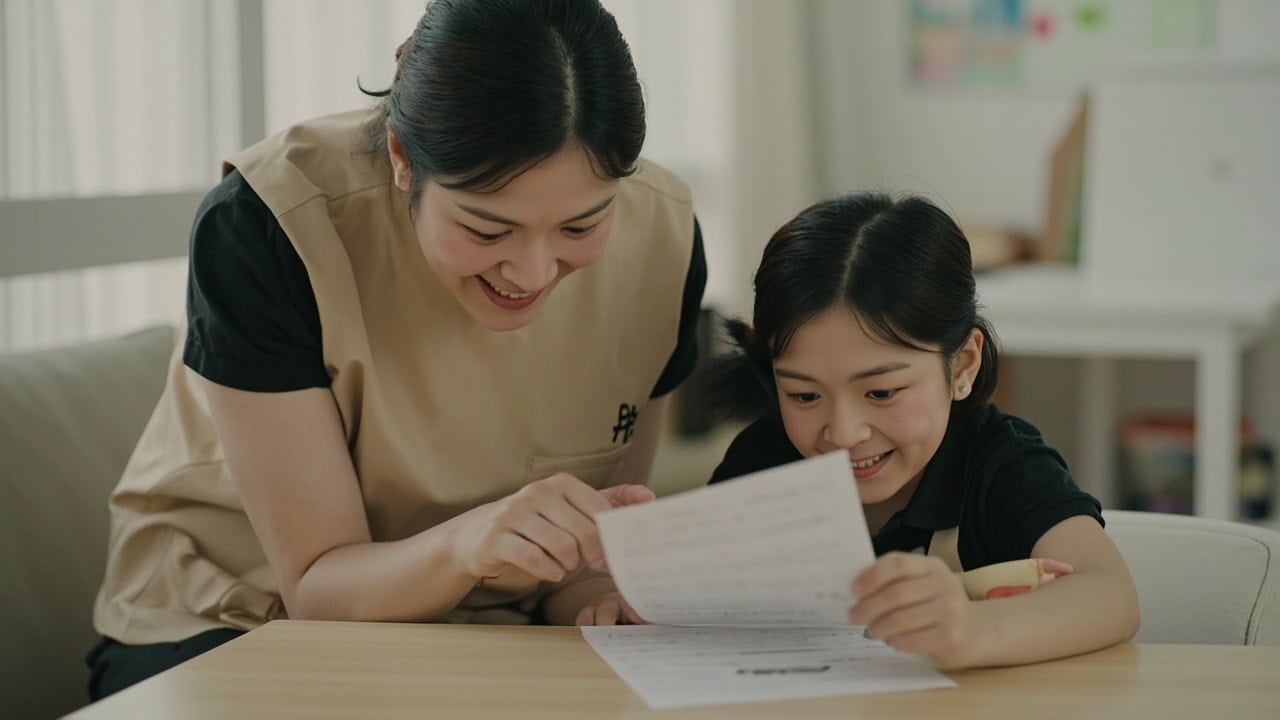
After you prepare the page, bring it to the conversation rather than treating it as information you simply hand over. Read through each section with the childminder. Ask which points are clear, which need more explanation and which should be checked in practice.
For example, you and the childminder may mean different things by “settles after a nap.” Ask what usually happens after a short nap, what a longer nap looks like and what the childminder will try if the usual sequence does not work. This turns a written routine into shared understanding rather than a simple handover.
Our pilot pathway places a Know Your Child conversation before families confirm the care plan and enrolment details. After care begins, families are encouraged to stay connected through updates. That sequence makes the brief a useful reference for later conversations: you can mark what stayed the same, what the childminder noticed and what should be added next time.
Use the visit to check the brief
We encourage families to meet the childminder and visit the setting before deciding on a pilot arrangement. Bring a copy of your brief and use the visit to explore how a familiar routine could work in that environment.
During the visit, ask the childminder to explain one routine in their own words. Choose one cue and ask what the childminder would notice. Discuss a preference that matters to you, then ask whether it can be followed consistently in the care environment. These questions help reveal whether your expectations are shared.
Also confirm the practical details of enrolment. EduNanny says a five day trial can be arranged after a visit under the pilot terms, but availability and the full agreement still need to be confirmed. Its Frequently Asked Questions describe the pilot as separate from private nanny care and explain that the full contract begins after the trial and remains valid until the child turns 18 months old. The pilot’s fees, eligibility and terms should not be assumed to apply to a different EduNanny service.
Leave the visit with a brief on one page, a shared understanding of one routine and an agreed way to keep the brief current. Then ask one final practical question: “When should we review this brief, and what should each of us bring to the next update?” This gives the Know Your Child conversation a clear next step before care begins.
Sources and further reading
- EduNanny ECDA Childminding Pilot · EduNanny
- About Us · EduNanny
- Frequently Asked Questions · EduNanny
- ECDA | Childminding Pilot for Infants · www.ecda.gov.sg
The images in this article were generated with AI for illustration. They do not show actual EduNanny staff, children or facilities.
Every family has different care needs. Speak with EduNanny to discuss care that is right for your child.