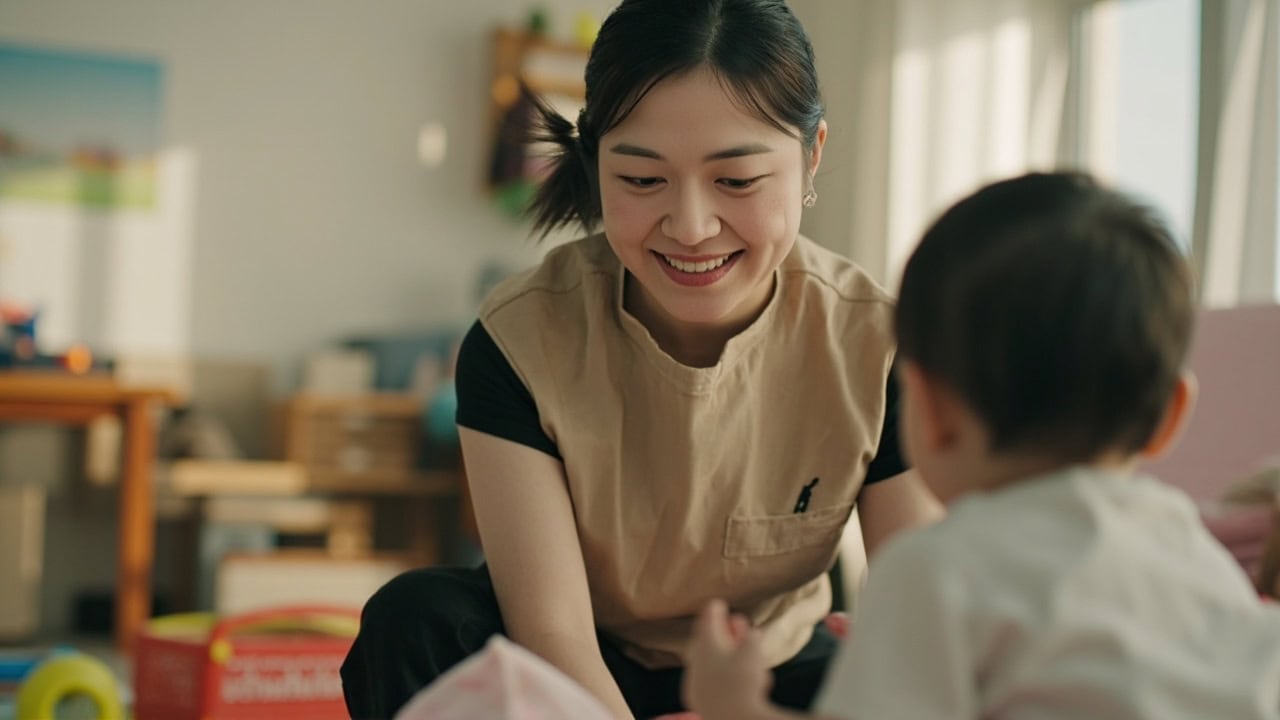
What Individual Attention Looks Like in Infant Childminding
Individual attention takes shape in the small exchanges of a baby’s day. For parents choosing childminding, knowing what to notice can make a visit more useful.
On a visit to a childminding setting, there is plenty to look at: the books, the toys, the space where your baby will rest. Alongside those practical details, watch the exchanges between the adult and the children.
They may begin with very little. A baby makes a sound; the childminder answers and pauses. An infant reaches towards a picture; the adult follows that interest and names what they are looking at. These are simple examples of individual attention, and they give you something concrete to look for when choosing care.
For parents considering Singapore’s ECDA Childminding Pilot, the question is how that attention will work for their child within a small group.
A small group, with each child in mind
Under the pilot, each childminder may care for one to a maximum of three infants at a time, as set out in the Ministry of Social and Family Development’s announcement. This is shared care. The childminder’s attention moves between the infants, so it helps to ask how many will be in the group when your child attends.
The useful detail is how the day is organised around those infants. Feeding, rest and play may fall at different times for each child. Ask the childminder to talk you through the arrangement, including what happens when several infants need attention at once.
Learning in the exchanges
A quiet moment with a board book, for example, gives a childminder a chance to follow a baby’s gaze, name the object on the page and wait to see what catches the child’s attention next. The exchange can grow from the baby’s interest rather than an adult’s plan to finish the book.
The Center on the Developing Child at Harvard University describes this kind of interaction as serve and return. A child offers a sound, gesture or look, and an adult responds. Its guidance explains how attentive exchanges support the foundations of learning and development, with time for the child to take a turn.
That gives parents a useful way to think about early learning. The activity matters, but so does what the adult does with it: noticing the child’s interest, responding and allowing the exchange to continue. For an infant, a few attentive moments with a familiar object can offer plenty to explore.
Our EduNanny pilot approach includes stories, songs, familiar objects and opportunities for movement, guided by each infant’s readiness. The aim is to make those experiences part of ordinary care. There is no need to turn every activity into a test of how quickly a baby is progressing.
Getting to know your baby
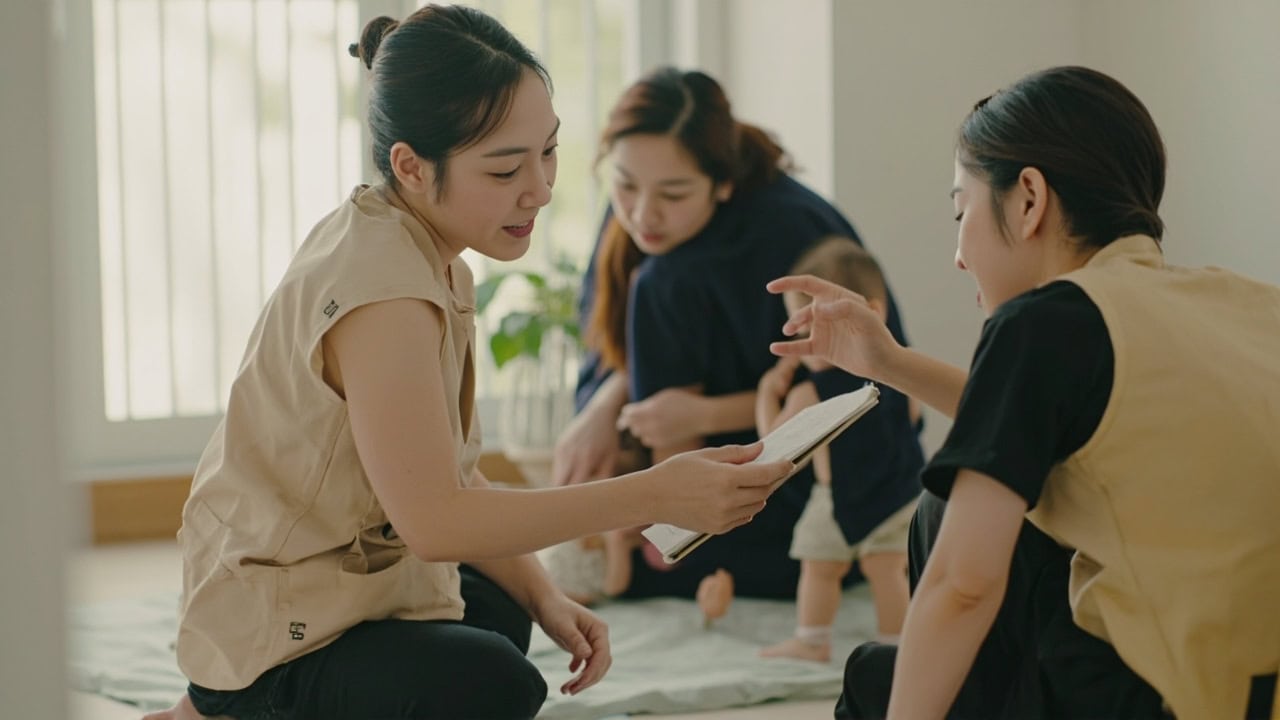
Parents know things about their baby that a new childminder has yet to learn. At EduNanny, the Know Your Child conversation covers routines, feeding, sleep and development goals. It is a place to share those details before care begins.
You might mention a familiar song your baby enjoys, how they usually show tiredness or what has changed in their routine recently. These details give the childminder something specific to discuss with you, rather than leaving both sides to rely on a general description of your child.
The conversation can continue through care updates. Alongside feeding and rest, you could ask what interested your baby that day or how they responded to an activity. You can share what you have noticed at home, too. Over time, those exchanges give both adults more detail to work with.
What to look for on a visit
With that picture of the day in mind, a visit becomes more than a tour of the room. You have a reason to watch how the childminder responds and a few practical situations to discuss. Useful questions include:
- How would you manage the infants’ different routines? Ask the childminder to talk you through feeding, rest and play when the group’s needs overlap.
- What would you do if my baby became unsettled? Discuss the comfort they are used to and how the childminder would keep you informed.
- What will you share with us about the day? Agree how updates will reach you and what information would help you understand your baby’s experience.
EduNanny’s parent FAQs encourage families to meet the childminder and visit the setting before deciding. A five day trial may be arranged after the visit under the pilot terms; ask about availability and the full agreement.
If you are considering the subsidised pilot, check eligibility as well. It is for Singapore Citizen infants aged two to 18 months who are not concurrently enrolled in an ECDA licensed infant care centre. Private nanny care is a separate service, so confirm which arrangement you are discussing.
The room and its equipment matter. So does the adult who will use them with your child. Watching how an exchange unfolds, asking how the day is organised and sharing what you know about your baby can help you picture the care they will receive. That is where a phrase such as individual attention starts to mean something you can recognise.
Sources and further reading
- ECDA Appoints Three Operators for New Childminding Pilot for Infants · Ministry of Social and Family Development
- 5 Steps for Brain-Building Serve and Return · Center on the Developing Child at Harvard University
- EduNanny ECDA Childminding Pilot · EduNanny
- Parent FAQs · EduNanny
The images in this article were generated with AI for illustration. They do not show actual EduNanny staff, children or facilities.
Arrange a conversation with EduNanny