Before She Knows It’s a Picture: How Shared Book Play Begins With Following a Baby’s Eyes
The Circle She Keeps Coming Back To
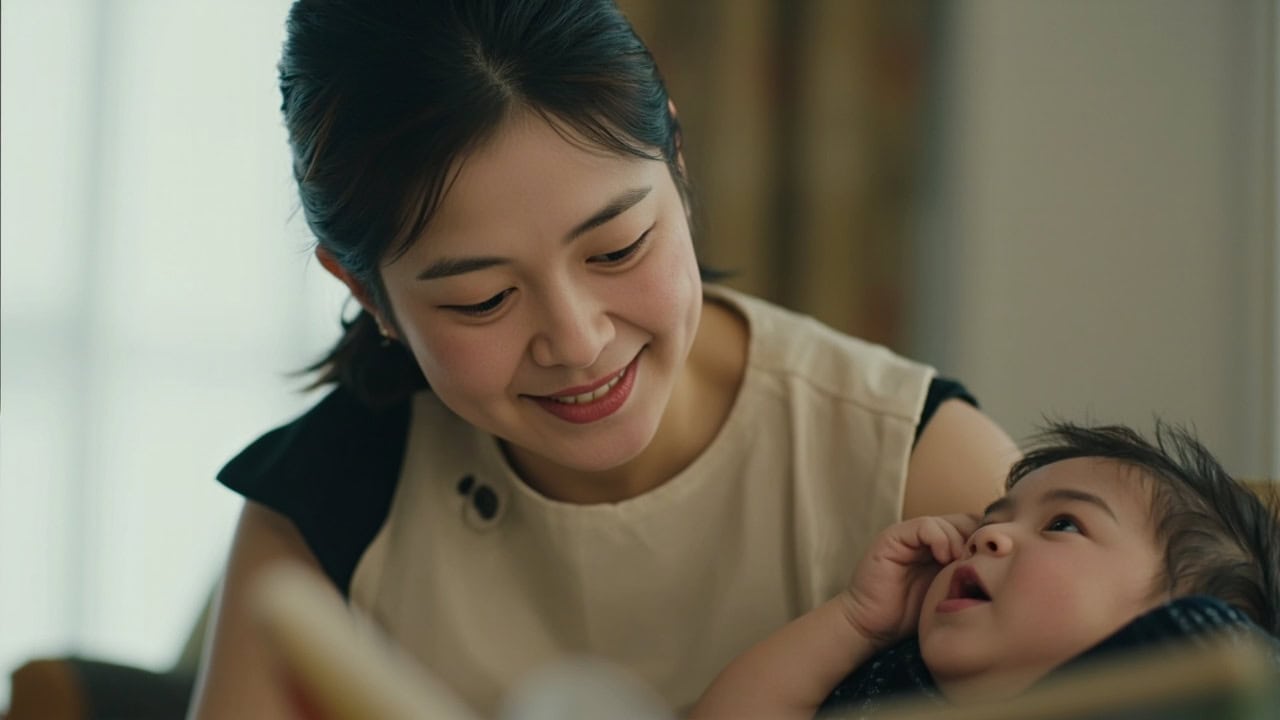
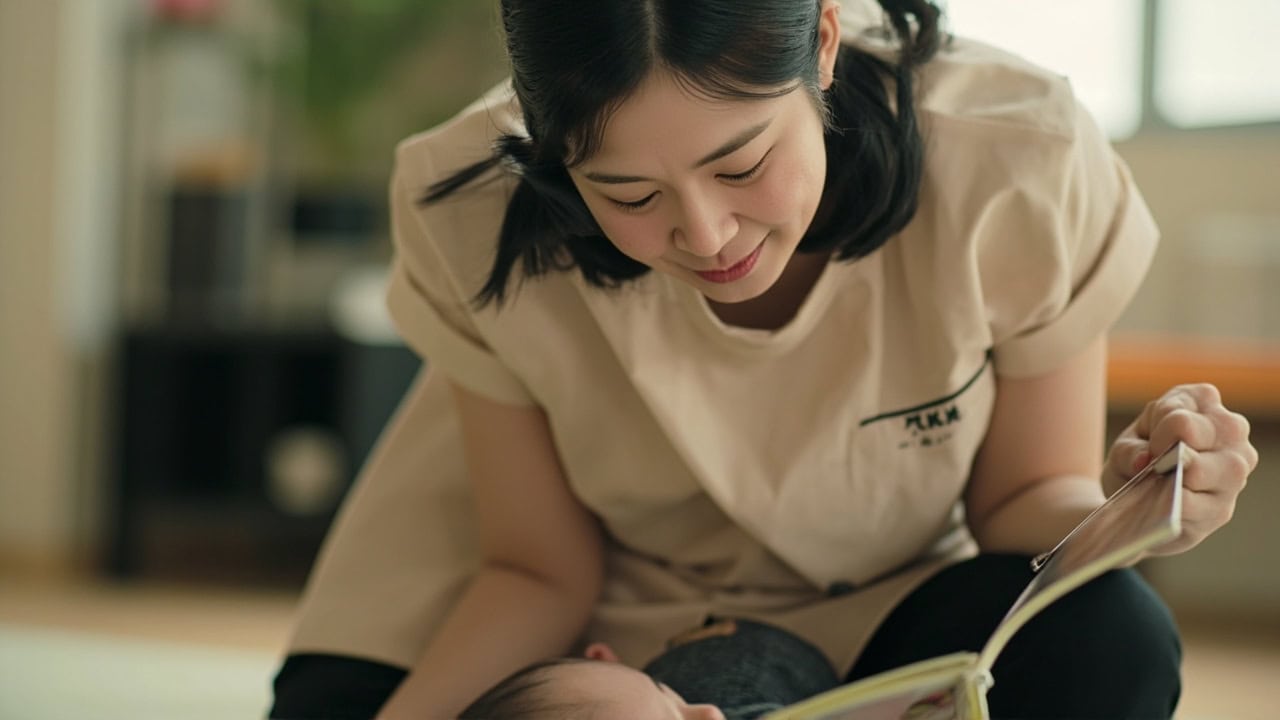
On a Tuesday morning a childminder sits on a low mat with a nine-month-old girl and a board book. The page has four pictures: a red apple, a blue boat, a yellow circle, and a green leaf. The girl does not point. She does not name anything. She looks at the yellow circle. She looks away. She looks back at the yellow circle. The childminder pauses. She says, quietly, “Yellow.” She waits. The girl looks away toward the edge of the page. Only then does she turn the page.
That pause — that deliberate choice to name what the baby noticed, once, and then wait — is not a technique borrowed from a manual. It mirrors the practice described in UNICEF’s guidance for 9-month developmental milestones: identify the object the baby notices, name it once, and build a small story around it. In a premium, low-ratio infant care setting, that kind of patience is not a luxury. It is the everyday texture of how shared book play is meant to unfold.
Most of the time, picture-book time with an infant can easily become something that happens to a baby rather than with her. Pages turn on a schedule. Words arrive in a steady narrated stream. The baby looks where the adult points. But the practice the UNICEF parenting guidance describes — following the baby’s eyes, naming what she notices, waiting — requires something harder: restraint. It requires a caregiver to slow down and let the baby’s attention lead.
Quiet Looking Is Real Work
Developmental research gives this practice a name and a reason. A peer-reviewed review of infant visual attention and object recognition notes that how a baby allocates her looking time is not random — it reflects active processing, the brain building connections between what she sees and what she already knows.
In other words, when a nine-month-old returns her gaze to the yellow circle again and again, she is doing something. She is noticing, comparing, and filing away a first impression. The childminder who follows that gaze and names the colour is not interrupting this process. She is completing it — giving the baby’s internal work a sound to attach to.
UNICEF’s collection of 21 learning activities for babies and toddlers reinforces this responsive principle: name what the baby points to or looks at, rather than labelling on your own schedule. The shift is small in words but significant in meaning. The adult stops being the narrator and becomes a mirror, reflecting back what the baby has already found interesting.
What Low-Ratio Care Makes Possible
Interest-led shared book play sounds simple in description and is genuinely demanding in practice. To follow a baby’s gaze, you need to be watching her face, not managing another child’s needs at the same time. You need to notice the moment her eyes leave the yellow circle before you have already started to speak. You need to resist the pull to name every picture on the page because the morning routine includes reading three pages.
This is where the structure of infant care quietly shapes the quality of every interaction. In an EduNanny small-group setting, the childminder-to-infant ratio is 1:3. That ratio creates room for something that is hard to manufacture in a crowded room: the time to sit with one baby and a book and truly watch. She can catch the flicker of attention, the half-second hesitation before a look away, the return to a favourite image. She has the time to let the book breathe.
UNICEF’s 9-month milestones page advises caregivers to create stories around the pictures a baby notices — to weave a small, flexible narrative around what the child has already chosen to look at. This kind of responsive storytelling asks for attention to one child at a time, and that attention is simply easier to give when the group is small.
From Looking to Recognising
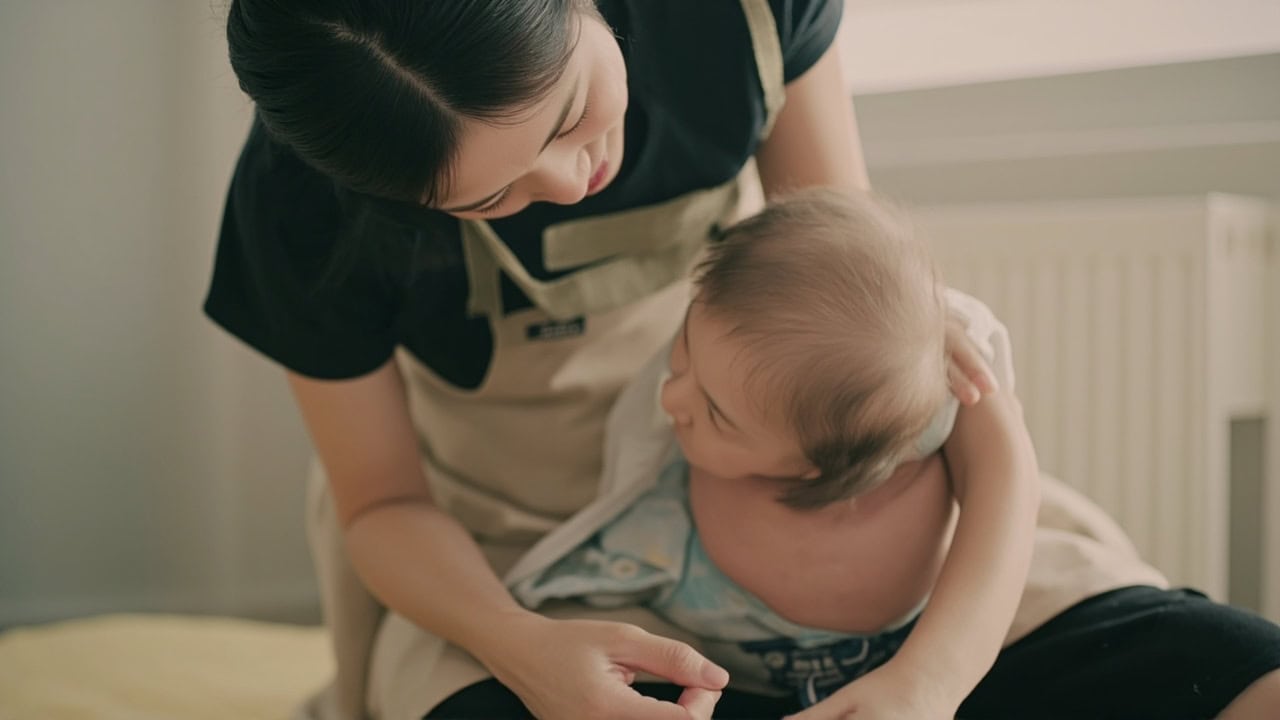
Research on infant visual attention describes how babies move from looking at an object to recognising it. The process is gradual and uneven. A nine-month-old may look at a yellow circle with the same sustained interest she gives to a face. She is not yet naming it. She is doing the earlier, more foundational work of categorising: this is a thing, it has a colour, it is separate from other things on the page.
The childminder’s role in this stage is not to rush the baby toward words. It is to hold steady — to name the colour once, warmly, and leave it there. A second naming does not accelerate understanding. What builds the connection between looking and knowing is repetition at the baby’s pace: the same image, the same name, the same patient pause, session after session.
Over weeks, something shifts. The baby begins to look toward pictures more deliberately. She may reach, or lean, or vocalise when a familiar image appears. These are not reading milestones. They are attention milestones — and they are the ones that make reading possible later.
A Gentle Question to Ask After a Week
After a week of shared book play, a parent might ask the childminder something like: “Which picture did she keep coming back to this week?” The answer will tell you whether picture-book time is following a schedule or following the baby. If the childminder has been watching, she will know. She will have noticed which image the girl returned to, how long she looked, and when she started to reach for it.
A second useful question: “Did you notice if she ever looked away before you turned the page?” This is a quiet way of asking whether the practice UNICEF describes — name once, wait for the look away — is actually happening. It is not a test. It is a conversation that keeps the practice visible and consistent.
These questions work best when they are asked without expectation. Babies vary. One infant at nine months may show strong visual preferences and return to the same picture for several sessions. Another may move quickly from image to image, showing interest in variety rather than repetition. Both responses are valid. Both benefit from a caregiver who is watching rather than performing.
What You Are Really Asking For
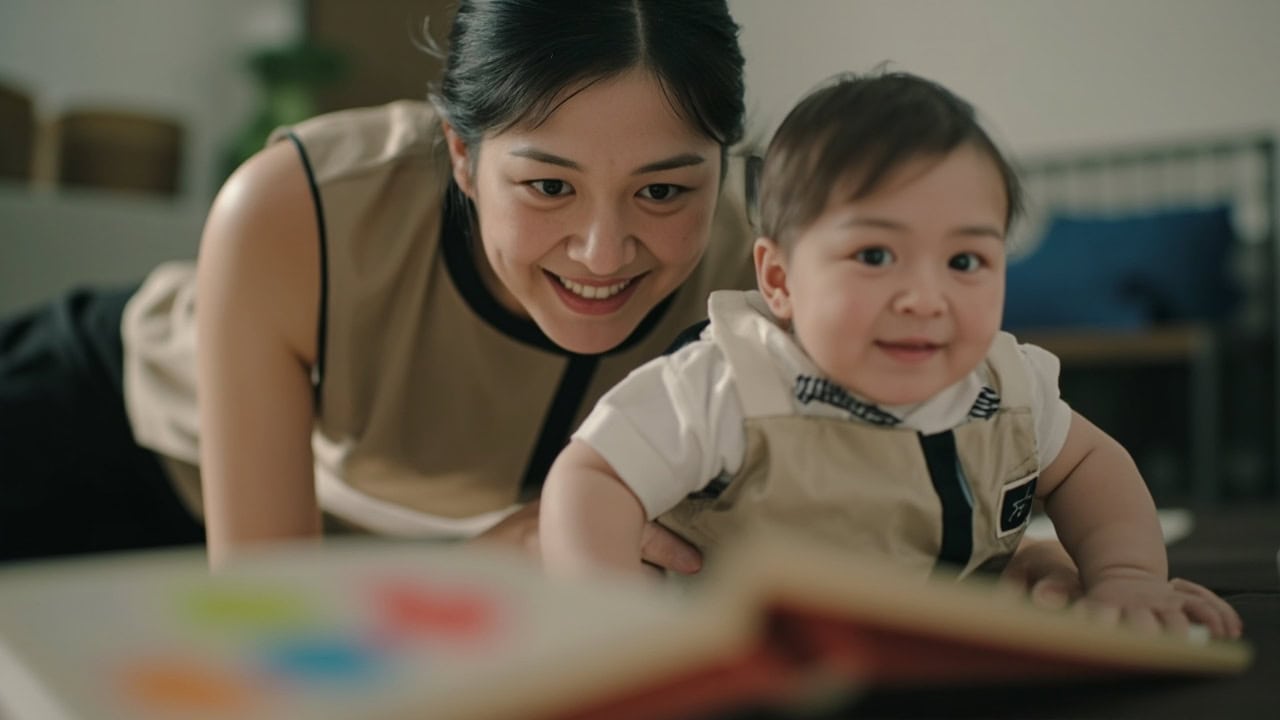
When you ask a caregiver to follow your baby’s eyes during picture-book time, you are not asking for a reading lesson. You are asking for attention. You are asking for the patience to pause on what your child has already chosen to notice, name it once without rushing, and let her finish looking before moving on.
This practice does not require a particular book or a particular technique. It requires a caregiver who is genuinely watching and willing to let the baby lead. In a premium infant care setting with a low ratio, that kind of watching is more likely to happen — not because the childminder is more skilled, necessarily, but because the conditions give her the time and the space to do it.
Picture books at this age are not about stories in the way older children experience stories. They are about moments of shared attention — a baby looking, an adult naming, a pause, a turn. Those moments accumulate. They are the beginning of what it means to read together, long before a single word is ever read aloud.
Sources and further reading
- Your baby's developmental milestones at 9 months · UNICEF Parenting
- Infant Visual Attention and Object Recognition · PMC / NIH
- 21 learning activities for babies and toddlers · UNICEF Parenting
- Infant visual attention and object recognition · PubMed / NIH
The images in this article were generated with AI for illustration. They do not show actual EduNanny staff, children or facilities.
Every family has different care needs. Speak with EduNanny to discuss care that is right for your child.