The Relationship That Makes Your Baby Feel Truly Secure
The Question Underneath All Other Questions
There is a moment, familiar to most parents who have placed their child in someone else’s care, that arrives without announcement. It may happen during a morning drop-off, or it may happen when you collect your child at the end of the day.
You notice it in the way your child reaches for a particular person in the room. You notice it in the way they settle more quickly in one pair of arms than in another. You notice it in the fact that they have, without being able to explain it, formed a preference.
And in that noticing, something shifts. Something settles. Because your child has just told you something true without saying a word. They have told you that they are not merely being looked after. They are being known.
This is the quiet truth that sits at the heart of quality infant care, and it is the truth we want to explore with you today. Not because it is novel or fashionable, but because it is the question that matters most to every parent who hands their child to someone else: who is with my child, and is that relationship good for them?
What this article covers
- Why the caregiver-child relationship is the most important factor in infant care
- What research tells us about early attachment and development
- How relational continuity creates the conditions for your child to thrive
- What quality childminding looks like in practice
- How EduNanny Singapore approaches caregiver selection, ratios, and support
- Practical guidance for choosing infant care in Singapore
Why the Relationship Is the Thing That Matters
We know the surface questions well. Parents ask about curriculum, ratios, facilities, and safety measures. These are important questions and they deserve careful answers. But underneath all of them lies something more fundamental, something that no checklist can capture.
It is the question of relationship. It is the question of whether your child has found, in the hours you are apart, someone who is genuinely present to them, attuned to them, and invested in their wellbeing. It is the question of whether your child is not simply supervised, but held within a consistent human connection that allows them to grow.
In our experience working with Singapore families, this is what parents sense they need even when they cannot name it. You want to know that the person holding your baby is not just going through motions. You want to know they are paying attention. You want to know your child is known.
What research tells us about early attachment
The research on early attachment is both extensive and clear. Young children, particularly in their first years, are not simply miniature humans who need feeding and diaper changes. They are neurologically and emotionally constructing the frameworks through which they will understand the world.
A child who experiences consistent, responsive care from one or a small number of caregivers develops what developmental psychologists call internal working models: foundational beliefs about whether the world is safe, whether people are reliable, and whether they themselves are worthy of attention and care.
This is not a soft or sentimental observation. It has measurable consequences. Children who form secure attachments in their early years demonstrate greater emotional regulation, more resilient coping under stress, enhanced capacity for curiosity, and more adaptive social behaviours as they grow. The research consistently shows that these outcomes are not primarily driven by the quality of toys, the content of activities, or the prestige of a programme. They are driven by the quality and consistency of human relationships.
Why consistency is not merely comfortable – it is developmental
Consider what a child needs in order to explore. A baby who is anxious, who does not know whether their cries will be answered, who has learned that caregivers come and go unpredictably, will not venture far from the familiar. They stay close. They stay guarded. The world feels too uncertain to engage with.
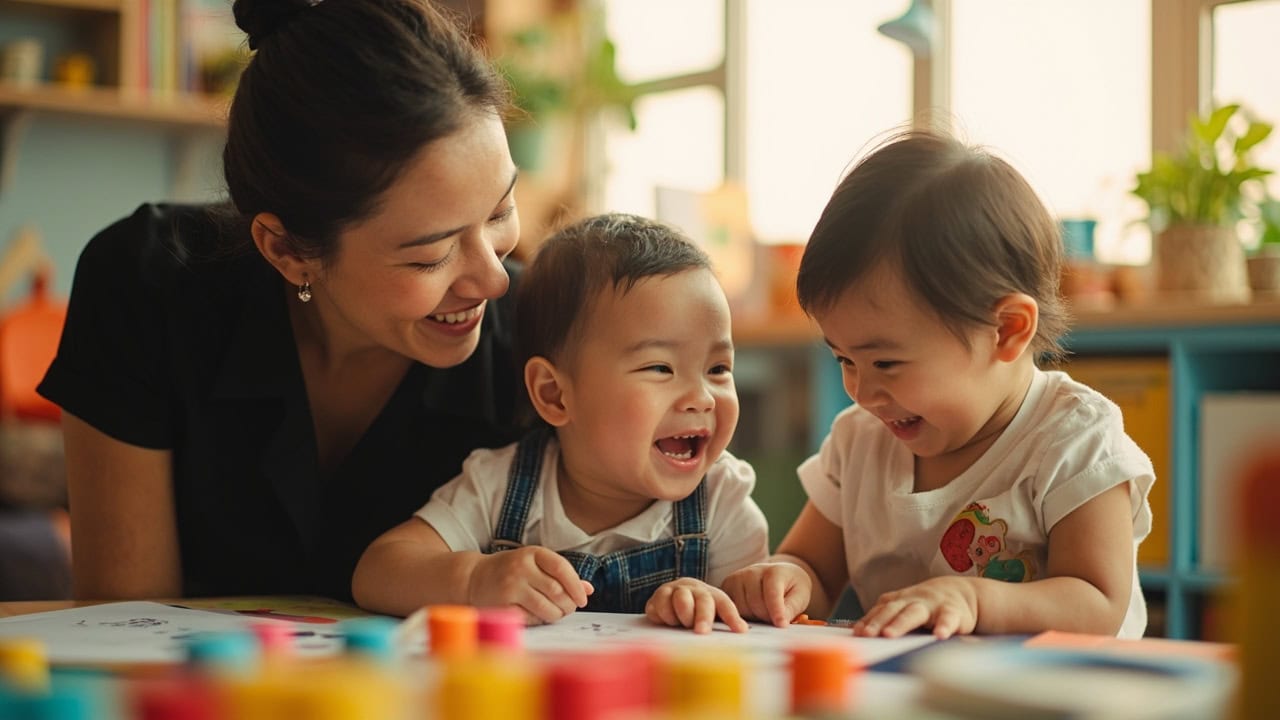
But a child who has learned, over time, that a trusted adult is reliably present, that their signals will be received and responded to, that this particular person is a safe base from which to venture: this child begins to explore. They reach for the new toy. They babble at the stranger. They test the boundaries of what they can do. They are curious because they are secure.
Security and curiosity are not opposites. They are partners. And this is the gift that a consistent caregiver relationship provides. It gives your child permission to grow – not because the caregiver is doing something extraordinary, but because they are doing something reliably and with genuine attention. They are being present in a way that compounds over time.
What Relational Continuity Looks Like in Practice
Relational continuity means your child is cared for by the same caregivers over time, not a rotating cast of strangers. At EduNanny Singapore, this is not an accident of logistics. It is a deliberate architectural choice.
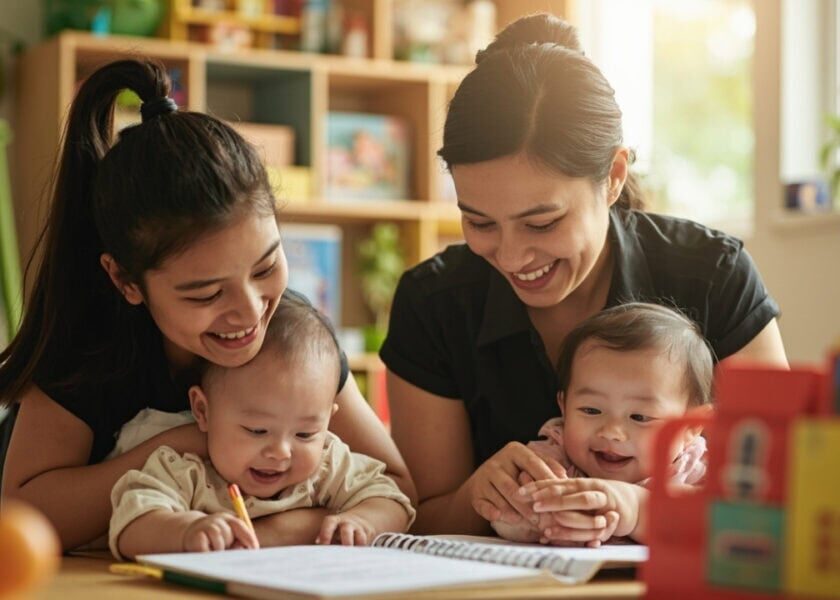
In our infant care settings, we maintain ratios of up to one caregiver to three infants. With smaller numbers, a caregiver can learn the rhythms of each child in their care. They can notice when a child’s fussiness signals hunger versus tiredness versus a need for simple comfort. They can remember that one child loves having their back rubbed gently while another settles better with firm, rhythmic motion.
Over days and weeks and months, these small attentions accumulate into something meaningful: a relationship that is specific, responsive, and real. The caregiver knows your child’s particular temperament, their likes and dislikes, the small things that comfort them and the small things that unsettle them. This knowledge does not replace your own. It supplements it. It means your child experiences the same quality of attentive care during your work hours that you would want for them.
The hidden cost of high-turnover care
Contrast this with environments where caregiver turnover is high, where children see a rotating cast of faces, where the adult who greets them on Monday is not the same adult who soothed them on Tuesday.
In such settings, children are forced to expend psychological energy constantly re-adjusting, constantly calibrating, constantly trying to figure out who this new person is and what they can expect from them. The stress response activates not because anything is wrong, but because everything is unfamiliar.
That energy, that emotional labour, is energy that cannot then go toward exploration, curiosity, and growth. For Singapore parents, who are already navigating significant pressures around work, commute, and family logistics, this is an invisible cost that often goes unrecognised.
You may not know that your child’s fatigue at the end of the day is partly because they have been working hard at being a stranger in their own care environment. You may not know that their clinginess at pickup is not a phase but a response to inconsistency.
How Your Child’s Relationship With Their Caregiver Grows
Here is what is beautiful about this process: it deepens over time. The relationship that begins with a caregiver meeting your infant’s physical needs evolves, as the child grows, into something more textured.
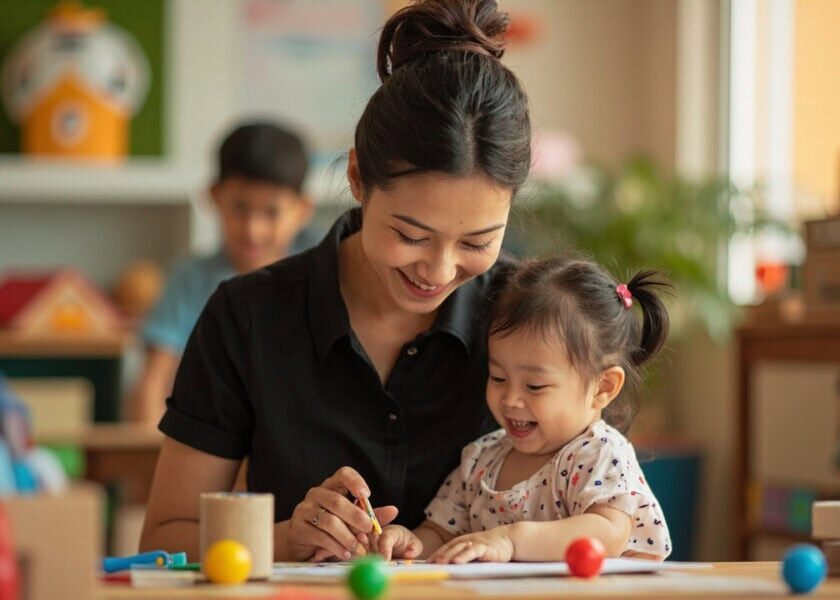
The toddler who seeks out their caregiver not just for comfort but for shared play. The preschooler who talks about their caregiver as an important person in their life, who mentions them by name, who asks whether they will be there tomorrow. These are not signs that you are being replaced. They are signs that your child is developing the capacity for relationship, and that the people in their life beyond you are contributing to that growth in meaningful ways.
This is developmentally appropriate and actually healthy. Your child is building the relational skills they will carry into school, into friendships, into their eventual adult relationships. The consistent caregiver is not your rival. They are another trusted adult who is helping your child grow.
A note for parents who feel this intensely
We understand that for parents, this can be a complex feeling. There is, in many parents, a quiet worry that deepening the caregiver relationship might somehow diminish their own. We want to name that feeling with gentleness and honesty: it is understandable, and it is unfounded.
The relationship between a parent and child is singular. It is formed before birth and shaped by a lifetime of accumulated intimacy. No caregiver, however wonderful, replicates or replaces that bond. What they do, when the relationship is healthy and well-supported, is complement it. They give your child an additional layer of security. They give them another person who knows them, values them, and responds to them with care.
And when parents and caregivers are aligned, when they respect and communicate with each other, they create something remarkable: a consistent emotional environment. Your child experiences the same values, the same warmth, the same basic expectations about how people treat each other, from both you and their caregiver. This is not confusing. It is anchoring.
That is not a diminishment of your role. It is an enrichment of your child’s world.
The EduNanny Approach: Selection, Ratios, and Ongoing Support
This is also why the selection and support of caregivers at EduNanny Singapore is something we take with absolute seriousness. We are not simply filling positions. We are cultivating the adults who will stand alongside your child during the hours that matter enormously, even when you cannot be there.
That means our selection process is rigorous. It means our caregivers receive ongoing training, not only in the practical elements of infant care, but in the relational elements: attunement, responsiveness, the quiet art of being fully present to a child.
It also means we treat our caregivers as the professionals they are. Childminding is not entry-level work. It is not something anyone can do well on instinct alone. It requires skill, emotional maturity, patience, and a genuine love of working with young children. Our caregivers choose this work deliberately, and we invest in them accordingly, because we know that the quality of their experience directly shapes the quality of care your child receives.
Transparency and communication
We also know that trust, to be real, must be visible. We know that parents need more than good intentions. They need assurance.
This is why transparency is built into how EduNanny operates. Where CCTV measures are deployed, parents have the ability to see into their child’s day. This is not about surveillance. It is about peace of mind. It is about knowing that the care you have entrusted to us is happening in a space where accountability is real and visible.
Communication, too, is essential. We keep parents informed not through generic updates or perfunctory reports, but through genuine sharing: what your child enjoyed today, what they worked on, how they slept, what made them laugh. These are the small windows into your child’s experience that help you feel connected even when you are apart.
They also tell you something important: that the person caring for your child is paying attention. That your child is not just one of many, but is being seen, known, and documented as an individual.
Practical Guidance for Choosing Infant Care in Singapore
If you are evaluating infant care options, the distinction to keep in mind is this: supervision asks if my child is safe, fed, and clean. Relational care asks if my child is known, responded to, and valued.
Both are important, but they are not the same. And it is relational care, the kind that happens when a caregiver truly knows your child, that creates the conditions for developmental progress.
When you visit a potential infant care setting, ask yourself not just about the physical environment but about the human environment. Do the caregivers seem present or distracted? Do they seem to know the children by name, by temperament, by habit? Do they respond to a child’s signals or wait for the child to escalate? These are the small moments that reveal whether this is a place where your child will be known.
Questions to ask when researching infant care
- What is the caregiver-to-infant ratio? Smaller numbers mean more individual attention and greater opportunity for your child to form a genuine relationship with their caregiver.
- How stable is the caregiver team? Ask about turnover rates. Consistent caregivers mean your child does not have to constantly readjust.
- How do caregivers communicate with parents? Look for genuine, individualised updates rather than generic daily reports.
- What does the transition process look like? A thoughtful introduction period helps both your child and the caregiver build rapport before full-time care begins.
- Are parents welcome to visit or observe? Settings that encourage parental involvement demonstrate confidence in their care practices.
- What training do caregivers receive? Quality programmes invest in ongoing development for their staff, not just initial onboarding.
EduNanny Singapore: What We Offer Your Family
EduNanny by BUTLER is part of the ECDA Childminding Pilot, which means our programme operates within a framework that recognises and supports the importance of quality childminding for Singapore’s families. We offer both home-based care and community or centre-based pathways, giving families options that suit their circumstances and preferences.
Our care operates Monday through Friday, in structured care blocks that provide predictability for both children and parents. We maintain the ratios that allow for genuine relationship formation: up to one caregiver to three infants, because we believe that the intimacy of small numbers is not a luxury but a developmental necessity.
We also believe that quality care should be accessible. Our pilot fee structures are designed to be affordable, and we support families in using available financial tools: CDA and Baby Bonus funds are usable where applicable, so that cost does not become a barrier to the kind of care your child deserves.
Your Child Deserves to Be Known
Choosing care for your child is one of the most significant decisions you will make. It is also one of the most intimate. You are not just choosing a service. You are choosing the people who will stand alongside your child during some of the most important developmental years of their life.
That is a responsibility we do not take lightly at EduNanny Singapore. It shapes every decision we make: from the ratios we maintain, to the caregivers we select, to the transparency we offer, to the way we communicate with parents each and every day.
As we close, we want to return to the image with which we began: the moment you notice your child reaching for a particular person, settling more quickly in one pair of arms than another. You may not have named it as significant at the time. You may have simply felt a small relief, a quiet thank-you, a moment of gratitude that your child is clearly happy in this place.
But what you noticed was important. It was a signal, one that your child communicated before they had the words to explain it. They were telling you that they have found a relationship that feels safe. They were telling you that someone in this world beyond you has earned their trust.
That trust, that consistent, patient, attentive relationship, is not incidental to your child’s development. It is central to it. It is the quiet anchor that allows them to venture, to question, to try, to fail, to try again. It is the foundation on which their confidence is being quietly built, one day at a time, one responsive moment at a time, in the hours when you cannot be there but someone equally worthy of their trust can.
We would be honoured to walk this path with you. To learn more about what thoughtful, development-oriented childminding looks like at EduNanny Singapore, we welcome you to get in touch or learn more about our approach.