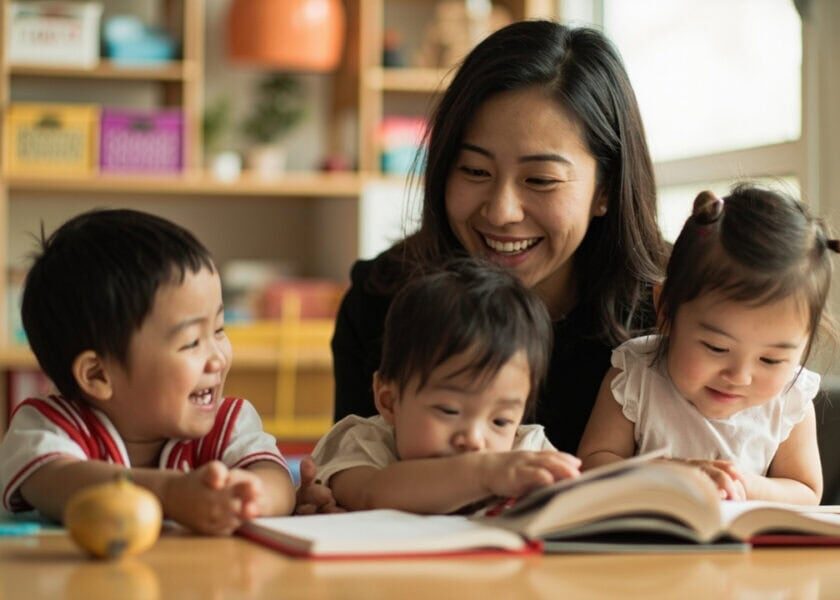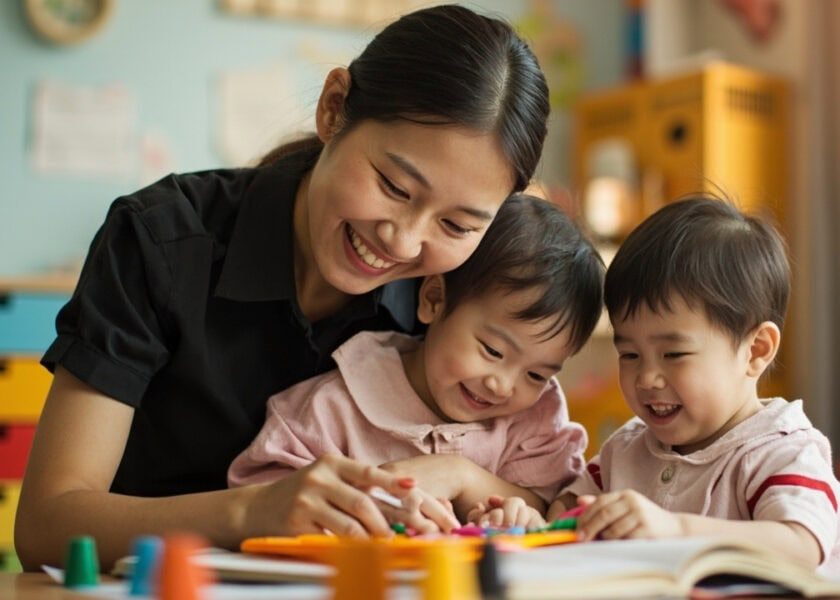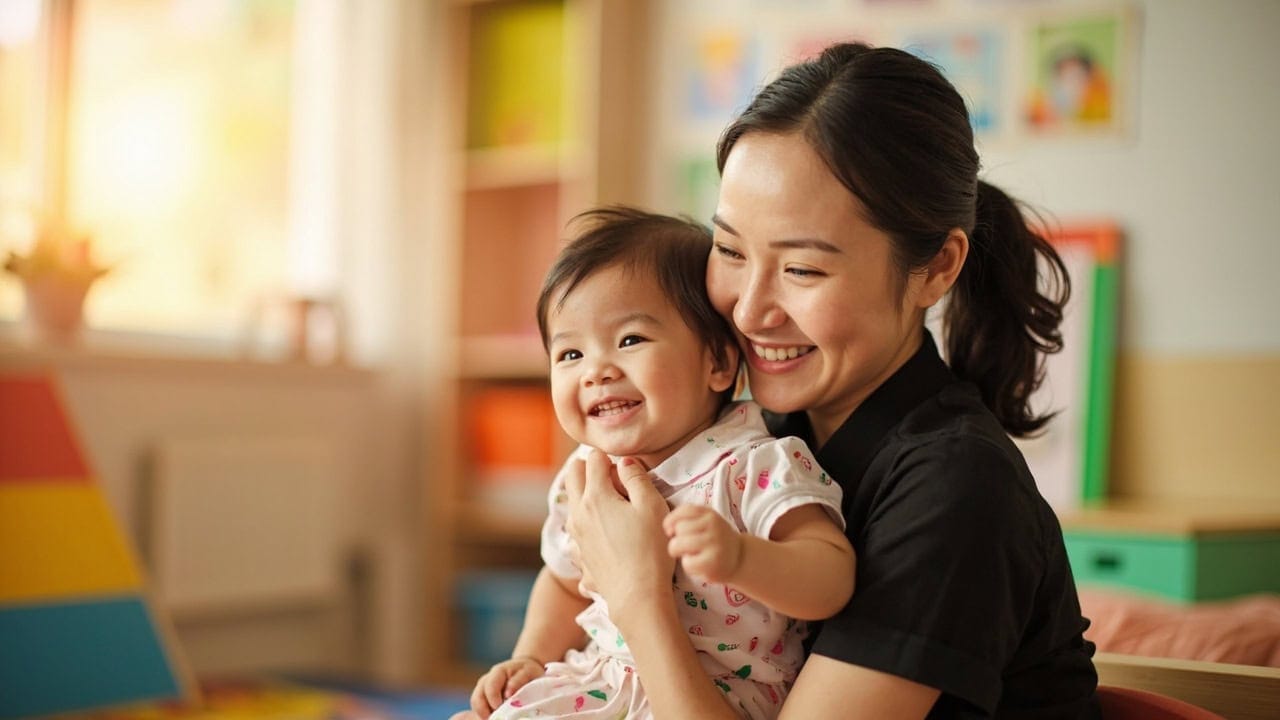
The Art of Noticing: Professional Observation in Singapore Childcare
The Silence After the Hand-Off: What Every Working Parent Needs to Know About Finding True Visibility Into Your Child’s Day
There is a moment, familiar to every parent who has returned to work, that arrives with a particular kind of silence. You have handed your child over, walked out the door, and entered a world where you cannot see them. Your mind stays behind in that room, following your child through hours you cannot witness.
What are they feeling? Are they engaged, content, frustrated, growing? Are they being truly seen?
This is not an unreasonable question. It is the most fundamental question a parent can ask. Yet in the landscape of childcare decision-making, it is also the question that goes unanswered most often. Parents are offered checklists of safety features, ratios, and curriculum names. What they rarely receive is a genuine answer to what their child’s inner life looks like during the hours apart.
At EduNanny Singapore, we have built our practice around a conviction that professional, intentional observation is the answer to that question. Not surveillance. Not supervision. Observation—the disciplined, trained, compassionate practice of watching children not just to keep them safe, but to understand who they are becoming.
The distinction matters more than most parents realize when they begin their search.
Supervision and Observation: Two Different Practices
When we talk about supervision, we describe a function. A supervisor oversees. They ensure physical safety, manage routines, intervene when conflict arises. Supervision is necessary. It is the baseline of any responsible childcare arrangement.
But it is not sufficient, and it does not answer the question that keeps parents awake at night.
Observation is something else entirely. It is a discipline. It requires training, patience, and a deep understanding of child development to notice what is happening beneath the surface of a child’s behavior.
A supervised child is watched. An observed child is known.
What This Difference Looks Like in Practice
Consider what happens in a single morning of a child’s life. A toddler approaches a block tower built by another child.
In that moment, a supervisor might note that the child touched the tower. An observer sees something different. They notice the hesitation before the approach, the way the child’s hands stayed at their sides rather than reaching out immediately, the glance back toward the other child, the choice to sit nearby rather than engage directly.
These small details tell a story about that child’s emerging social temperament, their processing of new situations, their developing capacity for autonomous play alongside others. None of this registers without trained attention.
This is why the distinction between supervision and observation is not merely philosophical. It is developmental. The moments that shape a child’s emotional intelligence, their confidence in social settings, their resilience in the face of challenge, rarely announce themselves. They pass in seconds. They require someone present who has learned how to look.
What Trained Caregivers Actually Notice About Your Child
Professional observation goes beyond noting that a child participated in an activity. It involves reading the texture of that participation—what it reveals about the child’s current developmental stage, emotional state, and emerging patterns of engagement.
In Toddler Care
Trained observers notice the difference between parallel play and associative play in toddlers who are just beginning to discover peers. They notice when a child who typically engages readily begins to withdraw, and whether that withdrawal reflects fatigue, overwhelm, or a new stage of autonomous preference.
They notice the precise moment a child moves from frustration to persistence—whether they need scaffolding or whether they are capable of working through difficulty independently. They also notice which materials a child returns to again and again, what sensory preferences emerge, and what kinds of problem-solving approaches a child gravitates toward naturally.
In Infant Care
Observation becomes even more intimate when caring for infants. A trained infant caregiver watches for the subtle shifts in a baby’s cues that indicate readiness for sleep, hunger, overstimulation, or the need for closer contact.
They read the difference between a cry of discomfort and a cry of fatigue. Between reaching arms and simply staring. Between the subtle facial tension that signals hunger and the full-body relaxation that signals contentment.
These distinctions, invisible to untrained eyes, are the substance of professional infant care. They are what make the difference between an arrangement that manages children and one that truly nurtures them.
Recognizing Developmental Windows
In child development, there are periods when the brain is particularly receptive to specific kinds of learning and growth. Language acquisition, social bonding, motor coordination, emotional regulation—each unfolds according to its own timing, each presenting its own window of opportunity.
What a trained observer does is recognize when a child is entering one of these windows and create conditions that support healthy development within it. This is observation in service of the child.
When an observer notices a twelve-month-old showing interest in self-feeding, they understand this is not merely a practical transition. It is a window into their emerging sense of autonomy, their desire to master their own bodies, their cognitive understanding that they are a separate person capable of acting upon the world.
How Observation Reaches You: Communication and Transparency
Here is what often goes unspoken in conversations about childcare quality: observation only matters if its insights reach the parent.
A childcare arrangement can be full of skilled observers who notice extraordinary things about children all day long. If those observations never travel from the care setting to the home, they remain isolated data points—valuable but inaccessible. The parent still drives home wondering what happened, what their child experienced, who their child is becoming in their absence.
At EduNanny Singapore, we believe that observation without communication is incomplete. Transparency is woven into how we operate.
What Parents Receive
Parents in our programme receive regular, meaningful updates—not just photographs of activities, but insight into what their child was exploring, how they engaged, what patterns emerged over the week. We want parents to receive information that is genuinely useful, that helps them understand their child better, that allows them to continue at home what is being supported in our care.
For some families, this means direct communication with their childminder. For others, it means structured reports that track developmental progress over time. In some settings, enhanced transparency measures such as CCTV access offer an additional layer of reassurance.
But we want to be clear: transparency for us is not about surveillance. It is about partnership. We want parents to feel that they are participants in their child’s day, even when they are not physically present.
The Standards That Enable Professional Observation
This approach to observation and communication does not happen by accident. It reflects deliberate choices about staffing, training, and organizational values.
Our Framework
EduNanny participates in the ECDA Childminding Pilot, operating within a framework that emphasizes quality standards, caregiver training, and the professionalization of home-based and community-based childcare pathways. This is not incidental to who we are. It is foundational.
Staffing That Enables Deep Attention
This kind of observation requires something that cannot be faked: genuine investment in the individual child. It requires staffing models that allow caregivers to know children deeply rather than rotate through responsibilities superficially.
At EduNanny, our commitment to small ratios reflects this conviction. With up to one caregiver for every three infants in our infant care setting, our childminders have the capacity to observe, to learn, to notice. They are not managing throughput. They are paying attention.
Training as a Core Competency
Our caregivers are not randomly assigned. They are selected, trained, and supported to observe as a core competency. This means learning to articulate what they see, to document developmental milestones accurately, to recognize when a child may need additional support, and to communicate observations in ways that are useful rather than overwhelming for parents.
Affordability and Accessibility
We know that for many families in Singapore, the practical dimensions of childcare matter enormously. Affordability is real. Accessibility is real. The logistics of Monday to Friday care, the usability of CDA funds, the integration of Baby Bonus arrangements—these are not abstract considerations. They are the conditions under which families make decisions about their children’s care.
EduNanny operates within pilot fee structures designed to make quality childcare accessible. We support CDA and Baby Bonus usability where applicable, recognizing that financial navigation should not be a barrier to exceptional care.
Whether through our home-based pathways, community settings, or centre-based programmes, the thread that connects all of EduNanny’s work is this commitment to professional, intentional observation. The setting may vary. The standard does not.
Questions to Ask When Evaluating Childcare Options in Singapore
As you consider your options, we invite you to look beyond the checklists.
Ask not only whether a childcare arrangement is safe—though safety is foundational. Ask whether it is attentive. Ask whether the people caring for your child have been trained to notice what matters.
- How do caregivers document and share observations with parents?
This reveals whether observation is systematic or ad hoc, and whether parents receive meaningful insight or just activity logs. - What is the caregiver-to-child ratio in infant care?
This shows whether staffing allows for genuine attention or only basic supervision. - How are caregivers trained in child development and observation?
This indicates whether observation is treated as a professional skill or an informal expectation. - Can I speak directly with my child’s caregiver?
This demonstrates whether communication is structured and accessible or limited to formal channels. - How will you help me understand my child’s developmental progress?
This clarifies whether the programme sees parents as partners in development or service customers.
We Will See Your Child: A Final Reflection
There is something worth naming here about what observation gives parents.
It gives them a window, even when they are not physically present. It gives them language for what they are seeing in their child at home. It gives them confidence that their child’s experiences are being noticed, valued, and responded to by someone who knows what to look for.
Every parent wants to understand their child better. This is not a weakness. It is the deepest expression of love—to wish that you could be inside your child’s experience, even for a moment, to truly know what delights them, what frustrates them, what they are working out in their play.
Observation is how we bring that wish closer to reality. It is how we translate the hours apart into moments of connection.
When a parent returns from work and asks their childcare provider what their child did today, they are not asking for a schedule. They are asking: Did anyone see my child today? Did anyone notice them? Did anyone understand them?
This is what EduNanny answers. Not with generic reassurance, but with genuine insight.
We believe childcare is not merely a service that manages children while parents work. It is a partnership in development. It is the careful, trained practice of watching children closely enough to understand them, and communicating what we see closely enough to help parents understand them too.
EduNanny was built on this belief. It is the promise we make to every family who entrusts us with their child’s earliest years.
We will see your child. We will notice what matters. And we will make sure that you never have to wonder whether anyone is watching over the person you love most in the world.
If you are a parent in Singapore exploring infant care or childminding options, we would be glad to speak with you. Understanding your child better—through professional, intentional observation—is what we do. It is the foundation of everything we offer.
EduNanny Singapore provides development-focused infant care and childminding services for families across Singapore. Learn more about our approach or read about our team.