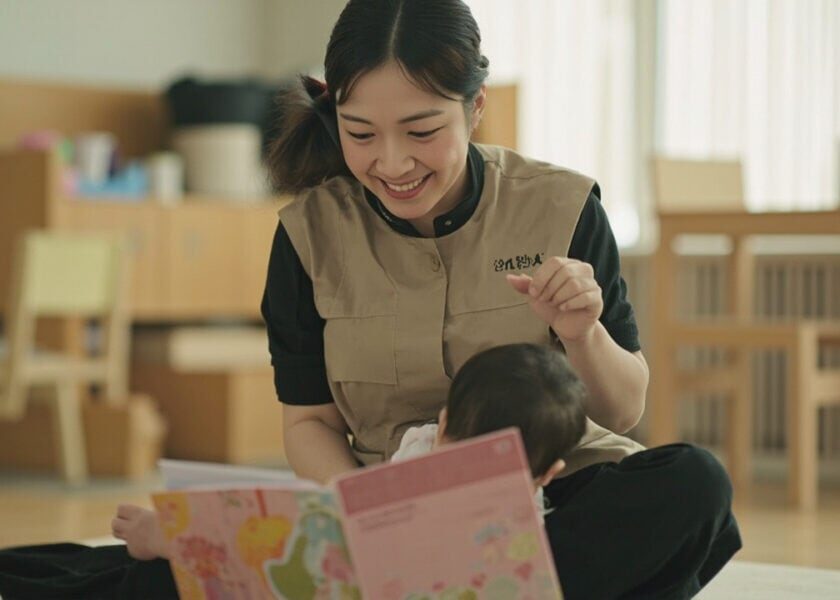
The Partnership That Transforms Your Child’s Early Years
Quick Summary: Building Your Parent-Caregiver Partnership
- The decision to enrol your child in childcare is just the doorway — the real relationship begins after the paperwork is done.
- The quality of your partnership with your child’s caregiver is the single greatest variable in the quality of the childcare experience.
- You are your child’s first and most important expert — your knowledge is a gift to the partnership, not a burden to set aside.
- True communication goes beyond daily logbooks — look for meaningful observations that reveal your child’s developing curiosity.
- Signs of a healthy partnership include your child’s comfortable familiarity with the caregiver and your own growing peace of mind.
- EduNanny Singapore, through the ECDA Childminding Pilot and the BUTLER framework, structures sustained partnership as a core principle.
The Real Work Begins After Enrolment
Most parents enter childcare the way they enter a new home. With hope. With careful thought. With a mental checklist of what matters: safety, qualifications, routines. You picture your child in that space, among those hands, and you weigh whether the feeling in your gut says yes or no.
That process matters. It is not trivial. But it is only the prologue.
The relationship that will actually shape your child’s earliest years — the one that will determine whether your child thrives in care or merely endures it, whether your own days are filled with confidence or low-grade worry, whether you feel like a passenger in your own child’s life or a co-author of it — that relationship begins the moment enrolment ends.
And it deepens, or it stagnates, based on something no checklist can capture: the quality of the partnership you build with the person caring for your child.
Reframing the Parent-Caregiver Dynamic
The word “partnership” can sound strange when you first say it aloud. Partnership is what you might use to describe a business arrangement or a legal agreement. But consider what you are actually doing.
You are inviting another human being to participate in the most formative, most vulnerable, most sacred process of your child’s life. You are asking them to learn your child’s rhythms, to read your child’s moods, to comfort your child in ways that feel like your own comfort. That is not a transaction. That is a collaboration of a very particular kind — and it deserves to be named as such.
In Singapore, we are fortunate to live in a city where childcare options have multiplied and matured in remarkable ways. Centre-based programmes, home-based arrangements, community pathways — each with its own strengths, each meeting a different need in a family’s life. Across all of these, one truth remains constant: the quality of the relationship between parent and caregiver is the single greatest variable in the quality of the childcare experience.
Not the curriculum. Not the facility. The relationship.
What Quality Childminding Actually Looks Like
So what does a real partnership look like? Not in theory, but in the texture of daily life.
It begins with communication — but not the kind that lives in a logbook or an app update alone. Those tools have their place. A daily report that says “napped well, ate well” has its utility. But a true partnership goes deeper.
It lives in the conversation you have when you pick up your child and the caregiver says: “She was so fascinated by the texture of that wooden block today — I think she reached for it at least a dozen times.”
That observation tells you something real about your child’s developing curiosity. It tells you that the caregiver is watching not just for safety and routine, but for meaning. When you receive that kind of information, something shifts. You start to feel like you are part of a shared narrative about your child’s day, rather than a recipient of a checklist.
This kind of communication does not happen by accident. It grows when both sides tend to it. It grows when you, as a parent, ask real questions and listen with genuine curiosity. It grows when the caregiver feels trusted enough to share not just the smooth moments but the puzzling ones: the afternoon your child refused to be soothed, the new sound she made during play, the way she reached for another child at snack time.
These are not incidents to be logged and filed. They are the raw material of your child’s development, and when two attentive adults are both paying attention to it, the picture that emerges is so much clearer than either could see alone.
The Conditions That Make Deep Observation Possible
With infant ratios kept to a maximum of one to three in the ECDA Childminding Pilot framework, caregivers have the space to truly observe. They are not running from child to child in a frenzy of logistics. They are present. They are noticing.
And that noticing, when shared honestly and consistently with you, becomes the foundation of a partnership that actually serves your child’s development.
Your Role in the Partnership: Showing Up Without Overstepping
Here is what many parents tell me they struggle with most: they want to be involved without overstepping. They want to trust without feeling naive. They want to collaborate without micromanaging. And they are afraid — sometimes quietly, sometimes not — that they do not know enough to contribute meaningfully to the caregiving relationship.
I want to say something directly to that fear, because it is so common and so rarely addressed with honesty.
You are your child’s first and most important expert. Nobody — not a caregiver, not a programme director, not a developmental specialist — knows your child the way you do. You know what makes her laugh when nothing else will. You know the particular shade of tired she gets before a meltdown, the way she reaches for comfort when the world becomes too loud. You know her history in a way no observation chart ever could, because you were there for every chapter before anyone else arrived.
That knowledge is not a burden to be set aside at the door of a childcare arrangement. It is a gift to the partnership.
When you share it — not in a defensive way, not in a way that prescribes every detail of your child’s day, but in a genuine spirit of “here is what I have learned about this person I love most” — you give the caregiver something invaluable. You give them context.
And context is the difference between care that is competent and care that is attuned.
A good caregiver welcomes this. A great caregiving partnership is built on this exchange. The caregivers within the EduNanny programme are not replacements for parental attention. They are complements to it — professional partners who work alongside you, not instead of you.
The moment that distinction is clear in your own mind, the anxiety of “overstepping” begins to dissolve. You are not overstepping. You are showing up.
Reading the Signs: Is the Partnership Working?
There is a question I encourage every parent in this situation to sit with. Not to answer quickly, but to live with for a while. It is this:
What does your child’s face look like in the moments just after you pick her up? Not at the very instant of reunion — that is always joy, always relief. But ten minutes later. Twenty minutes later.
What is the residue of her day in care? Is she settled? Is she curious? Is she reaching for the world with open hands, or is she withdrawn? Is she sleeping well at night, or is she fighting sleep with a restlessness that suggests her days feel chaotic?
These are the indicators that no app can tell you. They are the ones only you can read, because you are the one who knows your child best across time.
Signs of a Stagnant Arrangement
- The communication feels routine and surface-level
- The caregiver seems pleasant but not deeply engaged
- You get the sense that your child is being well-maintained but not deeply known
In that environment, a child’s development does not stall completely, but it certainly does not soar.
Signs of a Healthy, Growing Partnership
- Your child’s response to the caregiver — not with anxiety, which would signal a broken attachment, but with comfortable, easy familiarity that says “I know this person and I feel safe with them”
- The caregiver’s updates — which start to feel like dispatches from a shared mission rather than required notifications
- Yourself — in the quiet confidence that settles into your chest on the drive to work in the morning
The worry does not disappear entirely — it never does, and it should not. But it changes texture. It becomes the manageable kind, the kind that leaves room for you to focus on your own work, your own wellbeing, your own relationship with your partner and your wider life.
That peace of mind is not a luxury. For a parent in Singapore, where the demands of work and life can feel relentless, it is practically a lifeline.
Navigating Transitions and Changing Needs
Let me speak honestly about something that every parent eventually faces, and that the childcare industry rarely addresses with the seriousness it deserves: transitions.
Children grow. Families change. The caregiver who was perfect for your infant at nine months may not be the same caregiver who is ideal for your toddler at two years. Needs evolve. Relationships evolve. And sometimes, for reasons no one could have predicted, a partnership that was once nourishing begins to feel like it is running on habit rather than intention.
This is not a failure. This is the natural rhythm of a relationship that has real depth.
How you navigate these moments — as a family, as part of your caregiving partnership — defines whether the alliance you have built can flex and endure, or whether it calcifies into something that no longer serves anyone well.
A committed caregiving partner will navigate these transitions with you. They will be honest about what they can offer as your child’s needs shift. They will communicate openly when a change in the relationship’s dynamic needs to be acknowledged. And they will, when necessary, help you make a change that is in your child’s best interest rather than protecting a comfortable arrangement that has run its course.
EduNanny’s Approach: Built for Sustained Partnership
EduNanny Singapore, operating under the BUTLER framework, understands this at its core. It is why their model was built not merely to place a caregiver in your home or a programme near your door, but to establish something more deliberate.
They are part of the ECDA Childminding Pilot — a government-recognised initiative that takes infant and childminding seriously as a profession worthy of structure, support, and respect. This matters because it means the caregivers working within this framework are not isolated. They are trained, observed, and supported within a system designed to maintain standards and nurture growth — both for the children and for the families they serve.
Their model is built around sustained partnership — not the kind that simply fulfils a contract, but the kind that grows with your family’s changing needs. Whether your child is in home-based care, or moving along a community or centre-based pathway, the principles remain the same:
- Continuity — relationship stability that gives your child a secure foundation
- Communication — structures that keep parents informed and genuinely involved
- Professional collaboration — caregivers who work alongside you, not instead of you
- Transparent care — measures that build trust rather than replace it
When transitions need to happen, they are handled with care — because the people within this programme understand that the child at the centre of any transition is not a logistical problem to be managed. They are a small human being whose sense of security depends on how thoughtfully these moments are handled.
A Final Reflection
You made a decision. It was significant, and it was brave. But the decision was never the destination. It was the doorway.
On the other side of that door is a relationship that will, over the course of your child’s earliest years, become one of the most consequential professional relationships your family will ever have. Not because of paperwork or schedules or the practical logistics of who picks up on Thursday afternoons. But because of what it can become — what it can become for your child’s sense of safety, for her language, for her understanding of what the world feels like when trusted adults work together on her behalf.
A child who sees her parents and her caregiver communicating with warmth and mutual respect is a child who is learning something profound about partnership before she can even name the word. She is learning that the adults who love her can collaborate. That care is not a competition between people who know her best, but a conversation. That she is held not by one pair of hands, but by a network of attention, all pointed in the same direction.
If you are a parent in Singapore right now, navigating this journey, I want you to know that you are not alone. You are not navigating it poorly. And you are not asking too much when you want a caregiver who truly knows your child, who communicates with you honestly, who treats the relationship with the seriousness it deserves.
Those are not unreasonable expectations. They are the bare minimum of what your child deserves. And they are exactly what EduNanny is working every day to provide.
Your child is in the most extraordinary period of growth. Those first years — the ones people call the first thousand days — they are not a phase to be gotten through. They are the foundation. And the relationships your child experiences during those days will shape not just who she becomes, but how she learns to trust, to connect, and to belong.
Build that partnership deliberately. Protect it. Tend to it the way you would tend to anything precious. And trust that the right partner — the one who shows up not just for the assigned hours, but for the long journey — will make all the difference.
Monday to Friday. Morning to afternoon. Across neighbourhoods and towns and every kind of family Singapore has to offer. The work of caring for our youngest children is happening right now — and it deserves to be elevated, respected, and done with the kind of intentionality that transforms a childcare arrangement into something genuinely transformative.
At EduNanny Singapore, we believe that every family deserves a caregiving partnership built on trust, attentiveness, and genuine collaboration. If you are looking for a childminding arrangement that treats your relationship with your caregiver as thoughtfully as it treats your child, we would welcome the opportunity to connect with you.