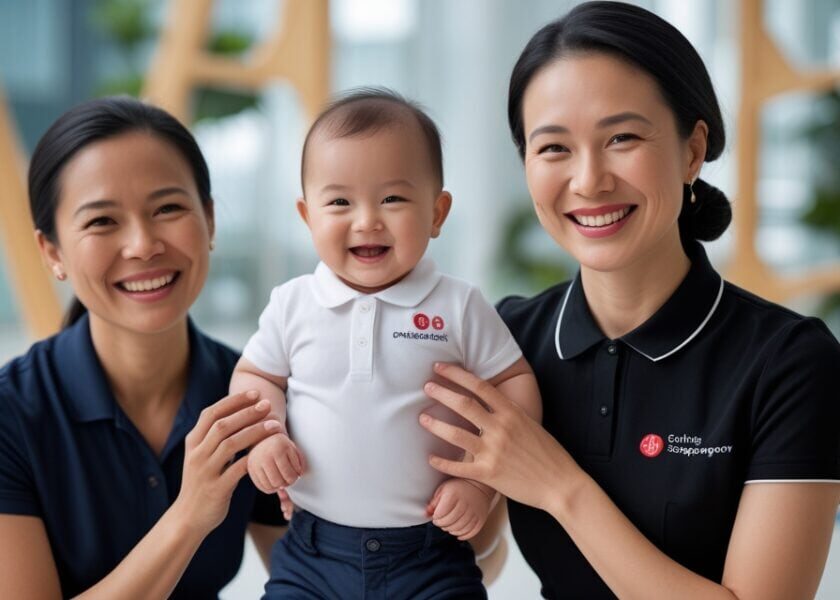
When Your Family Finally Has Room to Breathe Again
Understanding the Exhaustion That Lives in Your Home
There is a particular kind of tired that settles into a home quietly, over months. It does not announce itself. It does not arrive with drama. It lives in the sigh a mother lets out before she even reaches the front door. It hides in the patience that runs thinner each evening, in the way a parent finds themselves scrolling through their phone at the dinner table not because they want to, but because they have nothing left to give.
It manifests in the quickness with which small frustrations escalate, in the quality of attention that has quietly diminished, in the growing distance between two people who love each other but can no longer remember what it felt like to not be exhausted.
This is not the tiredness that comes from a single hard day. That kind of exhaustion has a clear cause and a predictable end. The tiredness we are speaking of today is structural. It is the tiredness that accumulates when a family’s rhythm has quietly broken—when the arrangements meant to hold daily life together have instead become sources of constant negotiation, compromise, and low-grade anxiety.
It is the tiredness of parents who love their children deeply but who have lost access to themselves in the process.
And the cruelest part of this tiredness is the guilt that accompanies it. Because somewhere beneath the exhaustion lives a question that many parents in Singapore carry in silence:
What if choosing professional childcare was the wrong decision? What if it helps my child but costs everyone else?
The Pressure Singapore Parents Carry—and What It Costs
There is a particular pressure that Singapore parents carry that is unique to this place. It is not simply the pressure of parenting. It is the pressure of doing so in one of the most demanding cities in the world, where career expectations run high, where the cost of living demands two incomes more often than not, where the distance between extended family support is measured in flight hours rather than neighbourhood blocks.
The village that once surrounded new parents has been replaced, for many, with a GPS tracker on a childcare app and a WhatsApp group that cannot replace the warmth of someone who just shows up.
In this context, the decision about who will care for your child becomes freighted with meaning far beyond logistics. It becomes a question about identity. About values. About what kind of parent you are, what kind of partner, what kind of person you are becoming.
The sheer weight of this decision means that parents often delay it, second-guess it, or make choices from a place of fear rather than clarity.
The Hidden Cost of Misaligned Childcare
When families are struggling, the struggle is almost never about the child. The child is, in most cases, adapting, growing, discovering the world with the bewildering resilience that children possess.
The struggle is about the adults.
- It is about the mother who returned to work before she was ready and now spends her commute rehearsing apologies she will never need to make.
- It is about the father who thought he could manage the juggle until he realised he was losing his marriage not to any single crisis, but to the slow erosion of time and attention.
- It is about the older sibling who has become a small, silent adult in the room, learning to need nothing because there is nothing left to give.
Every parent we have ever met is doing their best with the information, resources, and support they have. But doing your best and thriving are not the same thing. And we believe that families deserve to do more than simply survive.
When the Pieces Finally Fall Into Place
It does not happen all at once. There is no single dramatic moment when everything shifts. But there is a noticing.
A mother begins to recognise it first: she is no longer counting the hours until pickup with the same anxious intensity. She finds herself, on a random Tuesday afternoon, laughing at something her colleague said—not the performative laugh she has perfected, but a real one. She realises she has not felt that in months.
Then comes the noticing about her child. The child who seemed perpetually dysregulated, who would fall apart at the smallest transitions, who fought sleep with the desperation of someone afraid of what happened when they were unconscious. That child is different now. Not perfect—children are never perfect—but different in a way that matters.
Calmer. More secure. More willing to be soothed because she has learned, in the hours away, that soothing exists, that care is reliable, that the world is not a threatening place where she must remain vigilant.
And here is the part that most parents do not expect: the home begins to feel different.
The Family as a System: How Change Moves Through Your Household
Family life is a system. It operates according to principles that scientists and therapists have understood for decades, even if those principles rarely make their way into parenting conversations.
When one part of the system shifts, every other part responds. When a child is dysregulated, the entire household compensates.
- Parents walk on eggshells.
- Siblings learn to be small.
- Partnerships become careful, transactional, focused on logistics rather than intimacy.
The emotional temperature of the home drops by degrees that no one can name but everyone can feel.
Now consider what happens when that child begins to settle. The shift is subtle at first. A younger sibling who has been fighting for scraps of parental attention suddenly finds that there is more space. The older child no longer needs to perform distress to be seen. The mother discovers that she can actually listen—not just hear, but listen—to her partner’s day, because she is no longer running on empty. The father who had quietly withdrawn into work as refuge finds himself wanting to come home.
This is not magic. It is mechanics. It is the natural consequence of a child receiving consistent, quality care and the family system finally being allowed to breathe.
Siblings Find Room to Be Children
In families with multiple children, the dynamics between siblings are profoundly shaped by the emotional climate of the home. When one child is dysregulated, the entire family system reorganises around managing that dysregulation.
Siblings learn to take care of the anxious child. They learn to minimise their own needs. They learn to be good, to be easy, to be small. These adaptations serve a purpose in the short term, but they carry costs over time.
When a child receives quality care and begins to settle, the family system releases. Siblings are no longer conscripted into caregiving roles. They are free to be children themselves.
- The older child can be a child, with all the messiness and neediness that entails.
- The younger child can explore without the family holding its breath.
- The dynamic between siblings shifts from survival to something closer to what it should be: the beginning of a lifelong relationship built on genuine connection rather than mutual accommodation.
We have watched siblings who arrived as small, serious people—too careful, too watchful—begin to play. Begin to fight and then make up. Begin to be children together. And we have seen parents watch this with something that looks like relief. Like recognition. Like they are finally seeing the family they thought they had lost.
The Partnership Re-emerges
When a family is in survival mode, the relationship between parents suffers. This is not a failure of love. It is a predictable consequence of depletion.
When you have nothing left at the end of the day, you cannot give your partner what they need. You cannot listen. You cannot be curious about their experience. You cannot hold space for their struggles when you are barely holding space for your own.
The relationship becomes logistical—about schedules, pickups, whose turn it is, what needs to be done. Intimacy recedes not because either partner wants it to, but because there is simply no room for it.
What we have found is that when childcare arrangements settle, when parents have even small blocks of restored energy, the relationship begins to re-emerge. Not automatically. Not magically. But as a natural consequence of having something to give again.
A couple who could not remember the last time they had a real conversation suddenly finds themselves talking again—not about the logistics of childcare, but about themselves. About their lives. About the people they were before children and the people they are becoming now.
What Quality Childcare Actually Looks Like
Parents often ask us, usually in our first conversation, sometimes tentatively, as if they are afraid of the answer: What is actually happening to my child all day?
It is a fair question. And we think it is an important one, because trust cannot exist without transparency, and transparency requires more than reassurances.
The Five Pillars of Quality Care
In the context of infant care, quality is not a feeling. It is not a nice atmosphere or friendly staff, though those things matter. Quality is a set of specific conditions that allow a child to develop properly during the hours that parents are not present.
| Element | What It Means in Practice | Why It Matters |
|---|---|---|
| Ratios | Up to 1 caregiver to 3 infants in infant programme | An infant cannot learn to trust a caregiver who is overwhelmed or stretched too thin. Attention is a developmental necessity. |
| Training | Caregivers trained in child development, attachment theory, and emotional attunement | Caring for infants requires expertise. Dedicated professionals deserve ongoing development and support. |
| Consistency | Predictable caregivers and routines; the same face tomorrow and the day after | Children need predictability to build security. Frequent caregiver changes carry hidden costs. |
| Communication | Regular updates that tell a story, not just report facts | Parents and caregivers are partners. Transparency allows parents to feel connected to their child’s day. |
| Visibility | Where deployed, protocols that give parents real insight into the care provided | Trust is earned through consistency. Parents should leave feeling confident, not hopeful. |
Why We Reject the Sacrifice Narrative
There is a cultural narrative that suggests that good parenting requires sacrifice. That to be a present, devoted parent, you must give up parts of yourself—your career, your relationship, your hobbies, your friendships, your sanity.
We reject this narrative. Not because parenting is not demanding—it is profoundly demanding—but because sacrifice is not the same as service.
A parent who is depleted, disconnected, and barely surviving is not serving their child well. They may love their child enormously. They may be making enormous sacrifices. But love and sacrifice, without vitality and presence, are not enough.
What children need, beyond the basics of food and safety and affection, is parents who are alive. Parents who have energy, curiosity, dreams, connection to each other, connection to their own lives.
Children learn what it means to be human by watching the humans around them. If the humans around them are merely enduring, surviving, barely making it—what is that teaching them about what life is?
About EduNanny by BUTLER
EduNanny by BUTLER operates within the ECDA Childminding Pilot, a structured initiative to expand quality childcare options for Singapore families. Our practices have been reviewed, our caregivers trained according to established standards, and our programme operates within a framework designed to protect children and support families.
We offer Monday to Friday care blocks, because we understand that modern families need predictability. We work within fee structures that reflect our commitment to making quality care accessible, and we facilitate the use of CDA and Baby Bonus funding because childcare costs should not be a barrier to quality.
Our pathways include:
- Home-based care, where our trained childminders come to your home, providing continuity and comfort in familiar surroundings
- Centre-based options, where community and peer interaction become part of your child’s developmental experience
Both pathways maintain the same commitment to quality ratios, caregiver training, communication standards, and family partnership. The choice depends on what works best for your family, and we are here to help you think through that choice without pressure or judgment.
We know that entrusting your child to someone else is one of the most difficult decisions you will ever make. That is why we have built our programme around transparency. Our communication protocols and visibility measures are designed not to surveil, but to reassure. To give you the confidence that comes from knowing, not just hoping.
A Practical Path Forward
If you are researching childcare options in Singapore, here is what we suggest keeping in mind:
- Notice the emotional temperature of your home. Is depletion the norm? Is patience wearing thin? These are signals worth paying attention to.
- Ask about ratios. The number of caregivers to children matters enormously, especially in infancy. Ask specifically what the adult-to-infant ratio is.
- Ask about caregiver consistency. Will my child see the same faces every day? Frequent changes have costs that may not be visible immediately.
- Ask about communication. How will I know what my child’s day looks like? What kind of updates can I expect?
- Trust your instincts. If something feels off during a visit, take it seriously. You know your child and your family best.
- Consider the whole family, not just the child. The right childcare should make your household breathe easier, not just hand your child to someone else.
The Invitation
There is a story that parents often tell themselves. It goes like this: I will do this for a few years, and then things will get easier. I will hold on until my children are older, and then I will have my life back.
We understand the appeal of this story. It offers a destination, a finish line, a time when the struggle will end and the reward will begin.
But we have watched families live inside this story, and we have noticed something. The parents who are waiting for life to get easier rarely experience it the way they expected. Because the years pass, and the children grow, and the logistics change, but the depletion remains. The distance remains. The erosion of self, of connection, of joy—it does not automatically reverse when children reach a certain age.
It requires something more. It requires a decision, made consciously, to stop surviving and start living. To stop sacrificing and start investing. To choose arrangements and supports that serve the whole family, not just the child.
This is what we are offering at EduNanny. Not a promise that parenting will become easy—it will not, and anyone who tells you otherwise is not being honest.
But an invitation to experience what it feels like when the childcare works. When the pieces fit. When your child is thriving and so are you. When your partnership has room to breathe. When your older child is finally allowed to be a child. When the household temperature rises, not from chaos, but from the return of vitality and presence and joy.
We believe that every family deserves this. Not as a privilege for those who can afford the best, but as a right for every parent and child in this city who is working hard and loving deeply and wondering, quietly, if there is more.
There is more.
And it begins with the choice to stop compromising your family’s wellbeing and start investing in it. It begins with the recognition that choosing quality care is not a concession. It is an act of love—toward your children, yes, but also toward yourself, toward your partner, toward the entire intricate, beautiful system that is your family.
EduNanny by BUTLER is here to walk this path with you. Not as a service provider, but as a partner. We are not just caring for your child. We are caring for your family.
And we believe, with everything we have learned from the families we have served and the principles that guide our work, that when childcare is finally right, everyone breathes.
The whole family breathes.
And that is not a small thing. That is everything.
Ready to Explore What the Right Childcare Could Look Like for Your Family?
We invite you to start a conversation with us. No pressure, no obligation—just an honest discussion about your family’s needs, your concerns, and what quality care could return to your household. Because every family deserves to breathe. And sometimes, finding the right support is the first step.
EduNanny by BUTLER | Part of the ECDA Childminding Pilot | Serving families across Singapore