
Cradling a Nation Near Home 1 to 3 Infant Pods Pilot in Singapore December 2024 to December 2027

EduNanny in Singapore: An Editor’s Deep Dive into Infant Care That Builds Trust, Community, and Development
Thank you for inviting EduNanny into your considerations about the earliest days of your child’s life. This article expands the original speech into a practical, editor‑level guide for parents, grandparents, caregivers, and community partners. It outlines what EduNanny is, how the ECDA Pilot works, and how families can translate a near‑home, ultra‑low‑density model into tangible benefits for infant safety, attachment, development, and joy.

What is EduNanny? A Quick, Precision‑Focused Overview
EduNanny is a human‑centred, science‑driven childminding service offering ultra‑low‑ratio care—one childminder to a maximum of three infants—in home and community settings near you. Care runs Monday to Friday, 7am to 7pm, with affordable fees from $33 per full day before GST. CDA/Baby Bonus are payable for subsidised hours. EduNanny operates within Singapore’s ECDA Childminding Pilot, delivering intimate, professional care that respects infancy’s rhythms while supporting working families.
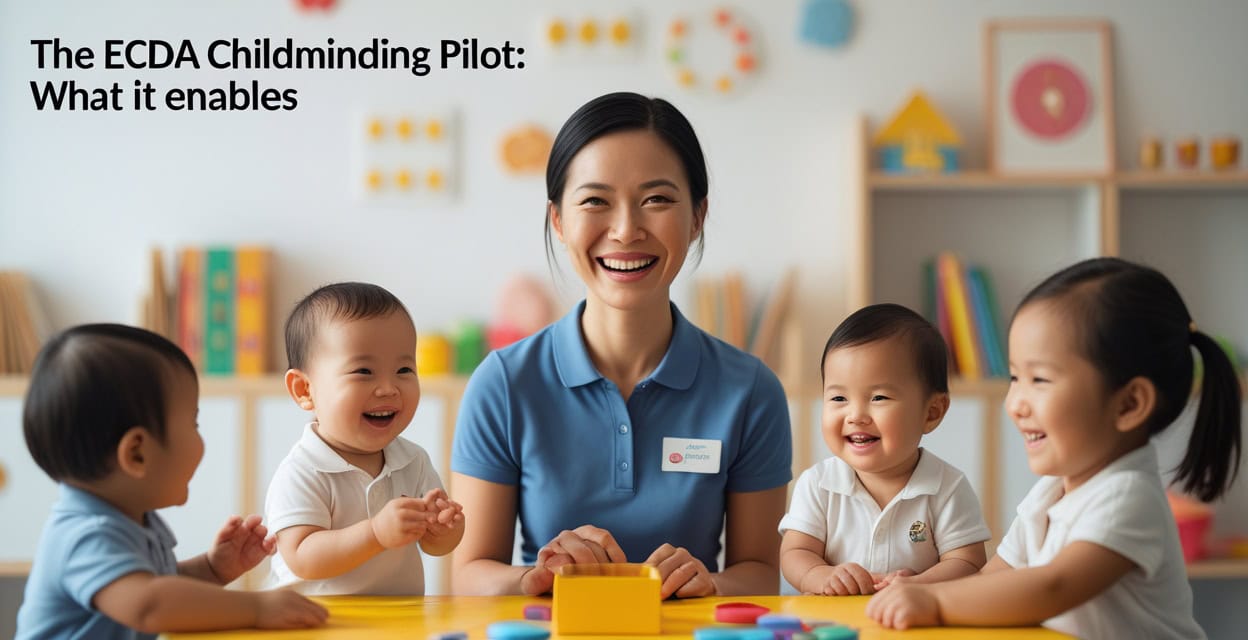
The ECDA Childminding Pilot: What It Enables
From 1 December 2024 to 31 December 2027, Singapore citizens aged 2 to 18 months can access near‑home infant care that is safe, reliable, and flexible. EduNanny by BUTLER is appointed to provide near‑home infant care in micro‑pods of one to three infants per childminder. Care can occur in childminders’ homes or in community spaces designed to be infant‑friendly.
- Subsidised hours: Monday to Friday, 7am–7pm (excluding public holidays) in 5‑hour or 10‑hour blocks.
- Fees before GST: $16.50 (half‑day, 5 hours) and $33.00 (full‑day, 10 hours).
- Payment: CDA/Baby Bonus permitted for subsidised hours.
- Availability: Islandwide, near home or workplace.
- Staffing: Certified, background‑checked childminders trained in infant care and first aid.
- Ratios: Ultra‑low, never more than 1:3.
- Safety technology: CCTV provided in community spaces; CCTV in home settings during care hours with consent, balancing safety and privacy.
EduNanny is, at heart, a covenant: we anchor your child’s day in safety and dignity, we honour the science of development, and we return your baby each evening not only fed and rested, but recognised.

EduNanny’s Five Uncompromising Promises
Think of these promises as five steady fingers that hold a tiny hand. Each one anchors near‑home infant care in connection, safety, and growth.
1) The Attachment Trifecta: Presence, Predictability, Play
Attachment is a daily practice, not a philosophy. With a 1:3 ratio, our childminders provide serve‑and‑return interactions—responding to cries, coos, and curiosity with warmth and attunement.
- Presence: Care moments are unhurried and relational—feeding, diapering, soothing treated as learning encounters (inspired by respectful caregiving traditions).
- Predictability: Gentle routines frame the day—arrivals, feeds, naps, floor time—so infants experience safety in “what comes next.”
- Play: Floor‑based exploration with simple materials, rich language, music, and movement. We invite discovery without overstimulation.
Care‑as‑Curriculum is the approach: ordinary rituals of care become the foundation for development through attention, curiosity, and responsive interaction.
2) The Safety Architecture: People, Place, Practices, Proof
- People: Every EduNanny childminder is background‑checked (including regular household members), certified in infant care and first aid, and trained in hygiene and incident protocols. Ongoing ECDA oversight supports quality and safety.
- Place: Home and community spaces are assessed for infant safety—hazard minimisation, safe sleep, clean ventilation, and infant‑ready layouts that support visibility and calm.
- Practices: A No Sick Child Policy alongside safe sleep guidelines, safe food handling, daily sanitation, and structured handwashing rituals—paired with clear incident management and transparent parent communication.
- Proof: CCTV in community spaces (with consent) and attendance logs, care notes, and timely parent updates to reinforce accountability and trust.
In short: trust is built through training, design, policy, and technology that are open to families.
3) The Development Weave: Tiny Science, Big Gains
Infancy is a tapestry of sensory exploration, motor practice, language exposure, and secure relationships. EduNanny’s framework supports growth across domains:
- Sensory and motor: Tummy time, rolling, reaching, cruising, with safe floor spaces and open‑ended materials that invite movement and problem‑solving.
- Language: Narration of care moments, daily read‑alouds, nursery songs, and vocal mirroring to amplify early language learning.
- Social‑emotional: Emotion labeling, gentle turn‑taking, and comforting responses that reinforce security and self‑regulation.
- Nutrition and sleep: Alignment with family feeding plans, age‑appropriate nap routines, and quiet zones to protect rest.
- Documentation: Observations flow back to parents so home and EduNanny operate as one integrated learning ecosystem.
4) The Happiness Index: Joy You Can Feel
Happiness for an infant is safety, being seen, and soothing presence. EduNanny cultivates joy through:
- Warm hello and unhurried goodbyes
- Consistent caregivers and daily rituals (welcome song, window‑wave goodbye)
- Regular outdoor time when possible, sunlight, and fresh air
- Music, songs, and gentle fingerplays
- Respect for individual rhythms and preferences, with flexible adaptation to nap and feeding patterns
When babies trust the day, they lean into learning. Joy follows safety, and curiosity grows from there.
5) The Civic Promise: Childminding That Works for Working Singapore
The Pilot’s logic is clear: when near‑home, high‑trust infant care exists, families thrive and the economy hums. EduNanny’s ultra‑low density model supports this by:
- Reducing commuting time and parental stress
- Providing meaningful work opportunities for certified childminders across neighbourhoods
- Maintaining affordability through government support and disciplined operator standards
- Strengthening communities by embedding care where families live
Public purpose, at a human scale: a tiny pod, a short walk from home, an infant learning that the world is safe.

What to Expect from EduNanny — At a Glance
- Ultra‑low ratio: 1 childminder to a maximum of 3 infants
- Ultra‑low density: Calm micro‑pods, fewer transitions, more attention
- Certified caregivers: Trained in infant first aid and basic care; assessed and supported
- Background checks: On childminders and regular household members with access
- Safety technology: CCTV in community spaces; optional CCTV in home caregiving areas with consent
- No Sick Child Policy: Protects infants and staff, with clear return‑to‑care guidance
- Hours and pricing: Monday–Friday, 7am–7pm; full‑day or half‑day blocks; fees from $33/day; CDA/Baby Bonus payable for subsidised hours
- Settings: Home‑based and community‑based spaces designed for infants
- Transparency: Daily notes, incident protocols, open lines with EduNanny Concierge Team
- Choice and flexibility: Select days and blocks; discuss extended hours at regular rates
- National initiative: Part of ECDA’s 2024–2027 pilot for excellence, quality, and access

Four Practice Pillars Parents Value Most
Parents consistently tell us they prioritise reliability, safety, visibility, and partnership. EduNanny’s practice pillars reflect those values in concrete terms.
1) Attachment First
Primary caregiver continuity within the pod is vital for secure attachment. The same caregiver (or small team) supports a child across most care moments to promote predictability and trust. Practical tips for families:
- Ask about the caregiver roster and how changes are communicated to you.
- Request short, predictable routines so your child experiences consistency each day.
- Share your baby’s cues and preferences in writing and during handovers to keep the care plan aligned with your family’s style.
2) Health and Hygiene
Sanitation routines, illness policies, and careful hygiene protect micro‑pods. Practical steps for families:
- Review the No Sick Child Policy and the process for returning to care after illness.
- Ask how meals, diapering, and feeding times are scheduled to minimize cross‑contact risk.
- Observe on a site visit how nap areas and play spaces are kept clean and free of hazards.
3) Visibility
Parents know who is caring for their child, where, and how. EduNanny provides CCTV in community spaces and consent‑based CCTV in home spaces, along with daily updates. Practical guidance:
- Clarify what is recorded, how long footage is retained, and who can access it.
- Request regular care notes and a simple daily summary of feeding, sleep, and milestones.
- Ask about real‑time updates during the day if available (text prompts, photo notes, etc.).
4) Partnership
Your voice matters. We tailor routines to your child and respect family culture, feeding choices, and sleep preferences. Practical actions:
- Bring a written care plan and any special routines (e.g., pacifier use, sleep location, soothing methods).
- Establish a preferred channel for communication (WhatsApp, email, printed notes) and set expectations for response times.
- Engage in ongoing feedback—share what’s working and what needs adjustment, and review quarterly milestones or concerns.

How to Sign Up: Three Simple Steps—and Tips to Make It Smooth
- Step 1: Explore and Inquire Visit https://edunanny.com/edunanny-ecda-childminding-service/ or Childminding.EduNanny.com and submit the short interest form. You may also inquire via WhatsApp through the site. Pro tip: prepare a brief family profile (infant age, schedule needs, location, preferred days) to speed matchmaking.
- Step 2: Eligibility and Matching EduNanny Concierge will confirm eligibility (Singapore Citizen; 2–18 months; not concurrently enrolled in an ECDA‑licensed infant care centre) and match you to available pods near your location and preferred schedule. Pro tip: bring a list of non‑negotiables (naps, feeding plan, caregiver language, special care needs) to the call.
- Step 3: Site Visit and Enrolment Schedule a site visit, meet the childminder, review the care agreement and safety arrangements (including CCTV settings), and enrol. Pro tip: during the visit, observe caregiver interactions with infants, the layout of the space, and how safety demonstrations are performed.
If you need care beyond subsidised hours, discuss options with us; extended care may be available at regular rates. Practical note: early sign‑up can unlock more pod choices and flexibility as your needs evolve.

Why This Matters — Who, What, When, Where, and How
Who: Singaporean infants aged 2 to 18 months; parents seeking dependable, dignified care; trained childminders; and communities benefiting from accessible, high‑quality care.
What: Ultra‑low‑ratio, professional childminding designed for attachment, safety, joy, and development; delivered under ECDA Pilot standards.
When: Monday to Friday, 7am–7pm, 1 December 2024 to 31 December 2027; options include 5‑hour or 10‑hour blocks.
Where: Near home or work, in home‑based or community‑based settings with safety protocols and oversight.
How: A safety architecture built on People–Place–Practices–Proof; a Care‑as‑Curriculum pedagogy; an ultra‑low 1:3 ratio; and open, transparent family partnerships.

Our Philosophy and Purpose — A Singapore‑Ready Model for the First Thousand Days
EduNanny by BUTLER rests on the belief that the measure of a society is how gently it holds its youngest. We fuse the wisdom of Montessori’s independence, Vygotsky’s social learning, Bowlby’s secure base, and Pikler’s respectful caregiving into a practical framework that works in Singapore’s context. Our purpose is clear:
- Keep infants safe, seen, and soothed
- Help parents work with peace of mind
- Professionalise neighbourhood childminding with national standards
- Make excellence affordable and accessible
- Build a quiet culture of care that resonates beyond the first thousand days
Closing: A Gentle Call to Action
Your infant does not need everything; your infant needs the right things—safety, steady hands, and a space where their small voice changes the room. EduNanny offers tiny pods, big attention, and a public promise kept close to home.
Come and see. Visit the EduNanny site, speak with our Concierge Team on WhatsApp, schedule a site visit, and enrol when it feels right. From the first hello to the evening handover, we promise to treat your child not as a number in a group, but as a person in a relationship.
EduNanny. One caregiver. Three infants. A nation’s future—held with care.
Visit: https://edunanny.com/edunanny-ecda-childminding-service/ • WhatsApp: via the site
Note: This article reflects the ECDA Pilot framework and EduNanny’s approach to ultra‑low‑ratio infant care in Singapore. Always verify current details on official pages and during sign‑up conversations.
SEO keywords: [#EduNannySingapore, #InfantCareSingapore, #UltraLowRatio, #ECDAChildmindingPilot, #NearHomeChildcare]