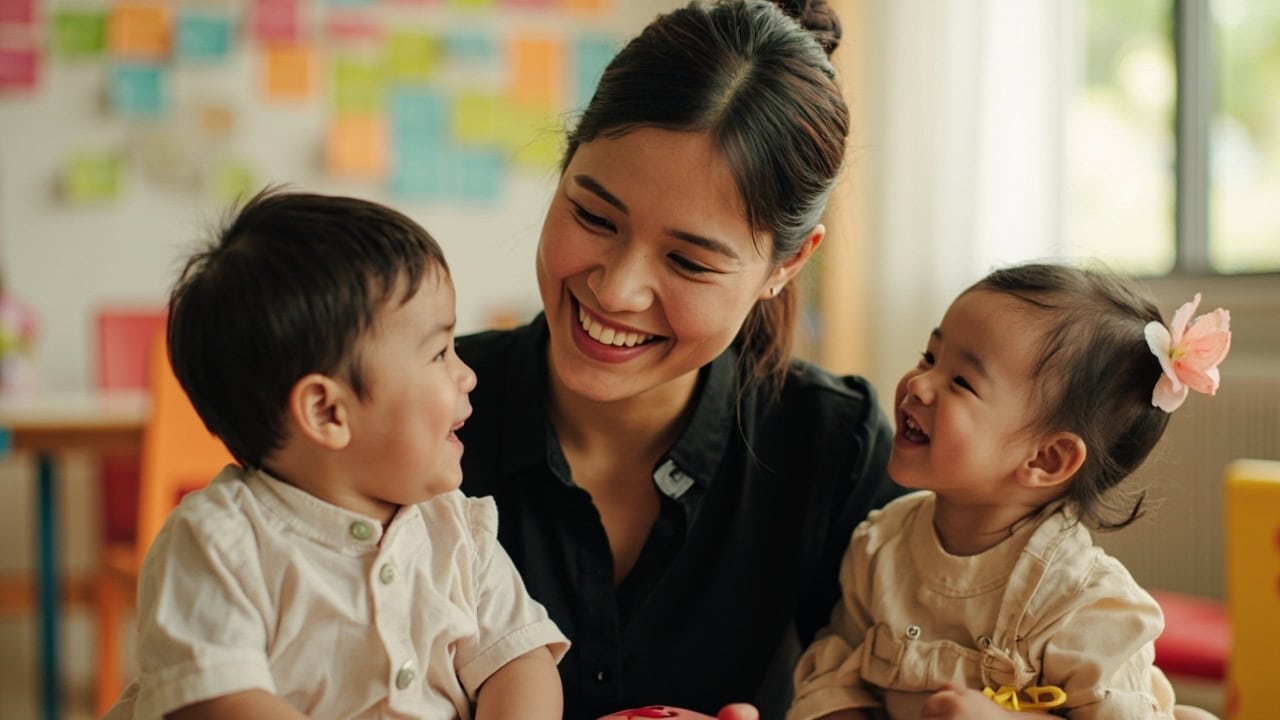
The Singapore Father Ready for More Than Weekends
The Question Singapore Fathers Don’t Ask Out Loud
In Singapore, the answer to a father’s role has long been assumed. The father provides. He works the long hours, brings home the salary that funds the childcare fees, and stands as the steady foundation upon which the family’s logistics rest. This is not wrong—his contribution is real and essential.
But somewhere along the way, this definition of fatherhood became a ceiling instead of a floor. It told him what he should do and what he should not feel about doing it.
The modern Singapore father—particularly in the dual-income households that now define our city—wants more. He wants to be involved in a way that is not defined solely by weekends and school holidays. He wants to understand what his child is experiencing during the hours he cannot be there. He wants to have something meaningful to say when his child comes home and babbles about her day, and he wants to feel that the caregiver knows his face, not just his wife’s.
But he is uncertain whether any of this is his place.
This is the first thing we need to say clearly: it is. It absolutely is.
The father who shows up at drop-off and says good morning to the caregiver—not just for the sake of politeness, but because he genuinely wants to know how his child’s morning is going—is building something. The father who texts the caregiver during the day to ask about lunch and gets a photo back is not being excessive. He is being present in the way that matters to his family.
What Fathers Actually Feel—And Why It Deserves a Name
Singapore’s childcare conversation has addressed drop-off anxiety and separation guilt for mothers. Fathers have their own version of this experience, but it tends to be quieter, less named, and sometimes dismissed as less significant.
It is not less significant.
When a father leaves his infant in someone else’s care for the first time, he is making a profound act of trust. He is believing that this person, in this place, will love his child the way he would if he could be there. He is accepting that he cannot control what happens in those hours. He is carrying a vulnerability that Singapore’s stoic expectations for fathers do not always allow him to express.
Many fathers describe a peculiar loneliness in this. They go to work, perform competence, solve problems—and underneath it, there is a low hum of wondering whether their child is okay, whether the caregiver noticed the slight fever this morning, whether their baby cried when they left and has since recovered.
Consider James, a project manager in Jurong West, who took six months to stop checking his phone compulsively after dropping off his daughter. “I told myself I was being ridiculous,” he shared. “But I couldn’t shake the feeling that something might be wrong and I wouldn’t know.” The update photo became his anchor—a daily confirmation that his daughter was not just fine, but flourishing.
This is not weakness. This is love doing what love does. And it deserves to be acknowledged.
How Fathers Evaluate Differently—and Why That Matters
There is something worth naming about how Singapore fathers make decisions. Fathers often evaluate differently than mothers. Where a mother might prioritize warmth, emotional attunement, and the feeling of connection she gets when she walks through the door of a centre, a father may look for structure, competence, cleanliness, and evidence that systems are in place.
He may spend more time examining the ratios on the wall, noticing whether the staff seem calm or rushed, reading the licensing certificates, and asking about safety protocols.
This is not a lesser way of evaluating. It is a different and equally valid one.
A father walking into a childcare centre for the first time is doing important work. He is asking questions the caregiver may not have been asked before. He is testing whether the environment would earn his trust if he had to leave his most precious responsibility there for eight hours a day. This instinct—this protective, evaluative, pragmatic mode—is not something to overcome. It is something to trust.
Too often, fathers move through this evaluation alone, without the language or confidence to articulate what they are sensing. They may feel in the gut that a centre is not right, but cannot explain why in a way that feels credible at the family meeting table. Or they may feel a centre is right, but worry they are being too quick, too careless, not attentive enough to details their wife would have caught.
Your instincts matter. The way you read a space, the questions you ask, the standards you hold—that is part of what makes you an essential partner in this decision, not a secondary one.
How Singapore Fathers Can Show Up With Intention
For the father who is ready to step into this role, daily involvement can look like this:
- Own the morning routine. Not as a backup when his wife is busy, but as his consistent domain. Learn the diaper bag. Know where the spare clothes are. Know what your child likes for breakfast and prepare it. In doing so, you build a morning rhythm that your child can rely on—and that makes you an expert on your child’s daily patterns.
- Drive the drop-off with intention. Not a rushed handoff, but a moment of presence. Talk to the caregiver. Ask how the morning has been. Watch your child’s face for signals that something is off. Leave feeling like you have done something meaningful, not like you have just transported a package.
- Own the pickup. Be the one who asks the caregiver what happened today—not because you are interrogating, but because you genuinely want to know. Learn to listen for the details your child will not volunteer: how she ate, whether she seemed happy, what she played with. This is not surveillance. This is care.
- Engage with communication tools. Many childcare providers offer updates, photos, and daily logs. Fathers can engage with these actively, not as afterthoughts to be glanced at, but as threads of connection to the hours they could not be present for.
- Prepare the caregiver. Call ahead when your child is sick, or teething, or going through a developmental leap. Make sure the caregiver has what she needs to do her job well. This is partnership in action.
- Show up to the events. The school recitals, the parent-teacher meetings, the open houses. Not just when your wife cannot make it, but as a consistent presence in your own right.
- Be an equal voice in the choice. When choosing childcare, do your own research. Visit your own shortlisted options. Have your own reasons for why this choice feels right for your family. Sign off on a recommendation because you believe in it, not because you are defaulting to someone else’s judgment.
Where Fathers Fit in the Care Partnership
In many Singapore households, there is an unspoken arrangement. The mother handles the logistics of childcare. She communicates with the caregiver, attends school events, knows what the child ate for lunch and how many times she napped. The father is supportive but peripheral. He defers not because he does not care, but because he does not know how to enter a dynamic that seems to already have its arrangements.
But here is what this arrangement misses: the father-caregiver relationship is not the same as the mother-caregiver relationship. It does not need to be. It should not be. It is its own connection, with its own value.
A caregiver who knows the father—who has had conversations with him about his child’s routines, who has heard his questions and respected them, who sends him updates not because his wife asked but because she knows he cares—is a caregiver who is truly part of the village. She sees the full family architecture. She understands that this child has not one advocate but two.
A father who builds this relationship discovers something unexpected: he stops feeling like a visitor to his child’s daily life and starts feeling like a participant in it. The update photo that arrives during his lunch break becomes a conversation starter when he picks his child up. The note from the caregiver about how his daughter said her first word today becomes a moment of connection that belongs to him, too, not just to whoever dropped her off.
This is what we mean when we talk about the care partnership. It is not about fathers doing what mothers do, or replacing what mothers have built. It is about fathers building something of their own—a complementary relationship, a parallel thread of trust, a presence in the childcare ecosystem that makes the whole system stronger for the child.
What Quality Childcare Actually Looks Like
For fathers evaluating their options, understanding what quality care looks like matters. Here are the markers worth noticing:
- Ratio awareness. How many children is each caregiver responsible for? Lower ratios mean more individual attention. For infants, ratios of one to three or better signal a setting where your child will not be lost in the crowd.
- Responsiveness to your questions. Does the caregiver welcome your curiosity or seem to tolerate it? The ones who appreciate engaged fathers are the ones who will keep you informed.
- Consistency of environment. Is the space clean, organized, and calm? Does it feel like a place where a child could thrive? These are the things fathers are often uniquely attuned to noticing.
- Transparency of communication. Will you receive updates? Photos? Daily notes about meals, naps, and moods? This is not a luxury—it is evidence that your child’s day is being observed and recorded.
- Alignment with your values. Does the caregiver ask about your child’s routines at home? Do they seem interested in maintaining continuity between home and care? This kind of partnership approach transforms childcare from supervision into genuine care.
EduNanny Singapore: Built for the Full Family
EduNanny was built with a particular kind of family in mind. The family where both parents work. The family where the question is not whether to have childcare, but how to find childcare that feels right. The family where the father is not an afterthought, but a decision-maker with his own standards, his own instincts, and his own need for reassurance.
EduNanny operates under the ECDA Childminding Pilot, which means it is part of Singapore’s recognized ecosystem of quality care options. The pilot offers pathways that meet families where they are—whether that is home-based care, where a trained childminder comes to the family, or community-based settings that bring care closer to home.
The pilot also brings care within reach. Fee structures are designed to be affordable for Singapore families, with CDA and Baby Bonus funds usable where applicable. In a city where childcare costs can feel like a second mortgage, these provisions matter—and they reflect an understanding that quality care should not be reserved for those who can afford premium pricing.
For infant care specifically, EduNanny maintains ratios that prioritize safety and attention. This means a caregiver who is not stretched thin, who can notice the small things, who can respond to each child’s cues with patience. This is the kind of environment that earns a father’s trust—not through marketing, but through the evidence of how they operate.
Communication and transparency are built into the model. Where updates are sent, fathers are included. Where CCTV measures are deployed, parents know. The intention is not to surveil, but to connect—to give parents, fathers included, the assurance that their child is in a place where she is seen and known.
For fathers who are navigating the centre-based versus home-based question, the affordability question, the logistics question, EduNanny offers something else that is harder to quantify: a service that sees them. That does not default to a maternal lens. That is ready to have the conversation with the father as a parent, not as a supporting character in someone else’s story.
Addressing the Concerns Fathers Actually Have
“What if I’m overstepping?”
You are not. Asking about your child’s day, requesting updates, building a relationship with the caregiver—these are not oversteps. They are what engaged parenting looks like. The caregivers worth trusting will welcome your involvement. If one does not, that is information worth having.
“What if I don’t have time for this?”
Presence is not measured in hours alone. A ten-minute drop-off with intention is worth more than an hour of distracted proximity. And the tools of modern childcare—quick messages, photo updates, brief calls—can fit into the margins of a workday. The question is not whether you have time, but whether you are willing to make it a priority.
“What if my wife handles it better?”
Different is not worse. Your way of evaluating, connecting, and showing up brings something she cannot provide. The father who texts the caregiver about his son’s teething pain is not competing with his wife—he is complementing her. Together, you build a fuller picture of your child’s world.
“What if I make the wrong choice?”
You will not choose perfectly. No parent does. But choosing with intention—researching, visiting, asking questions, trusting your instincts—means you are making the best decision you can with the information available. And if a choice does not work out, you will have the knowledge to course-correct. That is not failure. That is parenting.
Back to the Car Park
He has dropped his child off. He has said goodbye with more hesitation than he expected. He has watched the caregiver greet his daughter with warmth and competence, and he has felt—despite himself—something like relief.
He gets into the car. He sits for a moment before starting the engine.
He is thinking about the presentation at ten. The meetings that will fill his day. The report that needs to be finished. He is also thinking about his daughter, and whether she cried after he left, and whether she will be okay, and whether he made the right choice bringing her here.
And then his phone buzzes. It is a message from the caregiver. A photo. His daughter, sitting at a small table, eating a bowl of porridge with her hands, looking entirely at peace with the world.
He smiles. He saves the photo. He starts the car.
This is the moment. Not a grand gesture, not a dramatic act of parenting—but this small, daily confirmation that his child is known. That he has chosen well. That he is, in his own way and on his own terms, present.
You may feel that the conversation around childcare has never really included you. You may feel that the resources are all aimed elsewhere, that the communities do not quite see your experience, that the role you want to play is not the role the world expects you to play.
We want you to know that this feeling is not a flaw in you. It is a gap in the conversation—and it is a gap we are here to help fill.
You are not less capable of caregiving because you process differently, evaluate differently, or communicate differently. You are not less bonded to your child because your bond looks different than what the parenting guides describe. You are not less important to your child’s development because you are not the one who stays home.
You are the father who shows up. You are the one who provides and protects and presences. You are the one whose instincts about safety and quality matter as much as anyone’s. You are the one who can build a partnership with your child’s caregiver that adds a dimension to your child’s world that no one else can provide.
And if you are still looking for the childcare arrangement that sees all of this—EduNanny Singapore may be ready to have that conversation with you.
Not as a service that talks at you, but as a partner that listens. Not as a brand that assumes the mother’s voice is the only voice that matters, but as a team that understands the full architecture of the family you are building.
This is the invitation. Show up. Ask questions. Trust your instincts. Build the relationship. And know that the role you are playing—the one no one taught you exactly how to play—is exactly the role your child needs you to play.
The father Singapore childcare was waiting for was never someone who had all the answers.
He was someone who was willing to stay in the question—and to show up, fully, while he figured it out.
#SingaporeDads #FatherInChildcare #ChildmindingSG #EduNannySingapore #InvolvedFatherhood