Your Child’s First Big Transition: A Singapore Parent’s Compassionate Guide
Quick Summary: Understanding Your Child’s Transition Into Childcare
- What you are feeling is love, not failure. The anxiety of that first drop-off is the weight of enormous love, and it does not mean you have made the wrong choice.
- Separation anxiety is a developmental milestone, not a warning sign. Your child is learning that people who leave can also return—and this is one of the most important lessons of early childhood.
- Behavioral changes after starting childcare are communication, not problems. Changes in sleep, appetite, and mood are your child’s way of processing a significant change.
- Consistency is the single most important factor. The same caregiver, in the same environment, with the same rhythms creates the security your child needs to adjust.
- Secure attachment is not finite. When your child bonds with a warm, consistent caregiver, they are building a second anchor—not replacing you.
- The adjustment period takes two to four weeks. It rarely moves in a straight line. Monday may bring fresh tears. Friday may bring a smile. This rhythm is normal.
- On the other side of this transition is a more confident version of you. The parent who emerges will be more observant, more connected, and more at peace with the choice they have made.
What Is Actually Happening During the Adjustment Period
Let us start with the most important thing we want you to understand: what you are feeling as you stand at that door, what your child is feeling in those first disoriented days, what you will both feel in the weeks that follow—this is not a sign that something is wrong.
It is not a warning. It is not evidence that you have made a mistake or that your child is not ready or that you are somehow failing as a parent.
What you are feeling is love. Raw, enormous, inconvenient love. The kind that makes leaving hard because arriving was so beautiful. The kind that makes your child’s tears feel like a mirror reflecting every instinct that tells you to stay, to pick them up, to carry them home and never let go.
And what your child is feeling is similar, though they cannot yet name it. They are experiencing the beginning of one of the most significant developmental milestones of their young lives: the understanding that people who leave can also return. That the world contains more than the small circle of home. That they are capable of forming bonds with others—not instead of you, but alongside you.
This is what is actually happening during the adjustment period. Beneath the tears, beneath the changes in sleep and appetite and mood that often follow the start of childcare, something profound is taking place in your child’s brain and heart.
The Adjustment Rhythm Is Normal
The first two weeks, in particular, can feel like a rollercoaster. Some children adjust quickly and seem to settle almost immediately. More commonly, children cycle through periods of protest, exhaustion, and tentative exploration before finding their footing.
- Monday may bring fresh tears as your child processes the return to a new reality
- Tuesday might feel slightly easier—until it doesn’t
- Wednesday could bring a regression that makes you wonder if you are going backward
- Thursday may show small signs of engagement, a moment of play
- Friday might bring that first real smile, a sign that something is shifting
Then the weekend passes, and Monday begins again. This rhythm is normal. It is not a sign that your child is unhappy in their care or that the arrangement is not working. It is the rhythm of adjustment, and it will settle.
Understanding Behavioral Changes and When to Seek Support
Here is what many parents do not realize until they are in the midst of it: the behavioral changes that follow the start of childcare are not problems to be solved. They are communication. Your child is telling you something.
They are saying that this is new. That they are processing. That they need time and consistency and the assurance that you are still there—that the end of the day will bring you back to them.
Common adjustments you may notice include:
- A child who was sleeping through the night may start waking again
- A child who was eating well may become selective or fussy at meals
- A child who was content may cry more easily or cling more fiercely when you are near
These are not failures. They are the normal responses of a developing emotional system encountering a significant change. They are evidence of a child who is paying attention, processing, and adapting.
Signs That Indicate Normal Adjustment
- Tears that gradually lessen in intensity over the first two to four weeks
- A return of appetite and sleep patterns toward baseline within a few weeks
- The reemergence of playfulness and engagement, even if intermittent
- Growing comfort and familiarity with the caregiver and environment
- Small moments of exploration and curiosity emerging between periods of adjustment
- The ability to be comforted by the caregiver, not just by you
Signs That Warrant Closer Attention
- Persistent, unremitting distress that does not improve over time
- Significant changes in weight or growth that do not reverse
- Signs of physical distress—illness, rashes, or other symptoms—that do not resolve
- Complete withdrawal from interaction rather than typical separation protest
- Any indication that your child does not feel safe with their caregiver
If you notice signs that concern you, open communication with your caregiver is the essential first step. A good caregiver will welcome this conversation and work with you to understand what is happening. In some cases, consultation with a pediatrician or child development specialist may be appropriate. Genuine concerns deserve genuine attention, and you should never hesitate to raise them.
Why Consistency Is the Foundation of Quality Care
What helps most during this time is not any particular technique or strategy, though those have their place. What helps most is consistency.
The same caregiver, in the same environment, with the same rhythms of greeting and parting and reunion. Children build security not from the absence of change but from the presence of reliability.
When they know that Ms. Tan will be there every morning, that the routine will unfold in familiar ways, that the transition from your arms to her arms follows a predictable pattern—this predictability becomes the ground beneath their feet.
What Quality Childminding Looks Like
Understanding what distinguishes quality care can make the difference between an adjustment period that feels manageable and one that feels endless. One of the most concrete indicators is the caregiver-to-child ratio, especially in infant care where smaller numbers mean more attention and more responsive care.
| Care Setting | What This Means for Your Child |
|---|---|
| One caregiver to 1–3 infants | Each child’s cues are noticed. Needs are met quickly. Individual rhythms are respected. |
| One caregiver to 4–6 infants | Caregivers manage well, but individual attention is more limited during peak times. |
| Higher ratios | Attention is stretched. Individual observation becomes challenging. |
Children build security from routine. The morning greeting, the afternoon rest, the evening reunion—these become the scaffolding of their emotional world. When care is irregular, when the schedule shifts unpredictably, children do not have the opportunity to build that scaffolding. When it is consistent, they do.
Your Bond, Partnership, and the Village You Are Building
There is a fear that we see often in the parents we work with. It is the fear that placing your child in someone else’s care will somehow diminish your bond with them. That the hours apart will create a distance that grows over time. That your child will look to their caregiver instead of you, and that something essential will be lost.
Secure attachment is not a finite resource. It does not diminish when shared. When your child forms a bond with a consistent, warm, knowledgeable caregiver, they are not taking something away from you. They are building a second anchor—a second point of security from which they can operate.
Research consistently shows that children with multiple secure attachments—with parents and with other trusted adults—demonstrate greater emotional resilience, stronger social skills, and more confidence in exploring their world. The caregiver who knows your child’s rhythms, who can read their cues, who provides attuned care in your absence, is not replacing you. They are complementing you. They are holding a piece of the village that modern life has asked us to build anew.
The partnership between you and your child’s caregiver is the key that unlocks so much of what we have been speaking about. When you can communicate honestly about what you are seeing at home, when you can ask questions without judgment, when you can receive observations from the caregiver without defensiveness—the result is a richer understanding of your child and a more responsive care environment.
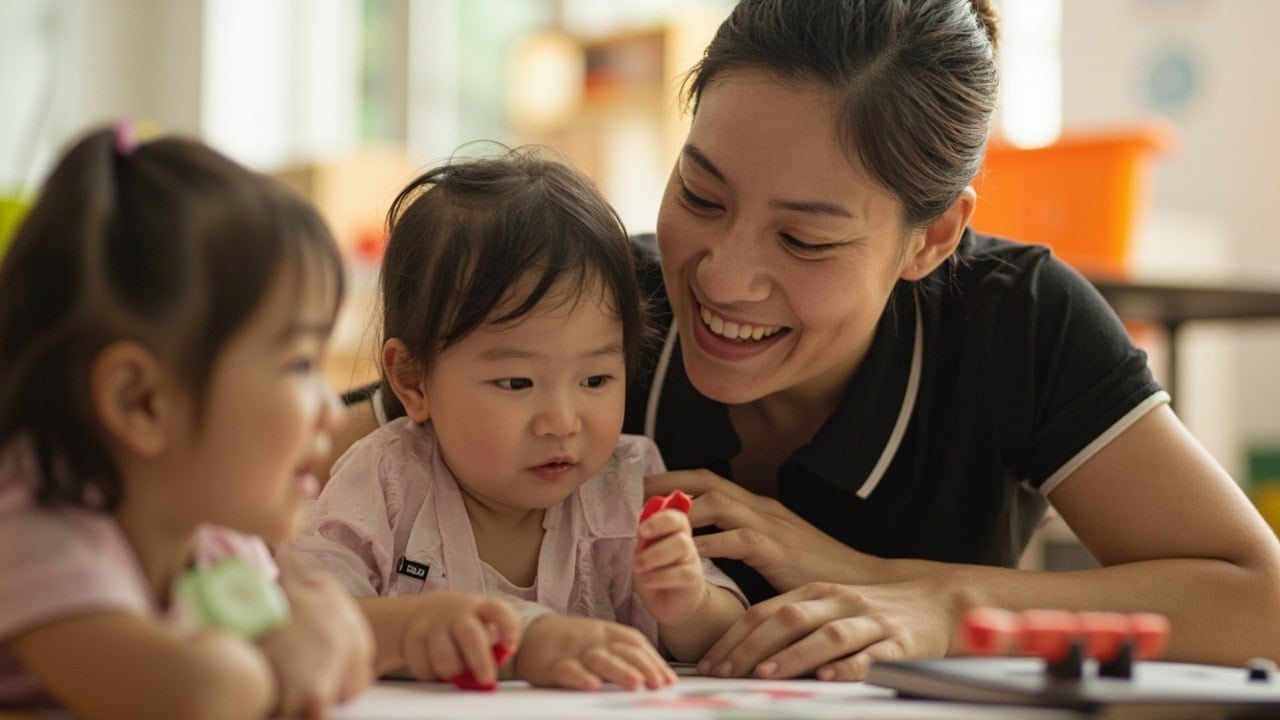
This partnership also transforms the adjustment experience for you as a parent. When you know that your child’s caregiver is attentive, communicative, and genuinely invested in your child’s wellbeing, the anxiety of those first drop-offs begins to ease. You are not abandoning your child to a stranger. You are entrusting them to someone who will send you updates, who will notice when something is off, who will hold them gently when they are sad and celebrate with them when they laugh.
Common Questions Parents Ask
“Am I Ready? Is My Child Ready?”
There is rarely a perfect moment. The question is not whether readiness has arrived but whether the need is real—and for most families navigating dual incomes, extended work demands, or the absence of extended family support, the need is real. What matters is not a theoretical readiness but the quality of the care you choose and the support you provide during the transition.
“I Feel Guilty About Leaving My Child”
Guilt is the shadow of love. It exists because you care deeply, not because you are doing something wrong. The goal is not to eliminate guilt but to move through it toward clarity. When you return at the end of the day, when your child runs to you with joy, when you see them growing in confidence and security—you will know that the decision you made came from love, and it was the right one for your family.
“What If My Child Never Adjusts?”
The vast majority of children adjust. The adjustment takes time—usually two to four weeks—and it rarely moves in a straight line. But children are remarkably adaptive. They do not need perfect arrangements. They need consistent, warm, responsive care—and they will find their footing within it.
“Is It Selfish to Want My Career Back?”
It is not selfish to want to work, to grow, to contribute, to be something beyond the parent you are becoming. You are modeling for your child a life that includes purpose, growth, and engagement with the world. That modeling has value. Your child will not remember the first weeks of adjustment as traumatic. They will remember growing up with a parent who was present when present, who returned with joy, who showed them that adults can leave and come back and leave and come back again—and that this is how the world works.
The Parent Who Emerges on the Other Side
There is a version of yourself that will emerge on the other side of this adjustment period. You may not recognize her yet. You may not be able to see past the anxiety of the first days or the exhaustion of the first weeks. But she is there, waiting.
She is the parent who learns, in the course of this experience, that her child is more resilient than she feared. That the tears at drop-off do not mean lasting distress. That her child can form new bonds without losing the old ones. That she can leave, and return, and leave again, and that each time the leaving becomes a little easier because the reunion proves that it is survivable.
She is the parent who becomes more observant. Who learns to read the signals her child sends—the subtle shifts in mood, the changes in sleep that indicate stress, the small moments of progress that signal growth. She develops a sensitivity to her child’s inner world that enriches their relationship in ways she did not anticipate.
She is the parent who builds a partnership with her child’s caregiver. Not a transactional relationship, not a purely professional one, but a collaboration. She learns to trust another adult with her most precious responsibility and discovers that this trust, when placed well, does not diminish her role as a parent. It enhances it.
And she is the parent who finds, gradually and then all at once, that the anxiety of the first days has loosened. That she can say goodbye in the morning without her chest tightening. That she can check in, receive updates, and let go of the need to control what she cannot control.
That she can trust.
EduNanny by BUTLER: Our Approach to Infant Care in Singapore
EduNanny by BUTLER operates within the ECDA Childminding Pilot, and this is not simply a regulatory designation to us. It represents a philosophy of care that we have built over years of listening to families, understanding their needs, and designing something that truly serves them.
The pilot offers pathways that include home-based care, community-based arrangements, and centre-based options—each with its own strengths, each designed with the same core commitment to the children and families we serve.
One of the commitments we are most proud of is our infant ratio. In our home-based settings and throughout our pilot, we maintain ratios of up to one to three infants, ensuring that each child receives the attention, observation, and responsive care that their development requires. In a landscape where ratios can sometimes stretch thin, we believe this small number matters enormously.
It means that when your child signals a need, there is a caregiver who can respond. It means that each child’s unique rhythms, preferences, and developmental trajectory can be observed and understood. It means that the consistency we speak about is not just a promise but a structural reality.
We also know that the financial realities of childcare in Singapore are real and pressing for many families. Within the pilot framework, fees are structured to be affordable, and we actively support families in accessing available subsidies. Your Child Development Account can be used, and the Baby Bonus provisions apply.
We want quality care to be accessible, not a privilege reserved for those with unlimited resources. Because the first thousand days matter, and every child deserves the best possible start.
Communication You Can Trust
When you drop your child off in the morning, you are making a promise you cannot fully verify until you return. Quality care acknowledges this reality and builds in transparency. Daily updates. Open channels for questions. Regular dialogue about what is happening in your child’s day. These practices allow you to move through your workday with greater peace, knowing you are connected to what is happening in their world.
A Note on Modern Family Life
For many families in Singapore, this conversation is shaped by specific circumstances. The demands of dual-income households. The absence of extended family nearby. The cost of living that makes it impossible to imagine any other arrangement.
We do not believe there is one right answer for every family. We believe there is the right arrangement for your family—and that arrangement should be supported without judgment, without guilt, and without the sense that you are somehow falling short.
Children do not need perfect parents. They need present, loving, responsive caregivers—and this can include parents, extended family, and professional caregivers working in concert. What they need most is consistency, warmth, and the knowledge that the adults in their lives are working together on their behalf.
Begin Your Journey With Us
We know that you came to this conversation carrying something. Perhaps uncertainty about whether now is the right time. Perhaps guilt about leaving your child. Perhaps anxiety about what the adjustment period will feel like. Perhaps fear that you are not ready, or that your child is not ready, or that the world is not ready to receive your child in the way they deserve.
All of these feelings are valid. All of them are part of the territory. And all of them can be held, understood, and moved through.
Because here is what we have seen, again and again, in the years we have done this work: we have seen families walk through the door carrying all of that weight. We have seen them return at the end of the day, exhausted and tearful and uncertain. And we have seen what happens over the weeks and months that follow.
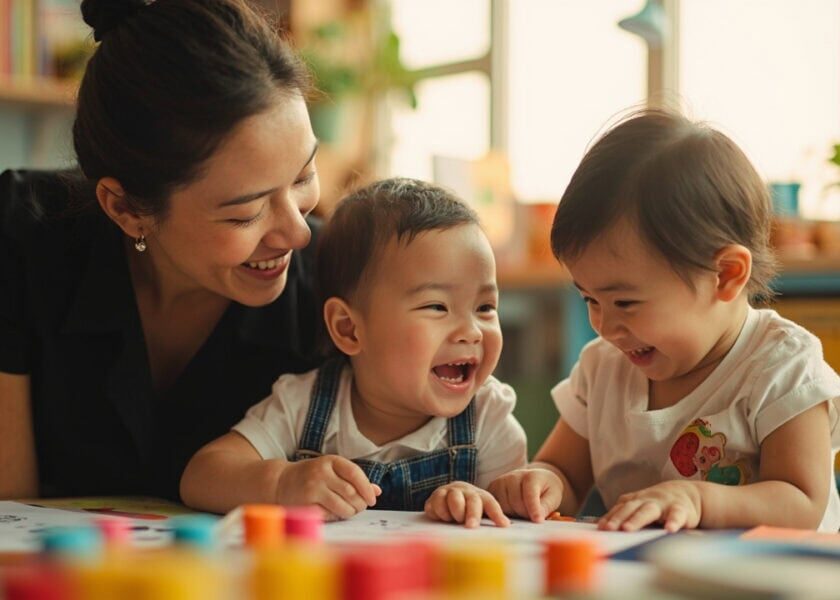
The child who was crying begins to laugh. The parent who was anxious begins to relax. The caregiver who was a stranger becomes a trusted figure. The routine that felt impossible becomes, simply, routine.
The first goodbye is not the last word. It is the beginning of a conversation that will unfold over months and years. And the child who emerges from this transition will be more secure, more confident, and more capable than the one who entered it.
Because they will have learned, in those first weeks, that goodbye is not forever. That the people who love them can leave and return. That the world is big, and they can navigate it. That they are held, even when you are not the one holding them.
This is what EduNanny stands for. It is why we have built what we have built. It is why we participate in the ECDA Childminding Pilot—not as a checkbox but as a commitment to the idea that every family deserves access to high-quality, consistent, affordable care.
We know that choosing childcare is one of the most significant decisions you will make for your family. We know it comes with weight, and worry, and hope. And we know that finding the right partner for that care can make all the difference.
If you are ready to take the next step—to learn more about our approach, to tour our settings, to ask the questions that matter to you—we would be honored to walk this path with you.
The transition is real. The feelings are valid. The adjustment takes time. And on the other side of it, there is a version of this experience that is not characterized by anxiety and fear, but by trust, connection, and the quiet confidence that comes from knowing your child is in a place where they can thrive.
We would be honored to help you get there.
EduNanny by BUTLER is a participant in the ECDA Childminding Pilot, offering consistent, developmentally focused infant care for families in Singapore. Learn more about our approach or reach out to begin a conversation.