Trained Eyes on Your Child: What Professional Observation Looks Like in Singapore
The Silence After the Morning Handover
There is a particular silence that follows a morning handover. You have handed your child to someone else, and for the next several hours, you cannot follow them.
You are in meetings, on public transport, at your desk, in conversations with colleagues. But somewhere across the city, your child is in a room you have never seen, with a person whose name you learned only recently, doing things you will not witness.
You are not failing. This is simply the reality of families where two incomes sustain a household, where grandparents may still be working, where the village we long for has scattered across geography and generations.
Is my child crying for me right now? Is she being held when she needs to be held? Is anyone noticing the thing I notice—the way his brow furrows before he gets tired, the particular sound he makes when he is proud of himself?
These are not unreasonable questions. They are the questions of a parent who loves their child and cannot be two places at once.
What Trained Observation Actually Looks Like
When we speak of trained observation in infant and early childhood care, we are not speaking of casual attention. We are not speaking of the glance across the room, the check that a child is still breathing, the acknowledgment that a toy has been picked up.
Trained observation is the capacity to notice not just what a child is doing, but what it means. It is the ability to read behavioral patterns across time, to understand connections that might not be visible in any single moment.
Reading Patterns and Meanings
A trained caregiver notices that a child’s refusal to eat at lunch might be connected to a disrupted morning nap three hours earlier. They understand that sudden clinginess is not random but is a body’s way of expressing something it cannot yet name.
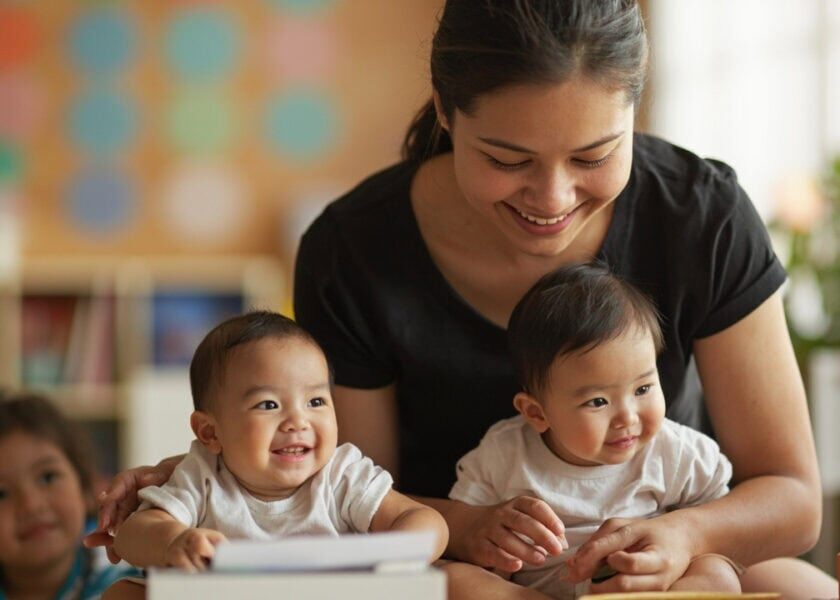
They notice the way children arrange themselves in space—the toddler who always chooses the corner, the baby who reaches for one caregiver over another in a pattern that reveals attachment preferences invisible to a parent who sees only the end of each day.
They notice the micro-expressions that cross a child’s face in the seconds before a tantrum: the tightening around the eyes, the slight stiffening of the body, the moment when intervention might still be possible.
Recognizing What Others Might Miss
- A usually social toddler has been standing at the edge of play for three consecutive mornings—not withdrawn, but watching. A trained eye reads this as the work of a mind building something new, processing social dynamics before engaging.
- An infant’s cry at three in the afternoon carries a different register than the cry at nine in the morning—not just louder or softer, but a different quality of need, signaling overstimulation accumulated through hours of learning and relating.
- The concentration that precedes a language burst. The first instances of parallel play. The moment when a baby who has been crawling for weeks finally decides to try standing.
This is what professional training in child development looks like in practice. It is not a certificate on a wall. It is a way of being with children that has been cultivated through study, supervised practice, reflection, and continued learning.
Trained Observation vs. Generic Supervision
| Generic Supervision | Trained Professional Observation |
|---|---|
| Checks that a child is safe and present | Notices the quality of a child’s engagement, attention, and emotional state |
| Notes what a child does in the moment | Recognizes patterns across days and weeks that reveal development and needs |
| Responds to problems after they escalate | Notices early signs of dysregulation and intervenes before breakdown |
| Provides activities to fill time | Creates intentional provocations that match each child’s developmental work |
Why This Matters for Singapore Families
Singapore parents carry enormous pressure—pressure to perform at work, pressure to optimize their children’s development, pressure to be present, to be patient, to be everything.
The guilt of separation is real, but it is often joined by a second, quieter guilt: the guilt of not knowing whether what we are doing is enough. We hand our children to caregivers and we wonder whether the person holding our child is simply passing time until we return, or whether they are doing something meaningful with those hours.
Trained observation is the answer to that question—not a perfect answer, not a guarantee, but a meaningful one. Because when you choose a caregiver who has been educated in child development, who has been taught to see, you are not handing your child to a stranger. You are extending your village with a professional whose eyes align with your own.
Parents and Professionals: Complementary, Not Competitive
You know your child in ways no caregiver ever will—the particular music of your voice, the specific history of your bond, the private language you have built together over months or years.
Trained observation does not replace what parents know. It adds a dimension of observation that complements parental intuition. When your caregiver notices something about your child, she is not seeing something you would miss because you are a bad parent. She is seeing something because her professional training has given her a lens that benefits from an outside perspective.
What EduNanny’s Approach Looks Like
EduNanny Singapore has built its practice around this understanding. Not just supervision. Not just safety. But the disciplined, educated, attentive observation of your child by professionals who have chosen to learn how children work—and who have committed themselves to watching yours with the same care you would bring if you could be there.
The ECDA Childminding Pilot Framework
EduNanny operates within the ECDA Childminding Pilot, a framework established to recognize and develop professional childminding as a legitimate and valued pathway for Singapore families. The pilot structure reflects a belief that childcare is not merely a logistical arrangement but a developmental environment—and that the people who provide it deserve the training, support, and professional standing to do so with excellence.
What This Means for Your Family
- Thoughtful caregiver-to-child ratios ensure that each child receives the attentive observation meaningful care requires. When a caregiver is responsible for one, two, or at most three infants at a time, they can watch closely, remember what they see, and build a picture of each child over time.
- Flexible care arrangements span both home-based and community-based pathways, allowing families to find the configuration that best fits their circumstances while maintaining the same professional standards across settings.
- Consistent care blocks provide the predictability that young children need to build trust and security with their caregivers—consistency that transforms strangers into familiar, trusted figures over time.
- Financial accessibility through pilot fee structures and CDA and Baby Bonus acceptance ensures that professional care is accessible to families across a range of circumstances.
Communication as Partnership
Parents receive regular insight into their child’s day—not just what they ate and when they slept, but what caregivers noticed, how they engaged, what seemed to be occupying them. This is not surveillance of the caregiver. It is the natural extension of a relationship in which parents are understood as partners, not clients, and in which the child’s experience is the shared priority.
The Daily Experience: What Changes When Observation is Professional
When a child is in the care of a trained observer, their day is different. Not because activities are more elaborate or environments more impressive, but because their inner life is being tracked.
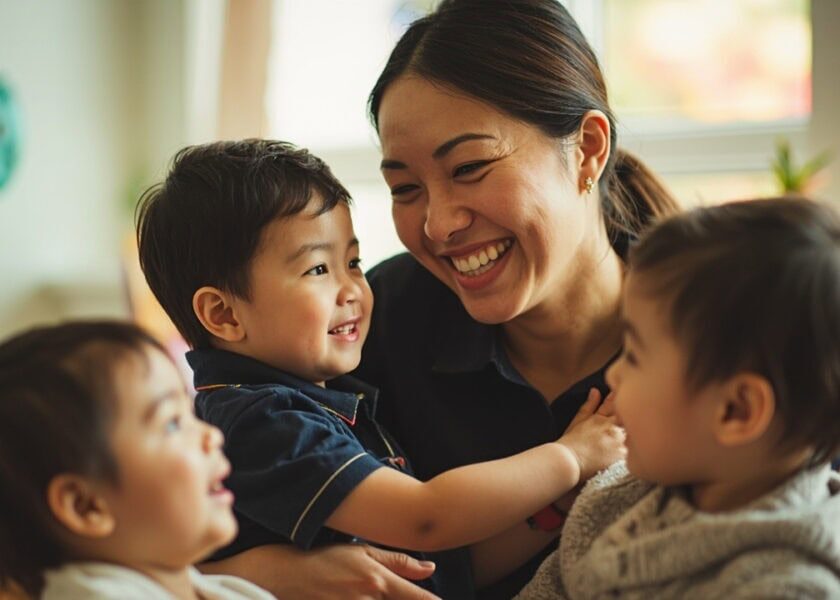
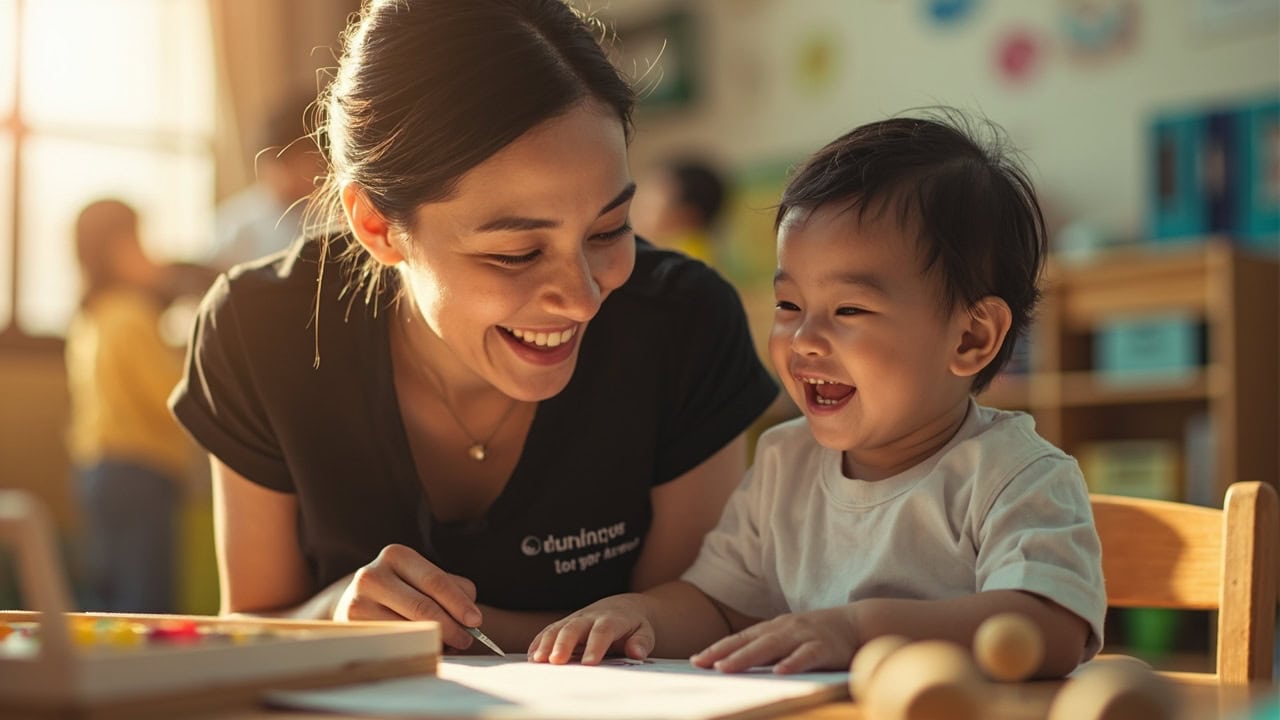
Their caregiver knows that this child is working on a particular skill, and so she creates opportunities for that skill to be practiced. Their caregiver knows that this child becomes dysregulated when overtired, and so she adjusts the schedule before the breakdown happens. Their caregiver knows that this child’s way of showing curiosity is different from her playmate’s way, and so she offers different materials, different provocations, different responses.
The child is not being watched. The child is being known.
Professional Competencies Behind Quality Care
- Developmental sequences—the way language emerges, motor skills unfold, social cognition develops—so caregivers can recognize where a child is on that trajectory and respond appropriately.
- Sensory processing—that some children are overwhelmed by noise and others are under-stimulated by quiet, and how to create environments that meet each child’s nervous system where they are.
- Attachment theory—that children form bonds in particular ways and that the bond with a caregiver complements rather than threatens the parent-child bond, providing additional security from which the child can explore.
Common Parent Concerns
“What if my child cries for me and no one notices?”
A trained caregiver notices. They notice the quality of crying, not just its volume. They understand that a child’s cry at different times of day may communicate different needs.
“Will my child form an attachment to the caregiver that competes with our bond?”
Children can form multiple meaningful bonds. A secure attachment to a caregiver actually supports the parent-child bond. The caregiver becomes part of your child’s village, not a replacement for you.
“Is professional care really that different from what any warm, caring person could provide?”
Warmth and instinct matter enormously. But they are not enough on their own. A naturally warm person who does not understand why a child is suddenly clingy may respond with their own anxiety, inadvertently reinforcing the distress. Training does not replace warmth. It channels it with precision.
Finding Someone Who Sees Your Child
Children are not passively waiting for us to return. They are living. Right now, in these hours you cannot see, they are experiencing joy and frustration, making discoveries, building connections, working through fears, learning who they are in relation to others.
The question is not whether they are having experiences during your absence—they are. The question is what kind of experiences they are having. Whether the person with them is simply occupying time, or engaging their mind and heart with the seriousness it deserves.
When that answer is yes—when your child has spent their day with someone who notices them, who responds to them, who sees the emerging person inside the small body and treats that person with professional respect—then the hours of separation become something other than a gap.
They become a continuation. A parallel experience that your child carries forward into the evening, that adds to their development rather than simply filling time until you return.
This is what EduNanny offers to Singapore families. Not just childcare. Not just a person to watch your child. But a trained professional who has chosen this work, who has committed to learning how to do it well, and whose eyes and heart are aligned with your own hopes for your child.
Tomorrow, when you hand them over again, you will feel it. Not certainty—certainty is not what life offers us, and it is not what anyone should promise. But something quieter and more durable than certainty.
Trust. The earned, evidence-based trust that comes from knowing that the person holding your child has been taught how to hold them well.
Your child is ready for someone who sees them. You are ready to find that person. EduNanny is here to make that match—not for a day, but for as long as your family needs it.
To learn more about EduNanny Singapore’s professional childminding services and how our trained caregivers support your child’s development, reach out to schedule a conversation with our team. You can also read more about our approach and our commitment to quality, development-oriented care for Singapore families.