How Singapore Parents Can Learn to See Quality Childcare
Observation Skills: What to Watch For in Real Time
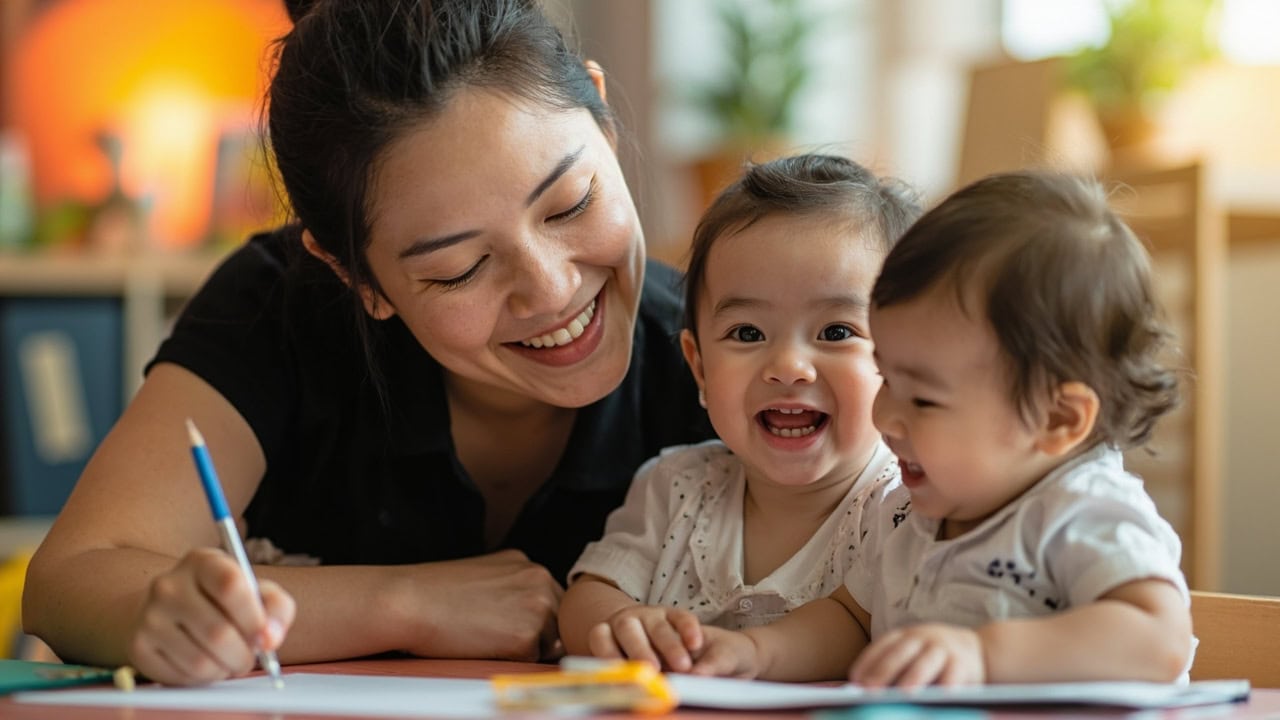
When a caregiver speaks to a child, how long does the child have to process before the next interaction arrives? In high-quality infant care, there is a quality of attention that includes waiting. The caregiver does not rush from one task to the next. She gives the child time to respond in their own time, and when that response comes, she receives it as if it matters.
Because it does.
What Attunement Looks Like
This is what we call attunement, and it is the single most important thing you can learn to recognise. Attunement is not a warm personality or a gentle voice, though those things matter. It is something more specific: the caregiver’s ability to read what the child needs in the present moment and to respond in a way that meets that need accurately.
Watch for the caregiver who notices when a child’s body begins to tense before a transition. Watch for the one who reads a slight withdrawal and adjusts her approach before the child escalates. Watch for the caregiver who is not just managing behaviour but genuinely participating in the child’s experience of the morning.
You will know attunement when you see it because the child will look at ease.
“The caregiver who waits—who gives a child the space to respond in their own time, and who receives that response as if it matters—reveals something that no policy document can capture.”
Reading Children’s Bodies
Children, especially infants and toddlers, are extraordinarily honest. They have not yet learned to perform comfort they do not feel. So pay attention to what their bodies are telling you:
- Is the child’s body soft, or is there a general background tension even when the child appears to be engaged with an activity?
- Are children able to move freely and with purpose, or is most movement directed and controlled by adults?
- When a child moves toward a caregiver, is there a sense of seeking closeness, or is there hesitation—a checking of the adult’s availability before approaching?
These are not dramatic signals. They will not announce themselves with crying or obvious distress. They are subtle. But they are also consistent, and once you begin to notice them, you will find that the quality of a programme reveals itself within minutes of walking through the door.
The Environment: What It Really Reveals
The learning materials on the shelves, the art displayed on the walls, the ratio of children to toys, the square footage of the play space, the presence of natural materials versus plastic, the amount of natural light—all of these matter, but not in the way you might think. They are not what you are evaluating. What you are evaluating is what these environmental choices reveal about the programme’s underlying philosophy and, more specifically, about how that philosophy translates into daily practice.
Philosophy in Practice vs Philosophy on Display
The environment tells you what the programme believes. What you need to understand is whether those beliefs are held deeply or merely proclaimed.
Consider these alignments:
- Child-led learning will have open-ended materials, but it will also have caregivers who follow children’s leads rather than directing them.
- Independence will have spaces designed for children to move freely, but it will also have caregivers who step back appropriately rather than intervening constantly.
- Respect for children will show in how caregivers speak to them—not just in the presence of parents, but in every interaction throughout the day.
The environment and the interaction must align. When they do not, the environment is decoration, and the philosophy is aspiration rather than practice.
Sensory Details That Matter
Ask yourself as you walk through: do these materials get used? Not are they available, but do the children actually engage with them in meaningful ways? Is the space arranged for children’s autonomy, or does everything require adult assistance?
Notice the details that often go unmentioned in tours:
- The noise level—is it comfortable, or does it feel chaotic?
- The smell—clean, natural, and warm, or clinical and synthetic?
- The pace at which children move through the space
- Whether children can find quiet corners or private spaces when they need them
These sensory observations matter because they describe what daily life actually feels like in this environment—and daily life is what your child will experience.
The Gap Between Visits and Daily Life
During a centre visit, everyone is on their best behaviour. The caregivers know they are being observed. The children are on their best behaviour. The atmosphere is shaped by the occasion.
But what you are choosing is not the visit. You are choosing the Tuesday morning three months from now, when the programme is running on routine, when your child has had a rough night and arrives clingy, when a caregiver is managing a difficult transition, when the energy of the room is shaped by factors that no tour can anticipate or control.
The Six-Week Observation Period
In those first weeks of any new childcare arrangement, you are not just settling your child. You are also, deliberately, observing. The things you want to observe during this period are not the same things the centre tour showed you.
What to Track in the First Six Weeks
- How your child looks when you pick them up. Not just whether they are happy to see you, which is natural and expected, but whether they transition smoothly, whether they carry any residue of stress from the day, whether they seem to have been genuinely cared for in the full sense of that word.
- Whether caregivers remember details. Do they reference your child’s particular preferences and rhythms? Is there continuity in the relationship, or a sense that your child is interchangeable with any other child in the room?
- The quality of communication. How does the programme share information with you? Is it transactional, limited to the required daily reports, or is there a genuine interest in building your understanding of your child’s experience?
When you ask questions, do you receive answers that reflect deep knowledge of your child, or do you receive scripted responses that could apply to any child?
The quality of communication is one of the clearest indicators of the partnership culture that exists within a programme. Where caregivers are treated as professionals with meaningful knowledge to contribute, communication tends to be rich and two-way. Where caregivers are interchangeable and their role is merely custodial, communication tends to be thin and defensive.
Questions Worth Asking
Parents often feel uncertain about what to ask during centre visits, and they often ask the wrong things. They ask about curriculum and receive rehearsed answers about developmental milestones. They ask about safety and receive reassurance about protocols and certifications. These are not useless questions, but they are the questions that every programme has prepared to answer. What you want to ask are the questions that reveal what actually happens when no one is evaluating.
- Ask about staff turnover. Not just whether the centre meets its ratio requirements, but how long caregivers have been in their roles, why previous caregivers left, whether there is a career pathway that keeps skilled caregivers invested in their work.
- Ask about how the programme handles difficult moments. When a child is in distress, what does the response look like? When a caregiver is struggling, how is that addressed?
- Ask about professional development. Are caregivers supported in building their skills, or are they expected to arrive fully formed and then simply maintain?
- Ask open-ended questions about individual children. Not about the programme’s philosophy in general, but about how that philosophy shows up in specific moments with specific children.
Watch how these questions are received. Does the caregiver light up, drawing on detailed knowledge and genuine affection? Or does the response become general, impersonal—the verbal equivalent of a brochure?
The answers to these questions will not be in any orientation pack. But they will tell you more about the quality of a programme than any tour could.
What You’re Really Looking For
Beneath all of these practical observations, there is something deeper. You are looking for someone who will love your child. Not in the way you love your child, not replacing what you provide, but genuinely caring about your child’s wellbeing and development in a way that goes beyond professional obligation.
You are looking for people who have chosen this work, who find meaning in it, who experience genuine satisfaction when a child makes a breakthrough in language or finds comfort in a new way or masters a skill that was just out of reach.
This is not naive. This is not wishful thinking. This is the foundation on which all quality rests.
Without it, no ratio, no curriculum, no amount of training can substitute. With it, caregivers find ways to meet challenges, to adapt, to persist through the difficult moments, to grow in their skills because they care about the outcome.
The Partnership Dimension
This partnership dimension matters more than most parents realise when they begin their search. You are not simply outsourcing childcare. You are entering into a relationship that will span years, that will shape your child’s sense of security, that will influence how your child learns to relate to other adults in positions of care.
The programme that treats you as a client to be served is not the programme that will offer your child what they need.
The programme that treats you as a partner—that invites your knowledge of your child into the daily programme, that sees your role as complementary rather than separate—this is the programme that will genuinely support your child’s development.
Addressing Common Concerns
“How do I know if my child is really thriving, not just being managed?”
Look for signs of genuine engagement: Does your child demonstrate curiosity? Do they seek out specific caregivers or activities? Does their language and social behaviour show growth over time—not just at milestones, but in the richness of their daily interactions?
“What if I don’t click with the caregiver—is that a problem?”
Some personality differences are normal. What matters more is whether your child thrives and whether the caregiver demonstrates attunement, warmth, and professionalism. Your relationship with the caregiver can develop over time; your child’s experience cannot wait.
“Is it disloyal to keep observing after I’ve enrolled my child?”
Not at all. Observing is not distrust—it is engagement. The best childcare arrangements are built on ongoing communication and mutual respect. Your attention to your child’s experience is exactly what a quality programme should welcome.
“What if I chose wrong in the first place?”
Quality matters most in the early years, but it is never too late to adjust. If you notice consistent signs that a programme is not meeting your child’s needs, it is worth reconsidering. The goal is not a perfect choice on paper—it is a genuine fit in practice.
What This Means for Your Search in Singapore
For families navigating the choices available in Singapore, understanding what those underlying conditions are—what to look for and what to ask—is the most valuable thing you can bring to your search.
You are not helpless in this process. You do not have to simply trust that quality exists and hope you have found it. You can learn to see quality. You can develop the observational skills that reveal what tours cannot, that distinguish genuine care from competent performance, that allow you to make decisions with confidence rather than second-guessing.
The parent who learns to observe well does not just choose better childcare. They become better partners in their child’s care. They understand what their child experiences during the day, what their child’s needs are, how those needs shift and develop over time. They are able to engage with caregivers in meaningful ways, to contribute their own knowledge, to participate in a genuine collaboration rather than simply handing over responsibility and hoping for the best.
Where EduNanny Singapore Fits
What EduNanny Singapore has built, through its participation in the ECDA Childminding Pilot, is a model designed to make this kind of quality possible.
By operating within a framework that values small ratios, that invests in caregiver training and development, that maintains clear communication channels and transparent practices, EduNanny creates the conditions in which genuine attunement can flourish.
The home-based model, in particular, offers something that centre-based care often struggles to replicate:
- The intimacy of a smaller setting
- The consistency of a primary caregiver relationship
- The ability to truly individualise care in ways that larger programmes cannot match
This does not mean that home-based care is inherently superior for every family. What it means is that quality is possible across different models when the underlying conditions support it—and that for families who value consistency, individualised attention, and a genuine partnership model, home-based childminding offers a clearly aligned option.
EduNanny offers a clear choice, built on principles that make genuine quality possible, and delivered with the transparency that lets you evaluate for yourself whether the standard is being met.
Your Observation Toolkit: A Quick Reference
As you visit programmes and begin your search, keep these indicators in mind:
Signs of Attunement
- Caregivers give children time to respond without rushing
- Caregivers notice and respond to subtle shifts in a child’s mood or energy
- Interactions feel reciprocal rather than directive
- Caregivers speak about children with warmth and specificity
Signs of Children’s Ease
- Children’s bodies appear relaxed, not tense or rigid
- Children move freely and with purpose
- Children approach caregivers without hesitation
- Children engage in play that shows genuine involvement
Signs of Philosophy in Practice
- Materials are actually used, not just displayed
- Caregivers follow children’s leads, not just the schedule
- The environment supports children’s autonomy
- Sensory details—noise, smell, pace—feel comfortable
Signs of Partnership Culture
- Communication is rich and two-way
- Caregivers remember details about your child
- Your questions receive thoughtful, specific answers
- You feel like a collaborator, not just a client
The Parent Who Observes Well
This is what the first years are really about. Not just developmental milestones, not just readiness for school, though those things matter. They are about building the capacity to relate, to learn, to trust, to grow.
And the people who care for your child during these years are not just caregivers. They are, in the truest sense, your partners in this most important work.
Evaluating childcare quality is not a burden we are placing on you. It is a gift we are offering you.
The parent who knows how to see quality is never at the mercy of programmes, brochures, or sales pitches. They are capable. They are confident. They are true partners in their child’s care.
And that is exactly what your child needs you to be.
Ready to Begin Your Search?
For families seeking a different kind of childcare relationship—one built on small ratios, consistent caregivers, transparent communication, and genuine partnership—EduNanny Singapore offers a thoughtfully designed option rooted in the principles outlined above.
Explore our approach to discover whether it aligns with what you are looking for. You can also learn more about our caregivers and reach out to start a conversation.
Because you deserve to feel confident about who cares for your child.