What Siblings Give Each Other in Quality Care
The Playroom Moment Every Parent With Siblings Recognizes
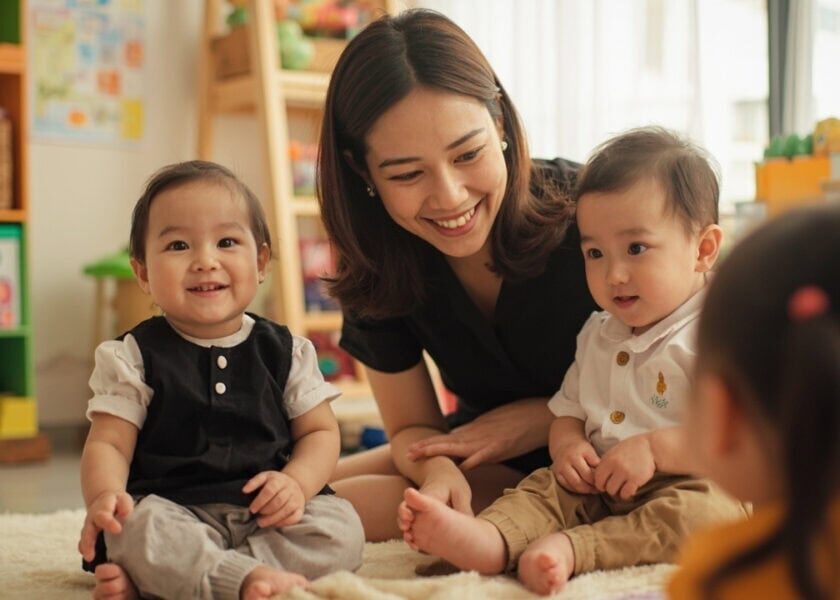
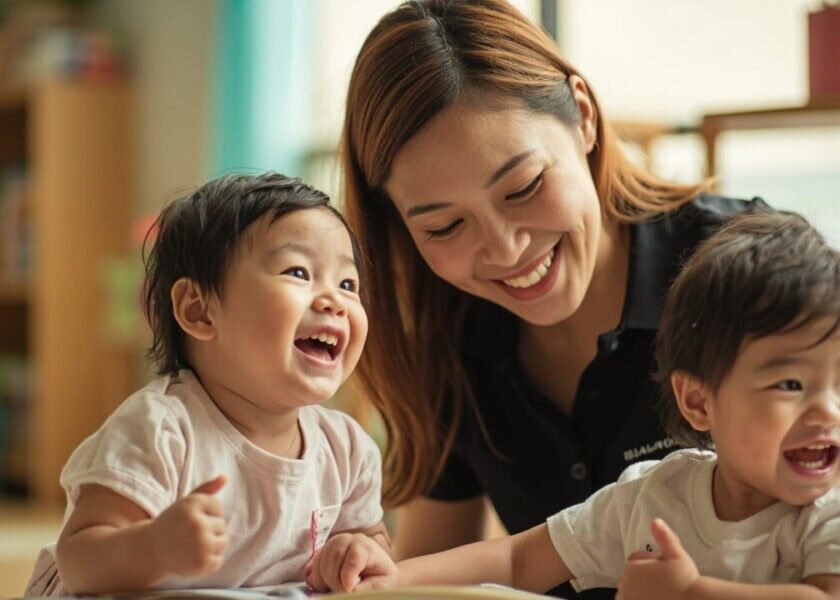
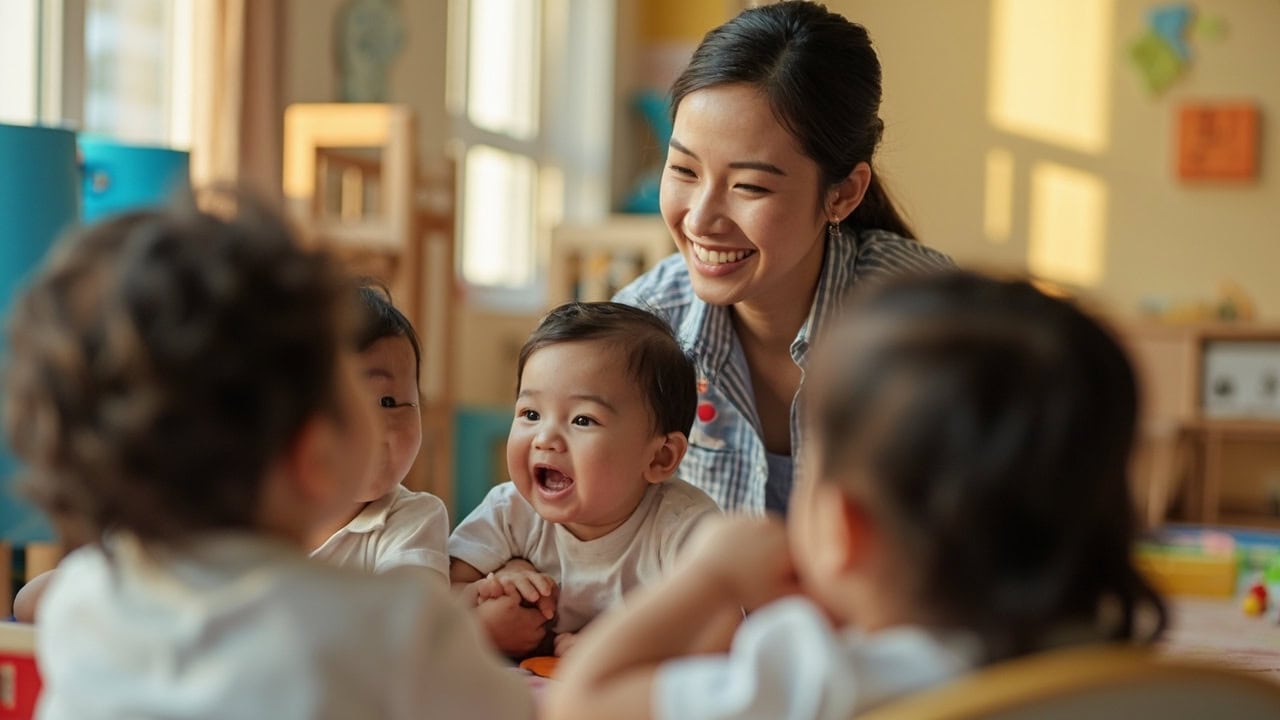
A Thursday afternoon. Soft light filtering through windows. Two children at a low table—one stacking blocks with careful concentration, the other watching. Without a word from either of them, the builder hands a red block to the watcher. The watcher considers it, turns it over, places it on top of the growing structure.
Neither child looks at the adult in the room.
If you have more than one child, you know exactly what this moment looks like. That instant when your children exist in a world you did not create for them—when their bond becomes visible not because you manufactured it, but because something in them recognized something in each other.
Now ask yourself: what happens to that bond when both children are in the same childcare environment? What do they give each other when they grow up together in quality care? And how does the right environment change what brothers and sisters become to each other?
These are the questions that matter most to families with two—sometimes three—children close in age. The families who lie awake wondering if they are giving each child enough individual attention while also nurturing the relationship that forms between them. The families who have discovered, sometimes to their surprise, that having siblings is not just a biological fact but a relationship that must be deliberately tended.
What Siblings Give Each Other in Quality Care
When children grow up alongside siblings in quality care, something happens that cannot happen when they are raised in isolation. They learn—firsthand, experientially—that other people have needs, wants, and perspectives that differ from their own. They learn negotiation before they can spell the word.
This is not sentimental to name. It is observable. Documented. Real.
Consider what siblings in shared care actually experience together. They share not just space but experience—the same songs sung in the same order, the same stories requested night after night, the same small frustrations when a puzzle piece will not fit. This shared reference point becomes the foundation of a relationship that outlasts childhood. It becomes the thing they talk about when they are grown. It becomes the reason they call each other, even across oceans, even across years.
- They become each other’s first peer companions—fellow travelers learning the same lessons at the same pace
- They practice relationship skills—negotiation, compromise, patience, and how to hold both love and annoyance
- They learn the world does not revolve around them—and that this is survivable, even good
- They build a shared foundation—the same songs, stories, and frustrations that become the language of a lifelong bond
- They consolidate their own learning by teaching younger siblings
Siblings also learn something harder: that a beloved toy is not always available when you want it. That the caregiver’s attention is not always on you. That the world does not revolve around them—and that this is survivable. That someone still loves you. That the other child still wants to play with you tomorrow.
This may be one of the most important gifts siblings give each other: the opportunity to practice being in relationship. To learn, in the relative safety of family, how to share and how to advocate for yourself. How to be separate and how to belong.
What Quality Care Does—and Does Not—Do
Quality care does not manufacture sibling bonds. But it creates the conditions in which those bonds can unfold naturally. And that distinction matters.
What quality care provides is space—physical, temporal, and emotional—for siblings to encounter each other as people, not just as family roles. It provides skilled adults who can help children name their feelings, navigate disputes, and return to each other with something intact. It provides ratios that allow caregivers to truly see what is happening between siblings, to notice when a child is feeling sidelined, to attend to the small moments—the hand extended, the half-smile, the whispered negotiation—that are the real texture of sibling life.
The Decision: Separating Siblings or Keeping Them Together
At some point, every family with multiple children confronts a specific question: do we put our children in the same care arrangement, or do we separate them?
The instinct to separate can be powerful. You want each child to have individual attention. You worry that a caregiver, no matter how skilled, cannot possibly attend to two or three children at once with the depth each one deserves. You wonder if your younger child will be overshadowed, or if your older child will be expected to share their caregiver’s affection with a newcomer.
These are legitimate concerns. They deserve careful thought, not dismissal.
Addressing the Common Concerns
Concern: “Each child needs individual attention.”
This is true. Quality care should never mean a caregiver spread so thin that no child is truly seen. But individual attention and sibling togetherness are not mutually exclusive. The right environment provides both—with caregiver ratios that allow for focused interaction while preserving the sibling dynamic.
Concern: “One child will be overshadowed.”
In quality care, skilled caregivers actively ensure this does not happen. They notice when a child recedes, and they draw that child back into the dynamic. They create opportunities for each child to shine, to be the teacher, the helper, the leader.
Concern: “The older child will be expected to grow up too fast.”
This can happen in poor care environments. In quality care, it does not. Older children are allowed to be children—helpers, yes, but not substitute parents. The caregiver’s role remains with the adults.
What Families Who Choose Shared Care Often Discover
In an individual care arrangement, a child receives concentrated attention from one caregiver. This is valuable. But a child in individual care also spends significant portions of the day alone, or in adult company that—however warm—is not peer company.
Siblings provide something that adults cannot: a fellow traveler. Someone who is learning the same lessons at the same time. Someone who celebrates the same small victories. Someone who knows the inside jokes of childhood before there are any words for them.
When Shared Care Becomes Unexpected Grace: A Family Story
Sarah and David have three children—Emma, five; Marcus, three; and Lily, who recently turned one. When Sarah returned to work after her maternity leave ended, she faced a decision millions of Singapore parents recognize: how do you care for three children of different ages while maintaining a career and honoring the unique developmental needs of each one?
Sarah had navigated infant care before, with Marcus. But three children, three different stages, three sets of needs—the complexity was new. The guilt was familiar, though. That persistent whisper: Am I giving each of them enough? Am I giving them what they need to become themselves?
What Sarah discovered surprised her. She had expected childcare to be a compromise—a way to keep everyone safe and supervised while she worked. What she found instead was a kind of unexpected grace.
Because when Emma came home from school and found Marcus and Lily playing together, something shifted. She became a teacher, a protector, a playmate. When Marcus helped Lily stack blocks, he became a capable person, not just a three-year-old. When Lily watched Emma draw, she learned what it meant to want something and reach for it.
The siblings were not just existing in the same space. They were building each other.
Sarah told us something that has stayed with us. She said: “I used to worry so much about whether I was giving each of them enough individual attention. But watching them together, I realized something. They are giving each other something I never could. They are giving each other a companion. And that is not a lesser gift. It might be the greatest gift.”
When Siblings Conflict: The Work of Childhood
Of course, siblings in shared care are not always harmonious. Anyone who has watched two children play together for more than ten minutes knows this.
There is rivalry. There is competition. There are moments when the older child resents the attention the younger one receives, and moments when the younger child mimics the older one in ways that are neither flattering nor welcome. There are screams and tears and slammed doors, even in the best care environments.
This is not a failure of the care arrangement. This is the work of childhood. This is siblings learning to be siblings.
The question is not whether conflict will arise—it will. The question is whether the environment is one in which conflict can be navigated productively. Whether there are skilled adults who can help children name their feelings, resolve their disputes, and return to each other with something intact.
How skilled caregivers handle sibling conflict:
- Active observation—caregivers who see what is really happening between siblings, not just the surface behavior
- Emotional scaffolding—helping children name and express feelings before those feelings become overwhelming
- Fair intervention—not defaulting to “share” or “apologize” without understanding, but helping children find their own resolution
- Reconnection support—helping children return to each other after conflict, showing them that disagreement does not end relationship
No caregiver can eliminate the fundamental tensions of siblinghood. But a skilled caregiver can help children learn that conflict does not end relationship. That you can be furious with your brother and still love him. That the bond survives the blow-up.
Age Gaps, Family Culture, and What Quality Childminding Looks Like
Parents often ask: if my children are far apart in age, can they really benefit from the same care environment? Will my toddler be overwhelmed by an infant? Will my older child be bored by the company of younger children?
The answer, in our experience, is more nuanced than the worry allows.
Yes, children of very different ages need different activities, different stimulation, different approaches to learning. A skilled care environment will not treat a five-year-old and a one-year-old the same way. That would be absurd.
But that does not mean they cannot benefit from being in the same space.
Older children rise to the occasion. They become helpers, teachers, protectors. They demonstrate skills by doing them, and in doing so, they consolidate their own learning. A child who teaches a younger sibling how to use a shape-sorter has not merely transferred knowledge—she has mastered it in a new way.
Younger children are not passive recipients. They observe. They imitate. They want what the older one has, and that wanting becomes motivation. Watch a one-year-old watch a three-year-old climb a structure, and you are watching aspiration in its purest form.
The Family Culture You Are Building
There is a question that goes deeper than logistics. It is this: what kind of family are you becoming?
When you bring multiple children into the same care arrangement, you are not just solving a scheduling problem. You are making a statement about values. You are saying: we believe our children benefit from each other’s company. We believe that growing up together is worth something, even when it is complicated, even when it requires more of us.
Families who choose shared care often discover something unexpected. They find that their children have become a unit—a team—a small society with its own jokes, its own rituals, its own ways of being in the world.
Signs of Quality Sibling Care
| Indicator | What It Looks Like |
|---|---|
| Caregiver ratios | Enough caregivers to observe sibling dynamics and intervene thoughtfully, not just adjudicate disputes |
| Individual recognition | Each child is known as an individual—caregivers can describe each child’s personality, preferences, and current developmental focus |
| Conflict support | Disputes are opportunities for learning, not just moments to be ended quickly |
| Flexible grouping | Children are sometimes together, sometimes in age-appropriate activities—but the together time is valued |
| Communication | You know what happened in your children’s day, including how they interacted with each other |
| Transparency | You feel welcome to ask questions, observe, and understand how sibling dynamics are supported |
The EduNanny Approach
EduNanny by BUTLER is part of the ECDA Childminding Pilot, offering home-based childminding and community and centre-based pathways designed for Singapore families.
Our infant care ratios allow caregivers to truly see what is happening between siblings. With up to one caregiver to three infants in our infant care arrangements, there is space to observe, to intervene thoughtfully, to help children negotiate rather than simply adjudicate. There is time to notice when a child is feeling sidelined and to gently draw them back into the dynamic.
We support the use of CDA and Baby Bonus funds, because quality care should not be reserved for families with significant financial resources. Our communication and transparency practices—including CCTV where deployed—exist because trust is the foundation of everything we do.
These are features. But they are not why we do what we do.
We do what we do because we believe in what siblings give each other. We believe that growing up together, not despite differences but through them, shapes children in ways that last a lifetime. We believe the sibling bond is one of the most powerful relationships a human being will ever have, and that quality care can help shape it well.
The Long View: Choosing Quality Care for Your Family
There will come a day when your children are grown. When Emma is a teenager, when Marcus is navigating secondary school, when Lily is learning to read. The textures of their daily lives will change beyond recognition. The childcare arrangements you agonized over will be distant memories.
But the siblings will remain.
The relationship that began in a playroom, in a home, in a care environment that saw them both together and individually—that relationship will persist. Through the conflicts of adolescence. Through the separations of adulthood. Through the marriages and the moves and the years.
What you are doing when you choose quality care for multiple children is not just solving today’s problem. You are building something that will outlast your own involvement. You are giving your children a partner in life—not a perfect partner, there is no such thing, but a real one. Someone who remembers the same songs. The same stories. The same playroom light on a Thursday afternoon.
Questions to Ask Prospective Providers
- What are your caregiver-to-child ratios, especially for infants and toddlers?
- How do you support sibling relationships when children are together in care?
- How do you handle sibling conflict? What is your approach?
- How do you ensure each child receives individual attention and recognition?
- How do you group children for activities—do siblings ever have time together?
- What does a typical day look like for siblings in your care?
- How do you communicate with families about sibling dynamics and individual development?
- How flexible is your arrangement for families with children of different ages?
Red Flags to Watch For
- Ratios so high that individual attention is genuinely impossible
- Default separation of siblings “for their own good” without clear rationale
- Vague answers about how sibling relationships are supported
- Disinterest in your family’s specific sibling dynamics
- No clear plan for when sibling conflict arises
Ready to Explore Your Options?
Whether you have two children or three, whether your children are close in age or years apart, EduNanny by BUTLER offers flexible care arrangements designed to support both individual development and sibling bonding.
The playroom scene we opened with—the two children, the blocks, the quiet collaboration—lasted perhaps thirty seconds. The adult in the room barely noticed it. It was not remarkable. It was not staged.
It was just siblings, building something together.
That is what we are here to protect: the space in which those moments can happen. The conditions in which sibling bonds can form. The caregivers who can help children navigate the inevitable conflicts and return to each other intact.
To learn more about our home-based childminding and community and centre-based pathways, we welcome you to reach out. Let us help you find the arrangement that fits your family’s unique needs—and the unique needs of your children.
We believe siblings belong together. Let us show you what that can look like.