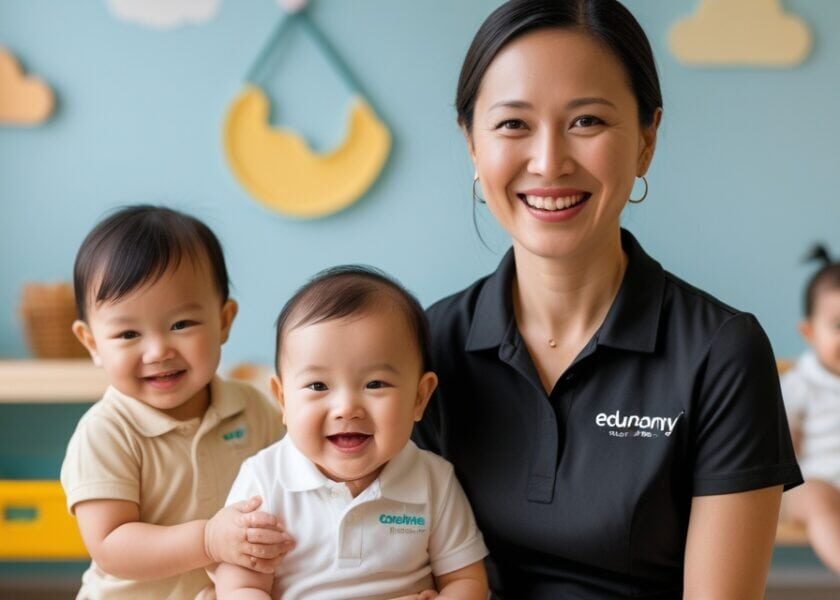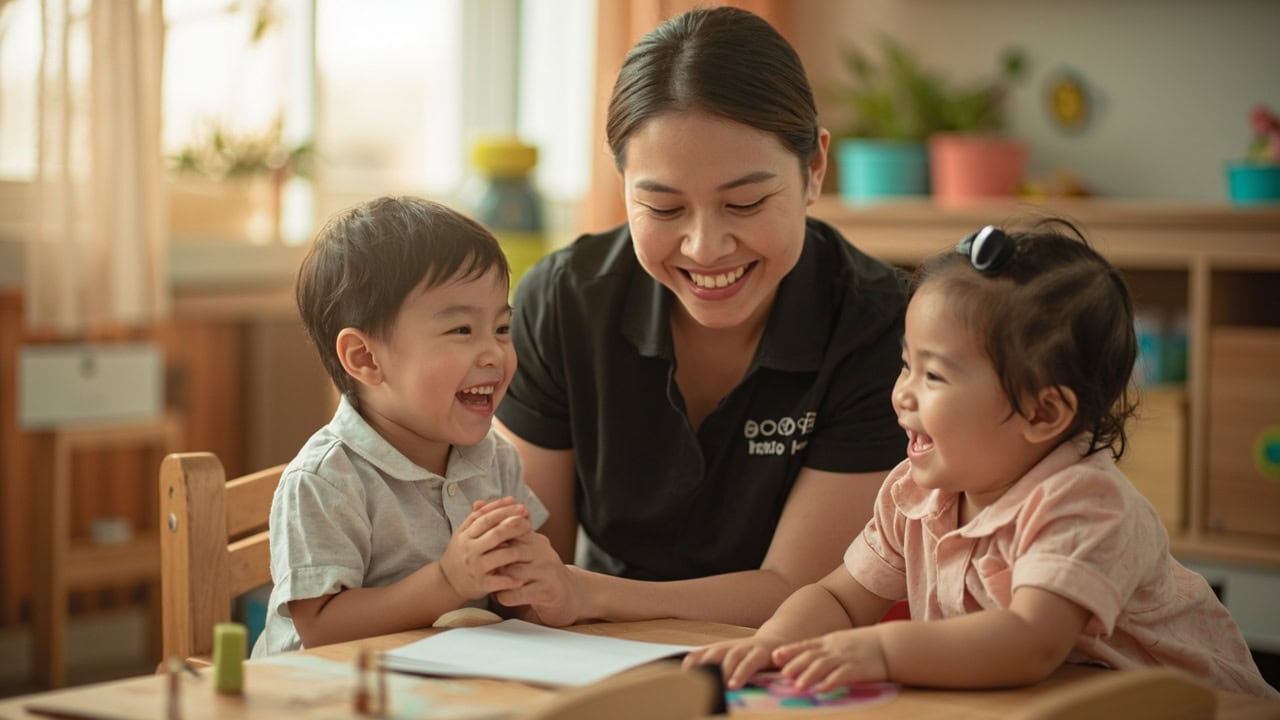
Singapore Families Are Building a Better Childcare Village Together
The Singapore Family Childcare Reality
Singapore has one of the highest rates of grandparent involvement in childcare anywhere in the world. This is not a problem. This is a gift. Our grandparents carry knowledge, patience, and a kind of instinctive wisdom that no training can fully replicate. They know how to calm a fussy infant without thinking about it. They know the songs. They know the rhythms. They have raised children in this city, in these humidity-soaked streets, in these HDB corridors where neighbors become family, and they did it with less than we have and more love than we sometimes know how to express.
But here is what also happens in Singapore, with increasing frequency and with genuine emotional weight: parents are making different choices than their parents did. Not because they distrust their parents. Not because they believe family care is inferior. But because the world their children are growing into has changed.
Both parents, in most Singapore households, work. Modern child development science has deepened our understanding of infant needs in ways that were not available a generation ago. And sometimes, a parent wants something for their child that they cannot quite articulate to someone who raised them differently.
The Childcare Equation: Balancing Generations
The childcare decision in a Singapore family is more complex than it appears from the outside. On one side: filial piety, the deep cultural expectation that we honor and defer to our elders, that we trust their judgment because they raised us. On the other side: parental autonomy, the very human desire to make the best choice for our own children, even when that choice looks different from what our parents expected.
And at the center, the child — small, unknowing, entirely dependent on the adults around them to figure this out together.
This is where most parenting advice fails Singapore families. It frames the choice as either-or: traditional care or modern care, grandparents or professionals, family or expertise. It sets up a false competition that no one wins, least of all the child.
Quality childcare, when done well, does not replace the family. It extends the family. It adds trained professionals who bring observation, intentionality, and developmentally appropriate practice into the equation.
- A caregiver who understands infant development milestones and can recognize when a child is approaching a developmental leap
- An environment arranged to support safe exploration as infants begin to discover their world
- Consistent routines that help infants develop trust and security
- Transparent communication so parents know exactly how their child’s day unfolded
- Accountability through structured processes that families can rely on
But quality childcare does not replace the grandmother who knows that your child calms down with a certain patting rhythm. It does not replace the grandfather whose face your child lights up to see on Saturday mornings. It does not replace the family knowledge that no outside caregiver will ever fully possess.
From Competition to Collaboration
What if we stopped thinking about childcare as a choice between generations? What if, instead, we thought about building a childcare ecosystem — a village, if you will — that draws wisdom from every generation and every source available to us?
Premium childcare, thoughtfully chosen, becomes an extension of what your family already offers. It provides structures and support that complement rather than compete with grandparent involvement. The trained caregiver is not a rival to your mother-in-law — she is a colleague in your child’s care.
This reframing matters because it changes what we are asking of our parents. We are not saying that what they offered was insufficient. We are saying that we want our children to have more — more attention, more stimulation, more professional observation — while preserving what grandparents uniquely provide: unconditional love, family history, and the comfort of knowing you belong to something older than yourself.
Having the Conversation With Your Parents
Let us be honest about something: having this conversation with your parents is not easy. It requires courage, patience, and a kind of emotional maturity that does not come naturally in the shadow of filial obligation.
Here is what often happens: a parent chooses premium childcare and then minimizes it to their parents. They say things like, “It’s just temporary,” or, “It’s only a few days a week,” or, “The child will still see you all the time.”
These words are meant to soften the decision. But sometimes, unintentionally, they send a message: that professional care is something to be apologized for. That it is lesser. That it is a compromise rather than a choice.
How to Talk About Your Decision
What if we reframed it? What if, instead of minimizing the choice, we named its value — openly, confidently, without arrogance, but without apology?
A parent might say to their own mother:
“Ma, the person who will be caring for Sarah has training in infant development. She knows how to recognize the signs of hunger before Sarah cries. She creates an environment that helps Sarah learn to trust and explore safely. This is not because we think you cannot do this. This is because we want Sarah to have more than what any one person can provide alone. And we want you to be her grandmother, not her sole caregiver. We want you to have your weekends free. We want you to enjoy her, not exhaust yourself for her.”
That is a different conversation. It is honest. It honors the grandparent’s role while clearly articulating why the family is choosing what it is choosing. And it invites the grandparent into a new kind of relationship with the child — one that is defined by presence and joy rather than obligation and duty.
When to Have This Conversation
This is the conversation that many Singapore parents need to have before choosing childcare. Not after, when emotions have already calcified into positions. Before. Early enough that the conversation can be exploratory rather than defensive. Early enough that the whole family can feel like participants in the decision rather than witnesses to it.
When grandparents are involved in the childcare conversation from the beginning, outcomes improve for everyone — not just emotionally, though that matters enormously, but practically. Grandparents who understand what premium childcare offers become advocates. They see the trained caregiver not as a rival but as a colleague. They notice the small things: the way the caregiver observes their grandchild, the way the environment is thoughtfully arranged, the way they receive updates and photos throughout the day.
And gradually, the invisible pressure lifts. Not because the grandparent agrees with every choice, but because they trust that their child — the parent — is making decisions with the same love they themselves were raised with.
How EduNanny Singapore Supports Your Family
EduNanny Singapore was built for this moment in Singapore’s childcare story. We are part of the ECDA Childminding Pilot, which means our model is designed to offer families a pathway that is not just high-quality but also accessible and affordable.
What We Offer
- Low infant ratios — up to one to three in our infant care settings, because every infant deserves attentive, unhurried care
- Monday to Friday care blocks — reliable, predictable schedules that Singapore families can build around
- Structured fees — within pilot parameters, so premium care does not remain out of reach
- Financial accessibility — CDA and Baby Bonus can be used wherever applicable, because cost should not be the reason a child misses out on quality care
Communication Built Into Every Level
We know that transparency is not optional when grandparents are watching, when parents are anxious, when the whole family has a stake in this decision. Our caregivers are trained not just in child development but in the particular art of keeping families informed — daily updates, photographs, careful notes about feeding and sleeping and the small moments that matter to parents who are apart from their children during the day.
Where deployed, our CCTV measures give parents peace of mind that is not about distrust but about the simple human need to know that your child is safe and well.
Our Approach to Families
EduNanny Singapore has built our approach not around the assumption that families are broken and need fixing, but around the belief that Singapore families are already rich with love, wisdom, and intention — and that sometimes, they need a partner who can help them bring all of that together in a way that serves the child best.
When a parent works with us, they are not abandoning their parents’ way. They are expanding it. They are saying: we honor what you taught us, and we also have access to knowledge and resources that can complement that. We are not replacing the village. We are asking the village to grow.
Common Questions From Singapore Parents
What if my parents feel displaced by professional care?
This fear is valid, and it deserves honest acknowledgment. The solution is not to avoid professional care but to frame it correctly from the beginning. Involve your parents in the conversation early. Share what you have learned about your child’s development needs. Invite them to visits. Let them see for themselves what quality care looks like. Often, grandparents who initially feel uncertain become some of the strongest supporters once they understand what professional care actually offers.
How do I know if the cost is worth it?
Quality childcare is an investment in your child’s foundation. The first thousand days of a child’s life shape development in ways that are difficult to rebuild later. When evaluating cost, consider what is included: trained caregivers, low ratios, structured curriculum, consistent communication, and environmental safety. Compare this not just to the financial cost but to the developmental value — and to the peace of mind that comes from knowing your child is in attentive, professional hands.
My child is still so young. Is infant care appropriate?
Infants need consistent, responsive care that supports attachment and development. Quality infant care does not mean less attachment — it means your child receives attentive, unhurried interaction from trained caregivers who understand infant cues. Many parents find that professional infant care actually supports their child’s security because caregivers are fully present rather than juggling other responsibilities.
Questions to Ask Any Childcare Provider
Choosing infant care in Singapore, while managing family expectations, requires both heart and thought. Here are the questions that matter most:
- What is the caregiver-to-infant ratio, and how does this change as children grow?
- What training do your caregivers have in infant development?
- How do you communicate with parents throughout the day?
- What does a typical daily routine look like for infants?
- How do you handle feeding, sleeping, and developmental milestones?
- What is your approach to supporting families during the settling-in period?
- How are fees structured, and what financial supports can we access?
Signs of Quality Care
- Caregivers who notice and respond to infant cues before crying begins
- Environments that are safe, clean, and arranged for infant exploration
- Caregivers who speak about children with warmth and specificity
- Transparent communication systems that keep parents informed
- A settling-in process that prioritizes your child’s emotional comfort
- Staff who welcome questions and view parents as partners
How to Involve Grandparents in the Process
- Share information about your chosen care approach — explain why you made this decision
- Invite grandparents to meet caregivers and visit the space
- Ask them to share their own knowledge about your child’s preferences and patterns
- Create space for them to be the “fun” part of your child’s day — weekends, special outings, bedtime stories
- Acknowledge their role openly and often — they are still essential to your village
Building Your Singapore Childcare Village
What we offer, fundamentally, is a childcare arrangement that holds space for the whole family. The child at the center. The parents making informed, confident choices. The grandparents whose wisdom and presence remain vital and honored. And the trained caregiver — the childminder — who is not a substitute for family but a professional partner in raising the next generation.
This is the Singapore childcare village. It looks different from what our parents imagined. It incorporates knowledge and approaches that did not exist when they were raising us. But it still has grandparents. It still has family. It still has love, patience, and the deep human instinct to protect and nurture the youngest among us.
The conversation is waiting to be had. In living rooms across Singapore, in kitchens and over dinner tables and in quiet phone calls between adult children and their aging parents. The conversation about what we owe our children, what we owe our parents, and how we build something that honors both.
EduNanny Singapore is not here to tell you how that conversation should go. We are here to tell you that it is worth having, and that you do not have to have it alone. We are here to offer a model of childcare that is worthy of the trust you are building — with your parents, with your child, with yourself.
The first thousand days of a child’s life are a foundation that no one can rebuild. They deserve quality. They deserve attention. They deserve a village that is thoughtful, collaborative, and genuinely committed to their flourishing.
That village can include your parents. It can include trained professionals. It can include structures and supports and frameworks that make modern parenting feel less like chaos and more like intention.
What it cannot include is the false choice between generations. That is the real pressure — not the childcare decision itself, but the belief that it has to divide rather than unite.
It does not. And we are proof of that.
At EduNanny Singapore, we believe every family deserves the support to build the village their child needs — one that honors what came before while embracing what comes next. Reach out to learn how we can walk this path with you.