Why Your Cultural Instincts Are the Best Guide to Quality Childcare
The Question Chinese Singaporean Parents Carry at 2 a.m.
There is a question that many Chinese Singaporean parents hold quietly, sometimes even from their partners, because it feels too vulnerable to say aloud. It sounds something like this:
Am I being too traditional if I trust what my instincts tell me about my child?
Am I being too Western if I follow expert frameworks without reservation?
And underneath both of those questions is the one that keeps parents awake at night, turning over names of childcare options in their minds:
Will whoever cares for my child understand who we are as a family?
This is not really a question about curriculum plans or activity schedules. It is a question about identity. It is about whether the people you trust with your child will honour the things that make your family who you are—the way you speak to your elders in front of your children, the foods you consider nourishing, the way you believe children should learn patience, respect, the names for things in both Mandarin and English.
If you have ever stood in a childcare centre and felt a quiet unease despite the clean floors and impressive credentials, you are not overthinking. You are doing exactly what a parent should do. You are listening to a form of intelligence that no checklist can measure.
Your Instincts Are Cultural Wisdom in Action
The truth is that Chinese Singaporean parents bring something to the search for quality childcare that the industry has been slow to recognise as a skill. You are not conflicted between culture and quality. You are holding one of the most sophisticated observation frameworks that exists.
What Your Family Already Knows
When a grandmother insists that a young child should not be left to cry unattended, she is not being overprotective. She is expressing an understanding of emotional attunement that took attachment research decades to articulate.
When a parent insists that children eat at the family table together rather than in separate rooms at separate times, they are not being rigid. They are designing the exact social learning environment that developmental science says children need.
When families teach children to greet elders with respect, to use the right words for 长辈, to understand the concept of filial piety not as oppression but as the architecture of belonging, they are building exactly the emotional regulation and social cognition that quality childcare aspires to develop.
Chinese Singaporean families have been practicing what the early childhood field now calls responsive caregiving for generations. The gentle redirection. The patient repetition. The belief that discipline is an act of love. The understanding that a child’s wellbeing cannot be separated from the wellbeing of the family.
Why Grandparent Involvement Is a Cultural Asset
In Singapore, the grandparent is not an optional presence in a child’s life. They are often a primary caregiver, a repository of family knowledge, a daily source of language exposure, and a living link to identity.
Parents sometimes feel caught between respecting their own parents’ expectations and making the childcare choice that feels right for their child. This tension is real and deserves to be acknowledged, not dismissed.
When grandparents and professional caregivers operate with mutual respect, when the family’s cultural values are treated as a foundation rather than an obstacle, the child receives something extraordinary: continuity of identity across care contexts.
- The same respect for elders, reflected in how caregivers speak to and about grandparents
- The same foods that taste like home, prepared with cultural understanding
- The same expectations about behaviour that the child does not have to unlearn in one place and relearn in another
- The same language rhythms, including both Mandarin and English, woven naturally into daily interactions
This continuity is not a luxury. For a child in their first thousand days, when the architecture of the brain is being built at a speed that will never be matched again, it is one of the greatest gifts a family can provide.
What Quality Childcare Actually Looks Like
There is a question that cuts through all the childcare options available to Singapore families, and it is the question that parents should ask themselves at the beginning of the search, not at the end.
It is not: What is the best centre?
It is not: What are the highest credentials?
It is: Will this feel like our family?
This is not a vague feeling to be dismissed. It is an intelligent screening question that captures everything that matters.
Signs That a Childcare Setting Understands Your Family
When you visit a potential childcare setting, here is what to look for:
- How caregivers speak to children: Do you see the respect you want your child to learn? Is there warmth without permissiveness? Is there patience without condescension?
- How they talk about food: Do you hear an understanding that nourishing a child is not just about nutrition but about culture, about family, about the foods that carry meaning?
- How they respond to your expectations: When you describe what matters to your family, do you feel heard? Do you feel like the people across from you understand that you are not being difficult—that you are being a good parent?
- How they describe their approach: Do they speak about your child as an individual or as a demographic? Do they ask about your family’s values or only about your child’s schedule?
If the answer is yes, you have found something rare. If the answer is no, no amount of impressive credentials should convince you to overlook it.
Cultural fit is not about finding a childcare centre that looks exactly like your home. It is about finding a childcare partner that understands what your family values and can extend those values rather than replace them.
The EduNanny Approach: Extending Your Family’s Culture
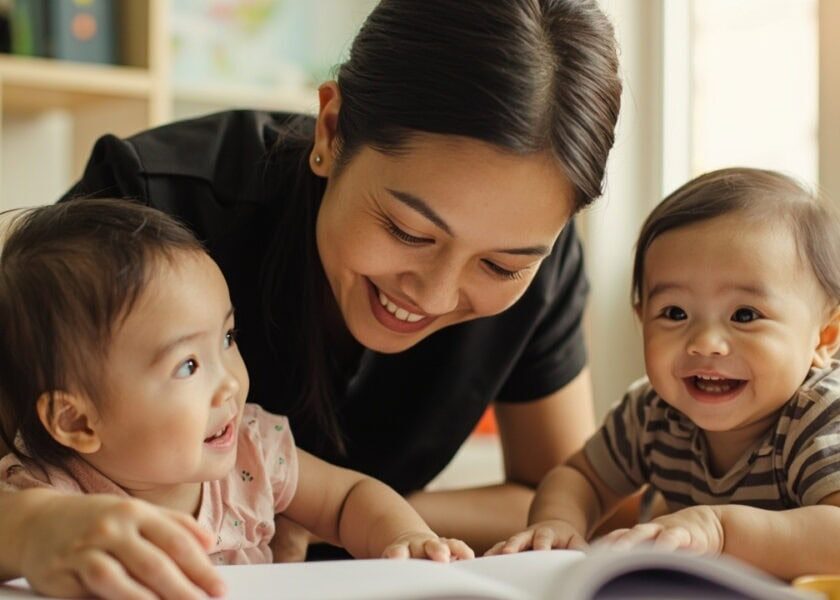
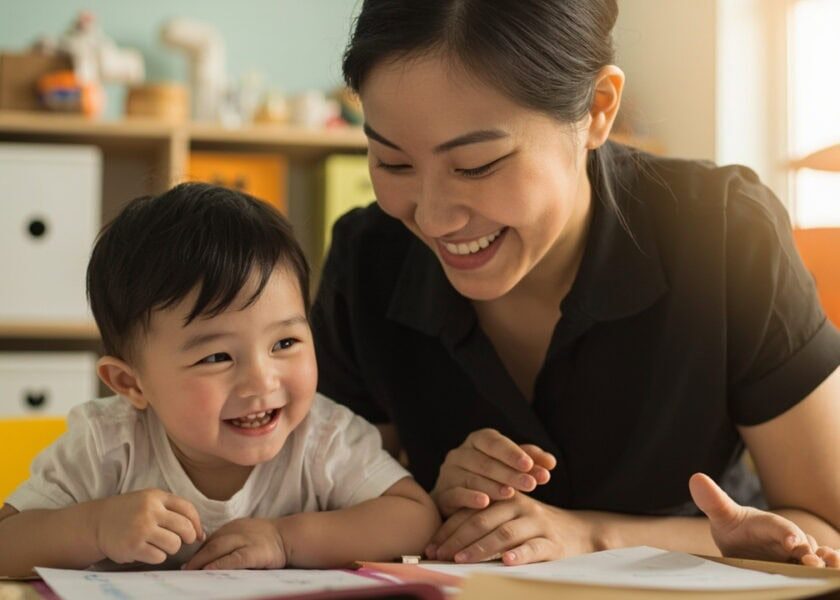
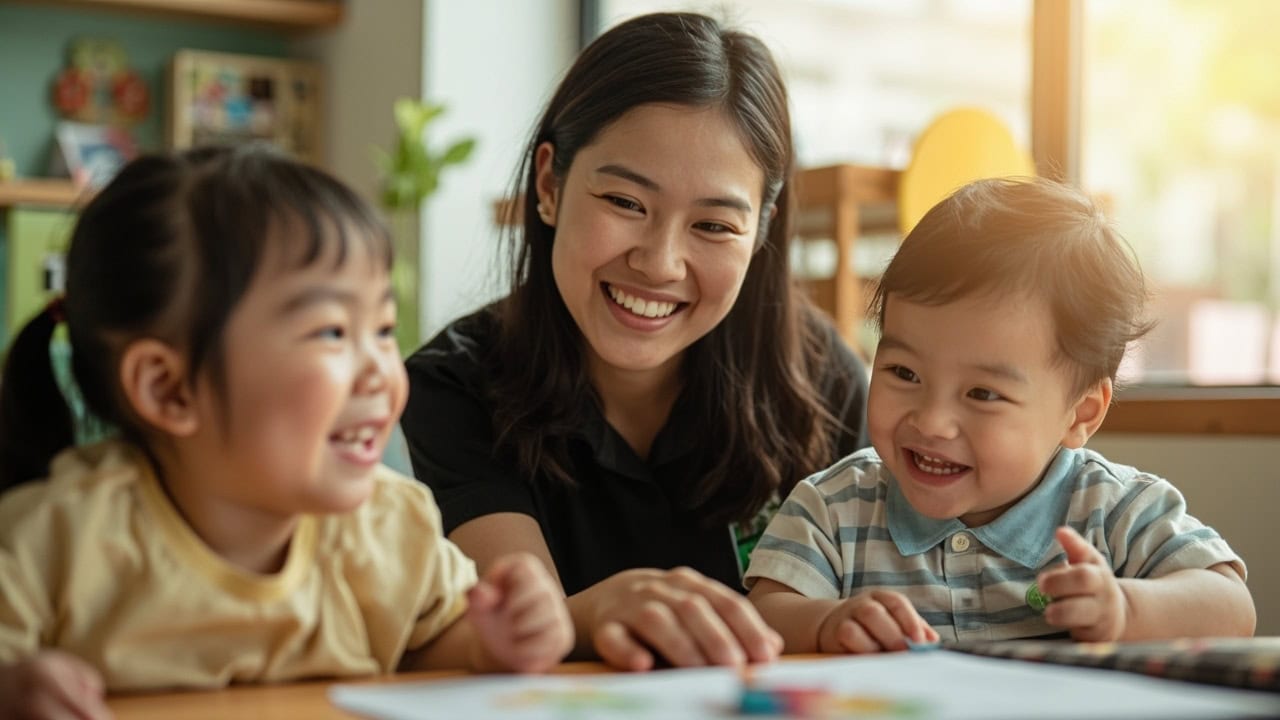
EduNanny by BUTLER operates within the ECDA Childminding Pilot, which means it is part of a deliberate national effort to offer Singapore families a form of childcare that is different from the centre-based mainstream. The pilot recognises what families have always known: that young children, particularly in their earliest years, thrive in environments that feel like home, with care ratios that allow for genuine attention, and with cultural continuity that larger institutional settings often cannot provide.
This is not about positioning home-based care as superior in every circumstance. It is about recognising that for infants, for children in their first thousand days, the ratios matter, the familiarity matters, and the cultural fit matters in ways that go beyond what any accreditation framework can fully measure.
What Makes Quality Possible
- Caregiver ratios that allow genuine attention: Smaller ratios mean caregivers can truly know the children in their care, not just manage them
- Home-based and community-based pathways: Flexible arrangements that can adapt to your family’s needs and values
- Monday to Friday care blocks: Reliable schedules that support family routine
- Accessible fee structures: CDA and Baby Bonus fund usability, pilot fee structures designed to be affordable
- Transparent communication: Open dialogue that builds trust through daily consistency
These are not marketing points. They are the conditions that make quality possible. They are the structural supports that allow caregivers to do what Chinese Singaporean parents have always known matters: to truly see the child in front of you, to respond to them as a person and not a demographic, to maintain the rhythms and routines that help a young child feel secure enough to explore and grow.
Trust is not given. It is built through consistency, through openness, through the daily evidence that the people caring for your child are doing so with the same care you would bring yourself.
EduNanny exists for families who want quality professional care and who refuse to accept that quality means abandoning who they are. It exists for parents who want the developmental benefits of trained caregivers and who also want those caregivers to understand that food, language, respect, rhythm, and relationship are not optional extras. They are the substance of early childhood development.
Questions Parents Actually Have
“How do I know if a childcare setting will really respect our cultural values?”
Ask specifically. Describe what your family does and why. Watch how caregivers respond. Do they ask follow-up questions? Do they seem curious rather than defensive? Do they speak about cultural practices as something to be accommodated rather than tolerated? The way a caregiver receives information about your family’s values is a strong indicator of how they will act on them.
“What if my parents’ expectations and my child’s needs feel different?”
Both can be honoured. The question is not whether to honour your parents’ wisdom or your child’s development—it is whether the childcare setting can create continuity across both. A good childcare partner understands that grandparents are not obstacles to modern parenting. They are part of the ecosystem that makes your child who they are.
“How do I trust my instincts when I keep second-guessing myself?”
The research on caregiver-child relationships confirms what every grandparent already knows: children need consistency, warmth, and caregivers who respond with genuine attention. The framework is universal. But the expression of it is always cultural.
And the family that knows its own culture, that knows what it wants to pass on, that knows what values matter, is the family that is best equipped to find childcare that will honour those values. Your cultural instincts are not obstacles to quality. They are the beginning of it.
Trust What You Know
As you think through your childcare decisions, carry this with you:
The weight you feel when you think about these choices. The worry about whether you are being too traditional or not traditional enough. The concern about what your parents expect and what your child needs. The desire to give your child every advantage and the fear of giving up the values that made your family who it is.
These are not signs of confusion. They are signs of love. And they are signs that you know exactly what matters.
Trust that knowledge. Trust the wisdom encoded in your family’s way of raising children. Trust that the instincts you have developed over a lifetime of being part of a culture that has survived and thrived across generations are not weaknesses to be corrected. They are the very things that will help you find the right care for your child.
And when you find it—when you find a childcare setting that feels like an extension of your family rather than a replacement for it—you will know. Not because of a list of credentials or a tour that checked every box. Because your child will feel it. Because you will feel it. Because it will feel like home.
That is what quality childcare looks like when it is done right. That is what EduNanny is here to offer. And that is what your family deserves.
EduNanny by BUTLER is a registered childminding provider operating within Singapore’s ECDA Childminding Pilot. Learn more about our approach to infant care and childminding, or connect with our team to explore whether EduNanny is the right fit for your family.