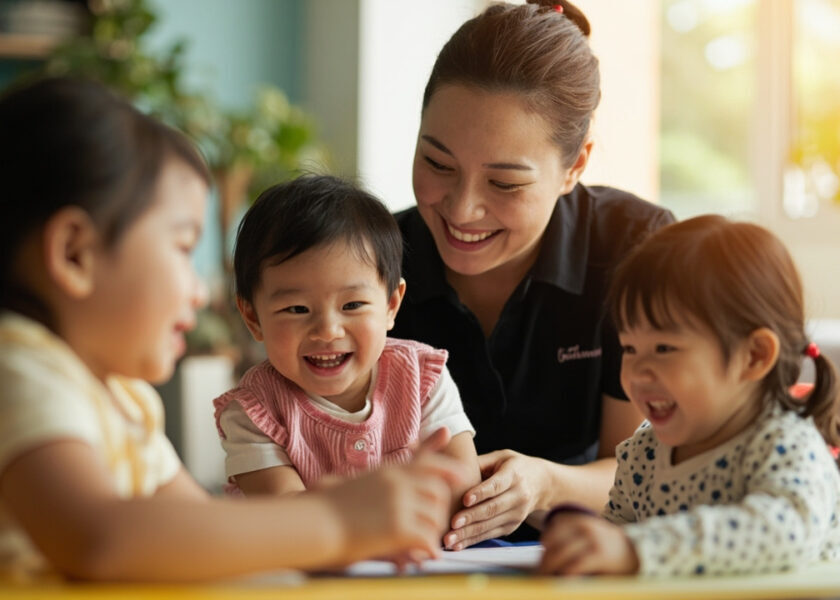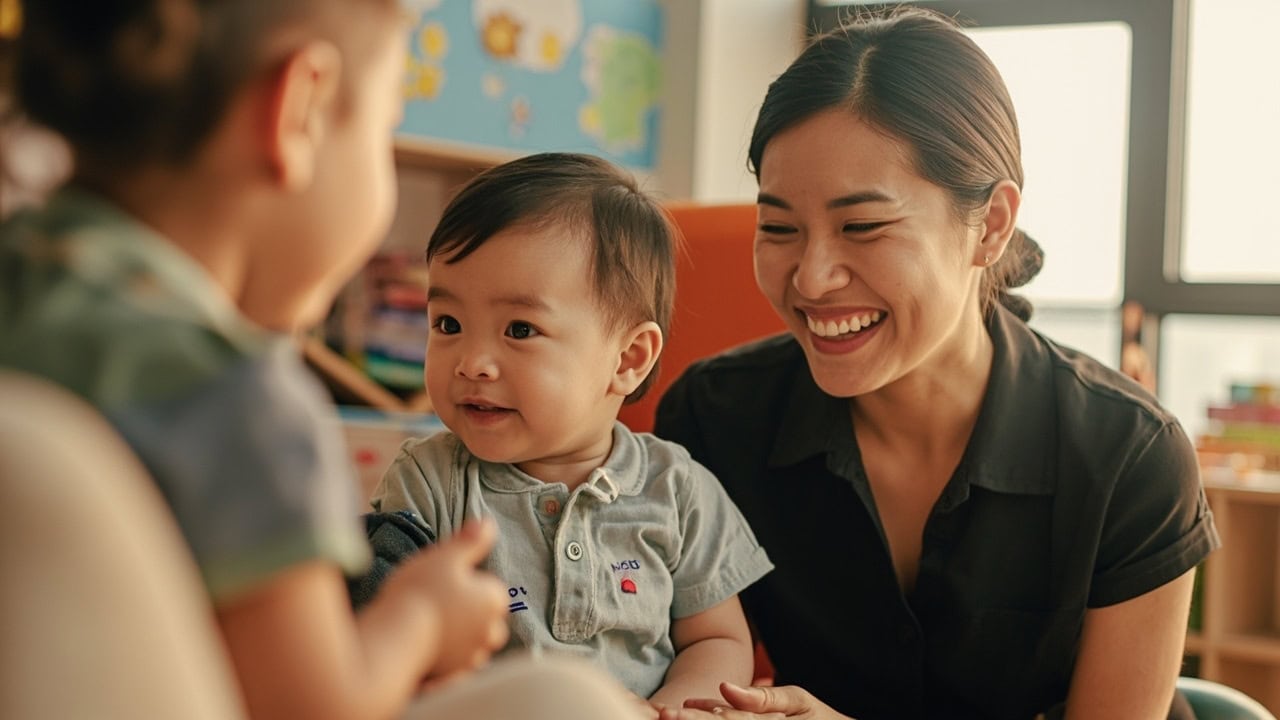
Singapore Parents Are Building a Bigger Childcare Village
The Grandmother in the Kitchen: Navigating Singapore’s Intergenerational Childcare Reality
There is a moment that happens in kitchens and living rooms across Singapore that most parents recognize but few talk about openly. It usually begins with a simple question from a grandmother—asked not with malice, but with decades of experience and the particular certainty that comes from having raised children herself.
The question might sound like: “Why do you need someone else to look after your child?” Or perhaps: “I raised three children. I know how to do this.” Sometimes it is not a question at all—just a pause, a look, a slight shake of the head when the subject of childcare comes up.
If you are a parent in Singapore who has experienced this moment, I want you to know something right away: you are not navigating a family problem. You are navigating a family transition. And those are not the same thing.
This article explores why the tension between grandparent care and professional childcare is a natural family evolution, what each generation brings to your child’s life, how to have the conversations that matter, and what quality childminding looks like under Singapore’s ECDA Childminding Pilot.
Singapore’s Childcare Heritage: Why Grandparents Are Irreplaceable
For generations, raising children in Singapore has been a collective endeavor. Our grandparents and parents built something remarkable—a childcare infrastructure that did not rely on institutions or systems but on the quiet, devoted presence of family.
Grandmothers who knew the exact temperature to bathe a newborn. Aunts who appeared with congee the moment a new mother walked through the door. Grandfathers who would cancel plans without hesitation when a grandchild needed attention. This is not nostalgia. This is the village that raised us, and it remains real, present, and deeply embedded in how Singapore families function today.
Singapore has one of the highest rates of multigenerational family involvement in childcare in the world. That is not a problem to solve. It is a strength to honor.
But something has shifted—not in our values, but in our options. Singapore parents today have access to childcare approaches, developmental frameworks, and professional caregivers that our parents did not have. This is not a replacement of what grandparents offer. It is an addition to what is available.
When families struggle with the introduction of professional childcare, it is almost never because grandparents do not love their grandchildren enough or because parents do not respect their elders. It is because we have not yet developed the language and the framework to hold both truths at once: that grandparent wisdom is irreplaceable, and that professionally structured care can complement it in ways that serve children even better.
What Grandparents Offer That Cannot Be Replicated
Grandparents offer continuity of love that spans decades. They carry family stories, cultural rhythms, and the particular warmth that comes from knowing a child belongs to a lineage.
When a grandparent holds a child, that child feels the weight of generations. Grandparents pass on language—the specific cadence of Hainanese dialect, the way Teochew phrases roll off the tongue, the Mandarin expressions that carry cultural meaning beyond translation. They introduce children to food traditions, family stories, and the sense of belonging to something larger than oneself.
What Professional Caregivers Complement
Professional caregivers—and truly qualified, thoughtfully trained ones—offer something different but equally important. They bring structured developmental awareness, an understanding of milestones and appropriate stimulation, and a consistency that comes from professional practice.
Trained caregivers observe children with fresh eyes, noticing patterns or delays that familiarity can sometimes obscure. They document, they plan, they reflect on their practice. In settings supported by the ECDA Childminding Pilot, caregivers work within frameworks that limit infant-to-caregiver ratios to no more than one to three, ensuring that every child receives genuine, unhurried attention.
When a child spends mornings with a grandparent who speaks to them in Mandarin with the cadence of the Hainanese dialect their family has used for generations, and then transitions to a professional caregiver who engages them with age-appropriate sensory activities and tracks their developmental progress with care and transparency, that child is not confused. That child is enriched. They are receiving the gifts of two worlds, and they are learning that love comes in more than one language.
The Three Conversations Every Singapore Family Needs
The real question is not whether to involve grandparents or professional caregivers. The real question is how to build a childcare village that honors both—without forcing parents to choose, without making grandparents feel dismissed, and without placing children in the middle of generational negotiations they cannot understand.
1. The Conversation with Yourself
Before you can communicate your childcare values to anyone else, you need to be clear about what you actually believe and why.
Ask yourself: Why does professional care matter to you? What developmental outcomes are you hoping for? What aspects of your own upbringing do you want to replicate, and what do you want to be different?
When you can articulate this—not just to yourself, but with conviction—it becomes easier to share with grandparents not as a defense of your choice but as an expression of your parenting identity.
Try this framing: “Mum, I want our child to have what you gave me, and I also want them to have what I wish I had. I want both.”
2. The Conversation with Your Child
This is not a conversation in words your infant cannot yet understand. It is a conversation in the emotional tone you create around childcare transitions.
The way you say goodbye. The confidence you carry when you hand your child to a caregiver. Children read their parents more than they hear them. If drop-offs are tense, rushed, guilt-laden moments, children absorb that. If they are warm, consistent, trusting transitions, children learn that this part of their life is safe. That the people caring for them are safe. That the village is real and reliable.
3. The Conversation with Your Parents
This is where many parents freeze, because they fear that any honest discussion about childcare values will be heard as criticism.
But grandparents are more resilient than we give them credit for, and more perceptive than we expect. When you approach this conversation not as asking for permission but as sharing your reasoning, you invite them into your decision rather than excluding them from it.
Try this approach: “I need your help with something. I want my child to grow up knowing you, knowing your stories, knowing where they come from. And I also want them to have professional care that supports their development in specific ways. I want you to be part of this village, not outside it.”
Some grandparents will still resist. Some conversations will need to happen more than once. But the message matters, and over time, consistency matters more than any single conversation.
What Quality Childminding Looks Like Under the ECDA Pilot
Understanding what separates professional childcare from informal care helps parents make confident decisions—and helps grandparents see what their grandchildren gain from structured care.
Under Singapore’s ECDA Childminding Pilot, quality childminding operates within specific standards designed for infant safety and development:
- Infant-to-caregiver ratios are kept low—at most one caregiver to three infants—ensuring unhurried, responsive attention
- Caregivers receive training in developmental milestones, age-appropriate stimulation, and safety protocols
- Communication with parents is ongoing and structured, including regular updates on your child’s day and progress
- Transparency measures in some settings allow parents—and curious grandparents—to see how care is delivered
- Flexible arrangements exist for families, whether home-based, community-based, or centre-based care suits their situation better
- Weekday coverage aligned with working parents’ schedules, typically Monday through Friday
Fee structures within the pilot are designed to be accessible, and families can utilize mechanisms like the Child Development Account and Baby Bonus to manage costs in ways that make quality care feasible without financial strain.
Welcoming Grandparents Into the Care Setting
One of the most thoughtful aspects of quality childcare providers is how they approach grandparent involvement. Many grandparents carry skepticism born not from distrust of their own child but from love for their grandchild and uncertainty about what professional care actually looks like today.
The old image of childcare—the institutional nursery, the overwhelmed supervisor, the sterile room—lingers in their minds, and they carry concern, not opposition.
When care settings open their doors to grandparent visits, something meaningful happens. Grandparents see the environment. They see the small ratios, the attentive caregivers, the way communication flows to parents. When they observe children engaged, calm, genuinely cared for—the skepticism often softens into recognition. The recognition that this is not what they feared.
Addressing the Guilt and Building Family Trust
For some parents, the guilt is not theoretical. It is real.
You have felt it in your chest when your child reaches for your mother instead of the caregiver. You have felt it when your mother says she misses your child and you know that choosing professional care has changed the rhythms of your family’s life. You have lain awake wondering if you are failing your parents by not trusting them completely, and failing your child by not being present more.
The presence of guilt does not mean you are doing something wrong. It means you care deeply about getting this right.
Guilt is the tax we pay for loving many people at once and wanting to honor all of them. The goal is not to eliminate that guilt. The goal is to build a family framework robust enough to hold it—to say to yourself, “I love my parents. I love my child. I am making a choice that serves my child while still honoring my parents, and the tension I feel is not a warning sign. It is evidence that I am human, and that I am paying attention.”
What Actually Affects Family Bonds
Quality childcare does not erode family bonds.
Miscommunication about childcare erodes family bonds. Lack of inclusion erodes family bonds. When grandparents feel sidelined, when they learn about decisions after they have been made, when they perceive that their role is being minimized—the distance that grows is not caused by the childcare arrangement. It is caused by the relational dynamics around it.
The childcare village is not smaller because professionals are part of it. It is more generous, more resilient, and better equipped to raise children who will carry the love of their grandparents and the preparation of their caregivers into a future we cannot yet imagine.
What EduNanny Offers Your Family
Through the ECDA Childminding Pilot, EduNanny provides care designed around the realities of Singapore family life:
- Low infant ratios (up to 1:3) ensuring every child receives attentive, unhurried care
- Flexible arrangements including home-based and centre-based pathways to suit different family preferences
- Regular parent communication so you remain informed and confident about your child’s day
- Transparency measures in applicable settings, giving parents and grandparents visibility into care practices
- Grandparent-inclusive approach that welcomes visits and values family involvement
- Accessible fee structures with support for CDA and Baby Bonus utilization
Beyond daily care, EduNanny understands that Singapore parents deserve support that extends beyond the routine. Thomas, an AI chatbot resource, serves as a companion for parents navigating the decisions, questions, and uncertainties that come with early childhood—whether that means questions about developmental milestones, guidance on communicating with grandparents about childcare, or reliable information at 2am when sleep feels impossible.
Questions to Ask Potential Providers
- What is the infant-to-caregiver ratio, and how does it change as children grow?
- What training and qualifications do caregivers have?
- How do you communicate with parents about their child’s day and development?
- Are grandparent visits welcome? What does the onboarding process for families look like?
- What transparency measures are in place?
- How do you handle the transition period when a child first begins care?
Signs of Quality Care
- Caregivers who notice and comment on your child’s individual personality and preferences
- A calm, unhurried environment where children are engaged but not overwhelmed
- Staff who welcome your questions and involve you in your child’s day
- Clear systems for communicating about feeding, sleep, milestones, and any concerns
- An approach that feels warm and home-like rather than institutional
Building a Richer Village Together
A parent who feels guilty about using professional care transmits that guilt. A grandparent who feels excluded or dismissed transmits that exclusion. But a family that approaches childcare as a shared endeavor—where everyone has a role and everyone is valued—creates an emotional environment where children thrive.
You are not narrowing your village. You are building a richer one. One that has room for bedtime stories in Cantonese and sensory play with trained caregivers. For grandmother’s gestures and professional developmental observation. For Sunday dim sum with the extended family and weekday routines that support your child’s growth in ways that complement what home provides.
If you have been reading this article with your chest tight, with the weight of a decision you have not yet made or a decision you have made and are still processing—I see you.
The grandmother in the kitchen is not your enemy. She is someone who loves your child as much as you do, in her own way, with her own certainty. The guilt you feel is not evidence of failure. It is evidence of love that is paying attention.
The child you are raising belongs not just to you, but to a lineage that stretches backward and forward in ways that quality professional care, at its best, can affirm rather than diminish.
EduNanny is not a replacement for your family. It is a trusted partner within it. A place where grandparents are welcomed, not sidelined. Where your choices are respected, not judged. Where your child receives the best of what professional care can offer, always in the context of a family system that matters and will always matter.
Your village is not smaller. It is growing.
If you are ready to explore what a childcare partnership looks like for your family, we would be honored to walk this path alongside you.