The Village Your Singapore Child Deserves
The Quiet Worry Singapore Parents Don’t Always Name
We live in a city that does extraordinary things well. We have built a society of competent, well-educated children, of families who plan and provide and love with remarkable intention. And yet, if there is one quiet concern I hear again and again from Singapore parents, across coffee mornings and playground conversations and late-night messages, it is this: the worry that their child is lonely.
Not abandoned. Not neglected. Loved, cherished, surrounded by adults who would do anything for them. But lonely, in the particular way that small families can make children lonely. The way that busy schedules can make children lonely. The way that living in a city of towers and condos and carefully ordered lives can make children lonely, even when they have everything they need.
The data tells us that Singapore families are smaller than they have ever been. One child. Two children, spaced carefully, loved completely. Extended family is near, sometimes, but more often scattered across the region or across the world. Neighbourhoods that once hummed with the noise of children playing in the corridors have given way to quieter rhythms, to screen time, to structured afternoons, to the understandable safety of indoor spaces.
We have built a city of extraordinary opportunity. And in doing so, we have inadvertently made it harder for our children to find what they need most: peers. Siblings to fight with and make up with. Friends who remember yesterday’s game and want to play it again today. A community that knows their name, that notices when they are tired or sad or triumphant.
Belonging Is Not a Soft Idea. It Is a Developmental Necessity.
Here is what quality childcare can be, when it is designed with intention: the first community your child belongs to outside your family. Not a holding space. Not a place where children simply wait until you return. A community, with all the meaning that word carries. A place where children learn, in the deepest and most lasting way, what it means to belong.
Psychologists and early childhood researchers have been telling us this for decades, but it is only recently that parents have begun to feel it in their bones. A child who belongs develops differently than a child who does not. They are more confident. They regulate their emotions better. They approach new situations with curiosity rather than fear. They know, in some essential way, that they are not alone.
This is what peer relationships teach that family relationships cannot. Siblings teach it. Peers teach it. The child down the block, the friend at childcare, the group that forms around a shared interest or a shared space—these teach children something fundamental about navigating the world.
They learn to negotiate, to compromise, to care about someone else’s feelings, to recover from disappointment, to celebrate someone else’s win. They learn that they are not the centre of the universe, and that this is not a tragedy but a gift.
For the only child, this learning cannot happen at home. It has to happen elsewhere. For the child with one or two siblings, it is still not enough, not without other children who choose them, who seek them out, who remember them. And for every child, the years from infancy to six are the years when this social foundation is laid down, when the brain is most receptive to learning how to be in relationship with others.
You cannot teach this from a parenting manual. You cannot manufacture it with love alone. It requires proximity to other children, yes, but it also requires facilitation. It requires adults who understand how children form bonds, who know when to step in and when to step back, who create the conditions for friendship to bloom rather than simply placing children in the same room and hoping.
How Children Learn to Belong: Siblings, Only Children, and the Space Between
Here is something that surprises many parents: when siblings come to quality childcare together, they experience each other differently than they do at home.
At home, there is often a parent available to mediate every disagreement, to redistribute the favourite toy, to adjudicate the argument over the television show. The sibling dynamic becomes, unintentionally, a parent-child-sibling triangle. The children are always positioning themselves in relation to the adult, competing for attention, seeking validation.
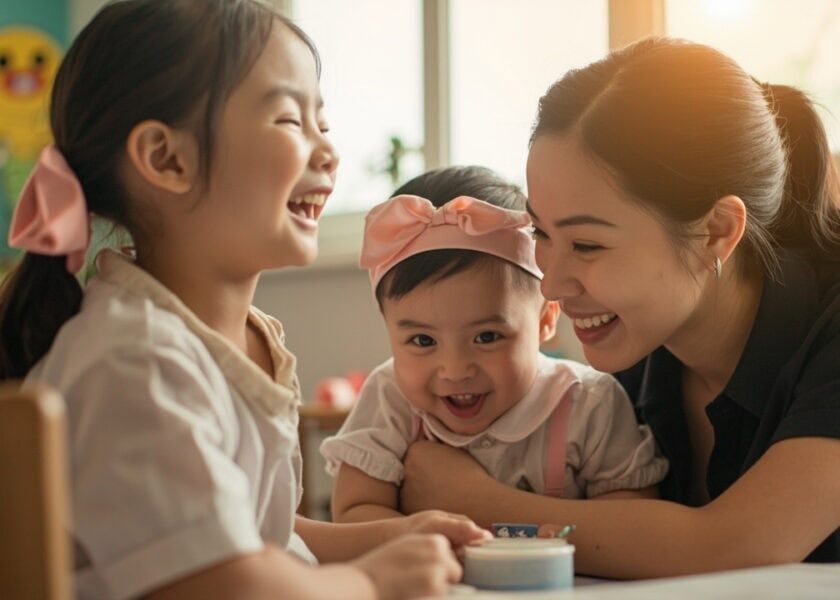
In quality childcare, the dynamic shifts. The caregiver does not intervene every time there is a disagreement. She watches. She is nearby. But she gives them space to work it out. And what emerges over weeks is something parents had almost given up on: genuine camaraderie.
The older child becomes a guide. The younger child becomes an admirer. The children learn that together they are stronger than apart. They learn to negotiate without an adult referee. They learn that their sibling will still be there tomorrow, even after a fight today.
For the only child, quality childcare is not just beneficial. It is, in many cases, essential for healthy social development.
Consider what a child learns by having siblings, even difficult ones: how to share attention, how to negotiate for limited resources, how to survive disappointment when they are not the favourite, how to practice relationship without the stakes being all or nothing. The only child does not get this practice at home.
Parents of only children often begin to notice what they gently call “only-child syndrome”: a certain expectation that the world will accommodate them, a difficulty with sharing, a fragility beneath the bravado. They have been, in many ways, the centre of their parents’ universe, and they have absorbed this completely.
What these children need is not correction. They need community. They need a space where other children’s needs matter, where waiting is survivable, where they can be angry at a friend and still love them. They need to discover, through experience, that sharing leads to more fun than holding on. They need to find their place among peers who chose them back.
What Quality Childcare Looks Like—and What You Will See at Pickup
Not all childcare is created equal when it comes to building belonging. There is a difference between placing children in the same room and creating the conditions for friendship to bloom.
Quality childcare begins with the environment. Groups must be small enough for real bonds to form. When ratios are too high, when there are too many children per adult, children become faces in a crowd. They may be safe, they may be supervised, but they are not seen. And a child who is not seen cannot learn to belong.
Quality childcare continues with facilitation. Adults who understand child development know when to step in and when to step back. They create the conditions for friendship without dictating the terms. They intervene in genuine conflicts, yes, but they also let children experience the natural consequences of their choices, the resolution of their own disputes, the joy of working things out for themselves.
Quality childcare is reflected in daily rhythms that build relationship. Consistent caregivers who stay, rather than high turnover. Routines that create predictability, so children know what to expect and can relax into relationship rather than constantly adjusting to new faces. Time built in for free play, which is where the deepest learning happens, far from the structured activities that look impressive on a brochure.
These qualities reveal themselves in observable ways at pickup.
You will see it in the way your child looks around when you arrive, weighing the choice between leaving and staying. There is a moment, a hesitation, when the child realises they have to choose between the parent in front of them and the friends who are still there. Sometimes they choose you immediately. Sometimes they choose their friends. Both are signs of healthy attachment.
You will see it in the quick, almost adult-like exchange between your child and another child: a wave, a word, a look that carries meaning you are not part of. This is their private language. You have not been invited. And that is exactly as it should be.
You will see it in the way your child asks, on the drive home, if their friend will be there tomorrow. You will see it in the names that emerge, in the small dramas and triumphs they recount from their day.
And sometimes, you will see something that surprises you. A child who was clingy and uncertain when they started, now running to greet their friends. A toddler who has learned to share, not because they were taught to, but because they discovered that sharing leads to more fun. A child who has found their place.
How EduNanny Approaches This
EduNanny by BUTLER was built with this understanding at its centre. We know that you, as a parent, are not looking for a babysitter. You are looking for a partner in your child’s development. You are looking for people who will see your child the way you see your child, who will notice when they are struggling and when they are thriving, who will hold them with care and challenge them with purpose.
Our approach begins with ratios. In our infant care programme, we maintain up to one caregiver to three infants. This is not a regulatory minimum. It is a design choice. It means that your child is not one face in a crowd. It means that the adult in the room has time to truly observe, to understand each child’s rhythms and preferences, to notice when something shifts.
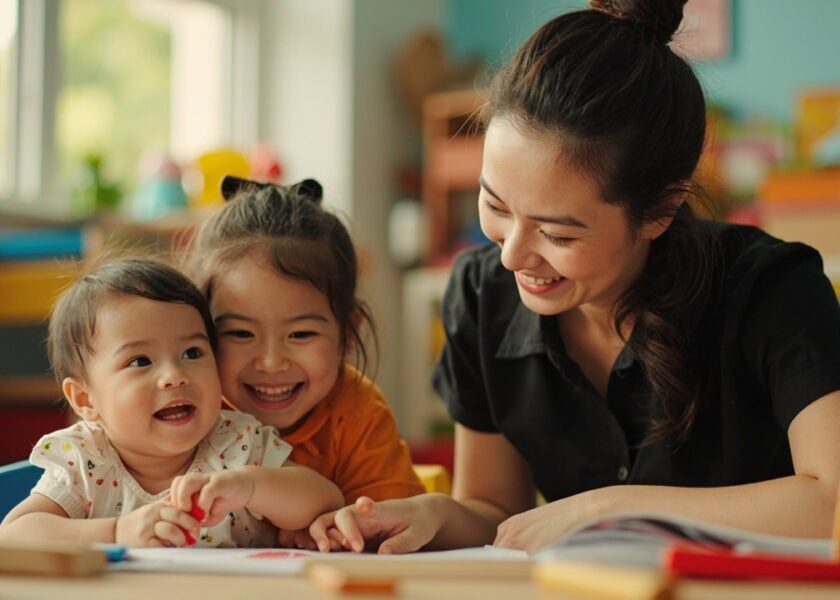
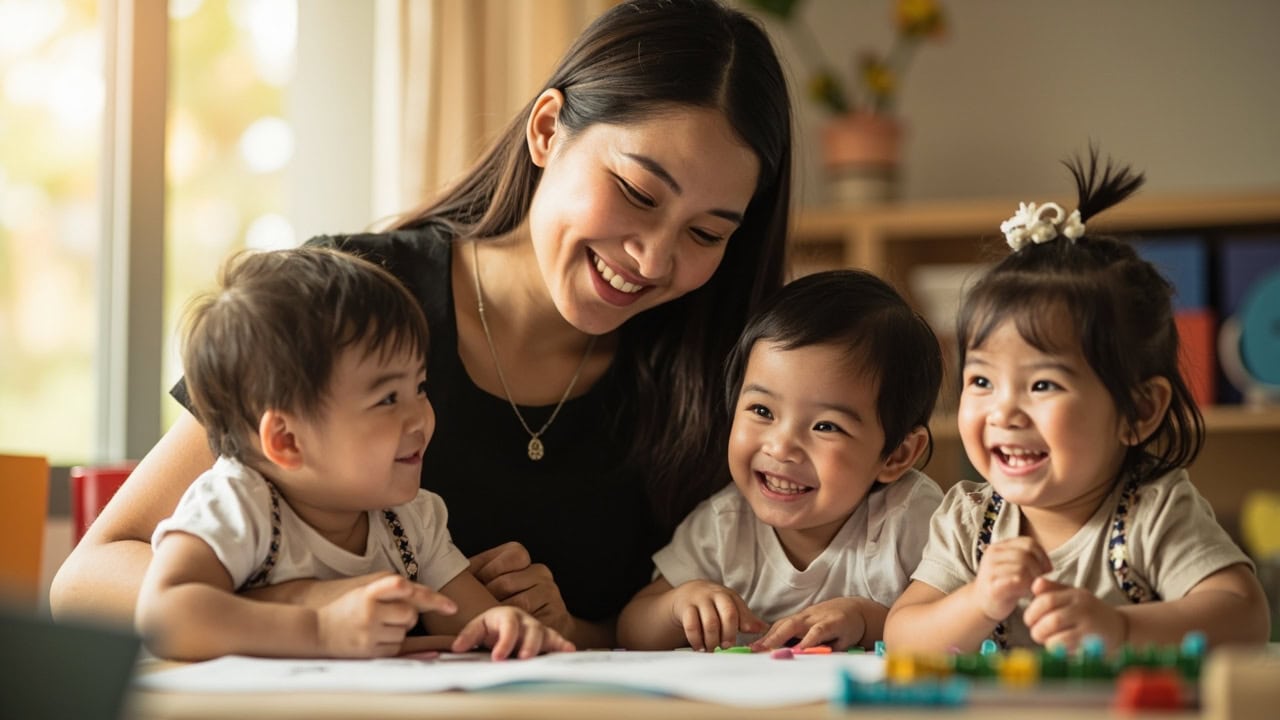
It means that your child is surrounded by peers in a way that is intimate rather than overwhelming. The group is small enough for real bonds to form. Children learn each other’s names before they are two. They develop preferences, allegiances, little friendships that adults may not even fully understand but that matter enormously to them.
Programme Options
| Option | Best For | Key Features |
|---|---|---|
| Home-Based Care | Younger infants, families preferring familiar surroundings | Dedicated caregiver in your home, consistent relationship, familiar environment |
| Centre-Based Care | Older infants and toddlers, families valuing peer interaction | Designed peer group, structured social learning, community atmosphere |
Both pathways are designed with the same intention: to give your child the social foundation they need, built by adults who take that responsibility seriously.
We are part of the ECDA Childminding Pilot, a programme designed to give Singapore families access to quality care that was once available only to those who could afford premium private arrangements. Our fees are structured to be affordable within the pilot framework. We accept CDA and Baby Bonus funds, because we believe that every family in Singapore deserves access to this kind of care.
Questions Parents Ask—and What You Should Ask Too
“Will they really know my child?”
Yes. This is what our ratio choices make possible. Your child’s caregiver will know their favourite song, remember that they slept poorly last night, understand why they are more clingy than usual. The first relationship your child forms outside the family will have depth and continuity.
“How will I know what’s happening during the day?”
Trust is not automatic. It must be earned, through transparency and communication and consistency. Our centres incorporate measures so that you can feel connected to your child’s day. We send you updates, we answer your questions, we treat your anxiety about leaving your child as reasonable rather than excessive, because we understand what it means to love someone this much.
“Is my child ready for this? Are they too young?”
The early years are precisely when the social foundation is laid down. The brain is most receptive during infancy and the preschool years. Waiting until your child is “ready” means missing the window when this learning happens most naturally. Quality care for young children is not about acceleration. It is about creating the conditions for developmental tasks to be mastered in the right sequence.
“Can I afford quality care?”
We accept CDA and Baby Bonus funds. We participate in the ECDA Childminding Pilot, which is designed to make quality care accessible. We encourage you to explore your options, ask questions about subsidies, and make a decision based on full information rather than assumptions about cost.
When you are evaluating childcare options, here are the questions that matter most:
- What is the caregiver-to-child ratio? Smaller groups mean more individual attention and more space for real peer bonds to form.
- How long have the caregivers been in place? High turnover means children never settle into the security they need for relationship-building.
- What does a typical day look like? Is there time for free play, or is every moment structured? Free play is where social skills are actually learned.
- How do caregivers handle conflict? Do they step in immediately, or do they create space for children to work things out? The answer tells you a lot.
- Can you observe a session? Watch how children relate to each other. Watch how caregivers respond. Do you see signs of belonging?
- What do existing parents say? Ask about pickup. Ask if children mention friends. Ask if parents have noticed changes in social confidence.
Choosing a Village
There is a question I want to leave you with. It is a question that, quietly, you may already be asking.
When you think about your child’s future, what do you want for them? Not the grades, not the school, not the milestones that are easy to measure. What do you want, in the deepest part of your heart, for who they become?
I believe you want them to be happy. To feel known. To have people who love them, chose them, stuck with them. To be the kind of person who can walk into a room and find their place, who can weather disappointment because they know they are not alone, who can celebrate another’s success without jealousy because they know their own worth.
These are not things that happen automatically. They are built, slowly, in the earliest years, through hundreds of small interactions with peers and caregivers and siblings, through the experience of belonging to something that chose them back.
This is what quality childcare offers. Not just care. Not just safety. Community. Belonging. A village, deliberately designed, that will shape your child in ways you may not fully see for years, but that will emerge one day in the confidence they carry, the friendships they form, the quiet certainty that they are loved and that they belong.
You chose a village for your child the moment you started looking for childcare. You may not have thought of it in these terms. You may have thought in terms of convenience, of reliability, of finding someone trustworthy to care for your child while you work. Those are valid reasons. But they are not the deepest reason.
Your child is not a project. They are a person, unfolding in real time, needing what all children need: to be held, to be seen, and to belong. You have given them the first. We would be honoured to help you give them the second and third.
EduNanny by BUTLER welcomes families who are ready to learn more. Visit us to see our centres, meet our caregivers, and discover what it looks like when a childcare community is built on purpose.
Get in touch with our team or learn more about our approach.