How Singapore Families Are Giving Grandparents Their Lives Back
“`html
The Gratitude You Carry — and the Grief Beneath It
Let us be honest about what Singapore parents are holding.
We are grateful. We are so deeply grateful. The financial and practical reality of childcare in Singapore makes that gratitude feel like the only possible response. We do not know what we would do without our parents’ help, and we know — truly know — that we could not manage without them.
And yet.
And yet there is a grief underneath the gratitude. A quiet, guilty grief that we do not know how to name because naming it feels like ingratitude. We grieve that our parents — who gave so much to raise us — are giving again, in ways that cost them. We grieve that our children may never know the grandparent we remember from our own childhoods, the grandparent who had time, who had nothing else to do but love.
We grieve that the village we inherited has somehow become a village where the oldest members are the ones doing the hardest work.
What Grandparenting Was Always Meant to Be
Close your eyes and remember the grandparents of your own childhood. What do you remember?
I suspect it is not the time they picked you up from school. I suspect it is not the packed lunches or the bath times or the discipline moments. What you remember is a particular quality of attention. The way your grandfather sat with you and told you stories from a time you could not imagine. The way your grandmother had a lap and a voice and a patience that felt infinite, that felt like the safest place in the world.
What you remember is not caregiving. What you remember is being loved by someone who had nothing to do except love you.
That is the grandparent role. It is one of the most profound roles a human being can play in a child’s life. And it is fundamentally different from the caregiver role.
The caregiver manages schedules and safety and meals and naps and the thousand logistical demands of keeping a small person alive and regulated.
The grandparent spoils. The grandparent has time. The grandparent offers presence without agenda, attention without urgency, a relationship built not on responsibility but on delight.
Now ask yourself: when was the last time your parents got to be that grandparent to your child?
Somewhere between the willingness and the reality, something shifts. The help becomes the arrangement. The arrangement becomes the expectation. The expectation becomes the weight.
And the grandparent who once dreamed of Sunday visits and holiday presents and the pure, unhurried joy of being a spoiler — that grandparent finds themselves at the kitchen table at 8 a.m. on a Wednesday, trying to negotiate a toddler into a stroller, while their own child rushes out the door to a meeting they cannot be late for.
What Children Feel — and What Gets Lost
Our children feel this tension too, even when they cannot articulate it.
Children are extraordinarily perceptive. They know when a person is fully present with them and when a person is managing, just barely managing. They know when the attention they receive comes from a well that is refilling and when it comes from a well that is running dry.
And they adjust. They adjust their needs, sometimes unconsciously, to the capacity of the adult before them.
A child who senses exhaustion may become more compliant, more independent, more willing to entertain themselves — not because they are ready, but because they have learned that the grown-up seems tired. A child who senses distraction may dial down their questions, their curiosity, their need for engagement.
The relationship between a child and a grandparent should be a place of safety and delight, not a place where the child learns to make themselves smaller to accommodate an adult’s fatigue. But this is what happens, quietly and without intention, when the grandparent role becomes the caregiver role.
The Shift That Changes Everything
What if there was a way to change this?
Not by removing grandparents from our children’s lives — never that — but by restoring them to the role they were always meant to play.
EduNanny Singapore was built on a simple but powerful recognition: that the best childcare does not compete with family. It creates the conditions for family to thrive.
When a grandparent is freed from the daily demands of caregiving, something remarkable happens. They become a grandparent again.
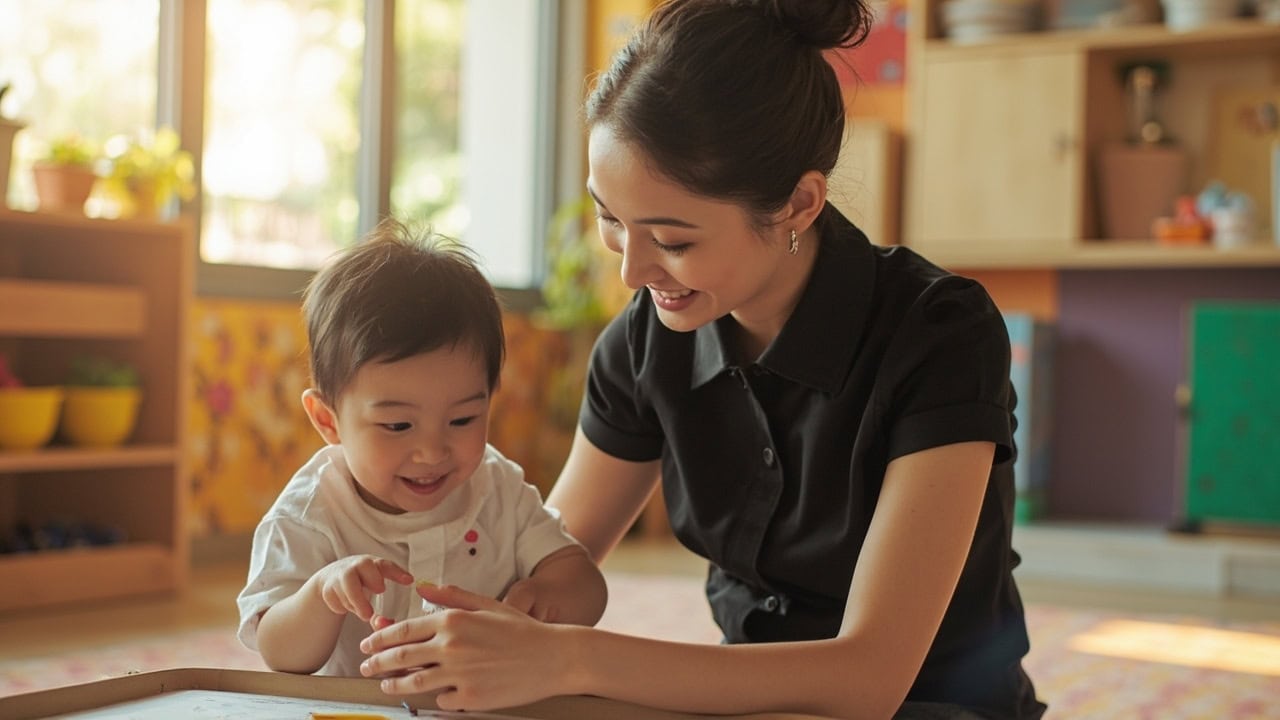
They have the energy for a walk in the park. They have the patience for one more story, and then one more after that. They have the attention to notice the small things — the new word, the latest obsession, the way this grandchild laughs differently from how their own children laughed thirty years ago.
The relationship transforms. It goes from functional to joyful. From obligation to gift.
“Now when I see my granddaughter, I can actually enjoy her.”
“I didn’t realize how tired I was until I wasn’t tired anymore.”
“My children fight less with my parents now. They used to push boundaries all the time. Now they can’t wait for visits.”
What Quality Childminding Looks Like
We know that trust is earned. We know that for many Singapore families, the idea of outside care feels like a departure from something essential — something that should stay within the family.
So let us be clear about what quality care actually looks like today, because it looks nothing like the childcare arrangements of previous generations.
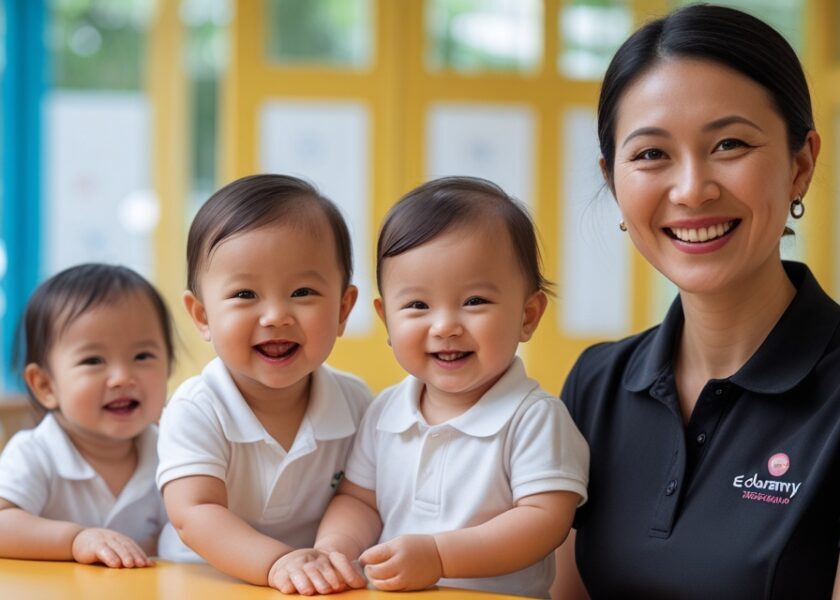
What EduNanny Provides
- ECDA Childminding Pilot: EduNanny operates as part of the ECDA Childminding Pilot, which means the approach is recognized, accountable, and built on evidence. This is not an informal arrangement — it is a structured programme with oversight and standards.
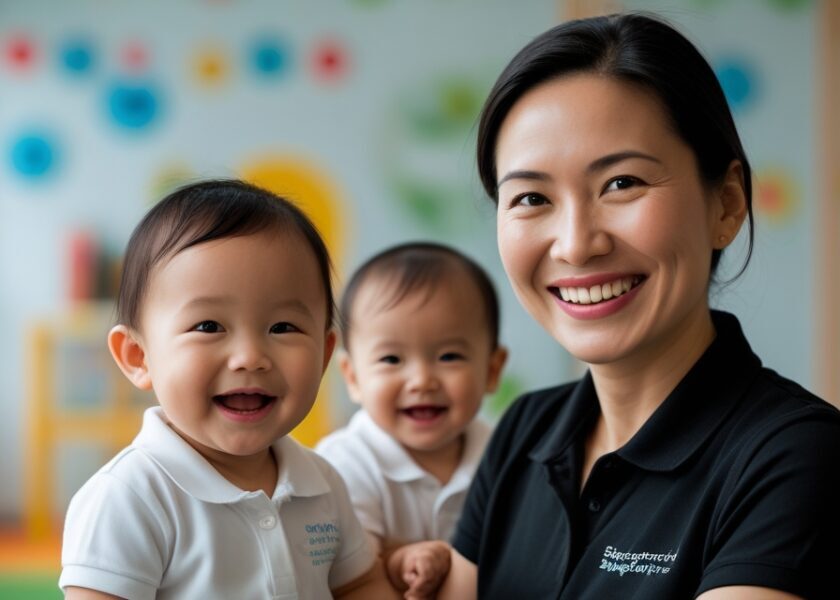
- Deliberately Low Infant Ratios: In infant care settings, ratios are kept at up to one caregiver to three infants. This is a structural commitment to the attention your child’s developing brain needs.
- Trained, Supported Caregivers: Caregivers are trained, supported, and held to standards that meet and exceed what ECDA requires. They understand child development as professionals.
- Open Communication: Parents and grandparents can stay connected throughout the day. A child’s village includes more than just the parents — and quality care makes space for that.
The Financial Reality
Singapore families face real constraints. The cost of quality care can feel prohibitive, and the guilt of spending money on something that grandparents would do for free weighs heavily.
But when families run the numbers honestly — including the hidden costs, the grandparents’ energy, the strain on relationships, the compromises in quality of care — the equation shifts.
EduNanny operates within pilot fee structures designed to make quality care accessible. CDA and Baby Bonus funds can be used, which means the financial architecture of Singapore’s family support systems is designed to help you here.
Addressing the Concerns
If you feel pulled toward keeping everything within the family, know that this feeling is rooted in love and loyalty and a deep respect for what your parents gave you. It is not wrong.
But consider this: choosing quality care for your child is not a withdrawal of trust from your parents. It is an act of generosity toward them. It is saying, “You have already given so much. You do not have to give this, too.”
And it is saying to your child: “You deserve a grandparent who is rested, who is present, who can give you the attention you need and that your grandparent wants to give you.”
For grandparents who are skeptical: quality care today looks nothing like the informal arrangements you might be imagining. This is structured, accountable, development-focused care. When a grandmother can see photographs from the day, when a grandfather can receive a message about how well lunch went, they become part of the story rather than outside it. They see quality care not as a stranger’s domain but as an extension of their own care — a place where their grandchild is safe and known and growing.
The Family You Are Building
The family you are building is not just a functional unit. It is a living inheritance.
The relationships your children form with their grandparents, the way those relationships feel, the quality of attention and love that flows between generations — these are not incidental. These are among the most important things you will ever create.
They will shape your children’s sense of self, their capacity for relationship, the way they understand what family means. And they will shape your parents’ final chapter — the years they have left, whether those years feel full of purpose and joy or heavy with obligation and fatigue.
A few years from now, your child will be old enough to remember.
They will remember weekends at their grandparents’ flat. They will remember breakfast with grandma, unhurried, the two of them at the table long after the food is finished, just talking, just being. They will remember grandpa teaching them something — how to fold paper, how to water the plants, how to say a phrase in a dialect that is fading from the world.
They will remember the particular smell of grandma’s house, the particular sound of grandpa’s laugh. These memories will become part of them. They will carry them into their own adult lives, into their own families, into the way they understand what love feels like.
Now ask yourself: what will it take for those memories to be possible? What will it take for your parents to be rested, present, unhurried enough to make those memories with your child? What will it take for the love that is already there to finally have room to breathe?
Ready to explore what a different kind of arrangement could look like for your family?
Learn more about EduNanny Singapore’s infant care and childminding programmes, or schedule a conversation with our team to discuss your family’s needs.
We would be honored to be part of what you are building.
#SingaporeInfantCare #GrandparentChildcare #EduNannySingapore #ECDAChildmindingPilot #QualityChildcareSG #ChildmindingSingapore
“`