
Living Language of Care How EduNanny Turns Daily Routines into Safe Joyful Infancy in Singapore

Introduction: A Living Language of Care
Good evening, families, caregivers, neighbours, and friends. A child’s first thousand days are not an abstract window on a calendar—each day is a living room, each minute a doorway. At EduNanny, we translate that language of breath, glance, touch, and tiny courage into safety you can see, development you can feel, and joy you can trust. This article expands on that vision with practical guidance, actionable steps, and EduNanny insights to support parents, caregivers, and communities across Singapore.
What you will read here is not theory alone. It is a field guide to turning daily routines into secure bases, curious minds, and joyful growth. We blend Montessori’s prepared environment with Pikler’s respectful caregiving, Vygotsky’s guided participation, and Bowlby’s secure base, all rooted in Singapore’s cultural tapestry and supported by local policies like the ECDA Childminding Pilot and Baby Bonus. This is not a program on a wall; it is a living practice in your home, your neighbourhood, and our EduNanny centres.

EduNanny: Singapore’s Everyday Genius of Care
EduNanny by BUTLER stands as Singapore’s homegrown standard for infant care and childminding. We offer center-based and home-based options, plus distance support to keep families connected even when work takes them away. Our approach aligns science with daily life, translating attachment science into tangible, everyday routines that families can trust.
- Human-scale care: A genuine 1:3 infant-to-caregiver ratio to preserve attention, relationship, and responsiveness. Practical effect: fewer transitions, deeper shifts in regulation, and more moments of felt safety.
- Flexible hours: Monday to Friday, 7am–7pm, islandwide across community and home premises for real-life convenience and continuity with family schedules.
- Design for safety and exploration: Modern layouts with sightlines designed for safety, plus transparent care through CCTV that respects privacy while enabling accountability and parental trust.
- Care arrangements: Centre-Based Childminding, Home-Based Childminding, and distance options for check-ins, guidance, and continuity of routines at home.
- Affordability and support: Care starting from $33/day with eligible fees payable by CDA/Baby Bonus where applicable, making high-quality infant care accessible to more families.
- Public purpose: A national social initiative aligned with ECDA’s Childminding Pilot, designed to strengthen neighbourhoods, support maximum employment, and dignify caregiver work.
- Next steps: Learn more at EduNanny.com and Childminding.EduNanny.com and discover how to begin with confidence.
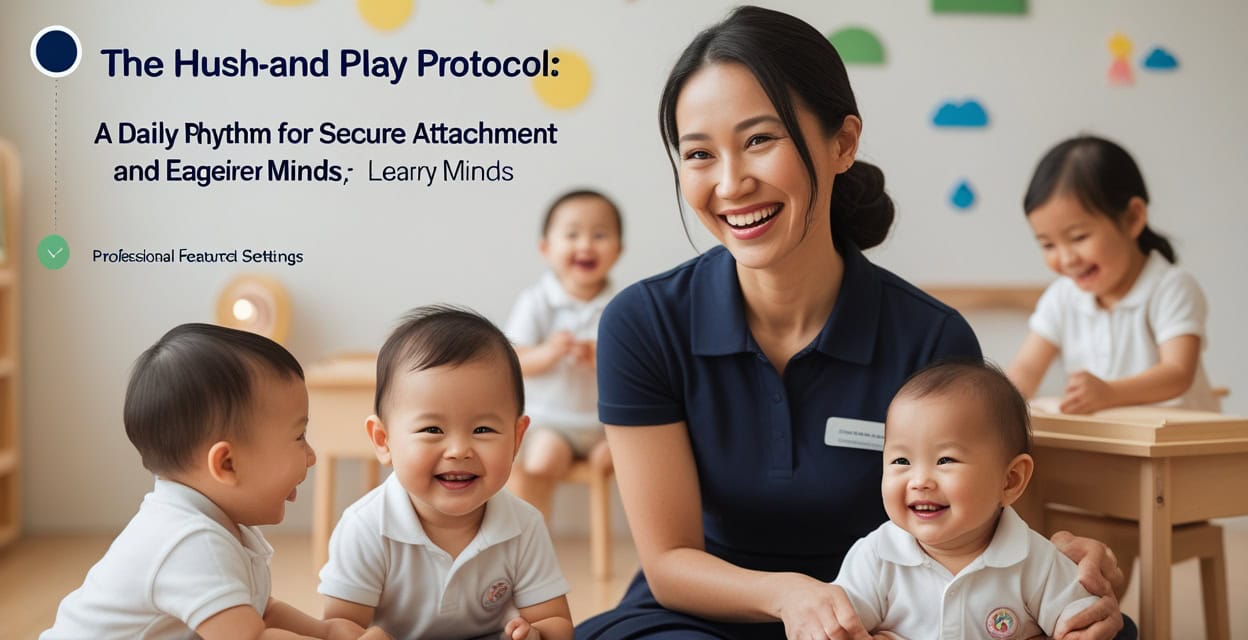
The Hush-and-Play Protocol: A Daily Rhythm for Secure Attachment and Eager Minds
Our daily rhythm starts with quiet, predictable moments that signal safety and welcome. The Hush-and-Play Protocol is a practical framework you can adapt at home and in any EduNanny setting to foster secure attachment and vibrant curiosity.
Attunement
What it looks like at home:
- Slow the environment to notice your baby’s breath cadence, muscle tone, and gaze invitations. Before your baby communicates with words, they communicate with cues—watch, listen, and respond.
- Practice 2–3 minutes of calm, face-to-face attunement daily: quiet eye contact, gentle breath, and a smile that matches your child’s pace.
EduNanny insight: Attunement lays the neural groundwork for secure regulation. It is the first “language” a child learns in the first thousand days, and it compounds over time into confident exploration.
Warm Handovers
- Shift responsibility intentionally: one caregiver greets, one gathers, one observes for continuity. Avoid abrupt transfers that disrupt the child’s sense of safety.
- At home, practice a 3-step handover: make eye contact, acknowledge the child’s current state, and name the next activity (“We’re going to sit to work on this puzzle now”).
EduNanny tip: Consistent, calm transitions reduce fussiness and support quicker emotional reset after transitions, enabling more sustained attention during play.
Play Arcs
- Invitation windows last 6–12 minutes. Use clear beginnings, middles, and ends to help the nervous system learn “I can start; I can finish; I am held.”
- Examples: grasp-and-let-go, glide-and-return, peek-and-find. Each arc should have a visible cue to begin and a natural close.
EduNanny insight: Structured play arcs cultivate executive function through predictable sequences, while still leaving room for improvisation and child-led exploration.
Micro-Turn-Taking
- Model the rules of conversation on a tiny scale: look, wait, respond. Even infants pick up rhythms before words emerge.
- Encourage gentle back-and-forth exchanges with simple gestures, sounds, or touch to build the foundation for language and social reciprocity.
Respectful Caregiving
- Diapering, feeding, and rest are curriculum moments, not interruptions. Narrate actions and invite infant participation at eye level to sustain trust.
- Maintain a calm, present posture during care to signal safety and predictability to the child.
Practical home application:
- Establish a consistent “hush minute” after waking: invite a caregiver to greet the child gently, names used, and a predictable routine for the day.
- Use short, child-led play invitations and end with a known closure—this creates a sense of mastery and security.
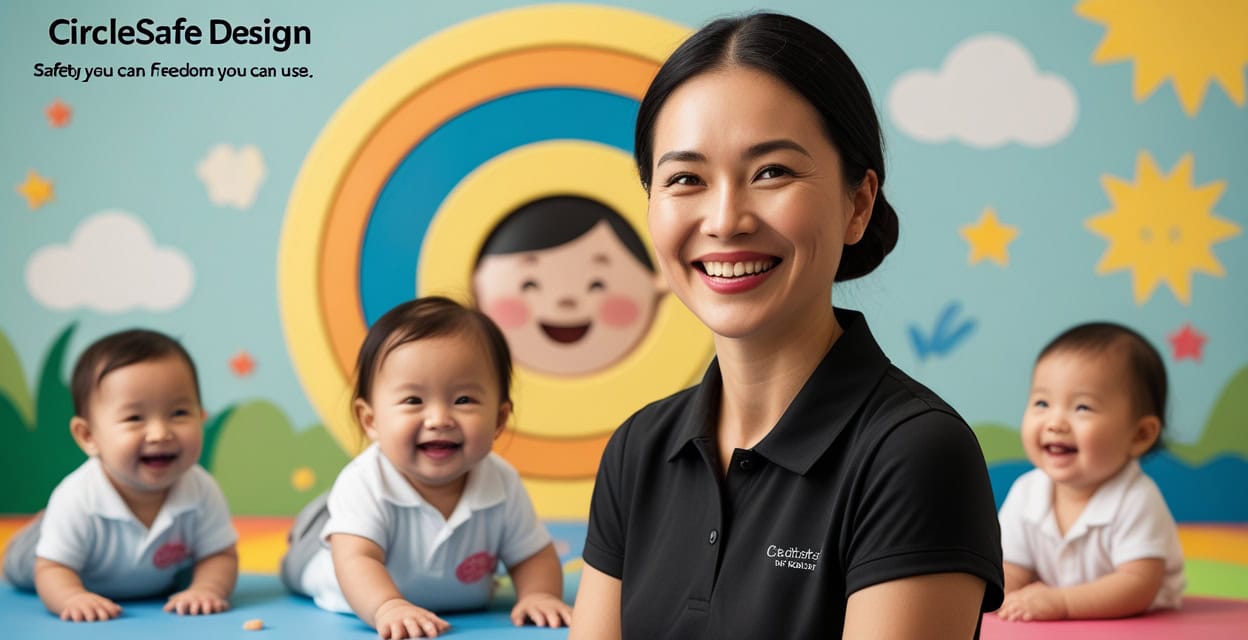
CircleSafe Design: Safety You Can See, Freedom You Can Use
Safety is not a checklist; it is a room that prevents error and invites exploration. CircleSafe Design translates this belief into tangible space planning, practices, and caregiver behavior.
Layout Philosophy
- Circle flows and soft corners create pathways for movement from grasp to crawl to stand. End-to-end sightlines ensure caregivers can respond promptly.
- Floor-level zones for different activities—titting, reaching, rolling—are arranged to minimize hazards while maximizing exploration.
Transparent Care
- Innovation CCTV is used to support oversight and security, with strict privacy protocols and positive framing for families.
- Windows and open sightlines reduce anxiety while maintaining a respectful boundary for infants’ sense of autonomy.
Ratio as Architecture
- 1:3 ratio is not just a number—it shapes the environment, response times, and the quality of caregiver-child connections.
- Smaller groupings reduce overstimulation and promote calm, focused interactions that support emotional regulation.
Quiet Checks, Loud Habits
- Daily floor sweeps, temperature checks, sanitization cycles, sleep audits, and hydration logs are integrated routines that become muscle memory for staff and families.
- Establish simple safety rituals at home: a daily habit of checking the environment for small hazards and ensuring comfortable sleep spaces.
Contingency Drills with Kindness
- Practice evacuation and allergy protocols in a calm, reassuring tone to reduce fear in children and staff alike.
- Regular, gentle rehearsals create confidence and competence in emergencies while preserving a sense of security for children.

The Gentle Spiral of Development: From Sensation to Meaning
Infant development is a spiral, not a straight line. EduNanny tracks six core capacities across the first thousand days and translates insights into practical support for families.
Core Regulation
- Goal: steady breath and predictable soothing responses that help infants ride fluctuations in rhythm and mood.
- Home activity: use a “breath pause” during soothing—inhale for 3 seconds, exhale for 4—and invite your child to mirror with you.
Secure Relating
- Goal: proximity with comfortable separation-and-return that builds confidence in social connections.
- Home activity: practice “return” rituals when you leave the room—offer a clear signal of your return and a warm goodbye.
Motor Freedom
- Goal: encourage grasp, roll, crawl, cruise, and step with respectful pacing.
- Home activity: provide varied opportunities for tummy time, supported sitting, and safe indoor exploration with age-appropriate toys.
Language Seeds
- Goal: shared attention, imitation, babble chains, and early gesture vocabularies.
- Home activity: narrate daily routines, label objects, and imitate your child’s sounds to invite turns in the conversation.
Early Thinking
- Goal: object permanence, cause-and-effect understanding, and simple problem-solving.
- Home activity: hide and reveal games with familiar objects; offer toy challenges that require simple reasoning (e.g., “Where did the toy go?”).
Joy Competence
- Goal: recover from small frustrations, maintain curiosity, and experience joyful discovery.
- Home activity: celebrate small wins—watch for moments of resilient play after a stumble and provide gentle encouragement.
EduNanny educators document development stories weekly—photos, cue notes, and brief next steps—so parents see progress without losing the magic of the moment. This approach keeps development visible and emotionally meaningful for families.

Measuring Joy Without Ruining It: The Joy Indices
Joy is a practice, not a mood. We track six reliable signs that indicate healthy engagement and well-being.
- Soft faces during caregiving and transitions signal comfort and trust.
- Willing hands – reaching toward caregivers, objects, and peers demonstrates curiosity and social interest.
- Re-engagement after small stumbles shows resilience and the ability to recover quickly.
- Expectant gaze – looking back to check, “Are you with me?” indicates ongoing shared attention.
- Rest that restores – sleep cycles that settle and lengthen reflect fundamental regulation.
- Satisfying finishes – completing a play arc without abrupt breaks signals mastery and closure.
We share Joy Indices during monthly check-ins and through gentle daily updates. Parents stay informed, infants stay immersed in learning, and staff stay focused on what matters most: presence, relationship, and meaningful growth.

The Neighbourhood Steward: The Purpose of a Childminder
A childminder is a skilled neighbour who keeps the circle of care unbroken between home, community, and centre. This role requires professional formation, family partnership, cultural continuity, and work with dignity.
Professional Formation
- Ongoing training in attunement, infant mental health basics, and practical pedagogy anchored in Singapore’s cultural tapestry.
- Reflective supervision to support caregivers’ well-being and growth.
Family Partnership
- Rituals that connect home and care, such as first-week photo diaries, end-of-day micro-briefs, and “ask us anything” clinics.
- Distance support to align home routines with care routines, ensuring continuity across environments.
Cultural Continuity
- Incorporation of songs, stories, and textures from families’ heritage to help infants belong to their family’s story while discovering their own.
- Respectful inclusion of diverse languages and traditions in daily activities and materials.
Dignity in Work
- A clear career ladder, reflective supervision, and tools that enable caregivers to thrive and stay close to children’s needs.
- A work environment that models professional joy, safety, and respect for early childhood as a valued vocation.
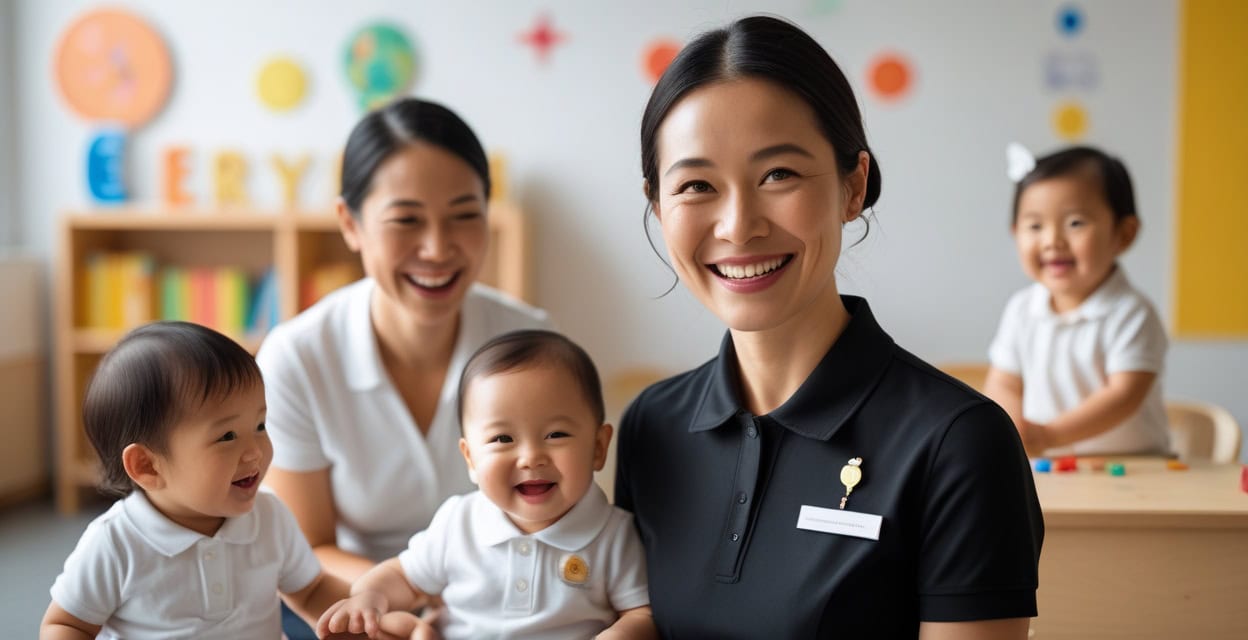
Practical Excellence, Everyday
EduNanny offers a spectrum of high-quality options designed for modern Singaporean families while upholding the highest standards of infant care and childminding.
Centre-Based Childminding
- Modern, light-filled rooms designed for movement, play, and restful breaks.
- Structured routines that balance exploration and rest, with consistent caregiver teams.
Home-Based Childminding
- Small, stable groups near home to ease transitions and support familiar routes, trusted faces, and gentle continuity.
- Same high standards of safety, attunement, and development tracking in a home environment.
Distance Support
- Secure updates, live check-ins when appropriate, and coaching to align home routines with care routines.
- Access to remote expert guidance to maintain consistency across environments.
Islandwide Access and Hours
- Open weekdays from 7am to 7pm, designed to fit Singaporean families’ working rhythms while safeguarding rest and family time.
Affordability and Public Purpose
- Care from $33/day with CDA/Baby Bonus eligibility where applicable, reflecting a commitment to accessible high-quality care.
- Part of ECDA’s Childminding Pilot and broader national initiatives that strengthen neighbourhoods and dignify caregiving work.

Who, What, When, Where, How: Why Childminding Matters
Childminding matters because it is more than care; it is a partner in a child’s early learning journey. EduNanny’s approach is designed to support families as they navigate work, life, and the desire to raise confident children.
- Who: Infants and toddlers in the first thousand days, supported by parents, caregivers, and host communities who seek more than a place; they seek a partner in development.
- What: Attuned, safety-led childminding delivered through centre-based rooms, home-based circles, and distance-enabled family support.
- When: Weekdays 7am–7pm, with routines that protect rest, nutrition, learning, and cherished family time.
- Where: Islandwide in Singapore—community spaces and home premises designed for visibility, calm, and growth.
- How: A true 1:3 ratio; prepared environments; respectful caregiving; transparent safety; modern layouts; innovation CCTV; and an educator’s stance that blends Montessori’s order, Vygotsky’s guidance, Pikler’s respect, Bowlby’s secure base, Erikson’s trust, Froebel’s play, Malaguzzi’s expression, and Spock’s practical wisdom.

A Day in the Life: A Glimpse into EduNanny
What does a typical day look like at EduNanny? Here is a representative sequence that shows how our principles come alive in routine:
- Arrival: Knees bent, voice soft, named welcome. The first success is being seen, heard, and valued.
- Care Moments: Diapering with narration and choice—“Shall we hold the wipe?”—because autonomy begins with participation.
- Play Arcs: A cloth that appears, disappears, returns; laughter and gaze cue object permanence turning into delight.
- Mealtime: Unhurried, upright, responsive feeding that develops self-feeding skills and social eating habits.
- Rest: Darkened corners, familiar scents, steady breath; the room holds the child as the child holds the day.
- Homeward: Brief handover—one observation, one emerging skill, one gentle suggestion for tonight. Partnership over paperwork.

Conclusion: A Simple Invitation to Begin Well
Our children will not remember rooms by paint or plans alone; they will remember how they felt—confident, seen, and connected. They will remember that leaders lead with safety, presence, and joy. EduNanny exists to ensure every Singaporean infant—and every working parent—can rely on excellence that is human, quality that is visible, convenience that is real, and affordability that is honest. We invite you to begin with us and to explore the possibilities of a 1:3 circle in motion, a transparent window into your child’s day, and a room that sounds like future Singapore: quiet confidence, curious minds, and steady joy—built one responsive minute at a time.
If this vision resonates, take the next step: explore EduNanny.com or join us at Childminding.EduNanny.com to learn how we can partner with your family today.
[#keyword1, #keyword2, #keyword3, #keyword4, #keyword5]Ready to Experience Excellence?
Transform Your Family’s Journey
Discover Singapore’s leading infant care and childminding services. Expert guidance for your little one’s first thousand days.