From Floor to Nation The Near Home 1 to 3 Revolution for Singapore First Thousand Days
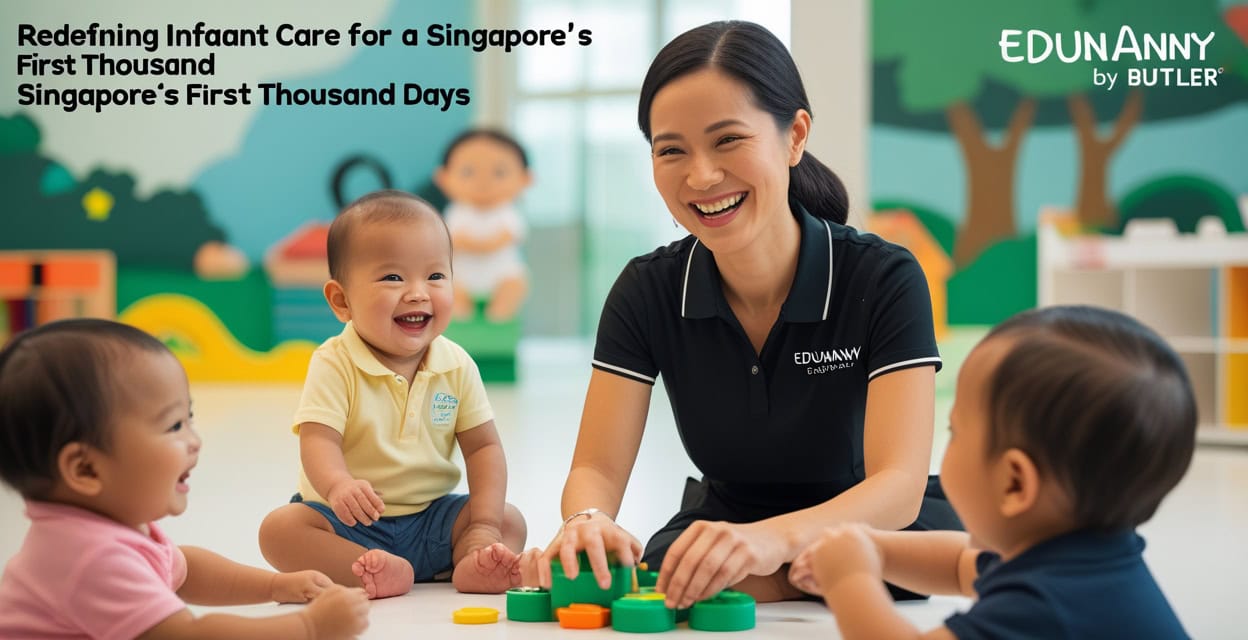
EduNanny by BUTLER: Redefining Infant Care for Singapore’s First Thousand Days
In a city where ambition pulses through every avenue, the quiet rhythm of an infant’s breath often signals the true pace of progress. EduNanny by BUTLER was envisioned to honor that rhythm: a centre-based and home-based childminding movement in Singapore that treats the first thousand days as a public good and a family joy. Our approach blends science-led care with human-hearted practice, delivering near-home options, transparent safety, and a curriculum built from the language of everyday moments.
What EduNanny Is — In Simple Terms, With Depth
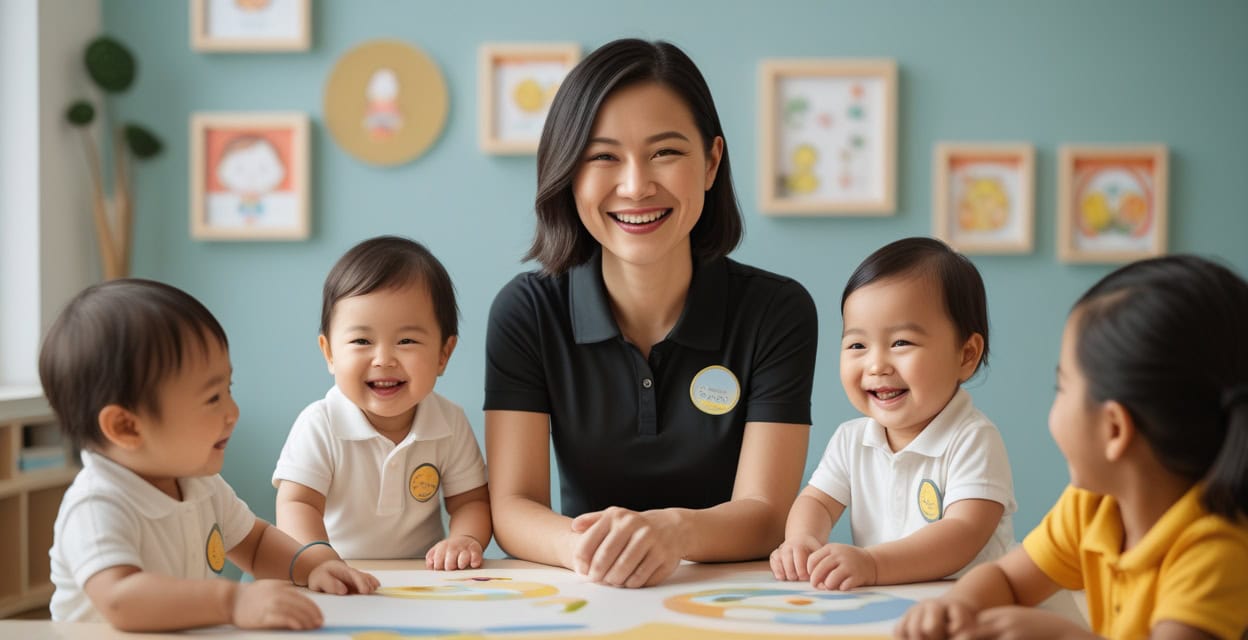
EduNanny is a science-led, human-hearted standard for infant care. We operate from 7am to 7pm, Monday through Friday, islandwide in Singapore, using ultra-low 1:3 care circles, modern calming layouts, consented live-view CCTV, and a curriculum grounded in the language of daily life. As part of a national ECDA Childminding Pilot, EduNanny expands near-home options, lifts care quality, and supports meaningful employment for local caregivers. Fees start from S$33 per day and are eligible for CDA/Baby Bonus subsidies where applicable.
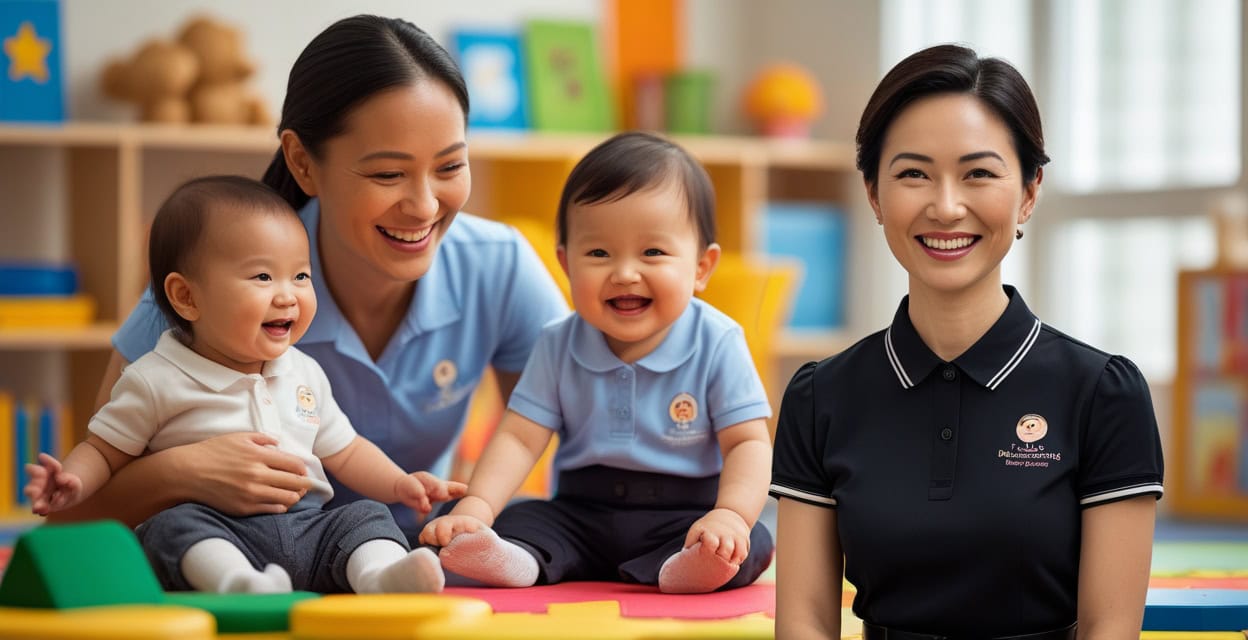
Pedagogy: The Knee-and-Neighbor Method
Great infant care is practical, intimate, and observable at floor level. The Knee-and-Neighbor Method centers on human-scale learning that happens where the child actually lives — on the floor, at the caregiver’s knee, and within the child’s neighborhood.
Anchor, Align, Allow — A Simple Framework
- Anchor: Predictable routines regulate body and brain. Create a daily rhythm: wake, feed, play, nap, repeat. Use visual schedules and consistent handovers.
- Align: Caregiver presence tuned to cues. Train eyes to read subtle signals—yawning, gaze shifts, posture changes—and respond with warmth and speed.
- Allow: Safe invitations to try, fail, try again. Embrace error as a stepping-stone to mastery, not a setback.
The One-Minute Curriculum — A Micro-Routine in Every Moment
- Say and Wait: During feeding, name objects and pauses to invite turn-taking and early speech.
- Palm-to-Floor: During transitions, place hands on the floor to build trust and shared attention.
- Name and Notice: During play, narrate actions, label emotions, and expand vocabulary with responsive language.
Practical tip for families: incorporate these micro-curriculum moments into your home routines. A two-minute “Say and Wait” pause before a spoonful can foster joint attention and early language without added stress.
Implementation in Daily Life
- Keep a small “care diary” for each infant: three lines on meals, sleep, and mood; share this with families at pickup.
- Rotate named caregivers in small groups (1:3 ratio) to foster secure attachments and internalized routines.
- Involve families in routine planning: a mutual weekly plan ensures consistency across centre-based and home-based settings.
Safety: Four Lines of Calm Defense
Safety is not an afterthought; it’s built into every moment of care. EduNanny’s safety framework includes environmental design, people practices, robust processes, and thoughtful use of technology.
Environment
- Modern, uncluttered rooms with clear sightlines and dedicated sleep zones.
- Non-toxic materials, safe sleep setups, and clearly labeled feeding areas.
- Air quality and lighting designed to support calm, alert states for infants.
People
- 1:3 caregiver-to-infant ratio with daily wellness checks.
- Consistent hand hygiene as a ritual, not a rule.
- Ongoing training in infant CPR, safe sleep, allergy response, and emergent care.
Process
- Arrival handovers with standardized checks; bottle labeling and tracking; sleep-position logs.
- Incident-prevention audits and weekly scenario drills to keep response instincts sharp.
- Clear, shared daily narrative to prevent miscommunication and ensure continuity.
Technology
- Consent-based CCTV for transparent oversight; secure digital logging; controlled access at both centre and home premises.
- Digital records that families can review, strengthening trust and collaboration.
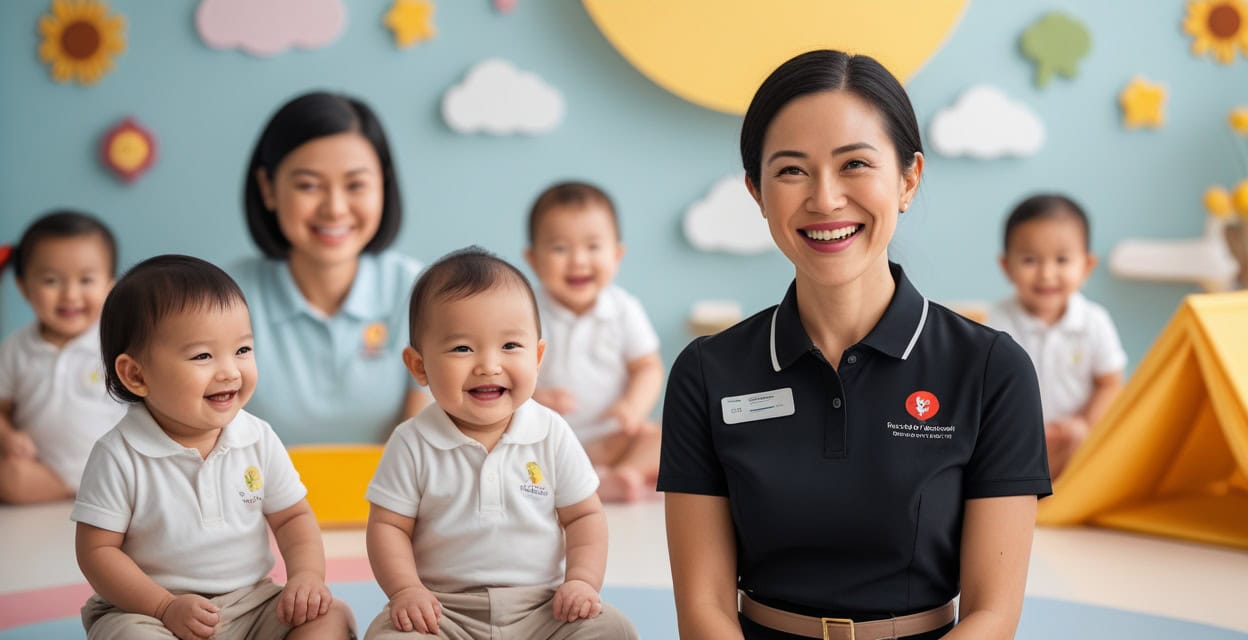
Development: Seven Streams for the First Thousand Days
Development in infancy grows from a balanced mix of attachment, self-regulation, language, motor skills, cognition, sensory integration, and social play. EduNanny outlines seven streams to guide early growth with intention and joy.
1) Attachment and Trust
- Assign a named primary caregiver within each small circle to support secure attachment.
- Regular, predictable caregiver presence helps infants anticipate care and feel safe.
2) Self-Regulation
- Predictable routines and gentle pauses before help teach infants how to manage arousal.
- Calm transitions reduce distress during changes in activity or environment.
3) Language
- Responsive labeling and narration in two languages when families choose, maximizing early vocabulary development.
- Sound play, singing, and responsive conversations as routine parts of the day.
4) Motor
- Floor-time-first approach to support gross and fine motor milestones: grasp, pivot, crawl, cruise, climb with age-appropriate safety.
- Progressions are scaffolded to avoid rushing milestones and to honor each child’s pace.
5) Cognition
- Cause-and-effect play and patterning through songs and routines.
- Object permanence activities and problem-solving within safe, everyday contexts.
6) Sensory Integration
- Controlled exposure to light, sound, textures, and water play to support sensory processing.
- Outdoor air-time and varied textures to strengthen sensory-motor integration.
7) Social Play
- Parallel play evolving toward cooperative play with adult scaffolding and shared routines.
- Mirrors, imitation, and caregiver-facilitated sharing as foundational social skills.
Importantly, EduNanny emphasizes nourishment over rushing milestones. A well-nurtured soil yields confident explorers and resilient learners.

Happiness: Joy as a Vital Sign
EduNanny tracks well-being with a simple, observable framework akin to checking a temperature. The Happiness Index highlights three smiles that signal thriving, alongside consistent rest and nourishment.
- The Settled Smile: relaxed body, soft gaze, deep breathing.
- The Seek Smile: infant initiates actions, reaches for a toy or person.
- The Shared Smile: joint attention and a moment of mutual joy between caregiver and infant.
Practical application for families: observe daily mood and energy patterns. Record a quick “happiness note” after key activities—feeding, play, a caregiver change—so caregivers and families share a complete picture of the child’s day.
Purpose of Childminders: The Fivefold Promise
- Guardian: safety first, enabling curiosity to flourish.
- Translator: read cues and translate them into practical care plans for families.
- Coach: model co-regulation, language, and play for parents and helpers.
- Neighbor: keep care near home to reinforce community ties and reduce commute stress.
- Navigator: connect families to health, development checks, and available support schemes.
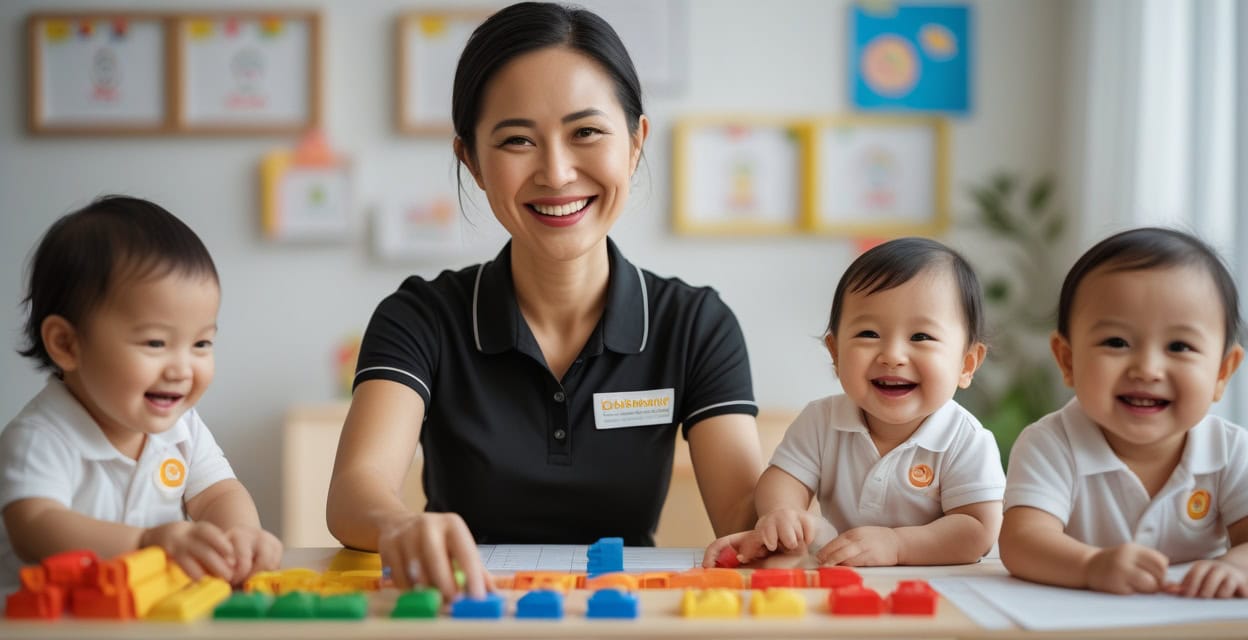
The EduNanny Benefits: Practical, Verifiable, Near-Home Care
- Excellence and quality you can verify: small ratios, named caregivers, transparent CCTV, rigorous training, modern, clean layouts.
- Centre-based, home-based, and distance touchpoints: choose in-community premises, home settings, or remote coaching for continuity.
- Hours that match modern life: Monday to Friday, 7am to 7pm, islandwide in Singapore.
- Affordability and access: care from S$33/day with subsidies for eligible families.
- A civic mission with private tenderness: part of the ECDA Childminding Pilot aimed at national uplift.
- Maximum employment mandate: meaningful jobs, professional development, and growth opportunities for local caregivers.
- Islandwide convenience: care that minimizes commute and maximizes family time.
- Clear enrollment paths: EduNanny.com and Childminding.EduNanny.com provide enrollment information and next steps.
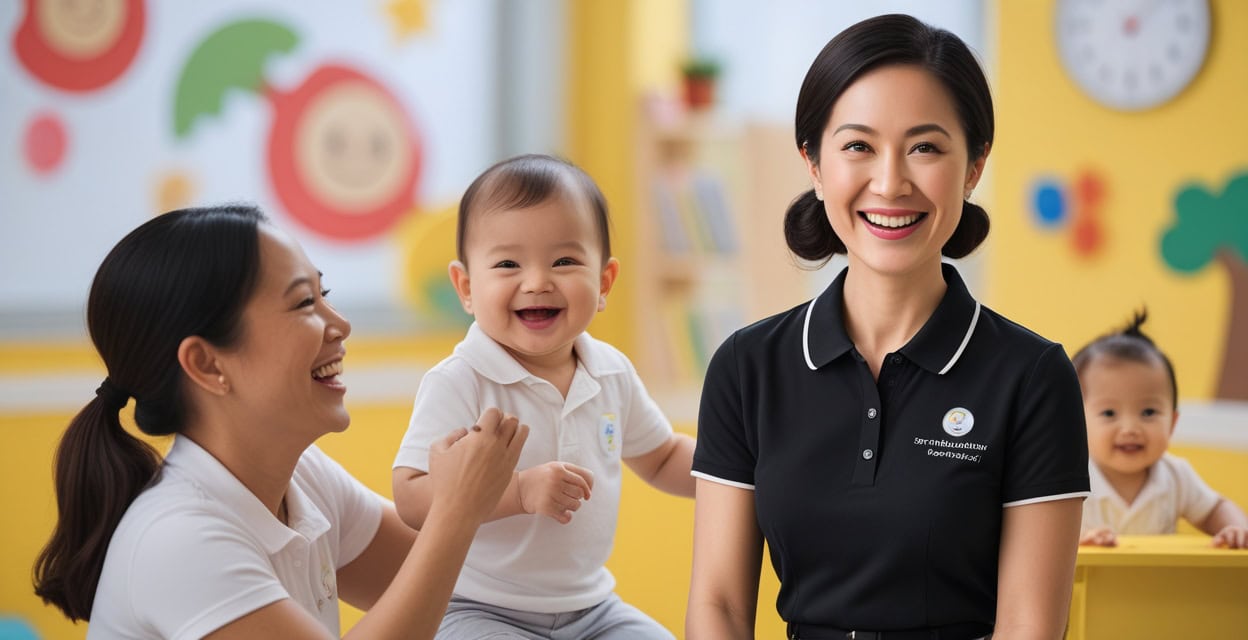
How We Work — Minute to Minute
Every day follows a deliberate sequence designed to optimize safety, learning, and joy. Here’s a practical snapshot of a typical day from arrival to departure.
- Arrival: calm handovers, wellness checks, and a micro-plan aligned with parents’ daily notes.
- Morning: anchor routines, floor play, language loops, and outdoor air where possible.
- Midday: safe feeding protocols, responsive naps, and gentle wake rituals.
- Afternoon: sensory baskets, social echoes, and progressions from tummy time to cruising.
- Departure: a single coherent narrative of what was noticed, nurtured, and what’s next for the child’s plan.
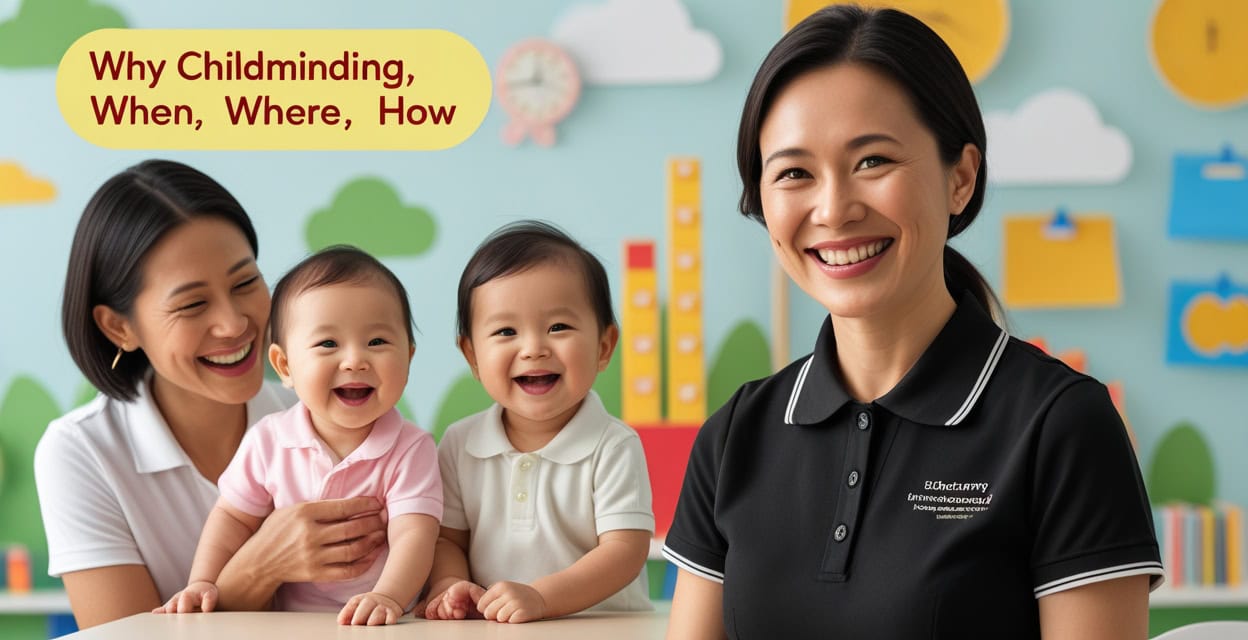
Why Childminding Matters — Who, What, When, Where, How
- Who: every infant and every working family in Singapore; every caregiver seeking dignified, meaningful work.
- What: turning ordinary care into attachment, language, and self-regulation.
- When: the first thousand days when the brain is most receptive to experience and trust forms the foundation of learning.
- Where: near home — community spaces and home premises — so care belongs to the child’s everyday environment.
- How: through a 1:3 ratio, transparent safety, a living minute-by-minute curriculum, and a partnership approach that respects culture and routine.
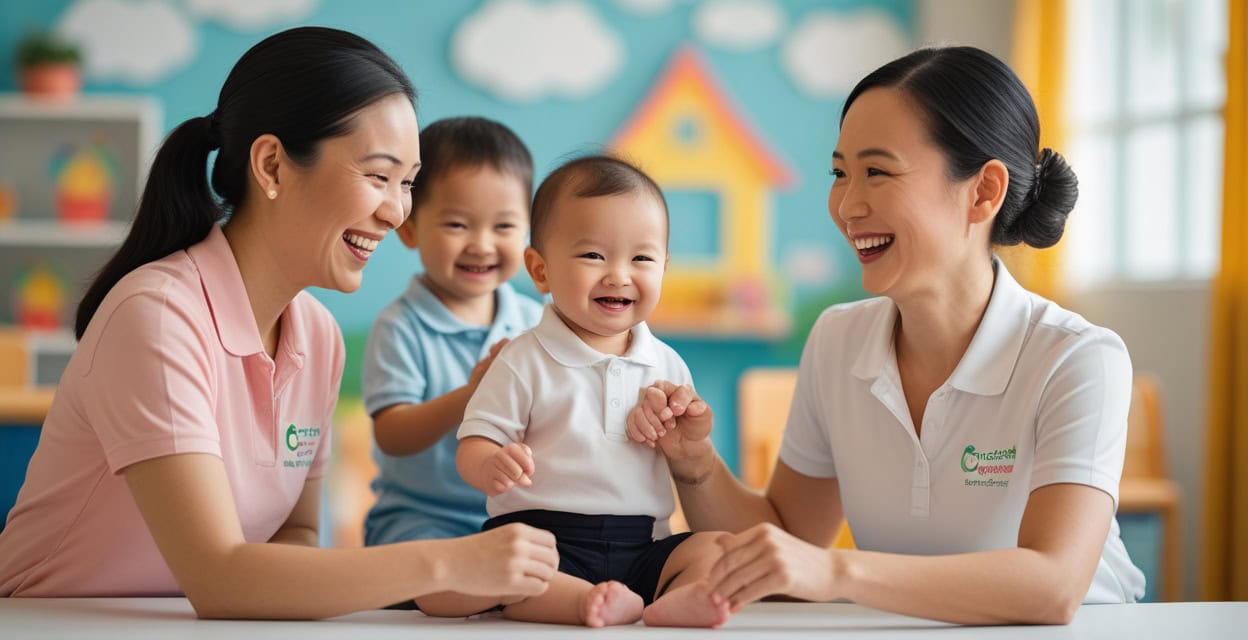
Our Philosophy and Practical Takeaways for Parents
EduNanny believes attention is a public resource with the highest return in infancy. When we kneel at eye level, safety becomes visible and learning becomes natural. When care happens near home, family life breathes easier. When joy is a vital sign, development accelerates as infants feel secure enough to explore. Families can apply these principles at home:
- Replicate near-home routines: build predictable daily rhythms using simple timers or cue cards for meals, naps, and play.
- Practice “Name and Notice” in daily moments: while feeding or playing, narrate actions and emotions to enrich language and social understanding.
- Support attachment through caregiver consistency: seek settings that offer a named caregiver and regular handovers to minimize transitions.
- Monitor safety with transparency: ask about finger-scan access, CCTV policies, cleaning routines, and safety drills.
- Encourage co-regulation with families: share stress-management strategies and daily milestones to reinforce progress across environments.

Conclusion — A Collective Beginning for Singapore’s Future
EduNanny by BUTLER invites families to imagine a Singapore where every infant’s day is calm, predictable, and rich with discovery; where parent handovers meet with competence and care; where caregivers are trained, respected, and offered meaningful work; and where the first thousand days are a national craft rather than an afterthought. If this vision aligns with your family’s beginning, we invite you to explore how EduNanny can kneel beside you and start the day well. Visit EduNanny.com or Childminding.EduNanny.com to learn more and begin enrollment.
SEO keywords: [#EduNannySingapore, #First Thousand Days, #NearHomeCare, #InfantCareSingapore, #ECDAChildmindingPilot]
Ready to Experience Excellence?
Transform Your Family’s Journey
Discover Singapore’s leading infant care and childminding services. Expert guidance for your little one’s first thousand days.