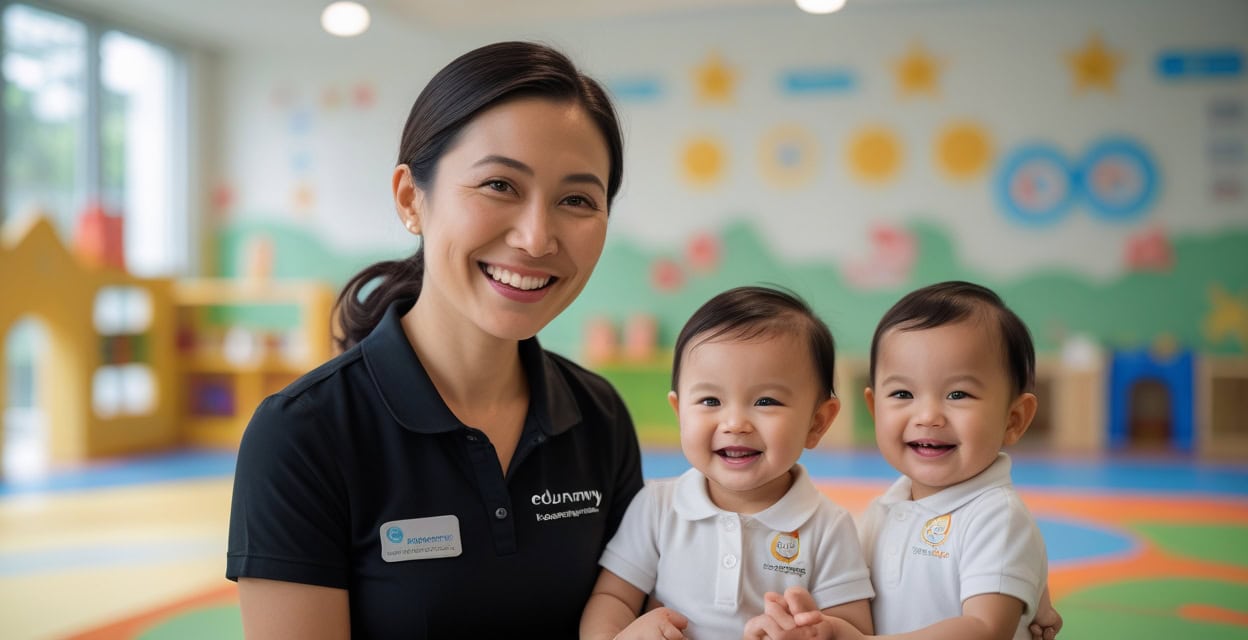
From Floor to Future A Nationwide EduNanny Blueprint of Near Home Pods and One to Three Care Across Singapore
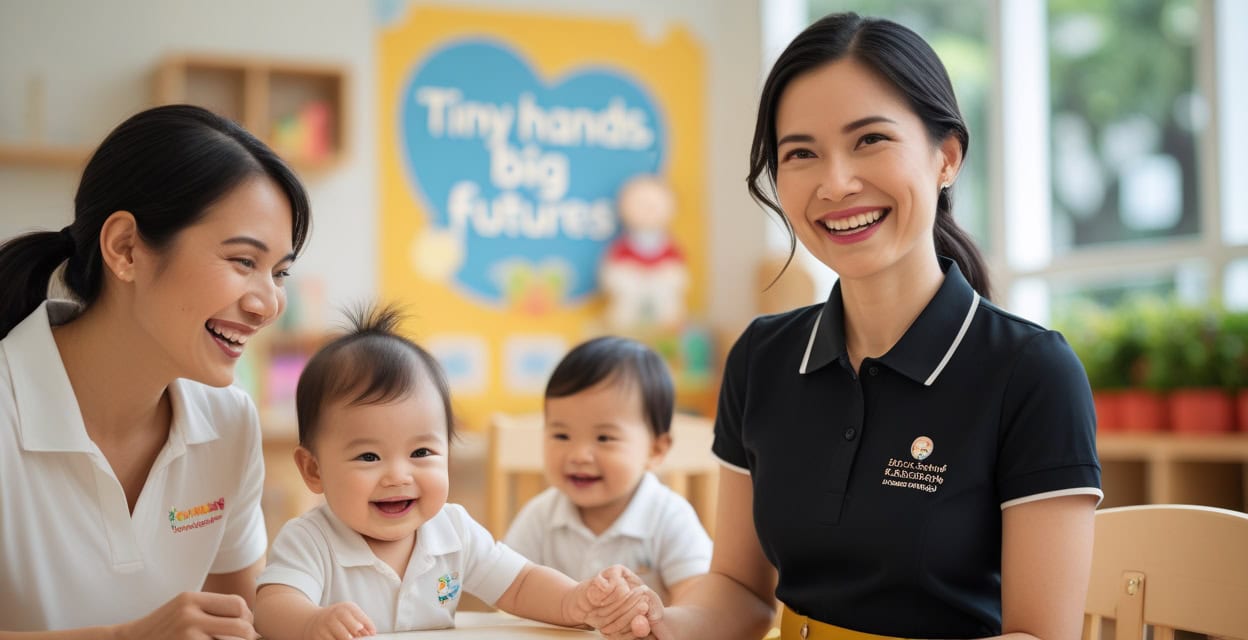
Introduction: Tiny Hands, Big Futures
In a world that moves quickly, early care shapes the quiet, enduring confidence that travels with a child for a lifetime. EduNanny by BUTLER stands for science-led, human-hearted infant care and childminding—delivering excellence with dignity, every day. This article grows from that belief and translates it into practical guidance, actionable routines, and a practical blueprint for families who seek reliable, transformative care in Singapore.

The EduNanny Promise: Centre-Based and Home-Based Care, Made Visible
EduNanny is a centre-based and home-based childminding operator in Singapore, designed to fit modern family life. Our promise is concrete, not marketing fluff:
- One educator to three infants — a daily commitment to genuine attention and vigilant care.
- Transparency by design — CCTV visibility that’s trust you can see, not just trust you feel.
- Islandwide access — through both centre-based and home-based settings, with consistent standards across formats.
- ECDA Pilot and National Social Initiative — advancing safety, dignity, and meaningful careers for trained caregivers.
- Affordability — from $33/day, with fees payable via CDA/Baby Bonus where policies permit, ensuring quality is within reach for families.
Learn more in plain terms at EduNanny.com and Childminding.EduNanny.com. We invite families to explore how this integrated approach fits their infant’s temperament, home rhythm, and daily life.
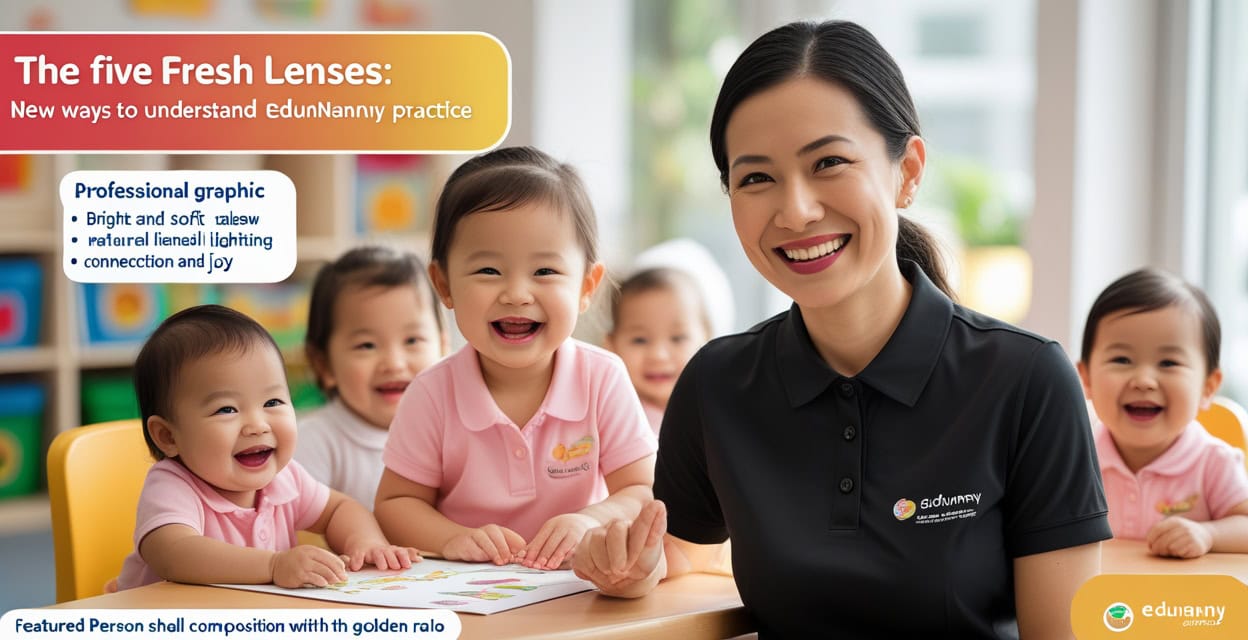
The Five Fresh Lenses: New Ways to Understand EduNanny Practice
First: The Listening Floor
Lowering your body and your voice opens a child’s world. The Listening Floor is where adult attention becomes the infant’s first language. In this space:
- Care precedes instruction — routines are anchored in respectful caregiving: unhurried diapering, predictable feeding, gentle transitions.
- Play is purposeful — objects invite reaching, rotating, problem-solving; caregivers narrate simply and name what the child sees and does.
- Movement as learning — safe floor time strengthens the vestibular system and body map, building confidence for later thinking.
Practical home tips: set aside 5–10 minutes daily for floor-time play. Kneel to the child’s level, narrate their actions, and pause to wait for a response. This supports language development and social cue reading in the same moment.
Second: Safety as Architecture, Not Afterthought
Safety informs every choice—from layout to routine. It is not a checklist, but a philosophy embedded in space, people, and daily practice.
- Ratios that matter — one educator to three infants for real vigilance and meaningful parent conversations.
- Transparent trust — live CCTV visibility and recorded reviews to support accountability and calm confidence.
- Modern layouts — low shelf lines, soft edges, clear visual corridors, quiet zones for feeding and sleep. Practices like SIDS-aware sleep, safe swaddling, and monitoring of temperature/air quality form baseline expectations.
- Practice over paperwork — recurring simulations for choking, evacuation, allergy management; visible hand hygiene cues; food prep aligned with infant feeding guidelines.
- Data with dignity — digital attendance, incident logs, and developmental notes that respect privacy and are accessible to parents.
Parents can support this at home by asking, “What safety cues do you use during transitions? How do you handle a diaper change if a child looks away or becomes unsettled?” The answers reveal whether safety is a routine, not a ritual.
Third: The Developmental Weave
Development is a braid, not isolated strands of cognition, language, or motor skills. EduNanny’s approach integrates multiple domains in a flowing, connected way.
- Senses to symbols — rich sensory input (natural light, textures, human voices) is balanced so that children don’t feel overwhelmed but are invited to explore and name.
- Attachment and autonomy — a dependable adult launches exploration, supports co-regulation, and celebrates the first moments of independent play as milestones.
- Everyday literacy — model turn-taking talk, sing gently, and read small books with big illustrations; language is warm, precise, and context-driven.
- Micro-assessments — observation happens in daily care, not in separate exams; tomorrow is shaped by today’s insights.
At home, nurture development by pairing new words with actions: “The ball rolled under the chair. Where is it now? Let’s look together.” And when a child wins a small skill—cheer with specific praise: “You rolled it all the way to me. I saw your strong arm.”
Fourth: Joy as a Learning Signal
Happiness in infancy is not frivolous; it is feedback that the environment fits the child. Joy indicates alignment between care and growth.
- Predictable rhythms — consistent feeding and sleep reduce cortisol and increase curiosity.
- Freedom to try — near-misses are celebrated as evidence of growing capabilities.
- Culturally rooted delight — lullabies in home languages, greetings aligned with family routines, familiar scents and objects that anchor belonging.
- Parent partnership — daily notes, photos, and optional distance check-ins make joy a shared experience rather than an expectation.
Practical tip: maintain a simple family routine or ritual (a song, a cuddle, a one-sentence daily recap) that can be echoed in EduNanny’s environment to reinforce continuity and security for your child.
Fifth: The Public Calling of Childminding
Childminding is a vocation with three responsibilities: the child’s well-being, the family’s stability, and the nation’s future. EduNanny treats it as a public good with immediate impact.
- Economic backbone — reliable, high-quality care supports workplaces, careers, and family resilience.
- Community fabric — centre- and home-based options with training, supervision, and CCTV bring trusted care closer to families’ lives.
- Workforce dignity — training, mentorship, and clear progression raise the standard of caregiving as a respected profession.
- Equity with access — affordable care makes opportunity tangible for more families, with policy-aligned funding where available.
As parents, you can advocate by asking how the program supports caregiver development, how it handles staff retention, and how families with different needs can access equitable options within the same high standard of care.
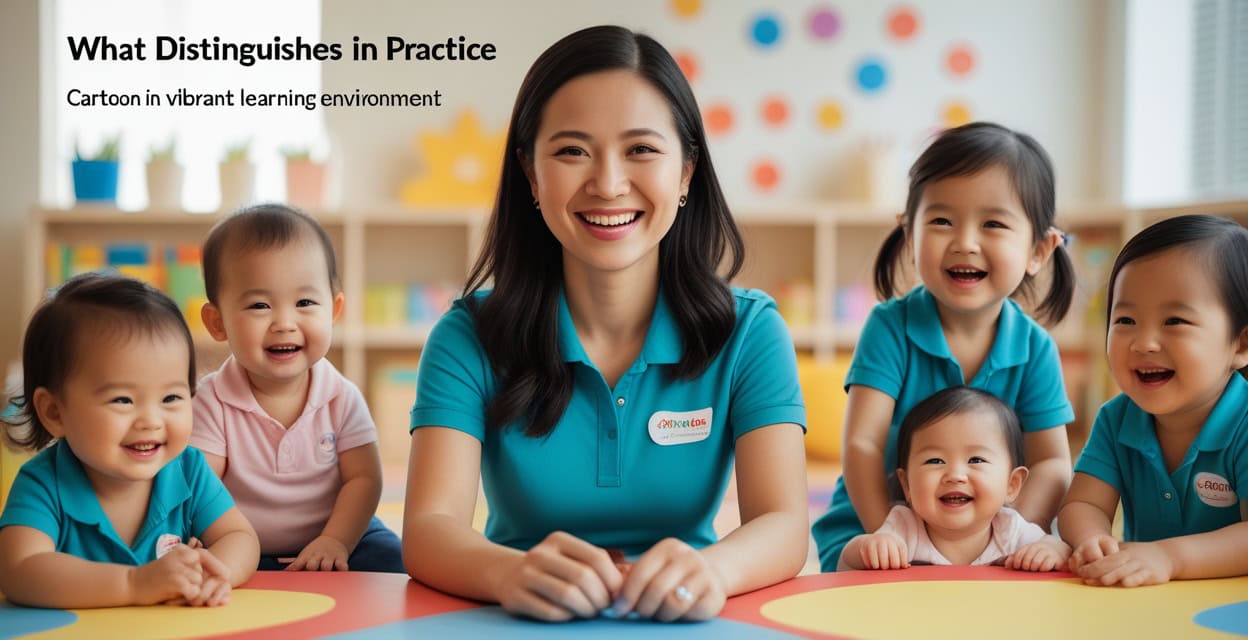
What Distinguishes EduNanny in Practice
- Excellence and Quality — rigorous training, reflective supervision, science-informed routines, and consistently kind, measurable care.
- Centre-Based and Home-Based Options — the same high standards across formats so families can choose the setting that suits temperament, commute, and home rhythms.
- Distance Support — tele-consults, secure daily updates, and remote coaching for sleep, feeding, and development.
- Convenience and Reliability — islandwide availability, standardized modern layouts, and disciplined operations that honor punctuality as respect.
- Transparent Technology — CCTV, digital daily reports, and clear escalation pathways ensure concerns travel quickly and support arrives faster.
- Governance and Mission — operating within the ECDA Childminding Pilot as a National Social Initiative focused on safety, dignity, and jobs.
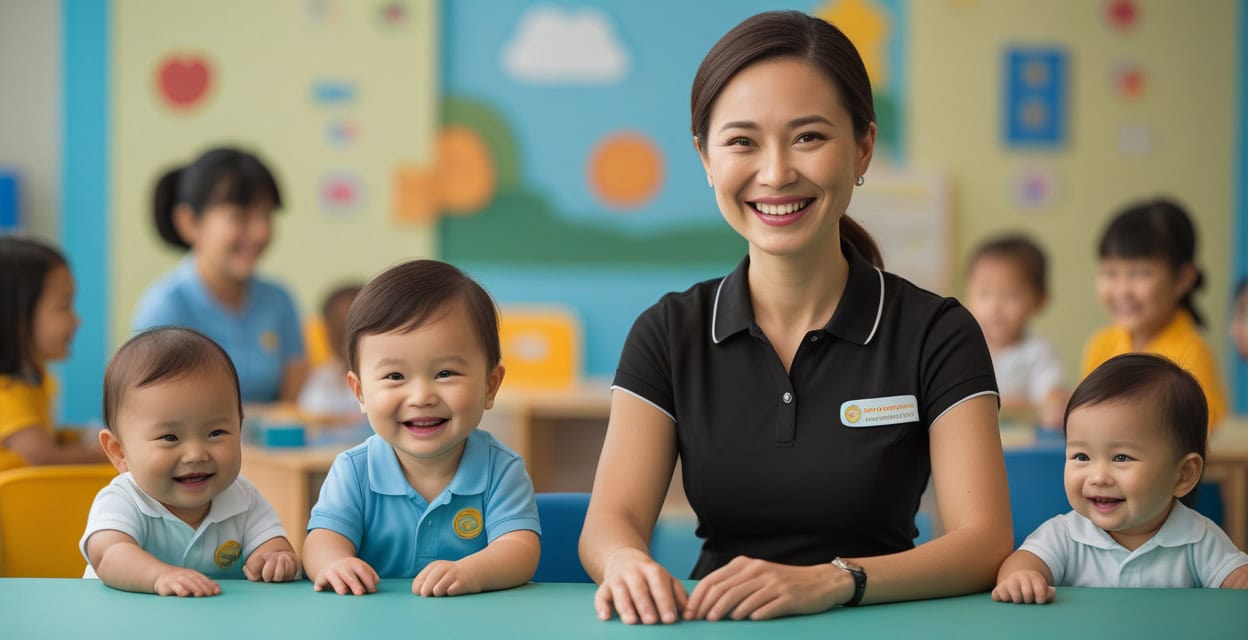
A Day in the Life: Practical Rhythms for Families
Here is a concise, practical sketch of a typical day that aligns with EduNanny’s philosophy while offering a template families can adapt at home:
- Morning welcome — calm handover, health check, and a note on last sleep and feeds. Quick temperature checks and a friendly greeting anchor safety and comfort.
- Unrushed care — diapering as dialogue; bottles provided with eye contact; gentle burping as bonding time.
- Floor exploration — rotated materials, safe movement, and caregiver narration to extend curiosity.
- Rest with respect — cues respected; sleep is not forced; safe sleep practices are maintained consistently.
- Afternoon attunement — soft music, sensory baskets, and outdoor pram walks where possible to support physical and sensory development.
- Evening handover — honest summaries, what delighted your child, what’s next, and how families can build on at home.
Parents can mirror this rhythm at home by creating predictable transitions, naming the day’s highlights, and sharing simple updates with caregivers to keep continuity seamless for the child.

Who, What, When, Where, and How: The Childminding Covenant
Who
Infants come first; parents partner with educators; educators act as professionals; the wider community guards shared standards.
What
Childminding as responsive care, developmentally tuned pedagogy, and safety embedded in space, training, and culture.
When
From the earliest months through the toddler years, when secure relationships and predictable rhythms shape self-regulation, language, and learning.
Where
Across centres and homes throughout Singapore—near workplaces, near transit, inside neighborhoods—supported by modern layouts and visible accountability.
How
With one-to-three ratios, innovative CCTV, Monday–Friday, 7am–7pm reliability, affordability, and CDA/Baby Bonus options where policy permits; with staff development, career ladders, and family coaching plus distance touchpoints for continuity.

The Philosophy and Purpose Behind Our Work
- Infant competence — recognizing that babies signal, learn, and build trust one micro-moment at a time.
- Caregiver dignity — nurturing professionals who notice, pace, protect, and extend a child’s effort into discovery.
- Clear communication — sharing what is seen, co-designing daily goals, and making progress visible and shared.
- Social good — high-quality, joyful care strengthens households, supports employment, and contributes to the nation’s human capital.
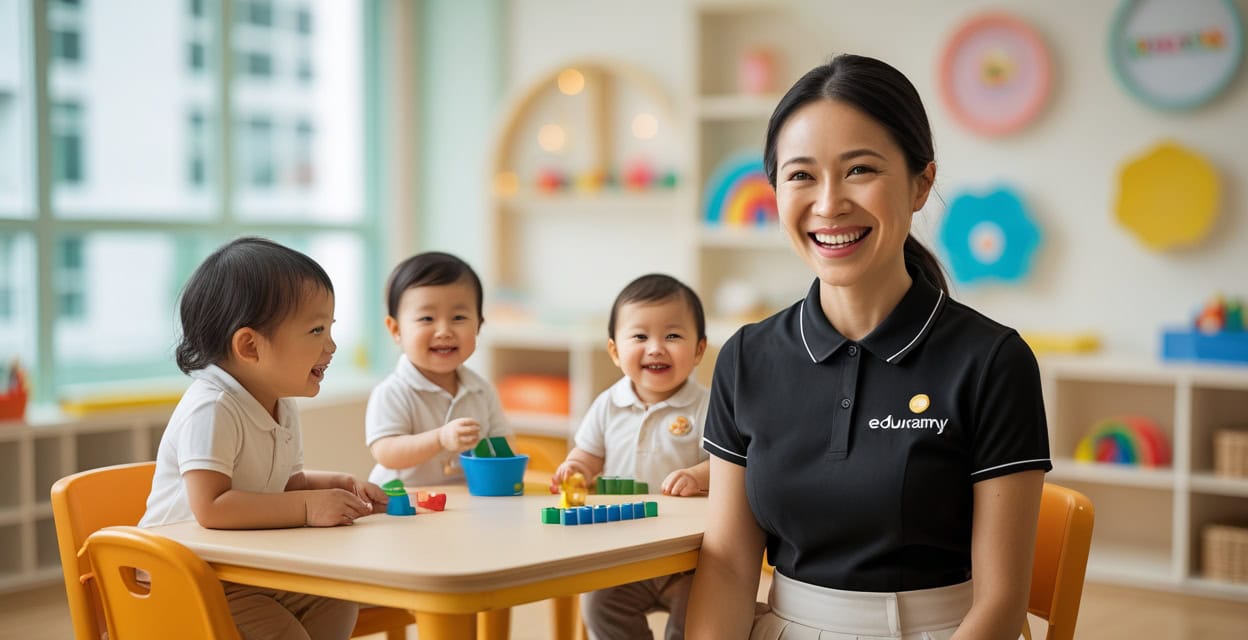
Practical Guidance for Parents: Partnering with EduNanny
Families can translate EduNanny’s principles into everyday practice. Here are concrete steps and questions to guide visits, enrollments, and ongoing partnerships:
- Evaluating safety and routines — ask to see floor plans, sleep setups, and a sample daily schedule. Look for spaces that permit safe floor time, quiet zones, and clearly labeled routines.
- Understanding the Listening Floor in action — request a live observation or video sample of floor-time play and caregiver narration to gauge language richness and responsiveness.
- Assessing the care team — inquire about caregiver training, supervision frequency, and how micro-moments of learning are documented and shared with families.
- Discussing CCTV and data privacy — confirm how video feeds are accessed, who can view them, and how incident logs or notes are shared in a privacy-respecting way.
- Planning for continuity — align morning handovers, home routines, and sleep schedules with the caregiver’s expectations so transitions are smooth for the child.
- Home collaboration — create a simple daily note or photo journaling habit; point out progress or concerns to facilitate timely joint planning.
- Budgeting for quality care — explore affordable options, subsidy eligibility, and plan for long-term consistency as a part of family budgeting rather than a one-off payment.
- Language and culture at home — share home languages and familiar songs or phrases; request culturally rooted materials and lullabies to maintain home-school continuity.

A Covenant for Parents: Who, What, When, Where, and How in Practice
The closing covenant of EduNanny emphasizes partnership with families and communities. This includes:
- Who — infants first; parents as partners; educators as professionals; community guardians of shared standards.
- What — childminding as responsive care, developmentally tuned pedagogy, and safety built into space, training, and culture.
- When — from earliest months to toddler years, when secure relationships and routines shape growth.
- Where — centres and homes across Singapore, close to families, supported by modern layouts and accountable practices.
- How — disciplined ratios, CCTV transparency, reliable hours, affordability, staff development, and family coaching with remote support as needed.

The Journey Forward: Our Call to Action
If you are a parent choosing where your child will spend their days, seek a place where safety is visible, love is paced, and learning threads through daily care. Seek a team that can tell you not only what your child did, but what your child felt—and how that feeling guided the next step of exploration.
EduNanny by BUTLER is ready to serve—centre-based, home-based, and distance-supported; Monday–Friday, 7am–7pm; islandwide; with a one-to-three promise, modern environments, innovative CCTV transparency, and fees that respect your budget and your hopes. Learn more or enroll at EduNanny.com and Childminding.EduNanny.com.

Conclusion: Tiny Hands. Big Futures. Practical Excellence.
In every moment of care, EduNanny translates expert knowledge into everyday practice that honors both child and caregiver. The result is not merely a place to leave a child during the workday but a deliberate, measurable progress toward confident independence, language growth, social skills, and a secure sense of self. For families, this means choosing a partner who blends science, caregiving craft, and transparent accountability with the warmth of home. If you want to align your child’s days with a thoughtful, research-informed approach, we invite you to explore EduNanny as your trusted option in Singapore’s childminding landscape.
EduNanny by BUTLER is ready to serve—centre-based, home-based, and distance-supported; Monday–Friday, 7am–7pm; islandwide; with a one-to-three promise, modern environments, innovative CCTV transparency, and fees that respect your budget and your hopes. Learn more or enroll at EduNanny.com and Childminding.EduNanny.com.
Tiny hands. Big futures. Practical excellence. That is our pledge to you, to your child, and to Singapore.
Thank you.
[#keyword1, #keyword2, #keyword3, #keyword4, #keyword5]Ready to Experience Excellence?
Transform Your Family’s Journey
Discover Singapore’s leading infant care and childminding services. Expert guidance for your little one’s first thousand days.