See Settle Spark The EduNanny Singapore Playbook for the First Thousand Days
EduNanny Singapore: An In-Depth Editorial Blueprint for Infants, Families, and Communities
EduNanny is described as an infant care movement built in Singapore—where science of development meets the art of human presence. This long-form article expands that vision into actionable guidance for parents, caregivers, and communities. It translates high-level principles into practical steps you can implement at home, in early learning spaces, and within your social networks to nurture the first thousand days with clarity, warmth, and measurable outcomes.

The Pedagogy of Presence: See, Settle, Spark
EduNanny’s core pedagogical trio—See, Settle, Spark—offers a repeatable framework for everyday care that blends attentive observation with developmentally rich opportunities. Below are practical applications and examples you can apply in homes and small group settings.
See: Attentive Access to Individual Cues
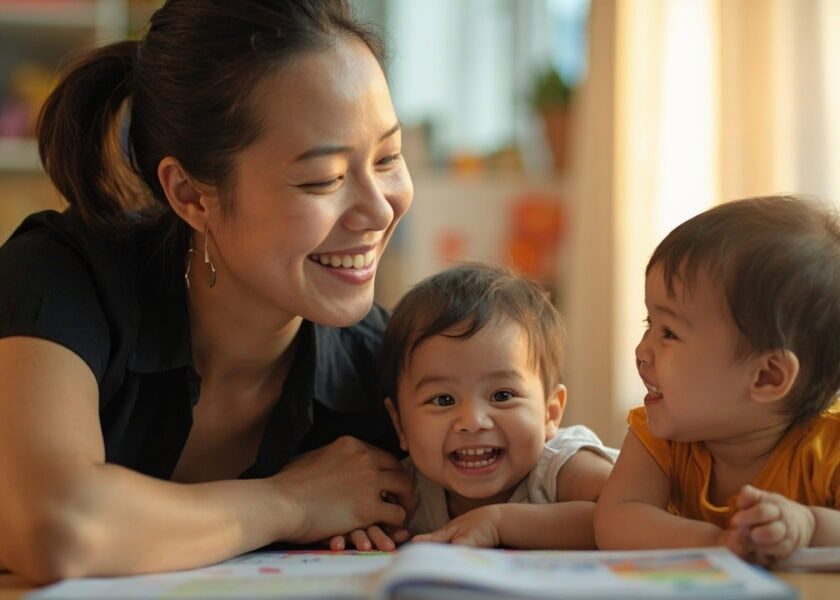
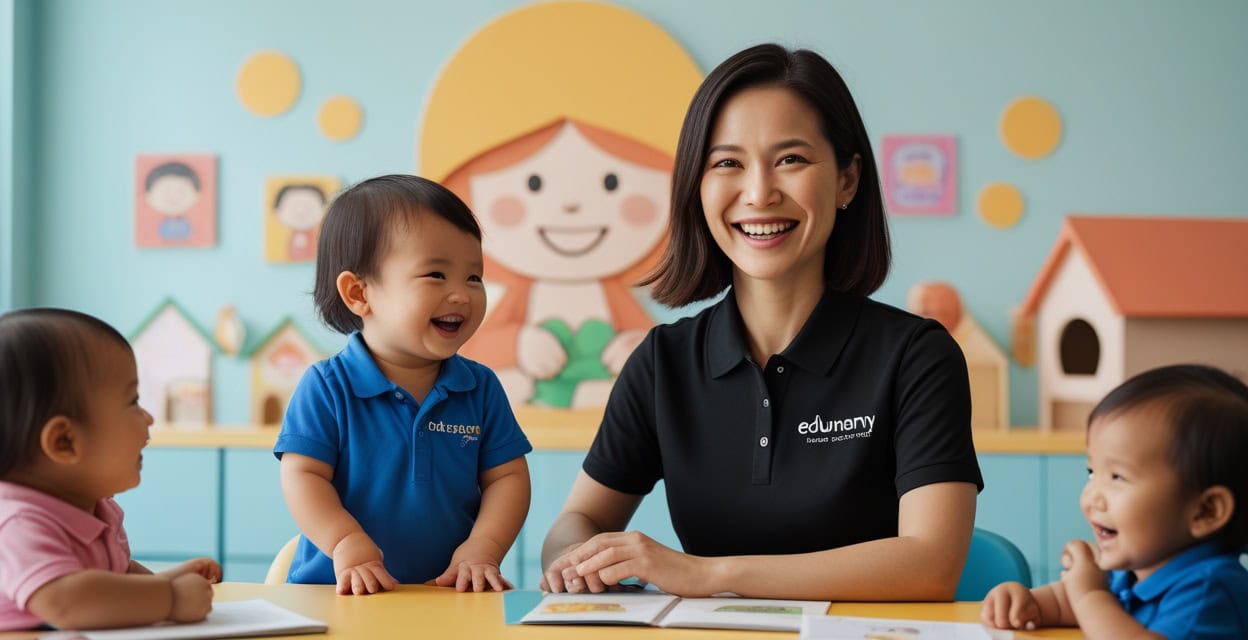
In a 1:3 circle, educators truly see each child by reading breath, gaze, posture, and micro-cues. Parents can adopt similar practices at home:
- Engage at eye level during playtime; sit on the floor to reduce distance and increase attunement.
- Observe the infant’s cues for needs—head orientation, reaching gestures, vocalizations—and respond within three breaths to reinforce reliable communication.
- Keep a simple cue journal: note one new cue you observed each day (e.g., “baby reached for a toy, then looked to me for a reaction”).
- Practice responsive labeling—comment on what you see (“You’re turning toward the rattle—should we try it together?”) to scaffold language and attention.
Settle: Co-Regulation as the Foundation for Learning
A calm nervous system supports learning. Before teaching anything, we co‑regulate. Home practices include:
- Use a soft, calm voice and slow tempo during transitions (e.g., before a bottle, before a diaper change).
- Pause before lifting or moving the child; keep touch secure and predictable.
- Establish a simple routine: a brief cuddle, a consistent song, then a predictable sequence (eat → play → nap).
- Record a short “calm routine” video to model for family caregivers and help substitute caregivers stay aligned.
Spark: Extend and Challenge Within the Child’s Capacity
After settling, extend the child’s learning with micro-challenges just beyond current abilities:
- Place a toy slightly out of reach to invite a gentle reach or roll; narrate the action to couple language with movement.
- Mirror babble and introduce a new syllable or word; vary the angle of tummy time to awaken the neck and shoulder girdle.
- Rotate safe objects with different textures to build tactile curiosity while ensuring safe exploration.
- Design daily micro-goals; celebrate every small achievement with specific, positive feedback (“You rolled all by yourself—nice work!”).
Safety by Design: Quiet Layers that Hold Everybody
Safety is a layered culture, not a single rule. Here are practical layers you can implement immediately at home and in small programs.
Environment: Visibility, Accessibility, and Stability
- Keep floor-level play areas clear of trip hazards; anchor heavy furniture to walls to prevent tipping if a child pulls up.
- Use clear sightlines: arrange furniture to ensure caregivers can see infants from multiple angles without turning
- Perform regular hazard sweeps (start-of-day and mid-day) and log findings in a simple chart.
- Choke‑check materials: ensure all small parts are larger than 3.5 cm (roughly the size of a ping-pong ball) to minimize choking risk.
Sleep: Safe, Calm, Predictable Transitions
- Use firm, flat sleeping surfaces and place babies on their backs for every sleep.
- Avoid pillows, loose blankets, or soft toys in the sleep space; maintain a comfortable room temperature (20–22°C is a common guideline) with a consistent routine.
- Maintain nap logs to track duration and quality and ensure another trained caregiver verifies the sleep setup during transitions.
Hygiene and Feeding: Rituals that Build Confidence
- Institutionalize handwashing as a ritual before meals and after transitions; teach children simple concepts like “washed hands are ready to eat.”
- Label bottles and use age-appropriate feeding utensils; avoid microwaving liquids; prepare formula per manufacturer guidelines and keep logs of preparation and storage.
- Establish sterilization routines for feeding equipment and ensure spot audits for adherence.
Allergies and Health: Individual Care and Transparency
- Create individual health plans for those with known allergies; label emergency contacts and allergen-free menus in advance.
- Prevent cross-contamination by separating utensils and foods when needed; document any incidents promptly and share learnings with families.
Emergency Preparedness: Drills and Clear Communication
- Practice evacuation drills and medical response scenarios; keep travel checklists for outings ready and visible.
- Establish a simple, plain-language notification flow to parents during emergencies.
Transparency: Privacy-Safe Observability
- Explain how CCTV is used for transparency and professional reflection, with consent-based, privacy-aware protocols.
- Provide families with regular, digestible updates and opportunities to engage with educators about observations and growth.
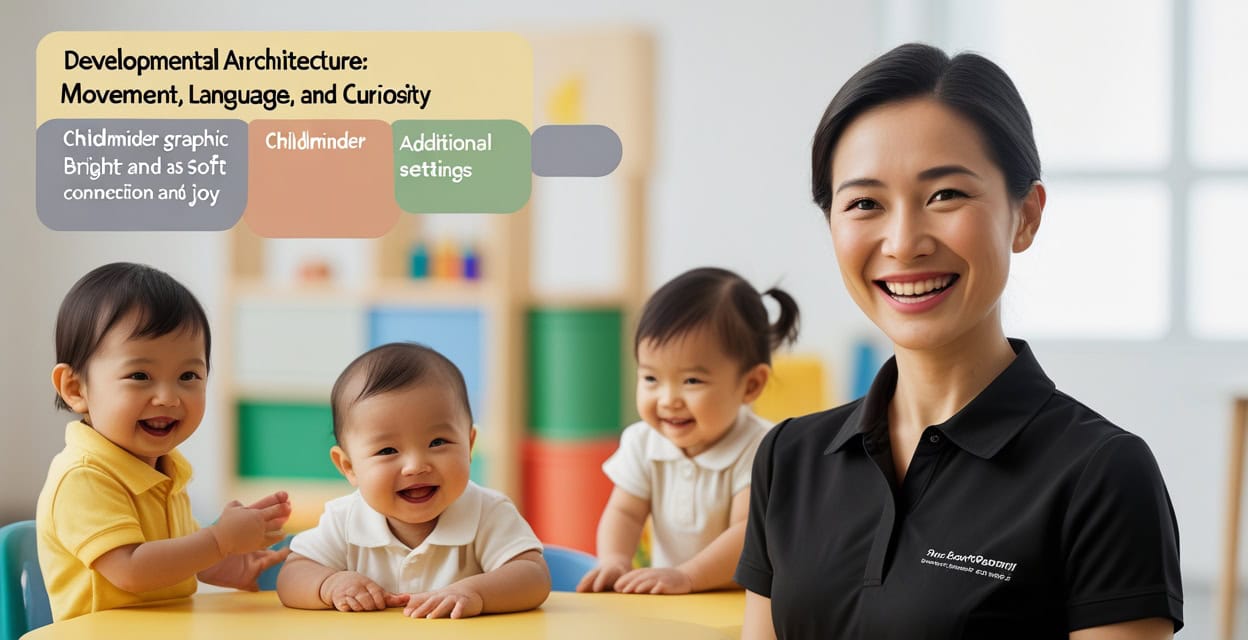
Developmental Architecture: Movement, Language, and Curiosity
The developmental architecture frames how we design days to align with the brain’s building blocks. Practical home and program strategies below help you apply these principles daily.
Movement Freedom: Floor Time and Purposeful Mobility
- Ensure safe floor time every day; provide soft surfaces and age‑appropriate props (cushions, low ramps, gentle wedges) to encourage exploration.
- Dress infants in uncluttered clothing that allows full range of motion and safe crawling; avoid restrictive outfits during floor play.
- Avoid prop‑putting to keep the child actively engaged with self-initiated movement.
Sensory Diet: Real-World Materials and Calm Environments
- Balanced sensory experiences include natural light, controlled sound levels, and tactile objects (wood, fabric, metal, water) to explore texture and temperature safely.
- Prefer real-world materials over plastic toys for authenticity and durability; rotate objects to maintain novelty without overwhelming the child.
Language Bath: Dialogue Before Words
- Engage in serve-and-return conversations: respond to vocalizations with meaningful language and questions.
- Incorporate bilingual songs and rhymes; narrate care moments to build a living dialogue (e.g., “I’m lifting you now; you feel my hands; we’re going to the changing table”).
- Carry a daily language routine: a predictable set of phrases in both languages to reinforce understanding and connection.
Social Seeds: Early Prosocial Experiences
- In small groups, encourage short, positive peer interactions—eye contact, smiling, and taking turns with a toy under caregiver guidance.
- Use guided activities (drums, rhythm sticks, simple waving games) to foster shared attention and cooperative play.
Observation and Documentation: Sharing Growth with Families
- Track tiny gains: longer reach, steadier sit, new sounds; translate these into growth statements for families.
- Offer weekly family updates or a digital “growth snapshot” that captures progress with simple visuals and language.
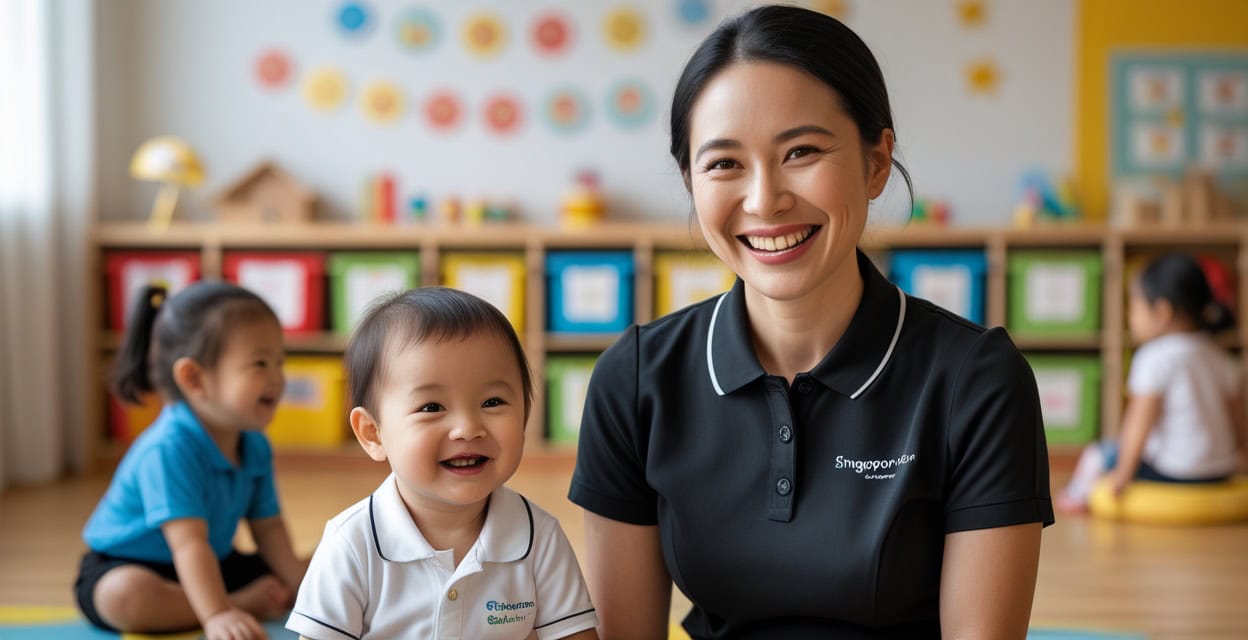
Happiness and Belonging: A Day Built on Rhythm
Infant happiness is not entertainment; it is predictability with room for discovery. Build days that feel steady, yet alive with curiosity.
The Day Design: Patterned Yet Flexible
- Structure the day around core blocks: arrive and greet, feeding, rest, exploration, quiet stretch, and a shared transition to home routines.
- Respect each child’s rhythm and offer gentle pacing in activities; allow flexible sequencing to honor individual needs.
Micro-Rituals: Anchors of Belonging
- Maintain a small set of home-wide anchors: a family photo within reach, a familiar lullaby, and a cloth or object from home for settling.
- Use the same welcome phrase in the home language and create a simple nap routine that signals safety and belonging.
Joy as Data: Observing Delight and Responding
- Look for indicators of joy: bright eyes, relaxed shoulders, eager reach; adjust the environment if joy wanes (lighting, proximity, pace, or challenge level).
- Provide families with a “joy ledger”—a weekly note of 2–3 moments of delight to celebrate progress and inform future planning.
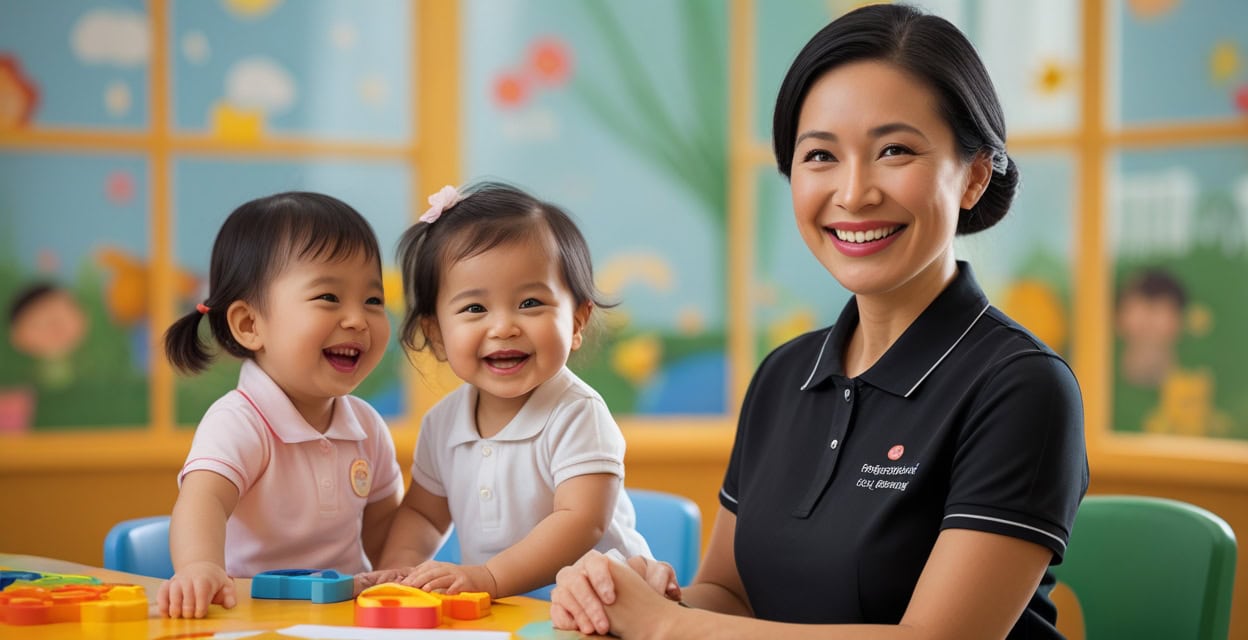
The Civic Purpose of Childminders: A Profession of Skill and Dignity
EduNanny elevates childminding as a skilled, dignified vocation. Here are practical implications for families and communities seeking to partner with professional childminders.
Training Pathway: Safety, Development, Reflection
- Seek programs that include safety certification, infant development modules, responsive care practicums, and sustained mentoring.
- Encourage reflective practice: after a care moment, ask questions like “What did I notice? What did I try? What will I adjust?”
Career Lattice: Progression Without Leaving the Craft
- Explore roles across home-based, centre-based, and distance-support models; look for opportunities that allow skill growth while staying close to caregiving work.
- Advocate for clear advancement pathways that don’t force mere wage increases but provide meaningful professional development.
Family Partnership: Open Dialogue and Cultural Respect
- Begin with entry interviews to understand routines, health needs, and cultural preferences; maintain monthly check-ins and an open line for feedback.
- Use tools like digital daily notes or a family portal to share routine changes, sensory experiences, and size-appropriate milestones.
Community Weave: Localized, Accessible Care
- Support care near home or work to reduce commute stress and strengthen caregiver-child relationships.
- Encourage modern, thoughtfully designed spaces that blend professional standards with neighborhood accessibility and trust.

What Makes EduNanny Different in Singapore: Practical Realities
EduNanny differentiates itself through practical structure, accessibility, and a public spirit. The following highlights translate high-level principles into concrete options for families.
- Choice without compromise: Centre-Based, Home-Based, and Distance-Supported models to fit family preferences and work realities.
- Access and affordability: Open Monday to Friday, 7am to 7pm island-wide, with fees from $33/day and eligible CDA/Baby Bonus support.
- Infrastructure and innovation: Ultra-low 1:3 infant ratios, modern layouts designed for calm visibility, and transparent practices enabled by innovation CCTV within privacy guidelines.
- A public spirit: A National Social Initiative that treats caregiving as essential work, with pathways for training, employment, and dignified careers.
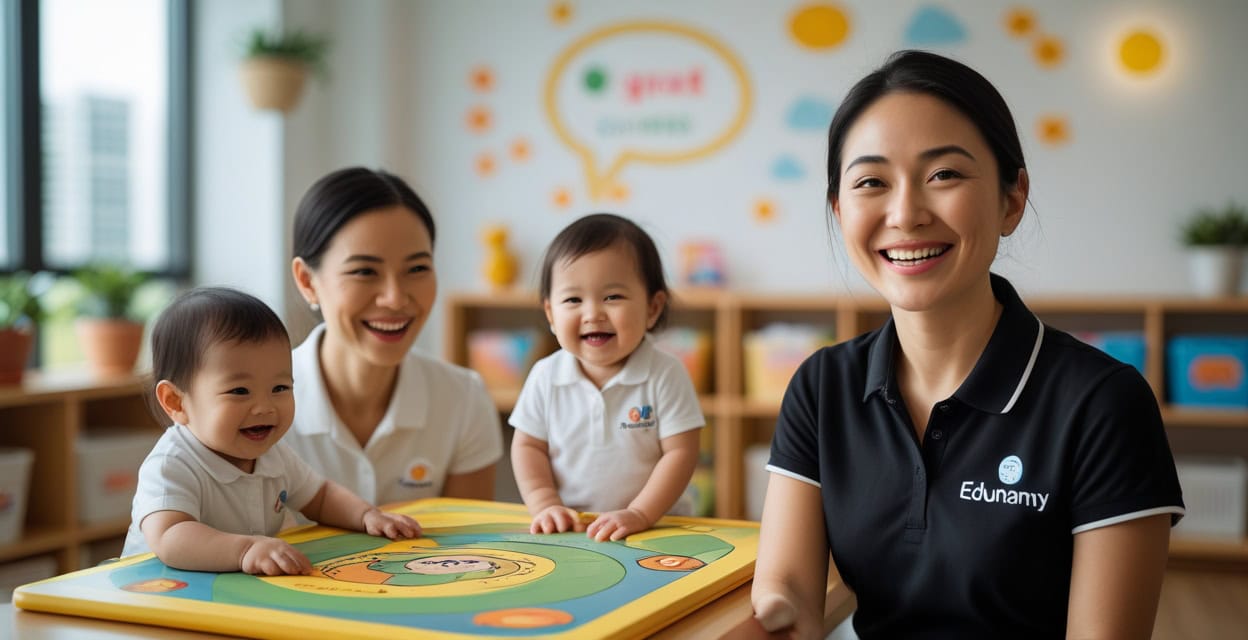
How EduNanny Makes Infant Care and Childminding Great in Singapore: Practical Highlights
- Care near home, near families’ routines: Neighbourhood-based care that reduces travel time and builds consistent relationships.
- Professional standards and trust: A bright line for training, supervision, and family partnerships, elevating the status of childminders.
- First thousand days as a design principle: Eye-level attention, floor-based movement, and a relentless focus on safety, awe, and development.
A Brief Story from the Floor: A Micro-Insight
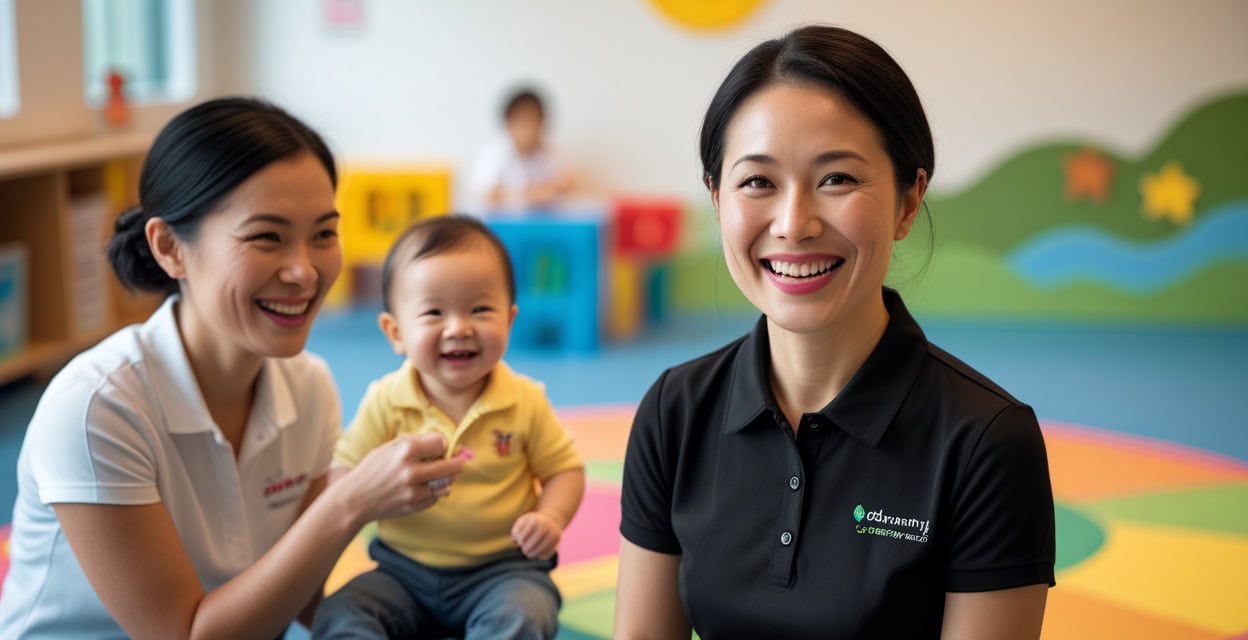
At 10:12 a.m., a nine-month-old struggles to reach a cloth ball. In a high-ratio setting, a well-meaning adult might hand it over. In a 1:3 circle, the educator waits, stays close, narrates calmly, and moves the ball a finger’s width closer. The infant rolls, grunts, reaches again, and—success. In that minute, the child practices problem-solving, coordination, perseverance, and self-belief. This is the model EduNanny multiplies across every hour, every room, every neighborhood.
Conclusion: Who, What, When, Where, How, Why — A Call to Action for Singapore Families
Who: Infants first, families always, childminders as skilled professionals, and employers and communities who benefit from dignified care.
What: Attentive, science-informed, joy-honouring childminding delivered through centre-based, home-based, and distance-supported models—with a 1:3 infant ratio and transparent practices.
When: The first thousand days matter most—paced Monday to Friday, 7am–7pm, to align with real family schedules.
Where: Across Singapore—at home, in neighbourhood centers, and in purpose-built spaces that feel like extensions of family life.
How: Through excellence and quality; through safety by design and innovation CCTV; through modern layouts and meticulous routines; through affordability from $33/day with CDA/Baby Bonus support; through ECDA’s Childminding Pilot and a National Social Initiative embracing dignified employment.
Why: Because the first thousand days shape future courage, trust, and learning; because when families feel seen and children feel settled and sparked, the entire nation benefits.
EduNanny is more than a service. It is a civic promise—an ongoing commitment to see your child clearly, hold them safely, and invite their curiosity to bloom. We invite you to visit, observe, and ask questions. Explore options at EduNanny.com and Childminding.EduNanny.com. Whether centre-based, home-based, or distance-supported, there is a place for your child—and a partner for your family.
Let us build a Singapore where the first thousand days are held—carefully, confidently, and close to home. Where excellence is accessible, safety is culture, development is joyful, and childminding is the proud profession it deserves to be.
Thank you.
SEO keywords: [#keyword1, #keyword2, #keyword3, #keyword4, #keyword5]
Ready to Experience Excellence?
Transform Your Family’s Journey
Discover Singapore’s leading infant care and childminding services. Expert guidance for your little one’s first thousand days.