
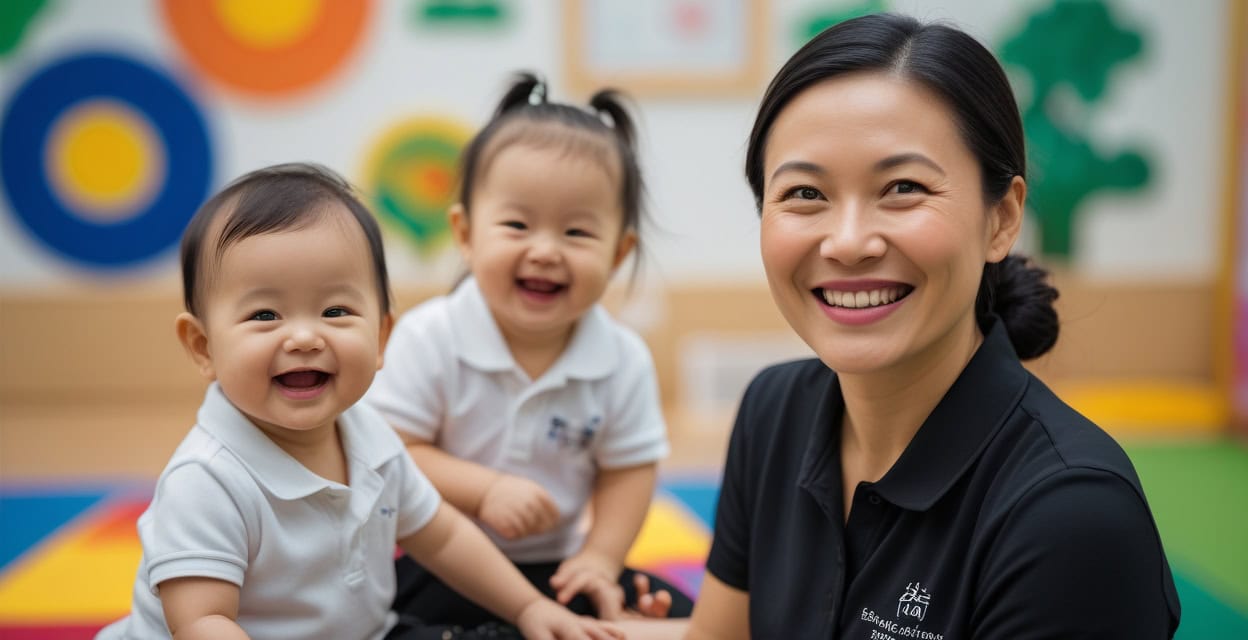
Eye Level Praxis, The Four Rings and Micro Moments Redefining Safe Joyful Infancy in Singapore
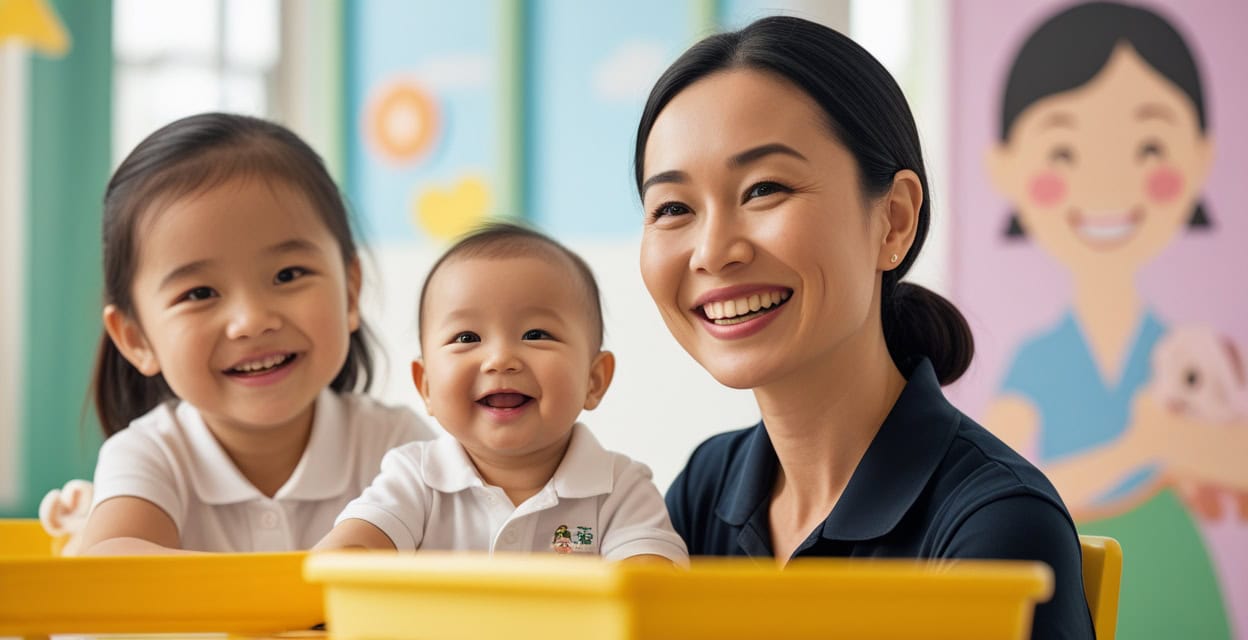
EduNanny Singapore: Eye-Level Care for a Secure, Joyful Infancy
Good evening to parents, caregivers, and community partners. This article expands on the EduNanny vision—turning a small door into a gateway for remarkable futures. Here you will find actionable guidance, practical examples, and EduNanny insights designed for families navigating early childhood care in Singapore. Our purpose remains steadfast: to make quality, affordable, and near-care for infants a standard that families can count on every day.
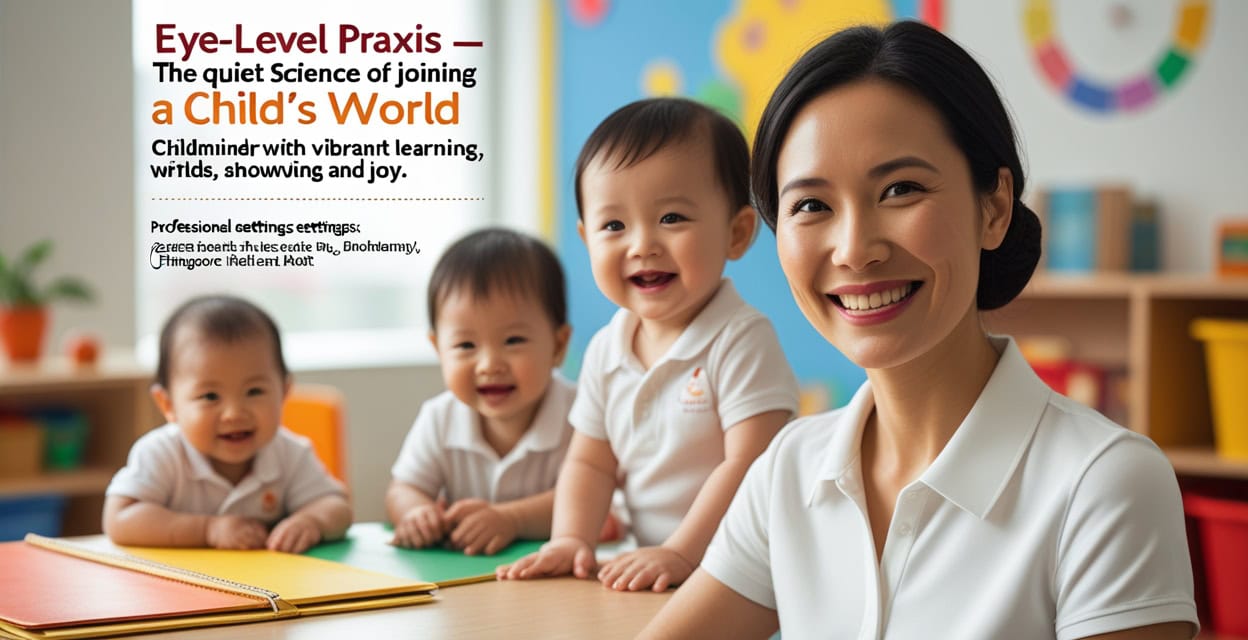
Eye-Level Praxis — The Quiet Science of Joining a Child’s World
Eye-Level Praxis translates decades of child development theory into daily, actionable practice. It honors Montessori’s dignity of independence, Piaget’s stages, Vygotsky’s scaffolding, and Bowlby’s secure attachment. Here are three practical moves you can adopt at home or when you visit EduNanny settings:
- Observe — Pause, breathe, and map a child’s comfort edge. Start with: Where does curiosity bloom safely? Note the child’s pace, gaze, and reach. Example: If a toddler hesitates at a new texture, slow the environment (dim lights, calm voice) and watch for zones where exploration becomes confident.
- Join — Enter the child’s play without taking over. Mirror a gesture, name a feeling, or echo a sound. Example: If a child stacks rings, respond with “You’re stacking the blue ring—great focus.” Language scaffolds thinking without stealing attention.
- Extend — Add one small, developmentally appropriate step. Example: After a child stacks rings, offer a new texture or a slightly different-sized ring to encourage problem-solving within the zone of proximal development.
In a 1:3 micro-group, Eye-Level Praxis is a lived reality; in larger groups, it remains an aspirational standard that guides caregiver training and home routines.

The Four Rings of Safety — People, Place, Process, Proof
Safety is a culture, not a checklist. EduNanny organizes safety into four concentric rings designed to be observable, improvable, and trustworthy for families.
- People — Who cares for your child? Seek meticulous vetting, ongoing training in infant cues, safe sleep, choking response, hygiene, and respectful handling. Ask caregivers to describe “slow hands, soft voice, steady eyes”—the triad that lowers infant cortisol and builds trust.
- Place — Where will learning happen? Look for hazard-mapped layouts, clear sight lines, washable surfaces, secure entryways, defined sleep and movement areas, pram-safe corridors, and non-toxic materials. In home settings, request a space that mirrors safety-conscious design.
- Process — How are routines enacted? Expect safe sleep as standard (supine, firm surface, no loose items); clear milk-handling protocols; consistent hand hygiene; skin-friendly diapering; morning incident-prevention checks; and rehearsals for emergencies—practiced, not merely documented.
- Proof — How do families see what’s happening? Insist on innovation-grade CCTV, digital daily logs, transparent incident documentation, internal audits, and structured feedback loops. Safety should be visible and understandable at a glance.
Practical tip: when evaluating a caregiver or center, request a sample daily log and a short, illustrated “care routine” overview showing how Eye-Level Praxis unfolds within a typical day.
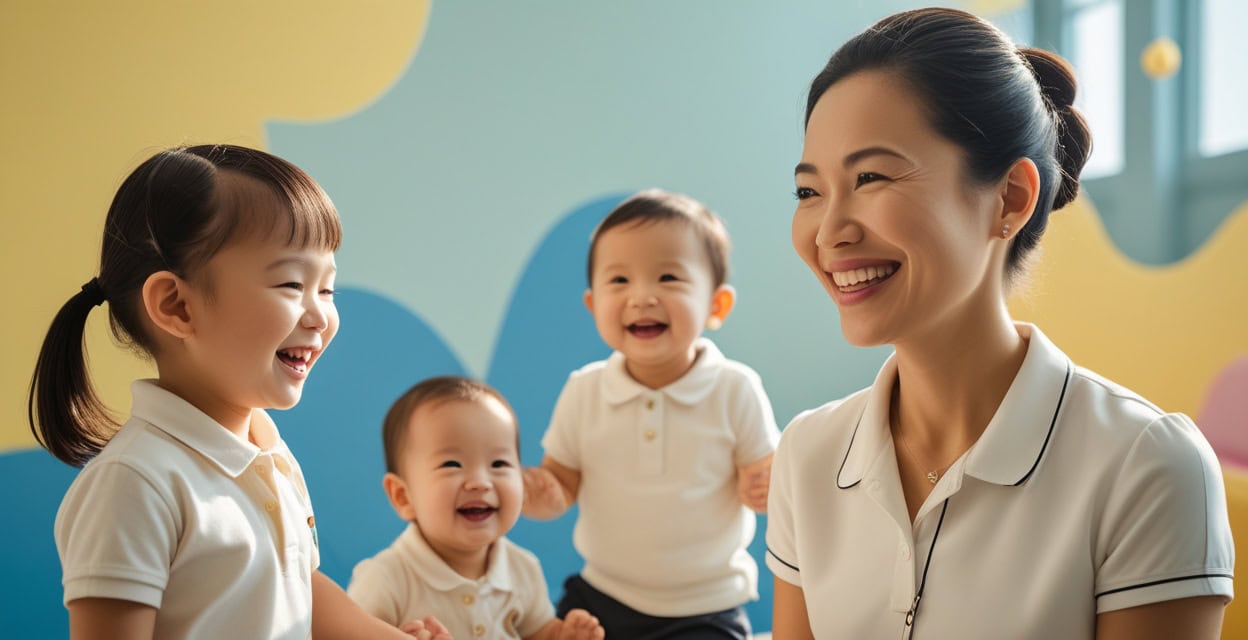
The Micro-Moments Matrix — How Development Actually Accumulates
Development is woven from micro-moments, not isolated activities. EduNanny targets five developmental channels and provides concrete activities you can replicate at home or in a center setting.
- Soothe — Regulating the nervous system through rhythm and touch. Practice: 2–3 minute slow-breath routines at transitions; swaddling or gentle patting where appropriate; rocking or sway time while singing a lullaby to settle a fussy moment.
- Talk — Responsive language that builds neural pathways for speech. Practice: Narrate daily actions, ask open-ended questions, and allow pause time for the child to respond. Example: “You found the blue ring. What comes next?”
- Move — Encourage gross motor exploration on the safe floor. Practice: Provide a clean, safe floor area for rolling, reaching, crawling, and ball play. Integrate movement into routines—dance a short song during diaper changes or stretches before naps.
- Explore — Sensory variety in safe doses. Practice: Rotate textures, lights, and sounds with gentle supervision. Create a “cause-and-effect” shelf: water, scooping cups, and soft blocks to explore action and consequence.
- Rest — The master teacher of development. Practice: Establish predictable nap windows and quiet times; protect wake-times that match a child’s developmental needs; use transitional phrases to signal rest periods.
Home adaptation ideas: design a “micro-moment map” in your living space with labeled zones for Soothe, Talk, Move, Explore, and Rest. Maintain a simple daily plan that can be adapted by caregivers to honor your child’s unique rhythms.
The Signals of Secure Joy — Measuring What Matters
Joy in infancy is a baseline, not a spectacle. Educators and researchers observe signals that indicate secure attachment and healthy development. Use these indicators to reflect on day-to-day care and to communicate with caregivers:
- The soft forehead and open hand during social moments.
- A steady gaze and return look that signals a secure base.
- Exploratory reach followed by a relaxed exhale and content posture.
- Predictable nap patterns and routine completion with calm transitions.
- Feeding that ends with satisfaction rather than distress or over-crying.
- Brief, well-handled protests that are named, soothed, and shortened over time.
- Ritualized farewells that signal continuity rather than rupture.
Practical home tips: create a simple “Joy Signals” checklist to monitor daily tone, engagement, and sleep quality. Keep a short, shared handover note between caregiver and family, highlighting what the child did, what they learned, and one small next-step in language, play, or movement.
The Profession of Childminding — Craft, Ethics, and Public Purpose
Childminders deserve visibility as skilled professionals. EduNanny champions a craft rooted in attunement, precision care, documentation, partnership, and ethical presence.
- Attunement — Reading cues with appropriate intensity and pace. Practice: Observe a child’s energy level and adjust pace. If a child is overstimulated, slow the environment and offer a soothing routine.
- Precision Care — Reliable hygiene, sleep, and feeding practices. Practice: Maintain a daily hygiene ritual—handwashing before meals, proper bottle/formula handling, and safe sleep positioning documented in the log.
- Documentation — Translating moments into patterns for families. Practice: Capture a week’s worth of observations in a simple narrative or pictorial chart; share highlights with parents to reinforce home routines.
- Partnership — Welcoming family culture and preferences without judgment. Practice: Start each day with a short family touchpoint, ask about routines, and align on key values like sleep schedules or feeding preferences.
- Ethical Presence — Protecting dignity and avoiding labeling. Practice: Describe the infant with neutral, respectful terms; avoid labeling a child as “good sleeper” or “fussy baby.”
Public purpose in Singapore means combining a Local Maximum Employment Mandate with high-quality infant care. When caregivers work in their own communities, resilience grows—families gain dependable support, and neighborhoods become closer-knit ecosystems.

What EduNanny Makes Possible for Families
EduNanny delivers practical, family-friendly benefits that you can leverage right away. Each feature is designed to mesh with Singapore’s realities—busy work schedules, family traditions, and a strong emphasis on safety and trust.
- Choice and proximity: Centre-based settings and home-based options, islandwide.
- Coverage for modern life: Monday to Friday, 7am to 7pm, aligned with typical work hours.
- True attention: A 1:3 caregiver-to-infant ratio that enables meaningful interactions and responsive care.
- Visibility: Innovation-grade CCTV and digital daily logs that bring the day into your hands, even when you’re apart.
- Design that serves body and brain: Modern, calm spaces with movement-friendly layouts and safe play zones.
- Practical affordability: From $33/day, supported by CDA/Baby Bonus.
- Flexible access: Near-home placements, center options, and digital tools such as virtual orientation and remote check-ins.
Actionable steps for families:
- Identify a few preferred neighborhoods and request a “Day-in-the-Life” sample log from centers or home-based carers.
- Ask for a brief, readable safety plan covering sleep, feeding, and emergency procedures.
- Request a family-oriented orientation that explains how the 1:3 ratio works in practice, with examples of daily routines.
- Track your child’s development usingEduNanny’s documentation or a home-friendly diary, focusing on five micro-moments (Soothe, Talk, Move, Explore, Rest).
How Singapore’s Traditions Meet Today’s Needs
Singapore’s rich traditions—grandparent wisdom, caregiver intuition, and shared community values—pair seamlessly with contemporary science and policy support. EduNanny honors this synthesis by:
- Combining age-old caregiving sensitivities with evidence-informed routines to support secure attachment and healthy development.
- Providing transparent safety measures so families feel confident in public or private care settings.
- Connecting neighborhoods through local employment and high-quality, nearby care options that reduce family strain and commute times.
- Preserving the dignity of both caregivers and children by elevating the profession and clarifying expectations.
Practical family strategies: have a weekly “family-care council” meeting to align on routines with the caregiver, share observations from the home environment, and adjust schedules to protect sleep windows while maintaining consistent daily rhythms.
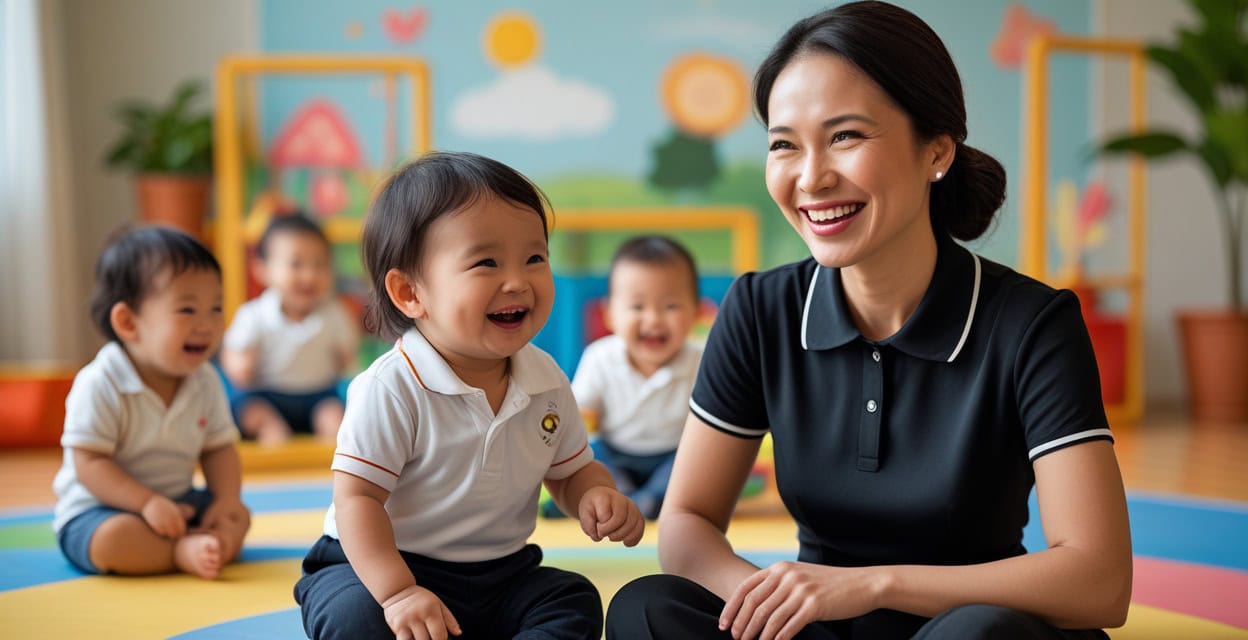
A Day in the Life, Briefly Told
7:32am — A baby enters a nearby home-based setting. The carer kneels, names the child, and greets him with slow hands, establishing trust from the first contact. 8:10am — The infant rolls to reach a wooden ring, checks safety with steady eyes, and continues confidently. 9:00am — Feeding occurs, burping graduates well, and the baby settles into a firm, clear cot for a mid-morning nap. 10:45am — The baby wakes and babbles; the carer responds with turn-taking language, enhancing conversational timing. 3:20pm — Light exploration with a yellow scarf reveals cause-and-effect learning. 6:05pm — Handover to parents includes what the child ate, how he slept, what he tried, what he loved, and a simple evening suggestion. This is not drama; it is a well-held day that respects the child’s dignity and curiosity.
Insight: A well-run day integrates eye-level interaction, safe routines, and home-like rituals that help children feel seen, safe, and capable.
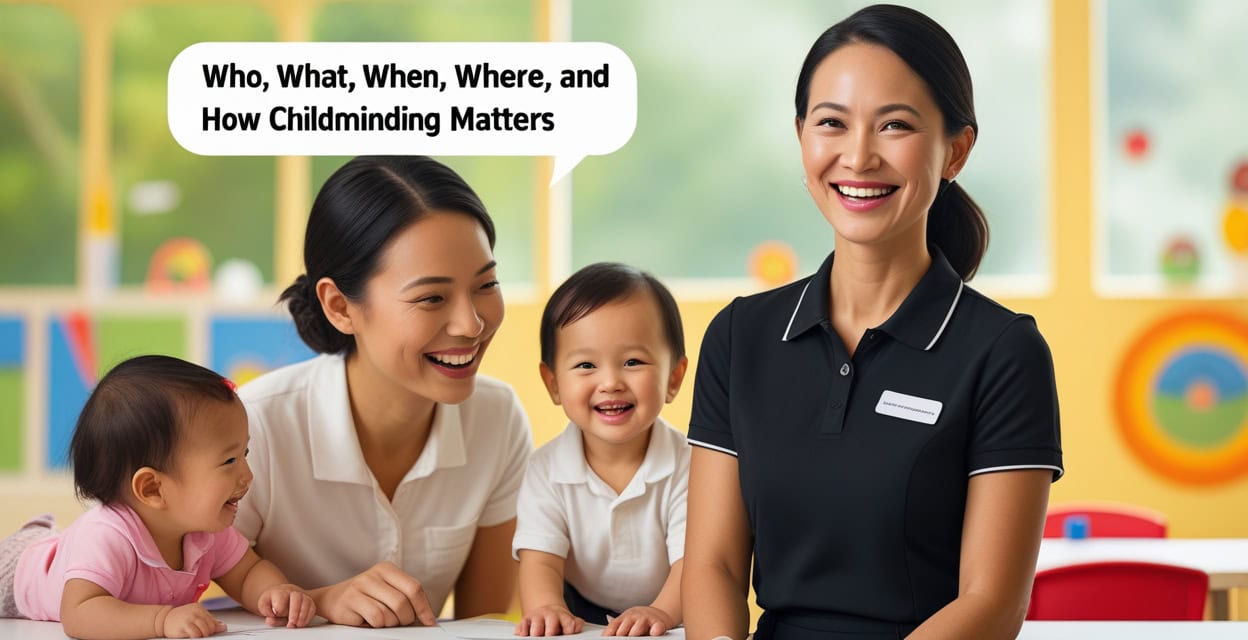
Concluding Call — Who, What, When, Where, and How Childminding Matters
Who: Infants whose brains build millions of connections; parents balancing duty and hope; childminders as skilled professionals; and a nation investing in future resilience.
What: Childminding as a public craft—small, skillful groups of three infants to one carer; evidence-informed routines for sleep, feeding, language, movement, and play; transparency through CCTV and documentation; steady, kind adults who show up every day.
When: From earliest months to age three—crucial years when attachment, regulation, and curiosity take root. Early, quality care today prevents higher costs tomorrow.
Where: In neighborhood homes and purpose-built centers across Singapore—calm, modern spaces designed for safety and exploration, within walking distance or a quick ride; care that lives where families live.
How: Through Eye-Level Praxis; the Four Rings of Safety; the Micro-Moments Matrix; dignified professional development for childminders; a 1:3 ratio that makes real attention possible; Monday–Friday, 7am–7pm coverage; and affordability from $33/day, supported by CDA/Baby Bonus.
And why—most important of all. Because a baby’s first understanding of the world is learned from how we handle their body, meet their gaze, and honour their tiny experiments with patience. When care is excellent, safe, and near, families breathe easier; communities steady; and a nation becomes more resilient, more humane, more itself.
EduNanny exists so that the smallest door a child passes through in the morning leads to the largest possibilities in the years ahead. We invite you to visit, to ask, to observe, and to partner with us. Whether you choose a centre-based room or a home-based setting nearby, we will meet your child at eye level, and we will meet your family with respect.
The future is not in the distance. It is on the floor, reaching for a ring, watched by a kind adult who knows when to wait and when to help. That is childminding that matters. That is EduNanny.
Thank you. To learn more or to register your interest: EduNanny.com and Childminding.EduNanny.com. We look forward to welcoming you and your little one to a safe, joyful, and beautifully ordinary day—again and again, until ordinary adds up to extraordinary.
Conclusion
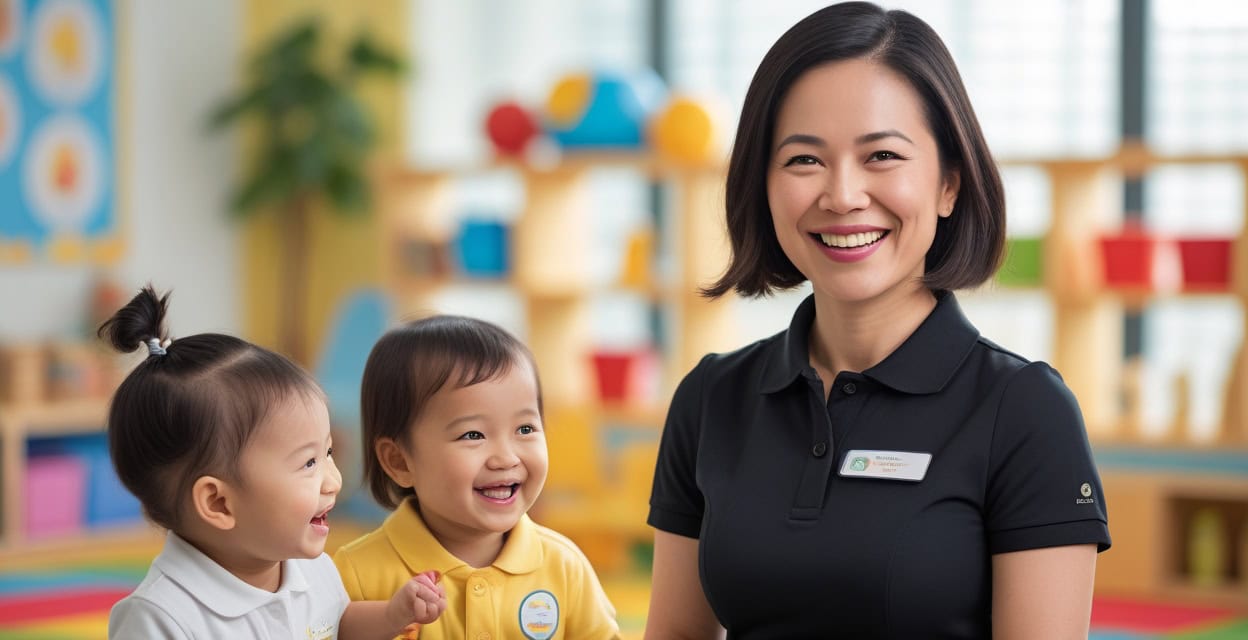
In embracing Eye-Level Praxis, the Four Rings of Safety, and the Micro-Moments Matrix, EduNanny translates science into everyday practice, returning dignity and joy to infancy. Parents gain proximity, clarity, and confidence; caregivers gain professional prestige and sustainable work; communities gain resilience. If you are seeking care near home that treats your child as a learner from day one, explore EduNanny and consider how these principles can enrich your family’s daily life.
SEO keywords: [#keyword1, #keyword2, #keyword3, #keyword4, #keyword5]