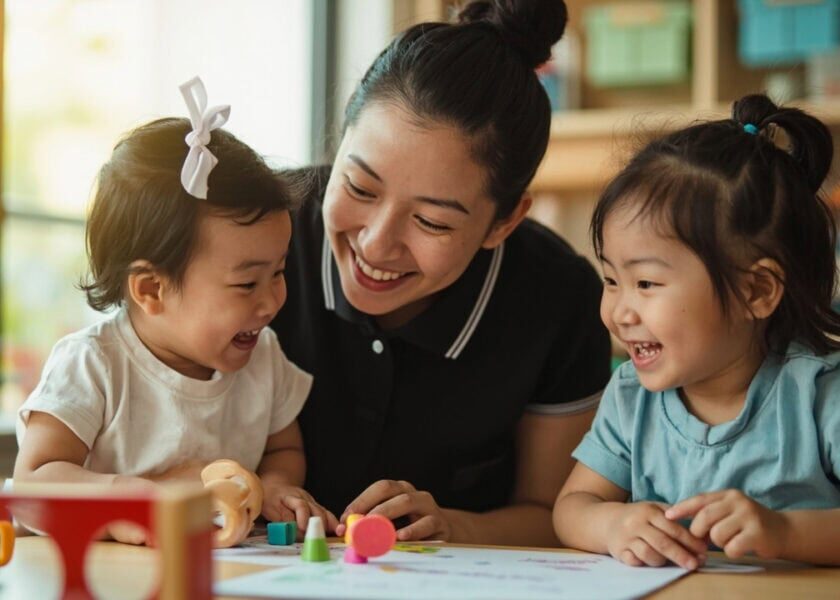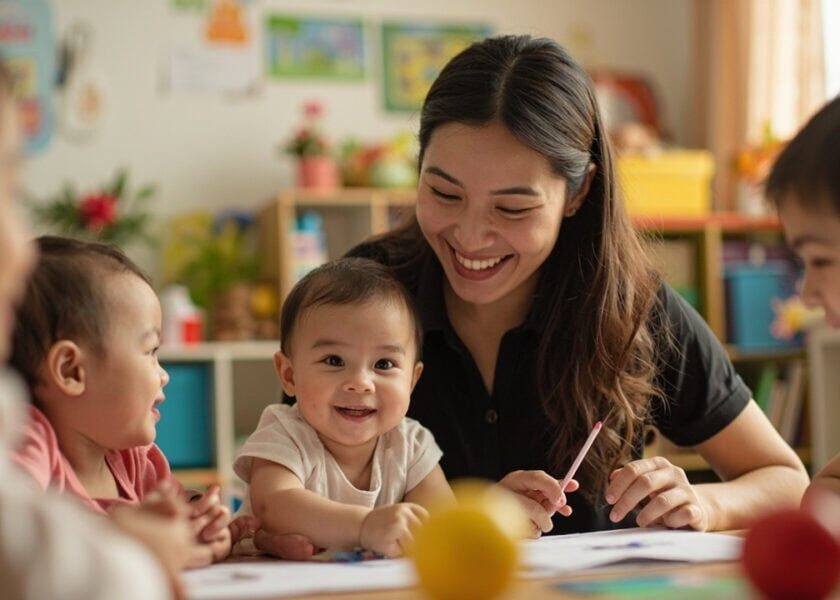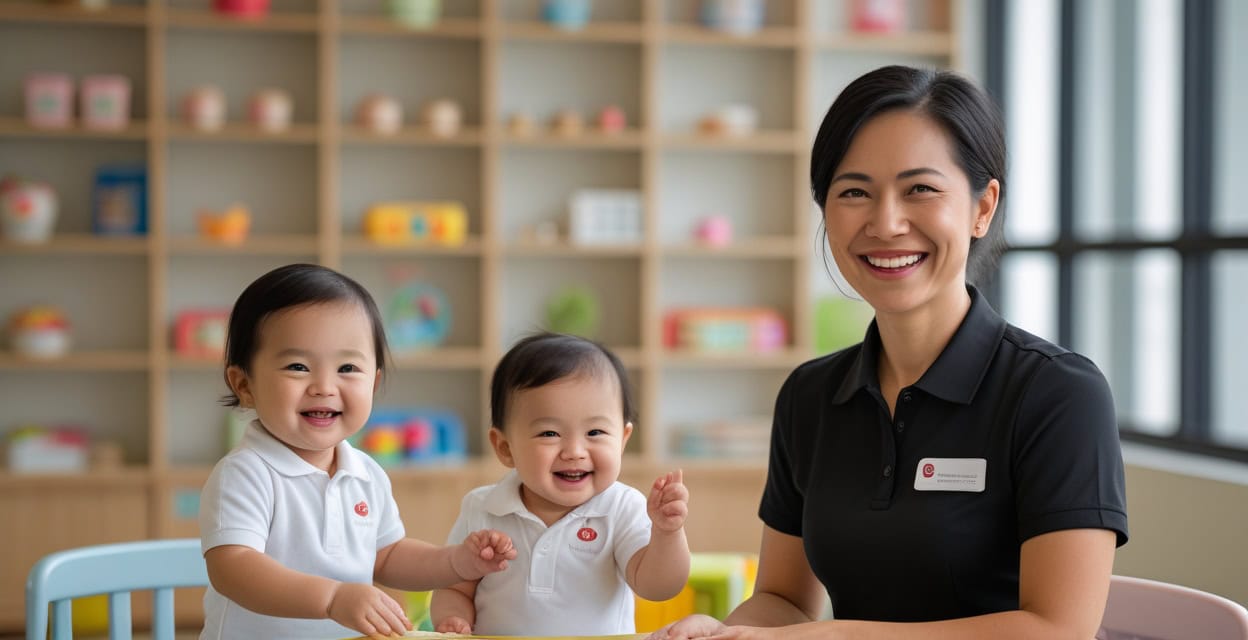
Minute by Minute Building a Nation with EduNanny Near Home Pods and the 1 to 3 Promise for Safe Joyful Infancy in Singapore
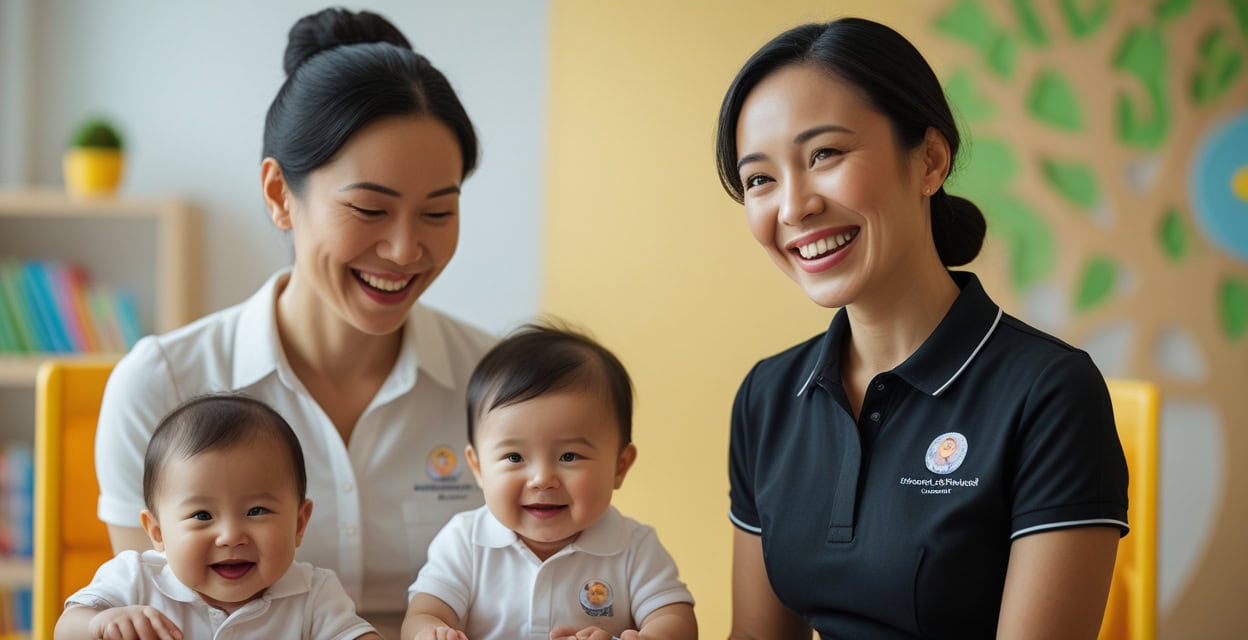
Introduction: The Minute That Builds a Nation
At dawn in Singapore, a simple, trusted moment can set a day of possibility: a mother handing her baby to a childminder, a calm room, and a routine that anchors a family. EduNanny exists to protect and multiply that minute—minute after minute, day after day, neighbourhood by neighbourhood. This long-form guide shares practical, actionable insights for parents, caregivers, and educators on how high-quality infant care and childminding can accelerate healthy development and support thriving families in Singapore.

About EduNanny in Singapore
EduNanny by BUTLER is Singapore’s childminding standard designed for the first thousand days and beyond. We blend the science of early development with the dignity of everyday care. Our model spans centre-based and home-based childminding across the island, operating Monday to Friday from 7 a.m. to 7 p.m., with an ultra-low 1:3 infant ratio. Our environments feature modern layouts focused on safety and calm, and we leverage innovative CCTV to foster transparent partnership with families. EduNanny participates in the ECDA Childminding Pilot as a National Social Initiative with a Maximum Employment Mandate—creating meaningful jobs for caregivers while delivering convenient, affordable care (from $33/day, fees payable by CDA/Baby Bonus).
Why this matters for families: predictable routines, proximity to home and work, and a care partner you can trust. By embracing public standards and a clear career pathway for caregivers, EduNanny aims to be excellence within reach—embedded in communities, supported by families, and scalable across Singapore.
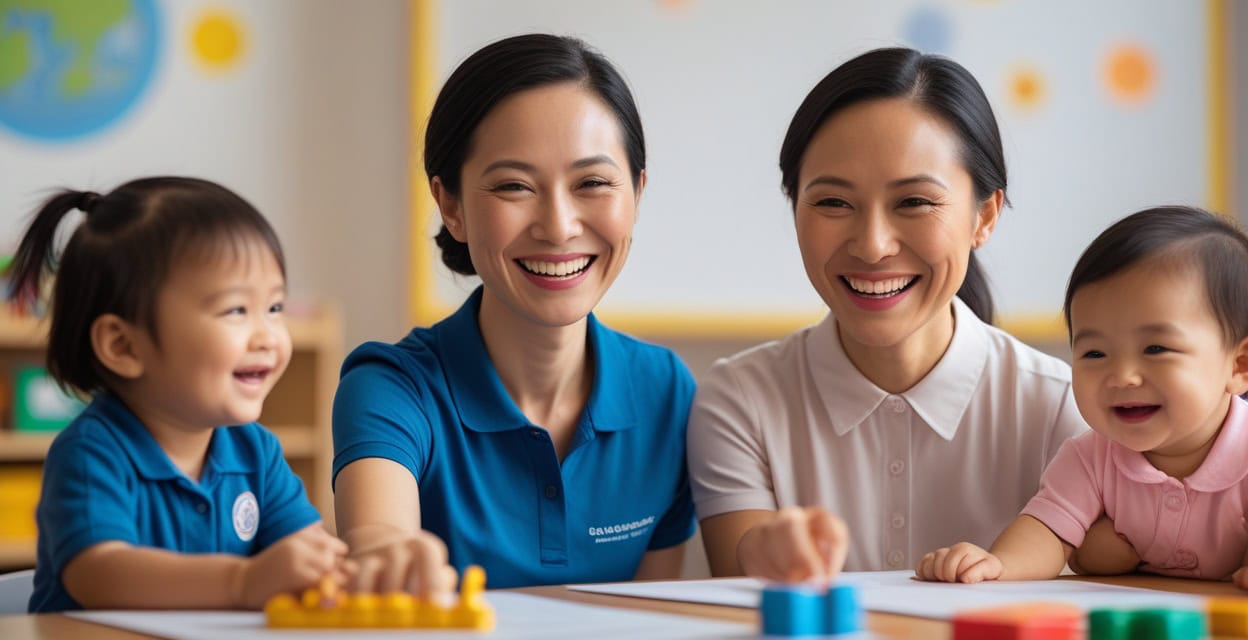
PORR Pedagogy: Presence as the Heart of Early Learning
Our pedagogy is a stance, not a script. We call it the PORR Cycle—Pause, Observe, Respond, Reflect. Each minute with a child becomes a teachable moment that strengthens development while sustaining a warm, responsive relationship.
Pause
We begin by kneeling to the child’s level. A calm adult nervous system is the first curriculum. Practical steps include:
- Adopt a relaxed posture and gentle breathing for yourself before interacting.
- Ensure the environment is quiet, safe, and free of overwhelm.
- Use a soft voice and slow movements to invite attention rather than to demand compliance.
Observe
We watch for cues—gaze, breath, reach, and tone—before acting. This prevents over-stimulation and ensures relevant responses. Try these strategies:
- Scan for signs of readiness for interaction rather than assuming needs.
- Note transitions: when a baby looks away, yawns, or reaches for familiar objects.
- Document cues in daily notes to tailor follow-up care with families.
Respond
We respond with micro-interactions—naming feelings, offering objects within reach, narrating actions. Right-sized responses support regulation and language growth:
- Label emotions: “You look happy; you’re clapping,” or “It’s sleepy time; let’s hug the blanket.”
- Offer accessible, developmentally appropriate objects to explore.
- Narrate actions: “We’re washing hands,” “We’re stacking blocks.”
Reflect
We note what worked, adjust the environment, and share insights with families. This continuous learning makes the next minute wiser:
- Record environmental changes that improved calmness or engagement.
- Share a brief, actionable tip with families at daily handovers.
- Adjust activities to align with the child’s evolving state and needs.
Practically, PORR informs daily life: floor-time with accessible materials, short sensory studios rather than overstimulating setups, and language baths woven through care moments—feeding, diapering, and settling become the day’s richest learning opportunities.
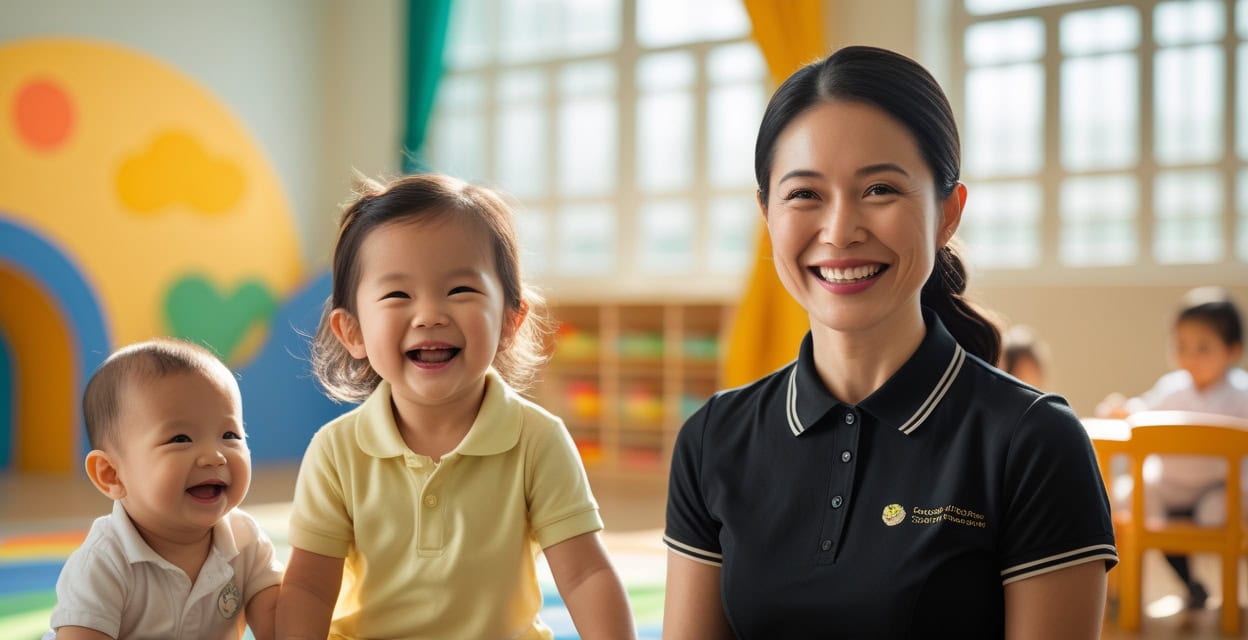
Safety by Design: Four Lines of Protection
Safety is both architecture and habit—embedded in daily routines, not an afterthought. EduNanny’s Four Lines of Protection are:
- Place: Modern layouts with clear sightlines, low shelves, soft edges, breathable sleep zones, secure gates, and infant-specific movement areas. Routine cleaning and air-quality checks are logged for accountability.
- Practice: Safe sleep (back to sleep, firm mattress, nothing loose in the cot), bottle-preparation standards, daily hazard sweeps, safe carrying, and responsive crying protocols. Regular emergency drills ensure preparedness.
- People: 1:3 infant ratio, verified qualifications, scenario-based training, and coached debriefs. Kindness is a professional competency—recruitment, training, and retention center on it.
- Proof: Real-time and recorded transparency through CCTV, digital incident logs, open-door visits, and third-party audits aligned with ECDA standards in the Pilot.

Seven Streams of Development: A Holistic View of Growth
Development happens in parallel, not in silos. We map growth across Seven Streams so families and educators can scaffold progress thoughtfully.
- Attachment Security: Predictable, warm responses that wire trust. Example: consistent soothing during transitions and predictable daily routines.
- Self-Regulation: Co-regulation first—breath, body, and routine—so independence grows on a secure base. Practical tip: implement a simple “breath together” routine before nap times.
- Language and Communication: Constant narration, songs, stories, and turn-taking with space for silence. Tip: narrate actions during routine tasks and introduce simple new words in context.
- Exploratory Cognition: Cause-and-effect play, treasure baskets, simple puzzles, object permanence games. Activity: weekly themed sensory baskets with varied textures and safe, reachable items.
- Fine and Gross Motor: Floor freedom, grasping, tummy time, cruising, and safe risk under supervision. Example routines include guided tummy-time challenges and recently introduced mobility stations.
- Social Attunement: Small-group rhythms, gentle sharing, and parallel play that respects readiness. Practice: shared snack time with turn-taking and social cues coaching.
- Rest and Nourishment: Unhurried feeding, responsive nap windows, and sleep hygiene aligned with individual cues. Tip: build a predictable wind-down ritual at the end of the day to ease transitions home.
Each stream flows through a daily arc we call “quiet to curious to quiet”—opening gently, exploring richly, and settling well.
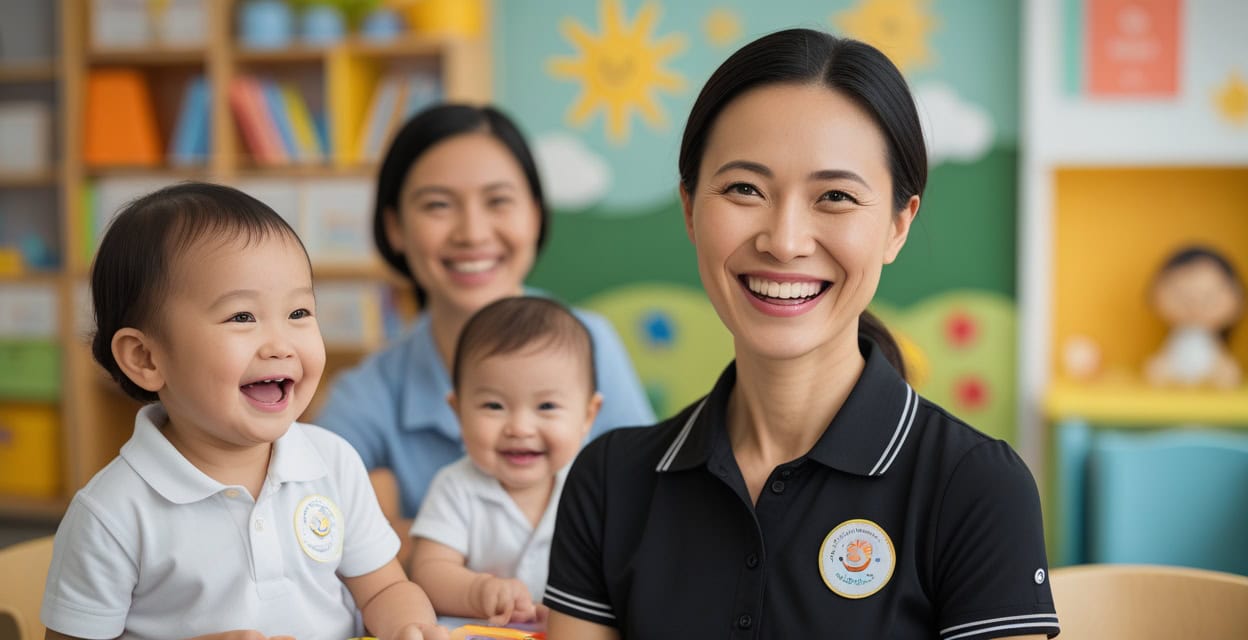
Happiness as a Daily Practice: Measuring Joy, Not Noise
Joy is the felt sense of safety, being seen, and succeeding in small moments. We track happiness through observable indicators and family resonance.
- Serve-and-return counts: Track reciprocal interactions to reinforce the idea that relationships grow what we measure.
- Comfort-to-cry ratio: Aim for quick, gentle resolutions of distress to minimize tears and maximize comfort.
- Brightness cues: Relaxed shoulders, open hands, soft eyes, and playful vocalizations signal well-being.
- Family resonance: Daily messages, photos, and short clips via secure platforms; distance-support check-ins for families on the move; and monthly micro-conferences to align home and care.
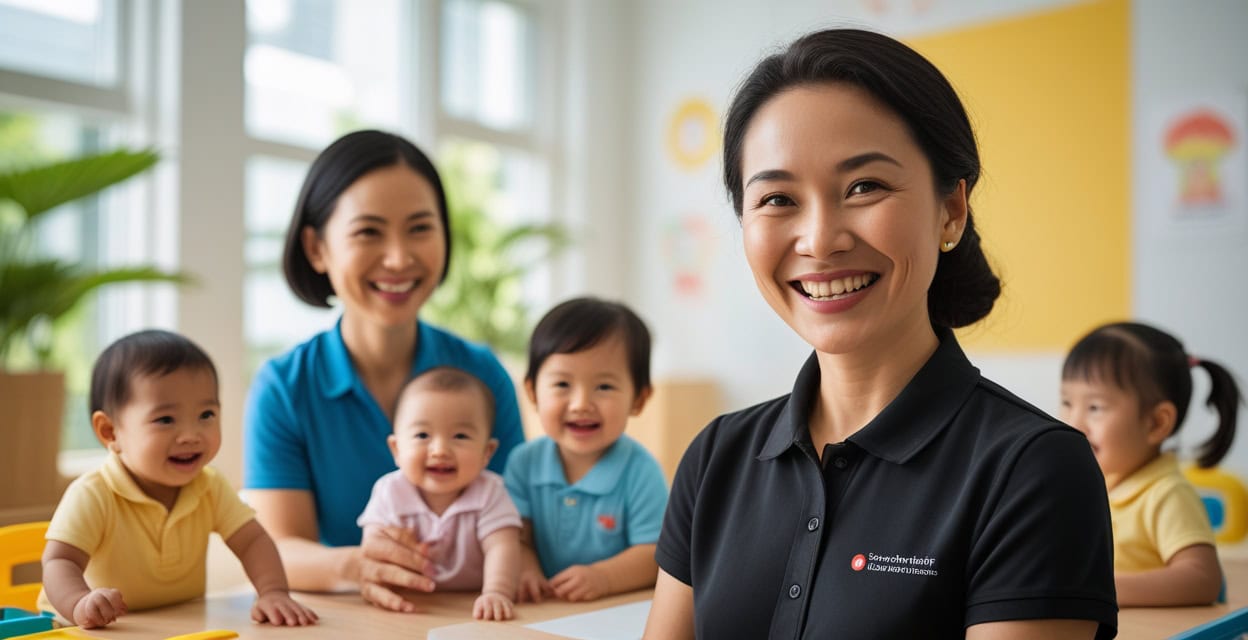
The Purpose of Childminders: Quiet Nation-Builders
Childminders are not stopgaps; they are craftsmen of the first thousand days. Through the ECDA Childminding Pilot, EduNanny aligns dignified employment with public good:
- A clear career ladder, living wages, and ongoing coaching.
- A learning guild: supervised practice, peer observation, and reflective circles.
- A civic calling: when caregivers thrive, children flourish and families stabilize. This is the social fabric, mended and strengthened in ordinary rooms.

Service Model: Clear, Convenient, and Credible
EduNanny offers two robust pathways to care, supported by transparent communication and credible standards.
- Centre-Based Childminding: Purpose-built environments with modern layouts, islandwide access, and reliability from 7 a.m. to 7 p.m.
- Home-Based Childminding: Intimate, community-rooted settings vetted for safety and quality, delivering a “home rhythm” with professional standards.
- Distance-Supported Partnership: Secure updates and live transparency with innovative CCTV, plus flexible parent communication.
- Affordability: Options from $33/day, with CDA/Baby Bonus acceptance to widen access to high-quality care.
- Islandwide Availability: Across Singapore in community and home premises with consistent weekday hours.
To learn more, visit EduNanny.com or Childminding.EduNanny.com to enquire, book a tour, or apply to become a childminder. EduNanny by BUTLER operates under the ECDA Childminding Pilot as a National Social Initiative with a Maximum Employment Mandate.
Practical Guidance for Parents: Getting the Most from EduNanny
Preparing Your Family for Childminding
Begin with a shared vision of development goals and routines. Practical steps include:
- Create a home profile of your child’s cues, routine preferences, and comfort objects to share with the care team.
- Set expectations for handovers: preferred communication method, key contact, and update frequency (daily notes, clips, or quick video summaries).
- Establish a flexible yet predictable schedule, including nap windows and feeding times aligned with your child’s rhythms.
Daily Routines and Handover Hints
Handover quality drives continuity. Try these methods:
- Provide a brief “mini-brief” at drop-off: mood, last feeding, sleep last night, and any concerns.
- Use a shared care journal or secure app to log cues, milestones, and questions for the family.
- During pickups, ask to see a quick floor-time snapshot or a short clip highlighting a recent learning moment.
Measuring Progress: What to Expect
Expect a gentle, gradual trajectory across the Seven Streams. Indicators include:
- Improved self-regulation during transitions and routines.
- Expanded vocabulary through daily narration and songs.
- Increased curiosity during sensory and problem-solving activities.
- More stable sleep and nutrition patterns aligned with caregiver cues.
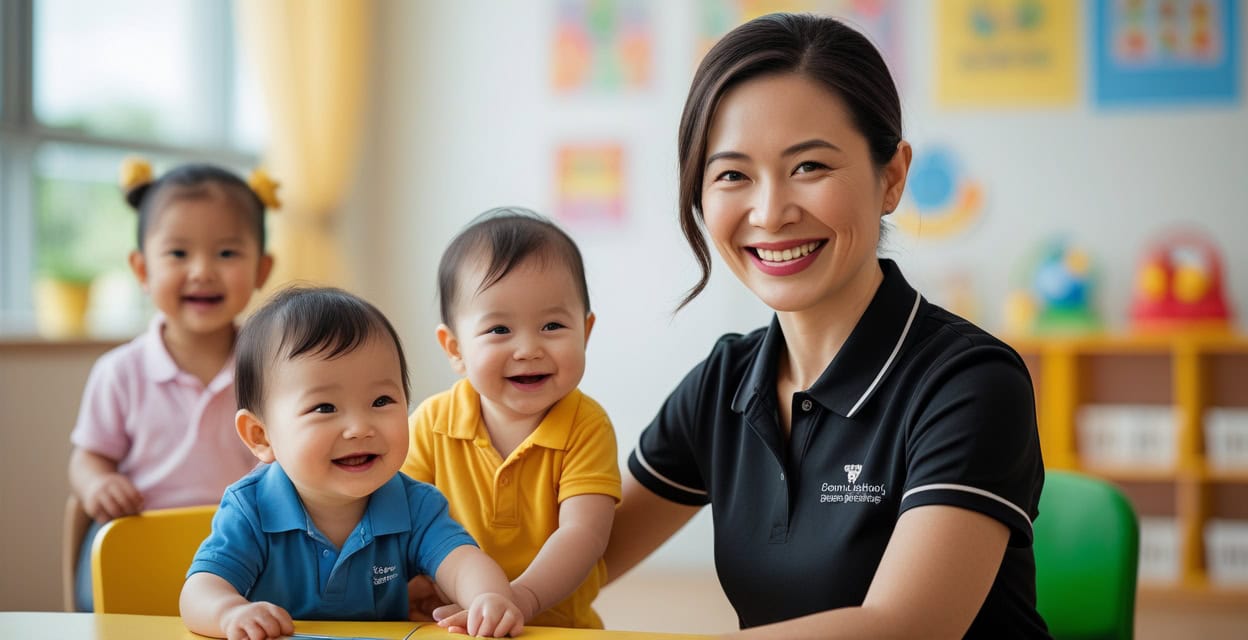
Quality You Can Trust: What to Look For in a Childminder
- Ratio and attention: A 1:3 infant ratio ensures prompt care and age-appropriate responsiveness.
- Qualifications and ongoing training: Verified credentials, scenario-based coaching, and reflective practice circles.
- Safety and transparency: Regular safety drills, clean incident logs, and CCTV with family access for peace of mind.
- Family partnership: Regular updates, two-way communication, and a simple system for feedback and concerns.
- Affordability and accessibility: Clear pricing, government support acceptance, and accessible locations near home or work.

Conclusion
EduNanny envisions a Singapore where the first thousand days are anchored in proximity, proportion, and partnership. By pairing PORR pedagogy with Four Lines of Safety and the Seven Streams of Development, we transform ordinary care moments into durable foundations for health, learning, and belonging. If you’re a parent seeking reliable, humane care; a caregiver who wants to practice a craft with dignity; or a policymaker invested in strong families and dignified work, we invite you to engage, learn, and participate in this evolving ecosystem. Tour a room, meet a childminder, and witness how a single minute can become meaning for a child—and for a nation.
Enrol or apply at EduNanny.com and Childminding.EduNanny.com. EduNanny by BUTLER—excellence, quality, convenience, and care that is as close as your neighbourhood and as far-reaching as your child’s future.
SEO keywords: [#SingaporeChildminding, #EarlyChildhoodDevelopment, #InfantCareSingapore, #EduNannyButler, #ECDAPilot]
Ready to Experience Excellence?
Transform Your Family’s Journey
Discover Singapore’s leading infant care and childminding services. Expert guidance for your little one’s first thousand days.