EduNanny Elevates Infant Care in Singapore Proximity Driven One to Three Standard for Early Learning and Bonding
EduNanny: A New Standard for Infant Care in Singapore
Good evening, Singapore. This article embraces a simple, brave idea: the first thousand days should feel close, safe, and possible for every family—where you live, where you work, and where you hope. EduNanny blends center-based and home-based care with a consistently low 1:3 infant-to-educator ratio, modern spaces, transparent family partnerships, and proximity that makes everyday routines possible. This is not a slogan; it is a practical standard, rooted in science and delivered with heart, designed for our island.
What is EduNanny?
EduNanny is a thoughtfully designed approach to infant care and childminding that prioritizes proximity, trust, and development. We anchor our practice in the best of child development science while honoring the realities of life in Singapore—where work, school, and family rhythms collide and converge. Our model offers:
- Proximity: care close to home and work to reduce commute stress for infants and parents.
- Ultra-small groups: a 1:3 infant ratio to strengthen relational learning and regulation.
- Floor-level, movement-forward environments: developmentally rich spaces designed for safe exploration.
- Transparent partnerships: open communication, trained educators, and modern tools for peace of mind.
- Multiple formats: Home-Based, Centre-Based, and Distance support for flexible, hybrid arrangements.
Our approach builds on Montessori’s respect for the child, Pikler’s gentle caregiving, Bowlby’s attachment science, Vygotsky’s social learning, and Erikson’s psychosocial stages—translated into daily rituals that help babies settle, strengthen, and shine. EduNanny operates Monday to Friday, 7am–7pm, islandwide, committed to reliability, affordability, and near-constant presence in families’ daily lives.

EduNanny’s Core Principles and Evidence Base
The Close Circle Method
This is the heart of our practice: Tune, Trace, Try. It is a practical loop that turns observation into action and action into learning.
- Tune: The caregiver attunes to the infant’s state—breath, gaze, muscle tone, cues for hunger, sleep, and interest. This is Bowlby and Pikler meeting modern neurophysiology; regulation is co-created.
- Trace: We document micro-patterns—how a baby rolls toward sound at nine weeks, how they reach with two hands at five months, how they pause before new textures. These traces guide the next tiny step.
- Try: We scaffold a single skill at a time—rolling, grasping, transferring, cruising—without overwhelming the infant. Learnings are paced to delight, not deadlines.
Practical examples for families: keep a simple daily log of cues and small milestones; celebrate each tiny combination of attention, curiosity, and response with a brief note to share with parents at pick-up. This creates continuity between home and EduNanny and grounds daily routines in concrete evidence of growth.
Safety by Design: Four Quiet Guards
Safety is woven into every moment, not added as a punishment or afterthought. Our framework is built around four Quiet Guards that keep safety visible, calm, and continuous.
- Breath and Sleep: Firm, flat surfaces; sleep sacks; back-to-sleep; rooms that are light-controlled, quiet, and temperature-controlled; vigilant supervision and documented sleep checks.
- Movement and Floor: Clearly defined zones for rolling and crawling; soft-but-firm mats; low, stable furniture; no default use of baby containers; gross motor experiences prioritized before gadgets.
- Hygiene and Health: Frequent handwashing; toy rotation with sanitisation schedules; bottle and food safety protocols; dry-wet zone separation; clear illness exclusion and return-to-care criteria.
- People and Places: Strict handover procedures; identity verification; secure premises; ratio integrity; secure CCTV for transparency and parent peace of mind.
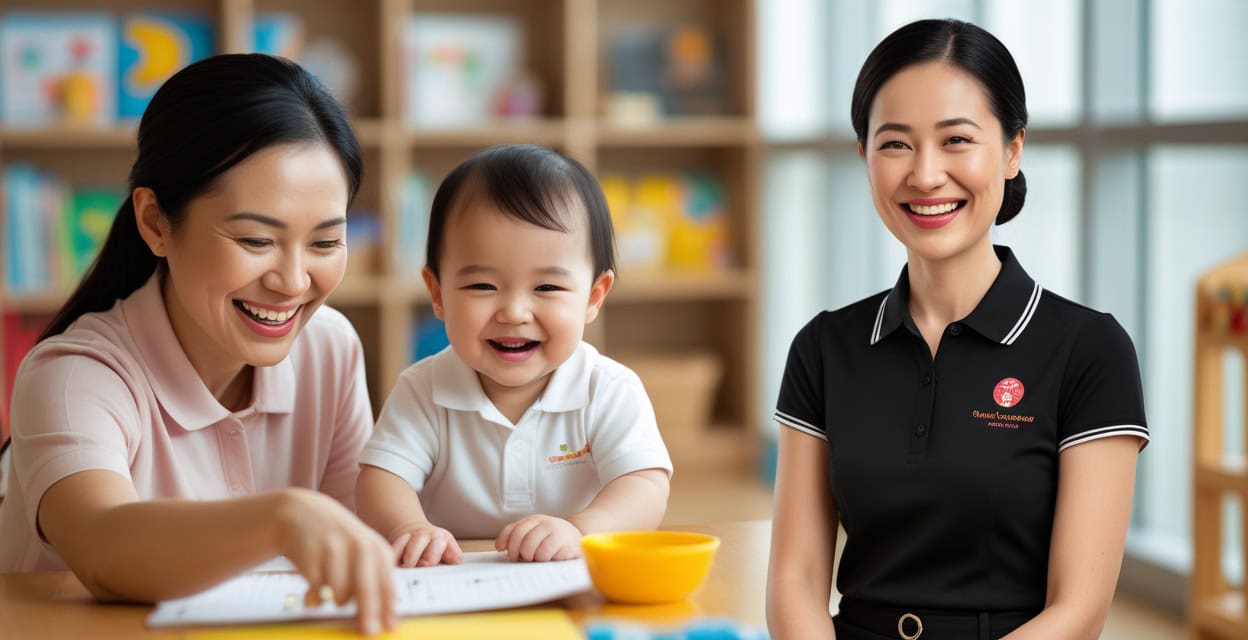
The Five Daily Nourishments for Development
Touch
Touch shapes body maps and trust. Practical actions:
- Unhurried diapering routines; skin-to-skin moments when appropriate; gentle vestibular play (rocking, tilting, and tummy time).
- Consent cues guide physical contact; educators model respectful, responsive touch for families to observe.
Talk
Language is the cradle of thought. Actions you can adopt at home and in care:
- Speak in a rich, two-language environment if desired—narrate actions, describe objects, and respond to babbles with turn-taking sounds.
- Build a language bath with songs, daily routines words, and family-specific phrases to support bilingual development if relevant.
Time
Uninterrupted windows for deep play and discovery are essential. Practical steps:
- Schedule protected play blocks without constant interruptions from screens or routine checks.
- Offer open-ended materials (soft blocks, natural textures, simple musical instruments) to invite cause-and-effect learning.
Tummy
Feeding is both nurturing and developmental. Guidelines include:
- Responsive feeding and paced bottle techniques; observe readiness cues before introducing solids; observe satiety signals.
- Healthy, developmentally appropriate snack options when age-appropriate; maintain hydration in warm climates.
Toddle
Milestones are arcs, not races. Support with:
- From floor to stand to cruising to steps—progress celebrated with stability and confidence, not speed.
- Safe, supervised opportunities for independent movement to build self-regulation and motor competence.
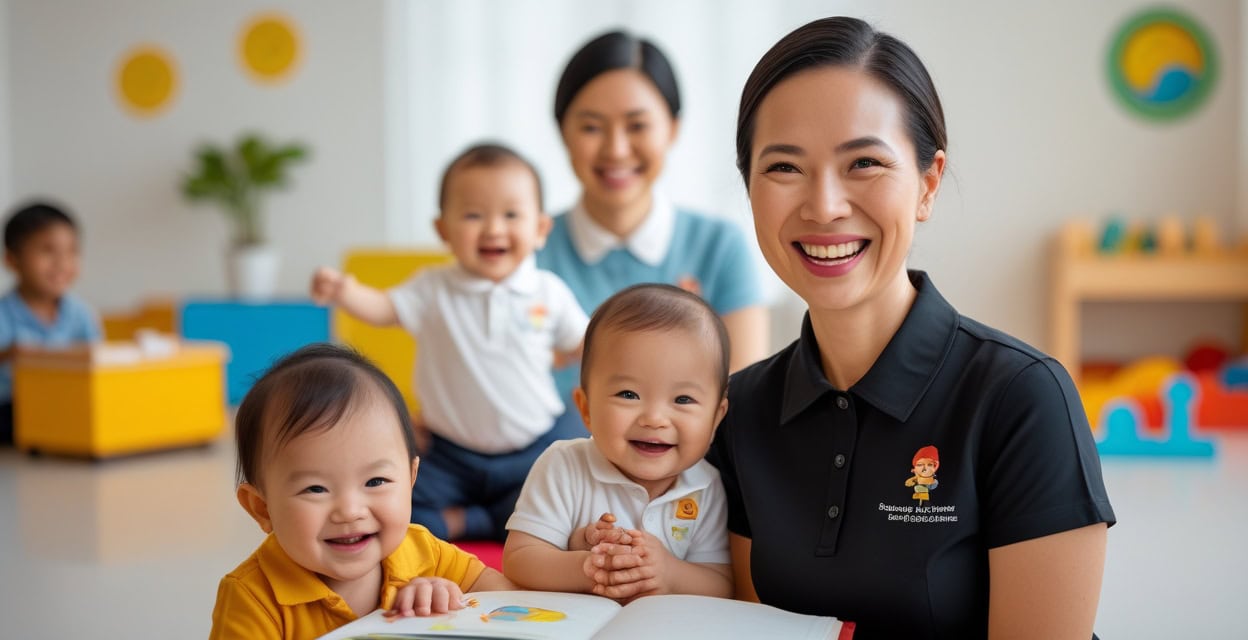
Joy as a Learning Strategy
Predictable Routines
A stable sequence of arrival, connection, exploration, rest, and return helps infants feel secure and curious.
Micro-Celebrations
Small wins deserve recognition. Use smiles, soft words, and gentle claps to reinforce progress and intrinsic motivation.
Choice Within Boundaries
Offer two safe options to foster autonomy without overload—e.g., which book to read or which mirror song to sing.
Repair, Not Perfection
Missed cues happen. When they do, acknowledge and repair the moment with a simple, compassionate script: “I heard you; I’m here.” This teaches resilience and trust in relationships.
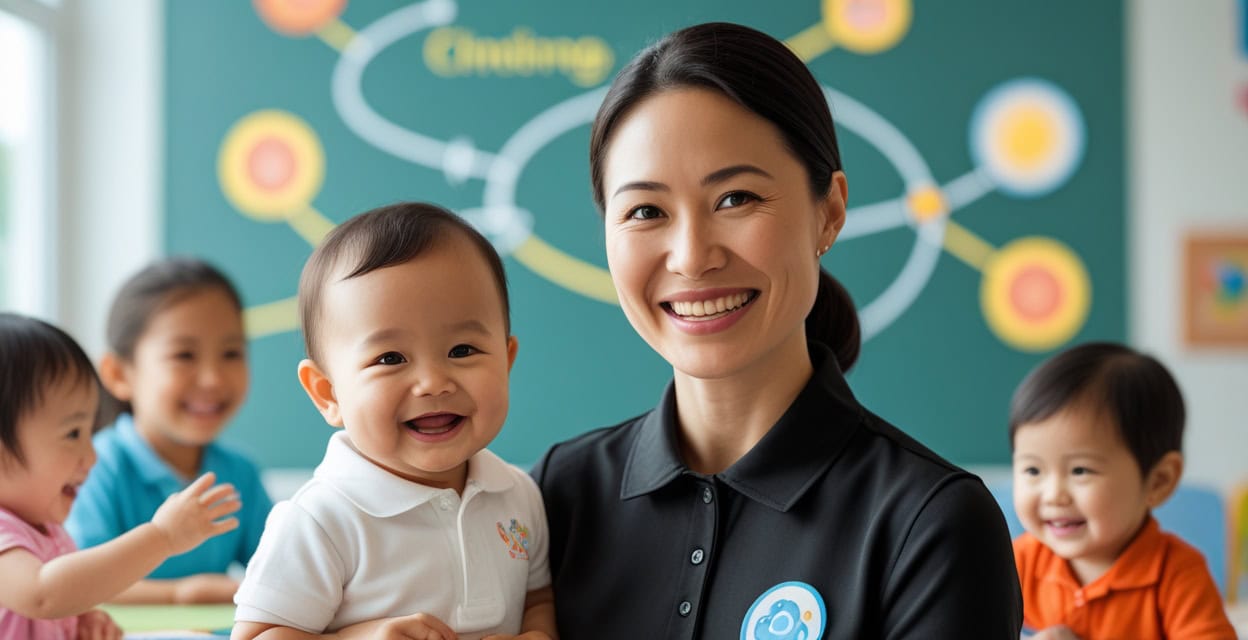
The Public Kinship of Childminding
Childminders are not stand-ins; they are skilled partners in a child’s circle of attachment. Their role is noble and practical:
- Extend family capacity with professionalism, warmth, and continuity.
- Model language, patience, and problem-solving for both infants and adults.
- Knits neighborhoods together through reliable, close-to-home care that respects culture and routine.
- Uphold a social compact: every child should be seen, soothed, and supported, regardless of postcode or paycheck.
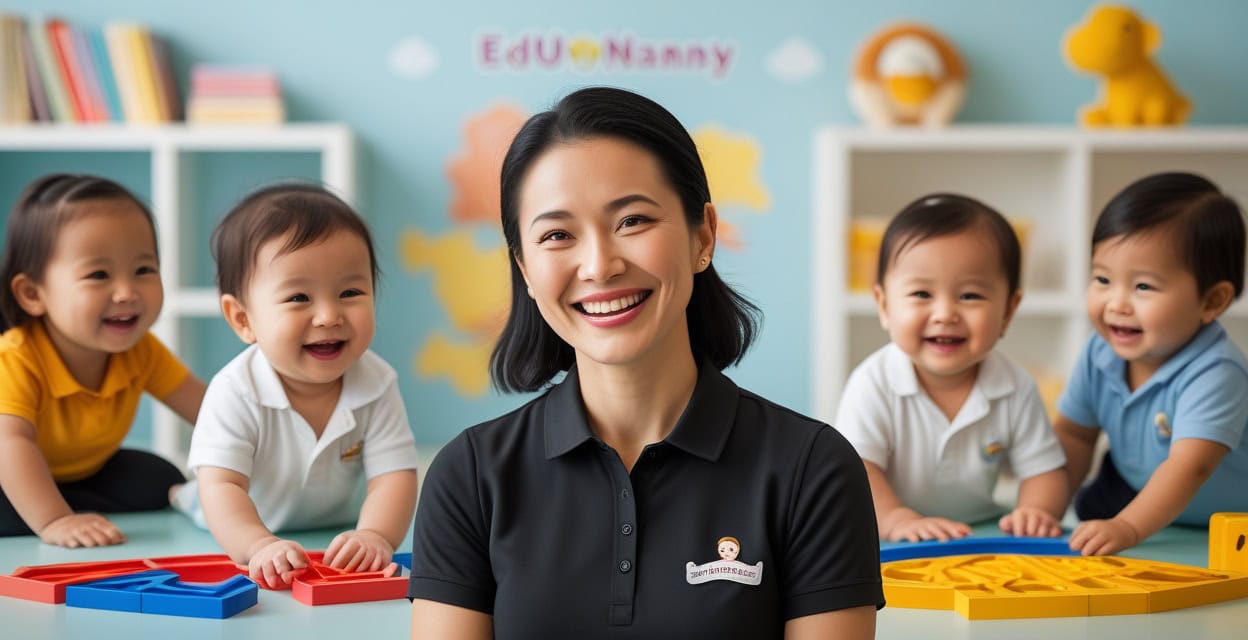
EduNanny on the Ground: What You’ll See
Our physical and operational design translates philosophy into everyday experience:
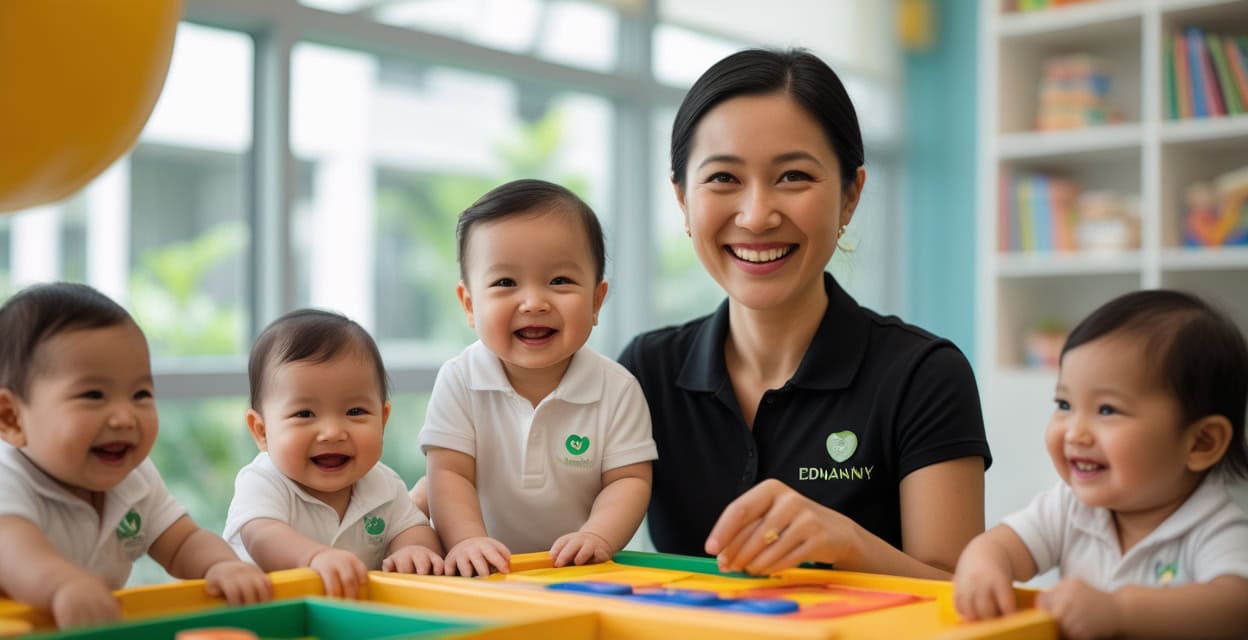
- Small, Modern Rooms: Calm palettes, low shelving, safe mirrors, breathable materials, tummy-time nooks, and quiet nap areas.
- Floor-Level Curriculum: Sensorimotor play, grasp-and-release activities, object permanence baskets, early books at reach, music and rhythm, and water/texture exploration.
- Attuned Routines: Arrival calm-down, individualized feeding and sleep plans, daily outdoor time where possible, and gentle goodbyes.
- Family Partnership: Daily notes on sleep, feeds, nappies, mood; photos and brief updates; open-door communication norms and scheduled developmental chats.
- Transparent Operations: Secure CCTV for supervision and parent peace of mind; strict data privacy protocols; documented safety drills and audits.

Practical Benefits for Singapore Families
- Excellence and Quality: Centre-Based and Home-Based options to fit diverse family needs.
- Islandwide Availability: Monday–Friday, 7am–7pm, across the island.
- Affordability: From $33/day; CDA/Baby Bonus eligible fees.
- 1:3 Infant Ratio: A standard that supports close relationships and regulatory learning.
- Innovative Safety Features: Secure CCTV, thoughtful layouts, and robust safety protocols.
- ECDA Pilot Involvement: EduNanny by BUTLER as part of the ECDA Childminding Pilot.
- National Social Initiative Alignment: Supporting growth in jobs and family stability.
- Enrollment and Support: Easy pathways via EduNanny.com and Childminding.EduNanny.com.
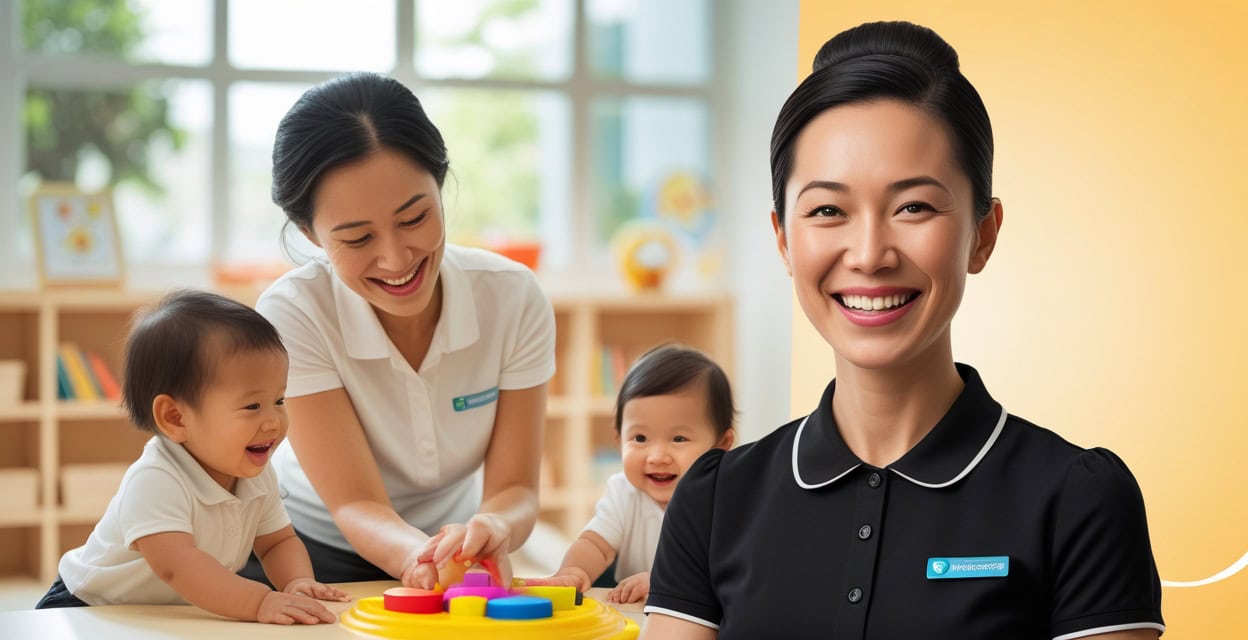
Why Proximity Matters Now
In a fast, beautiful city like ours, minutes matter. A baby strapped into a car seat or pram for long commutes trades curiosity time for transit time. When care is close, a parent can drop off without rush, return for a feed if needed, witness first steps, or simply wave at a window and be seen. Proximity is not merely logistics; it is pedagogy. It lowers cortisol for infants, reduces stress for parents, and returns moments that become memories.

Who, What, When, Where, How: Why Childminding Matters
Who
Infants and families across Singapore—newborns to three-year-olds, in estates large and small, with or without extended kin support.
What
Professional, relationship-centered care that turns routines into learning, moments into milestones, and stress into steadiness.
When
The first thousand days—the period of rapid brain wiring, resilience-building repetition, and the greatest need for reliable partnership.
Where
In neighborhoods and thoughtfully designed premises near your routes—center-based, home-based, and with distance support for travel or special circumstances.
How
Through trained childminders, a 1:3 ratio, safety by design, floor-level learning, and daily collaboration with families—supported by clear systems, transparent communication, and civic purpose.

EduNanny’s Philosophy and Purpose
- Dignity first: Begin with dignity for every child and family.
- Science-led care: Lead with evidence from development science to inform routines and environment.
- Joy in daily practice: End each day with moments of joy, connection, and growth.
- Partnership with families: Transparent, competent, and caring collaboration that travels beyond drop-off and pick-up.
- Community-building: A strong early years infrastructure that creates meaningful jobs and futures for families and educators alike.

A Closing Invitation
To every parent here tonight: you are not meant to do this alone. To every educator and childminder: your craft is nation-building at knee height. To policymakers and partners: when we protect the first thousand days, we invest in a Singapore that is calmer, kinder, and more capable.
If you are returning to work, welcoming a first child, supporting a second, or caring for twins; if mornings need covering or long days steadied; if you desire care that is excellent, nearby, and affordable—discover how EduNanny can feel when trust is built at eye level and learning begins on the floor. Visit EduNanny.com and Childminding.EduNanny.com. Speak with our team, tour a room, meet a childminder, and ask every question you have—and a few you don’t yet have words for. We will be there, Monday to Friday, 7am–7pm, islandwide, ready to help you begin well.
Because the future of Singapore does not arrive at 21. It yawns at dawn, curls a tiny fist around your finger, and waits to be met with steadiness and song. Let us meet it—together—with proximity, safety, joy, and purpose.

Conclusion
EduNanny offers a practical, evidence-informed path to near-home, high-quality infant care that respects families’ rhythms and cities’ real conditions. By combining the Close Circle Method with safety by design, a focus on daily nourishments, and the celebration of joy in learning, EduNanny creates environments where babies feel secure, parents feel supported, and communities thrive. If you value proximity, transparency, and a developmental approach that holds both science and heart, explore how EduNanny can accompany your family through Singapore’s first thousand days and beyond.
[#earlyyears, #infantcareSingapore, #childmindingSingapore, #educareproximity, #EduNanny]Ready to Experience Excellence?
Transform Your Family’s Journey
Discover Singapore’s leading infant care and childminding services. Expert guidance for your little one’s first thousand days.