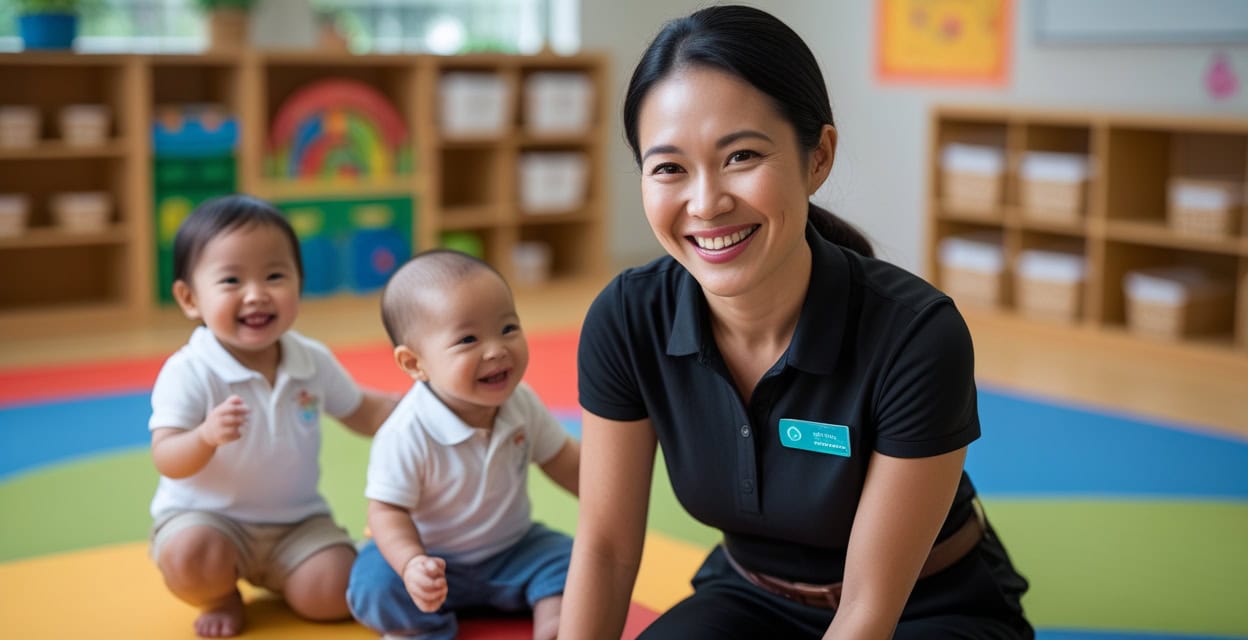
Kneeling Pedagogy and the 1 to 3 Promise A Near Home Safety and Joy Framework for Singapore Infants

The Kneeling Mindset: Pedagogy at the Child’s Eye
Great infant care begins on the floor—physically and philosophically. The kneeling mindset is a discipline of presence: meeting the child at eye level, listening with our eyes, and answering with our hands. It is not merely a posture but a declarative stance that shifts power from adult-centered routines to child-centered exploration.
- Watch, Wonder, Weave: Observe a child’s activity for intent and interest. Wonder about the purpose behind a motion, a reach, or a pause. Weave just enough support to extend the play without overtaking it. For example, if a baby reaches for a block, place an inviting, easy-to-grab block within reach and narrate the action.
- Micro-moment Curriculum: Short, meaningful moments accumulate into developmental momentum. A hand steadying a first pull-up, a word naming the feeling of a new toy, a quiet pause before a transition—these tiny moments become building blocks for resilience and curiosity.
- Prepared Spaces: Create floor-level shelves, low tables, and clear pathways. Use sensory invitations that honor the Pikler principle—trust is built when children feel safe to explore at their own pace, not rushed by busy adults.
- 1:3 Rhythm as Practice: In EduNanny’s 1:3 constellation, each caregiver knows each child’s rhythms—breathing, feeding, sleeping, exploring. This anticipation becomes the first language of security and a foundation for self-confidence.
- Home-to-Care Continuity: Families observe how kneeling practice translates into daily routines. At pick-up and drop-off, caregivers model slow, attentive interactions, reinforcing a sense of continuity between home and EduNanny spaces.
Practical takeaway for parents: ask caregivers to describe how they greet your child at eye level, how they scaffold a new task without taking over, and how they design “micro-moment” opportunities into the day. Notice the difference in responsiveness when adults are physically present at the child’s scale.
Safety as Architecture, Not a Rulebook
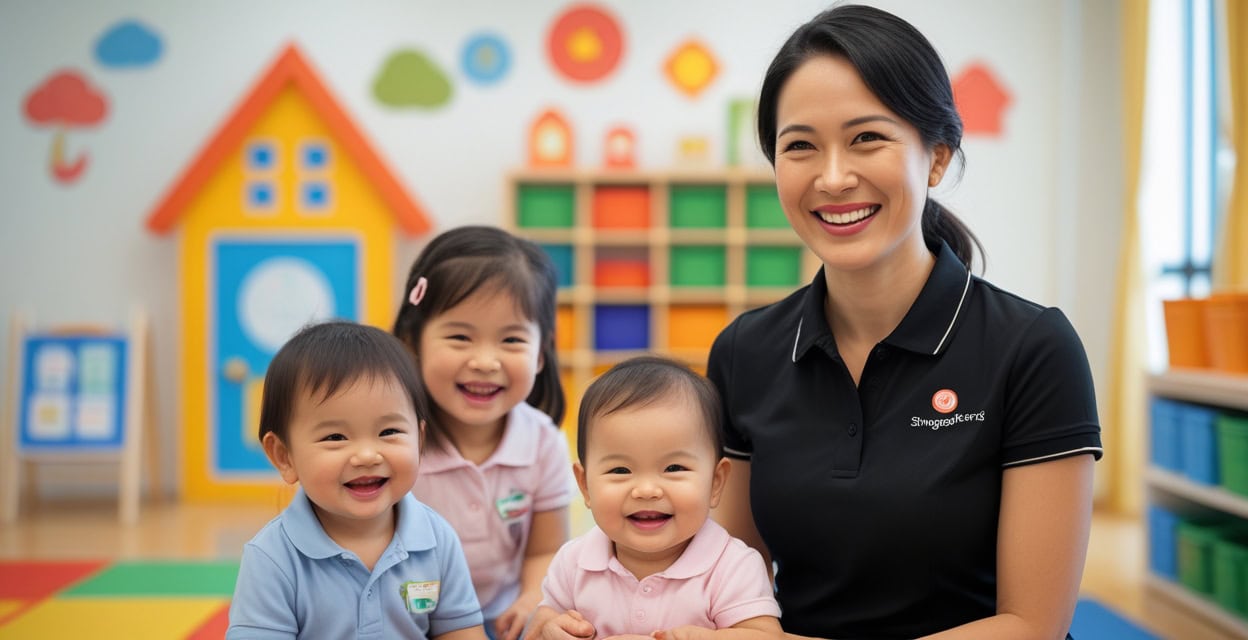
Safety is not a poster on the wall; it is a living architecture that speaks safety through space, routine, and relationship. EduNanny designs environments where prevention is built into every corner, every material choice, and every caregiver action.
- Environment for Prevent-First Care: Sightlines are open to minimize hidden zones; corners are softened; materials are non-toxic and appropriately sized for tiny hands. Floors are slip-checked, gates are quiet and firm, and nap areas offer ventilation and visibility for calm transitions.
- Transparency Through CCTV: CCTV adds a layer of transparency for families and serves as a coaching tool for teams. It supports reflective practice—educators can review routines to refine technique without eroding trust with families.
- 1:3 Ratio as Safety Engine: A smaller ratio enables continuous supervision, unhurried feeding, and genuine attunement. Safety becomes relational as caregivers monitor cues, anticipate needs, and respond with attuned care.
- Predictable Routines: Regular mealtimes, naps, and play transitions reduce cortisol, promote cooperation, and decrease accidents. Predictability acts as a navigational map for both children and families.
- Continuous Training: Ongoing coaching covers gentle handling, infant CPR/First Aid, hazard mapping, allergy protocols, and the art of slow—slow lifting, slow settling, slow speaking—so infants can track and trust.
Practical guidance for families: observe how the center structures safety in daily routines. Notice how staff adapt to individual needs during transitions (e.g., moving from playtime to nap). Ask about the staff-to-child handoff process and how parents receive safety feedback and incident reporting in real time.
Development as a Relationship, Not a Checklist
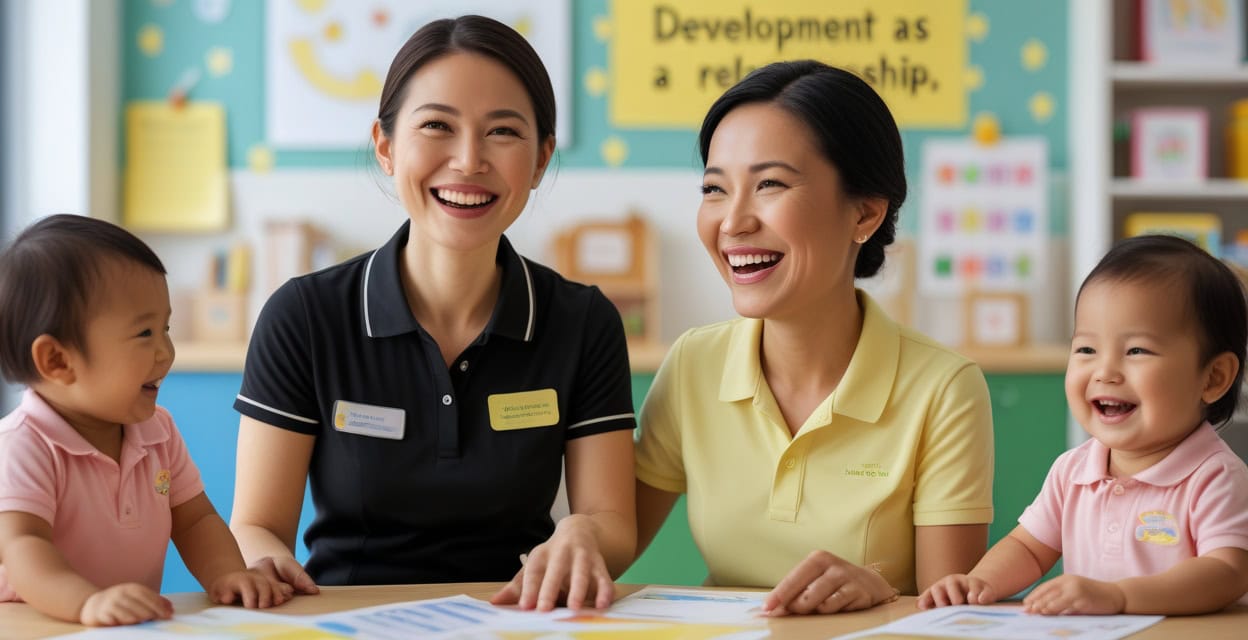
Development unfolds most powerfully where secure relationships anchor learning. Our educators act as responsive partners who scaffold just ahead of each infant’s current abilities. This mirrors the concepts of Vygotsky’s zone of proximal development in practice—learning is most potent when adults provide support just beyond what the child can achieve independently, then gradually fade that support as competence grows.
- Sensorimotor Mastery: Support milestones—grasp, crawl, climb, cruise—through thoughtfully graded challenges that match the child’s pace. Introduce new textures and objects that invite exploration while ensuring safe handling.
- Language Nutrition: Narrate the day using rich vocabulary in English and mother tongues. Use songs, rhymes, and culturally meaningful phrases to honor Singapore’s linguistic landscape and strengthen bilingual development.
- Self-Regulation Through Co-Regulation: Consistent caregiving and calm transitions teach infants to settle with support. Co-regulation builds trust; gradual exposure supports self-regulation as children mature.
- Social Confidence: Micro-groups encourage turn-taking, gentle waiting, and early empathy. Phrases like “We see you; we’ll get to you; you are safe while you wait” reinforce a culture of respect and patience.
- Meaningful Progress Narratives: Track development through stories—first smiles in a new setting, a first shared giggle, a determined reach for a favorite toy—alongside conventional measures to capture the full picture of growth.
Actionable tips for parents: request a weekly development snapshot that couples observational notes with caregiver reflections. Encourage language-rich routines at home—narrate play, label emotions, introduce simple problem-solving prompts during everyday tasks. Engage in joint observation sessions with educators to align on milestones and next steps.
Joy with a Direction
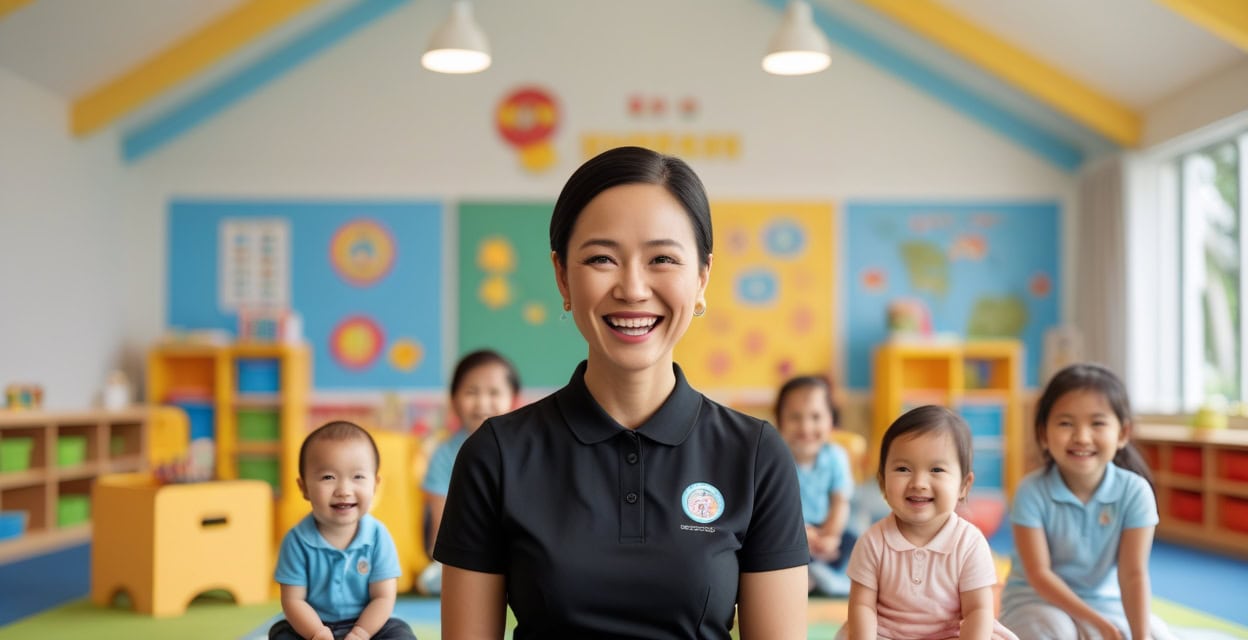
Joy in infancy is not mere entertainment; it is the cultivation of competence and the scaffolding of curiosity. Joy flourishes when effort meets progress, creating a positive loop that powerfully shapes future learning.
- The Tiny Triumphs Habit: Educators and parents share a daily note celebrating one thing the child mastered or attempted. Over weeks, this builds a personal, authentic narrative of growth for each child.
- Rhythm Over Rush: Unhurried mealtimes, respected nap times, and play as the day’s centerpiece enable infants to experience a world that responds to their pace rather than demands speed.
- Outdoor Minutes: Daily outdoor time supports physiological regulation, mood, and resilience. Short, regular outdoor sessions can recalibrate a day and reduce restlessness inside.
- Cultural Delight: Lullabies, celebrations, and textures from local life help infants develop a sense of belonging to a place and a people, strengthening identity from the earliest years.
Practical guidance for families: track and celebrate small but meaningful milestones that may not appear on formal scales—first independent reach, confident babble in two languages, or a calm response to a new routine. Encourage educators to integrate cultural storytelling and familiar songs into daily rhythms at the centre.

The Calling of the Childminder
To mind a child is to mind a future. EduNanny treats this as a craft, a vocation, and a pathway to meaningful work. The profession gains dignity through clear practice and visible progression, not through luck or convenience.
- Five Vows of Practice: Presence, Patience, Protection, Partnership, and Possibility. These vows ground every action—from quiet moments of contact to collaborative planning with families.
- Career Pathways: On-the-job coaching, reflective supervision, and specialist tracks (infant well-being, environment design, family partnership) create continuous growth and recognition.
- A Maximum Employment Mandate: As a national social initiative, EduNanny aims to broaden access to dignified, well-supported care careers, especially in local neighborhoods where caregivers can model trusted, nearby care.
- Partnership with Families: We are not a replacement for parents; we are a reliable extension. When routines align and observations are shared, care becomes one continuous circle from home to EduNanny and back again.
What families can observe in practice: look for clear signs of caregiver investment in the child’s well-being, such as proactive communication about nap schedules, feeding cues, and social interactions. Ask about ongoing professional development and mentorship within the team, and observe how staff collaborate with families to co-create consistent care plans.
What Families Can Count on with EduNanny
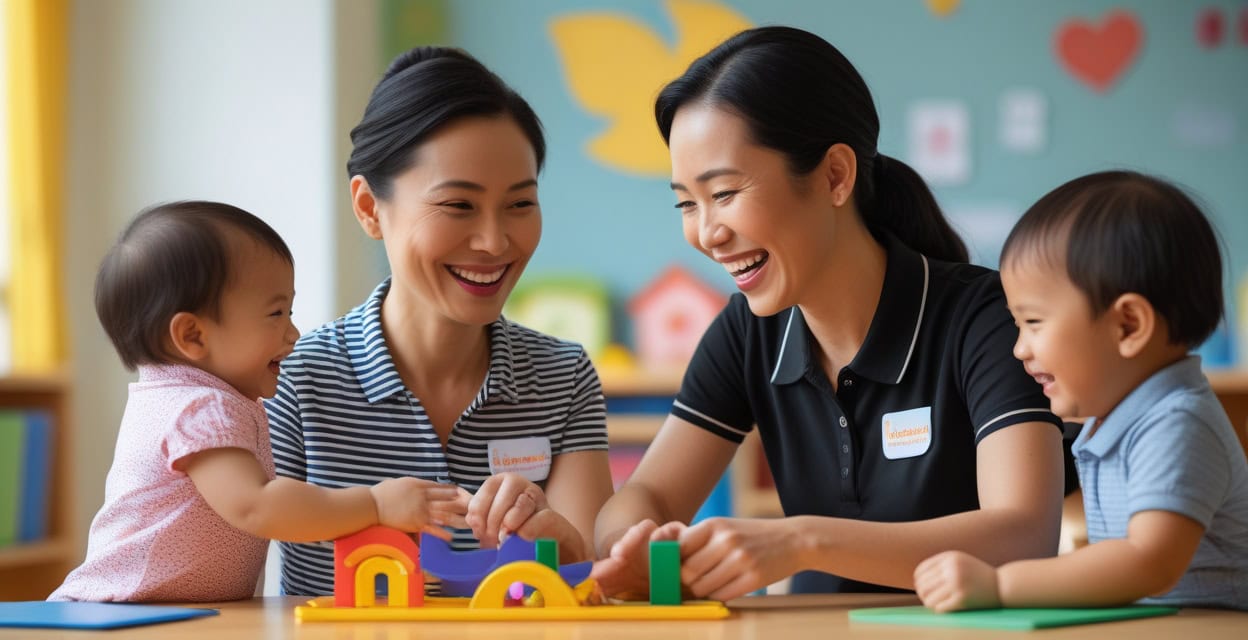
- Excellence and Quality You Can See and Feel: From the moment you step into a space, attention to detail signals high standards of care.
- Centre-Based and Home-Based Options for Proximity: Flexible arrangements that bring care closer to home and work, with consistent routines across settings.
- Islandwide Availability, Monday–Friday, 7 a.m.–7 p.m.: Reliable access that aligns with modern family schedules.
- Ultra-Low 1:3 Infant Ratio: A safety engine that supports attunement, slow transitions, and individualized attention.
- Transparency Through CCTV and Infant-Wise Layouts: Builds trust with families while enabling reflective practice for educators.
- Affordability from $33/day: Feasibility that makes high-quality infant care more accessible, with payments integrated through CDA/Baby Bonus where applicable.
- Participation in ECDA Childminding Pilot: A national initiative that elevates the status of the profession and expands opportunities for families and communities.
- Simple Access: Clear pathways to information and enrollment via EduNanny.com and Childminding.EduNanny.com.

EduNanny Promise: Answering Five Public Questions
To clarify the purpose and impact of EduNanny, we offer focused answers to five public questions that parents, caregivers, and policymakers often ask.
Who does childminding serve?
Childminding serves infants who need secure bases, parents who seek trustworthy partners, caregivers who deserve dignified careers, and communities that flourish when families thrive. It is a shared infrastructure for healthy childhoods and resilient families.
What is childminding at its best?
At its best, childminding is a daily choreography of safety, attachment, and discovery—care that is gentle to the nervous system and generous to the growing mind. It blends responsive caregiving with purposeful play and respectful collaboration with families.
When does it matter most?
In the opening thousand sunrises, when brains are most malleable, habits are most contagious, and trust imprints for life. Early years shape lifelong patterns of learning, health, and social belonging.
Where should it be?
Care should be close to home and easy to reach, in thoughtfully designed spaces with predictable rhythms and familiar faces. Proximity matters for continuity of care and family engagement.
How do we make it real?
We make it real through a 1:3 ratio, kneeling pedagogy, transparent environments, skilled childminders, family partnership, and affordability that brings excellence within reach. It is an integrated system of people, spaces, and practices that co-create trust daily.
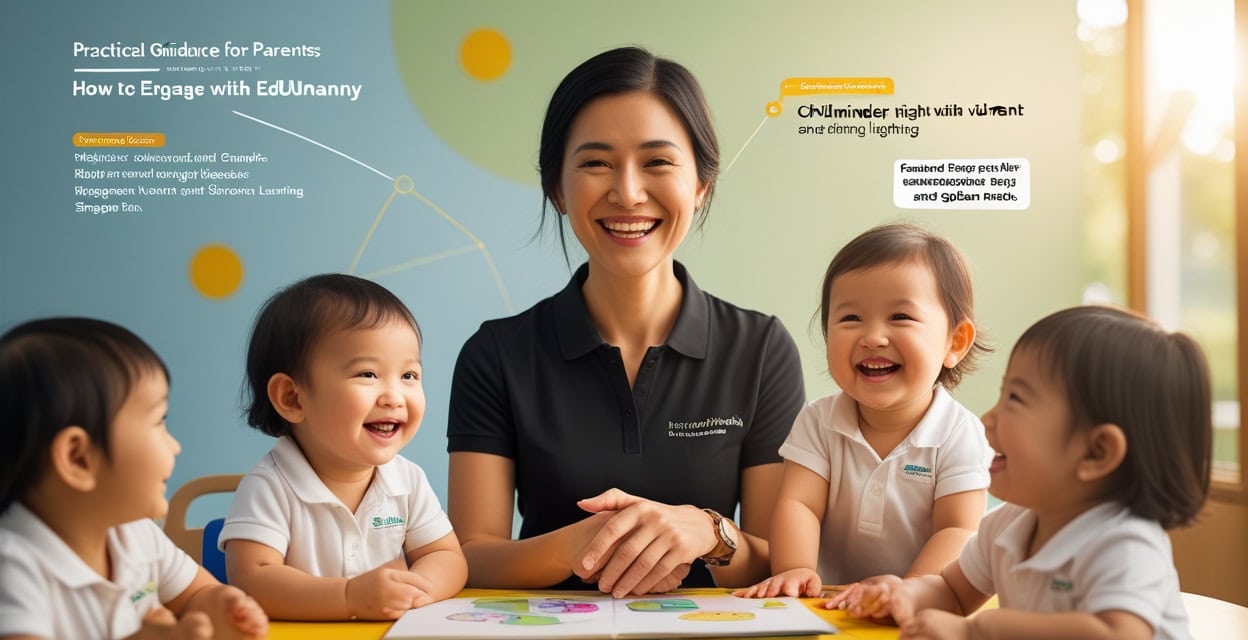
Practical Guidance for Parents: How to Engage with EduNanny Effectively
- Observe the Kneeling Moments: Attend drop-off or participate in routine floor-level activities to see how staff greet children and initiate learning in a child-centered manner.
- Ask About Transitions: Transitions are fragile moments for infants. Ask how caregivers prepare children for changes in routine and how they minimize stress during nap times and meals.
- Request Development Snapshots: Seek regular short reports that pair observation notes with practical next steps for home activities that reinforce learning.
- Inquire About Language Support: If your child is bilingual or multilingual, understand how educators integrate your home language into daily interactions and documentation.
- Participate in Family Partnerships: Engage in family meetings, observation sessions, and co-planning discussions to ensure routines align across home and EduNanny spaces.
- Discuss Safety Practices: Review emergency procedures, first-aid protocols, allergy handling, and how CCTV reviews are used to improve practice without compromising trust.
- Plan for Community: Seek opportunities for cultural exchange, outdoor activity, and local community involvement that strengthen a sense of belonging for your child.

Conclusion
EduNanny envisions Singapore’s first years as a foundation for lifelong growth—built on a kneeling mindset, architectural safety, developmental relationships, and joy with direction. By treating childminding as a skilled profession, advancing family partnerships, and keeping care near to home, we create environments where infants thrive and families feel supported. If this vision resonates, we invite you to engage with EduNanny—visit EduNanny.com and Childminding.EduNanny.com, talk with our educators, and experience care that kneels to greet your child, not merely to supervise.
[#infantcareSingapore, #childmindingSingapore, #earlychildhooddevelopment, #familypartnerships, #1to3ratio]Ready to Experience Excellence?
Transform Your Family’s Journey
Discover Singapore’s leading infant care and childminding services. Expert guidance for your little one’s first thousand days.