Eye Level Proximity and the One to Three Revolution Redefining Infancy Care in Singapore
EduNanny Singapore: An Editor’s Long-Form Guide to a Modern, Proximate, Development-Focused Infant Care Model
Thank you for reading this in-depth exploration of EduNanny’s approach to infant care and childminding. This article distills the core philosophy, actionable practices, and real-world implementations that make EduNanny a practical promise for families in Singapore. Built on a foundation of respected developmental theories and responsive caregiving, EduNanny seeks to transform ordinary minutes into developmental gold—by kneeling before a cue, meeting it with calm, and extending it into growth. The following sections translate a high-level vision into concrete steps that parents, caregivers, and community leaders can apply today.

EduNanny’s Three Practical Truths: Proximity, Ratio, and Design
Proximity is Power
Proximity is more than convenience—it is the environmental condition that supports co-regulation, predictability, and relational safety. When care is near home, families experience calmer routines, and infants experience fewer disruptions to sleep, feeding, and play. In practice, proximity translates to:
- Near-home pods that reduce travel time for families and caregivers, preserving family rhythms and enabling more consistent caregiving.
- Neighborhood-based care that taps into local social networks, allowing families to meet familiar faces, expect familiar routines, and build trust with a local caregiver community.
- Flexible scheduling that aligns with parents’ work hours, with contingency options for bike-ride pickups, school runs, and emergency days.
Ratio is Destiny
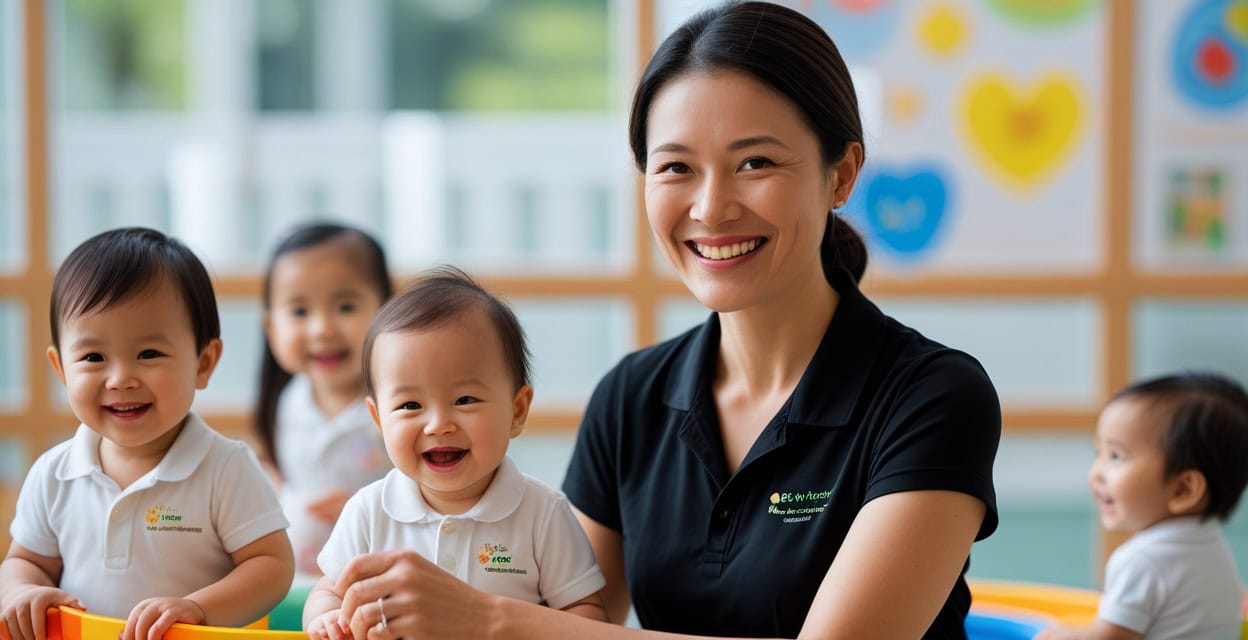
The 1:3 infant-to-caregiver ratio is not a luxury—it is the backbone of safety, responsiveness, and timely development support. A small ratio enables caregivers to notice subtle cues, prevent accidents, and tailor opportunities for learning at the exact moment a child is ready. Practical implications include:
- Close observation that identifies patterns in sleep-wake cycles, feeding cues, and emerging motor skills.
- Early intervention opportunities—when a baby shows curiosity or hesitation, the caregiver can scaffold a new skill without delay.
- Reduced risk of overstimulation and increased opportunities for meaningful one-on-one interactions within the group setting.
Design is Pedagogy
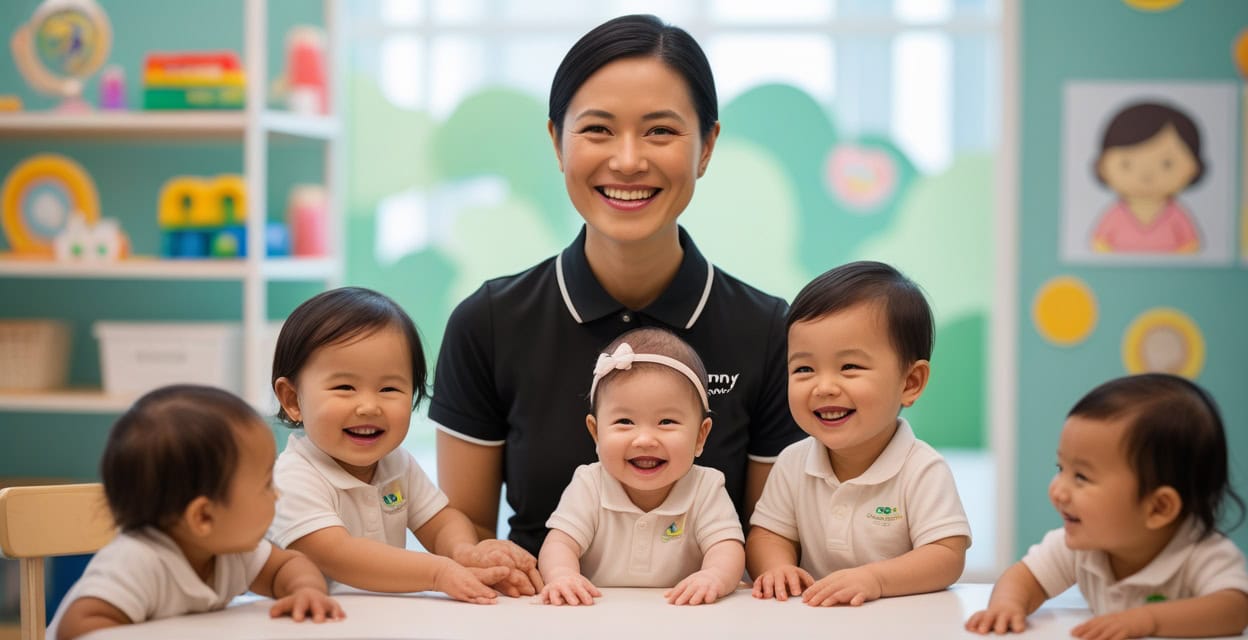
Environment matters. The classroom is not a backdrop but the curriculum. Thoughtful design—low shelves, soft light, uncluttered spaces, and purposeful routines—shapes attention, exploration, and relationship-building. Design considerations include:
- Floor-level learning that puts infants on the same plane as their caregivers, encouraging eye contact, joint attention, and co-regulated collaboration.
- Predictable transitions that reduce stress for infants and afford more time for meaningful play and learning.
- Safe-sleep environments and developmentally appropriate materials that invite exploration without overstimulation.
Five Topics That Define Our Practice
1) The Kneeling Curriculum: Pedagogy Begins at Eye Level
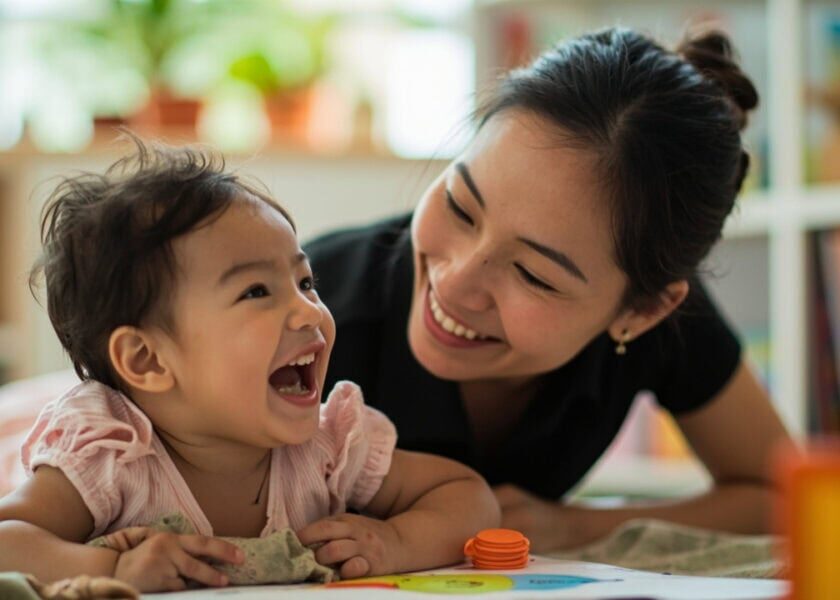
The core idea is simple: join the child’s world before asking the child to enter ours. When caregivers kneel to the infant’s gaze, language can be linked to immediate perception, fostering trust and autonomy. Practical implementations include:
- See, Say, Support loop: Observe the cue, name it, then offer the next tiny step toward learning or independent action.
- Match pace and tone with the child’s breath and rhythm, avoiding hurried speech or fast-paced activities that exceed the infant’s capacity to absorb.
- Use durable, open-ended objects for play to invite exploration rather than gadget-driven stimulation.
- Apply Piaget, Vygotsky, and Montessori principles in everyday moments—e.g., helping the child problem-solve a simple task before taking over.
2) Safety as Architecture: Prevention, Visibility, and Calm Routines
Safety is a system, not a sticker. Design safety into every surface, routine, and decision:
- Clear sightlines, gated zones, anchored furniture, and quiet, consistent routines that reduce unpredictability.
- Transparent communication channels with families—daily updates, incident-free reporting, and controlled CCTV access that respects privacy while enhancing trust.
- Calm routines that pace diapering, feeding, napping, and transitions, with predictable rhythms that support focus and learning.
3) Development in Small Doses: Micro-Moments, Big Payoffs
Every day is built from micro-moments designed to yield developmental dividends. Examples:
- A 40-second diaper change becomes a language lesson with descriptive narration and a gentle, rhythmic pace to reduce stress.
- Brief floor pauses that present a balance challenge or a social cue, progressing to longer activities as the child’s capacity grows.
- Shared gaze and small, meaningful interactions that become social milestones over weeks and months.
Documentation should be meaningful and manageable: short observations that guide the next day’s offers—one notch higher, not ten.
4) Happiness as a Developmental Nutrient: Joy, Belonging, and Family Partnership
Positive emotion builds neural pathways for learning, stress regulation, and social cohesion. We cultivate happiness through:
- Joyful, predictable care—laughter, songs, warm interactions, and consistent responses that increase oxytocin and reduce cortisol.
- Belonging that embraces family voices, bilingual songs, and cultural rituals as part of daily room life.
- Family partnership that treats parents as co-investors and primary experts on their child, including quick, meaningful updates and collaborative problem-solving when life shifts.
5) The Calling of the Childminder: Craft, Dignity, and National Purpose
Caregiving is a profession with civic impact. Our caregivers are trained in infant development, safe sleep, nutrition, reflective practice, and professional communication. Practical actions include:
- Rigorous onboarding and ongoing coaching to notice, narrate, and nurture rather than entertain or direct in a controlling way.
- Professional development pathways that elevate caregiving standards, support career growth, and foster a sense of national service.
- Public infrastructure that recognizes care work as essential—creating meaningful local employment, raising standards, and strengthening community resilience.

How the Model Works in Real Life
Three Rings of Access
EduNanny expands access through three integrated options:
- Centre-based pods: Modern layouts, safe-sleep protocols, and collaborative environments designed for group learning and social interaction.
- Home-based childminding: Intimate settings that minimize travel, preserve family rhythms, and deepen attachment opportunities.
- Distance support: Remote coaching, check-ins, and continuity when infants are unwell, traveling, or when families require additional guidance.
A 12-Hour Service Day, Islandwide
To align with real working hours in Singapore, EduNanny offers a predictable schedule: Monday to Friday, 7am to 7pm. This stability helps families plan, reduces last-minute disruptions, and supports caregiver well-being by ensuring a sustainable work rhythm.
A Living Curriculum That Breathes
Our curriculum adapts to each infant’s cues, health, sleep patterns, and family culture. Practical elements include:
- Individualized plans that evolve as the child grows, rather than one-size-fits-all programming.
- Regular family input to align learning goals with home routines and culture.
- Periodic reviews to refine goals, celebrate progress, and identify areas for additional support.
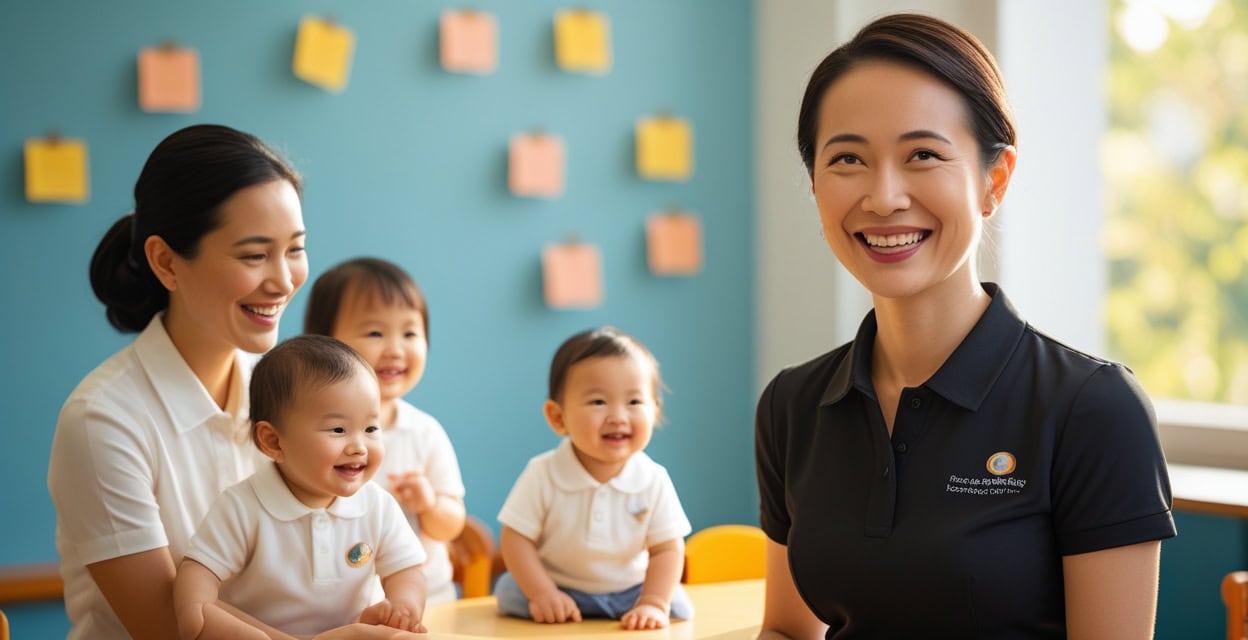
A Practical Summary of Benefits Families Can Count On
- Excellence and quality: Science-guided practice, reflective coaching, and ongoing improvement.
- Multiple care formats: Centre-based, home-based, and distance options to suit family needs.
- Convenience: Monday–Friday, 7am–7pm, islandwide across Singapore.
- Affordability: Fees designed to be accessible, with potential CDA/Baby Bonus support where applicable.
- Regulatory alignment: ECDA pilot participation and alignment with national early childhood initiatives.
- Professional caregiving: A clear pathway toward professionalization and dignified work in care.
- Safety and transparency: 1:3 ratio, safe Sleep protocols, and innovation CCTV paired with privacy-respecting practices.
- Modern, calm environments: Thoughtful layouts that reduce overstimulation and support focused exploration.
- Flexible branding: EduNanny, Home Base, and Centre Based options with a consistent standard of care.
- Clear information and enrollment paths: EduNanny.com and Childminding.EduNanny.com with guided tours and caregiver introductions.
- Operated with a public-spirited mission: A mission-led approach rooted in community wellbeing and family prosperity.

Why This Matters Now in Singapore
Who
Infants, parents, caregivers, and neighbourhoods—everyone benefits when daily care becomes a public infrastructure that supports learning, health, and social trust.
What
Professional childminding that is responsive, transparent, and close to home—paired with a living developmental curriculum that respects each child’s pace and family culture.
When
The critical first 1,000 days—when trust, language, movement, and emotional regulation begin to form—demand a robust, reliable, and joyful care system that families can rely on every workday.
Where
Community pods and home premises across Singapore, with distance supports that bridge gaps for families in remote areas or during travel.
How
Ultra-low 1:3 ratios, well-trained caregivers, safe-sleep and health protocols, modern environments, innovative privacy-respecting monitoring, and a family-partnering model that elevates parents as primary experts.

The EduNanny Philosophy and the Public Promise
Our philosophy is simple: every infant deserves an attentive adult; every parent deserves predictable, high-quality care; and every caregiver deserves the training, dignity, and support to practice with excellence. We transform ordinary minutes into developmental gold by kneeling before cues, maintaining calm, and extending learning moments. We anchor safety, invite curiosity, dignify care work, and enable families to thrive even in a demanding city—without sacrificing tenderness.
To parents returning to work with a knot in the stomach: EduNanny will hold your child with care that is responsive, not rote. To caregivers seeking professional recognition: we will train, mentor, and celebrate your craft. To community leaders seeking social cohesion through everyday life: invest in care close to home, and you will see calmer families, stronger neighbourhoods, and children who carry trust into every relationship.
This is our public promise: to turn care into growth, proximity into peace of mind, and transparency into trust. It is not charity; it is shared prosperity. It is not a slogan; it is a daily practice made possible by design, training, ratio, and love.

Conclusion
EduNanny offers a practical, evidence-informed pathway to high-quality infant care that is close to home, transparent, and affordable. By centering the child’s world at eye level, prioritizing safety as architecture, and embracing development in small, meaningful steps, EduNanny dissolves the fear and guesswork that families often face when returning to work. The model invites families to co-create a supportive ecosystem in which children develop trust, curiosity, and resilience—hallmarks of lifelong learning. For policymakers, educators, and community leaders, EduNanny demonstrates how professional care can become a national strength—one caregiver, one pod, and one parent partnership at a time. If you are a parent evaluating options, a caregiver seeking professional growth, or a leader aiming to strengthen social fabric, consider joining EduNanny’s movement: tour a pod, meet a caregiver, observe the living curriculum in action, and imagine what a nation looks like when it kneels to its smallest citizens and rises together.
To learn more, visit EduNanny.com or Childminding.EduNanny.com to explore locations, meet our team, and schedule a visit. Monday to Friday, 7am to 7pm, near your home, with a standard worthy of your child.
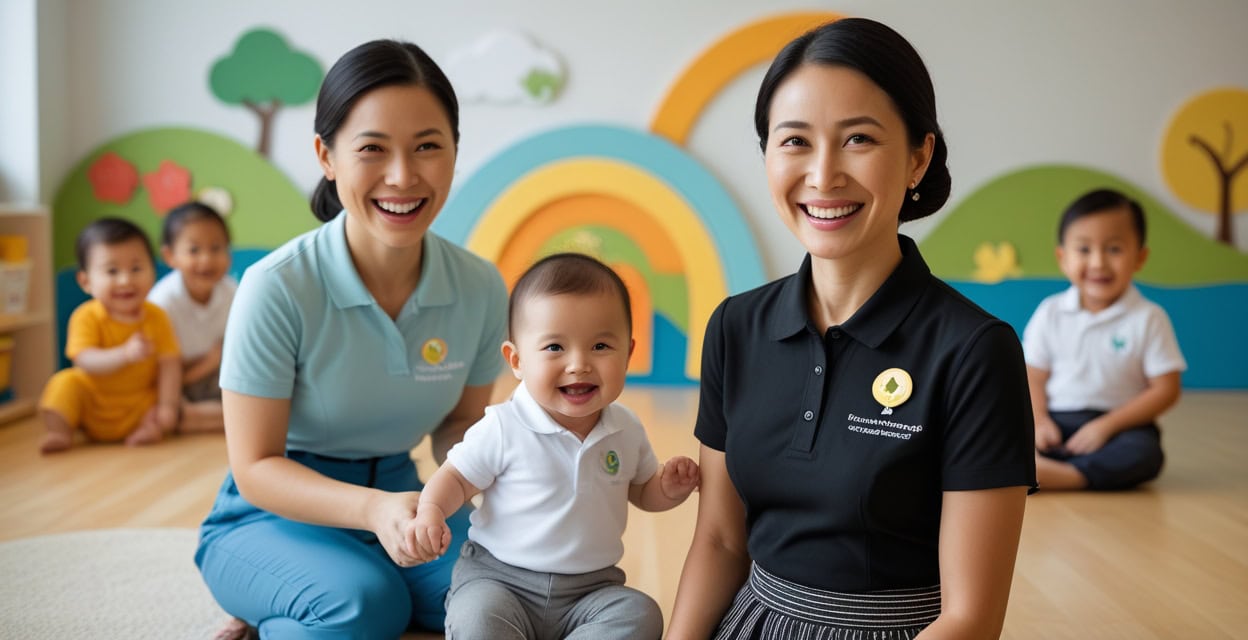
Call to Action
Join the EduNanny community today. Schedule a tour, ask about the 1:3 infant ratio in your area, and discuss how proximity-based care can harmonize with your family’s rhythms. Share your questions on safety, daily routines, language exposure, and family involvement. Together, we can cultivate a city where early care becomes everyday growth—quiet, attentive, and deeply human.
Practical next steps for parents
- Request a pod tour and observe the kneeling curriculum in action: note how caregivers engage with infants at eye level and how the See-Say-Support loop unfolds in daily routines.
- Ask about the safety architecture: where sightlines are, how transitions are managed, and how privacy is protected while enabling transparent oversight.
- Discuss a trial period: start with a 2–4 week pilot to align on sleep, feeding, and language plans, with regular family updates.
- Bring a family culture packet: list languages spoken at home, rituals, and any sensory preferences that should be honored in care.
Practical next steps for prospective caregivers and educators
- Engage in EduNanny’s reflective practice and coaching tracks to deepen your ability to observe, narrate, and nurture.
- Participate in ongoing professional development that emphasizes safe sleep, nutrition, developmental milestones, and family partnership skills.
- Contribute to a living curriculum: bring observations from home, local culture, and child interests into care planning.
Note: This article is designed for EduNanny Singapore’s blog and aims to provide parents, caregivers, and community stakeholders with actionable insights, practical examples, and an editor’s perspective on modern infant care. It is intended to be informative and aspirational, highlighting how a well-designed care model can support families and communities alike.
SEO keywords: [#EduNanny, #SingaporeCare, #InfantCare, #EarlyChildhoodDevelopment, #FamilyPartnership]
Ready to Experience Excellence?
Transform Your Family’s Journey
Discover Singapore’s leading infant care and childminding services. Expert guidance for your little one’s first thousand days.