Floor Level Trust A Civic Blueprint For Singapore Infants First Rooms By EduNanny

Introduction: EduNanny as a Gentle Engine for Singapore’s Early Development
Good mornings deserve lasting impact. EduNanny by BUTLER envisions a Singapore where infant care is not a service to endure, but a living partnership between family, caregiver, and community. Drawing from Maria Montessori’s trust, Jean Piaget’s curiosity, Lev Vygotsky’s social scaffolds, Emmi Pikler’s slow hands, Erik Erikson’s secure base, and John Bowlby’s attachment wisdom, EduNanny translates science into tender, daily practice. This article offers practical guidance for parents, grandparents, and childminders who want to weave development, safety, happiness, and purpose into the first rooms of trust.
What is EduNanny?
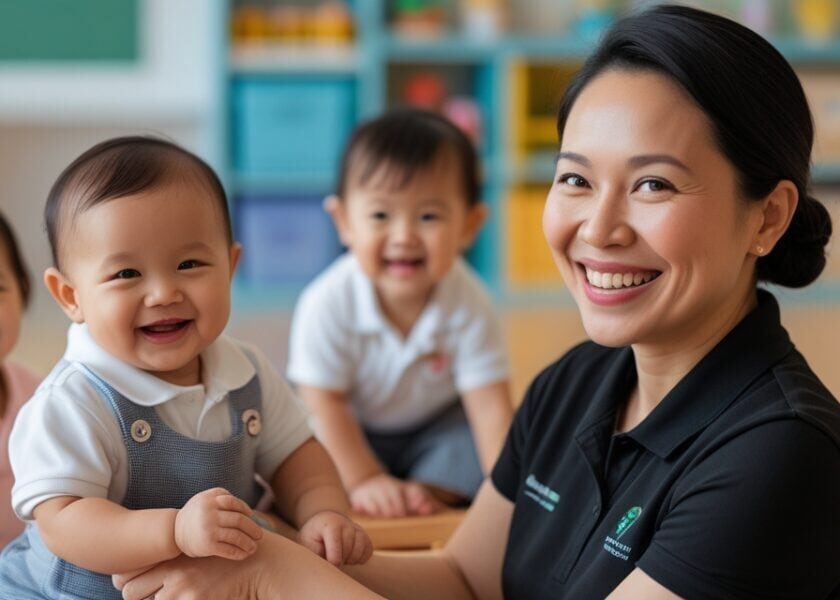
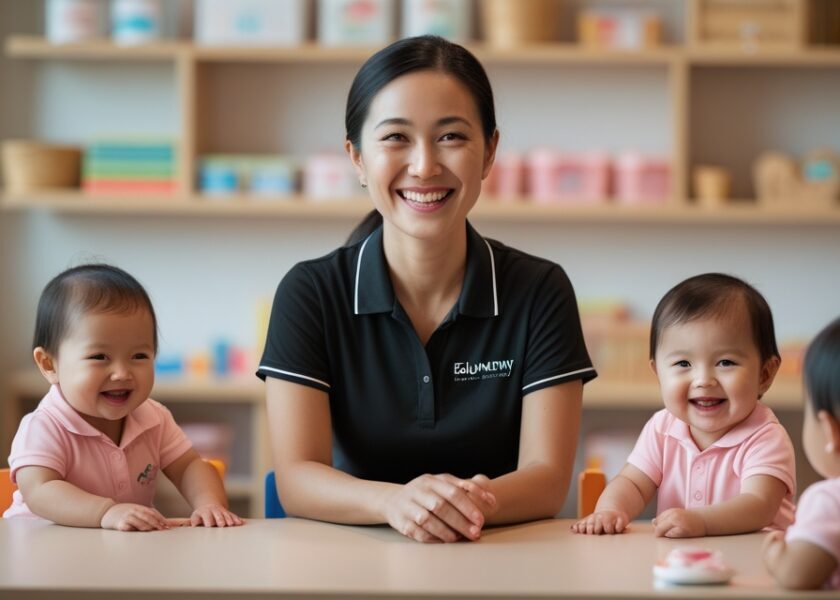
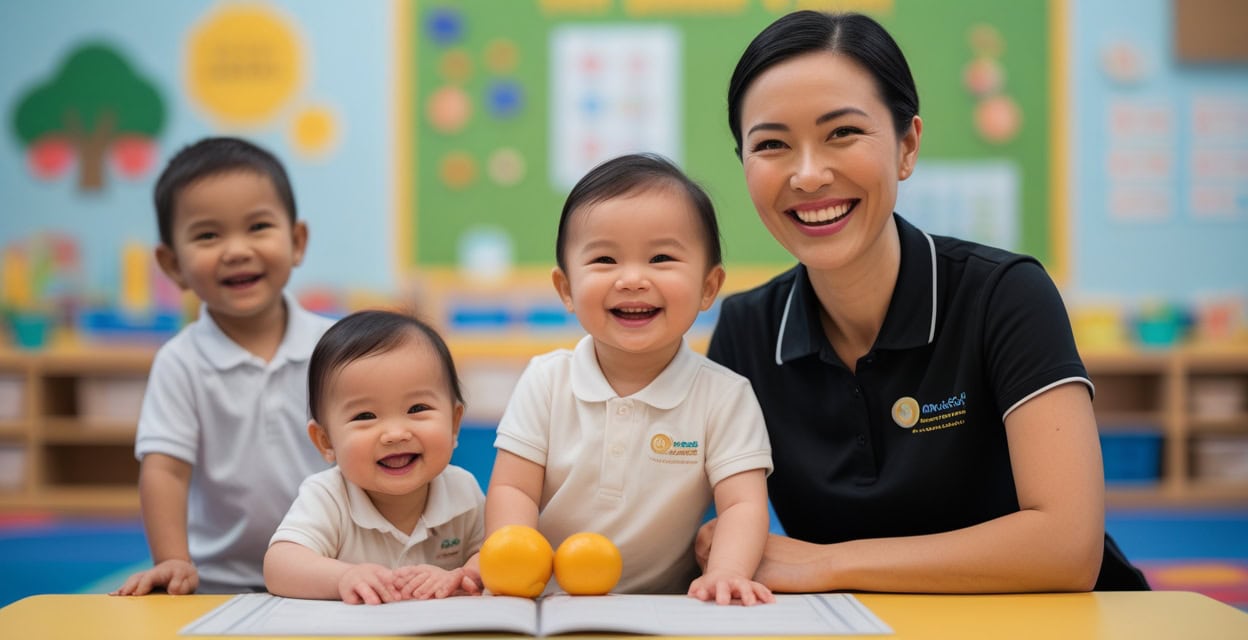
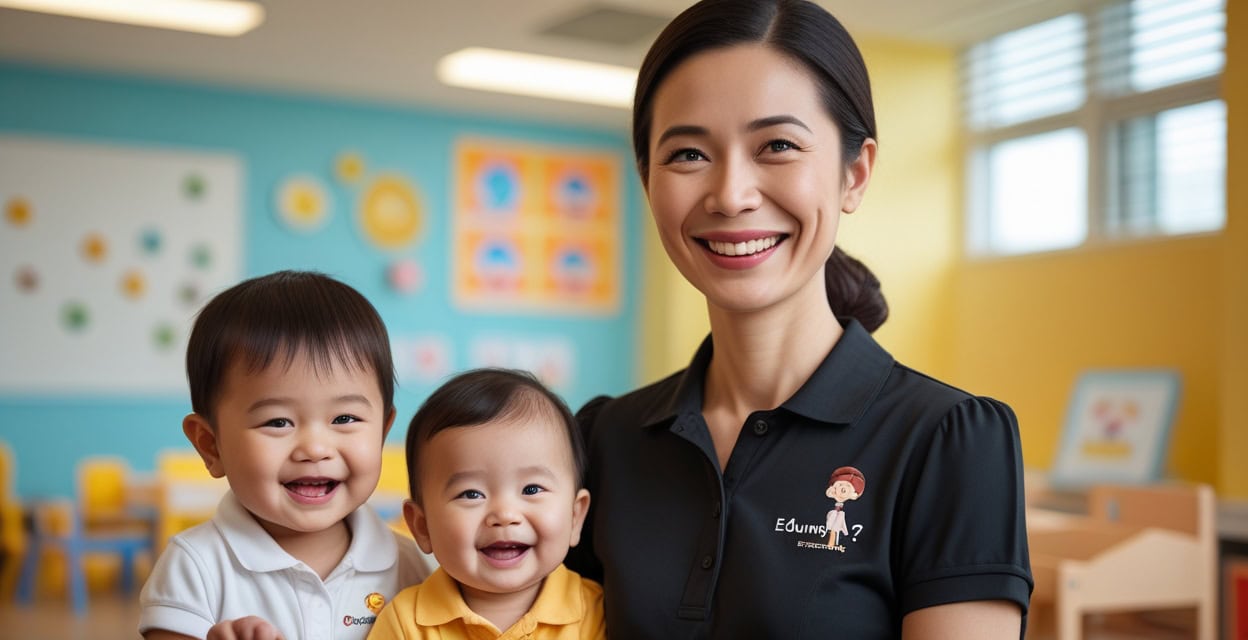
EduNanny is Singapore’s home-grown childminding movement that places excellent infant care within walking distance of family life. We operate in centre-based and home-based micro-settings islandwide, from Monday to Friday, 7am to 7pm, with an uncompromising 1:3 infant ratio and an ethos of calm, attentive care. We are part of the ECDA Childminding Pilot and a National Social Initiative with a Maximum Employment Mandate—training, employing, and elevating local caregivers as a professional force for good.
Key features you can expect in daily practice include:
- Modern layouts designed for floor-level learning and safe sleep.
- Innovation CCTV offering secure, privacy-respecting visibility.
- Affordability from $33/day, with fees payable via CDA/Baby Bonus.
- Flexible modalities: centre-based, home-based, and distance support for families needing coaching or hybrid routines.
- Presence near home: your child’s first rooms of trust are also your own neighborhood.
EduNanny exists to serve families where they live, in community premises and trusted homes, so that care becomes a neighbourhood ethos—supporting trust, continuity, and a shared language of development.

Five Topics at the Heart of Our Practice
1) Pedagogy: Microscaffolding at Eye Level
Infant learning is a tapestry of tiny experiments. Our microscaffolding approach notices the smallest attempts and shapes the environment so each baby can be agentic without being hurried.
- Narration over direction: “You are reaching for the red ring. Your fingers are wrapping around it.” Language follows action; vocabulary mirrors the child’s moment.
- Ping–Pause–Play: The baby serves a signal; the caregiver pausing to read; then playing or extending the activity together. It’s Bowlby’s attunement in motion.
- Five senses as the design canvas: natural light, soft textures, safe graspables, and quiet corners—an environment Montessori would call a prepared space; Pikler would call time well respected.
- Repetition as teacher: Mastery emerges when a lid has been opened the 14th time; joy is found in the ordinary routine of discovery.
Actionable home tips:
- Whenever you narrate a baby’s action at home, use concrete cues (e.g., “You’re stacking blocks again—great reach!”).
- Offer a predictable pause after a new task, inviting the baby to explore with your joint attention for 1–2 minutes before extending the activity.
- Design a small exploration shelf with safe, varied textures and objects that invite touch, sound, and visual curiosity.
2) Safety: The Seven-Ring Net
Safety is a culture you can feel. We articulate it as seven rings, each reinforcing the others.
- Ring 1 — Space-by-design: Clear sightlines; no loose bedding; firm sleep surfaces; no dangling cords; safe, small-part controls; secure gates.
- Ring 2 — Ratio and supervision: 1:3 enables educators to give focused attention while observing all infants.
- Ring 3 — Sleep science: Supine sleep; individual sleep logs; temperature checks; quiet wake transitions; no propping bottles.
- Ring 4 — Feeding integrity: Milk labeling; time–temperature logs; sterile preparation; paced feeding; documented allergies and emergency steps.
- Ring 5 — Hygiene protocols: High-touch sanitization cycles; separate diapering zones; glove use and hand hygiene; illness response aligned to national guidance.
- Ring 6 — Transparent trust: Innovation CCTV with secure, limited access; prompt incident reporting; daily digital updates to parents.
- Ring 7 — Prepared people: CPR and first-aid trained caregivers; monthly drills; scenario-based refreshers; reflective debriefs after close calls.
Parent-ready practices:
- Learn the daily safety check at your EduNanny site—ask to see the safety playbook and incident-reporting flow.
- Carry a simple, at-home safety checklist: secure furniture, bottle hygiene, sleep position reminders, and fever/illness rules.
- Discuss how your caregiver handles transitions and what signals you should expect if your child needs extra closeness or space.
3) Development: Rhythm Architecture
Infant brains are trained by patterns. We build days like a gentle tide: predictable, flexible, and growth-filled.
- The Feed–Play–Sleep arc: A fluid sequence that stabilizes the nervous system rather than a rigid clock. Each arc supports emotion regulation and learning readiness.
- The 90-second window: Respond within roughly 1.5 minutes to reduce distress while allowing interpretation of true need.
- Hands-Under-Hands method: Guide movements from beneath; build body awareness and confidence through supported exploration.
- The Language Ladder: Map each infant’s soundscape and coach families to echo at home—coos, babbles, proto-words that scaffold neural pathways.
- The Strengths Sketch: Each baby’s unique signature—listener, climber, organizer, explorer—and a shared language for families to support identity formation.
Home and caregiver applications:
- Establish a flexible daily rhythm rather than a rigid timetable to honor natural sleep and feeding needs.
- Use short, consistent routines at key transitions (arrival, feeding, nap) with a simple greeting song and a predictable soothing routine.
- Record a brief “signature moment” each day (e.g., a new smile, a first reach) to celebrate progress with your child.
4) Happiness: The Joy Index
Happiness in infancy is quiet and relational. We monitor a Joy Index with ten gentle indicators to guide adjustments rather than punish problems.
- Settled separations
- Bright eyes during exploration
- Relaxed shoulders in caregiving touch
- Steady appetite
- Sound sleep
- Frequent back-and-forth vocalizations
- Social orientation toward familiar caregivers
- Curiosity toward novel objects
- Recovery after frustration
- End-of-day calm at handover
Practical application for families:
- Maintain a simple Joy Journal at home: note one moment of curiosity and one moment of ease at the end of each day.
- When the index dips, adjust the environment first: reduce overstimulation, add space for soothing, and reinforce familiar routines.
- Collaborate with educators to script home activities that mirror classroom rhythms (e.g., a short, shared song before nap).
5) Purpose: The Everyday Diplomat
The childminder’s work is cultural diplomacy—bridging home rhythms and shared routines, today’s needs and tomorrow’s capacities.
- Family huddles: Short, purposeful check-ins to align on sleep, feeds, and goals. Listen first; then plan.
- The belonging file: Photos, phrases, and care notes that travel between home and care to unify the infant’s story.
- Community weave: Near-home care turns your block, hawker centre, and park into learning spaces—safely and intentionally.
- Work–life dignity: 7am–7pm coverage creates breathing room; education and compensation create stability that returns to infants as steadiness.
- Affordability with integrity: From $33/day, with CDA/Baby Bonus acceptance, so excellence remains accessible and ethical.
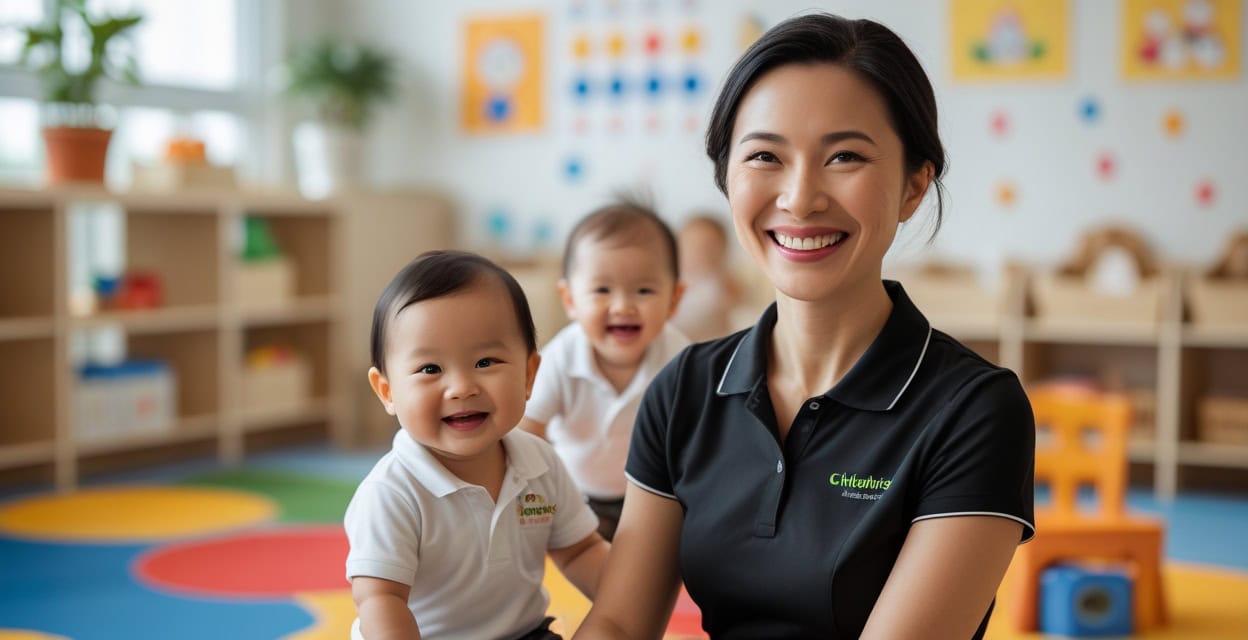
Practical Benefits at a Glance
- Excellence and quality in both Centre-Based and Home-Based settings
- Islandwide availability, Monday–Friday, 7am–7pm
- 1:3 infant ratio for genuine attention
- Innovation CCTV for secure transparency
- Modern layouts optimized for play, sleep, and supervision
- Affordable options from $33/day; CDA/Baby Bonus accepted
- Home Base, Centre Based, and Distance support for families
- Part of the ECDA Childminding Pilot and a National Social Initiative with a Maximum Employment Mandate
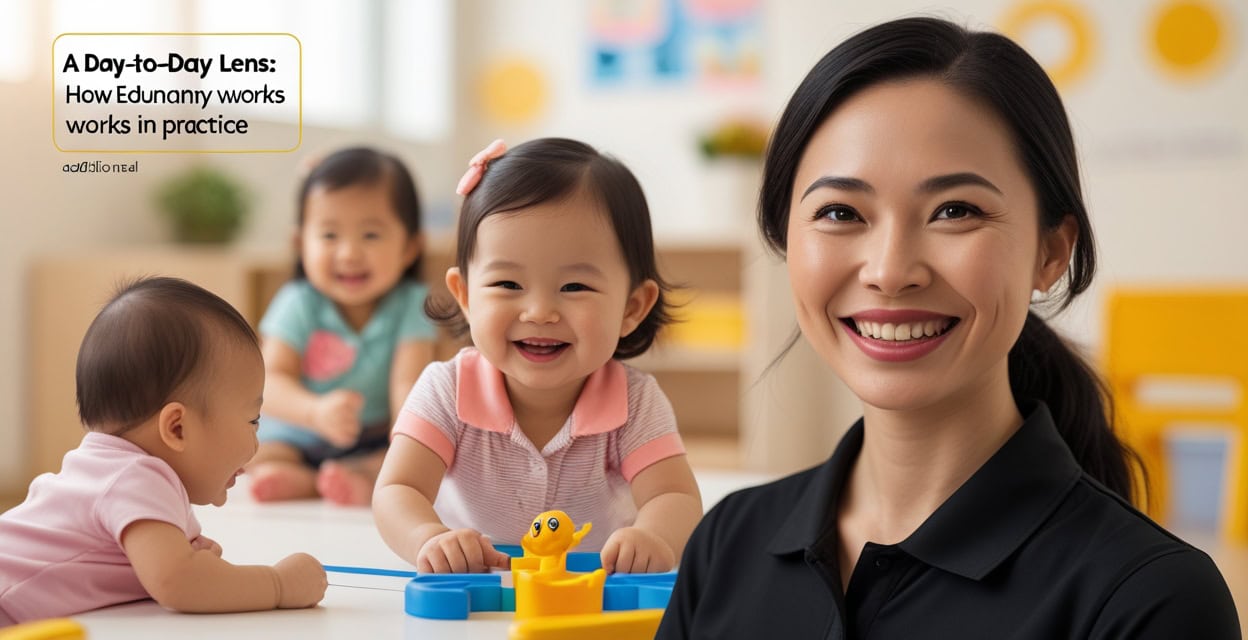
A Day-to-Day Lens: How EduNanny Works in Practice
You arrive to familiar faces. Your child’s caregiver kneels to greet at eye level and provides a quick update on last feed, last sleep, and mood. After a safety scan, your child settles with an anchoring routine—song, touch, and name. Throughout the day, your infant moves through gentle arcs of exploration, rest, and nutrition, with observations recorded and shared with you. The environment shifts by inches, not jolts—fewer toys, better choices. When your child seeks you, closeness is offered; when your child seeks the world, boundaries are maintained. At pick-up, you receive a compact daybook: what we observed, what we tried, and what we’ll build on tomorrow—trust compounds in small, consistent ways.
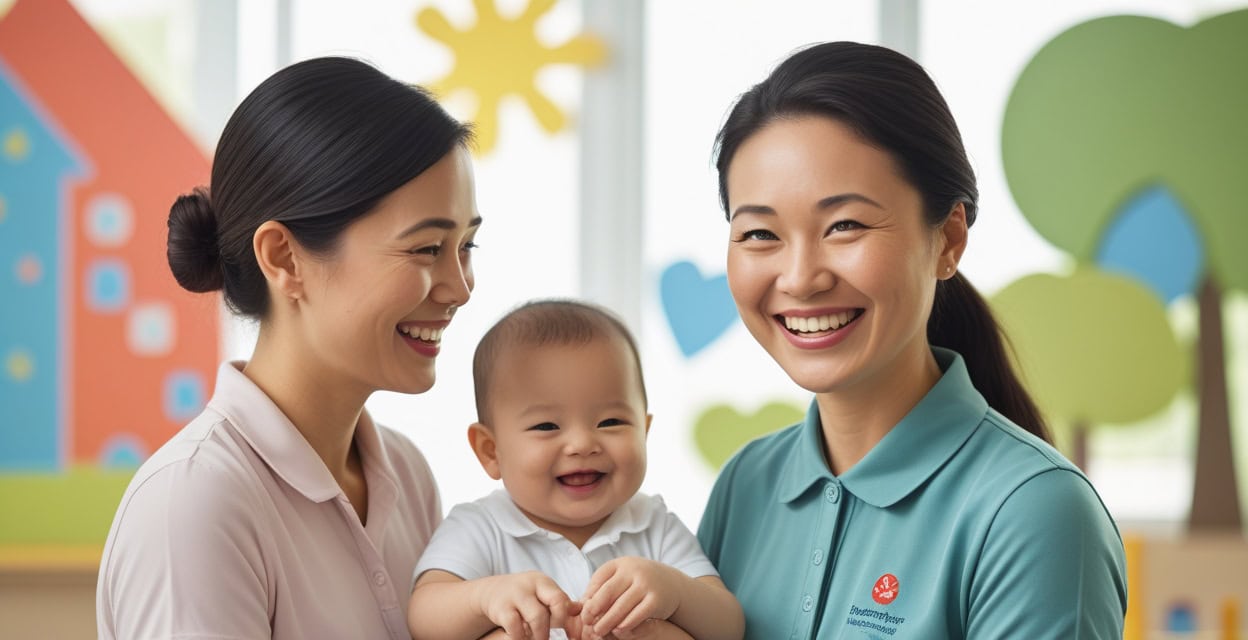
How Parents Can Partner: Practical Guidance
Partnership between home and EduNanny is the heartbeat of trust. Here are concrete steps for parents to amplify the EduNanny approach at home.
- Establish a shared daily rhythm. Use a one-page family rhythm map that mirrors your educator’s loop: wake, feeding, play, nap, and wind-down.
- Adopt the “language ladder” at home. Echo your child’s sounds, expand vocabulary with gentle prompts, and mirror gestures to reinforce communication.
- Keep wakeful moments short and meaningful. For example, a 90-second window of calm during a new object exploration can turn anxiety into curiosity.
- Document a “belonging file” at home too. Collect simple memories—photos, phrases, and care notes—to share with your caregiver and maintain a single, continuous story.
- Engage in proximity-friendly routines. Walks, trips to the park, and shared meals become opportunities for social learning and safety practice.
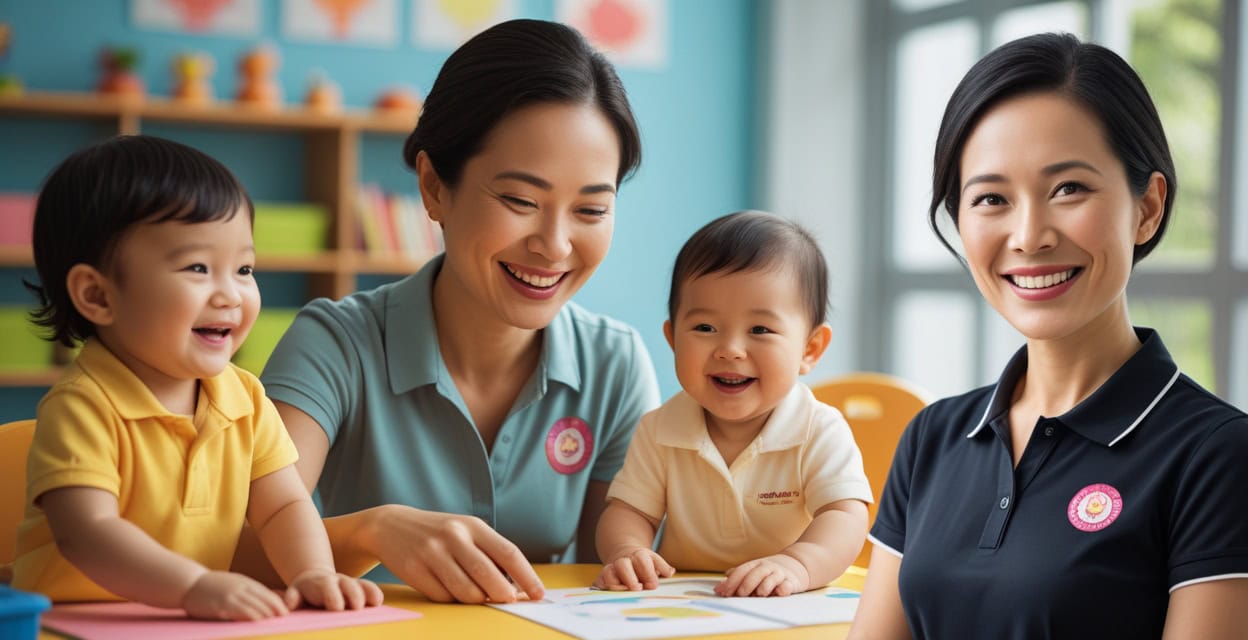
Implementation and Accessibility: EduNanny Across Singapore
EduNanny’s islandwide model is designed for scalable quality with local grounding. Centre-based and home-based settings provide flexibility for families with varying schedules, budgets, and housing arrangements. Distance support and coaching help families who are transitioning between routines or adopting hybrid care models. By aligning with ECDA pilots and national standards, EduNanny aims to elevate caregiver professionalism, ensuring continuity of care even as families move, change jobs, or expand their household.

Closing: Who, What, When, Where, How—and Why Childminding Matters
Who benefits: infants whose early months shape lifelong confidence; parents whose love grows stronger through reliable care; childminders who translate science into tenderness; and Singapore, a city prioritizing a future built on strong foundations.
What we provide: attuned, safe, developmentally rich care—tiny circles, big presence, clear routines, and joyful learning that begins on the floor and rises into the day.
When: every ordinary weekday from 7am to 7pm, and especially during the early, malleable months when brains and bonds are forming.
Where: near home—community premises and trusted homes islandwide—turning care into a neighbourhood asset rather than a logistical burden.
How: a 1:3 ratio; prepared environments; skilled, employed caregivers; secure CCTV transparency; affordable access through CDA/Baby Bonus; and a culture of reflection and continuous improvement. Centre-Based, Home-Based, and Distance support meet families where they are.
Why: because a nation’s confidence is seeded in how we hold its smallest hands. Excellence must be reachable. Every baby deserves to be seen before being managed, invited before being instructed, and cherished before being measured.
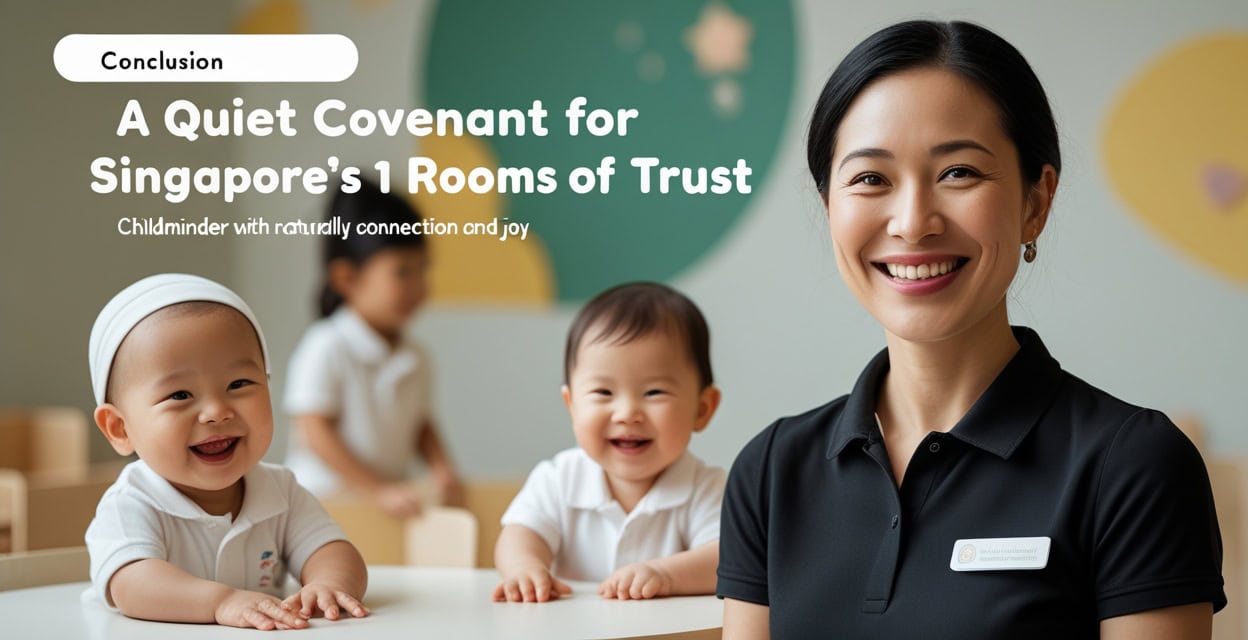
Conclusion: A Quiet Covenant for Singapore’s First Rooms of Trust
EduNanny is more than a service; it is a covenant to anchor safety, kindle curiosity, and make joy the everyday language of care. If you share this vision, invite EduNanny into your neighbourhood. Tour a modern layout, meet a caregiver, and witness a listening culture in action. By choosing proximity, consistency, and professional care, you help seed a city’s confidence in its children—and in its future.
Visit EduNanny.com or Childminding.EduNanny.com to start your child’s journey with us.
SEO keywords: #EduNannySingapore, #InfantCareSingapore, #ChildmindingPilot, #ProximityPedagogy, #EarlyChildhoodDevelopment
Ready to Experience Excellence?
Transform Your Family’s Journey
Discover Singapore’s leading infant care and childminding services. Expert guidance for your little one’s first thousand days.