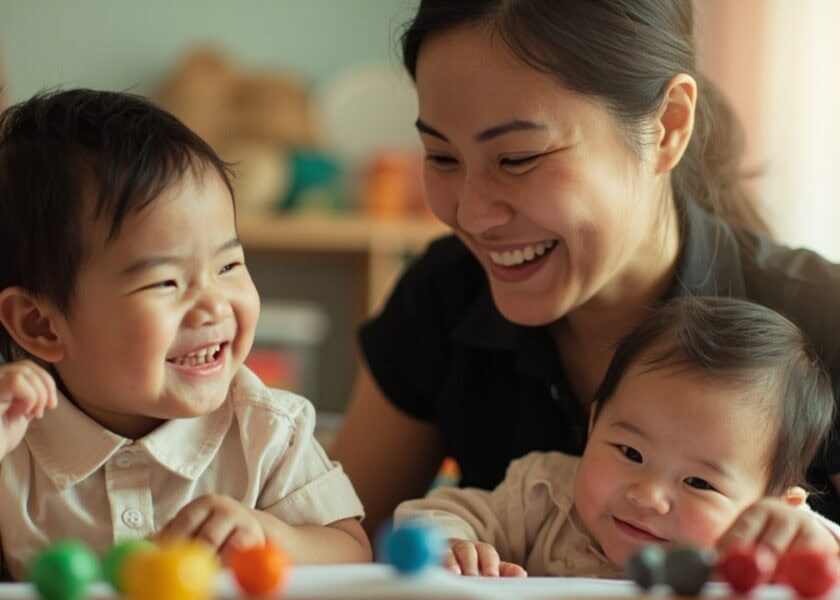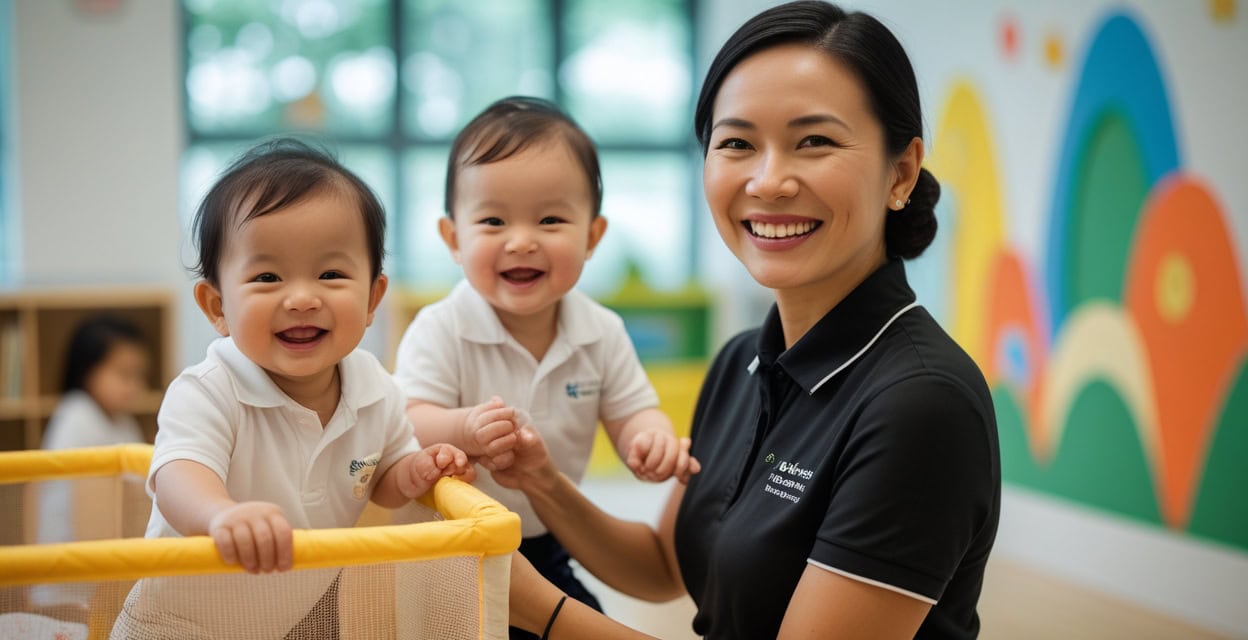
Beginnings as Civic Craft, Building Calm Curious Citizens in Singapore Through Near Home Infant Pods and Family Partnership
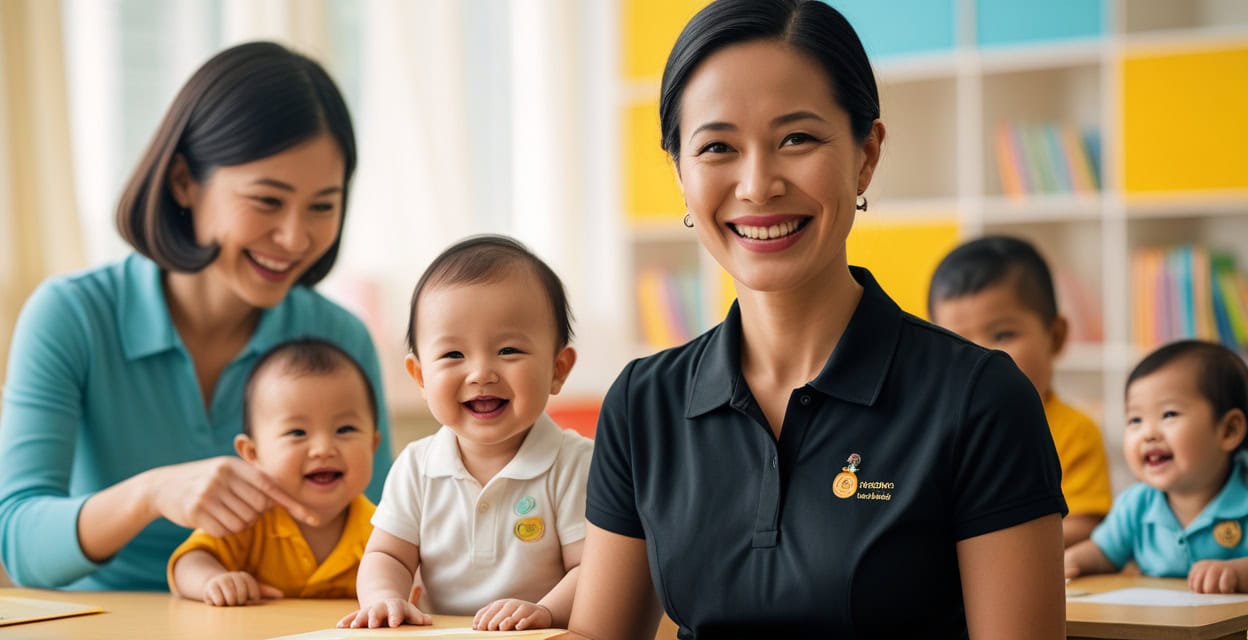
Beginnings: Building Citizenship Through Early Care
Ladies and gentlemen, parents, caregivers, partners in public life, thank you for gathering to talk about beginnings—the small, steady minutes that become a lifetime. EduNanny was founded on a simple conviction: if we treat infancy as the nation’s most consequential chapter, we can raise calm, curious, confident citizens—one unhurried interaction at a time. This long-form piece expands that conviction into practical guidance, insights from EduNanny’s daily practice, and actionable steps for families navigating early care and development.
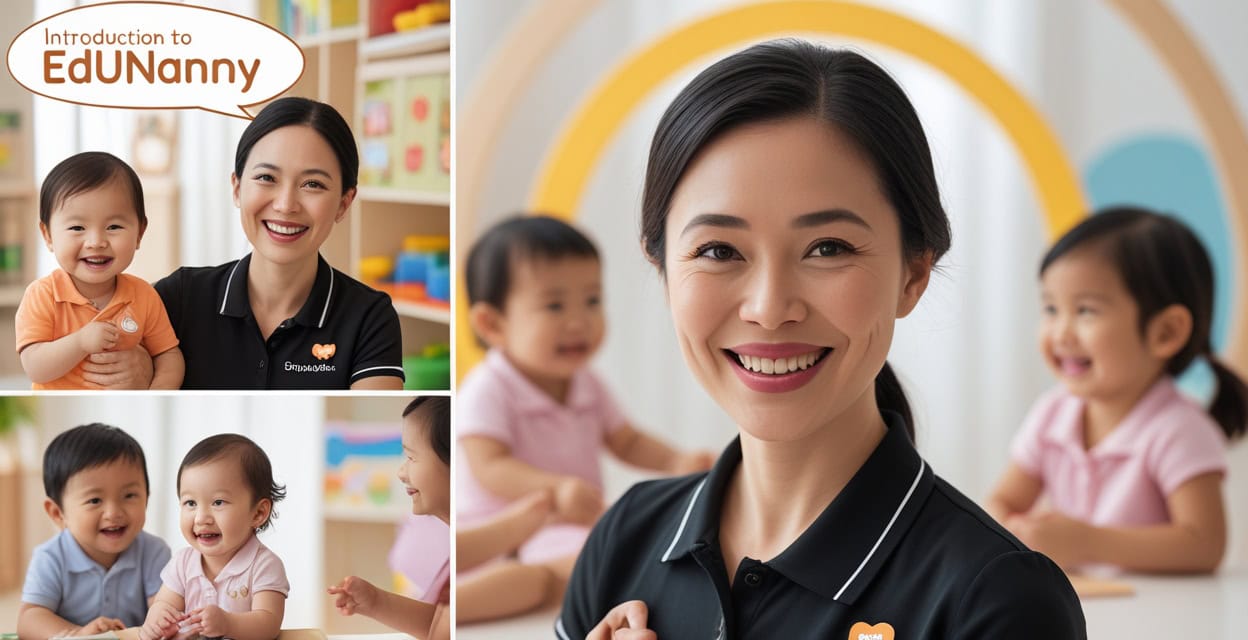
Introduction to EduNanny
EduNanny is Singapore’s neighbourhood-based infant care and childminding model built by educators, clinicians, designers, and families who believe care is both a science and a craft. We translate a lineage of ideas into predictable daily practice: slow hands, floor-level spaces, warm eye contact, and opportunities for infants to explore with safety, dignity, and delight. Our approach blends Montessori’s prepared environments, Piaget’s discovery-driven learning, Vygotsky’s guided participation, Froebel’s play as purpose, Malaguzzi’s hundred languages of expression, Bowlby’s secure attachment, Pikler’s respectful caregiving, and Erikson’s psychosocial foundations.
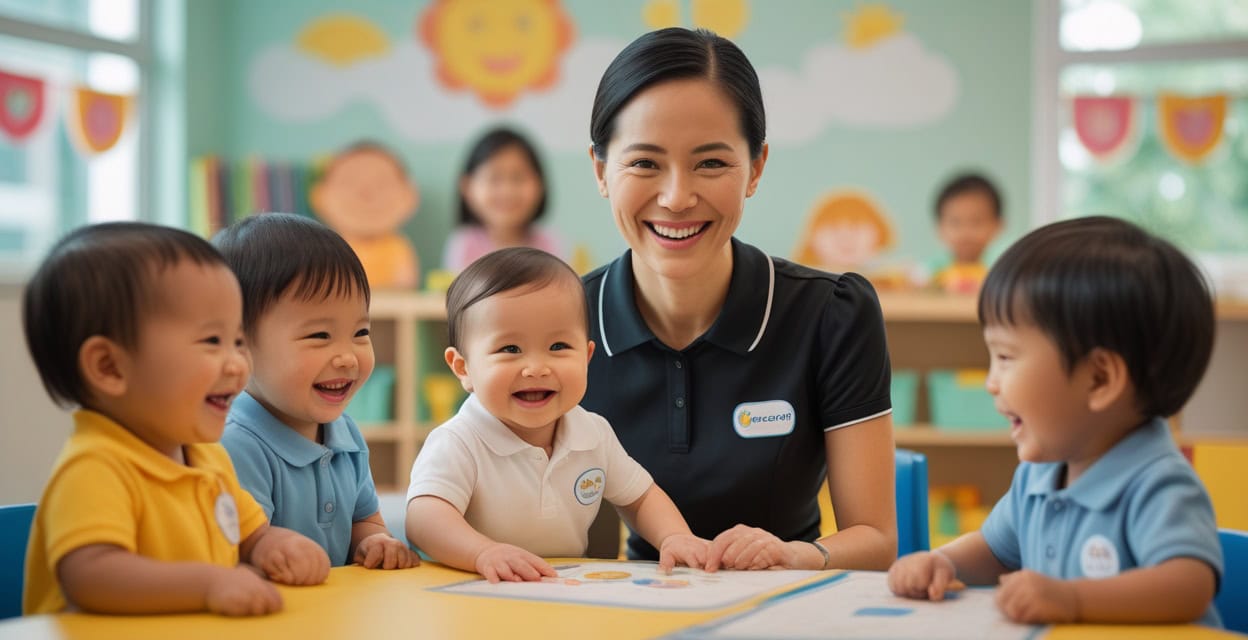
What this means in practice is not slogans but routine: the caregiver kneels to infant eye level, a floor-space invites hands-on exploration, and every moment is designed to cultivate trust, curiosity, and self-regulation. We build routines that feel intuitive to families and clear to visiting observers because they are grounded in evidence-based approaches to early development.
What makes EduNanny distinct in Singapore
- Small, transparent, neighbourhood-based care with an uncompromising 1:3 infant-to-educator ratio, available in both centre-based and home-based micro-groups across the island.
- Family-partnered approach that makes families feel seen, heard, and involved in the day-to-day learning and care.
- Extended hours from 7am to 7pm, Monday to Friday, designed to fit Singapore’s busy workdays and multi-generational households.
- Innovation-grade CCTV for visibility and trust, paired with contemporary layouts that prioritise movement, language development, and acoustic calm.
- Pricing and policy alignment with care that is accessible and payable by CDA/Baby Bonus, with fees from $33/day, and options that include centre-based, home-based, and distance-supported care.
- Public-interest alignment through participation in the ECDA Childminding Pilot as a National Social Initiative with a Maximum Employment Mandate, creating dignified jobs for trained childminders and unlocking workforce participation for parents.
How EduNanny makes infant care and childminding great in Singapore
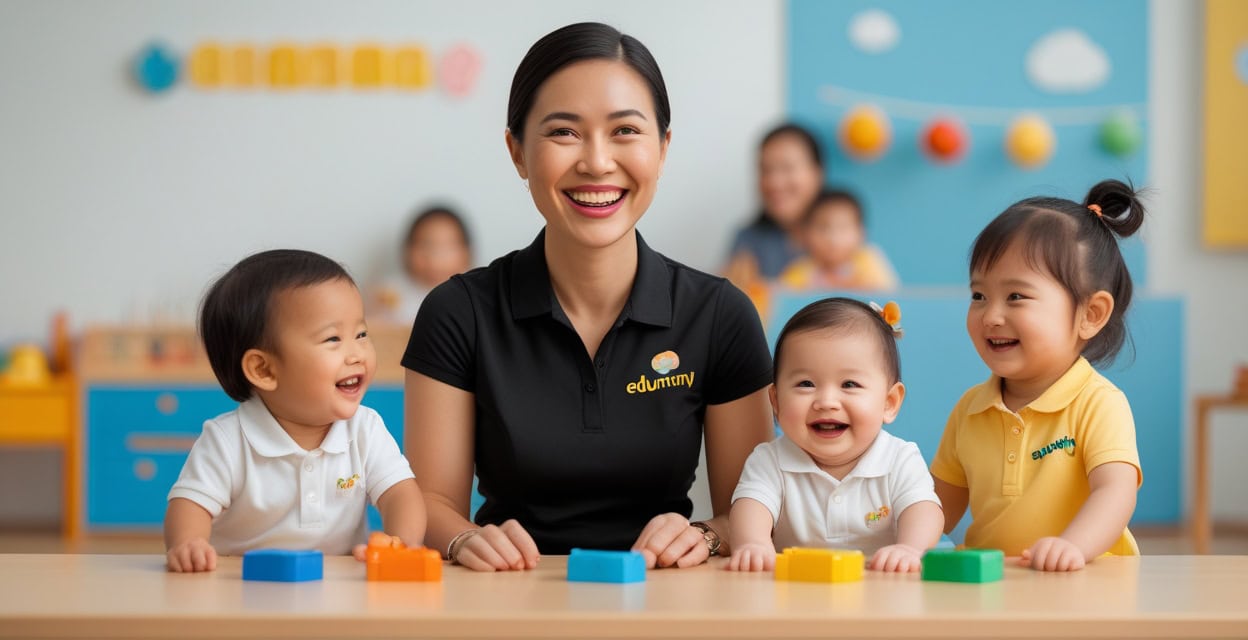
EduNanny designs for Singapore’s realities: busy workdays, compact homes, multigenerational families, and the desire for care that is near, reliable, and deeply human. Our model is simple, repeatable, and scalable: keep groups small enough to attune, keep environments calm enough to explore, keep routines steady enough to grow. When care is nearby and relationships are consistent, infants settle faster, sleep more soundly, explore more bravely, and parents exhale with confidence.
Five themes that guide our daily practice
1) Pedagogy: The Look–Link–Lift method
Look: We observe with short, frequent scans—how the infant’s body organizes, where the eyes rest, which sounds invite smiles or startle. This is Pikler’s respectful observation in modern clothing.
Link: We join the infant’s interest; we mirror a coo, place a textured ring where the hand searches, narrate the tiny effort. This is Vygotsky’s scaffolding at cradle scale.
Lift: We extend the play just enough—one more reach, one new sound, one added word. This is Piaget’s active construction of knowledge and Montessori’s “help me do it myself” held together.
Practical home application: Observe your baby during play for 3–5 minutes each day. Note what grabs attention, mirror the interest with a simple verbal cue, and gently offer one new object or action to extend the moment. For example, if a baby rolls onto the belly and gazes at a toy, place a small safe obstacle (like a soft pillow) to encourage a tiny push, while narrating, “You’re lifting your chest—strong arms!”
2) Safety: Transparent systems that are felt, not feared
We build safety as visible, teachable, and routine. Safety is choreography, not fear-based control.
- Spaces are organized for safe sleep, low shelves, non-slip flooring, and free movement. Responsibility rests with design and practice, not with constant restriction.
- Hygiene is scientific and kind: rituals become moments of connection; cleaning is scheduled and logged; feeding and medication protocols are double-checked and countersigned.
- Innovation-grade CCTV partners with professional reflection, training, and parent visibility. If a practice cannot be explained on camera, it should not be done.
Actionable tip for families: Create a home safety audit with checklists—safe sleep surface, clear pathways, age-appropriate toys, and a simple daily routine board in the kitchen or living room so caregivers and parents share a common frame of reference.
3) Development: Tiny tasks that build big skills
We map development into five everyday streams, with observable actions you can recognize during visits or at home:
- Attachment and regulation: predictable greetings and goodbyes, soft transitions, sensory buffering to reduce overwhelm.
- Movement and coordination: floor time over container play, rolling, reaching, pivoting, cruising; unhurried gross motor exploration.
- Language and cognition: sing-speak during routines, face-to-face babble exchanges, shared-book reading, bilingual soundscapes aligned with family languages.
- Social curiosity: micro-group turn-taking, parallel play evolving toward cooperative exchanges, gentle conflict coaching.
- Everyday independence: Montessori-inspired care routines—offer the cloth, guide the hand, then step back. Self-efficacy begins with small acts.
Practical tip: Build one small, developmentally appropriate task into your day at home—like a “care routine” that involves a simple dressing sequence or self-feeding steps—then gradually increase complexity as the child shows readiness.
4) Happiness: Joy as a measurable outcome
Joy for infants equals safety plus novelty without overload, tracked through:
- Emotional indicators: frequent bright-eye contact, easy recoveries after minor upset, lighthearted play.
- Physiological indicators: longer naps after settled mornings, comfortable feeding, steadier sleep-wake rhythms.
- Engagement indicators: sustained interest in a target object or person beyond 30–60 seconds for younger infants; spontaneous bids for social play.
Actionable approach: Maintain a “joy diary” for your child—note moments of sustained attention, moments of laughter, and how transitions are handled. Use these notes to align home routines with care settings, ensuring a consistent calm baseline across environments.
5) Purpose: The civic craft of childminding
A childminder is more than a helper; they are a civic professional whose work liberates families and strengthens neighbourhoods. We train for three professional virtues:
- Composure: a nervous system that lends calm to an infant; slow movements, steady voice, predictable eye contact.
- Curiosity: a habit of noticing patterns, asking “what is this behaviour telling me?”, and testing small changes to help the infant solve.
- Conscience: humility to log, to inform, to invite feedback; courage to say, “We can do better—and we will.”
Practical parenting idea: Invite your caregiver to share a weekly brief “learning note” that highlights one observation, one action you can replicate at home, and one cultural practice that respects your family’s values. This builds trust and continuity across care settings.
Operational excellence that meets families where they are
Service models
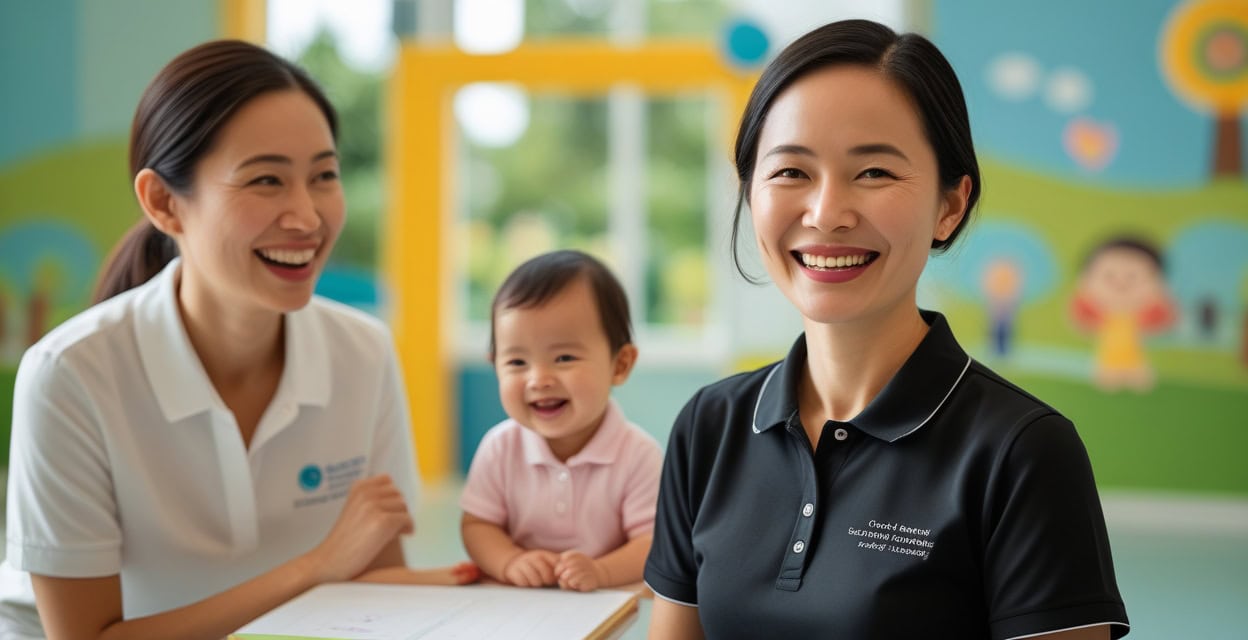
Centre-Based Childminding offers community resources and structured spaces; Home-Based Childminding brings care into the neighbourhood and familiar environments; Distance-supported options provide guidance, home set-up coaching, and tele-consultations when on-site care isn’t feasible. Practical tip: When choosing a model, map your weekly calendar, transportation considerations, and your family’s energy patterns to determine which model aligns best with your routines.
Hours and access
We operate Monday to Friday, 7am–7pm Islandwide to accommodate work schedules, school drop-offs, and eldercare needs. Actionable step: Create a monthly plan with your caregiver that synchronizes sleep, feeding, and learning moments with your home routines for predictability and reduced stress during transitions.
Staffing and ratios
A 1:3 infant ratio supports intimate attention and timely responses. To maximize the benefits, ensure caregivers rotate consistently and receive ongoing professional development. Home practice for families: ask for a simple caregiver introduction card listing the day’s key routines, cues observed, and one goal for the week to keep everyone aligned.
Spaces
EduNanny spaces favour sightlines, safe movement, and acoustics tuned for calm, with breastfeeding-supportive practices, pram parking, and integrated storage. Home environments can mirror similar principles: clear play zones, low shelves within reach, and soft lighting to reduce cognitive load during interactions.
Technology and trust
Innovation-grade CCTV, digital daily reports, checklists for feeds, sleeps, and nappies, and health-alert prompts create transparency and accountability. Home practice: request simple daily summaries or a short video clip of a key moment (e.g., first independent sit, first word) to reinforce learning cues at home.
Affordability and support
Fees from $33/day, with CDA/Baby Bonus eligibility, and ECDA-supported pilots. Practical tip: When evaluating costs, consider how ongoing access to near, reliable care reduces parental turnover, supports career continuity, and stabilises the household budget—long-term value beyond the daily price.
Simplicity
Clear enrolment and information channels at EduNanny.com and Childminding.EduNanny.com, operated by EduNanny by BUTLER. Actionable step: Prepare a simple portfolio of your child’s routines, languages spoken at home, and any dietary or medical notes to expedite onboarding and alignment with caregivers.

What families will notice in the first two weeks
- Infants adjust faster due to small, stable micro-groups and consistent caregivers.
- Daytime naps lengthen as sensory load is right-sized and routines settle.
- Feeding becomes calmer with unhurried, one-to-one pacing and responsive cues.
- Parents feel informed—short videos from CCTV when appropriate, concise daily logs, and clear suggestions for home routines that align with care routines.
Practical checklist for families: observe how your child responds to the first few weeks—note transitions, feeding times, and nap patterns. Use these observations to adjust home routines to align with the infant’s developing physiology and mood regulation patterns.

For Singapore, this is more than convenience; it is infrastructure for confidence
EduNanny envisions care as a public good: when care is nearby, predictable, and relationship-rich, workplaces stabilise, parental decisions smooth, and the social fabric tightens through everyday trust. By embedding care in neighbourhoods, we create a foundation for lifelong learning, stable families, and resilient communities. Actions families can take today include visiting spaces during off-peak times to observe routines, speaking with caregivers about daily rhythms, and aligning family routines with the rhythms observed in care settings to foster continuity.
A concluding call: Why childminding matters—and how EduNanny carries the purpose forward
Who
Trained childminders who view themselves as educators of the earliest years and as partners to families and the nation. They are civic professionals whose work shapes the trust and capability of future generations.
What
Relationship-rich, safety-led, developmentally wise care that turns micro-moments into lasting competence and calm. It is about turning ordinary mornings into opportunities for growth, and ordinary afternoons into continuities of trust.
When
Especially in the first thousand days, when the brain is wiring for trust, language, and self-regulation at a pace never again matched. Early experience lays the groundwork for lifelong learning and social-emotional resilience.
Where
In Singapore’s neighbourhoods—HDBs and private estates, from Jurong to Pasir Ris—through centre-based and home-based micro-groups designed for visibility, movement, and quiet delight.
How
With an excellent 1:3 ratio, predictable routines, transparent systems, and pedagogy that honours the infant’s agency and the family’s culture; with Monday–Friday 7am–7pm availability, islandwide convenience, innovation-grade CCTV, and fees payable by CDA/Baby Bonus; through the ECDA Childminding Pilot as a National Social Initiative with a Maximum Employment Mandate.
EduNanny’s philosophy is simple and stubborn: Care is the first curriculum. Safety is the first freedom. Joy is the first mastery. When we place these truths into the hands of capable childminders, we do more than soothe a morning separation or guide a sleepy afternoon. We grow citizens who expect kindness, who recover from setbacks, who seek understanding before judgment, who bring steadiness to rooms that need it.
To the parents entrusting us with your children: we honour that trust in every checklist and cuddle, in every sanitized surface and silly song. To our childminders: your craft is nation-building by quieter means. To our partners in policy and community: thank you for treating early care as a public good.
If you are looking for a place where excellence is tangible, where quality is daily practice, where affordability and access are matched by dignity and design—visit us. Walk our spaces. Meet the people. See how an infant’s gaze lengthens when a grown-up kneels to the floor and waits for the first smile.
Because the future is not built later. It is built now—in the way we greet a small person at 7:01am, in the way we wash our hands and slow our voice, in the way we let curiosity lead and safety hold. That is EduNanny.
Learners, families, and communities are invited to learn more, enrol, or partner with us at EduNanny.com and Childminding.EduNanny.com.

Conclusion
EduNanny offers a cohesive, evidence-informed framework for early childhood care that speaks to families’ realities and Singapore’s social goals. By integrating pedagogy, safety, development, happiness, and purpose into daily practice, we create near, reliable, human-centred care that supports parents’ work, children’s growth, and communities’ strength. The path to calm, curious, confident citizens begins with how we greet a small person each morning and how we respond to the questions they spark in us. We invite families to walk our spaces, meet our educators, and experience the quiet mastery of care that lays the groundwork for a thriving tomorrow.
Learn more, enroll, or partner with us at EduNanny.com and Childminding.EduNanny.com.
[#EduNanny, #InfantCareSingapore, #ChildmindingSingapore, #MontessoriBasedCare, #EarlyChildhoodDevelopment]Ready to Experience Excellence?
Transform Your Family’s Journey
Discover Singapore’s leading infant care and childminding services. Expert guidance for your little one’s first thousand days.